/ao-dai-photoshoot
Ao Dai Wedding Photos at Tra Que Vegetable Village
Tra Que vegetable village, 3 km northeast of Hoi An Ancient Town, is a working organic farm where locals grow herbs and vegetables using traditional methods. For ao dai wedding photos, the appeal is the layered landscape—terraced beds, water channels, and canopy shade—plus soft early-morning light before tourists arrive. Sessions typically run 90–120 minutes, starting at sunrise (around 5:30–6 am) when mist clings to fields and foot traffic is minimal. Cáo Studio – Makeup & Photoshoot books Tra Que shoots by appointment as part of Hoi An elopement and wedding packages; the team arranges transport, manages local permits, and times the session around farm routines. Avoid midday (harsh shadows, heat, crowds) and the rainy season (Sep–Dec), when flooding and typhoons disrupt access. Bring layers and closed shoes; the paths are muddy and uneven even in dry season. --- 📸 Book on WhatsApp — ao dai photoshoot | 🌸 See the lookbook ---
What makes Tra Que different from other Hoi An photo locations?
Tra Que is one of few locations where you shoot inside an active farm rather than at a landmark or resort. Most Hoi An venues—the Ancient Town, Japanese Bridge, temples—are heritage sites with fixed aesthetics and strict access rules. Tra Que offers texture, shadow, and movement: farmers wade in flooded beds, water buffalo appear, palm fronds sway. The light is painterly—gold and green, not the flat white of noon or the pink of a sunset spot. The trade-off: you share the space with workers, paths are narrow, and the scenery changes with crop cycles, so no two sessions look identical.
When is the best season to shoot ao dai at Tra Que?
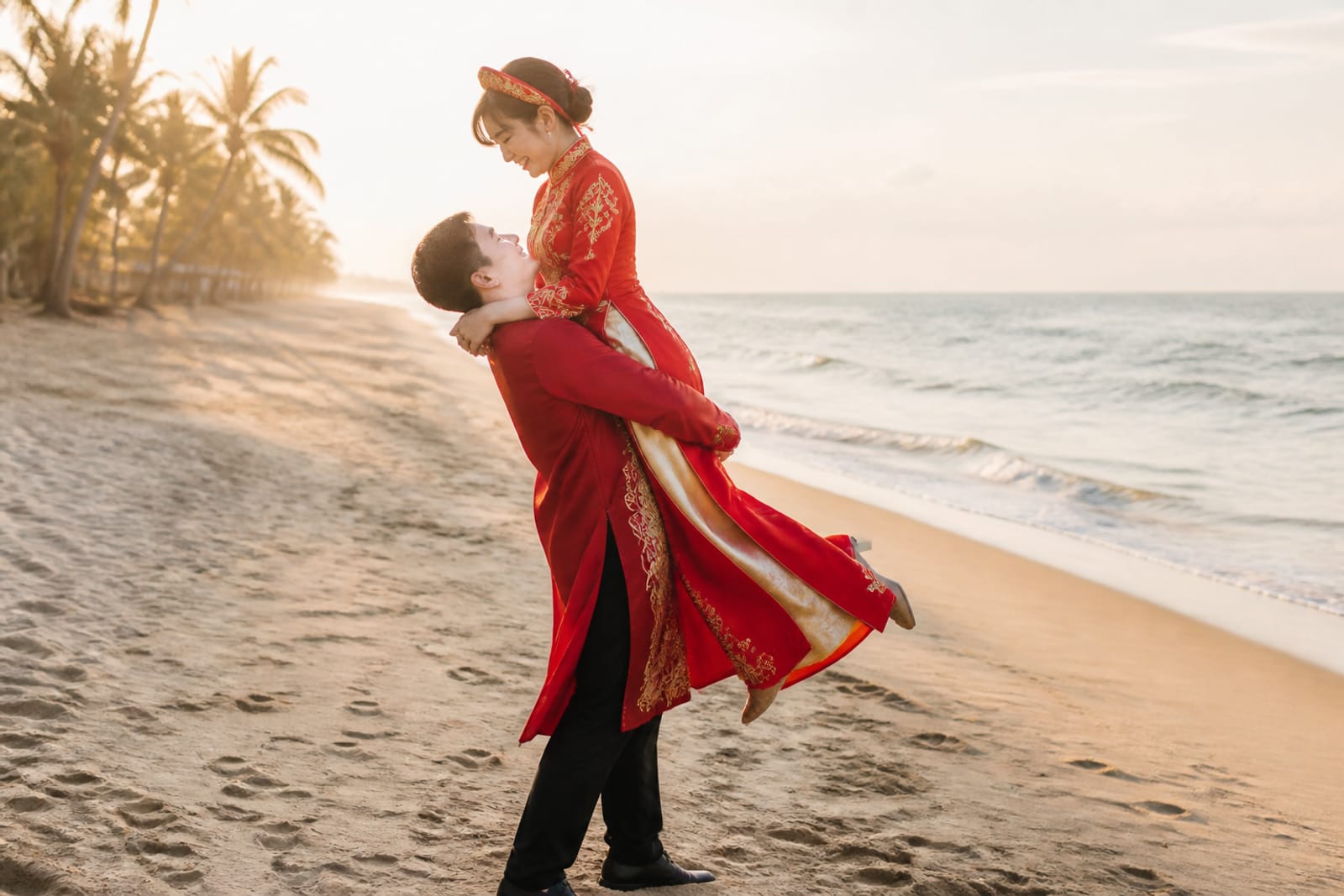
February to April is optimal: dry, mild, and the rice and herb beds are lush and green from recent rains. May to August is dry and very hot (often 35°C+), so you must shoot at sunrise or risk harsh shadows and sweat on makeup; the fields are mature but dusty. September to December is the rainy season and typhoon window; flooding in the Ancient Town and surrounding areas makes access unpredictable, paths slippery, and light flat and grey. December to January is cool and often drizzly, with less vibrant green. Based on Hoi An's tropical-monsoon climate (coastal central Vietnam), February–April offers the most forgiving conditions for a 90–120 minute session and the richest field color.
---
| Option | Best for | Light & season | Why it works |
|---|---|---|---|
| Tra Que farm (sunrise) | Couples wanting rural authenticity, lush color, active farm backdrop | Feb–Apr, 5:30–6:30 am; May–Aug dawn only | Soft directional light, mist, green, minimal crowds, farmers add life |
| Hoi An Ancient Town | Heritage lovers, lantern night, architecture backdrop | Feb–Apr, 5–6 am or dusk; avoid Oct–Nov floods | Iconic bridges, wood buildings, narrow lanes; crowded by 7 am |
| Hotel or resort grounds | Time-flexible shoots, multiple outfits, no travel | Any month, any time | Controlled setting, no crowds, makeup touch-ups on-site; less character |
| Combine: Tra Que + Ancient Town | Couples wanting variety, farm + heritage in one day | Feb–Apr, dawn + mid-morning | Two distinct aesthetics, two light windows; requires 4–5 hours, higher logistics |
How do you actually book and run a Tra Que ao dai session?
A Cáo Studio session at Tra Que is custom-built per couple, not a fixed package. You contact the team on WhatsApp with your date, outfit count, and mood; they confirm availability, arrange transport from your hotel in Hoi An, and liaise with farm management to secure access and timing. The team arrives 30 minutes early to scout light and clear sightlines. Sessions start at sunrise; the photographer positions you among the beds, guides you through poses and walking sequences, and adapts to farmer activity and shadows. Most couples spend 90 minutes on-site; the team handles makeup touch-ups between outfits and manages the muddy terrain. After the session, images are edited over 2–4 weeks (exact timings are confirmed on WhatsApp). Logistics: wear closed shoes, bring a light wrap, and expect the smell of soil and compost. The farm is still operational, so you may hear water pumps and voices—this adds authenticity or distraction depending on your preference.
---
What do you wear under an ao dai for a farm photoshoot?
Ao dai fabric is typically silk or synthetic blend and falls straight to the ankles; it's semi-sheer at the seams. Underneath, wear a full-coverage white or skin-tone slip or underdress that reaches your ankles and has short or long sleeves (depending on ao dai sleeves). This prevents transparency in sunlight and allows the fabric to drape cleanly. For Tra Que, wear closed-toe shoes—soft leather flats or embroidered slippers—because paths are uneven and muddy; open sandals expose feet to soil and insects. Bring a light cardigan or shawl; early morning is cool (around 20°C in Feb–Apr), and the cardigan adds a styling layer for variety. Trousers under the slip are optional: some couples wear them for extra comfort when sitting or kneeling in wet soil for close-up shots. Most photographers recommend avoiding heavy jewelry that catches in fabric or sinks into mud when you kneel.
---
How does seasonal weather change what you can and cannot shoot?
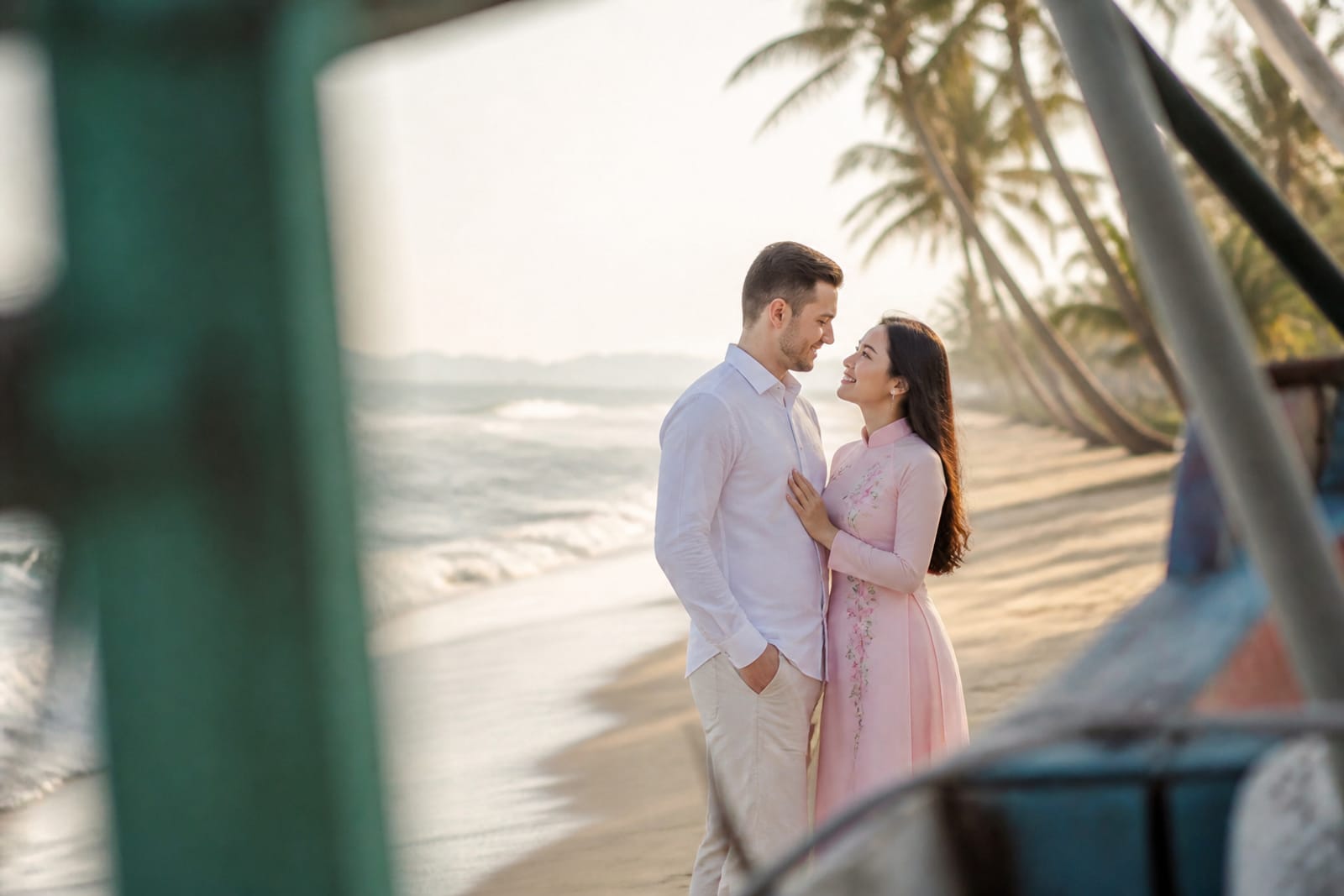
Feb–Apr (dry, mild): Fields are green and wet with morning dew; mist rises around 5:30–6:30 am and clears by 7 am. Light is soft and directional. Mud is present but manageable in closed shoes. Best for clean, romantic images. Crowds of tourists are moderate. May–Aug (dry, hot): Fields are mature and earthy-toned; there is less standing water and fewer farmers visible. Light is harsh and direct by 6:30 am, so sessions must finish by 7 am or shift to noon (less ideal, shadows strong). Heat rises above 30°C by 6:30 am. Good for bold, high-contrast aesthetic. Makeup wilts faster. Sep–Dec (rainy, typhoon risk): Light is flat and grey; paths are slippery. October–November see occasional flooding in Hoi An and surrounding zones; the farm may be inaccessible or unsafe. Late December is cool and drizzly. Not recommended. Avoid if possible. Dec–Jan (cool, drizzly): Light is soft and diffused; fields are verdant but often wet. Cool air (15–20°C) suits makeup longevity. Fewer tourists. Fewer farmers working at dawn. Good middle ground if Feb–Apr is booked.
Based on Hoi An's climate (tropical monsoon, central coast), Feb–Apr and Dec–Jan offer the most reliable light and access.
---
Tra Que vs. studio backdrop: which one is right for you?
If you prioritize authenticity, texture, and one-of-a-kind imagery, Tra Que is worth the early start and muddy shoes. The farm's unpredictability—changing light, passing farmers, water reflections—produces images no studio backdrop can replicate. Sessions require flexibility and a sense of adventure. If you want simplicity, weather certainty, and multiple quick changes, a hotel makeup & hair session combined with a nearby resort garden is faster and safer. If you dream of both rural and heritage aesthetics, book a pre-wedding elopement package that spans Tra Que at dawn and the Ancient Town at mid-morning (4–5 hours, higher logistics cost). Solo travelers or couples on tight schedules often choose resort grounds; international couples planning a destination elopement favor Tra Que for the story and depth. The deciding factor is your tolerance for early mornings, mud, and imperfection—and whether those "flaws" excite or stress you.
---
What to check before you book
- Confirm the exact date and sunrise time with the team on WhatsApp. Sunrise shifts by 15–20 minutes month to month; your session timing depends on it.
- Ask whether the farm permit and transport are included in the quote. Some studios bundle these; others charge separately. Clarify on WhatsApp.
- Verify what happens if weather turns bad (unexpected rain, grey sky). Can you reschedule? Is there a backup indoor session? Confirm the studio's policy.
- Check if makeup and hair are included or booked separately. Cáo Studio can arrange makeup & hair at your hotel before the farm shoot; confirm timings so you arrive fresh and dry.
- Review the lookbook or past Tra Que sessions to see the aesthetic in real conditions. Light and landscape vary year to year. Ask for reference images from Feb–Apr if you are booking for that season.
- Discuss outfit logistics. Carrying multiple ao dai through muddy paths is impractical. Some couples bring one outfit and use styling (shawl, flowers, jewelry) for variation. Others have two outfits at the farm and change in a sheltered spot. Plan this with the photographer.
- Bring a list of poses and shots you want. Farms are dynamic; a shot list helps the photographer prioritize if light changes quickly or a farmer needs to work a specific bed.
---
📸 Book on WhatsApp — ao dai photoshoot
---
Related services and inspiration
- Couple & family photoshoots in Hoi An and other Vietnam locations.
- Pre-wedding elopement sessions that combine multiple Hoi An venues in one day.
- Wedding day photographer coverage if you're planning a ceremony.
- Ao dai rental for curated heritage or modern silhouettes.
- Photo album and prints to preserve your farm images in a keepsake format.
- Explore Cáo Studio's Hoi An appointment bookings and the full ao dai photoshoot pillar for seasonal guides and alternative venues.
---
FAQ
Can I do a Tra Que shoot in the rainy season (September–December)?
Not recommended. October–November bring typhoons, flooding around Hoi An, and grey, flat light. The farm paths become slippery and unsafe. If your dates are fixed in this window, ask the team on WhatsApp about alternative venues like resort grounds with ao dai styling.
How muddy does Tra Que get, and will my ao dai be damaged?
Paths are consistently muddy even in dry season (Feb–Aug) due to irrigation. Wear closed shoes and avoid kneeling directly in standing water; the photographer can position you on drier patches. Ao dai fabric is durable and washable. Light mud on the hem adds authenticity; heavy staining is avoidable with care and the team's guidance.
What's the difference between booking Tra Que through Cáo Studio and hiring a local Hoi An photographer?
Cáo Studio handles transport, farm permits, timing expertise, and professional editing across three Vietnam locations. Local photographers may offer lower base rates but often lack inter-province logistics and may not know Tra Que's seasonal shifts as deeply. Ask any studio for references from Feb–Apr shoots to compare quality.
Do I need to speak Vietnamese or arrange anything directly with the farm?
No. Cáo Studio manages all farm communication and permits. You coordinate only with the studio on WhatsApp in English.
Can I combine Tra Que with other Hoi An spots in one day?
Yes. A combined session (Tra Que at sunrise, Ancient Town at 7–9 am) spans 4–5 hours and requires two outfit changes and transport between sites. This is possible Feb–Apr when dawn breaks early and morning light lingers. Confirm logistics and costs on WhatsApp; the team will tailor timing to your vision.
FAQ
Can I do a Tra Que shoot in the rainy season (September–December)?
Not recommended. October–November bring typhoons, flooding around Hoi An, and grey, flat light. The farm paths become slippery and unsafe. If your dates are fixed in this window, ask the team on WhatsApp about alternative venues like resort grounds with ao dai styling.
How muddy does Tra Que get, and will my ao dai be damaged?
Paths are consistently muddy even in dry season (Feb–Aug) due to irrigation. Wear closed shoes and avoid kneeling directly in standing water; the photographer can position you on drier patches. Ao dai fabric is durable and washable. Light mud on the hem adds authenticity; heavy staining is avoidable with care and the team's guidance.
What's the difference between booking Tra Que through Cáo Studio and hiring a local Hoi An photographer?
Cáo Studio handles transport, farm permits, timing expertise, and professional editing across three Vietnam locations. Local photographers may offer lower base rates but often lack inter-province logistics and may not know Tra Que's seasonal shifts as deeply. Ask any studio for references from Feb–Apr shoots to compare quality.
Do I need to speak Vietnamese or arrange anything directly with the farm?
No. Cáo Studio manages all farm communication and permits. You coordinate only with the studio on WhatsApp in English.
Can I combine Tra Que with other Hoi An spots in one day?
Yes. A combined session (Tra Que at sunrise, Ancient Town at 7–9 am) spans 4–5 hours and requires two outfit changes and transport between sites. This is possible Feb–Apr when dawn breaks early and morning light lingers. Confirm logistics and costs on WhatsApp; the team will tailor timing to your vision.
Ao dai, makeup, hair and a local photographer in Hanoi or Saigon — one WhatsApp message.