/ao-dai-photoshoot
Ao dai wedding photos at Tra Su cajuput forest: guide & planning
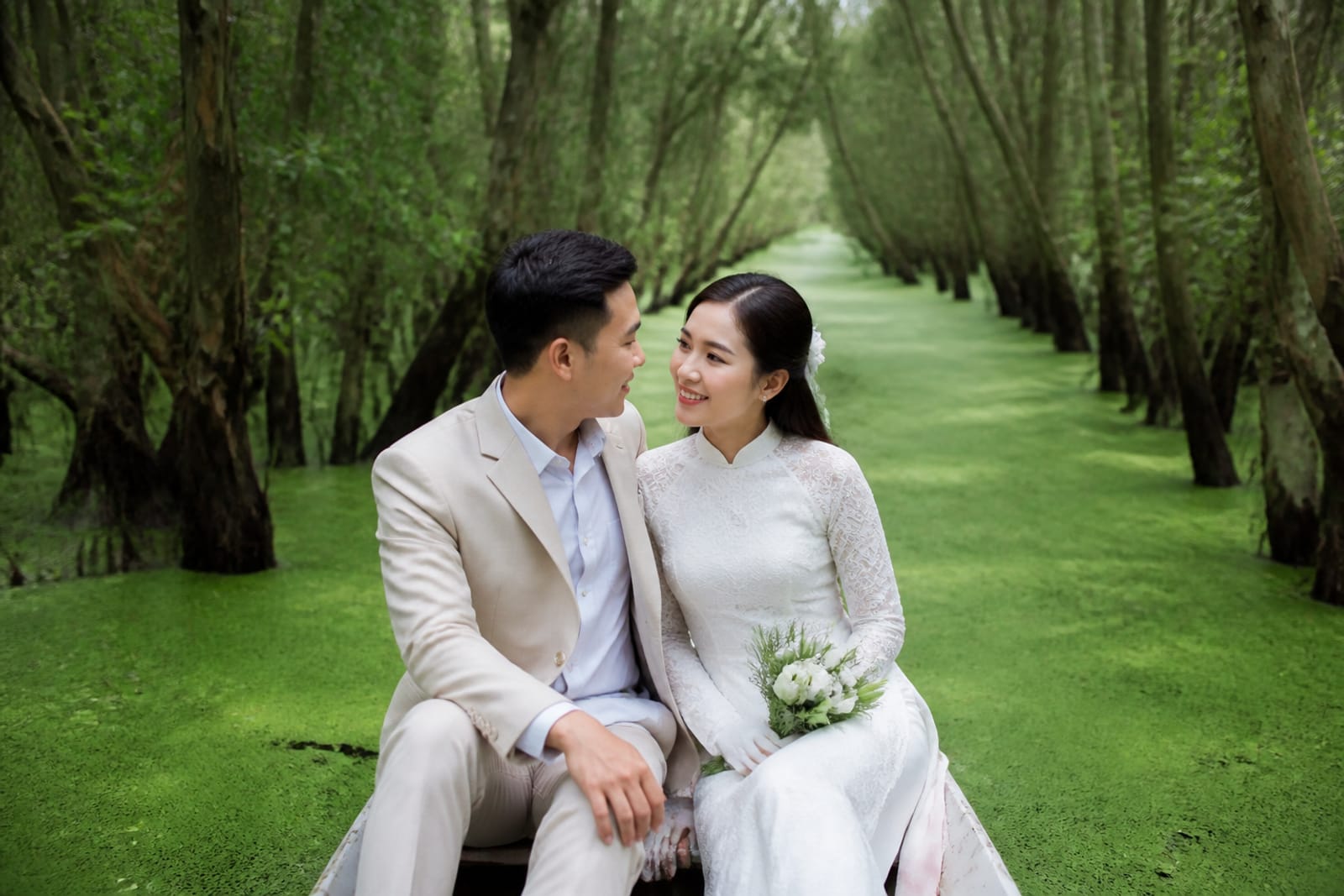
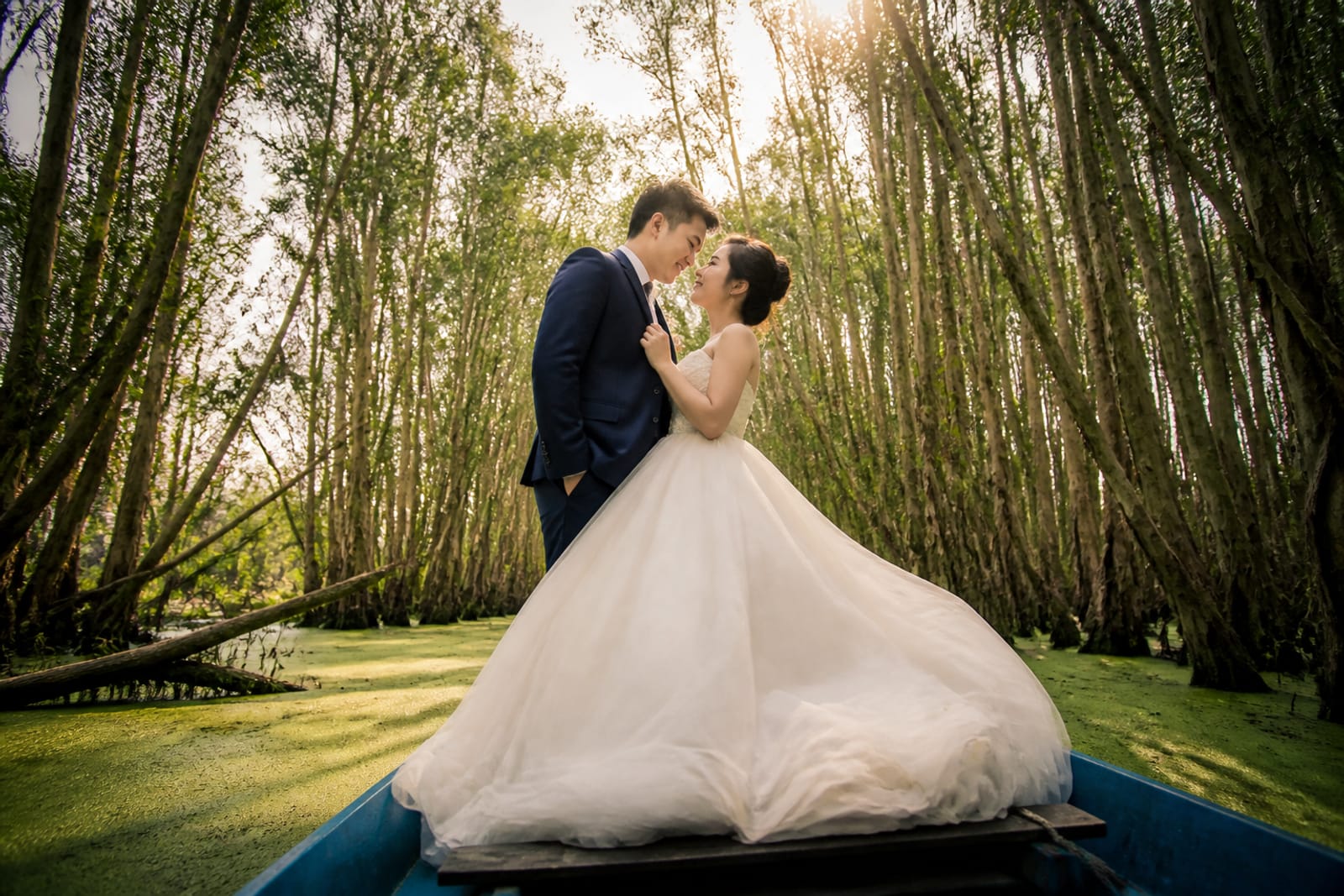
Tra Su cajuput forest, two hours north of Ho Chi Minh City, is a flooded forest reserve where water levels rise seasonally, creating mirror-like reflections and dense canopy light. An ao dai shoot there typically runs 2–3 hours, starting at dawn or late afternoon when light is soft and the reserve is quieter. The setting demands a photographer experienced in water, humidity and remote access—most international couples either hire a Saigon-based local team or book with Cáo Studio's Saigon base (who can advise on logistics). You'll wade or boat between trees, so wear water-resistant footwear under your ao dai, and bring a change of clothes; the reward is frames no studio location can match. Avoid the wet season (Sep–Nov) when flooding is unpredictable and accessibility is compromised. 📸 Book on WhatsApp — ao dai photoshoot ---
Why do couples choose Tra Su for ao dai photos?
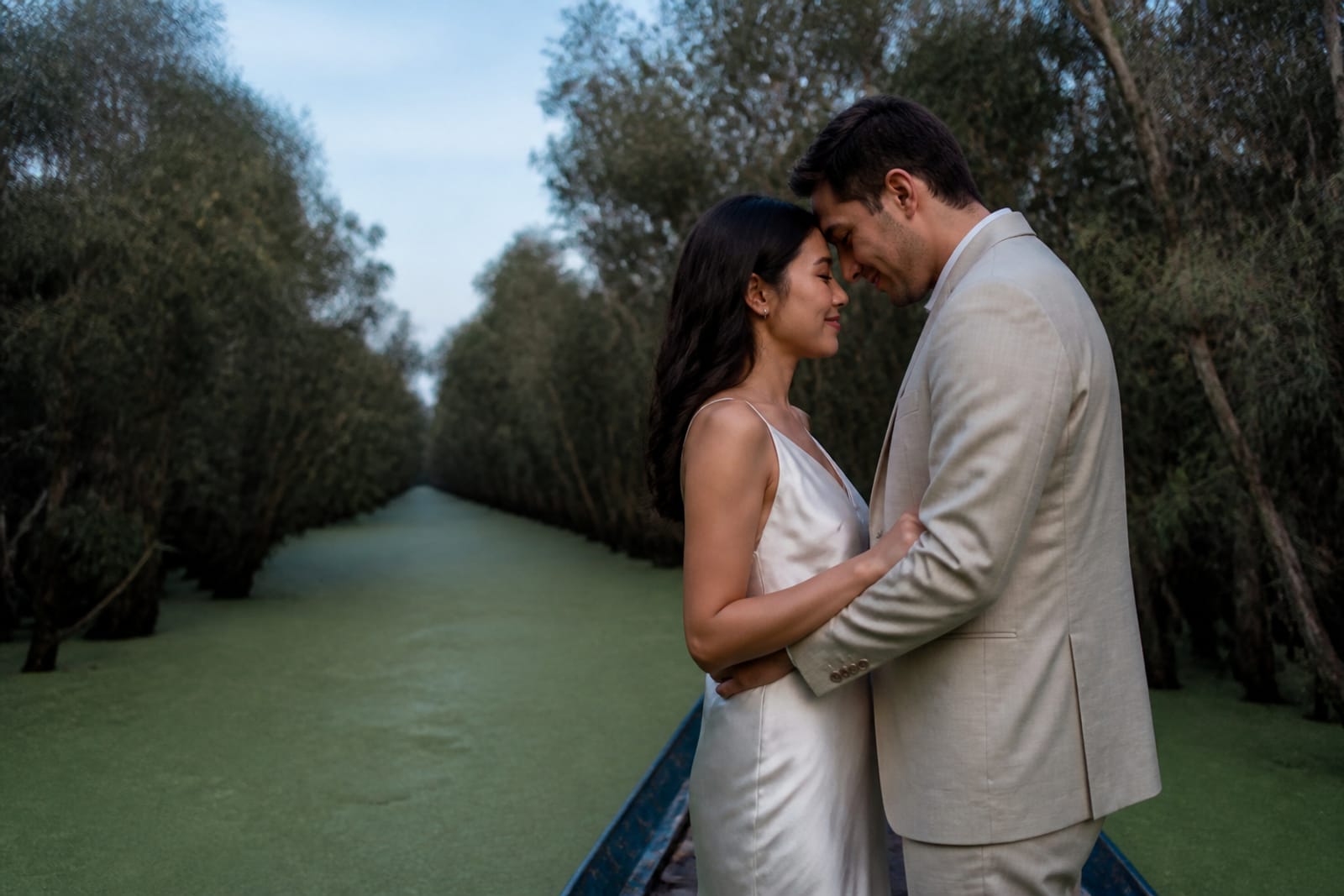
Tra Su is not a manicured garden or pagoda—it's a working nature reserve where the landscape does the storytelling. The waterlogged forest creates a sense of isolation and stillness that frame-by-frame feels cinematic rather than posed. Reflections double your visual depth, and the filtered green light softens skin without flash. Most other ao dai locations (temples, markets, urban streets) rely on composition and timing; Tra Su's light is the subject. For couples seeking a departure from conventional temple or river backdrops, it offers a narrative of exploration and intimacy.
When is the best season to shoot at Tra Su?
Tra Su's dry season runs December to April, when water levels are manageable and light is most predictable. December–January offers cool mornings and afternoon clarity; February–March brings heat but low humidity near dawn. The rainy season (May–November, worst October–November) raises water levels unpredictably and clouds block directional light for hours. Book between December and March for the most reliable conditions. The reserve operates year-round, but accessibility and safety depend on current water levels—always confirm with a local photographer or the reserve office before committing to a date.
| Season | Best for | Light & water | Why it works |
|---|---|---|---|
| Dec–Jan | First-time Tra Su shoots | Cool, clear dawn light; stable water | Soft side light, reflections steady, walkable paths |
| Feb–Mar | Heat-tolerant couples | Bright, direct midday light (hazy); warm water | Early morning avoids harsh sun; still water by 6 am |
| Apr–May | Risk-aware couples | Transitional; unpredictable clouds & water rise | Fewer crowds, but light is flat; water level unclear |
| Jun–Nov | Not recommended | Floods, grey skies, operational closures possible | Access compromised; light diffuse all day; humidity extreme |
What should you wear and bring to a Tra Su shoot?
An ao dai works best when it's fitted at the bodice and flows loosely below the waist—the fabric catches wind and water reflections beautifully. Wear a slip or underskirt (áo lót) to prevent transparency in water, and choose a neutral or jewel-tone colour that reads well against green canopy. Footwear is critical: water-resistant sandals or rubber boots under the ao dai; most photographers ask you to wade into shallow water, so bring a bag with dry socks and casual shoes for the walk out. Skip heavy jewelry—earrings and a simple bracelet photograph better in dappled light, and you won't risk losing items in water. Bring a thin shawl or cardigan to layer after the shoot; morning light can mean cool air near the water.
Can a traveling photographer from overseas shoot at Tra Su?
A Western-trained photographer experienced in water environments can handle Tra Su's technical demands—reflections, low light, moving subjects. However, logistical barriers are real: you need a driver familiar with reserve access roads, knowledge of which water levels allow wading versus boating, and permission routing through local operators (often managed day-of). Most international couples choose one of two paths. First: hire a Saigon-based photographer who works Tra Su regularly and understands reserve protocols. Second: book with Cáo Studio's Saigon base, who can advise on whether your vision suits Tra Su or suggest alternatives (the Mekong's floating markets, nearby Chau Doc temples, urban Ho Chi Minh locations), and recommend a trusted local photographer if Tra Su is outside their current shoot schedule. This hybrid approach—studio as advisor, local as executor—is more reliable than attempting an overseas team's first Tra Su shoot.
How much does a Tra Su ao dai photoshoot cost, and what affects the price?
Pricing depends on several factors that a local photographer will discuss upfront: travel time from Ho Chi Minh City or Chau Doc (typically 1.5–2 hours each way), reserve entry tickets, guide or boat rental if water levels require it, number of outfits (one ao dai or multiple changes), and delivery timeline (same-day preview, edited files in 48 hours, or album printing). Makeup and hair are often booked separately—check with your photographer whether they're in-house or require coordination with a makeup artist (Cáo Studio's makeup & hair service is based in Hanoi and Saigon, available for hotel coordination). Transport costs, seasonal water management fees, and location-specific permits are factors but not fixed amounts; ask your chosen photographer for a transparent breakdown. When comparing quotes, clarify what's included (edited photo count, video, outfit rental, styling) rather than price alone.
What could go wrong, and how do photographers prevent it?
Light fades fast near water and trees. Shoot within 90 minutes of sunrise or 90 minutes before sunset; midday flat light makes ao dai colours look washed. A skilled photographer arrives 15 minutes early to scout light direction and reflections.
Water wading ruins footwear and ao dai hems. Wear water shoes you don't mind losing, and ask the photographer to shoot wide first (full-length from a distance) before medium and close-ups; this lets you pull your hem up safely for detail frames.
Humidity fogs lenses and disrupts makeup. Bring lens cloths for the photographer; use waterproof makeup primers and set powder applied fresh just before wading scenes.
Reserve access changes week to week. Confirm the booked date with the reserve office 48 hours prior; don't assume a date that worked last month will work this week.
Wet ao dai is heavy and cold. Limit water shots to 20–30 minutes, then move to dry paths under canopy for covered-light frames; have dry clothes nearby.
---
What to check before you book
- Photographer experience: Ask how many Tra Su shoots they've done and request photos from similar flooded-forest or water-based sets. A first-timer will cost less but may not anticipate humidity, reflections, or access hiccups.
- Reserve permissions: Confirm the photographer has current access rights and knows whether boats, wading, or guide fees apply on your date.
- Ao dai ownership vs. rental: If you're renting, check whether the rental shop launders and presses after a water shoot (many require advance notice). Cáo Studio's ao dai rental is based in Hanoi and Saigon; ask via WhatsApp about Tra Su shoots.
- Makeup & hair logistics: If the photographer doesn't provide styling, book hotel-based makeup & hair the morning of the shoot in a nearby town (An Phu or Chau Doc).
- Delivery timeline: Ask when you'll see edited photos and whether a video or printed album is included.
- Weather backup plan: Ask what happens if water levels rise or light is flat; do they reschedule, refund, or offer alternative locations?
---
A framework: Tra Su or elsewhere?
Choose Tra Su if you want cinematic, water-reflective frames and are comfortable wading. Choose a temple or heritage site if you prefer iconic backdrops and dry, social photo sessions. Choose a hotel or urban shoot if you're pressed for time or traveling with family. Cáo Studio Saigon base can recommend the best fit for your timeline and vision; ask via WhatsApp.
---
📸 Book on WhatsApp — ao dai photoshoot
FAQ
Do I need to book a photographer months ahead for Tra Su?
No—four to six weeks is typical. Tra Su's reserve doesn't require advance permits for photo sessions, but local photographers fill up during December–January (peak season); book earlier if that's your target window.
Can I rent an ao dai in An Phu or bring my own from Hanoi?
You can rent locally in Chau Doc (30 minutes away) or Ho Chi Minh City. Bringing your own works if it's travel-friendly (wrinkle-resistant fabric), but cleaning it after water exposure is your responsibility. Ask your rental shop or Cáo Studio about post-shoot laundry before booking.
What if the water is too high to wade when I arrive?
A experienced local photographer will know the water forecast and suggest a date shift or alternative location (nearby canals, Chau Doc temple grounds, Mekong banks). Don't assume "high water = cancelled"—it often means boat-based shots instead.
Is a Tra Su shoot right for an engagement or anniversary couple?
Yes—it suits couples seeking intimate, moody frames. If you're planning a proposal or anniversary session, tell your photographer upfront so they can frame moments of interaction and emotion rather than static posing.
Should I hire Cáo Studio's Saigon team or a local Tra Su photographer?
Cáo Studio's Saigon base can advise on whether Tra Su fits your vision and budget, and recommend a trusted local if they're not shooting that day. Most couples benefit from a local photographer's reserve access and logistics knowledge; Cáo Studio's role is planning and styling. Ask via WhatsApp which makes sense for your dates.
FAQ
Do I need to book a photographer months ahead for Tra Su?
No—four to six weeks is typical. Tra Su's reserve doesn't require advance permits for photo sessions, but local photographers fill up during December–January (peak season); book earlier if that's your target window.
Can I rent an ao dai in An Phu or bring my own from Hanoi?
You can rent locally in Chau Doc (30 minutes away) or Ho Chi Minh City. Bringing your own works if it's travel-friendly (wrinkle-resistant fabric), but cleaning it after water exposure is your responsibility. Ask your rental shop or [Cáo Studio](/ao-dai-rental) about post-shoot laundry before booking.
What if the water is too high to wade when I arrive?
A experienced local photographer will know the water forecast and suggest a date shift or alternative location (nearby canals, Chau Doc temple grounds, Mekong banks). Don't assume "high water = cancelled"—it often means boat-based shots instead.
Is a Tra Su shoot right for an engagement or anniversary couple?
Yes—it suits couples seeking intimate, moody frames. If you're planning a [proposal or anniversary session](/proposal-and-anniversary), tell your photographer upfront so they can frame moments of interaction and emotion rather than static posing.
Should I hire Cáo Studio's Saigon team or a local Tra Su photographer?
Cáo Studio's Saigon base can advise on whether Tra Su fits your vision and budget, and recommend a trusted local if they're not shooting that day. Most couples benefit from a local photographer's reserve access and logistics knowledge; Cáo Studio's role is planning and styling. Ask via WhatsApp which makes sense for your dates.
Ao dai, makeup, hair and a local photographer in Hanoi or Saigon — one WhatsApp message.