/pre-wedding-photoshoot
Avoid Crowds at Hoi An Rice Paddies: Wedding Photo Guide
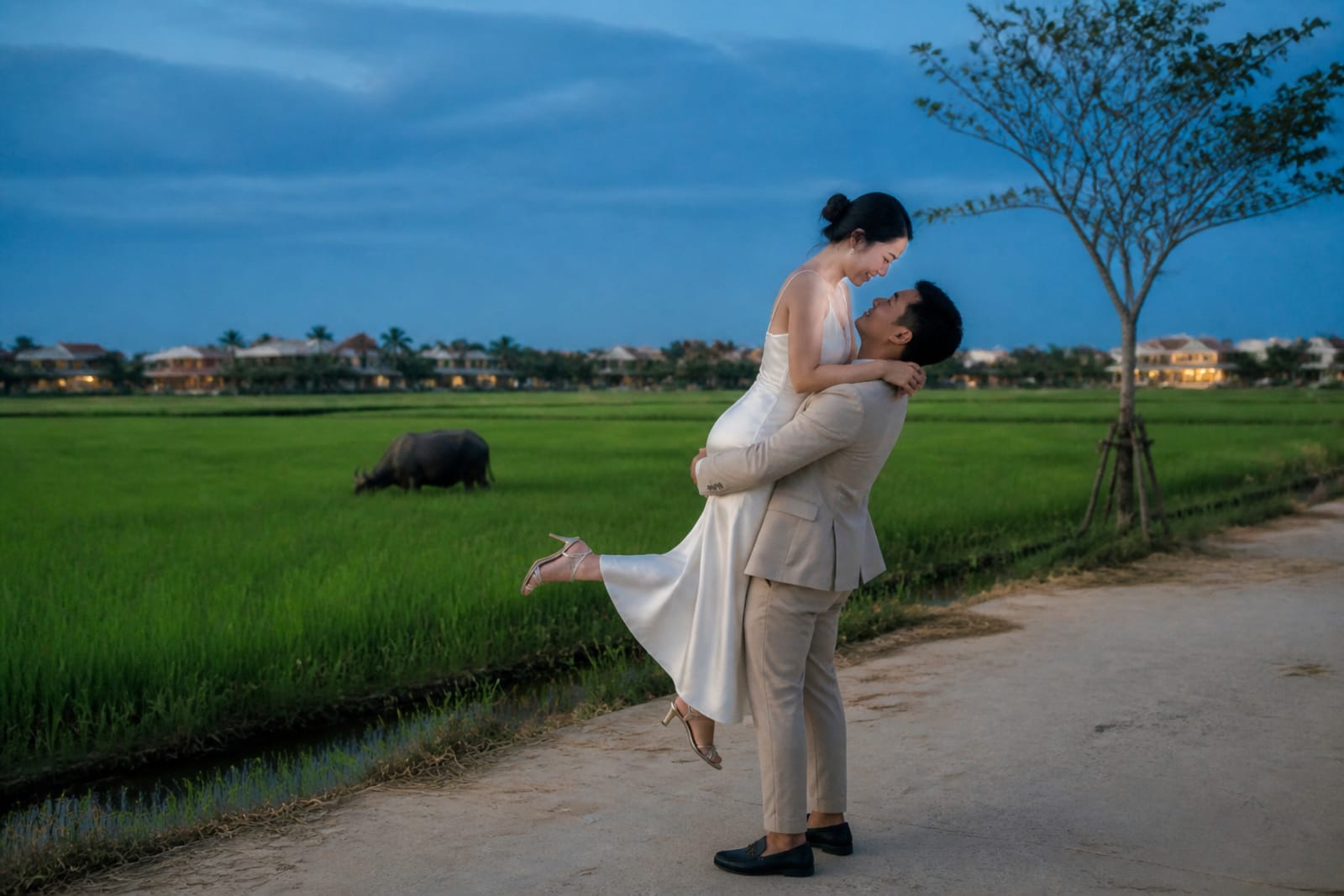
Hoi An's rice paddies photograph best during the green-rice window (Feb–Apr, after planting; May–Aug heat softens this advantage), but crowds peak 9 a.m.–3 p.m. when tour buses arrive. Shoot at sunrise (5:30–6:30 a.m., before vendors open) or after 4 p.m. (golden hour, emptier roads). Avoid Oct–Nov—the area floods during typhoon season, making paddies inaccessible and muddy. Work with a local photographer who knows private-access routes through working farms, or book Cáo Studio – Makeup & Photoshoot, which travels to Hoi An by appointment and arranges early-access logistics. Your choice depends on budget (local photographers cost less; studios handle hair, makeup, and props), how much control you want over post-production, and whether your outfits need professional care beforehand. ---
Where are Hoi An's least-crowded rice paddies?
The paddies within 2–3 km north and west of the Ancient Town (toward Cam Thanh and Tra Que) attract fewer tourists than the famous photo-spots near the main roads. Working farms—where farmers actively cultivate crops—have fewer selfie-takers because they're off the standard tour loop and often require local knowledge to access safely. Sunrise and late afternoon are genuinely quiet; noon is when buses full of tourists stop for photos. The quietest paddies are 4+ km from the Ancient Town center, but reaching them requires a motorbike or guide—not a 10-minute walk.
📸 Book on WhatsApp — pre-wedding photoshoot | 🌸 See the lookbook
Should you hire a local photographer or book a traveling studio?
Option comparison:
| Photographer type | Best for | Light/season advantage | Why it works |
|---|---|---|---|
| Local freelancer | Budget, minimal crew, quick turnaround | Early sunrise (5:30–6 a.m.), Feb–Apr | Knows farm access, speaks farmer language, no transport delays |
| Traveling studio (e.g., Cáo Studio) | Hair, makeup, multiple outfits, styling, albums | Flexible; studio books around your season | Makeup artist, props, outfit changes, professional post-processing included |
| Hotel makeup + studio | Makeup at your suite, then outdoor shoot | Best Feb–Apr, morning light | Split cost; fresh makeup on-location, studio skill |
A traveling studio costs more because it includes hair, makeup, styling, and a full production team—worth it if you want an ao dai styled professionally and edited images within weeks. A local photographer charges less and shoots faster, suits you if budget is tight and you're comfortable doing your own makeup or hiring a local beautician separately. Hybrid: book makeup & hair at your hotel the morning of your shoot, then meet a local photographer on-site.
What month and time of day guarantee the quietest paddies?
Feb–Apr (green-rice season, 15–20°C mornings, mild light) and Dec–Jan (cool but often drizzly—bright overcast, fewer tourists) are least crowded. Oct–Nov: do not book. Flooding during typhoon season makes many paddies impassable; "romantic rain shots" in promotional photos are misleading—the ground is waterlogged, access roads flood, and farmers keep tourists away. May–Sep brings intense heat (35°C+); sunrise is essential to avoid harsh shadows. Within your chosen month, shoot 5:30–7 a.m. (sunrise, vendors not yet open, vendor bikes not blocking paths) or 4:30–6 p.m. (golden hour, tour buses returning to town). 10 a.m.–2 p.m. is peak crowding and harsh, flat light.
How do you book a paddy shoot and check conditions before the day?
Before committing, ask your photographer (or Cáo Studio if traveling) these questions: Which specific paddy are we shooting? Can you confirm current water level and farm access via video call a week before? Will the farmer allow us on that date? What's the backup plan if fields are flooded or inaccessible? Local photographers can video-call you from the exact paddy days before your session, showing real water depth and foot traffic. Studios booking you from Hanoi or Saigon should have a local contact in Hoi An who confirms access; if they claim "guaranteed access" without a named local liaison, ask how they'll verify. Check the Hoi An tourism website for typhoon alerts (Sep–Dec risk). Arrive 30 minutes before your booked time to assess light and scout your exact positions.
💄 Makeup & hair at your hotel | 🎬 Wedding & pre-wedding video
What outfits and timing work best in each season?
Feb–Apr (green rice, mild light): Ao dai (traditional silk, lightweight) works; light fabric breathes in 20–25°C mornings without clinging. Barefoot shots or flat sandals suit muddy edges. Golden-hour light at 6 p.m. flatters skin, ao dai color pops. Bring a long cardigan or shawl—early morning is cool, and humidity rises by 7 a.m.
May–Aug (heat, risk of harsh shadows): Shoot 5:30–6:30 a.m. only; afterwards, light turns harsh and unforgiving. Lightweight, breathable fabrics (cotton-silk blend) prevent sweat marks. Skip heavy ao dai brocade; opt for plain silk or cotton in light colors. Sunscreen: reapply after 5 a.m.; makeup melts fast in humidity. Makeup artist should use heat-resistant primer and long-wear products. If budget allows, hire a makeup artist on-location (not hotel-based) who can touch up between outfit changes.
Dec–Jan (cool, often drizzly): Overcast mornings diffuse light beautifully (no harsh shadows). Heavier ao dai silk drapes well; layers (long cardigan, shawl) feel natural. Avoid wet grass on bare feet—wear thin socks or heel protectors. Drizzle photographs moody and romantic; bring a waterproof backdrop or use a umbrella stylistically. Light is flat by 4 p.m., so plan to wrap by 5 p.m.
What practical checklist prevents regrets on shoot day?
Before booking:
- Confirm photographer's local contact and their paddy access method.
- Ask for a one-week-before video call from the exact paddy (water level, foot traffic, light angle).
- Check Hoi An tourism alerts for typhoons or flooding (Sep–Dec).
- Decide: local photographer vs. traveling studio vs. hybrid (hotel makeup + local shooter).
- Book makeup & hair 2–3 weeks in advance if studio-based; hire on-location if budget-tight.
One week before:
- Confirm weather forecast (avoid rescheduling last-minute).
- Have photographer send outfit recommendations (weight, color for season, footwear).
- If ao dai: confirm rental pickup time if not owning; ensure alterations fit you (studio or local tailor).
- Pack sunscreen, reapply kit, backup cardigan, insect repellent, phone charger.
Morning of shoot:
- Arrive 30 minutes early to scout light and foot traffic.
- Reapply makeup and sunscreen just before first frame.
- Check phone battery; data for backup shots if hired crew loses footage.
- Confirm farmer/landowner presence; re-check access route (a water channel may have risen overnight).
📸 Book on WhatsApp — couple photoshoot | 🎁 Wedding photo album
---
What to check before you book
- Photographer location & access: Is the photographer based in Hoi An (fast response, real-time scouting) or traveling from Hanoi/Saigon (logistical delays, but full crew)? Ask how they confirm paddy access—video call from site, local farmer contact, or assumption?
- Season & flood risk: Never book Oct–Nov. Dec–Jan and Feb–Apr are safest. If shooting May–Sep, confirm 5:30–6:30 a.m. sunrise slot is locked in; afternoon shoots waste money on harsh light.
- Makeup & hair plan: If studio (like Cáo Studio) travels to Hoi An, clarify whether makeup is done at your hotel the morning of, or at a studio space in town. Local photographers rarely coordinate hair/makeup; hire separately or accept a simpler look.
- Outfit handling: If renting ao dai or a wedding dress, confirm tailor fittings are complete ≥5 days before. If studio is booking you, ask if outfit rental is included or separate.
- Turnaround & post-processing: How many days until you see edited photos? Traveling studios (2–3 weeks) are slower than local freelancers (3–5 days), but offer more comprehensive editing.
- Backup plan: What happens if fields flood or access is blocked 2 days before? Do they reschedule free, charge a rescheduling fee, or refund?
- Usage rights & prints: Will you receive high-resolution files or only low-res previews? Can you print or share on social media? Studios usually include print rights; local photographers may charge extra.
---
Why choose Cáo Studio – Makeup & Photoshoot for Hoi An?
Cáo Studio travels to Hoi An by appointment. The team books your makeup & hair at your hotel the morning of your session, handles outfit changes and styling, and shoots with full production crew (no rushed 30-minute slots). You'll see your gallery within 2–3 weeks, fully edited. If you want an ao dai photoshoot with professional styling, or a formal couple session with album, the studio's traveling model suits you—cost is higher, but you skip the stress of coordinating freelancers and makeup artists separately. For a faster, budget-friendly sunrise paddy shot with a local photographer, a Hoi An–based freelancer is ideal.
Contact Cáo Studio via WhatsApp to confirm current Hoi An availability and ask for a one-week-before scouting call with the exact paddy and water-level update.
---
Explore related services
- Pre-wedding & elopement photoshoot: full details on what's included in a traveling session.
- Couple & family photoshoot: group framing for multi-person shoots.
- Ao dai photoshoot: traditional outfit styling and cultural backdrop guidance.
- Makeup & hair at your hotel: on-location beauty before any shoot.
- Cáo Studio Hanoi & Saigon: home bases; both can travel to Hoi An.
- Hoi An photoshoot details: more location guides and logistics.
- Lookbook: real couple & family shoots to see style and editing.
- Wedding video: if you want motion alongside stills.
---
FAQ
Is it really possible to avoid crowds in Hoi An rice paddies?
Yes—sunrise (5:30–6:30 a.m.) is genuinely quiet; tour buses don't arrive until 8–9 a.m. Paddies 3+ km from the Ancient Town, on working farms, attract fewer tourists. Late afternoon (4:30–6 p.m.) is also empty but has softer light. Midday is always crowded.
What happens if my shoot date falls during October or November?
Avoid booking Oct–Nov. Typhoon season causes flooding; paddies fill with water or mud, access roads become impassable, and farmers restrict tourist entry. Feb–Apr and Dec–Jan are safer. If you must shoot Nov–Jan, confirm water levels via a local scouting video call one week before.
Should I hire a local photographer or book a traveling studio?
Local photographers cost less and shoot faster; ideal if you want a 1–2 hour sunrise paddy session. Traveling studios (like Cáo Studio) cost more but include hair, makeup, professional styling, and comprehensive editing over 2–3 weeks. Hybrid option: book hotel makeup, then hire a local photographer on-site, splitting costs.
How do I confirm a photographer has real access to a specific paddy?
Ask for a video call from the exact paddy one week before your shoot. They should show water level, foot traffic, light angle, and any barriers. Ask for their local farmer contact's name. If they can't video-call or name a contact, they likely don't know the site well.
What should I wear to avoid looking muddy or out of place in a rice paddy?
Wear lightweight ao dai (Feb–Apr, Dec–Jan) or breathable cotton-silk blend (May–Aug). Go barefoot or wear flat sandals if muddy; thin socks work if uncomfortable barefoot. Light colors photograph well against green rice. Skip heavy brocade in summer heat. Bring a waterproof shawl for Dec–Jan drizzle.
How long does a typical paddy photoshoot take?
Local photographer: 1–1.5 hours (sunrise, one outfit, quick turnaround). Traveling studio: 2–3 hours (makeup on-site or at hotel, 2–3 outfit changes, full production). Clarify with your photographer before booking to manage your morning and confirm it fits your Hoi An itinerary.
FAQ
Is it really possible to avoid crowds in Hoi An rice paddies?
Yes—sunrise (5:30–6:30 a.m.) is genuinely quiet; tour buses don't arrive until 8–9 a.m. Paddies 3+ km from the Ancient Town, on working farms, attract fewer tourists. Late afternoon (4:30–6 p.m.) is also empty but has softer light. Midday is always crowded.
What happens if my shoot date falls during October or November?
Avoid booking Oct–Nov. Typhoon season causes flooding; paddies fill with water or mud, access roads become impassable, and farmers restrict tourist entry. Feb–Apr and Dec–Jan are safer. If you must shoot Nov–Jan, confirm water levels via a local scouting video call one week before.
Should I hire a local photographer or book a traveling studio?
Local photographers cost less and shoot faster; ideal if you want a 1–2 hour sunrise paddy session. Traveling studios (like Cáo Studio) cost more but include hair, makeup, professional styling, and comprehensive editing over 2–3 weeks. Hybrid option: book hotel makeup, then hire a local photographer on-site, splitting costs.
How do I confirm a photographer has real access to a specific paddy?
Ask for a video call from the exact paddy one week before your shoot. They should show water level, foot traffic, light angle, and any barriers. Ask for their local farmer contact's name. If they can't video-call or name a contact, they likely don't know the site well.
What should I wear to avoid looking muddy or out of place in a rice paddy?
Wear lightweight ao dai (Feb–Apr, Dec–Jan) or breathable cotton-silk blend (May–Aug). Go barefoot or wear flat sandals if muddy; thin socks work if uncomfortable barefoot. Light colors photograph well against green rice. Skip heavy brocade in summer heat. Bring a waterproof shawl for Dec–Jan drizzle.
How long does a typical paddy photoshoot take?
Local photographer: 1–1.5 hours (sunrise, one outfit, quick turnaround). Traveling studio: 2–3 hours (makeup on-site or at hotel, 2–3 outfit changes, full production). Clarify with your photographer before booking to manage your morning and confirm it fits your Hoi An itinerary.
Ao dai, makeup, hair and a local photographer in Hanoi or Saigon — one WhatsApp message.