/pre-wedding-photoshoot
Best Time for a Pre-Wedding Photoshoot in Mai Chau and Pu Luong
Mai Chau and Pu Luong, two limestone karst valleys in northwest Vietnam, are best for pre-wedding shoots during golden rice season—late May to June and September to October—when paddies turn amber under soft morning and evening light. Winter (December–February) works if you want mist, fewer crowds and cooler air, but rice is green and photography light is flatter. The valleys sit 4–5 hours from Hanoi; shoots typically run sunrise to mid-morning, returning to Hanoi by afternoon. Because Cáo Studio does not operate in Mai Chau or Pu Luong, you'll need to hire a local photographer experienced in location scouting, timing and editing. This guide walks you through season trade-offs, light logistics, outfit fit and how to vet a photographer so your pre-wedding frames match the landscape. #
Why does rice colour matter so much to your pre-wedding shoot?
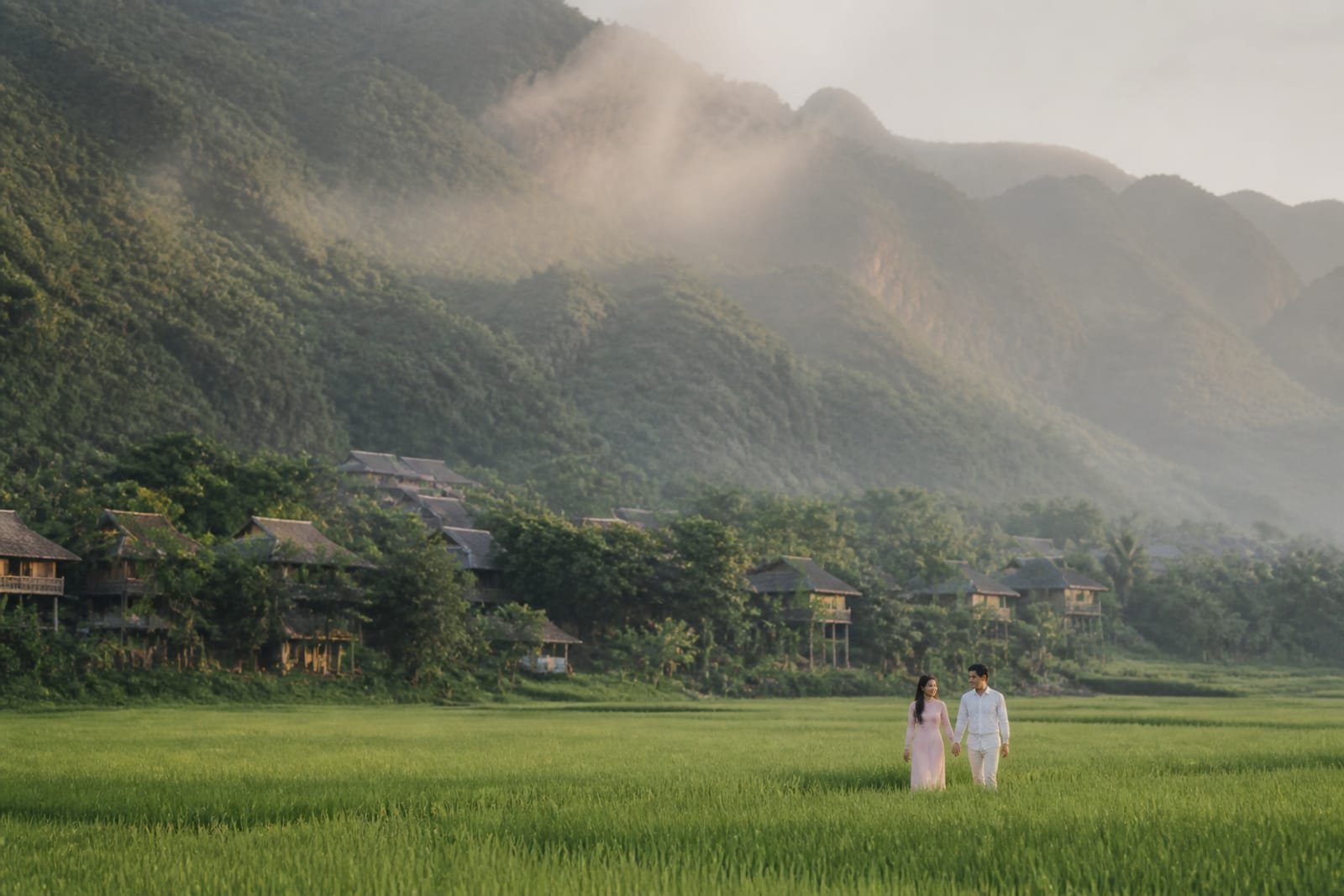
Golden rice is visual candy—it reads warm, vibrant and narrative-rich in every frame. When paddies turn amber (late May through June, and again September through October, depending on harvest cycles and microclimates), the light bounces off the grain, warming skin tones and making the valley feel alive. During green season (March–May, July–August) or after harvest (November onwards), rice is either bright-acid green or brown stubble; your outfits and skin can look washed out or muddy against it. If the bride wears white or cream, golden rice provides natural contrast without artificial saturation. Texture—terrace contours, water reflecting sky—is deeper and more photogenic when paddies are full and golden. For your pre-wedding photoshoot, timing to golden rice season (especially the cleaner light of early morning shoots) is the single biggest factor in frame quality. The colour alone saves editing time and ensures the landscape does half the work.
What's the light difference between early morning and late afternoon shoots in the valleys?
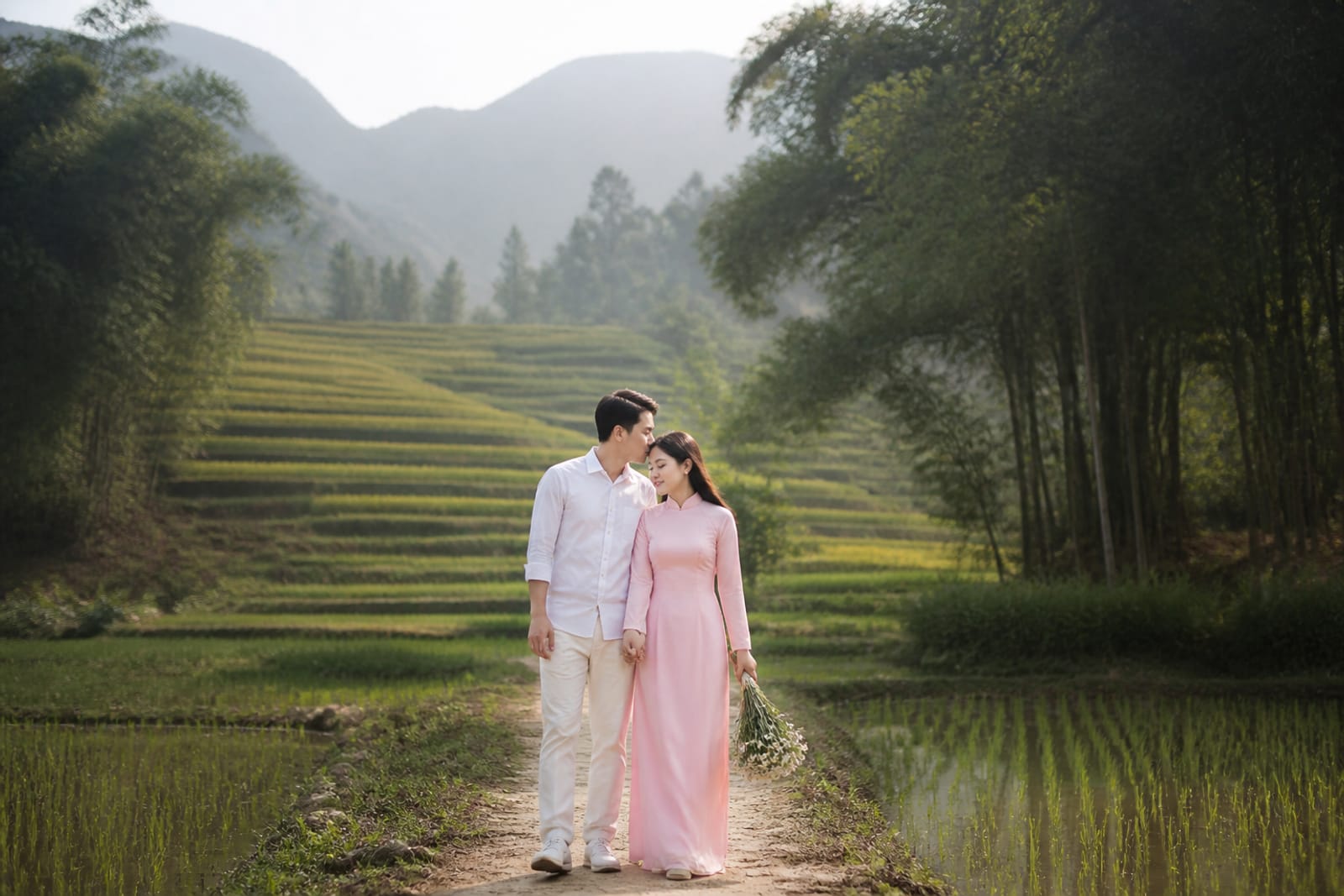
Early morning (5:30–7:30 am) delivers soft, directional side light that skims across terrace walls, creating shadow and depth without harsh contrast. Mist often lingers in the lower valleys, adding mood and diffusion. Skin tones are cool, even—no squinting. The air is calm, light is predictable. Late afternoon (4:00–6:00 pm) offers warm, golden side light, but it comes after a full day of heat; any mist has burned off, the sky can be hazy, and you're racing the sun. If clouds arrive (common in wet season), afternoon shoots lose dimension fast. Early morning also means fewer hikers and motorbikes—your frames are cleaner. Because the valleys funnel air, wind picks up by afternoon. Early starts suit ao dai photoshoots (fabric movement reads better in stillness) and couple shoots where intimate framing matters. Choose morning if you want control and clean backgrounds; choose late afternoon only if your photographer knows the specific terraces where afternoon light doesn't blow out.
How do you balance mist and visibility in winter shoots?
Winter (December–February) brings cool air and low-hanging mist that can look cinematic or murky—the line is thin. Mist peaks at dawn and clears by 8:00–9:00 am, depending on temperature and humidity. For moody, atmospheric frames, shoot before sunrise and into the first hour after; the mist softens facial features and creates layers (foreground, subject, distant hills). For clarity, wait 30–45 minutes after sunrise. Winter offers fewer tourists, calmer light and—for brides who want to wear long sleeves or layered fabrics—realistic comfort. But green rice doesn't photograph as warmly, and overcast skies (frequent Dec–Jan) are flat. Winter suits couples who value solitude and a cooler mood over golden colour; it's also better for pre-wedding shoots where the focus is emotional connection rather than landscape drama. Ask a local photographer whether mist is forecast for your dates; if heavy fog is predicted, you risk losing the valley entirely.
Should you choose a season for outfit fit or for light quality?
Season | Best for | Light & Weather | Rice State | Outfit Comfort ---|---|---|---|--- Late May–June | Golden light + warm mood | Soft morning side light, occasional clouds, warm 25–28°C | Golden, lush | Ao dai floats; white/cream pop; layers risky Sep–Oct | Golden light + drier air | Clear morning light, lower humidity, warm 22–26°C | Golden again; freshest terraces | Ao dai ideal; layering optional; fabric moves well Dec–Feb | Mist + solitude + cool air | Soft, diffused, moody; cool 12–18°C; flat midday | Green; post-harvest brown | Layers work; long sleeves comfortable; ao dai needs thermal slip Mar–May | Avoid | Hazy, hot, pre-monsoon clouds | Green paddies; dull contrast | Heat; fabrics cling; light is flat by 9 am Jul–Aug | Avoid | Monsoon humidity, afternoon storms | Green; waterlogged in places | Sweat-soaked before sunrise; unpredictable light Nov | Transition; risky | Shifting light; early cold snaps | Harvest week; fields bare | Uneven comfort; uneven visuals
Golden rice season (late May–June, Sep–Oct) solves both: light is warm and directional, outfit fabrics drape and move, and the landscape is at its peak. If you wear an ao dai, this is non-negotiable—fabric reads best in strong side light with a warm background. Winter works for couple shoots in simple outfits (jeans, linen shirts) or for brides who want sleeves and layers. Mid-year and monsoon season (July–August, March–May) should be avoided; light is flat or hazy, rice is uniform green, and weather is unpredictable. Choose your season first for light, then fit your outfit to that season.
How do you find and vet a local photographer for Mai Chau and Pu Luong?
Because Cáo Studio operates in Hanoi, Saigon and Hoi An only, a location shoot in Mai Chau or Pu Luong requires a local photographer experienced in the valleys. Look for portfolios that show: (1) multiple shoots in the same valleys across seasons, not a handful of tourist snapshots; (2) frame variety—wide, medium, detail shots that tell a story, not stiff couple-facing-camera poses; (3) clear understanding of light direction and time of day (captions should say "6:15 am, Pu Luong east terrace, side light"); (4) retouching that enhances without over-processing (skin should look real, colours warm but honest). Ask about logistics: How long are shoots? Are they location-scouted in advance or improvised? What's the editing timeline? Do they have backup gear if equipment fails at altitude? Can they deliver edited images in a reasonable timeframe (ask for specifics, not "within two weeks")—the valleys offer no internet backup, so download speeds matter. Check if they've shot your outfit type before (ao dai, wedding dress, casual, formal). If you're booking from abroad, ask for a video call to discuss light, outfit fit and expectations in detail. A photographer who grills you on season, outfit choice and mood is more reliable than one who says "yes to everything." Request a contract or agreement specifying shoot date, locations, number of images, editing timeline and payment terms.
What outfit choices work best for each season?
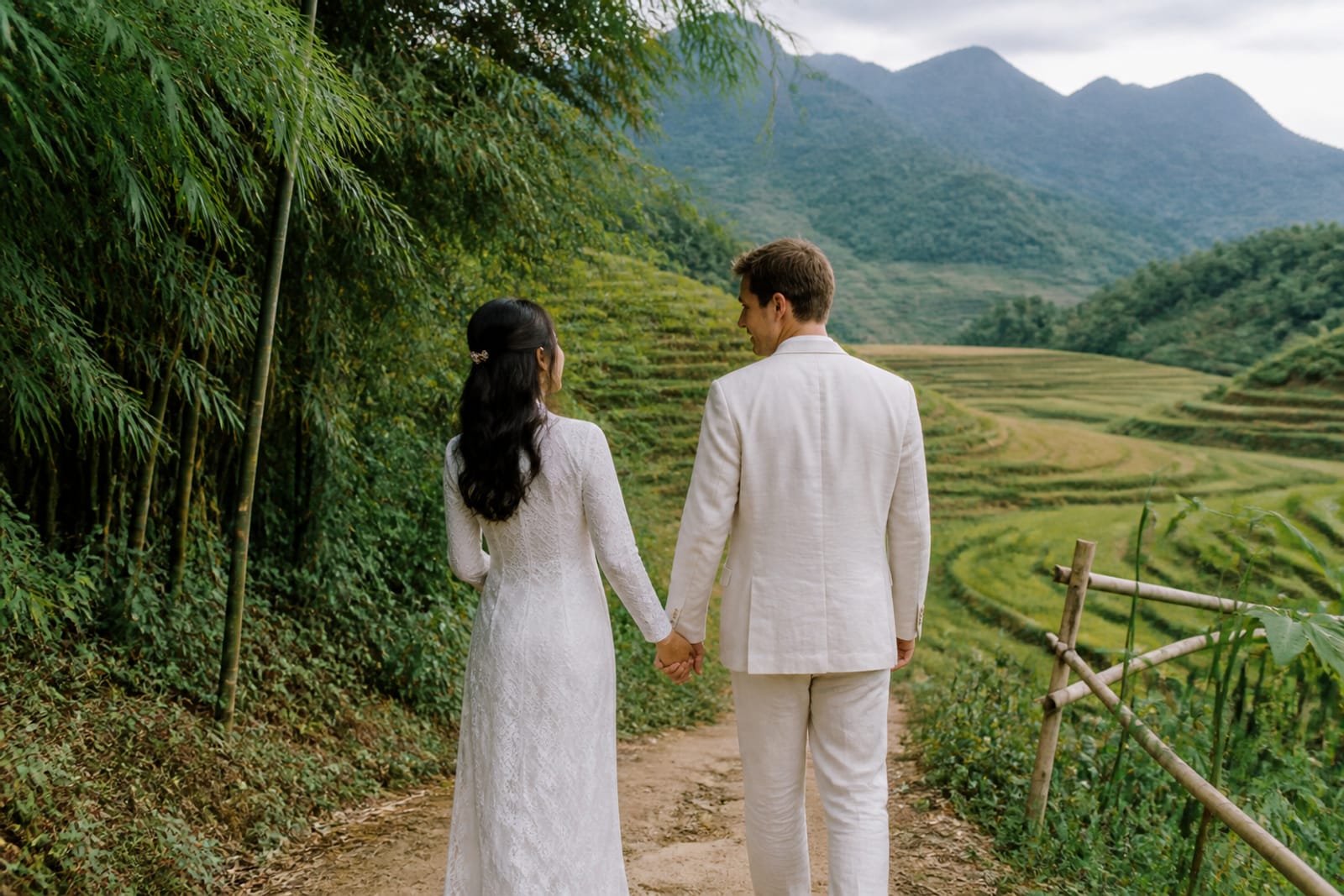
Late May–June, Sep–Oct (golden rice season): Ao dai in white, cream, pastels or jewel tones reads best. Silk or silk-blend fabric catches light beautifully. Wear a simple slip underneath (cotton, neutral) to avoid transparency issues in morning backlighting. For couples, one partner in ao dai, the other in tailored linen or cotton shirt works well—the contrast in fabric and colour separates subjects from background. Avoid busy patterns or logos; let the landscape do the visual work. If you wear a dress (white/cream), choose a cut that allows walking and movement; stiff formal wear photographs stiffly. Bring a shawl or light jacket for 5:30 am starts; you'll shed it by 7:00 am anyway.
December–February (winter, mist, green rice): Layers suit the cool air and moodier aesthetic. Long-sleeved linen, tailored trousers, a light sweater or jacket read well against grey skies and green paddies. Ao dai is beautiful but plan a thermal slip—the mornings are genuinely cold, and shivering ruins frames. Avoid all-white outfits (they're washed out in flat light) and very dark colours (they disappear into misty backgrounds). Neutral, warm tones—cream, tan, olive, soft grey—ground you in the landscape without competing.
Ask your photographer in advance which outfits they've tested in your chosen season; they'll have practical feedback.
📸 Book on WhatsApp — pre-wedding photoshoot | 🌾 See the lookbook
What should you check before committing to a date?
Before booking a Mai Chau or Pu Luong shoot, confirm: (1) Exact shoot dates and backup weather plan. Monsoon season (July–August, October–November) brings afternoon storms; confirm whether the photographer reschedules for free if rain cancels the morning session. (2) Rice cycle for your dates. Contact a local guest house in the valley or the photographer directly; harvest dates shift yearly. Late May–June and September–early October are safest, but confirm the specific terraces will be golden (not harvested early). (3) Travel logistics. Are you responsible for transport from Hanoi, or does the photographer arrange it? What time do you leave? How many hours is the shoot, and when do you return? (4) Outfit and equipment readiness. If you're bringing an ao dai from abroad, test it for movement in your chosen season; if renting locally, confirm the size and fit two weeks before. (5) Editing timeline and file delivery. How many images do you receive? In what format? How long after the shoot? (6) Contract and payment. Get terms in writing—dates, locations, deliverables, payment schedule, cancellation policy—before money changes hands. (7) Communication channel. Confirm whether the photographer responds via email, WhatsApp or other messenger, and how quickly.
If the photographer avoids these specifics or rushes you, that's a flag. A good local photographer should be as detailed about season and light as they are about price.
💄 Makeup & hair at your hotel | 👰 See the pricing guide
Can Cáo Studio help if you shoot in Mai Chau or Pu Luong?
Cáo Studio does not operate in Mai Chau or Pu Luong; the team is based in Hanoi and Saigon. However, if you want professional makeup and hair applied before your shoot, Cáo Studio can arrange services in Hanoi the morning before you travel, or style you at your Hanoi hotel (if you have a few hours before departure). Alternatively, you can hire a makeup artist in the valley itself—ask your local photographer for recommendations. If you're considering a pre-wedding photoshoot with multiple sessions (one in the valleys with a local photographer, one in Hanoi for ao dai or couple frames), Cáo Studio can coordinate the Hanoi portion, including styling, photo prints and wedding video. This way, you get the landscape drama of Mai Chau or Pu Luong plus the polished, directed energy Cáo Studio brings to couple shoots in urban and heritage settings.
📸 Book on WhatsApp — couple photoshoot | 🌸 Wedding pre-shoot options
---
#
FAQ
Is September or October better for golden rice in the valleys?
Both are strong, but September (early-to-mid) catches the first flush of ripening; by late October, some fields are already harvested. Late May–June is equally golden. Confirm exact harvest dates with a local photographer one month before your shoot.
Can you shoot in the valleys during the rainy season?
Technically yes, but light is unreliable. Afternoon storms are common July–August and October–November, often cancelling shoots. If you must book during these months, confirm a reschedule clause and plan for grey, flat light as a backup aesthetic.
How early do you need to wake for a valley shoot?
Sunrise varies (5:30 am in summer, 6:30 am in winter), and photographers typically ask guests to arrive 30–45 minutes before. Plan to wake at 4:30–5:45 am. The early start is non-negotiable; light quality after 8:00 am drops fast in the valleys.
Should you hire a makeup artist from the valley, or come prepared?
If you hire a local makeup artist, vet their portfolio (ask your photographer for referrals). If doing your own makeup, bring touch-up supplies; humidity and early starts mean it won't last until midday. Waterproof mascara and setting spray are essentials. Many couples hire makeup in Hanoi the evening before and refresh with touch-ups on location.
What if weather ruins your shoot date?
Reputable photographers include a reschedule clause (typically one free date within 30 days). Confirm this in your contract before paying. Some offer a partial refund if you choose not to reschedule, but that varies. Get it in writing.
How much does hiring a local photographer cost?
Pricing varies widely based on photographer experience, shoot length, location distance and editing depth. Discuss budget and deliverables directly with your photographer via WhatsApp or email. Ask how they structure pricing (by hour, by outfit, by number of edited images) so you can compare fairly.
Can you do a pre-wedding shoot in the valleys and another session in Hanoi?
Yes. Many couples split a pre-wedding into two sessions—one in the valleys with a local photographer, one in Hanoi with Cáo Studio for ao dai or couple frames in heritage settings. This gives you landscape drama plus styled, directed urban shots. Contact Cáo Studio on WhatsApp to plan the Hanoi portion.
FAQ
Is September or October better for golden rice in the valleys?
Both are strong, but September (early-to-mid) catches the first flush of ripening; by late October, some fields are already harvested. Late May–June is equally golden. Confirm exact harvest dates with a local photographer one month before your shoot.
Can you shoot in the valleys during the rainy season?
Technically yes, but light is unreliable. Afternoon storms are common July–August and October–November, often cancelling shoots. If you must book during these months, confirm a reschedule clause and plan for grey, flat light as a backup aesthetic.
How early do you need to wake for a valley shoot?
Sunrise varies (5:30 am in summer, 6:30 am in winter), and photographers typically ask guests to arrive 30–45 minutes before. Plan to wake at 4:30–5:45 am. The early start is non-negotiable; light quality after 8:00 am drops fast in the valleys.
Should you hire a makeup artist from the valley, or come prepared?
If you hire a local makeup artist, vet their portfolio (ask your photographer for referrals). If doing your own makeup, bring touch-up supplies; humidity and early starts mean it won't last until midday. Waterproof mascara and setting spray are essentials. Many couples hire makeup in Hanoi the evening before and refresh with touch-ups on location.
What if weather ruins your shoot date?
Reputable photographers include a reschedule clause (typically one free date within 30 days). Confirm this in your contract before paying. Some offer a partial refund if you choose not to reschedule, but that varies. Get it in writing.
How much does hiring a local photographer cost?
Pricing varies widely based on photographer experience, shoot length, location distance and editing depth. Discuss budget and deliverables directly with your photographer via WhatsApp or email. Ask how they structure pricing (by hour, by outfit, by number of edited images) so you can compare fairly.
Can you do a pre-wedding shoot in the valleys and another session in Hanoi?
Yes. Many couples split a pre-wedding into two sessions—one in the valleys with a local photographer, one in Hanoi with Cáo Studio for [ao dai](/ao-dai-photoshoot) or [couple frames](/couple-photoshoot) in heritage settings. This gives you landscape drama plus styled, directed urban shots. Contact Cáo Studio on WhatsApp to plan the Hanoi portion.
Ao dai, makeup, hair and a local photographer in Hanoi or Saigon — one WhatsApp message.