/pre-wedding-photoshoot
Best Time for Pre-Wedding Photoshoot in Ho Chi Minh City
Ho Chi Minh City runs on two weather patterns: dry (December–April) with bright, harsh midday light best shot in early morning or golden hour; wet (May–November) with afternoon downpours, shorter windows, and moody skies that suit intimate, muted aesthetics. Dry-season shoots demand early starts (6–7 a.m.) to avoid overhead glare and heat; rainy-season sessions compress into 2–3-hour morning windows before clouds release. At Cáo Studio – Makeup & Photoshoot, booking windows tighten during peak dry months (Jan–Mar), when local wedding calendars fill fastest. Your choice depends on outfit (ao dai silks wilt in humidity; formal wear suits crisp, cool mornings), desired mood (sharp, saturated colors vs. soft, diffused tones), and team logistics (fewer backup dates in rain). Neither is objectively "best"—pick the season that matches your vision and arrival date. ---
What weather actually means for your shoot day?
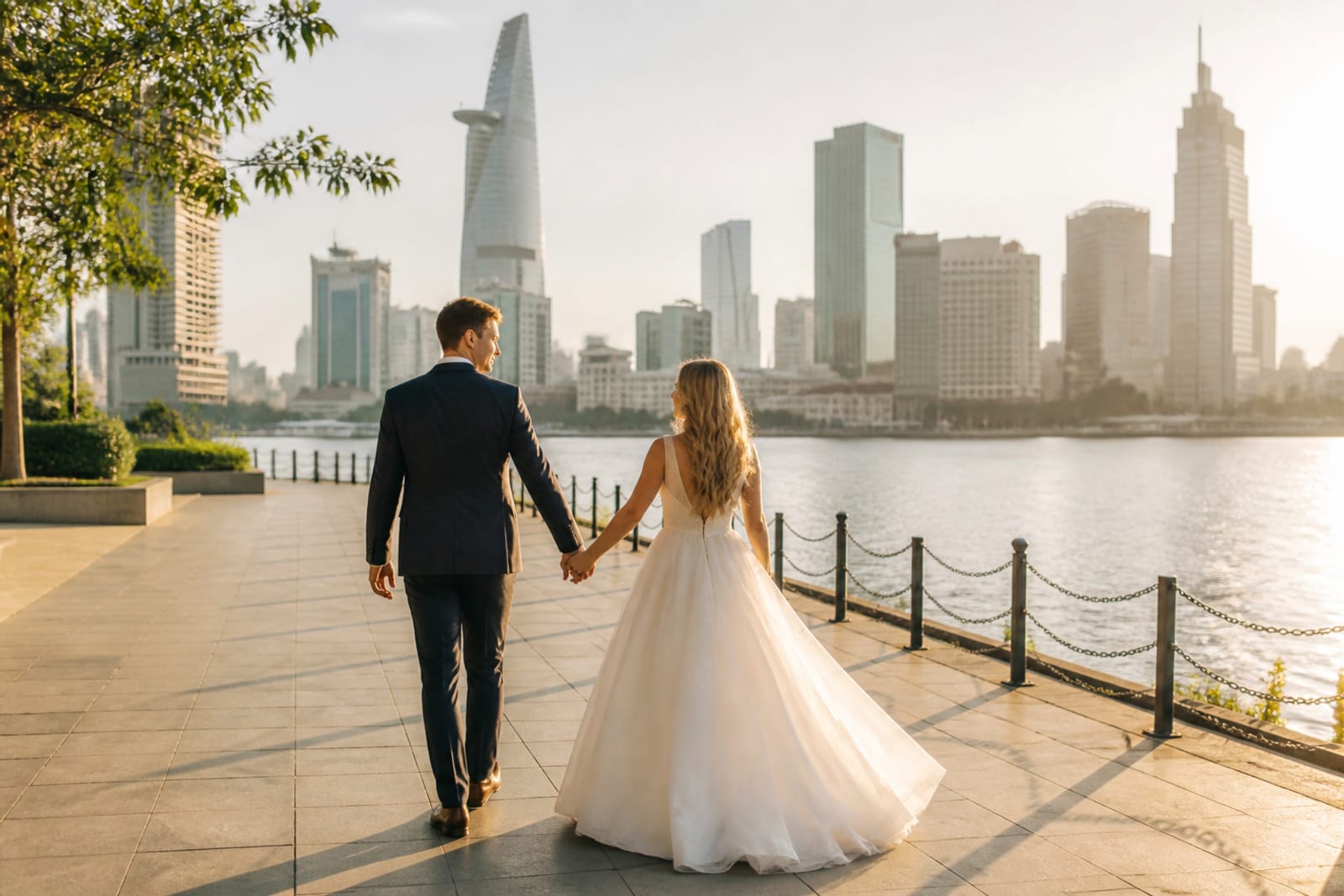
Dry-season light (Dec–Apr) is intense and directional, creating sharp shadows on skin unless you shoot before 8 a.m. or after 5 p.m. Rain-season mornings (May–Nov) stay overcast until midday, diffusing light evenly—ideal for bridal makeup detail and soft expression shots, but a sudden downpour can halt everything. Humidity peaks April–May, making formal makeup run and ao dai fabrics cling. The three-month window Feb–Apr hits a sweet spot: consistent morning clarity, lower afternoon humidity, and manageable crowds compared to December's holiday rush.
Midday anywhere in Saigon is brutal. Expect harsh nose and eye shadows, squinting, and heat fatigue in both seasons. Plan your session to finish by 10 a.m. or start after 5 p.m., with a makeup touch-up in between if you're doing a longer shoot.
📸 Book on WhatsApp — pre-wedding photoshoot
How does booking load shift by month?
January–March sees weddings peak (post-Tet and pre-monsoon); Cáo Studio's Saigon calendar fills fast, and you may face longer waits for editing. June–September is quieter—fewer bookings, more flexible dates, but you'll need contingency plans for rain delays. October–November is typhoon season for the central coast; Saigon avoids direct hits but humidity and pressure systems create unstable afternoons. Late November to early December softens weather and demand simultaneously—a underrated sweet spot if your wedding is spring.
Ask on WhatsApp for current availability across your preferred month. Booking 3–4 months ahead gives you choice of dates and makeup artist; last-minute slots (2–4 weeks) may limit team size or require a weekday session.
Should you choose dry or rainy season by outfit type?
| Outfit choice | Dry season (Dec–Apr) | Rainy season (May–Nov) | Why it matters |
|---|---|---|---|
| Ao dai in silk or brocade | Best—fabric holds structure, colors pop, no cling | Risky—humidity wilts pleats, makeup seeps, colors fade in flat light | Silk absorbs sweat; rainy light washes out detail |
| Formal Western dress (white, pastels) | Excellent—bright light flatters pale tones, easy makeup durability | Good—soft light suits romance, but humidity creases easily | Heat in dry season fades pale fabrics; rain risks staining |
| Groom in suit, formal jacket | Trickier—jacket looks stiff, heat shows sweat | Better—cooler, less visible perspiration, softer texture | Jackets show body shape better in diffused light |
| Multiple outfit changes (3+) | Ideal—shorter setup, no rain delays, makeup holds 4+ hours | Plan for 2–3 outfits max; allocate 30 min per outfit change + touch-up | humidity and rain delays compress your window |
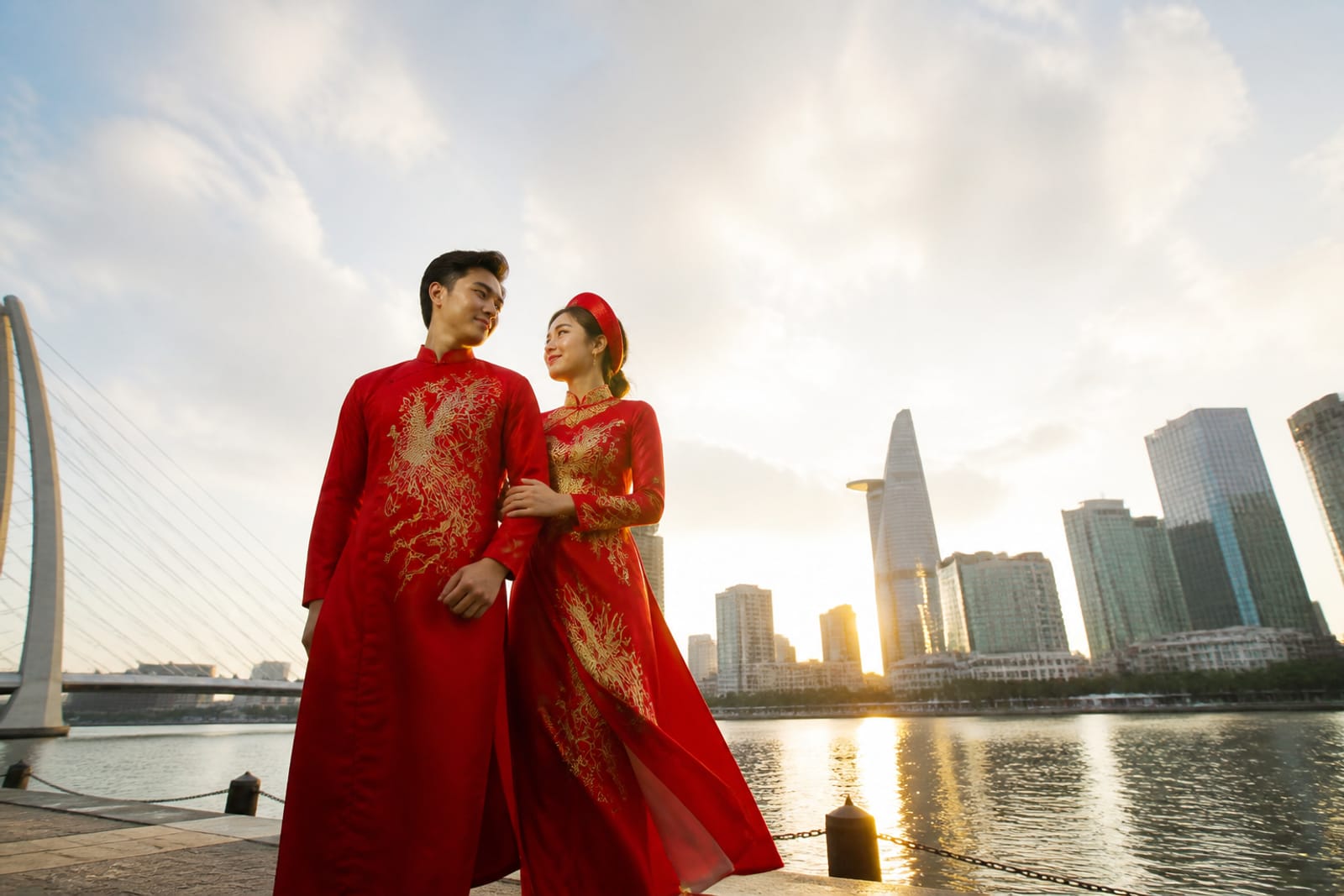
The ao dai is Saigon's star. Dry-season light intensifies colors (jewel reds, golds, deep blues jump), while rainy-season overcast can flatten embroidery and brocade detail. If ao dai is your centerpiece, aim for Dec–Mar and shoot before 9 a.m.
What time of year cuts setup and travel stress?
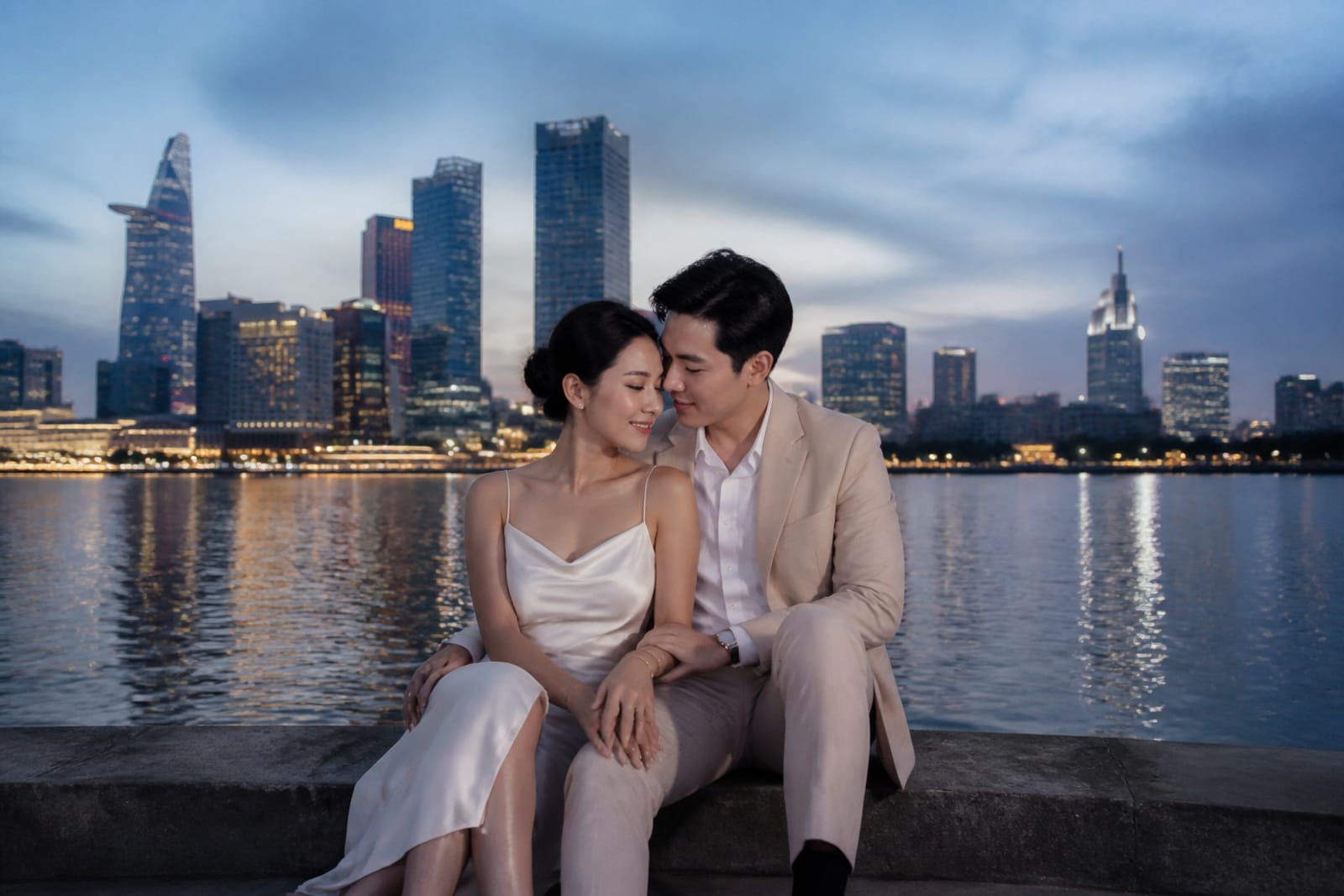
Cool months (Dec–Feb, roughly 25–28°C) mean the hair and makeup team works in comfort—no extra towels, ice packs, or touch-ups every 20 minutes. Saigon's street traffic is predictable; 6 a.m. travel to landmarks (Saigon Notre-Dame Cathedral, Ben Thanh Market, Bitexco Tower) takes 20–30 minutes vs. 45+ minutes during afternoon gridlock. Tet (late January–mid-February) closes many shops and temples, adds crowds to open parks, and complicates bookings—avoid if you want quiet backdrops.
May–September heat (30–35°C, humidity 80%+) exhausts small teams. Makeup requires re-setting every 90 minutes; ao dai steaming between outfit changes becomes mandatory. Travel to outdoor locations stretches 60+ minutes in traffic. A rainy-season shoot demands more crew (an extra hand for umbrellas, shade), pushing logistics costs up.
February–March is operationally easiest: cool, dry, pre-peak-wedding rush. March is underbooked compared to Jan–Feb, offering faster booking and editing turnarounds.
How do lighting conditions change what's even possible to shoot?
Dry-season morning shoots (6–8 a.m.) deliver golden, directional light—perfect for rim lighting on hair, texture in fabric, and defined cheekbones. By 9 a.m., light hardens; by 11 a.m., it's overhead and unflattering. Rainy-season overcast is even, shadowless, ideal for close-ups and soft expression work—but requires 1–2 stops wider aperture and faster shutter speed to avoid muddy tones. Rainy-season reflector work is harder (less direct light to bounce); assistant logistics matter more.
Saigon's architecture (narrow alleys, high-rise glare, riverside reflections off water) benefits from dry-season directional light—silhouettes, shadows, and composition pop. Botanical venues (parks, gardens) favor rainy-season softness and greener tones. Indoor hotel suites and rooftop backdrops work year-round, but hotel air-conditioning in dry season keeps makeup stable; rainy-season rooms feel damp and cramped.
The lookbook shows Saigon's real light across seasons. Study the golden-hour shots (dry season, 6–8 a.m.) vs. overcast gardens (rainy season, 8–10 a.m.)—pick the aesthetic you recognize.
---
What to check before you book
- Confirm your arrival date and weather window. Dry or rainy, your session is only one day. Check the 10-day forecast before finalizing.
- Ask about rain contingency. On WhatsApp, clarify whether indoor backup venues (studio, hotel ballroom, covered riverside) are included or incur extra time, and if editing timelines extend if shooting moves indoors.
- Specify outfit count and type. White dress, ao dai, suit? Say it. Humid months compress outfit changes; dry months allow more. Confirm setup and transition time on WhatsApp.
- Agree on makeup and hair durability. Rainy-season shoots need sweat-proof, humidity-resistant application. Ask if your makeup artist has worked Saigon's May–Sep humidity.
- Book hair and makeup timing separately. If you're using makeup and hair at your hotel, agree whether the team arrives 90 minutes or 2 hours before shoot start. Dry-season 6 a.m. shoots need 4:30 a.m. arrival; confirm the team's availability.
- Lock in editing and delivery timeline. Off-season bookings (June–Aug) may deliver faster; peak-season (Jan–Mar) can stretch 4–6 weeks. Ask for a written timeline on WhatsApp.
- Check landmark access hours and permits. Some temples close by noon; riverside parks fill by 8 a.m. Ask Cáo Studio which venues suit your start time.
---
For a deeper dive into pre-wedding photoshoots, explore couple and family sessions if you're adding a family moment, or ao dai photoshoots if you want a dedicated Vietnamese-dress session. Saigon's wedding photographer team also offers wedding day coverage if you're planning the full event. Visit Cáo Studio Saigon to see your venue and meet the team on WhatsApp.
---
FAQ
Is December or January better for pre-wedding photos in Ho Chi Minh City?
December is cooler (25–27°C) and has no Tet disruptions, making it ideal for comfort and location access. January post-Tet (mid-Feb onward) is also excellent but busier with weddings. Both suit dry-season light; December books easier, January fills faster.
Can I shoot during rainy season if I pick an indoor venue?
Yes. Hotel suites, studios, and covered rooftops work year-round. Rainy-season indoor shoots avoid weather risk but lose natural light complexity. Budget for lighting equipment or choose bright hotel spaces with large windows.
How far ahead should I book for a dry-season pre-wedding shoot?
Aim for 3–4 months. Jan–Mar books quickly; Dec is still available 6–8 weeks prior. Reach out on WhatsApp with your preferred month and dates as soon as possible.
Does rainy season cost less than dry season?
Cost factors differ by season (logistics, team availability, backup plans), not a flat discount. Ask on WhatsApp for details tied to your chosen month and location.
What if I'm arriving unplanned and only have 1–2 weeks to book?
Off-season (June–Sept) has same-week or next-week slots. Peak season (Jan–Mar) may not. Contact on WhatsApp with your arrival date; Cáo Studio will confirm real availability. Weekday shoots are more flexible than weekends.
FAQ
Is December or January better for pre-wedding photos in Ho Chi Minh City?
December is cooler (25–27°C) and has no Tet disruptions, making it ideal for comfort and location access. January post-Tet (mid-Feb onward) is also excellent but busier with weddings. Both suit dry-season light; December books easier, January fills faster.
Can I shoot during rainy season if I pick an indoor venue?
Yes. Hotel suites, studios, and covered rooftops work year-round. Rainy-season indoor shoots avoid weather risk but lose natural light complexity. Budget for lighting equipment or choose bright hotel spaces with large windows.
How far ahead should I book for a dry-season pre-wedding shoot?
Aim for 3–4 months. Jan–Mar books quickly; Dec is still available 6–8 weeks prior. Reach out on WhatsApp with your preferred month and dates as soon as possible.
Does rainy season cost less than dry season?
Cost factors differ by season (logistics, team availability, backup plans), not a flat discount. Ask on WhatsApp for details tied to your chosen month and location.
What if I'm arriving unplanned and only have 1–2 weeks to book?
Off-season (June–Sept) has same-week or next-week slots. Peak season (Jan–Mar) may not. Contact on WhatsApp with your arrival date; Cáo Studio will confirm real availability. Weekday shoots are more flexible than weekends.
Ao dai, makeup, hair and a local photographer in Hanoi or Saigon — one WhatsApp message.