/photo-album
Choosing a Pre-Wedding Photo Album and Prints in Vietnam
A pre-wedding photo album is a curated, bound or boxed collection of edited images from your shoot, designed to be displayed, gifted, or archived. Print quality, album construction, and surface finish (matte, lustre, or metallic) determine longevity and aesthetic impact. Albums range from traditional leather-bound books to modern lay-flat designs, acrylic keepsake boxes, or framed prints for walls. At Cáo Studio – Makeup & Photoshoot in Hanoi and Ho Chi Minh City, couples receive guidance on which format matches their space and memories; timelines depend on album complexity and print production, typically confirmed during your booking. Avoid rushing the selection—poor paper stock fades, and mismatched binding ages badly. Most couples decide on album style after their shoot, so you can see which images deserve which format. 📸 Book on WhatsApp — ao dai photoshoot | 💄 Makeup & hair at your hotel | 🌸 See the lookbook ---
How do album binding styles affect durability and feel?
Binding is the skeleton of longevity. A lay-flat binding lets pages open 180 degrees without cracking the spine—critical for displaying two-page spreads. Flush-mount construction (images adhered directly to pages) feels premium and photographs beautifully but cannot be separated. Traditional sewn binding offers flexibility; pages turn smoothly for decades but may show wear at the spine if heavy. Clamshell box albums (images in a closed box) protect prints from dust and are handled less, so they age best if you're archiving rather than displaying. Leather covers age distinctly—they darken, soften, and develop character over years. Canvas or linen exteriors stay consistent but can attract dust. Choose lay-flat if you'll display the album openly; choose a box if you store it in a closet and pull it out for anniversaries.
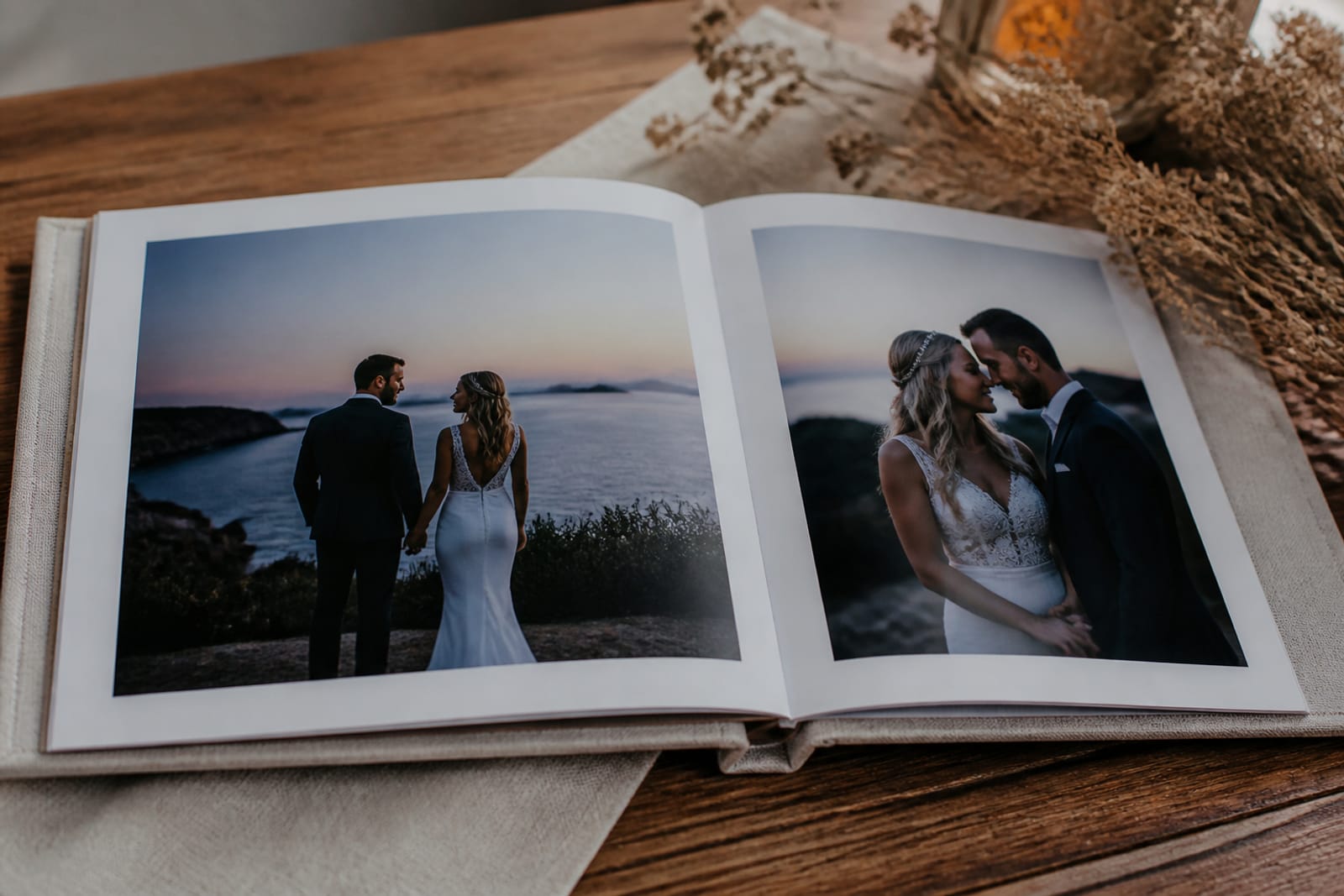
What print surfaces last longest in tropical humidity?
Vietnam's humidity—especially in Ho Chi Minh City and coastal Hoi An—accelerates fading on poor-quality prints. Lustre (semi-gloss) paper resists mold and humidity better than matte finishes in damp climates. Metallic prints, printed on aluminum-backed stock, are nearly immune to humidity and won't curl; they also feel weightless and modern. Matte prints are elegant but absorb moisture; they belong in a closed album, not framed and exposed. Archival inks (lab-certified 75+ year lifespan) cost more than standard inks but won't yellow in sunlight. Uncoated art paper sounds romantic but deteriorates fastest in tropical homes unless sealed in UV glass. Cáo Studio guides couples toward lustre or metallic finishes for humidity-prone homes and matte for protected, low-light albums. If you frame prints, use UV-blocking glass and avoid direct sunlight on east or west walls.
| Print Finish | Best For | Humidity Risk | Why It Works |
|---|---|---|---|
| Lustre (semi-gloss) | General albums, framed in shade | Low; resists moisture | Sealed surface repels humidity |
| Metallic (aluminum-backed) | Modern displays, sunny rooms | Very low; immune | Metal substrate blocks water vapor |
| Matte | Closed albums, soft feel | High; absorbs moisture | Porous surface; store sealed |
| Fine art / uncoated | Studio displays only | Highest; curls easily | No protective coating in tropics |
Should you print all images or select a curated set?
Printing every image from your session creates overwhelm and wastes money. A curated album—typically 40–80 prints for a full shoot—tells a story and forces you to revisit and honor your favorites. Selecting prints is emotional work; many couples print 10–15 hero images and 30–50 supporting shots. Some prefer a printed album of 40 images plus a digital archive of 200+; others print a slim 20-image keepsake box and frame one 5×7 for the bedroom. Ask yourself: Will I look at this regularly, or is it archival? If daily—print fewer, select carefully, and frame the top 3. If archival—print a broader selection and store in a box. Cáo Studio – Makeup & Photoshoot often collaborates with couples on selection during the edit review; that conversation shapes the album scope. Don't print filler; don't leave favorites unprinted because you're unsure.
What's the difference between an album and framed prints?
An album is a tactile, time-bound object you hold and turn. Framed prints are always-on décor that shape how you see your relationship daily. Albums are private (you decide when to share); framed prints are public (guests see them first). Albums preserve a complete narrative in sequence; framed prints isolate singular moments. Most couples benefit from both: a 50-image lay-flat album for anniversaries and quiet nights, and 2–4 framed prints (5×7 or 8×10) in the living room or bedroom. Framed prints fade if placed in direct sunlight, so position them on north-facing walls or behind sheer curtains. If your home is small or minimal, choose one 11×14 statement frame over a full album. If you have wall space, a gallery wall of 3–5 framed prints (mixed sizes) feels curated and modern. Acrylic keepsake boxes with 10–20 of your best prints are a hybrid: they display beautifully on a shelf but protect prints from light and dust.
How do you decide between a handmade album and a lab-printed one?
Handmade albums—where you arrange and paste prints into pages—are slow, personal, and irreplaceable. Lab-printed albums (where a printing lab arranges your selected images into a designed template and binds them) are consistent, faster, and archivally superior. Handmade albums feel bespoke but deteriorate if glue breaks down or pages shift. Lab-printed albums use acid-free mounting and professional binding, so they last 50+ years if stored properly. For a pre-wedding photoshoot in Hanoi or Ho Chi Minh City, most couples choose lab-printed albums because they ensure longevity and they're ready in a known timeline. If you love craft and have time, assemble a small handmade album (20 images max) alongside a lab-printed archive album. Never mix both methods in the same book; the durability standards conflict. Ask your photographer or album vendor whether they use archival adhesives and acid-free paper before ordering.
---
What to Check Before You Buy
- Archival certification: Does the album use acid-free paper and archival inks? Ask the lab or vendor.
- Binding sample: Request to see or hold a sample of the exact binding style and cover material.
- Paper weight: Lighter paper (under 200gsm) feels cheap and creases easily; heavier stock (250gsm+) feels substantial.
- Humidity storage: If you live in a coastal or tropical area, choose lustre or metallic finishes and store albums in a closed shelf or box.
- Timeline: Confirm how long album production takes and whether rush options exist (they often cost more).
- Customization limits: Some labs allow custom cover text or monograms; others don't. Clarify before ordering.
- Return or remake policy: What happens if the printed album arrives with a fault? (This varies widely; ask upfront.)
---
How do you choose the right album size?
Album size is a practical and emotional choice. A 10×12 album (landscape) feels grand and is ideal for displaying on a coffee table. An 8×10 (portrait) is classic and fits on a shelf without dominating a room. A 6×8 album is intimate and portable—you'll actually carry it to friends' homes. Larger albums (12×14+) require dedicated wall space or a display table. Smaller albums (5×7) fit a nightstand but feel cramped if your images are portraits or close-ups. For couple and family photoshoots, an 8×10 album works universally; for proposal or anniversary sessions, a smaller keepsake box (6×8 or 7×9) often feels more romantic. Check your home: where will the album live? If it's a coffee table, landscape (10×12) is standard. If it's a bedroom shelf, portrait (8×10) blends in. Square albums (10×10) are modern and Instagram-friendly but photograph narrowly if your images are landscapes. Visit a bookstore or hotel lobby to hold albums in different sizes; scale matters more than photographs suggest.
---
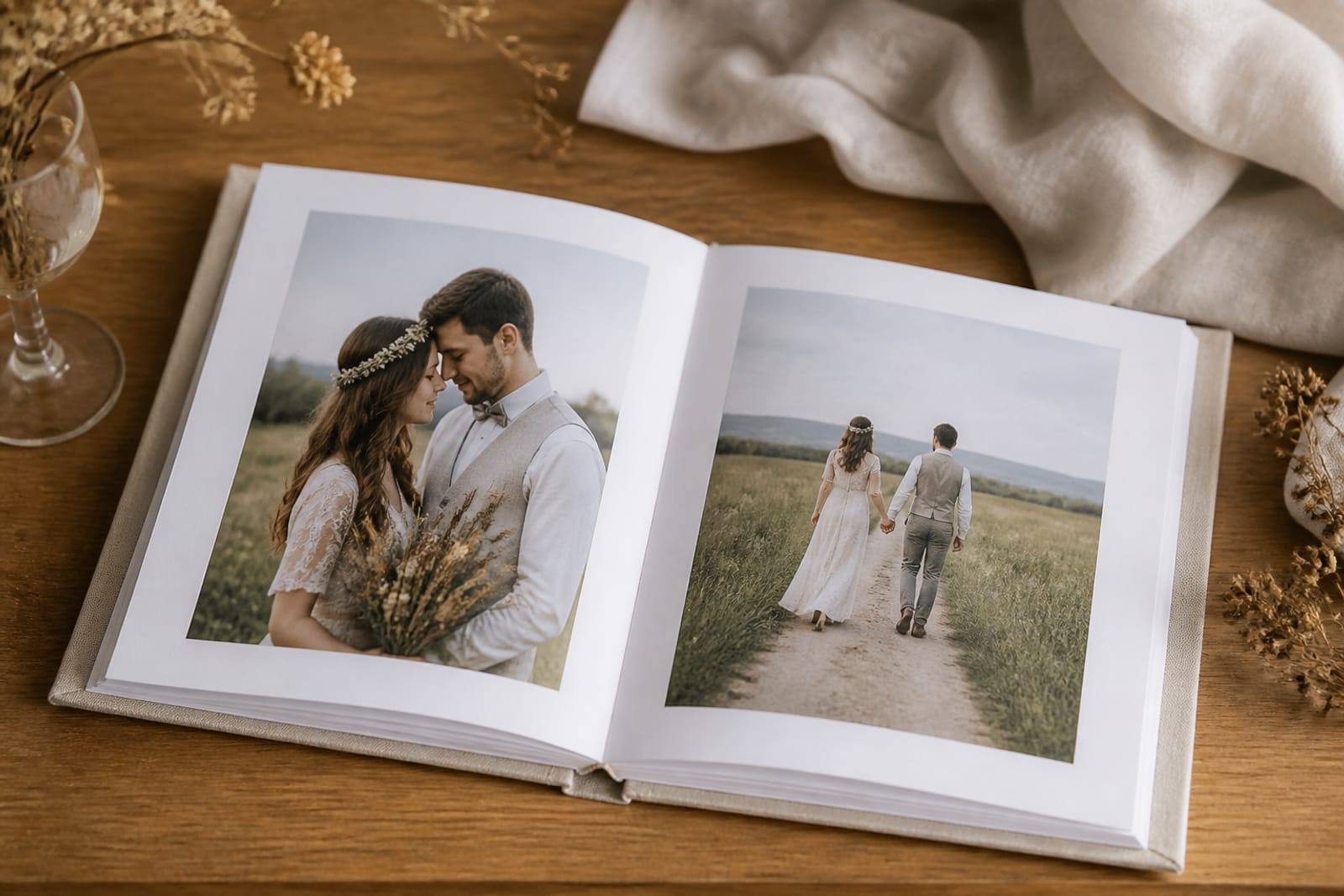
Why does image selection matter more than album style?
An expensive, beautifully bound album filled with average images disappoints on the tenth flip. A simple box of 30 killer prints makes you smile every time. Your album is only as strong as its weakest image; Cáo Studio guides couples through edit reviews to ensure every printed image earns its place. Weak shots (blinks, out-of-focus moments, awkward poses) dilute the story even in a premium album. Narrow your selection ruthlessly: choose images where both partners look genuine, the light is best, and the emotion reads clearly. A 40-image album of your absolute favorites outshines a 100-image album of mixed quality. Many couples find it helpful to edit and layout their album 2–4 weeks after the photoshoot, when the initial excitement fades and you can evaluate images objectively. Some labs offer free design mockups before printing; use that service to preview the album page-by-page before committing.
---
Should you print in color, black & white, or mixed?
Color prints feel immediate and alive; black-and-white prints feel timeless and editorial. Mixed albums (some color, some black-and-white) can feel indecisive if not carefully themed. If your images are rich in color (a vibrant ao dai, lush garden, golden-hour light), print color; black-and-white dilutes that visual investment. If your images are moody, texture-heavy, or in soft light (overcast day, intimate indoor shots), black-and-white often reads stronger. For vacation photoshoots, color honors the setting and season. For portraits, black-and-white isolates emotion and expression. Modern albums rarely go full black-and-white anymore; most couples print a mix with a clear logic (e.g., all opening pages in black-and-white, then color spreads, or hero images in color and detail shots in black-and-white). Avoid printing the same image in both formats in one album; it looks confused. Ask to see color and black-and-white proofs of a key image before finalizing your order. Light, skin tone, and fabric color all shift between formats.
---
How long do different album and print formats actually last?
Archival prints (acid-free paper, archival inks, UV-protective glass) last 75–100 years if stored away from direct sunlight and extreme humidity. Standard lab prints last 20–30 years before noticeable fading. Handmade albums with non-archival adhesive begin deteriorating within 5–10 years as glue dries and pages shift. Acrylic keepsake boxes protect prints from light and humidity better than open frames or shelves, extending lifespan to 50+ years. Leather album covers age beautifully for 30+ years; synthetic covers may crack after 15 years. In Vietnam's tropical climate, a print stored in a closed album lasts twice as long as one framed and exposed to humidity and heat. If you want your album to be a heirloom, invest in archival everything: lab-printed with archival inks, acid-free paper, UV-blocking framing, and climate-controlled storage (or a closed box).
---
What role does your photoshoot style play in album design?
An ao dai photoshoot in Hanoi's Old Quarter or Hoi An's ancient streets produces images rich in cultural detail and vibrant color; these reward large prints and generous white space on album pages. A pre-wedding photoshoot in a minimalist studio calls for clean, simple layouts. A proposal session often has one hero moment (the ring, the yes, the kiss); that image deserves a full-page spread or an oversized single-image frame. Destination shoots (beaches, mountains, urban backdrops) pair well with colorful or metallic finishes. Indoor, low-light makeup and hair sessions benefit from matte finishes and black-and-white or warm-toned color. Discuss your album vision with your photographer during the editing phase; they can adjust contrast, color grading, and cropping to suit your chosen album layout and paper finish. A skilled editor delivers images that look stunning on the paper you've selected.
📸 Book on WhatsApp — ao dai photoshoot
---
A simple decision checklist: From shoot to keepsake
- After your photoshoot, review all edited images and flag 60–100 favorites within 2 weeks.
- Choose your primary format: Album, framed prints, keepsake box, or a combination.
- Select your album size based on where it will live (coffee table, shelf, nightstand).
- Decide on print finish (lustre for humidity, metallic for sunlit spaces, matte for closed albums).
- Narrow to your final selection: 30–80 images for a full album; 2–4 images for framing.
- Review a mockup or sample before ordering if your lab offers it.
- Confirm timeline and delivery with your lab or vendor.
- Store finished albums in a cool, dry place away from direct sunlight (or in a closed box).
- Frame prints behind UV glass if displayed on walls; avoid east and west-facing light.
- Revisit your album on your first anniversary and beyond—it's a living memory, not a one-time event.
---
Choosing an album and prints is not a footnote to your photoshoot; it's part of how you live with your images. The right format, finish, and curation transform a digital file into a tactile, lasting memory. Visit Cáo Studio's photo album page to explore options, or message us on WhatsApp with questions about prints, albums, and delivery timelines after your couple photoshoot or pre-wedding session in Hanoi, Ho Chi Minh City, or Hoi An.
---
FAQ
How long does it take to receive a finished album after my photoshoot?
Timeline varies by album type and lab complexity. Most lab-printed albums are ready 2–4 weeks after your final image approval. Handmade albums take longer. Ask your photographer or vendor for an exact date when you order.
Can I reorder prints or add pages to my album later?
Yes, if your lab keeps your file and design template on file. Some labs allow unlimited reprints from the same source; others charge setup fees. Confirm this policy before placing your first order. Cáo Studio can discuss options on WhatsApp.
What's the best way to store a finished album to avoid fading?
Keep albums in a cool, dry place away from direct sunlight—ideally a closed shelf, box, or cabinet. Avoid damp basements or hot attics. If framing prints, use UV-blocking glass and position frames on north-facing walls. In Vietnam's humidity, storing albums in a sealed box extends lifespan.
Should I order duplicate prints or albums for gifts?
Yes. Many couples order two identical albums (one for themselves, one for parents) or extra prints for framing. Plan and order duplicates at the same time; reprinting later costs more and may have slight color variations.
Do professional labs offer custom cover text, monograms, or designs?
Many do, but options vary. Some labs allow embossed monograms or custom text on the cover; others only sell standard covers. Ask your lab or vendor about customization options and costs when ordering. Cáo Studio's partners can advise on WhatsApp.
Is a digital gallery enough, or do I really need printed albums?
Both serve different purposes. Digital galleries preserve quantity and are easily shared. Printed albums are tactile, tangible, and free from device dependency—they feel more like keepsakes. Most couples benefit from both: a printed album for display and archiving, and a digital backup for sharing and easy access.
FAQ
How long does it take to receive a finished album after my photoshoot?
Timeline varies by album type and lab complexity. Most lab-printed albums are ready 2–4 weeks after your final image approval. Handmade albums take longer. Ask your photographer or vendor for an exact date when you order.
Can I reorder prints or add pages to my album later?
Yes, if your lab keeps your file and design template on file. Some labs allow unlimited reprints from the same source; others charge setup fees. Confirm this policy before placing your first order. Cáo Studio can discuss options on WhatsApp.
What's the best way to store a finished album to avoid fading?
Keep albums in a cool, dry place away from direct sunlight—ideally a closed shelf, box, or cabinet. Avoid damp basements or hot attics. If framing prints, use UV-blocking glass and position frames on north-facing walls. In Vietnam's humidity, storing albums in a sealed box extends lifespan.
Should I order duplicate prints or albums for gifts?
Yes. Many couples order two identical albums (one for themselves, one for parents) or extra prints for framing. Plan and order duplicates at the same time; reprinting later costs more and may have slight color variations.
Do professional labs offer custom cover text, monograms, or designs?
Many do, but options vary. Some labs allow embossed monograms or custom text on the cover; others only sell standard covers. Ask your lab or vendor about customization options and costs when ordering. Cáo Studio's partners can advise on WhatsApp.
Is a digital gallery enough, or do I really need printed albums?
Both serve different purposes. Digital galleries preserve quantity and are easily shared. Printed albums are tactile, tangible, and free from device dependency—they feel more like keepsakes. Most couples benefit from both: a printed album for display and archiving, and a digital backup for sharing and easy access.
Ao dai, makeup, hair and a local photographer in Hanoi or Saigon — one WhatsApp message.