/wedding-video
Cinematic pre-wedding video in Vietnam: what to plan
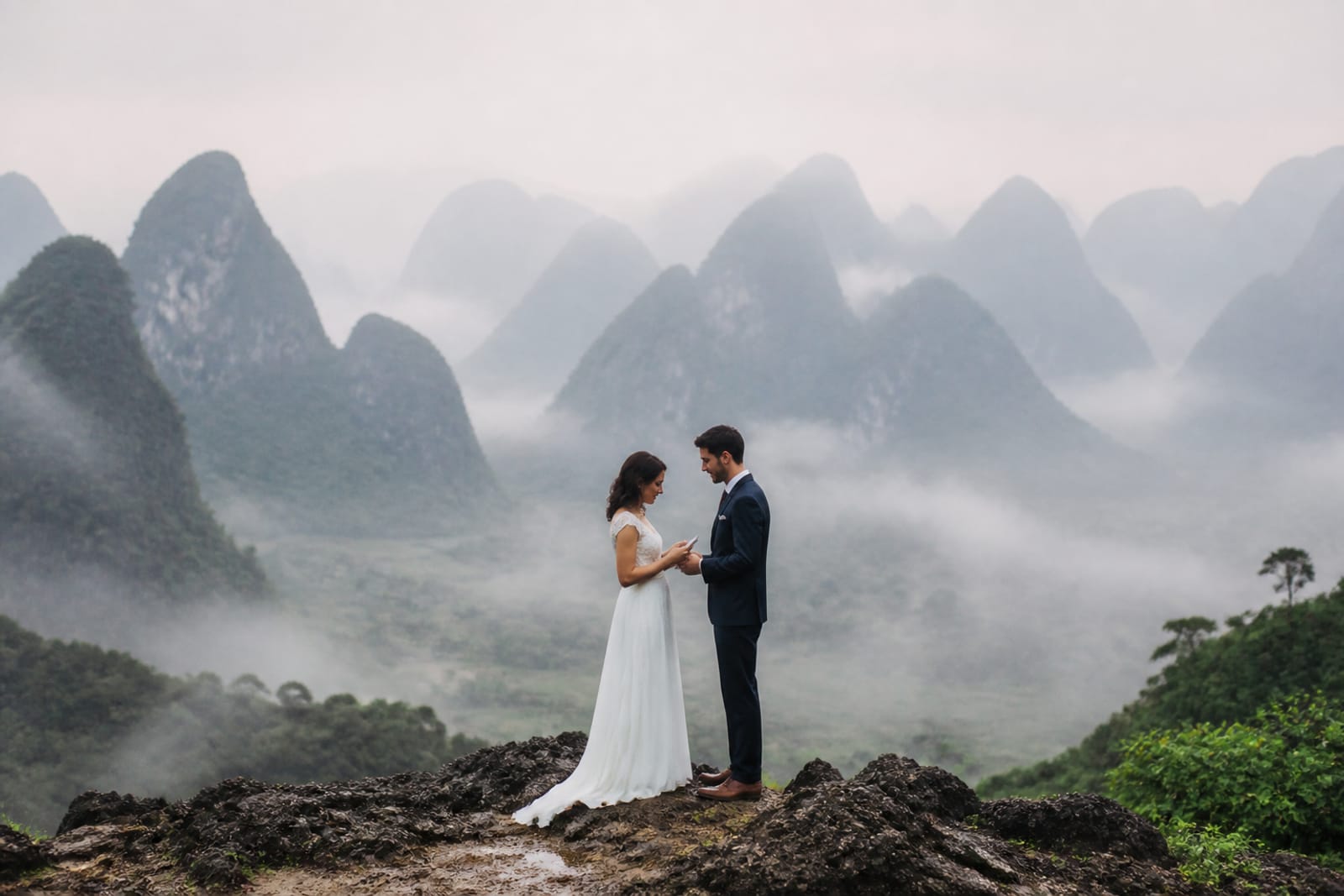
A cinematic pre-wedding video weaves your relationship into a narrative film, not a highlight reel. Unlike photo albums, moving footage and sound design let you capture moments—a hand-hold, a laugh, your first kiss in a temple doorway—with emotional texture that stills cannot. Vietnam offers filmmakers infinite variety: misty limestone karsts in Ha Long and Ninh Binh, colonial architecture in Hoi An and Da Nang, chaotic energy in Hanoi's backstreets, lush tea plantations in Sapa, and the Mekong's golden light. Planning a cinematic production in Vietnam requires timing, location scouting, weather awareness, and coordination with a crew who understands local culture and permitting.
When is the best season to shoot your video?
Timing your shoot to favorable light and weather is critical. The north (Hanoi, Sapa, Ha Long, Ninh Binh) is clearest February–April: cool, dry, with soft morning light and minimal haze. May–September brings heat, humidity, and afternoon thunderstorms that halt shooting. The central coast (Hoi An, Da Nang, Hue) is driest February–August, with brilliant morning light and calm seas; October–November brings typhoons and flooding that close roads and temples. The south (Ho Chi Minh City, Mekong, Phu Quoc) shines December–March with cool, dry weather and long golden hours; May–November has daily afternoon downpours. Avoid Tet (late January–mid February), when temples close, streets flood with crowds, and many businesses shut for several days. Early morning shoots (5–7 a.m.) avoid crowds and capture soft, even light; sunset (5–7 p.m.) offers warm tones but requires backup plans if cloud cover intensifies. Winter in the north feels romantic but grey—plan for mist and overcast skies, which soften and diffuse light (useful for close-ups and emotional scenes, not establishing wide shots).
How do you choose locations that work on film?
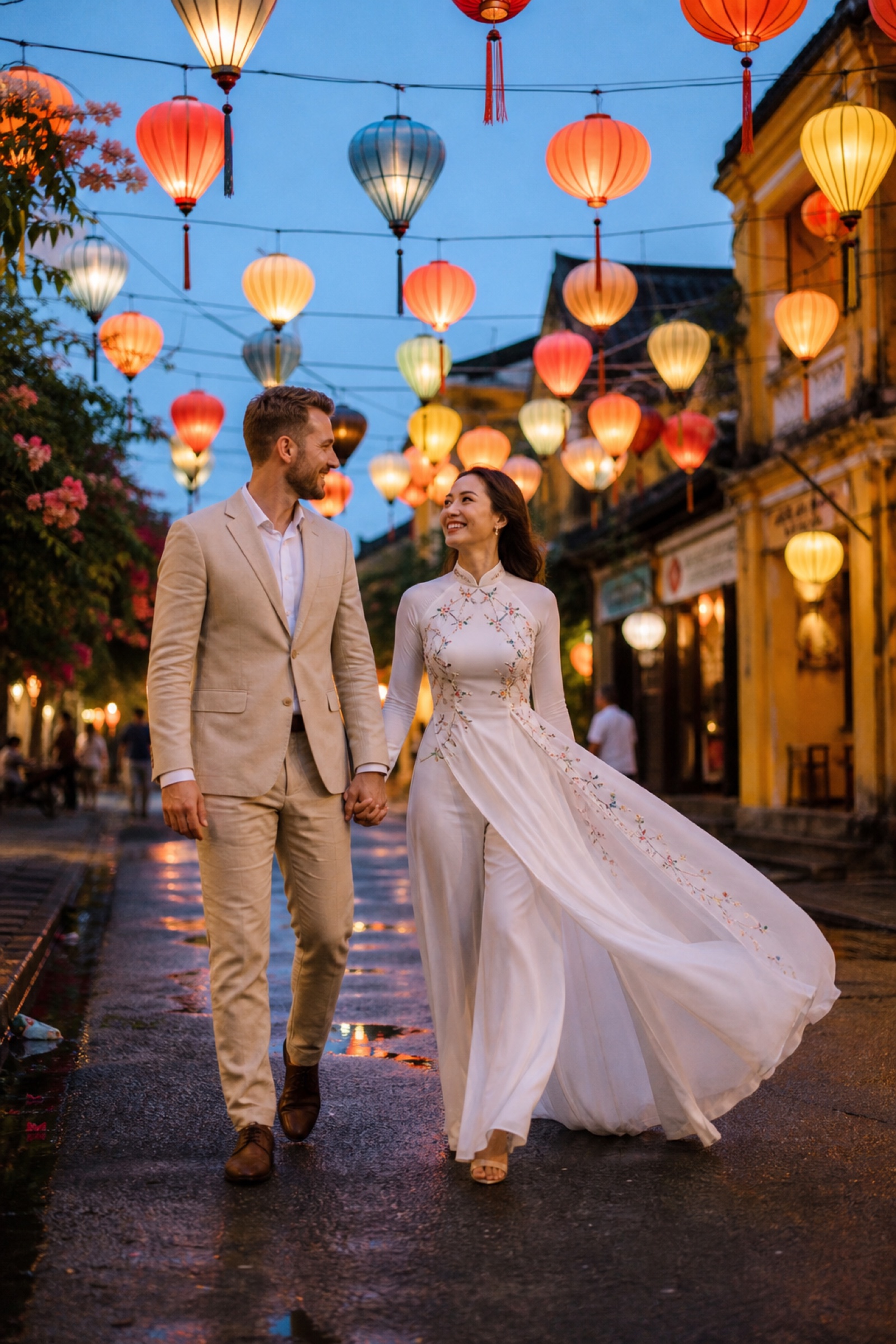
Cinematic location selection balances visual variety, walking distance between scenes, and permitting reality. Your videographer should scout in person: a photo looks romantic but may have harsh shadows at the hour you plan to film, blocked sightlines, or tourist congestion that eats hours. Hoi An's ancient town photographs beautifully but permits for commercial filming exist—your crew must know whether they need approval and how to obtain it. Temple interiors (like Jade Mountain Temple in Hanoi) require respectful positioning and often restrict commercial equipment; coordinate directly with temple staff weeks ahead. Outdoor public spaces—parks, bridges, gardens—usually allow filming without permits, but check locally: government offices or venue contact details clarify rules. Create a shooting schedule that groups locations geographically: clustering scenes in the old quarter minimizes travel and light changes within one location block. A typical three-day shoot might cover Hanoi (day one: old quarter mornings, lake at sunset; day two: temple and garden interiors, coffee shop candlelit scene; day three: train tracks, countryside if accessible by car). Build in 30% buffer time for travel, crew setup, and unexpected delays (a broken camera lens, a sudden crowd, a permission question).
📸 Book on WhatsApp — pre-wedding photoshoot | 💄 Makeup & hair at your hotel | 🌸 See the lookbook
What should you wear, and how does costume planning affect the shoot?
Your outfit is the visual anchor across cut scenes. Many couples wear their wedding dress and groom's suit, but cinematic shoots often benefit from 2–3 costume changes to signal story progression (casual morning coffee, formal evening dress, candid countryside wear). Ao dai—Vietnam's traditional long tunic—photographs beautifully in motion and reads instantly as culturally rooted; paired with a simple modern suit, it creates visual contrast. Advise your videographer of your outfit choices 4–6 weeks prior so they can plan color grading and location matching: a white ao dai shines against dark lake water but dims in overcast forest. Avoid patterns that flicker on camera (thin stripes, small checks) and colors that clash with your chosen locations' natural tones. Rent or tailor garments with camera movement in mind: a heavy skirt may not flow in slow-motion takes, while lightweight silk wraps beautifully. Coordinate makeup and hair styling for durability during outdoor shooting—Cáo Studio's makeup & hair at your hotel service can ensure your look survives humidity and sun, a logistical advantage over self-styling. Shoe choice matters: comfortable, quiet footwear reduces crew fatigue and lets you walk naturally without distraction.
What is the realistic timeline from concept to final video?
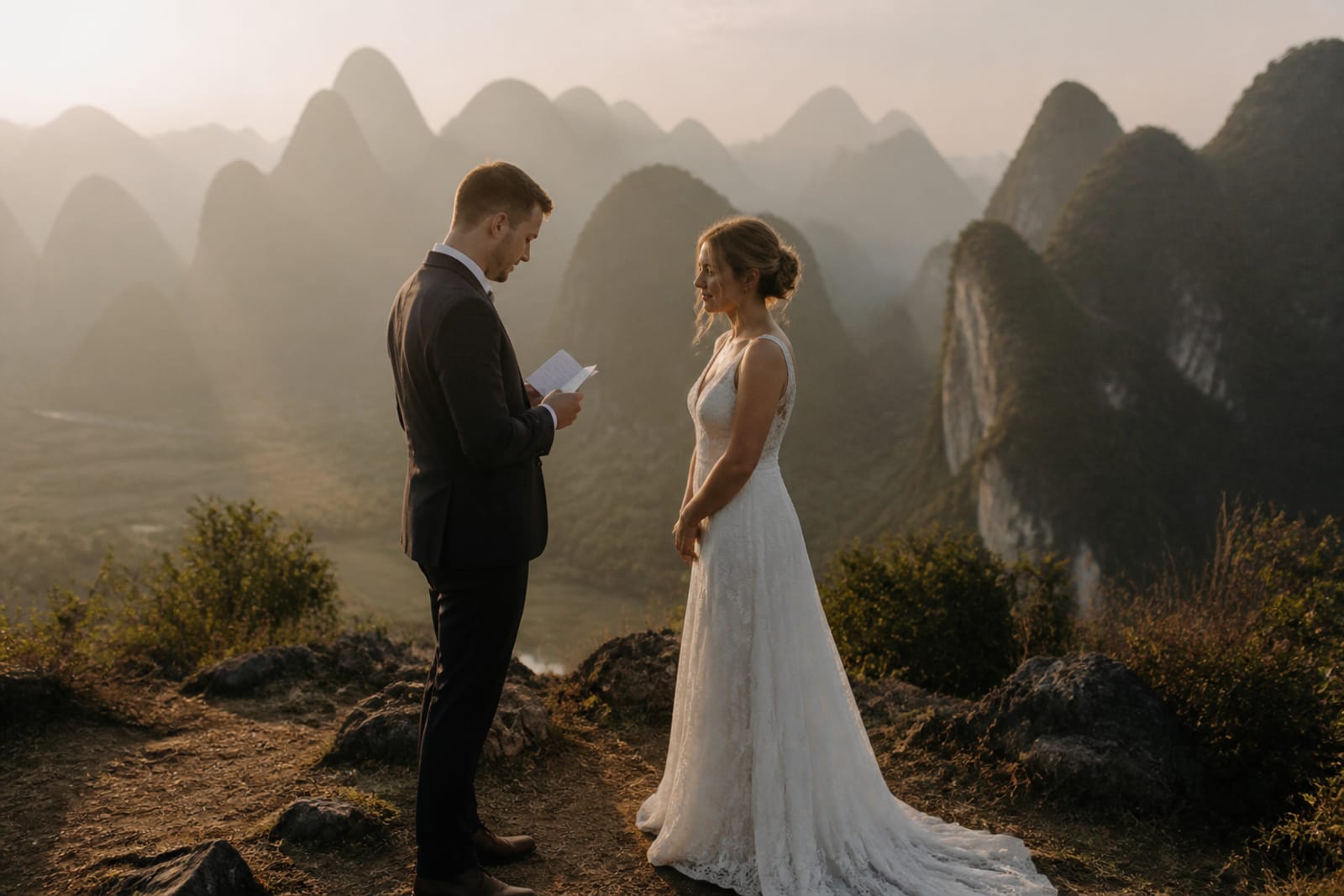
Cinematic video production unfolds in phases: pre-production (3–4 months before wedding), shooting (1–3 days), and post-production (3–4 weeks). Pre-production includes story development (you and your videographer outline scenes and emotional arcs), location scouting (in person, if possible), outfit and makeup planning, permits and venue contact, and a detailed shot list. The actual shoot day begins before sunrise (arriving 5–6 a.m. to set gear and frame first light) and often runs past sunset, with meal and rest breaks. Your videographer reviews footage daily and flags any retakes needed before the team moves on. Post-production starts after the final shoot day: the editor sorts and logs footage (1 week), cuts a rough assembly (1 week), adds color grading and sound design (1 week), and compiles a first draft for your feedback (week 4). Revisions take another 1–2 weeks. Many couples want their video ready 2–3 weeks before the wedding to share with family or integrate into the reception; plan production to end 6–8 weeks before your wedding date. Delays happen: monsoon rains push shoot dates, editing takes longer if your crew juggles other clients, or you request substantial revisions. Build a two-week buffer.
| Phase | Timeline | Effort | Best for |
|---|---|---|---|
| Pre-production (story, scouting, permits) | 3–4 months before wedding | High (meetings, location visits, outfit fittings) | Ensuring locations are accessible and visually cohesive |
| Shoot day(s) | 1–3 days (12–16 hours per day typical) | Very high (early starts, travel, emotional intensity) | Capturing variety of light and backdrops in real conditions |
| Editing & color grade | 3–4 weeks | Medium (you review drafts; crew works independently) | Crafting narrative flow and polishing visuals |
| Revisions & delivery | 1–2 weeks | Low (feedback rounds; final file export) | Final tweaks before wedding or sharing with loved ones |
How do you work with local crews and avoid common pitfalls?
Hiring or coordinating a videographer experienced in Vietnam is non-negotiable. Local crews understand permitting quirks, language nuances at temples and parks, seasonal weather patterns, and how to navigate traffic without losing creative time. A foreign videographer unfamiliar with Vietnam may underestimate travel times (Hanoi traffic or narrow Hoi An alleys can consume hours), overlook cultural sensitivity (filming inside temples requires respectful positioning and often advance approval), or book locations without confirming commercial filming is allowed. Vet your videographer with a portfolio of work shot in Vietnam—not just technically polished videos, but ones that show they know how light falls in humid, hazy climates and how to frame scenes in crowded, unpredictable urban settings. Agree on deliverables in writing: number of final videos, edit style, music licensing, file format and resolution, and revision rounds. Clarify who handles permits and venue contact; usually the videographer leads but you should confirm in advance. Common problems include: shooting during hidden crowds (ask locals when a temple or market is quietest), underestimating weather delays (always have an indoor backup location), and poor audio due to traffic noise (invest in lapel mics and plan dialogue scenes away from major roads). Cáo Studio – Makeup & Photoshoot can guide you through pre-wedding photoshoot planning and suggest trusted collaborators; ask on WhatsApp +84 338 762 340 for videographer referrals in your chosen city.
---
What to check before you finalize your video shoot
- Videographer portfolio: Have they shot in your chosen city? Do their videos match your style (cinematic narrative vs. documentary realism)?
- Permits and venue approval: Does the videographer handle contacting temples, parks, or heritage sites, or do you?
- Outfit and makeup coordination: Will you hire makeup & hair at your hotel, or does your videographer recommend a local artist?
- Weather backup plan: If your shoot date falls in monsoon season, what locations or dates shift?
- File deliverables: Will you receive the full video, color-graded and edited, in 1080p or 4K? How many versions?
- Timeline and revisions: When is the first draft due, and how many revision rounds are included?
📸 Book on WhatsApp — pre-wedding photoshoot | 💄 Makeup & hair at your hotel | 🌸 See the lookbook
---
Many couples combine a cinematic video with professional pre-wedding photoshoots to capture still and motion work in one location block, saving travel and restyling time. If you're wearing a traditional ao dai, a dedicated ao dai photoshoot session ensures you have polished stills of that outfit too. For families traveling to Vietnam, couple and family photoshoots can be woven into your video production—extended footage of you with relatives adds emotional depth. Cáo Studio – Makeup & Photoshoot operates in Hanoi, Ho Chi Minh City, and Hoi An (by appointment); our team can coordinate with local videographers and ensure your makeup and styling remain camera-ready across shoot days. Reach out on WhatsApp +84 338 762 340 to discuss your vision, chosen locations, and how we can support your cinematic pre-wedding production.
FAQ
How much does a cinematic pre-wedding video in Vietnam cost?
Pricing depends on shoot duration (1–3 days), locations, crew size, editing complexity, and the videographer's experience. Get a quote from your videographer; ask us on WhatsApp for referrals and budget benchmarks specific to your city.
Can we shoot during Tet or the rainy season?
You can, but expect obstacles: temples close during Tet (late Jan–early Feb), crowds surge, and many services shut. Heavy rain (May–Sep in the north; Oct–Nov on the central coast) delays shooting and dims natural light. Choose Feb–Apr (north) or Feb–Aug (central coast) for reliability.
Do we need a permit to film in Hanoi's old quarter or Hoi An's ancient town?
Public outdoor spaces generally allow filming without permits, but temples and heritage sites often require advance approval. Your videographer should confirm with venue contacts 4–6 weeks ahead. Never assume; ask locally.
How do we coordinate makeup and hair for a full shoot day?
Book makeup & hair at your hotel or hire a local makeup artist recommended by your videographer. Plan for durability in humidity and sun; bring touch-up kits. Discuss with your crew how often you'll need refreshes between location changes.
What if weather ruins our shoot day?
Confirm your videographer's rescheduling policy in writing. Indoor backup locations (temples, cafes, vintage homes) work if outdoor venues flood. Some couples shift dates; others film abbreviated versions in one location. Discuss contingencies before booking.
Should we wear our wedding dress for the video shoot?
Many couples do, but it's not required. Cinematic videos often benefit from costume changes (casual morning, formal evening, traditional ao dai) to signal emotional progression. Discuss with your videographer whether multiple outfits serve your story.
FAQ
How much does a cinematic pre-wedding video in Vietnam cost?
Pricing depends on shoot duration (1–3 days), locations, crew size, editing complexity, and the videographer's experience. Get a quote from your videographer; ask us on WhatsApp for referrals and budget benchmarks specific to your city.
Can we shoot during Tet or the rainy season?
You can, but expect obstacles: temples close during Tet (late Jan–early Feb), crowds surge, and many services shut. Heavy rain (May–Sep in the north; Oct–Nov on the central coast) delays shooting and dims natural light. Choose Feb–Apr (north) or Feb–Aug (central coast) for reliability.
Do we need a permit to film in Hanoi's old quarter or Hoi An's ancient town?
Public outdoor spaces generally allow filming without permits, but temples and heritage sites often require advance approval. Your videographer should confirm with venue contacts 4–6 weeks ahead. Never assume; ask locally.
How do we coordinate makeup and hair for a full shoot day?
Book [makeup & hair at your hotel](/makeup-and-hair) or hire a local makeup artist recommended by your videographer. Plan for durability in humidity and sun; bring touch-up kits. Discuss with your crew how often you'll need refreshes between location changes.
What if weather ruins our shoot day?
Confirm your videographer's rescheduling policy in writing. Indoor backup locations (temples, cafes, vintage homes) work if outdoor venues flood. Some couples shift dates; others film abbreviated versions in one location. Discuss contingencies before booking.
Should we wear our wedding dress for the video shoot?
Many couples do, but it's not required. Cinematic videos often benefit from costume changes (casual morning, formal evening, traditional ao dai) to signal emotional progression. Discuss with your videographer whether multiple outfits serve your story.
Ao dai, makeup, hair and a local photographer in Hanoi or Saigon — one WhatsApp message.