/pre-wedding-photoshoot
Communicating with a Vietnamese photographer: language and expectation
English-speaking photographers in Hanoi and Ho Chi Minh City are common, especially in the studio sector; Cáo Studio – Makeup & Photoshoot operates in both cities with bilingual coordinators. The real barrier isn't vocabulary—it's unspoken assumptions about timeline, outfit changes, weather contingencies, and what "natural" or "candid" means across cultures. Brief your photographer in writing (WhatsApp or email) covering session date, location, outfit details, shot list, and must-haves; expect a response within 24 hours. Confirm logistics three days before: meeting point, weather forecast, backup dates, and any prop or makeup requests. Avoid vague phrases ("just do your thing") and last-minute changes; Vietnamese photographers often work from detailed mood boards and value planning clarity over improvisation on set. 📸 Book on WhatsApp — pre-wedding photoshoot | 💄 Makeup & hair at your hotel | 🌸 See the lookbook ---
How much English does a Vietnamese photographer actually speak?
Vietnamese photographers targeting Western clients—especially those with studio bookings and website presence—typically communicate in conversational English via WhatsApp or email. Don't assume fluency in slang, idiom, or rapid speech; written communication is clearer than voice calls for complex briefs. Cáo Studio's booking team is bilingual; coordinators confirm details in plain English, repeat back what they've understood, and ask clarifying questions. If your photographer uses a translator app, expect slight delays and occasional word-choice oddities—that's normal and fixable. Test communication early: send a brief, sample message and gauge response quality before your shoot date. If misunderstandings arise (e.g., "soft focus" vs. "blurry"), reference photos instead of adjectives.
Key insight: Written briefs in simple sentences (subject-verb-object, no idiom) sidestep 90% of language friction. Spoken-only requests fail more often.
What should I tell my photographer before the shoot?
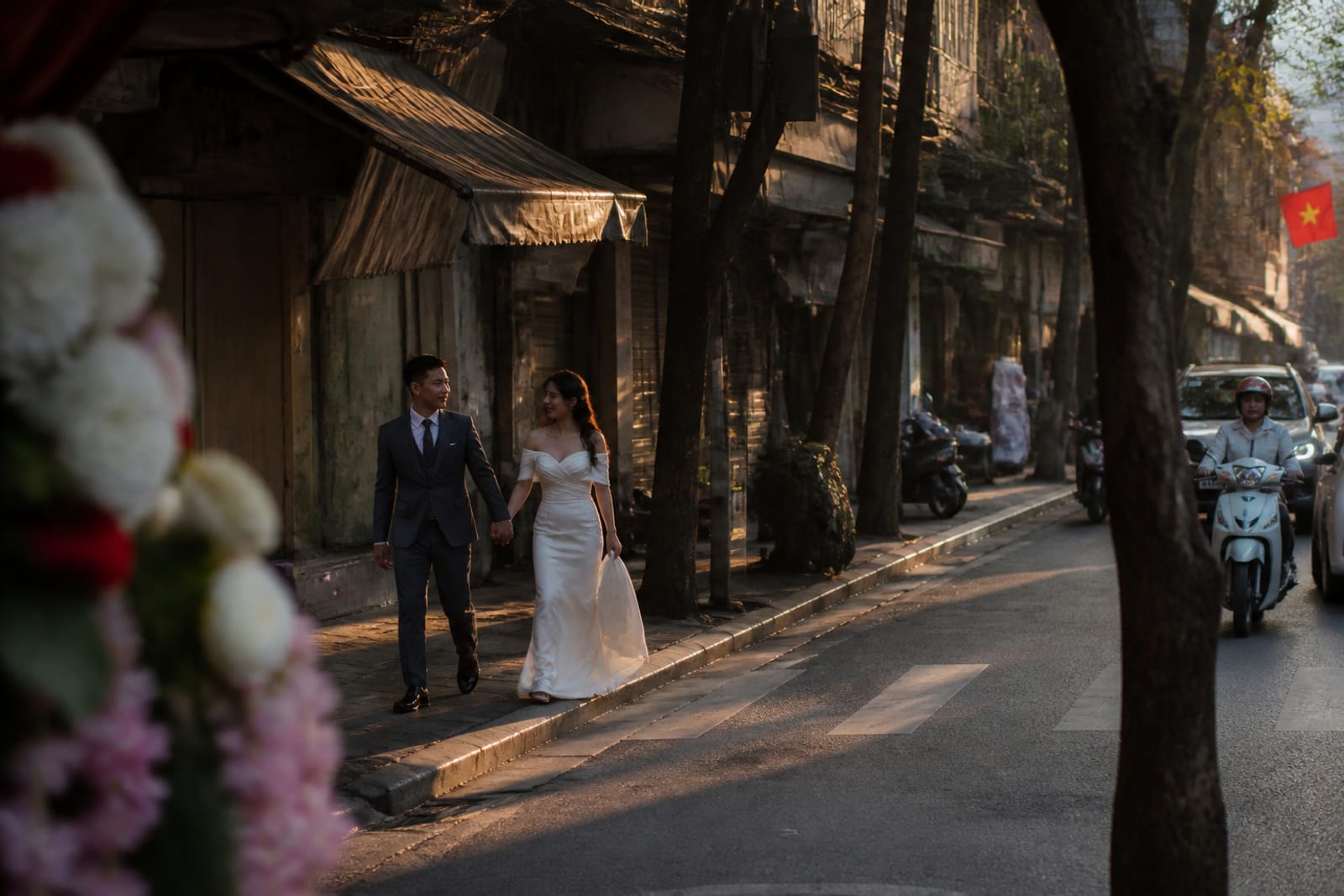
A pre-shoot brief should cover five core elements in a short message, not an essay. First: date, time, duration, and meeting location (street address or landmark, not "near the train station"). Second: outfit description—how many outfit changes, what you're wearing, whether it's ao dai or Western dress, shoes, and if makeup is pre-booked or on-site. Third: location backup in case of rain (this matters in Vietnam's rainy season, Sep–Dec, especially central coast and south). Fourth: shot list (e.g., "close-ups, full-body, couple poses, detail shots of rings or flowers"); avoid vague requests like "romantic" without referencing a mood board. Fifth: any cultural or religious restrictions (e.g., temple etiquette, family presence, no certain colors for luck reasons).
Send this 1–2 weeks before your session; confirm again 3 days out. Use photos or Pinterest links for style reference—a single image communicates mood faster than 50 words of description.
Preparation checklist:
- Confirm date, time, duration, and exact meeting point (address + landmark)
- List outfit changes and describe each (colors, formality, fit)
- Name your location(s) and provide backup if weather is uncertain
- Share a mood board (3–5 photos) of poses and style you want
- Mention makeup/hair needs and when they'll be done (pre-session or on-site)
- Note any props (flowers, rings, family members, pets)
- Confirm contact number and WhatsApp handle for day-of logistics
Why do Vietnamese photographers ask so many follow-up questions?
In Vietnamese business culture, clarification before action is valued more than Western-style speed and trust. Your photographer isn't being difficult—they're minimizing risk of re-shooting, which costs time and money. Expect questions like: "Will you bring your own flowers or should we source them?", "What time is sunset that day?", "Is your partner's family attending?", "Should we start before or after breakfast?" These are professional signs, not delays. Answer fully and honestly; if you don't know (e.g., sunset time), the photographer will research it and confirm with you. Cáo Studio's coordinators send a detailed pre-shoot form via WhatsApp—fill it in completely and ask if anything is unclear, rather than leaving fields blank.
Worst outcome: Arriving on shoot day with surprise outfit changes, unexpected guests, or a completely different location than discussed. Avoid this by pre-confirming every variable.
When is the best time of year to shoot in Vietnam, and how do I brief your photographer about weather?
Vietnam has three climate zones; Hanoi and northern areas (Dec–Feb: cool and grey; May–Sep: hot and rainy), central coast (Feb–Aug: driest; Sep–Dec: typhoon risk), and southern region (Dec–Apr: dry; May–Nov: afternoon downpours). For pre-wedding photoshoots, dry season (Feb–Apr in the south, Feb–Aug on the central coast) offers predictable morning light and lower rain risk. Tet (late Jan–mid Feb) closes many services and crowds temples; avoid booking during this period.
Brief your photographer about weather concerns in your initial message: "We're shooting Feb 15 in Hanoi; we expect cool morning light and don't mind overcast skies for soft light" or "We're shooting Hoi An in July; what time should we start to avoid the hottest hours?" They'll advise on optimal timing and suggest indoor or sheltered backups. If a typhoon or flash flood warning is issued (Sep–Nov on the central coast), your photographer will raise it first—trust their local knowledge and agree on a new date rather than risk safety.
Why it matters: A photographer who knows "May in Hanoi is pre-monsoon haze" will position you correctly for that soft, diffused light. One who doesn't will blame you for "bad weather" on shoot day.
How do I compare outfit choices and location options with my photographer?
Use a comparison approach rather than asking open-ended questions. Instead of "What should I wear?", send: "I'm considering a traditional red ao dai or a white Western dress—which suits the morning light better at the French Quarter?" Then wait for reasoning (red pops in soft overcast light; white glows at sunrise). For locations, reference the studio's lookbook or portfolio: "I like the temple backdrop in photo #47 and the lake reflection in #23—can we do both, or is one better for our season?"
Comparison table: ao dai vs. Western dress for your brief
| Outfit type | Best light/season | Why it works | Logistics |
|---|---|---|---|
| Ao dai (traditional silk) | Soft, overcast light (Nov–Feb north; Sep–Dec south) | Rich color saturation, fabric movement in still air | Rent locally; requires undergarment; takes 10 min to change |
| Western dress (white/cream) | Golden hour or bright overcast | Bright fabric catches edge light; modern aesthetic | Bring from home or rent; faster changes; wrinkles show more |
| Ao dai + Western dress (two outfits) | Mixed: overcast, then sunset | Variety in mood; captures two eras; requires 20–30 min transition | Book makeup touch-up time; longer session; rent both or mix |
Cáo Studio's ao dai rental and wedding dress rental pages show available colors and styles—reference these in your brief so your photographer knows what's in scope.
Pro move: Bring outfit samples (or photos) to your pre-shoot WhatsApp conversation. A picture of the ao dai's exact shade beats 100 words of description.
What's the difference between a pre-wedding shoot and a wedding-day shoot, and how do I brief each differently?
A pre-wedding photoshoot is a standalone session—usually 2–4 hours, flexible pacing, on a date you choose, often at multiple locations. You can re-shoot poses, change outfits leisurely, and direct the mood. Brief your photographer with: desired locations, outfit changes, shot list (romantic portraits, detail shots, playful couple poses), and mood (candid and natural, or posed and formal?).
A wedding-day photographer is event coverage: they're documenting real moments as they happen (ceremony, reception, speeches, first dance). There's no re-shooting; timing is fixed. Brief a wedding-day photographer with: ceremony start time, photo must-haves (rings, vows, kiss, exit), key family moments, and reception flow (when do you expect dinner, speeches, cutting the cake?). Provide a shot list and a timeline; answer their questions about lighting challenges (indoor reception? outdoor ceremony under trees?).
Cáo Studio offers both services; pre-wedding shoots and wedding-day coverage require different communication styles. A pre-wedding brief is about creative vision; a wedding brief is about logistics and backup plans.
Honest advice: If you've never met your wedding-day photographer in person, do a trial shoot (e.g., a couple photoshoot) first. It's far cheaper than discovering communication gaps on your wedding day.
Should I hire a local photographer or book internationally?
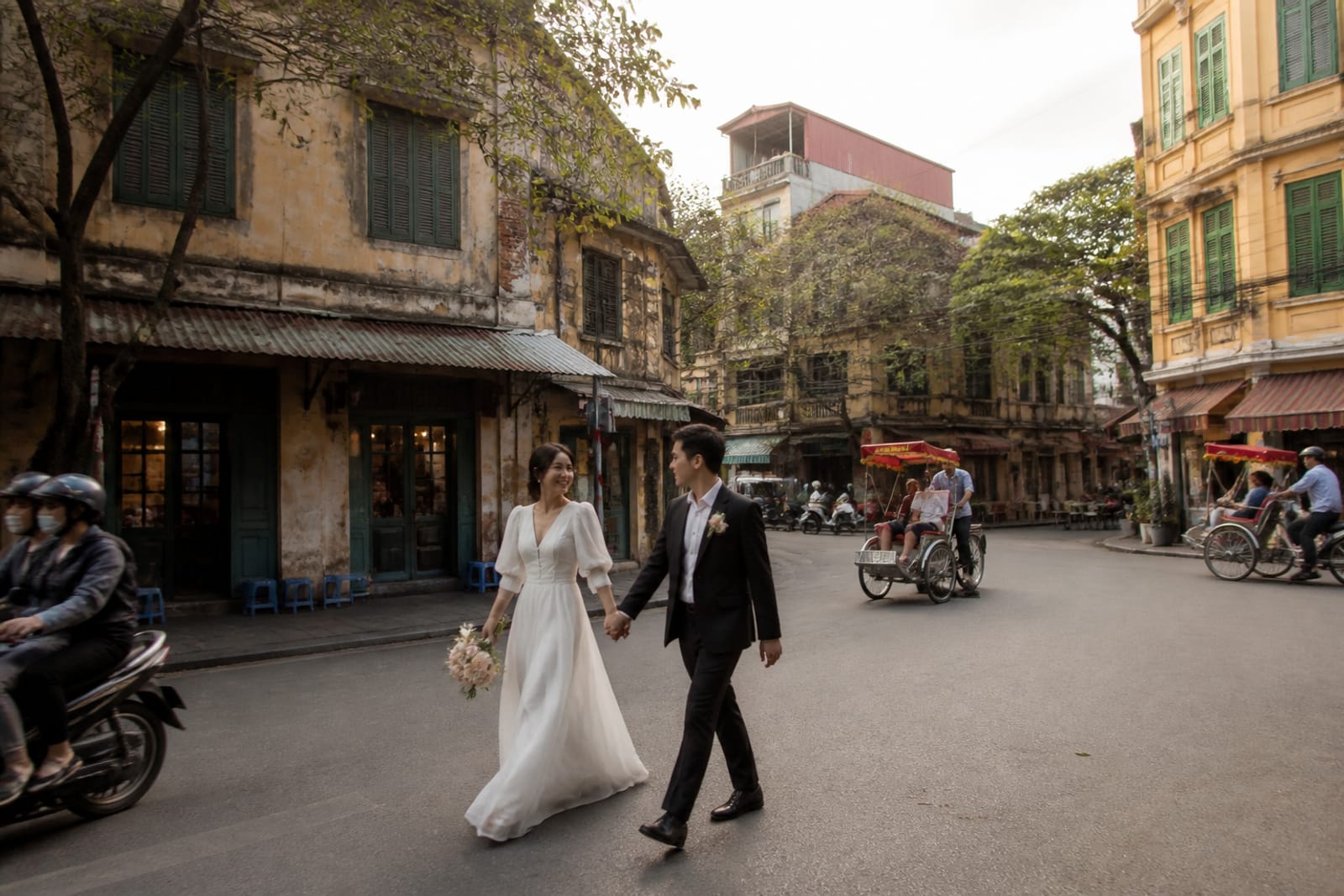
Local Vietnamese photographers (based in Hanoi, Ho Chi Minh City, or Hoi An) know weather patterns, seasonal light, venue restrictions, and cultural norms without being told. They can navigate language and logistics locally, and travel time is minimal. International photographers (based abroad, visiting Vietnam for your shoot) bring fresh aesthetics and may have fewer availability constraints, but charge travel costs, face jet lag, and have less local intel.
Cáo Studio – Makeup & Photoshoot is a local team with three branches in Hanoi and one in Saigon; we also travel to Hoi An by appointment. If your shoot is in Hanoi or Ho Chi Minh City, booking a resident studio cuts logistics friction and improves contingency response (e.g., weather delays). For Hoi An or other destinations, you'll hire an international photographer or request Cáo Studio's travel availability on WhatsApp; in either case, expect longer lead times and firm cancellation terms.
Decision framework: choose local if:
- You're shooting in Hanoi, Ho Chi Minh City, or Hoi An (appointment basis)
- Your shoot date is within 4–6 weeks
- You value rapid communication and same-day contingency decisions
- You want someone who knows light and seasons firsthand
Choose international if:
- You want a specific aesthetic not available locally (verify this first)
- You're combining your shoot with destination photography (e.g., Sapa, Ha Long, Phu Quoc)
- You have a large budget and flexible dates
---
How do I create a mood board and send it without overwhelming my photographer?
A mood board is 3–7 high-quality photos (not 50) that show the tone, pose style, color palette, and location vibe you want. Search Pinterest, Instagram, or the Cáo Studio lookbook for shots that resonate; screenshot or download them. Open a new WhatsApp chat or email and upload 5–6 images with captions: "Pose style top: close-up, intimate" or "Location mood: golden light, water reflection, natural poses."
Avoid mixing wildly different aesthetics (bohemian AND minimalist AND glamorous). If your photographer says "This isn't possible in Hanoi's light" or "This location doesn't exist here," trust that feedback and refine together. A good photographer will counter-propose something achievable that matches your intent.
Red flags to avoid:
- Sending 100+ photos with no guidance
- Pinning photos shot in different climates (e.g., Bali golden light when you're shooting Hanoi's grey winter)
- Using heavily edited or AI-generated images as reference
- Changing your mood board 1 week before the shoot
---
What if there's a miscommunication on shoot day?
Minor friction (e.g., "I thought we were meeting at 7 am, not 8 am") is resolved by confirming your WhatsApp conversation 24 hours before and having your photographer's contact number. Major friction (e.g., "You didn't bring the outfit I asked for" or "The location is completely different") is preventable: re-confirm outfit details, location address, and any special requests 3 days prior. Cáo Studio sends a final confirmation message before each session; respond promptly so discrepancies surface before shoot day.
If something goes wrong during the shoot (e.g., an outfit doesn't fit, light is worse than expected, a family member is unexpectedly present), address it immediately with your photographer. Most professionals adapt on the fly. If it's serious (e.g., the photographer is rude or dismissive), note the time and what happened, wrap the session politely, and contact the studio afterward. Post-shoot disputes are harder to resolve; honesty in the moment is better.
Bottom line: A 2-minute clarifying text 3 days before prevents 2 hours of conflict on the day.
---
What to check before you book
- [ ] Your photographer's portfolio includes clients like you (e.g., Western couple, ao dai aesthetic, outdoor light—not just studio work)
- [ ] They respond to messages within 24 hours and communicate in clear English
- [ ] Your shoot date falls outside Tet (late Jan–mid Feb) or extreme weather windows (typhoon season in your region)
- [ ] You've confirmed the exact meeting location (street address, not just neighborhood) and backup indoor spot
- [ ] Your outfit(s) are finalized and discussed with your photographer (colors, formality, fit) ≥1 week before
- [ ] Makeup and hair services are pre-booked if needed; confirm whether they're included or added on
- [ ] Your photographer has confirmed they know the venue rules (e.g., temple photography restrictions, permit requirements)
- [ ] You've sent your mood board and shot list, and received acknowledgment that it's achievable
- [ ] A 24-hour pre-shoot confirmation message has been exchanged and all details match
---
📸 Book on WhatsApp — pre-wedding photoshoot | 💄 Makeup & hair at your hotel | 🌸 See the lookbook
---
Other services to consider
If you're booking a pre-wedding shoot, you might also want:
- Makeup and hair at your hotel: Cáo Studio's team can come to your location for prep, eliminating commute stress on shoot day.
- Ao dai photoshoot: A dedicated session in traditional dress, often at cultural locations like temples or heritage sites.
- Couple photoshoot: A casual couples session (engagement, anniversary, casual) that's shorter and more intimate than pre-wedding coverage.
- Wedding-day photographer: If you're planning a full wedding, discuss coverage scope and timeline in the same communication style as your pre-wedding brief.
- Wedding photo album or photo prints & frames: After your shoot, consider how you'll display or preserve the images—discuss delivery format and print options with your photographer beforehand.
---
FAQ
My photographer speaks English, but I'm not confident in phone calls. Can I brief them entirely by message?
Yes. WhatsApp messages, email, or the photographer's online form are preferred for detailed briefs. A single clarifying voice call (if offered) is helpful but optional. Written confirmation matters more than spoken.
What if I want to change my outfit or location a week before the shoot?
Contact your photographer immediately via WhatsApp. Minor changes (different shade of ao dai, one new location) are often possible with advance notice. Major changes (three new outfits, entirely different city) may require rescheduling or incur modifications. Confirm what's feasible before assuming it's fine.
Should I tip my Vietnamese photographer, and is it expected in writing or cash?
Tipping isn't culturally mandatory in Vietnam like it is in Western countries. If you're very happy with the work, a small cash tip on the day or a bank transfer after delivery is appreciated but never obligatory. Cáo Studio will advise on this when you confirm your booking.
What if it rains on my shoot day? Do we reschedule or shoot anyway?
Light rain is often workable (soft, diffused light; add an umbrella for mood). Heavy rain or storm warnings require postponement. Confirm your photographer's rain policy and backup date before booking. Cáo Studio will advise on feasibility and propose a new date if needed; discuss this in your initial WhatsApp conversation.
Can my photographer edit photos to look more "Westernized" or remove traditional elements?
Editing preference (e.g., color grading, skin tone, clothing adjustments) should be discussed before the shoot. Vietnamese photographers may default to styles popular locally (e.g., warmer, saturation-rich edits) versus cooler, minimal Western presets. Share a reference photo of your preferred edit style and ask if they can match it. Cáo Studio will discuss final edit deliverables and style preferences when you confirm your booking.
What if my photographer's English breaks down during the shoot itself?
Most communication happens before the session; on-the-day direction is simpler ("more smile," "step left," "face the light"). If you genuinely can't understand an instruction, ask for a demo (they show the pose) or reference your mood board. A shared language barrier is rarely a session-killer if your brief was solid.
FAQ
My photographer speaks English, but I'm not confident in phone calls. Can I brief them entirely by message?
Yes. WhatsApp messages, email, or the photographer's online form are preferred for detailed briefs. A single clarifying voice call (if offered) is helpful but optional. Written confirmation matters more than spoken.
What if I want to change my outfit or location a week before the shoot?
Contact your photographer immediately via WhatsApp. Minor changes (different shade of ao dai, one new location) are often possible with advance notice. Major changes (three new outfits, entirely different city) may require rescheduling or incur modifications. Confirm what's feasible before assuming it's fine.
Should I tip my Vietnamese photographer, and is it expected in writing or cash?
Tipping isn't culturally mandatory in Vietnam like it is in Western countries. If you're very happy with the work, a small cash tip on the day or a bank transfer after delivery is appreciated but never obligatory. Cáo Studio will advise on this when you confirm your booking.
What if it rains on my shoot day? Do we reschedule or shoot anyway?
Light rain is often workable (soft, diffused light; add an umbrella for mood). Heavy rain or storm warnings require postponement. Confirm your photographer's rain policy and backup date *before* booking. Cáo Studio will advise on feasibility and propose a new date if needed; discuss this in your initial WhatsApp conversation.
Can my photographer edit photos to look more "Westernized" or remove traditional elements?
Editing preference (e.g., color grading, skin tone, clothing adjustments) should be discussed before the shoot. Vietnamese photographers may default to styles popular locally (e.g., warmer, saturation-rich edits) versus cooler, minimal Western presets. Share a reference photo of your preferred edit style and ask if they can match it. Cáo Studio will discuss final edit deliverables and style preferences when you confirm your booking.
What if my photographer's English breaks down during the shoot itself?
Most communication happens before the session; on-the-day direction is simpler ("more smile," "step left," "face the light"). If you genuinely can't understand an instruction, ask for a demo (they show the pose) or reference your mood board. A shared language barrier is rarely a session-killer if your brief was solid.
Ao dai, makeup, hair and a local photographer in Hanoi or Saigon — one WhatsApp message.