/pre-wedding-photoshoot
Da Lat or Mui Ne for pre-wedding photos: which fits your vision
Da Lat suits couples who want cinematic mist, cool-season shoots (Dec–Apr), and an ao dai that drapes cleanly without humidity. Mui Ne works best dry-season visitors (Dec–Apr) drawn to desert geometry, golden-hour light and warmer tones. Both require a local photographer or travel-based crew—Cáo Studio operates in Hanoi and Ho Chi Minh City; for Da Lat or Mui Ne shoots we guide you through finding and vetting a local team, or you can book Cáo in Saigon and we'll advise planning. Session logistics differ: Da Lat means early starts (5–6 am for mist and temple light), Mui Ne demands late afternoon (4–6 pm for dunes without harsh shadow). Neither destination is crowded at those hours. Budget three to four shooting locations per couple session, and allow 48 hours for edits. Both destinations work year-round, but dry season (Dec–Apr) guarantees cloud cover in Da Lat and reliably clear skies in Mui Ne. ---
Which destination matches your outfit choice?
Your ao dai or dress decides half the battle. Da Lat's cool air keeps silk and embroidery crisp; humidity stays low even in shoulder seasons. Mui Ne's heat and salt wind can wrinkle heavier fabrics by mid-afternoon, but the contrast of a pale ao dai against rust-red dunes creates frames no other landscape can match. If you're renting an outfit, confirm with your vendor whether it's pressed for tropical heat or highland cool. Cáo Studio's ao dai rental and suit rental pages detail how our pieces hold up on set—ask on WhatsApp what we'd recommend if you're shooting elsewhere.
---
What light do you actually need for your frames?
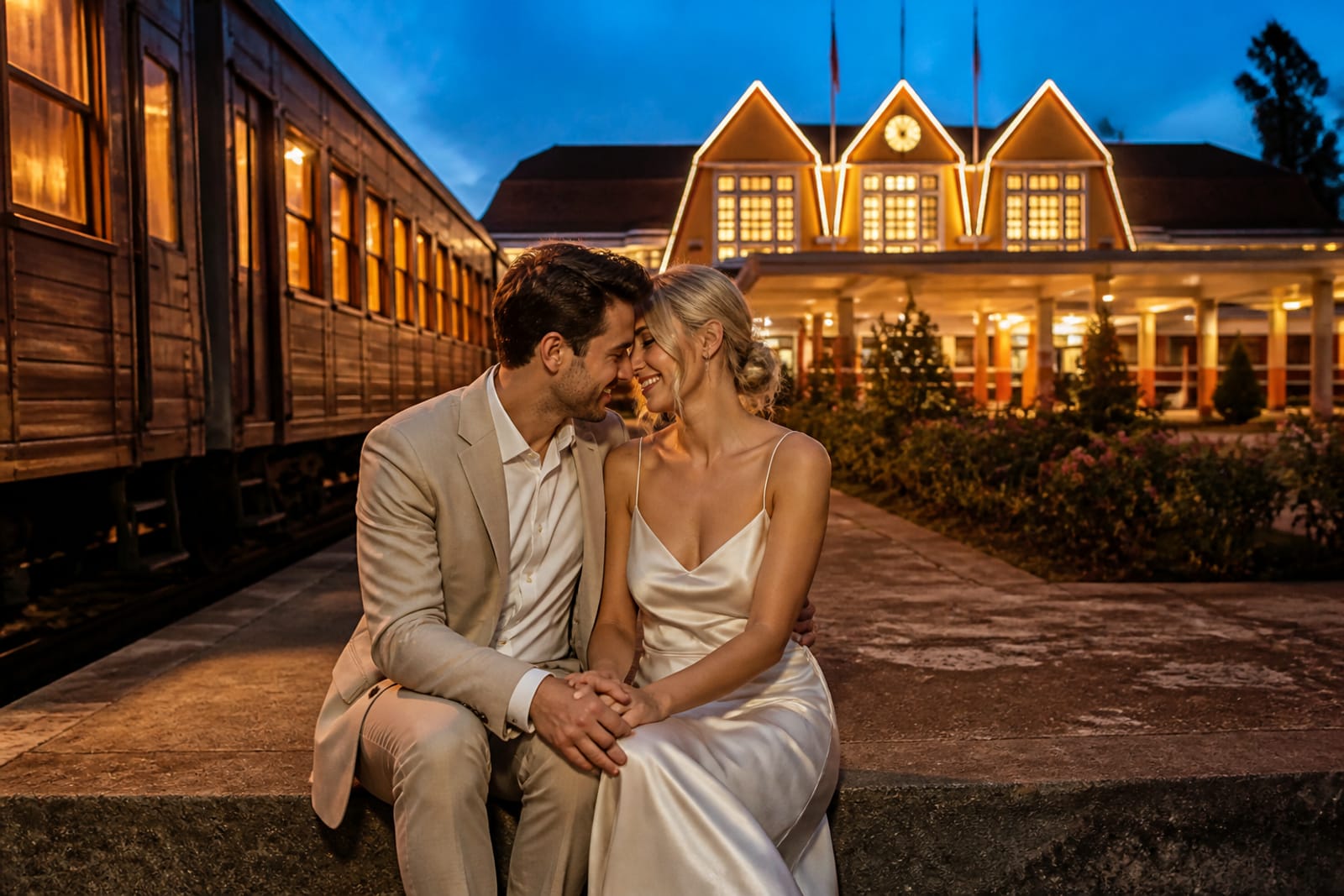
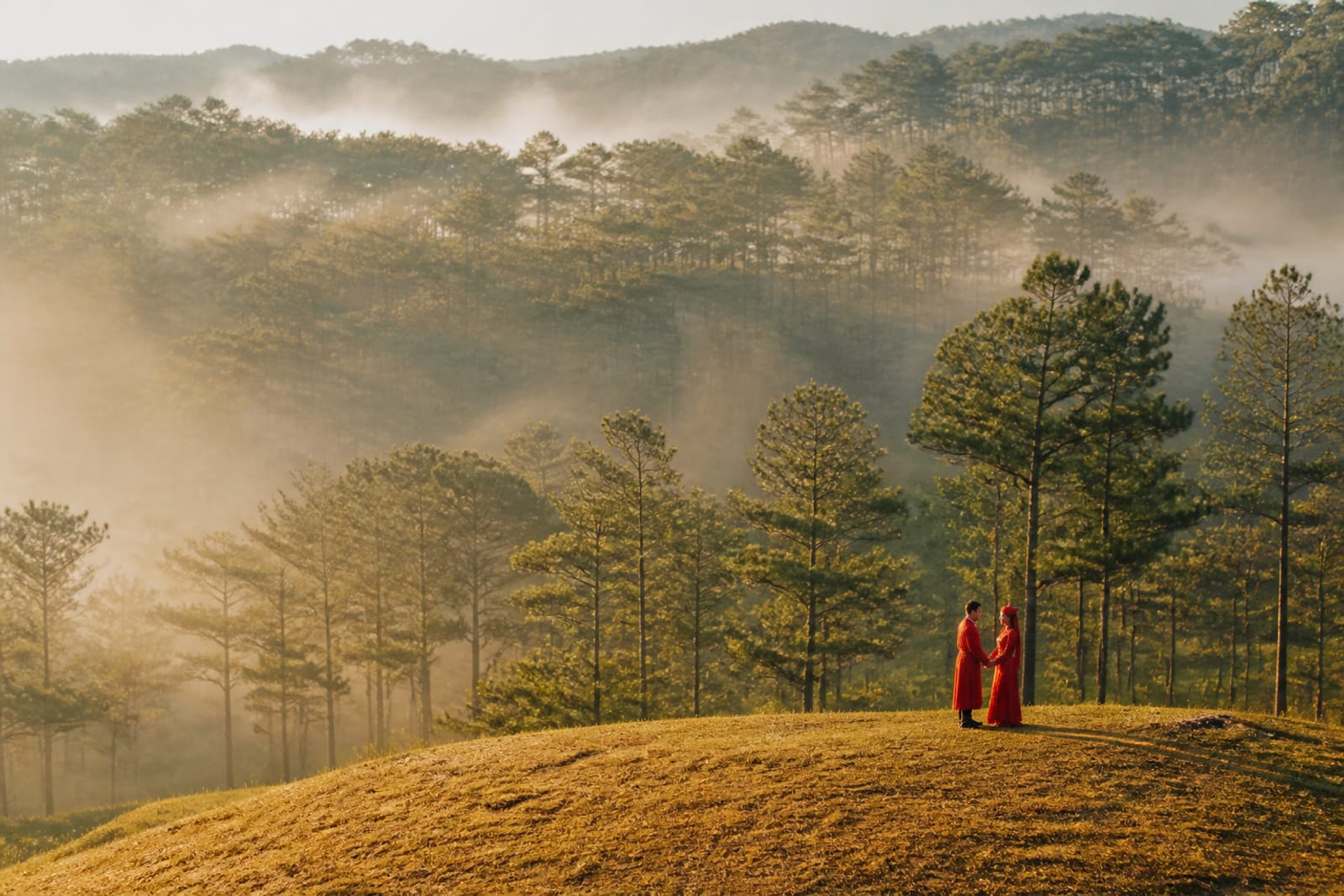
Da Lat's signature light is diffused: clouds roll in by 8 am most days, and mist hangs over temples and lakes until 10 am. A director shooting there leans into that grey softness—no harsh shadows on faces, no squinting into sun. The trade-off is lower contrast; strong silhouettes need a dark background (pine forest, lake water). Mui Ne's light is direct and warm. Sunrise (5:30–6:30 am) casts long shadows across dunes, perfect for couple walking shots. Late afternoon (4:30–6 pm) turns sand gold and faces copper-toned—but you're racing the dark. A director there shoots tighter, faster, and relies on landscape geometry. Da Lat favors wide landscape frames; Mui Ne rewards portrait-on-dune intimacy. Neither suits midday (11 am–2 pm) photography in dry season.
📸 Book on WhatsApp — couple photoshoot
---
When should you travel to avoid rain and crowds?
| Destination | Best window | Why it works | Watch out for |
|---|---|---|---|
| Da Lat | Dec–Mar | Cool (15–22°C), dry mornings, mist guaranteed. Cherry blossoms Jan–Feb. | Apr–May: heat creeps in; Jun–Oct: daily afternoon rain; Nov: sunflowers but unpredictable cloud. |
| Mui Ne | Dec–Apr | Dry, warm, low wind, low humidity. Clear skies for predawn and dusk shoots. | May–Nov: afternoon thunderstorms (usually quick but unpredictable); Jul–Sep: occasional typhoons affect visibility. |
Both destinations see minimal tourist crowds before 6 am—the hours a photographer needs. Tet (late Jan–mid Feb) is chaotic everywhere; avoid if you value quiet light and empty temple steps. Book your shoot 2–3 weeks before travel to allow a local crew time to scout and prepare a shot list.
---
How do you find a trustworthy local photographer in either place?
Cáo Studio's base is Hanoi and Ho Chi Minh City. For Da Lat or Mui Ne, we don't operate a branch, but we'll guide your planning over WhatsApp. Here's how to vet a local photographer: request their lookbook (not examples from international shoots)—look for clean editing, consistent color, and at least 10 full couple or pre-wedding sessions (not wedding-day work, which is different). Ask their turnaround time (48–72 hours is honest; instant edits are red flags). Check whether they've shot in bad light (overcast dawn, harsh midday, post-rain humidity)—that's where skill shows. Ask for a location scout call (20 minutes on video) to discuss sunrise timing, backup locations if weather fails, and how they frame your outfit in each place. Expect to pay more for travel time if the photographer is based in Ho Chi Minh City or Hanoi and going to Da Lat or Mui Ne—that's logistics, not premium pricing.
---
What's the real cost of shooting in a remote destination?
"Cost" isn't your call to make on these pages—what we can tell you is what varies. A Da Lat shoot involves a 1.5-hour drive from Ho Chi Minh City or 4 hours from Hanoi, meaning crew accommodation and travel time. Mui Ne is closer to Ho Chi Minh City (4 hours by road), but salt air and sand wreck gear faster, so equipment maintenance factors in. Both require an early start (photographer arrives 4:30–5 am to scout light), which means a night nearby or very early departure. A local Hanoi or Saigon crew charging city rates will apply a destination surcharge—ask on WhatsApp for specifics. Renting an ao dai in Da Lat is usually available through homestays or the photographer's contacts; Mui Ne is smaller and options are fewer, so book ahead. A pre-wedding session in either place is a full-day commitment (scout, shoot, breaks, outfit changes)—expect 6–8 hours on location.
---
What should you confirm before you book?
Outfit fit & transport: Will your ao dai or dress arrive pressed and travel well? How does the rental vendor handle coastal or highland conditions?
Backup locations: Ask your photographer for three alternate spots if weather (mist too thick, unexpected rain, rare wind) hits Plan A.
Timing clarity: Does 5:30 am mean photographer-on-location-ready, or arrival at your hotel? Confirm the exact itinerary 48 hours before.
Editing style: Review their lookbook and ask for a sample edits of one location in each destination (Da Lat grey light, Mui Ne golden light)—style consistency across seasons matters.
Communication: Confirm they reply fast (within 24 hours) if your flight shifts or weather forces a reschedule.
Travel insurance: Both destinations are safe; no special precautions. But travel insurance covering shoot delays is wise.
---
If you're based in Ho Chi Minh City and leaning toward a pre-wedding shoot closer to home, Cáo Studio Saigon can consult on Da Lat or Mui Ne planning, or book you for an urban session. If you're in or visiting Hanoi, Cáo Studio runs the same planning calls. For a pre-wedding video to pair with stills, ask on WhatsApp—video direction in highland mist or dune light is a distinct craft.

FAQ
Can I shoot in both Da Lat and Mui Ne in one trip?
Yes, but not in 48 hours. Both need a dawn start and a full morning/afternoon for light to shift. Plan 2–3 days minimum between shoots if you want distinct mood in each. Logistics (transport, outfit changes, crew coordination) add cost and fatigue—a single location with multiple outfit changes often gives better frames in one day.
Is Da Lat really misty every day?
Mist is common Dec–Mar, especially 5–9 am; clouds usually burn off by 10 am. Apr–May: less predictable. Jun–Oct: daily afternoon rain, but mornings can be clear. Check the forecast 3–5 days before, and have a backup indoor or sheltered location (temple, café, cafe interior) in your shot list.
What if I'm shooting Mui Ne in Jul–Sep and a storm hits?
Afternoon thunderstorms in wet season usually pass in 30–60 minutes. A good photographer reschedules the afternoon dune shoot to next morning or pivots to indoor or sheltered locations (your resort, local market, salt farms under cover). Confirm your photographer has a rain plan before booking.
Do I need a permit to shoot in temples or Mui Ne's sand dunes?
Temples in Da Lat require respect and often a small donation (no permit). Sand dunes are public land; no permit needed. Check locally on arrival—some temples request photographer ID or restrict photo times (early morning usually okay). Ask your local photographer; they know the current rules.
How do I know if a local photographer is trustworthy?
Request their Instagram/portfolio focusing on pre-wedding or couple sessions shot in that destination (not wedding-day coverage). Ask for three past-client references. Video chat to gauge communication clarity and ask how they've handled weather mishaps. Ask for edits of their worst-light scenario (grey dawn, afternoon overcast)—that's where skill shows.
FAQ
Can I shoot in both Da Lat and Mui Ne in one trip?
Yes, but not in 48 hours. Both need a dawn start and a full morning/afternoon for light to shift. Plan 2–3 days minimum between shoots if you want distinct mood in each. Logistics (transport, outfit changes, crew coordination) add cost and fatigue—a single location with multiple outfit changes often gives better frames in one day.
Is Da Lat really misty every day?
Mist is common Dec–Mar, especially 5–9 am; clouds usually burn off by 10 am. Apr–May: less predictable. Jun–Oct: daily afternoon rain, but mornings can be clear. Check the forecast 3–5 days before, and have a backup indoor or sheltered location (temple, café, cafe interior) in your shot list.
What if I'm shooting Mui Ne in Jul–Sep and a storm hits?
Afternoon thunderstorms in wet season usually pass in 30–60 minutes. A good photographer reschedules the afternoon dune shoot to next morning or pivots to indoor or sheltered locations (your resort, local market, salt farms under cover). Confirm your photographer has a rain plan before booking.
Do I need a permit to shoot in temples or Mui Ne's sand dunes?
Temples in Da Lat require respect and often a small donation (no permit). Sand dunes are public land; no permit needed. Check locally on arrival—some temples request photographer ID or restrict photo times (early morning usually okay). Ask your local photographer; they know the current rules.
How do I know if a local photographer is trustworthy?
Request their Instagram/portfolio focusing on pre-wedding or couple sessions shot in that destination (not wedding-day coverage). Ask for three past-client references. Video chat to gauge communication clarity and ask how they've handled weather mishaps. Ask for edits of their worst-light scenario (grey dawn, afternoon overcast)—that's where skill shows.
Ao dai, makeup, hair and a local photographer in Hanoi or Saigon — one WhatsApp message.