/pre-wedding-photoshoot
Da Lat Railway Station for Pre-Wedding Photos: Real Pros and Cons
Da Lat Railway Station draws couples for its nostalgic French-colonial trains and pine-forested backdrop, but it delivers mixed results for photography. The station sits at roughly 1,500 metres elevation in the southern highlands, cool year-round (15–25°C). Best light runs early morning (6:30–8:30 am) before crowds arrive; midday sun floods the platform and bleaches skin tones. Trains operate on fixed schedules—check departure times to avoid trains in frame or blocked access. Steep platform stairs challenge ao dai hems and heels. The site requires no permit, but visitor flow is unpredictable. Cáo Studio – Makeup & Photoshoot specializes in pre-wedding shoots in Hanoi and Ho Chi Minh City where studio-controlled lighting and tailored locations eliminate weather and crowd gambles. If Da Lat appeals, hire a local Dalat-based photographer familiar with platform access and backup indoor spots near the station. ---
Is the light really better early morning at Da Lat Railway Station?
Yes, but only until 8:30 am. Before sunrise, soft ambient light reflects off mist over the pine hills and flatters skin without harsh shadows on the platform. Once the sun clears the eastern ridge (around 7:15 am in Jan–Feb, 6:30 am in Nov–Dec), direct rays hit the western platform face hard. By 9 am, metal rails and train bodies throw conflicting shadows across couples' faces. Afternoon (2–5 pm) is worst—full overhead glare bleaches colors and deepens eye sockets.
Comparison: Hanoi's Old Quarter streets and Hoa Lang Thang flower gardens offer softer, longer-lasting light because dense canopy and building shade extend the golden window to 9–10 am.
Best light window: 6:30–8:30 am, Dec–Feb (misty) or Mar (clear). Avoid 10 am–4 pm.
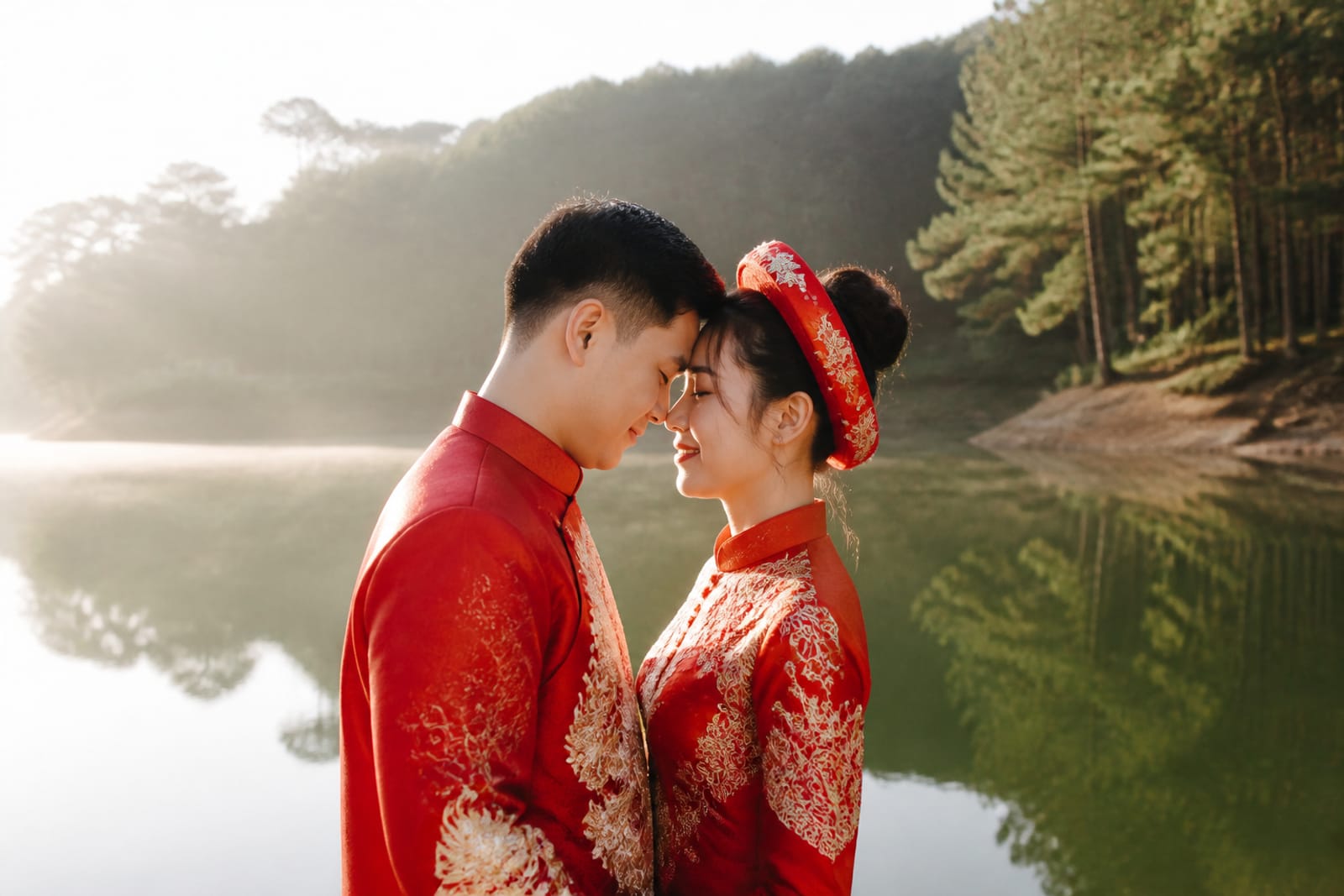
What do couples wear under an ao dai at a railway platform?
Platform concrete is rough and cold; ao dai trains drag and snag on track edges and stair lips. Wear a fitted slip or petticoat (the built-in underskirt most reputable ao dai rentals provide) to protect the main fabric from dust and snagging. Choose strapless or thin-strap undergarments so shoulder seams don't show under the loose áo. Heeled sandals or embroidered wedding shoes look formal but grip poorly on metal stairs—bring flat backup shoes for movement, then change for posed shots.
If you rent an ao dai in Hanoi, ask the rental team to fit a durable slip; many include this. For Hoi An ao dai, check our rental page or ask local tailors about slip durability before photo day.
Tip: Avoid synthetic silks—they cling in highland humidity and show sweat. Choose cotton-silk blends or silk charmeuse.
Do you need a permit to shoot at Da Lat Railway Station?
No permit is required for visitors or individual photography at Da Lat Railway Station. However, the site is an active railway terminus with staff, maintenance schedules and occasional train movements. Photographers are allowed on the platform but must not obstruct tracks or block staff access. If you hire a professional team (drone, multiple assistants, reflectors, extended location time), notify station staff on arrival—they may ask you to pause during train operations or staff shifts.
Ask your local photographer to confirm current access rules before booking, as railway administrations can change policy without notice.
Never assume unlimited time; arrive early and have a backup plan if trains are running.
How crowded is Da Lat Railway Station, and when is it quietest?
Weekday mornings (Mon–Fri, 6–8 am) are nearly empty; weekend and public-holiday mornings draw 20–40 tourists by 7:30 am. Lunchtime (11 am–1 pm) sees backpackers and tour groups—expect 50+ people. Evenings (5–6 pm) are quieter but light fades fast. Tet (late Jan–mid Feb) closes or severely restricts access for 3–5 days; book your session at least 3 weeks before.
Pros vs. a studio shoot:
| Venue | Crowds | Light control | Ao dai fit | Weather risk |
|---|---|---|---|---|
| Da Lat Railway Station | High weekends, low Tue–Thu early | Uncontrolled, 2-hour window | Stair snags, rough concrete | Drizzle (Nov–May mornings) |
| Cáo Studio Hanoi or Saigon | None—private studio | Full control, all-day | No obstacles, polished floors | Climate-controlled |
| Hoi An Ancient Town streets | Mod. (early morning) | Soft, 90 min. | Ancient-lantern frame (romantic) | Humidity, rare flash floods (Oct–Nov) |
Couples often book Da Lat for its iconic train, then regret rushed timing and soaked hems. A pre-wedding session with Cáo Studio in Hanoi lets you pair ao dai with controlled light, backup outfits and no weather surprises.
📸 Book on WhatsApp — pre-wedding photoshoot
Why is Da Lat popular for pre-wedding photos, and what are the real drawbacks?
Da Lat's romantic appeal rests on three things: vintage French trains, pine forests and cool mountain mist. The station itself is a working heritage site, which adds authenticity tourists crave. However, couples often discover drawbacks on the day:
- Light timing is rigid. A 2-hour morning window means one or two outfit changes maximum; midday light requires moving 500+ metres to nearby pine groves (time-consuming in heels and heavy fabric).
- Ao dai logistics are hard. Train hem-catching and platform dust accelerate wear; couples often spend session time arranging fabric rather than posing naturally.
- Unpredictable crowds. A tour bus can arrive mid-shoot; backing out of a paid booking is difficult.
- Altitude and cold. Lightweight ao dai fabrics don't insulate; couples report shivering for 2+ hours. Hair and makeup freeze in mist.
- No backup indoor space. If rain arrives (Nov–May mornings common), the session is lost or moved to a generic hotel lobby.
For couples wanting romance without logistics headaches, Cáo Studio's Hanoi pre-wedding package pairs ao dai photoshoots with controlled studio light, professional makeup and backup outfits—zero weather or crowd risk. Or book Hoi An, where ancient streets offer similar nostalgia with longer light windows and no train obstacles.
💄 Makeup & hair at your hotel | 🌸 See the lookbook
What should you check before booking a Da Lat Railway Station pre-wedding shoot?
Before you commit, confirm these with your photographer:
- Train schedule. Which trains run the day of your shoot? Do they block platform access? Ask for the official timetable link.
- Weather window. Book Nov–Feb (coolest, misty) or Mar–Apr (clear, warm). Avoid May–Oct (afternoon downpours, humid).
- Outfit changes. Ask how many ao dai changes are realistic in the light window. (Typical: 1–2, vs. 4–5 in a studio.)
- Backup location. If light fails or crowds spike, where does the shoot move? (Confirm the backup spot exists and is nearby.)
- Ao dai fit and protection. Confirm the rental includes a protective slip and that your photographer has guided hundreds of couples on stair safety.
- Delivery timeline. How long until edited photos arrive? (Some local photographers take 3–4 weeks; studios typically 2 weeks.)
- Hair and makeup durability. Ask if the photographer has a touch-up kit for mist and wind. (Cáo Studio provides this as standard.)
Not sure whether Da Lat or a studio suits your style? Check our pre-wedding lookbook to see ao dai in different light and venue types, then contact us on WhatsApp to compare options.
---
How do Da Lat Railway Station and Hanoi or Hoi An venues compare for pre-wedding shoots?
Da Lat Railway Station shines for couples who prioritize the iconic train and nostalgic atmosphere above all else. It is the only pre-wedding venue in Vietnam with operating heritage trains and natural mist backdrop.
Hanoi pre-wedding shoots through Cáo Studio offer longer light windows (6:30–10:30 am), zero crowds, professional makeup and 4–5 outfit changes in controlled settings—ideal for couples wanting relaxed pacing and weather certainty. Studio-based shoots also include hotel makeup and hair on your wedding morning, making pre-wedding a full beauty-and-photo experience.
Hoi An (ask us on WhatsApp for Hoi An dates) combines romantic heritage architecture with 90–120 minutes of soft golden light along the riverside and lantern-lit streets, plus access to silk tailors and lantern-maker studios for unique backdrop stories. Ao dai moves freely without train-snag risk.
Comparison summary:
- Choose Da Lat if: the iconic train is non-negotiable, you're willing to shoot early and fast, and you trust the light window.
- Choose Hanoi studio (Cáo Studio) if: you want relaxed pacing, full weather control, multiple outfit changes and professional hair/makeup built in.
- Choose Hoi An if: you want romantic architecture, soft light and a leisurely 2-hour session without logistic stress.
📸 Book on WhatsApp — ao dai photoshoot for Hanoi or Hoi An.
---
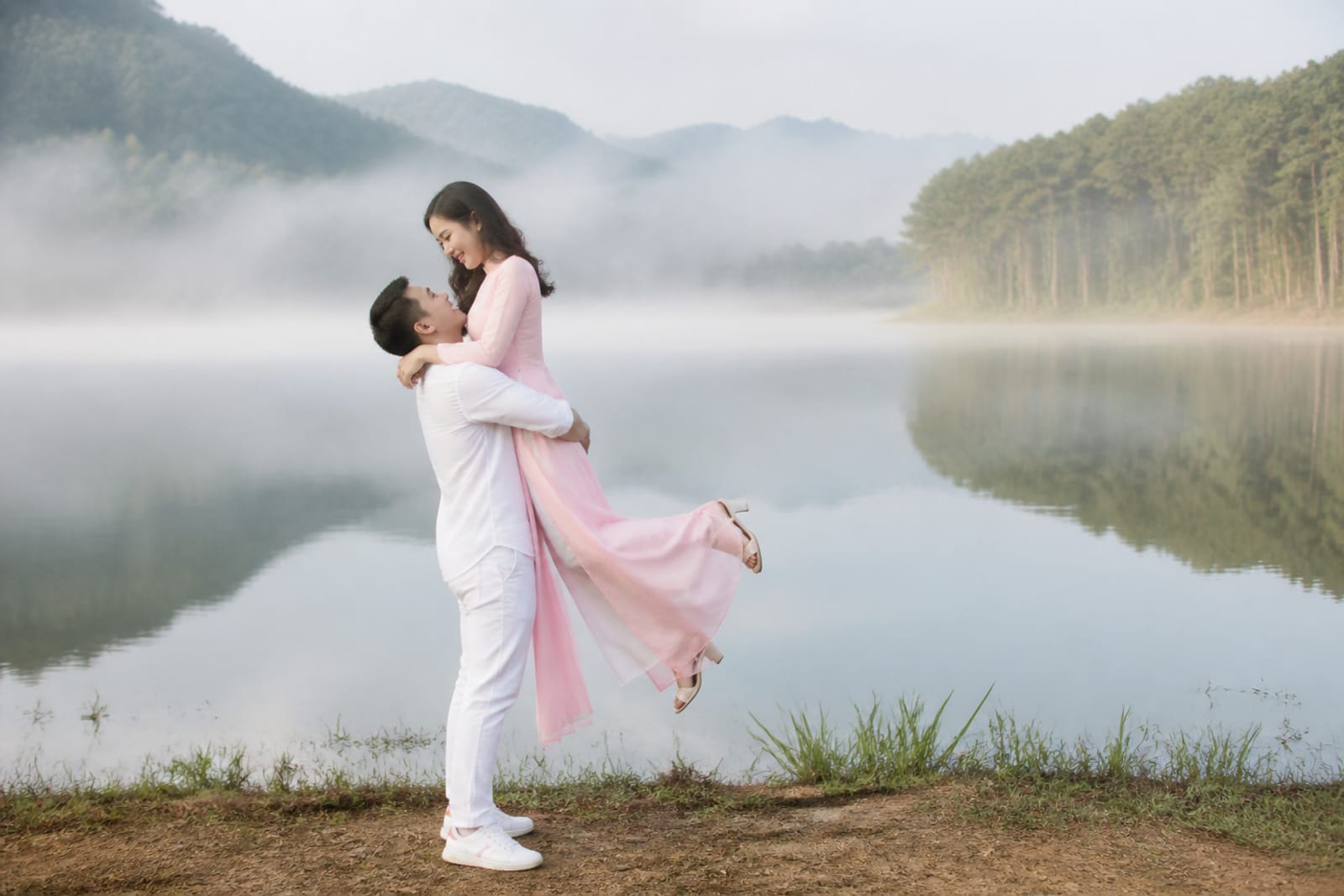
Season and weather: when is Da Lat best for pre-wedding photos?
Dec–Feb (cool season): Best overall. Mornings are misty (5–7°C), creating the signature pine-forest backdrop. Humidity is low, so makeup holds better. Sunrise light is softest. Tet holidays (late Jan–mid Feb) may restrict station access; book 4 weeks ahead.
Mar–Apr (warm, clear): Clear skies mean sharp shadows and harsher light by 8:30 am. No mist. Fewer crowds. Ao dai fabric breathes, but makeup requires more powder.
May–Oct (warm, rainy season): Afternoon downpours (2–5 pm) are common. Mornings are often clear but humid (70%+ moisture). Risk of session cancellation is highest. Avoid.
Why misty mornings matter: Mist acts as a giant diffuser, spreading sunlight evenly and softening shadows on faces. It also hides the background hills, forcing focus onto the couple—a professional photographer's dream. However, mist means cold, damp ao dai hems and rapid makeup smudging if humidity isn't controlled.
Cáo Studio's Hanoi studio is climate-controlled year-round, eliminating seasonal light and weather gambles.
---
What happens if weather or crowds ruin your Da Lat session, and what's your recourse?
If rain cancels your shoot (common Nov–May), most local photographers offer a reschedule within 30 days. Check your booking contract for the exact reschedule window and whether a fee applies.
If crowds become unshootable by 8:30 am, a professional photographer should pivot to the backup location (usually a nearby pine grove or quiet street). Confirm this backup before you book and see sample photos from that spot.
If neither option works, many photographers offer a partial refund or credit toward a future session. Cáo Studio operates private studio spaces in Hanoi and Saigon specifically to eliminate this scenario—rain, crowds and light-timing stress are designed out.
Key takeaway: Ask your Da Lat photographer whether they've had to reschedule in the past 6 months, and what their actual reschedule success rate is. (Many will admit 20–30% of bookings need rescheduling.)
---
What outfit rentals and styling options work best at Da Lat Railway Station?
Ao dai is the obvious choice—the station's vintage backdrop begs for traditional silk. Rent from a Da Lat tailor or bring one from Hanoi (many couples transport rentals in garment bags). Ensure the ao dai includes a protective slip (not all rentals do) and that the tailor has fitted it to your exact height (hem length matters on stairs).
Western wedding dress is logistically harder. Long trains snag on platform edges; heels slip on metal stairs. If you prefer a dress, go with a knee-length or midi cut and bring flat shoes for platform movement, then change into heels for posed shots.
Groom and groomsmen: Suits look formal but heat up fast in morning mist. Linen shirts with blazers or vests are a working compromise. Avoid long coats—they drag on stairs.
Accessories: Floral garlands, bouquets and ceremony arches don't work on an active railway platform (obstructs staff and track access). Handheld bouquets only.
Check our ao dai rental page for Hanoi-based options, or ask local Da Lat tailors to show you their protective slip and stair-tested fabrics before committing.
---
How should you plan the timeline and pacing of a Da Lat Railway Station shoot?
Arrive 45 minutes early (6:15 am for a 7 am start in peak season) to scout the platform, check train schedules with staff, and confirm crowds haven't already arrived. Hair and makeup should be done at your hotel or a nearby salon—platform bathrooms don't exist, and touch-ups mid-shoot are awkward.
Realistic timeline:
- 6:45–7:15 am: Couple poses on platform, stairway and near train (outfit 1).
- 7:15–8:00 am: Outfit change (either on-site in a portable tent or at a nearby building). Retouch makeup if mist has dampened it.
- 8:00–8:30 am: Couple poses in new outfit; photographer captures both before light hardens.
- 8:30+ am: Light is too harsh for skin tones. Most couples finish and depart.
Total on-platform time: 90–120 minutes. Compare this to a Cáo Studio Hanoi pre-wedding shoot, where 3–4 hours of controlled light allows 4–5 outfit changes, bride-groom transitions, detail shots and group poses without rushing.
💄 Makeup & hair at your hotel | 🌸 See the lookbook
---
How do you find and vet a local Da Lat photographer if you're not using Cáo Studio?
Since Cáo Studio does not operate in Da Lat, you'll need a local photographer. Here's how to evaluate them:
- Ask for a Da Lat Railway Station portfolio. If they have no previous railway-station shoots, their experience with light timing and platform logistics is unproven.
- Request sample photos from Nov–Feb. Misty-season light is the most beautiful—if their portfolio is all clear-sky shots, they haven't captured the full experience.
- Confirm train-schedule knowledge. Do they know the real train timetable and have they coordinated with station staff before? (You'll hear yes or no immediately.)
- Ask about their backup location. Where do they pivot if crowds spike? Have them show you sample photos from that spot.
- Check turnaround time. Do edited photos arrive in 2 weeks or 4 weeks? (Longer is common for small-town photographers; expect delays during Tet.)
- Read reviews from couples, not tourist sites. Instagram couple testimonials are more honest than travel blogs.
Unsure whether a local photographer is right, or prefer the certainty of a studio approach? Book a pre-wedding session with Cáo Studio in Hanoi and relocate any Da Lat-inspired element (mist, trains, nostalgia) into a styled studio backdrop or Hanoi location shoot.
---
What are the realistic costs and payment terms for a Da Lat Railway Station shoot?
Entry to Da Lat Railway Station itself is free for visitors. Costs come from:
- Local photographer fee (varies by reputation and turnaround time; ask for a quote).
- Ao dai rental (check Da Lat tailors or transport from Hanoi).
- Hotel and transport to Da Lat (roughly 5 hours from Ho Chi Minh City; 8+ from Hanoi).
- Makeup and hair (either at your hotel or a Da Lat salon).
Cáo Studio does not operate in Da Lat, but pre-wedding shoots in Hanoi and Ho Chi Minh City bundle photography, studio light, professional makeup and multiple outfits into one package. Ask on WhatsApp for a quote; pricing depends on location, number of outfits and editing style.
Payment note: Most local Da Lat photographers require a deposit (typically 30–50%) to secure your date, with the remainder due on shoot day or upon delivery. Confirm their refund policy if you need to reschedule.
---
Should you book Da Lat Railway Station or a studio pre-wedding shoot?
Book Da Lat Railway Station if:
- The iconic vintage train is your must-have centerpiece.
- You're comfortable waking at 5:30 am and shooting fast (90–120 min).
- You accept weather and crowd risk, and can reschedule if needed.
- You trust your local photographer's platform experience.
- You want an intimate, unconventional vibe over formal pacing.
Book a Cáo Studio pre-wedding shoot in Hanoi or Ho Chi Minh City if:
- You want relaxed pacing, zero crowds and full light control.
- You value 4–5 outfit changes and professional makeup durability.
- You're risk-averse (weather, crowds, timing stress).
- You want the session styled around your wedding colors and ao dai, not a location's constraints.
- You want to embed makeup and hair at your hotel on your actual wedding morning into the same pre-wedding relationship.
Book a combination: Many couples shoot a fast Da Lat session early morning, then book a studio backup shoot in Hanoi for outfit variety and stress-free light. Ask us on WhatsApp how to coordinate.
📸 Book on WhatsApp — pre-wedding photoshoot
---
FAQ
Can I shoot at Da Lat Railway Station in the afternoon or evening?
No. Afternoon sun (12–5 pm) is too harsh for flattering skin tones, and evening light fades in 30–40 minutes. Early morning (6:30–8:30 am) is the only window. Evening train departure times may offer a late-day option, but light quality is poor and couples report cold, tired expressions.
Do I need a professional photographer, or can I hire a friend with a camera?
A friend can help, but railway platform photography requires light expertise (harsh shadows, reflective metal), fast pacing (90-min window) and backup-location knowledge (if crowds spike). An experienced local photographer is worth the cost—they'll anticipate problems and deliver usable photos even if light or timing shifts.
Will my ao dai stay clean on a dirty railway platform?
Not easily. Dust, old metal oxidation and rough concrete stain light fabrics. Rent an ao dai with a protective slip; confirm it's durable and washable before you book. Bring a small towel and tell your photographer to avoid low-level floor shots. Budget for dry cleaning after the shoot.
What if it rains or is too cloudy on my shoot day?
Rain typically cancels; mist is workable. Cloudy mornings are dull but safe—soft light, no harsh shadows. Check the weather 1 week before and 3 days before with your photographer. Most local photographers offer a reschedule, but dates fill fast. Cáo Studio's studio-based shoots eliminate rain risk entirely.
How many final edited photos will I receive from a Da Lat session?
Ask your photographer upfront. Local photographers often deliver 50–100 images (unedited or lightly edited); turnaround is 2–4 weeks. Confirm the exact count and editing style before booking. Cáo Studio's packages include a defined number of fully edited high-resolution files; ask on WhatsApp for specific inclusions.
Can I do a pre-wedding shoot in Da Lat and a wedding-day shoot with the same photographer?
Yes, if your photographer operates both. Most Da Lat specialists are available for wedding-day coverage. Cáo Studio does not operate in Da Lat, but our wedding photographer service is available in Hanoi and Ho Chi Minh City. Couples often book a Cáo Studio pre-wedding session in Hanoi and hire a local for their actual Da Lat wedding day.
Is it cheaper to book a Da Lat local photographer or Cáo Studio in Hanoi?
Cost varies by photographer experience and location travel. Da Lat locals may charge less upfront, but Hanoi offers bundled styling (makeup, hair, multiple outfits, studio backup). Request quotes from both; Cáo Studio quotes are sent on WhatsApp after a brief consultation about your vision.
FAQ
Can I shoot at Da Lat Railway Station in the afternoon or evening?
No. Afternoon sun (12–5 pm) is too harsh for flattering skin tones, and evening light fades in 30–40 minutes. Early morning (6:30–8:30 am) is the only window. Evening train departure times may offer a late-day option, but light quality is poor and couples report cold, tired expressions.
Do I need a professional photographer, or can I hire a friend with a camera?
A friend can help, but railway platform photography requires light expertise (harsh shadows, reflective metal), fast pacing (90-min window) and backup-location knowledge (if crowds spike). An experienced local photographer is worth the cost—they'll anticipate problems and deliver usable photos even if light or timing shifts.
Will my ao dai stay clean on a dirty railway platform?
Not easily. Dust, old metal oxidation and rough concrete stain light fabrics. Rent an ao dai with a protective slip; confirm it's durable and washable before you book. Bring a small towel and tell your photographer to avoid low-level floor shots. Budget for dry cleaning after the shoot.
What if it rains or is too cloudy on my shoot day?
Rain typically cancels; mist is workable. Cloudy mornings are dull but safe—soft light, no harsh shadows. Check the weather 1 week before and 3 days before with your photographer. Most local photographers offer a reschedule, but dates fill fast. Cáo Studio's studio-based shoots eliminate rain risk entirely.
How many final edited photos will I receive from a Da Lat session?
Ask your photographer upfront. Local photographers often deliver 50–100 images (unedited or lightly edited); turnaround is 2–4 weeks. Confirm the exact count and editing style before booking. Cáo Studio's packages include a defined number of fully edited high-resolution files; ask on WhatsApp for specific inclusions.
Can I do a pre-wedding shoot in Da Lat and a wedding-day shoot with the same photographer?
Yes, if your photographer operates both. Most Da Lat specialists are available for wedding-day coverage. Cáo Studio does not operate in Da Lat, but our [wedding photographer service](/wedding-photographer) is available in Hanoi and Ho Chi Minh City. Couples often book a Cáo Studio pre-wedding session in Hanoi and hire a local for their actual Da Lat wedding day.
Is it cheaper to book a Da Lat local photographer or Cáo Studio in Hanoi?
Cost varies by photographer experience and location travel. Da Lat locals may charge less upfront, but Hanoi offers bundled styling (makeup, hair, multiple outfits, studio backup). Request quotes from both; Cáo Studio quotes are sent on WhatsApp after a brief consultation about your vision.
Ao dai, makeup, hair and a local photographer in Hanoi or Saigon — one WhatsApp message.