/pre-wedding-photoshoot
Da Nang or Ha Giang for Pre-Wedding Photos: Which Fits Your Vision
Da Nang suits couples who want dramatic coastline, golden-hour light over sand and limestone, and a weekend trip—best February to August when skies are dry and blue. Ha Giang rewards those with 3–5 days, tolerance for winding roads, and autumn or spring travel; buckwheat flowers peak October–November, but winter (December–February) brings grey skies and cold that flatten colour. Both need a local photographer fluent in the landscape—Cáo Studio – Makeup & Photoshoot, based in Hanoi and Ho Chi Minh City, coordinates shoots in Hoi An (160 km south of Da Nang) by appointment and offers full pre-wedding packages; for Da Nang or Ha Giang, we recommend vetting independent local photographers and using our guides to plan light, outfits, and timing. Neither location promises "perfect" light every day—weather, crowds, and road conditions shift the logistics substantially. ---
What makes Da Nang the easier choice for pre-wedding couples?
Da Nang's appeal lies in its accessibility and predictable light windows. The coastline—My Khe Beach, Marble Mountains, golden bridges across the Han River—photographs cleanly in 2–4 hours. No multi-day mountain drives; you fly in, shoot at sunrise or golden hour, and depart. The dry season (February–August) guarantees relatively clear skies. However, summer heat peaks in June–July, requiring early starts (5–6 a.m.) to avoid harsh overhead light and sweat damage to makeup. Spring (February–April) offers cooler temperatures and softer midday light. Logistics are straightforward: hotels cluster near shoots, road access is paved, and backup indoor venues (museums, cafés) exist if weather turns.
The tradeoff? Da Nang's beauty is popular—beaches and bridges fill with tourists, especially weekends. Shooting at dawn or booking a weekday helps; hiring a local assistant to scout locations the day before prevents bottleneck surprises. Transportation between spots is 10–30 minutes by taxi or motorbike, not strenuous but requires a coordinator to manage timing and outfit changes.
Why choose Ha Giang despite the logistical challenge?
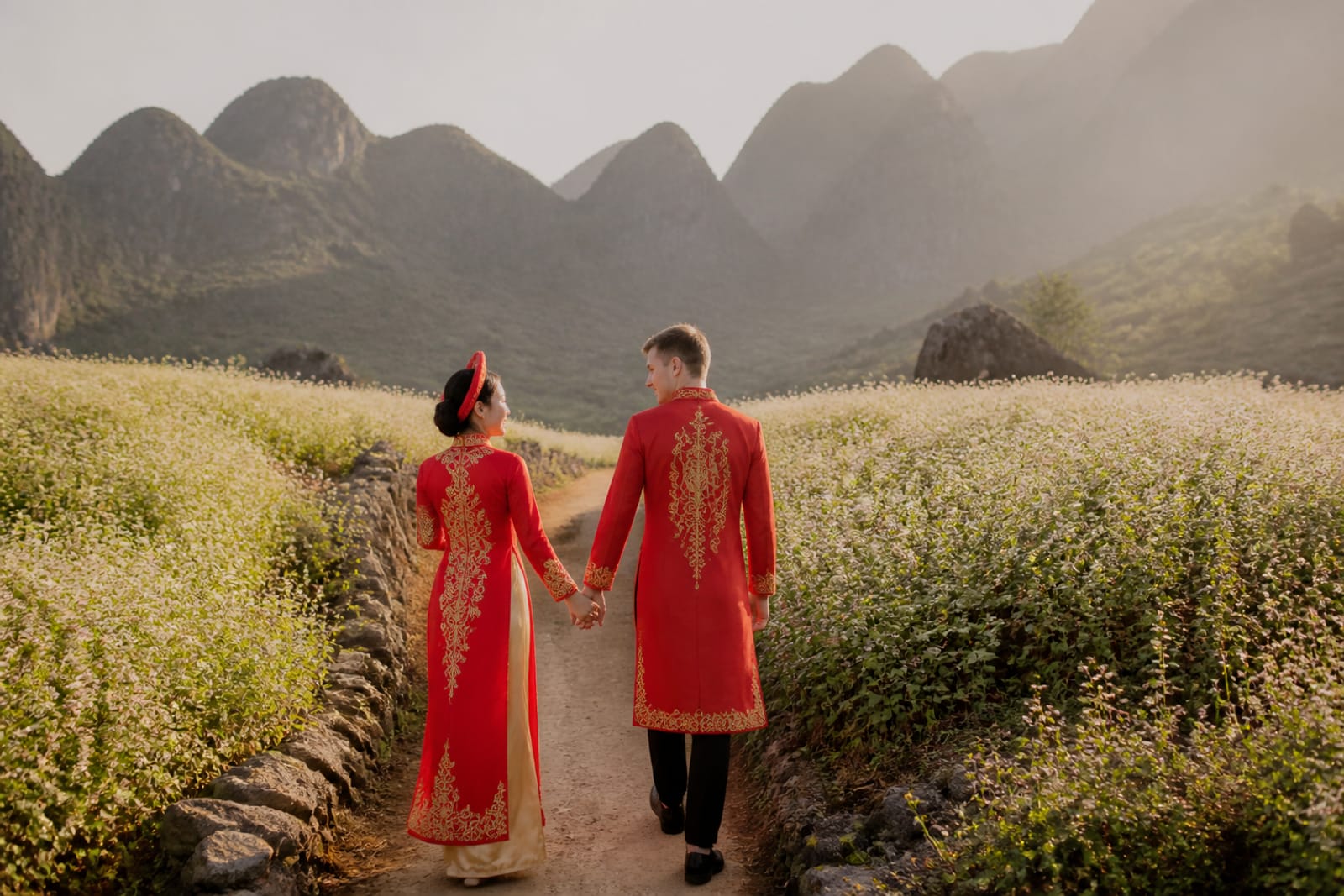
Ha Giang attracts couples seeking singular, untouched landscapes: rolling rice terraces, buckwheat fields in bloom, limestone karst valleys, and minority village roads untouched by tourist infrastructure. The payoff is cinematic difference—photos here read as adventure, not resort. The catch: reaching Ha Giang from Hanoi takes 5–7 hours by road (winding, not expressway); shooting there requires 2–3 days minimum to justify travel time and to capture dawn light (terraces glow 6:30–7:30 a.m., then flatten). October–November is peak buckwheat flower season; September offers golden rice before harvest. December–February brings cold, morning mist that obscures colour, and typhoon-prone roads; avoid June–August for safety (landslide risk and heat).
A Ha Giang shoot demands a local guide who knows terrain, village access etiquette, and light patterns by hour. You'll travel by motorbike or 4x4, change outfits in basic guesthouses, and accept that one day of bad weather erases half your planned shots. Couples who thrive here are willing to be uncomfortable for the aesthetic—and they're rarely disappointed. The isolation is the selling point.
📸 Book on WhatsApp — ao dai photoshoot
Comparison: Light, season, and effort side by side
| Factor | Da Nang | Ha Giang | Winner for |
|---|---|---|---|
| Best light months | Feb–Aug (dry, bright) | Sep–Nov (clear, cool); Feb–Apr (spring mist, softer) | Da Nang (longer window) |
| Peak colour | April–May, golden hour | October (buckwheat), Sept (rice) | Ha Giang (unique seasonal palette) |
| Travel time from Hanoi/HCM | Flight or 20–24 hr drive | 5–7 hr drive from Hanoi only | Da Nang (closer to HCM) |
| Shooting hours per day | 2–4 (concentrated locations) | 6–8 (terrain demands early start, multiple spots) | Da Nang (less exhausting) |
| Weather backup | Indoor cafés, museums, covered bridges | Guesthouses, village interiors (limited aesthetic options) | Da Nang |
| Outfit changes | 2–3 (dress code, ao dai, casual) | 2–4 (terrain wear, ethnic textiles, casual) | Tie (both demand variety) |
| Crowd factor | High on weekends; low at 6–7 a.m. | Low; unpredictable tourist groups | Ha Giang (solitude) |
Honest conclusion: Da Nang wins for romance and ease; Ha Giang wins for storytelling and uniqueness. Your choice hinges on whether you prioritize a polished half-day or a committed multi-day adventure.
How to scout locations and time the shoot for maximum light
Both destinations require on-ground reconnaissance—you cannot predict light from photos alone. For Da Nang, visit your chosen spots (My Khe, Marble Mountains, Han River bridges) at your target shooting time (dawn, golden hour) 1–2 days before the session. Note where sun hits, where shadows pool, and how crowds move. Bring a phone camera and note the exact angle and time; ask your photographer to plan shots using that reference.
For Ha Giang, hire a local guide or coordinator 2–3 weeks ahead. They'll scout based on season (are buckwheat fields flowering now? Is rice golden or green?), road conditions (is the mountain pass clear?), and weather forecast. Ask for photos or video from recent shoots in the same locations—this saves surprises. Light in mountain valleys shifts rapidly; plan for 30–45-minute windows per location, not all-day exposure.
Both require an early alarm (4:30–5:30 a.m. start). Bring a professional makeup artist or book makeup & hair at your hotel service if available—field makeup touch-ups are messy and time-consuming. Pack outfit changes in a dry bag, not loose luggage; wrinkled clothes read poorly at dawn, when fabric texture matters most.
What outfit and ao dai choices work best in each landscape?
Da Nang's coastal light favours jewel tones (deep reds, sapphire, emerald) and white—high contrast pops against sand and blue. Silk ao dài glide beautifully in sea breezes; avoid heavy brocade that wilts in humidity. A casual linen shirt over trousers works for second shots. Barefoot on sand is romantic; bring sandals to walk between spots without damaging feet. Jewellery should be minimal—wind tangles chains, and salt spray corrodes gold quickly.
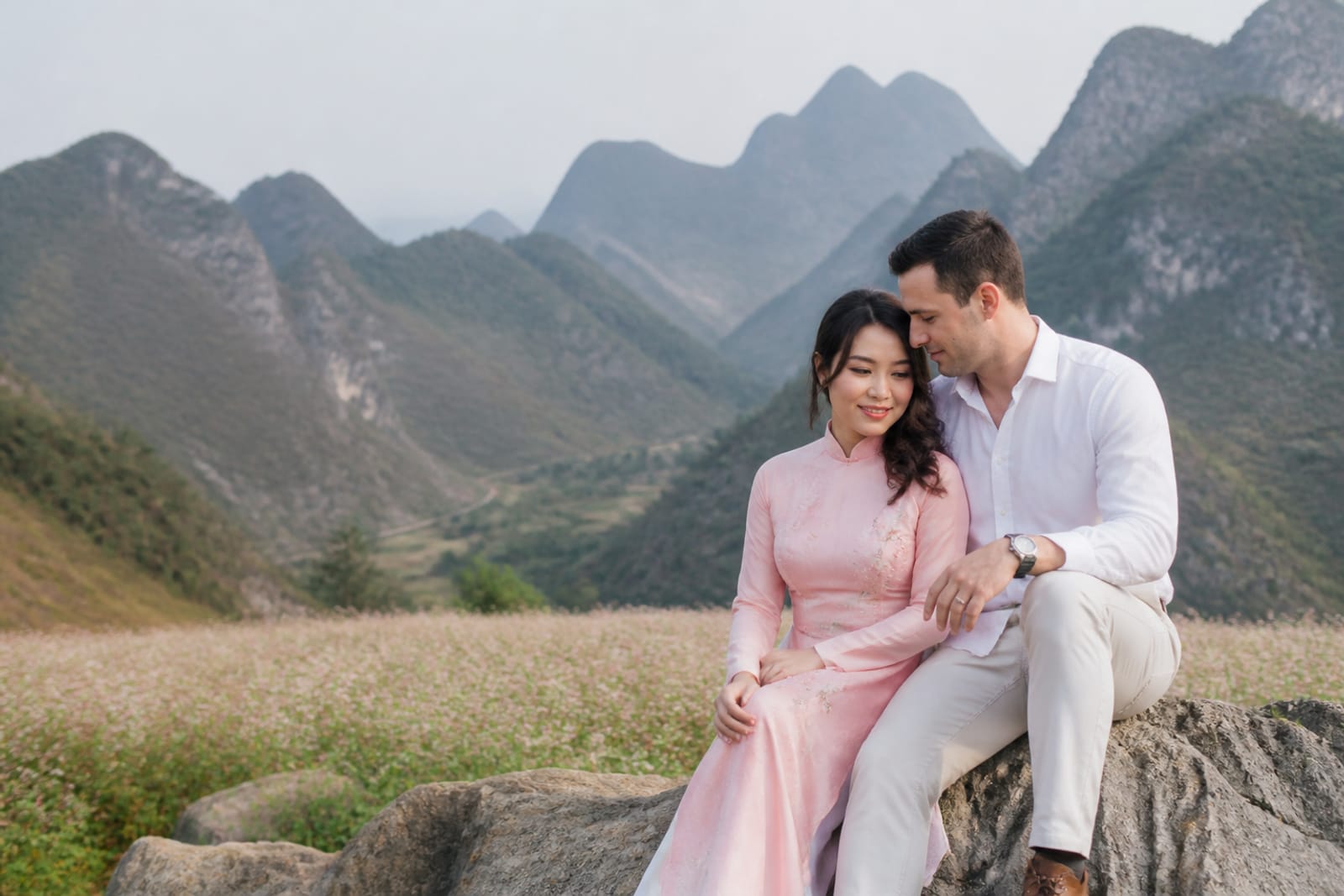
Ha Giang suits earthy tones: terracotta, olive, cream, rust. Ao dài in cotton (lighter, less wrinkle-prone during long motorbike rides) or silk blends work; avoid trailing fabrics that snag on branches or expose groom's outfit awkwardly in village roads. Layer up—October mornings are 12–15°C (55–59°F). A casual ethnic-style tunic over trousers reflects respect for Hmong and Dao communities; avoid costume parody (avoid feathered headdresses or overstaged "tribal" looks). Sturdy footwear is non-negotiable for walking terraces and village paths. A structured jacket or shawl adds visual interest without compromising movement.
Check with your local photographer about village dress codes and photo permissions before planning outfits—some sacred sites require long sleeves or head covering.
When to book and what to check before committing
Book 6–8 weeks ahead, ideally 3 months if you're hiring a guide and coordinating transport. For Da Nang, confirm your photographer's experience with beaches (harsh glare, salt spray, midday heat). For Ha Giang, ensure they've shot the exact season and terrain you're targeting—not just "mountains," but specific villages or valleys. Ask for a portfolio that shows the light you want, not just pretty locations; a photographer who shoots at 2 p.m. in harsh sun won't deliver golden-hour magic, even if their subjects are stunning.
What to verify:
- Photographer's insurance and backup equipment (one camera failing in Ha Giang delays everything).
- Transport plan: Will they drive? Will you? Does it include a guide?
- Weather contingency: What happens if it rains? Are reshoot dates guaranteed or refunded?
- Permit or access permissions: Some Ha Giang villages require local authorization.
- Editing timeline: When do you receive proofs and final files?
- Ao dài or outfit rental: Does the photographer recommend a seamstress, or does Cáo Studio coordinate ao dai rental for your session?
Check the FAQ and pricing page for standard inclusions; every shoot varies—confirm exact deliverables on WhatsApp before signing.
One original angle: the "days available" framework
Most couples ask "Which place is prettier?"—the wrong question. Ask instead: How many days can I release from work or family? Da Nang fits a long weekend (Friday–Sunday). Ha Giang demands 4–5 days (1 day travel, 2 days shoot, 1 day buffer for weather). If you have only 2 days, Da Nang is mandatory. If you have a week and thrive on adventure, Ha Giang. If you're torn, split the difference: shoot Hoi An (160 km south of Da Nang; Cáo Studio travels there by appointment) on day 1 for town-and-river aesthetics, then drive 2 hours north to Da Nang beaches on day 2. This hybrid satisfies couples who want both intimacy (Hoi An's narrow streets and lantern light) and drama (Da Nang's scale).
Contact us on WhatsApp to discuss how pre-wedding photoshoots work across these locations and how Cáo Studio coordinates shoots in Hoi An by appointment.
---
What if I want to combine Da Nang and Ha Giang in one trip?
Technically possible; practically grueling. Hanoi → Ha Giang (2–3 days) → Hanoi (5–7 hr drive) → Da Nang (flight, 2 hours) → shoot (1–2 days) requires 7–9 days total. You'll be jet-lagged, road-tired, and shooting on fatigue. Couples who attempt this often regret rushing either location. Choose one, shoot it thoroughly, and save the other for an anniversary trip in 1–2 years. Alternatively, plan a couple & family photoshoot in one location now, then a vacation photoshoot in the other later—spread the adventure, reduce pressure.
The honest takeaway
Da Nang is the "safe" romantic choice: beautiful light, manageable logistics, proven backdrops. Ha Giang is the "risk it" choice: raw, singular, exhausting, unforgettable. Neither guarantees perfect weather or flawless shots. Both benefit from a photographer who knows the terrain and the season—if you're from overseas, hiring a local is non-negotiable. Cáo Studio – Makeup & Photoshoot operates from Hanoi and Ho Chi Minh City; for these regions, we guide you to vetted local photographers and offer makeup & hair support if you're staying in a hotel. For a pre-wedding shoot in Hoi An, we travel by appointment and handle the full session ourselves.
📸 Book on WhatsApp — ao dai photoshoot to discuss your destination, timeline, and aesthetic—or reach out for recommendations in Da Nang and Ha Giang.
---
FAQ
Can I shoot pre-wedding photos in both Da Nang and Ha Giang in one trip?
Yes, but it's exhausting. A 7–9 day itinerary (Ha Giang 2–3 days + transport + Da Nang 2 days) leaves couples fatigued. Better to shoot one location thoroughly and return for the other on an anniversary trip 1–2 years later. Spread joy; avoid rushed logistics.
What's the best month to shoot in Ha Giang?
October–November peaks with buckwheat flowers and clear skies, but roads are safe and cool. September shows golden rice before harvest. December–February brings grey mornings, mist, and typhoon risks. Avoid June–August entirely (heat, landslide danger). February–April is spring alternative: misty, softer light, cooler temps, fewer tourists.
Do I need an ao dài for Da Nang photos?
Not mandatory, but it photographs beautifully in coastal light. A silk ao dài in jewel tones or white reads powerfully against sand and sea. For casual shots, linen or cotton separates work. Cáo Studio arranges ao dai rental if you don't own one—confirm on WhatsApp. Most couples do 1–2 ao dài shots and 1–2 casual outfits.
Who coordinates the local photographer if I book Ha Giang?
You hire or contract a local photographer directly (Cáo Studio does not operate there). Our guides on this page help you vet them by portfolio, experience with your target season, and backup gear. Confirm permit access, transport, and weather contingency in writing before payment. For makeup & hair support, book makeup at your hotel or bring a stylist from Hanoi.
How early do I need to book a pre-wedding shoot?
6–8 weeks minimum; 3 months if coordinating transport or guides. Peak season (February–April for Da Nang; October–November for Ha Giang) books faster. Confirm your photographer's availability for your exact dates before booking flights or hotels.
FAQ
Can I shoot pre-wedding photos in both Da Nang and Ha Giang in one trip?
Yes, but it's exhausting. A 7–9 day itinerary (Ha Giang 2–3 days + transport + Da Nang 2 days) leaves couples fatigued. Better to shoot one location thoroughly and return for the other on an anniversary trip 1–2 years later. Spread joy; avoid rushed logistics.
What's the best month to shoot in Ha Giang?
October–November peaks with buckwheat flowers and clear skies, but roads are safe and cool. September shows golden rice before harvest. December–February brings grey mornings, mist, and typhoon risks. Avoid June–August entirely (heat, landslide danger). February–April is spring alternative: misty, softer light, cooler temps, fewer tourists.
Do I need an ao dài for Da Nang photos?
Not mandatory, but it photographs beautifully in coastal light. A silk ao dài in jewel tones or white reads powerfully against sand and sea. For casual shots, linen or cotton separates work. Cáo Studio arranges [ao dai rental](/ao-dai-rental) if you don't own one—confirm on WhatsApp. Most couples do 1–2 ao dài shots and 1–2 casual outfits.
Who coordinates the local photographer if I book Ha Giang?
You hire or contract a local photographer directly (Cáo Studio does not operate there). Our guides on this page help you vet them by portfolio, experience with your target season, and backup gear. Confirm permit access, transport, and weather contingency in writing before payment. For makeup & hair support, book [makeup at your hotel](/makeup-and-hair) or bring a stylist from Hanoi.
How early do I need to book a pre-wedding shoot?
6–8 weeks minimum; 3 months if coordinating transport or guides. Peak season (February–April for Da Nang; October–November for Ha Giang) books faster. Confirm your photographer's availability for your exact dates before booking flights or hotels.
Ao dai, makeup, hair and a local photographer in Hanoi or Saigon — one WhatsApp message.