/pre-wedding-photoshoot
Dai Yem waterfall wedding photos: best time and light
Dai Yem waterfall near Cao Bang delivers soft, diffused light ideal for pre-wedding photos, especially in cooler months (Oct–Nov, Feb–Mar). Shoot early morning (6–8 am) when mist clings to the rocks and the water catches first light; or late afternoon (4–5 pm) for warm reflections without harsh shadows. The 3-hour drive from Hanoi and a 15-minute trek to the falls mean you need a photographer who knows the location and can time the light precisely—not a generic vendor. If you're based in Hanoi, Cáo Studio can direct this shoot with your outfit, hair and makeup coordinated in one team. Expect to spend 2–3 hours on-site for wide, medium and detail frames, plus a short film. Avoid midday (11 am–3 pm): the sun bleaches the mist and flattens the water. Bring a change of shoes; the rocks are slippery after rain. ---
When is the light actually best at Dai Yem?
Early morning (6–8 am) and late afternoon (4–5 pm) are the only two windows worth planning for. At 6:30 am, the sun is low and soft, the mist is thickest, and no other visitors crowd the foreground. By 7:30 am, direct light starts to angle across the water—that's when you want to shoot wide to capture the fall's scale. Late afternoon (4–5 pm) works differently: the sun is warm and low, reflections dance on the water, and you can frame your subjects walking toward the light. After 5:30 pm, the canyon darkens fast and you lose definition. Midday is a wasted hour—the sun bleaches the mist, shadows become harsh, and the water looks flat.
The conclusion: plan two separate shoots or commit to arriving before dawn if light is your priority.
Which season gives you the clearest mist and safest access?
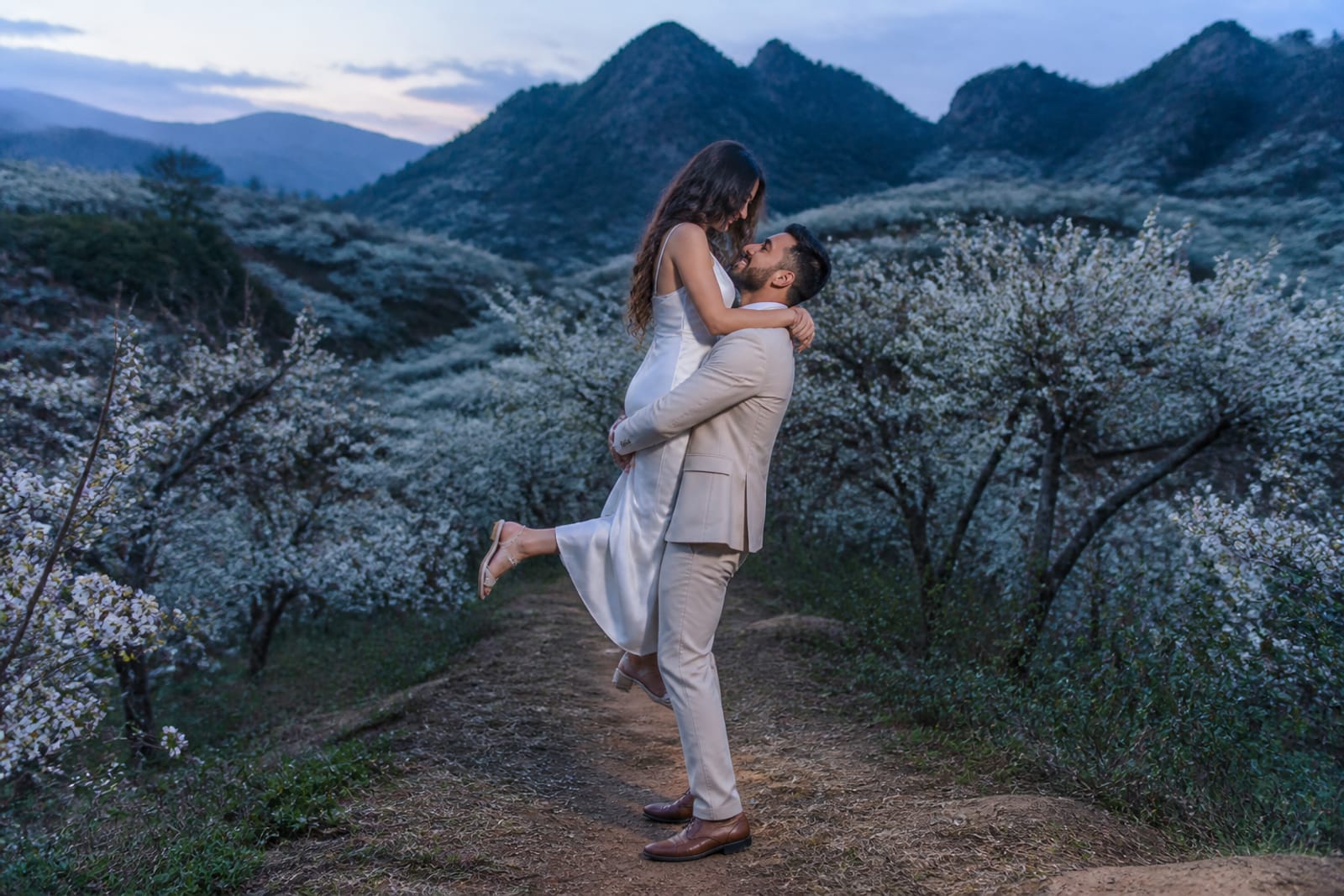
October–November and February–March are the sweet spots. Post-monsoon (Oct–Nov), the air is crisp, mist hangs thick after overnight rain, and rockfaces are wet but not dangerously slippery if you wear good shoes. February–March is similarly dry and cool. Avoid May–September: the monsoon brings unpredictable downpours, the rock face becomes treacherous, and flash floods are a real risk—a local guide will refuse to go. December–January is dry but can be foggy all day, which kills the golden hour effect. The water flow is strongest Oct–Mar (best for drama) and lowest Apr–May (clearer but less dynamic).
Season choice is not aesthetic—it's a safety and logistics gate.
What should you wear under an ao dai for a waterfall shoot?
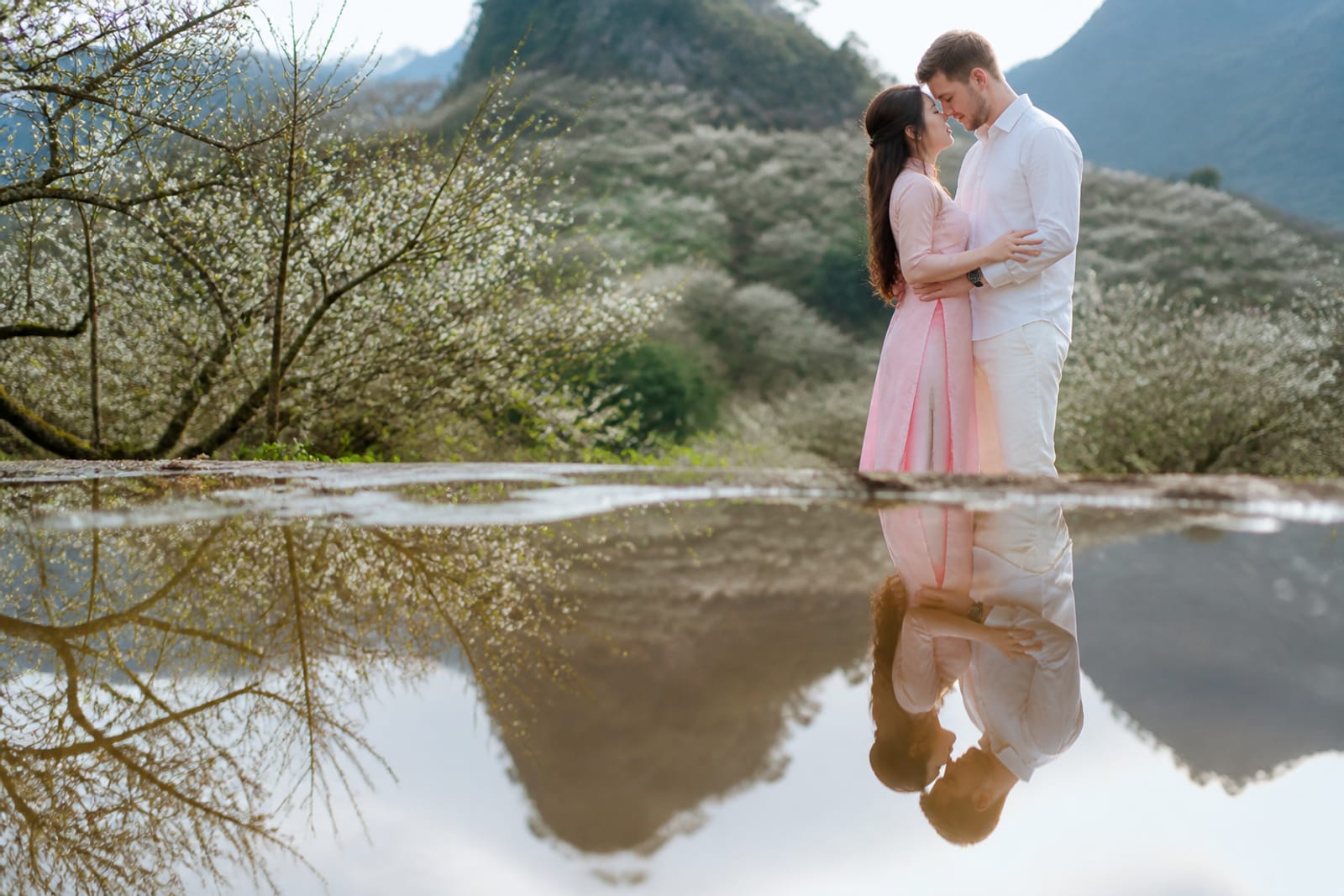
Wear a thin, dark slip or bodysuit under your ao dai—wet fabric clings and shows everything. If you're wearing a traditional ao dai, bring a second fitted layer to wear directly against your skin; the outer silk won't cling as visibly when damp. For pants-based outfits (ao dai with pants), choose high-waist linen or cotton trousers that dry quickly. Avoid anything with metal zips or embellishments that will rust or glint in water spray. Footwear is critical: bring two pairs of shoes—one for the walk and one for the shoot (grip soles or sandals that won't slip on wet rock). Many couples change outfits mid-shoot: one ao dai look dry on the rocks, a second outfit for the mist zone. Pack a microfiber towel in your photographer's bag to dry your arms and face between shots.
Wet fabric is not romantic if it reveals undergarments or reveals too much.
How does booking a waterfall shoot work if you're not local?
If you live in Hanoi, Cáo Studio directs the shoot with outfit, hair and makeup in one team—no coordinating three vendors across a 3-hour drive. The studio arranges the timeline (6 am pickup from your hotel, 9 am shoot start, 12 pm return) and knows the access permit requirements and best-light windows without guesswork. If you're arriving from outside Hanoi, book a Hanoi base for hair and makeup the evening before (hotel service available via Cáo Studio), then travel to Cao Bang early. If you're based in Ho Chi Minh City or Saigon, consider the Saigon team for local coordination and a guide who knows the falls intimately. For destinations outside Hanoi and Saigon—Hoi An, Da Nang, or other regions—ask us on WhatsApp about Hoi An travel dates. Do not hire a photographer who has not shot Dai Yem in the last 6 months; the trail changes after heavy rain and the falls are inaccessible for weeks.
Waterfall logistics are not standard photoshoot logistics—you need a team with site knowledge.
Pre-wedding or elopement: which format fits a waterfall shoot?
A full pre-wedding photoshoot spans multiple locations across one or two days—often Hanoi city (Huc Bridge, Old Quarter), countryside (Moc Chau tea fields), and a landmark like Dai Yem. This gives you range and tells a visual story across settings. An elopement is tighter: you, your partner, the photographer and one outfit at one location for 2–3 hours. Dai Yem suits elopement format well—the location is dramatic enough alone, and the drive time is justified by a focused, intimate shoot. If you want both Hanoi city framing and the waterfall, a two-day pre-wedding is the right choice. Some couples add a proposal or anniversary session at Dai Yem separately (a shorter, 1-hour visit focused on one emotional moment). The video element also matters: a short wedding film shot during a waterfall session feels cinematic because the light and location do half the work.
Frame the decision around what story you want to tell, not the location alone.
---
Quick comparison: Dai Yem vs. other North Vietnam waterfall shoots
| Location | Best light & season | Best for | Why it works | Logistics |
|---|---|---|---|---|
| Dai Yem, Cao Bang | 6–8 am, 4–5 pm; Oct–Nov, Feb–Mar | Intimate pre-wedding, elopement, ao dai drama | Thick mist, soft diffusion, water reflections, no crowds at dawn | 3-hour drive Hanoi; 15-min trek; permit required |
| Ban Gioc, Cao Bang | 8–10 am golden light; Oct–Nov, Feb–Mar | Couple's wide-angle frames, larger groups | Larger scale fall, easier access, wider foreground for positioning | 3.5-hour drive; more tourist traffic; easier walk |
| Trang An, Ninh Binh | Dawn (5–6 am), dusk (5–6 pm); Oct–Apr | Boat-based shoots, ao dai + cave framing | Limestone karst, cave backdrops, water reflections, controlled light on water | 2-hour drive Hanoi; boat booking required; more crowds mid-morning |
All three require an early or late-day commitment. Dai Yem wins on mist and intimacy; Ban Gioc on scale and access; Trang An on diversity of backdrops.
---
What to check before you book a waterfall pre-wedding shoot
Photographer site knowledge. Ask when they last shot at Dai Yem—not "have you shot waterfalls" (too vague). Request three recent frames from the location. If they hesitate or show generic waterfall shots from other regions, move on.
Weather backup plan. Monsoon rain or unseasonable downpour can make the trail unsafe. Confirm the photographer has a reschedule policy (many do not—check in writing via WhatsApp). Some teams offer a virtual rain-check; others charge again.
Access permits. Cao Bang has informal entrance protocols that change. A local photographer handles this; an outsider may be turned away or charged unofficial fees. Confirm your team has current access knowledge.
Outfit drying logistics. If you're wearing silk ao dai, wet fabric needs proper drying between shots. Does your photographer or makeup artist travel with microfiber towels and know how to dry and refresh makeup after mist exposure? This is a detail that separates a polished shoot from a damp one.
Transport and timing. The 3-hour drive means you lose 6 hours round-trip. Confirm your team will handle transport or give you clear pickup/dropoff times. Daylight only works Oct–Mar (sunrise ~6:30 am, sunset ~5:30 pm by late Feb). Schedule accordingly.
Video element. If you want a short film, the sound of falling water is loud—ask the videographer how they manage audio. A 30-second edit at the falls works better than narration over waterfall noise.
---
📸 Book on WhatsApp — pre-wedding shoot
---
FAQ
Can we shoot Dai Yem in the wet season (May–Sep)?
No. Flash floods and slippery rock faces make the trek unsafe. The monsoon also creates flat, grey light and unpredictable downpours. Wait for Oct–Nov or Feb–Mar when conditions are stable and mist is natural.
Do we need a local guide or permit?
A local guide is not officially required, but knowing access protocols and weather changes is essential—a photographer familiar with Cao Bang handles this. Confirm current access status with your team before booking.
How long does a Dai Yem shoot actually take?
Plan 2–3 hours on-site (6 am–9 am or 4 pm–7 pm). Add 3 hours drive each way from Hanoi. A full day commitment, best paired with a pre-wedding format that includes other locations.
Will our ao dai and makeup survive the mist and water spray?
Yes, if prepared. Wear a fitted slip underneath, bring a microfiber towel, and use makeup products designed for humidity (ask your makeup artist before the session). Plan outfit changes to dry between shots.
What if the mist is too thick on the day?
Thick mist creates soft, diffused light—ideal for pre-wedding photos. If it's so heavy you cannot see 10 metres ahead, visibility is unsafe for trekking. Confirm a reschedule policy with your photographer in writing before booking.
Can we combine Dai Yem with other locations in one pre-wedding shoot?
Yes. Many couples shoot Hanoi city (Old Quarter, Huc Bridge) one day and Cao Bang waterfalls another. Or combine Dai Yem with a tea field or cave location in Cao Bang region for a two-day journey. Discuss multi-location framing with your photographer. --- 💄 Book on WhatsApp — makeup & hair | 🌸 See pre-wedding lookbook
FAQ
Can we shoot Dai Yem in the wet season (May–Sep)?
No. Flash floods and slippery rock faces make the trek unsafe. The monsoon also creates flat, grey light and unpredictable downpours. Wait for Oct–Nov or Feb–Mar when conditions are stable and mist is natural.
Do we need a local guide or permit?
A local guide is not officially required, but knowing access protocols and weather changes is essential—a photographer familiar with Cao Bang handles this. Confirm current access status with your team before booking.
How long does a Dai Yem shoot actually take?
Plan 2–3 hours on-site (6 am–9 am or 4 pm–7 pm). Add 3 hours drive each way from Hanoi. A full day commitment, best paired with a pre-wedding format that includes other locations.
Will our ao dai and makeup survive the mist and water spray?
Yes, if prepared. Wear a fitted slip underneath, bring a microfiber towel, and use makeup products designed for humidity (ask your makeup artist before the session). Plan outfit changes to dry between shots.
What if the mist is too thick on the day?
Thick mist creates soft, diffused light—ideal for pre-wedding photos. If it's so heavy you cannot see 10 metres ahead, visibility is unsafe for trekking. Confirm a reschedule policy with your photographer in writing before booking.
Can we combine Dai Yem with other locations in one pre-wedding shoot?
Yes. Many couples shoot Hanoi city (Old Quarter, Huc Bridge) one day and Cao Bang waterfalls another. Or combine Dai Yem with a tea field or cave location in Cao Bang region for a two-day journey. Discuss multi-location framing with your photographer. --- [💄 Book on WhatsApp — makeup & hair](/makeup-and-hair) | [🌸 See pre-wedding lookbook](/lookbook)
Ao dai, makeup, hair and a local photographer in Hanoi or Saigon — one WhatsApp message.