/pre-wedding-photoshoot
Elopement Photos at Dai Yem Waterfall: Light, Season & Booking
Dai Yem waterfall, near Tam Duong in Lai Chau province, is a full-day commitment for an elopement shoot: plan 4–5 hours on-site to reach the falls, shoot in early-morning side light (6:30–8:30 am) or late-afternoon golden hour (4:00–6:00 pm), then return. The dry season (Sep–Nov) gives you the best light and safest footing; winter (Dec–Feb) brings mist that can obscure framing, while the wet season (May–Aug) risks flash flooding and dangerous rocks. Wear layers you can shed, water-resistant shoes (not sandals) and bring a second outfit packed in a dry bag—the hike is muddy and the spray soaks everything. Cáo Studio works with partners in the region to coordinate hair and makeup at a nearby base, then directs your movement through the water and around the rocks in real light, not posed stills; the shoot is demanding, so choose a team (not a freelancer with a phone) who understand how to frame you walking, looking at each other and moving in and out of mist. Confirm accessibility, current water levels and permit needs with a local guide before booking. ---
How Do You Choose Between a Local Guide and a Directed Photoshoot Team?
A guide with a camera will show you the falls, frame you standing still, and hand you JPEGs in a week. A directed team—outfit styling, hair and makeup, a cinematographer-level photographer, edited films and prints in 48 hours—treats the waterfall as a story location, not a backdrop. The trade-off: guides are cheaper and flexible; directed teams cost more but deliver frames you'll frame at home. If you want a photo of yourselves at the falls, hire a guide. If you want the waterfall as a chapter of your elopement, book a team trained in movement, light and continuity. Cáo Studio's pre-wedding & elopement shoots are built for locations like Dai Yem: one team (stylist, hair/makeup artist, photographer) manages everything so you focus on each other.
📸 Book on WhatsApp — pre-wedding photoshoot
What Season Gives You the Best Light at Dai Yem?
| Season | Light Quality | Water Level | Footing | Crowds | Best For |
|---|---|---|---|---|---|
| Sep–Nov | Side light, no haze | Low to moderate | Dry, safe | Few | Elopement shoots; soft frames without mist |
| Dec–Feb | Golden but misty | Moderate | Slippery | Few | Moody, muted palette; risky for large setups |
| Mar–Apr | Harsh, washed-out | Low | Dry | Growing | Not ideal; light is flat |
| May–Aug | Golden (early/late only) | High, dangerous | Treacherous | Moderate | Dangerous; flood risk; only sunrise/sunset viable |
September through November is the window: water level is calm enough to wade, rocks are dry enough to position yourself safely, and the air is clear. Early morning (6:30–8:30 am) gives side light that separates you from the rock face; late afternoon (4:00–6:00 pm) adds warmth but requires leaving by dusk. Winter mist can soften the backdrop (romantic for some, but uncontrollable for directed framing). May to August is wet season in this region—flash floods are real, and the spray becomes a hazard rather than a feature. Book your shoot between mid-September and mid-November for the highest chance of the light you imagined.
What Should You Wear, and How Do Outfit Changes Work?
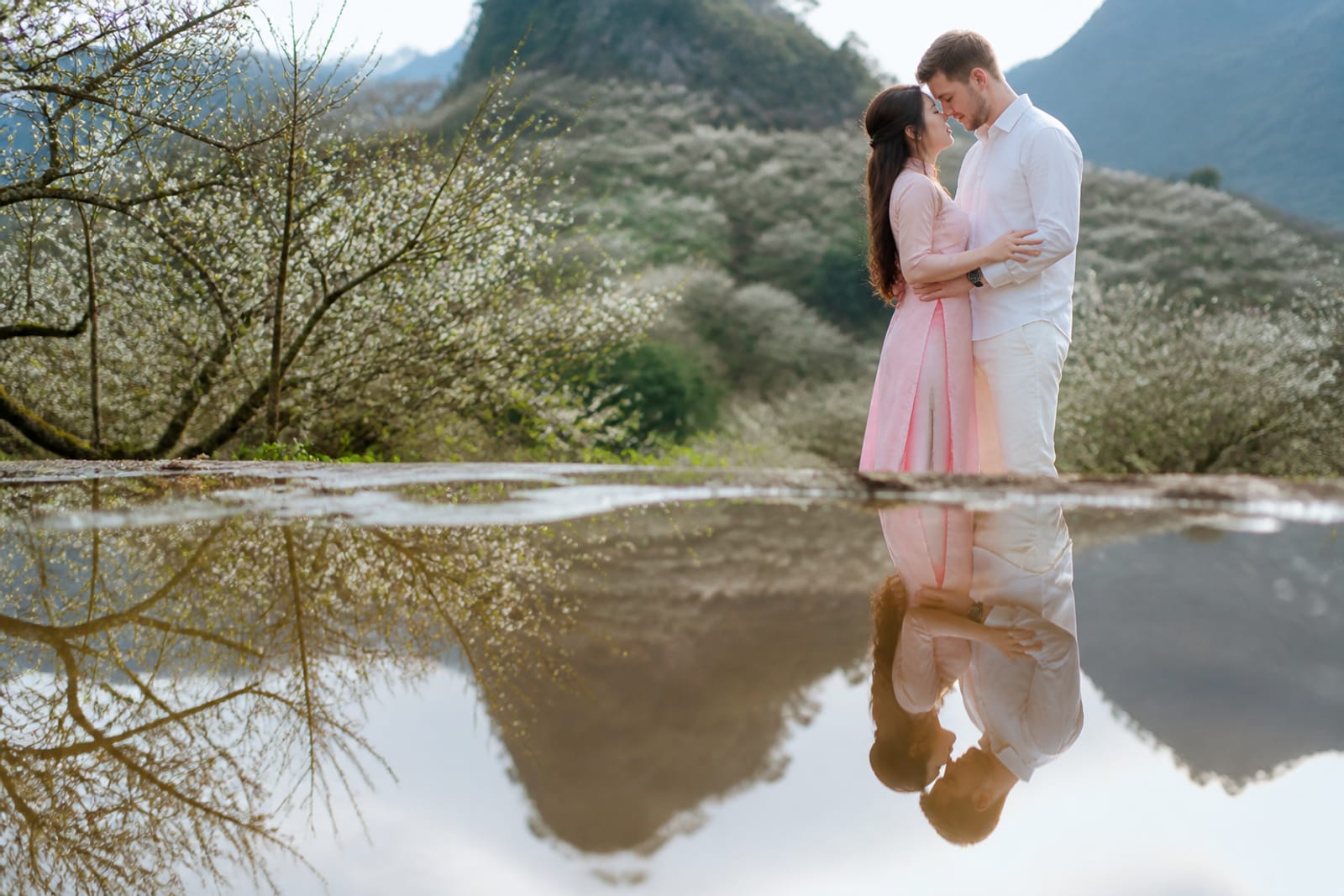
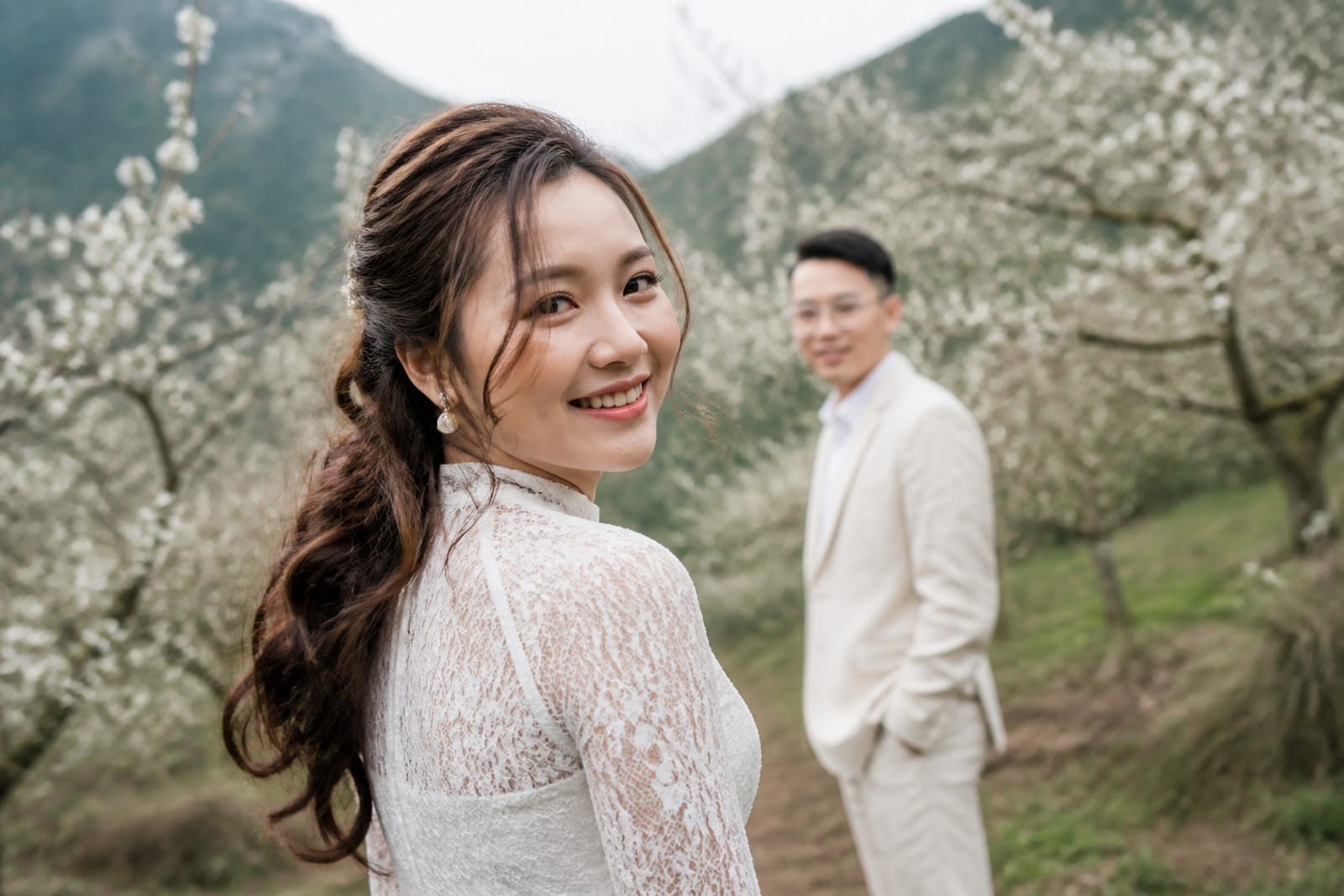
The hike to Dai Yem is steep, muddy and takes 60–90 minutes one way. Wear hiking shoes (waterproof, grip-soled) from the base camp, not your shoot outfit. Pack your first look—a simple dress, suit or ao dai—in a waterproof dry bag; change on-site in a sheltered spot (or plan a second outfit swap mid-shoot, in which case bring both in separate bags). Ao dai works beautifully at waterfalls if you choose a fitted silk that won't cling when wet and coordinate with the photographer on framing (avoid wide sleeves that catch on rocks). For Western wedding dress, consider a knee-length or tea-length version that won't drag through water and mud during the hike back. Bring a lightweight robe or sarong to wear over your outfit during the trek; change into it as you leave. Hair should be styled for movement—loose waves hold mist and spray better than a strict updo; makeup should be waterproof foundation, long-wear lip stain and minimal face powder (spray soaks everything). Makeup & hair at your hotel can be coordinated with your team, but plan for touch-ups at the waterfall location if you're arriving after a hike.
How Does a Directed Shoot Actually Work on-Site?
A directed team arrives with you, scouts framing while light is still soft, then guides you into position—never says "smile at the camera," instead: "Walk toward the mist, look at each other as you step." The photographer shoots wide first (you in the landscape), then medium (you two moving), then detail (hands, expressions, the water). Hair and makeup touch up between setups; the stylist adjusts your outfit for each shot. This takes 90 minutes to 2 hours of actual shooting time, not 15-minute poses. The waterfall backdrop moves constantly—mist shifts, light changes, rocks reflect differently every second—so a team experienced in real-time framing catches frames a guide with a list of poses will miss. Post-shoot, you receive edited images and a short vertical film within 48 hours; prints and albums can be ordered separately. See the lookbook to see how Cáo Studio frames couples in natural motion before you book.
What Logistics and Costs Should You Plan For?
Dai Yem is a full-day trip from Hanoi (5–6 hours' drive), so budget travel time, a local guide fee (required for access and safety), base camp setup and a early start. A directed team coordinates with the local guide, pays their fee separately and handles wardrobe, hair and makeup independently—this means higher upfront cost than a lone photographer, but no day-of scrambling to find a makeup artist or swap outfits. Ask on WhatsApp for a quote: pricing factors include travel distance, number of outfits, whether hair/makeup is on-site or at a nearby base, and whether you want both stills and a short film. Permits are not typically required for couples, but confirm with your local guide. Entry to Tam Duong commune is free, but the guide's time and local access fees apply—ask the guide directly for current rates. Factor in 1–2 nights' accommodation nearby (Tam Duong or nearby towns) if you're coming from Hanoi; return travel the same day is possible but exhausting after a full shoot.
What Can Go Wrong, and How Do You Avoid It?
Water level and weather. Heavy rain upstream can raise water level overnight and make rocks impassable. Check weather and water condition reports with your guide 1–2 days before; if conditions look risky, reschedule. A directed team is more flexible than a guide—they can pivot to a nearby backup location or compress the shoot and still deliver frames.
Slippery footing in wet spray. Wear water shoes with grips, not hiking boots that slip on algae. Test your shoes on rocks before the shoot starts.
Light windows are small. Sunrise (6:30–8:00 am) and sunset (4:30–6:30 pm) are your 90-minute windows for side light. Midday (10 am–3 pm) is flat and harsh. Book your shoot at sunrise or sunset, not mid-morning.
Mist obscures framing. Winter and wet season bring thick mist that hides the upper falls and softens your outline. If your vision is a clear, sharp waterfall backdrop, book Sep–Nov. If you want moody and romantic, winter works—just confirm the mood with your photographer before the shoot.
Outfit continuity. If you change clothes mid-shoot, the video won't flow (shots of you in dress A, then suddenly dress B). Plan one signature look, or make the change a clear narrative moment (first look in simple dress, then ao dai for the walk-out frame). A directed team will storyboard this with you.
Fatigue and impatience. The hike + shoot + hike out is 6–7 hours. You'll be tired, hungry and wet by hour 4. Schedule realistic shoot duration (90–120 minutes of actual shooting, not a 4-hour "all-day" session where half is waiting). Bring water, snacks and a change of socks.
---
What to Check Before You Book
- Guide and access. Confirm the name and contact of the local guide you'll use; check their access permits are current.
- Water level and forecast. Ask your guide for current water conditions and a 7-day weather forecast 1 week before the shoot.
- Footwear and gear. Own or rent proper water shoes; bring a dry bag for a second outfit; pack layers you can shed.
- Light window. Sunrise or sunset only—confirm exact times for your shoot date with your photographer.
- Accessibility for hair/makeup. If you're booking a directed team with hair and makeup, confirm where styling happens (at a base camp or on-site).
- Backup plan. Ask your team: if weather cancels, what's your rescheduling policy? Cáo Studio offers flexible rebooking within a season.
- Deliverables. Confirm how many edited images, whether a short film is included, and the 48-hour turnaround applies to Dai Yem (remote locations sometimes take slightly longer—ask).
---
Dai Yem elopement shoots reward couples who are clear about their vision: intimate, real-light frames, not tourist snapshots. A directed team of a stylist, makeup artist and cinematographer-level photographer costs more than a guide with a camera, but delivers a story—not just a location. Choose based on what you'll treasure: a memory souvenir or a frame you'll live with. Book with Cáo Studio for pre-wedding shoots coordinated end-to-end; for Hanoi-based couples, we handle travel, styling and directed framing so you focus on each other. Confirm accessibility, season and light timing with a local guide before committing to dates.
📸 Book on WhatsApp — pre-wedding photoshoot
Explore couple photoshoots and wedding day photography for other shoot styles and locations.
FAQ
Can we do an elopement at Dai Yem in the rainy season?
Technically yes, but risky—water levels rise fast, rocks become treacherous, and mist obscures framing. Sep–Nov is safer and offers clearer light. If your heart is set on a specific rainy-season date, ask your guide about water reports 1 week before; most teams will advise rescheduling.
How long is the hike to Dai Yem, and is it difficult?
60–90 minutes one way, moderately steep and muddy year-round. Wear proper hiking shoes and plan rest time. A directed team will pace with you; it's not a race.
Should we hire a makeup artist for the waterfall, or do it beforehand?
At a base camp before you hike, makeup lasts 2–3 hours and spray will damage it mid-shoot. On-site touch-ups after the hike preserve your look for the shoot. Cáo Studio coordinates makeup at your hotel or nearby; confirm logistics when you book.
What's the difference between sunrise and sunset shoots at Dai Yem?
Sunrise (6:30–8:00 am) gives cool, side light and fewer crowds; you'll hike out in daylight. Sunset (4:30–6:30 pm) adds warmth but requires headlamps for the return hike and you're racing against dusk. Both are valid—choose based on your energy and mood.
Can we book a elopement shoot at Dai Yem from Ho Chi Minh City?
Yes, but plan a 2–3 day trip (travel time is 8–10 hours from Saigon). Cáo Studio has a Saigon base; WhatsApp for Hanoi-to-Lai-Chau coordination. A Hanoi-based team is typically closer for this shoot.
Do we need a permit or permission to shoot at Dai Yem?
Not typically for couples, but confirm with your local guide before booking. Some seasons or new regulations may apply—ask your guide for current requirements.
What's included in a Cáo Studio elopement shoot at Dai Yem?
Exact inclusions (hours, outfit changes, edited images, film) are confirmed on WhatsApp when you get a quote. Different packages suit different visions; message to discuss what you want.
FAQ
Can we do an elopement at Dai Yem in the rainy season?
Technically yes, but risky—water levels rise fast, rocks become treacherous, and mist obscures framing. Sep–Nov is safer and offers clearer light. If your heart is set on a specific rainy-season date, ask your guide about water reports 1 week before; most teams will advise rescheduling.
How long is the hike to Dai Yem, and is it difficult?
60–90 minutes one way, moderately steep and muddy year-round. Wear proper hiking shoes and plan rest time. A directed team will pace with you; it's not a race.
Should we hire a makeup artist for the waterfall, or do it beforehand?
At a base camp before you hike, makeup lasts 2–3 hours and spray will damage it mid-shoot. On-site touch-ups after the hike preserve your look for the shoot. Cáo Studio coordinates makeup [at your hotel](/makeup-and-hair) or nearby; confirm logistics when you book.
What's the difference between sunrise and sunset shoots at Dai Yem?
Sunrise (6:30–8:00 am) gives cool, side light and fewer crowds; you'll hike out in daylight. Sunset (4:30–6:30 pm) adds warmth but requires headlamps for the return hike and you're racing against dusk. Both are valid—choose based on your energy and mood.
Can we book a elopement shoot at Dai Yem from Ho Chi Minh City?
Yes, but plan a 2–3 day trip (travel time is 8–10 hours from Saigon). Cáo Studio has a [Saigon base](/saigon); WhatsApp for Hanoi-to-Lai-Chau coordination. A [Hanoi-based team](/hanoi) is typically closer for this shoot.
Do we need a permit or permission to shoot at Dai Yem?
Not typically for couples, but confirm with your local guide before booking. Some seasons or new regulations may apply—ask your guide for current requirements.
What's included in a Cáo Studio elopement shoot at Dai Yem?
Exact inclusions (hours, outfit changes, edited images, film) are confirmed on WhatsApp when you get a quote. Different packages suit different visions; message to discuss what you want.
Ao dai, makeup, hair and a local photographer in Hanoi or Saigon — one WhatsApp message.