/pre-wedding-photoshoot
Elopement photos at Hanoi Old Quarter: guide & booking
An elopement photoshoot in Hanoi Old Quarter captures you on the streets where lanterns hang above cafés and colonial shutters frame alleyways—intimate, unscripted moments with no wedding party or formal timeline. Cáo Studio – Makeup & Photoshoot books 2–4 hour sessions across Hanoi, including Old Quarter coverage. Sessions run early morning (6–8 a.m., soft light, fewer crowds) or late afternoon (4–6 p.m., golden glow). You'll meet the photographer and makeup artist at your hotel or the studio, finalize your outfit (áo dài, Western dress, or both), and move through pre-scouted locations. Weather matters: October–November is dry and cool (ideal); December–February brings overcast, drizzly conditions (moody tone, plan indoors as backup); March–April is humid with haze; May–September is hot, humid, with sudden downpours. Before booking, confirm session length, edited photo count, outfit changes and delivery timeline on WhatsApp.
Why does the Old Quarter suit elopement shoots?
The Old Quarter's appeal lies in its unplanned visual layers: 100-year-old shophouse façades, draped silk scarves, narrow pedestrian lanes (closed to traffic at dawn), lantern-lit tunnels and locals setting up morning market stalls. No manicured backdrop needed. The streets are tight enough that you're physically close to your partner; the architecture frames you naturally. Morning sessions capture empty alleys and soft, diffused light before tourist crowds (roughly 8 a.m. onward). Late afternoon light enters the lanes horizontally, turning shutters and tile roofs into amber geometry. The trade-off: if you arrive in peak summer (July–August) or during typhoon season (September–November rain), heat and humidity reduce shooting hours, and downpours end sessions mid-afternoon.
📸 Book on WhatsApp — ao dai photoshoot
What's the difference between Old Quarter and other Hanoi elopement spots?
| Location | Best for | Light window | Why it works |
|---|---|---|---|
| Old Quarter (36 Streets) | intimate, cultural, narrow frames | 6–8 a.m., 4–6 p.m. | authentic shophouse layers, lanterns, traffic-free dawn |
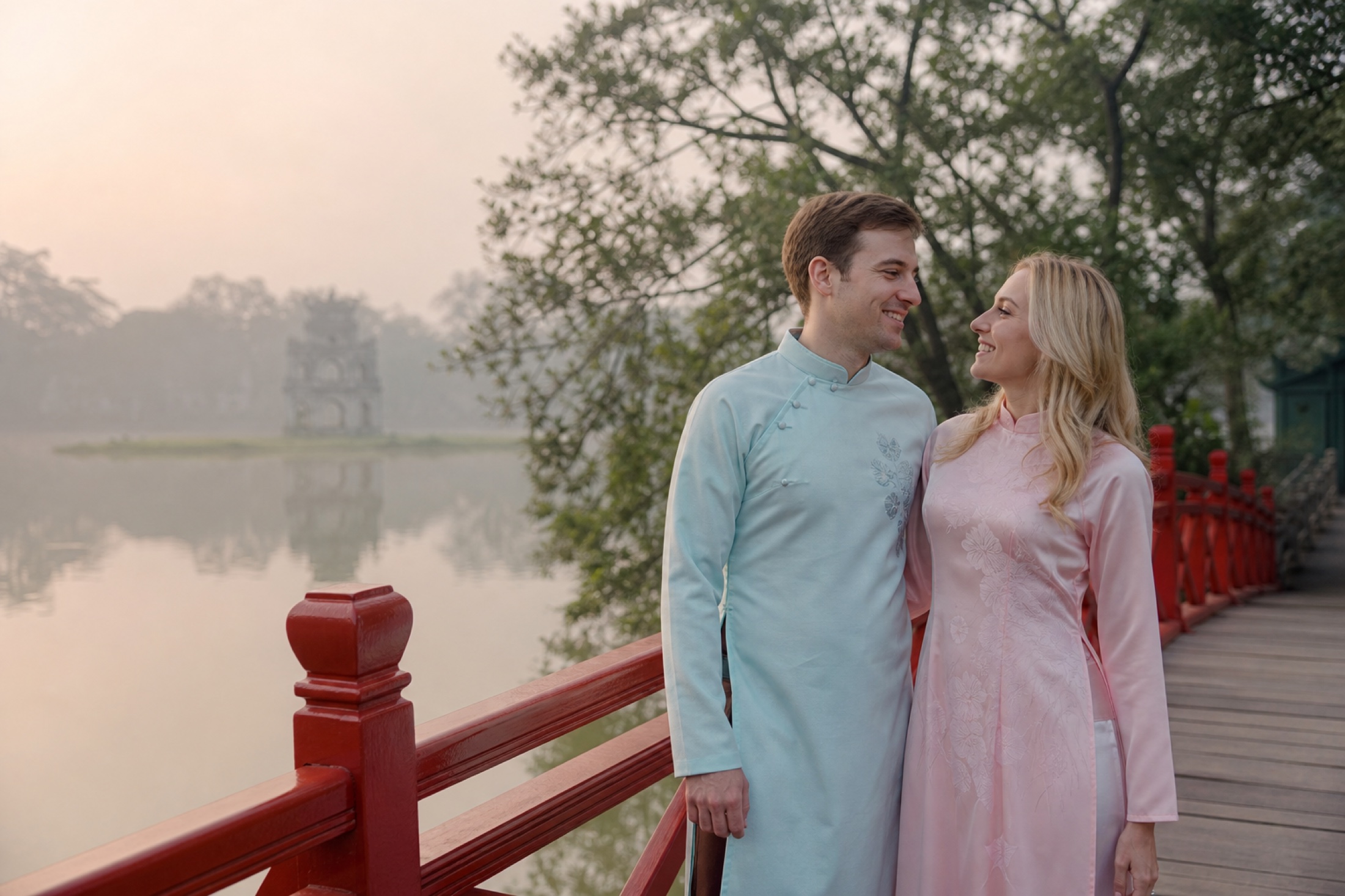
| Hoan Kiem Lake perimeter | couples strolling, water reflections | 5:30–7 a.m., 5–7 p.m. | open sky, iconic red bridge, public weekend closing |
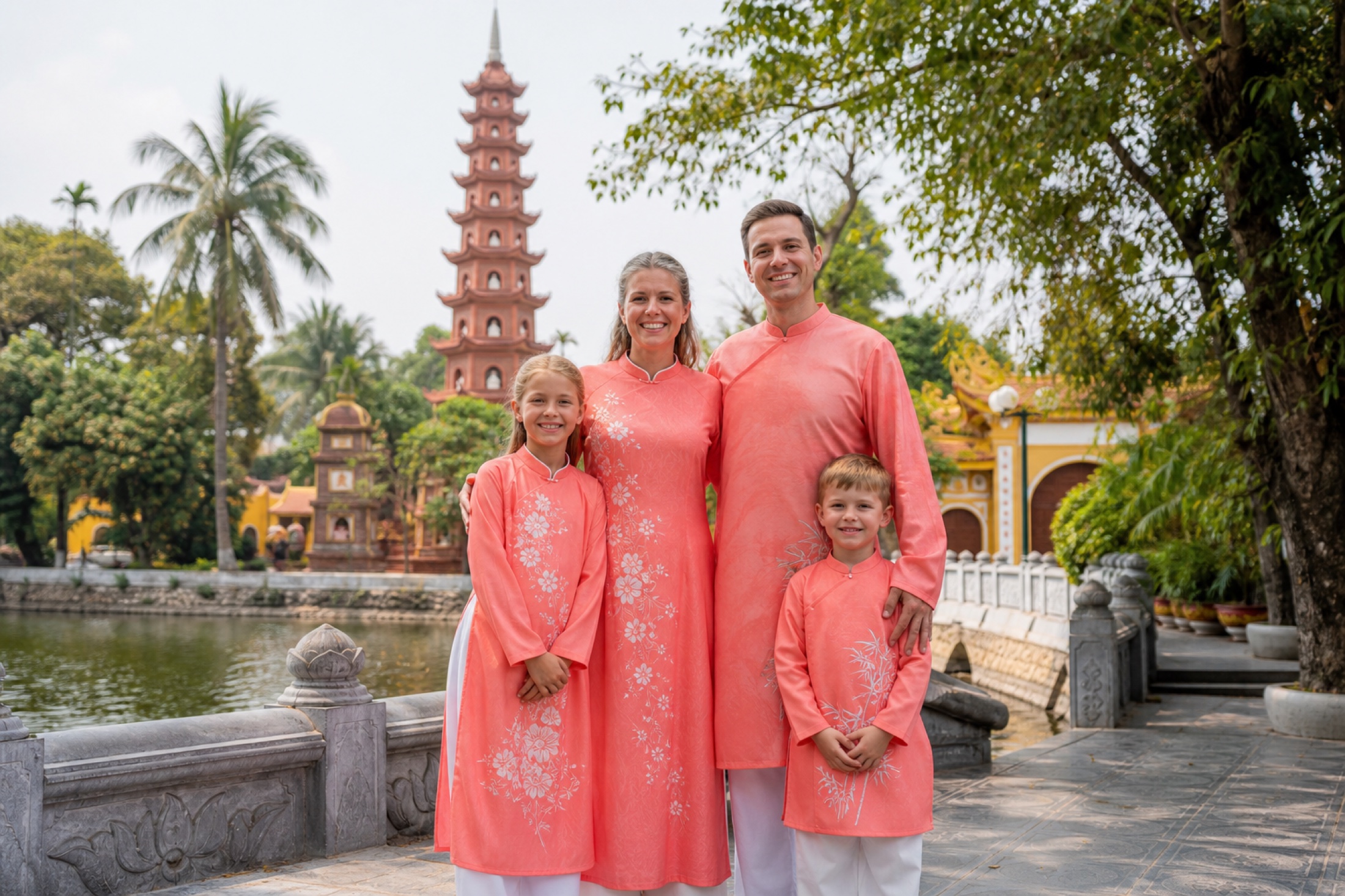
| Tran Quoc Pagoda & surrounds | spiritual, lakeside, temple-robed contrast | 6–8 a.m., 4–5:30 p.m. | elevated views, morning mist, requires etiquette respect |
| French Quarter (Ba Trieu, Ly Thuong Kiet) | colonnaded elegance, colonial nostalgia | 5:30–7 a.m., 4–6 p.m. | wider streets, Deco windows, less pedestrian congestion |
| Phan Dinh Phung in autumn | tree-lined romance, seasonal mood | 5–7 p.m. (Oct–Nov only) | golden canopy, peach blossoms Feb, lotus June–July |
The Old Quarter rewards early starts: empty lanes let the photographer move freely and capture you without blurred bystanders. Hoan Kiem Lake offers more open framing but draws crowds by mid-morning. Tran Quoc requires respectful timing (early, before crowds and ceremonies). French Quarter streets are wider—useful if you prefer less enclosed framing. If you're set on autumn foliage, Phan Dinh Phung on Hanoi's northeast edge delivers that only October–November; otherwise, other quarters work year-round.
How should you time an Old Quarter elopement shoot?
Book early morning (6–8 a.m.) to avoid crowds, heat and afternoon chaos. The Old Quarter has no traffic restrictions, but foot traffic is minimal before 8 a.m.—you'll move through near-empty lanes with only shopkeepers setting up. Light is soft, diffused and flattering. By 9 a.m., local breakfast crowds arrive; by 10 a.m., tour groups fill the main streets. Afternoon sessions (4–6 p.m.) catch golden light entering the alleys, but you're competing for space with evening shoppers and restaurant prep. Winter (December–February) adds complexity: sunrise is around 6:30 a.m., so early shoots need a 5:30 a.m. hotel pickup. Morning haze often lingers until 8–9 a.m., softening light but reducing contrast. If you're not a morning person, late afternoon works, but book before 4 p.m. to guarantee unrushed location scouting and makeup touch-ups.
What should you wear for Old Quarter elopement photos?
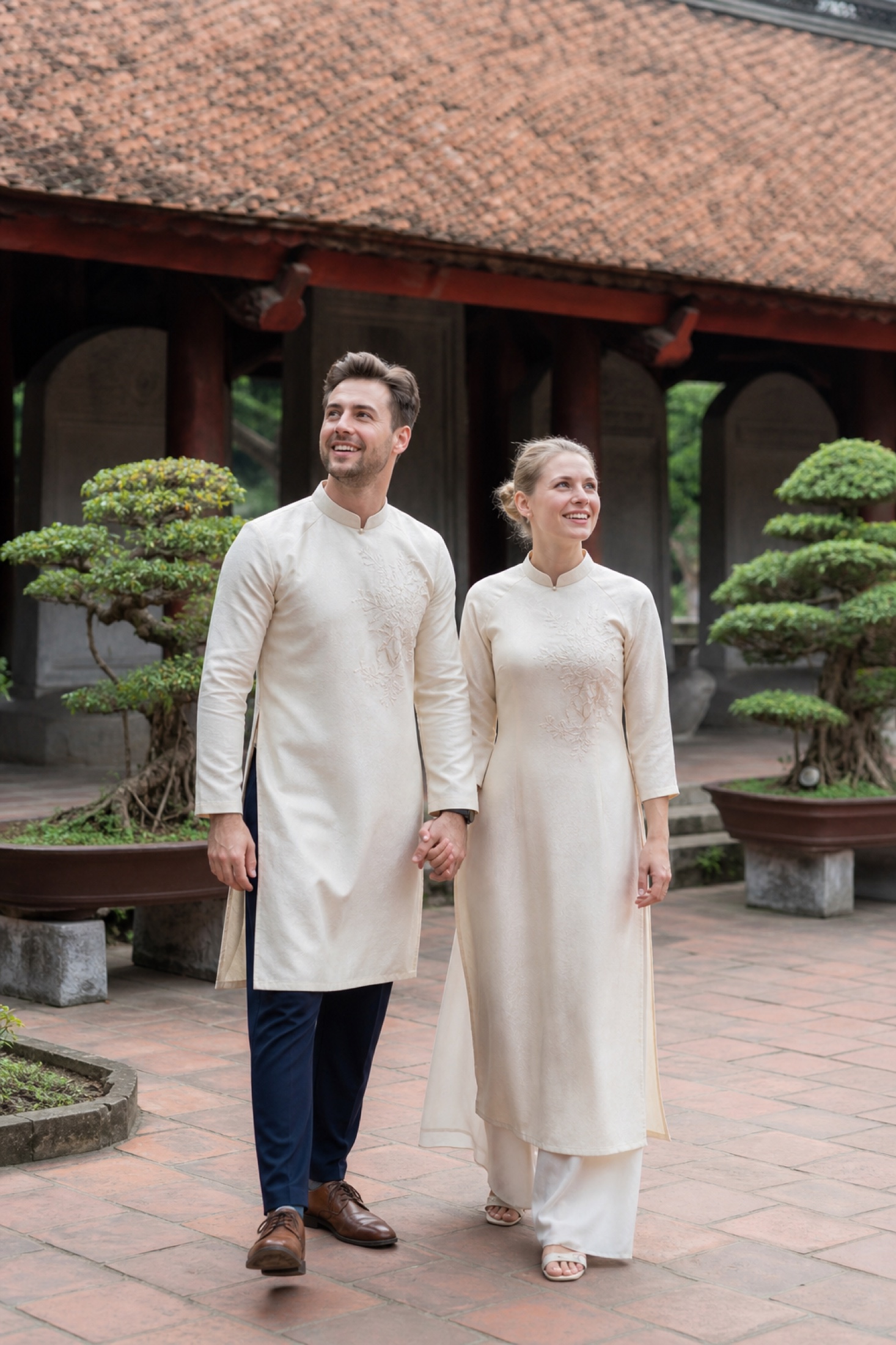
An áo dài works exceptionally well in the Old Quarter: the flowing silk complements narrow lanes, lantern backgrounds and lantern-lit doorways feel culturally integrated, not borrowed. Choose solid or subtle patterns (stripes photograph cleaner in tight spaces than florals). If you prefer Western dress, a simple, flowing gown or jumpsuit suits the narrow frames—avoid heavily beaded looks that compete with shophouse texture. Layering matters: bring a light shawl or áo dài overshirt for cooler early-morning shots and to drape over shoulders if you enter a temple. Wear comfortable walking shoes (you'll navigate uneven cobblestones and tight passages); save heels for the final location or a planned sit-down café shot. Many couples rent ao dai in Hanoi the day before to avoid packing wrinkles. Makeup should be light, waterproof (morning humidity or unexpected drizzle in shoulder seasons) and minimalist—heavy contouring competes with textured backdrops and won't read well in narrow alley light.
How does the shoot day actually run?
You confirm your hotel address or the studio with Cáo Studio on WhatsApp. The makeup artist arrives 60–90 minutes before your shooting start time. They apply makeup and do a quick outfit check (steaming, hem adjustment, áo dài tie verification). The photographer briefs you on the first 2–3 locations, expected light and how long each stop takes. You travel by taxi or Grab (you arrange or the studio suggests). The photographer leads; you walk, pause, interact—not posed but directed. A typical 2-hour session covers 4–6 locations (a narrow lane, a café entrance, a temple courtyard, a fabric shop, a rooftop pocket, a lantern-hung tunnel). Breaks happen naturally when you swap outfits or rest. The photographer shoots 200–400 raw frames per hour. Weather forces rapid pivots: if drizzle starts, you move indoors (a silk shop, café interior, temple shelter) or wrap early. By session end, you have a shot list and a timeline for edited photo delivery (confirmed in your WhatsApp booking).
What should you check before booking an Old Quarter elopement shoot?
- Session length & edited count: Ask on WhatsApp exactly how many hours and edited images are included. A 2-hour shoot and a 4-hour shoot have very different location counts.
- Outfit allowance: Confirm whether makeup + styling for one outfit or two is included. Áo dài rental fees (if not included) are separate.
- Backup plan: Check the photographer's weather policy. Do you reschedule for free if there's rain, or is a partial refund offered?
- Delivery timeline: Edited photos are typically sent within 2–4 weeks. Confirm the exact turnaround on your booking.
- Hotel pickup vs. studio meeting: Agree where you'll meet. Hotel pickup adds convenience; studio meetings save travel time.
- Language & communication: Confirm the photographer speaks English if you're a non-Vietnamese speaker. Cáo Studio works with international couples; clarify on WhatsApp.
- Printed/album keepsakes: Ask if wedding photo albums or prints & frames are available separately—most couples want a hard copy.
Book at least 2–3 weeks ahead, especially in October–November (Hanoi's peak elopement season). Avoid booking during Tet (late January–mid-February) when many services close for several days.
---
Comparing Cáo Studio elopement shoots to alternatives
Cáo Studio offers makeup + photography bundled, hotel flexibility and culturally informed location scouting. Freelance photographers (found via Instagram or international wedding boards) often cost less but don't include styling—you're managing makeup separately, which adds coordination friction. Resort package deals (if you're staying at a hotel) sometimes bundle photography, but they're designed for romantic portraits, not intimate elopement storytelling. Studio chains in Hanoi (Xuan Studio, Hanh Phuc) offer similar packages; the difference is Cáo Studio's focus on English-speaking couples and pre-wedding narratives, not just weddings. All reputable studios shoot RAW and offer edited digital files; the variation is in turnaround time, outfit inclusion and retouching depth. Before you decide, ask each studio the same three questions: What's included in a 3-hour session? How many outfits can I change into? When do I get edited photos? Compare the answers, then book the one that matches your timeline and comfort level.
---
Seasonal decision tree: when to shoot
October–November (ideal): Dry, 20–25°C, soft light, no haze. Book 6–8 weeks ahead. Early morning the best time for empty streets. Elopements booked solid; plan early.
December–February (moody): Cool (10–20°C), overcast, drizzly. Light is flat but intimate; expect backup indoor locations (cafés, temple shelters). Tet (late Jan–mid-Feb) shuts services; avoid. Best for couples wanting a quiet, introspective mood.
March–April (humid haze): Mild but hazy, frequent drizzle. Light is muted; outlines soften. Viable if you book indoors (silk shops, lantern workshops) as primary locations. Fewer crowds; good for flexible couples.
May–September (hot & rainy): 30–35°C+, afternoon downpours and typhoon risk Sep–Nov. Sunrise shoots (5:30–7 a.m.) before heat peak. Embrace indoor tea-house or market-stall shots. Doable but requires stamina and backup plans.
Tet (late Jan–mid-Feb): Many studios close 3–7 days. Landmarks packed just before. Avoid unless you have a firm date. If you must shoot during Tet, book private, early-morning sessions away from main temples.
---
What to expect from Cáo Studio after booking
Once you WhatsApp the studio with your dates and preferences, you'll get a quote that outlines session length, outfit changes, makeup inclusion and delivery timeline. You confirm via WhatsApp (no email back-and-forth). The studio sends a simple pre-shoot form: your names, contact number, Old Quarter preferences (specific streets or vibes), any outfit rentals needed. If you rent an áo dài, the studio coordinates sizing 1–2 weeks prior. Three days before the shoot, you receive the photographer's mobile number and a brief itinerary (hotel pickup time, first location). On shoot day, you arrive at the hotel or studio 60 minutes early for makeup. The session flows naturally. After the shoot, you wait 2–4 weeks for the edited gallery link on WhatsApp. You download full-resolution files and can order prints or custom albums if desired. No surprises; transparency is built in.
---
📸 Book on WhatsApp — couple & family photoshoot
FAQ
Do I need a visa or permit to shoot in Hanoi Old Quarter?
No special permit for tourists. Your passport and tourist visa (if required) are enough. The photographer is familiar with local authorities and route timing.
Can I shoot in an áo dài rented from somewhere other than Cáo Studio?
Yes, you can bring a rented or owned áo dài. Confirm fit and styling with the makeup artist on shoot day; steam or press it the night before.
What happens if it rains during an Old Quarter elopement shoot?
Light drizzle is workable (moody texture). Heavy rain triggers backup: move indoors (silk shops, cafés, temple shelters) or reschedule. Clarify the studio's rain policy on WhatsApp before booking.
How many locations will we visit in a 2-hour session?
Typically 4–6 stops, depending on layout, outfit changes and whether you pause for café breaks. The photographer chooses based on light, crowd flow and your preferences.
Can the photographer also shoot video or do we need a separate videographer?
Cáo Studio offers wedding & pre-wedding video separately. Confirm on WhatsApp if you want both photo and video; some packages bundle them.
Is the Old Quarter accessible by wheelchair or mobility aid?
Narrow, uneven cobblestones and steep, stepped passages make the Old Quarter challenging for mobility devices. Discuss alternative Hanoi locations with the studio if access is a concern.
How far in advance should I book an Old Quarter elopement shoot?
2–4 weeks for flexibility, 6–8 weeks in October–November (peak season). Tet bookings (late Jan–mid-Feb) should be made 3 months ahead, if at all.
FAQ
Do I need a visa or permit to shoot in Hanoi Old Quarter?
No special permit for tourists. Your passport and tourist visa (if required) are enough. The photographer is familiar with local authorities and route timing.
Can I shoot in an áo dài rented from somewhere other than Cáo Studio?
Yes, you can bring a rented or owned áo dài. Confirm fit and styling with the makeup artist on shoot day; steam or press it the night before.
What happens if it rains during an Old Quarter elopement shoot?
Light drizzle is workable (moody texture). Heavy rain triggers backup: move indoors (silk shops, cafés, temple shelters) or reschedule. Clarify the studio's rain policy on WhatsApp before booking.
How many locations will we visit in a 2-hour session?
Typically 4–6 stops, depending on layout, outfit changes and whether you pause for café breaks. The photographer chooses based on light, crowd flow and your preferences.
Can the photographer also shoot video or do we need a separate videographer?
Cáo Studio offers [wedding & pre-wedding video](/wedding-video) separately. Confirm on WhatsApp if you want both photo and video; some packages bundle them.
Is the Old Quarter accessible by wheelchair or mobility aid?
Narrow, uneven cobblestones and steep, stepped passages make the Old Quarter challenging for mobility devices. Discuss alternative [Hanoi locations](/hanoi) with the studio if access is a concern.
How far in advance should I book an Old Quarter elopement shoot?
2–4 weeks for flexibility, 6–8 weeks in October–November (peak season). Tet bookings (late Jan–mid-Feb) should be made 3 months ahead, if at all.
Ao dai, makeup, hair and a local photographer in Hanoi or Saigon — one WhatsApp message.