/pre-wedding-photoshoot
Elopement photos at Mui Ne fishing village: guide & local photographer
Elopement photography at Mui Ne fishing village means shooting in one of Vietnam's driest areas (Nov–Apr best for light; May–Nov brings afternoon showers) with a photographer experienced in tight spaces, moving boats and salt-water logistics. Sessions run 2–3 hours around sunrise or late afternoon when light is golden and fishermen are active. You'll need a local team (Cáo Studio operates in Hanoi, Ho Chi Minh City and Hoi An; for Mui Ne, hire a Binh Thuan-based photographer who knows the village's rhythms). Avoid midday heat, wear breathable cotton under any formal dress, bring a backup outfit for salt spray, and confirm the photographer's insurance and backup gear before you commit.
Why Mui Ne's fishing villages work for elopement shoots
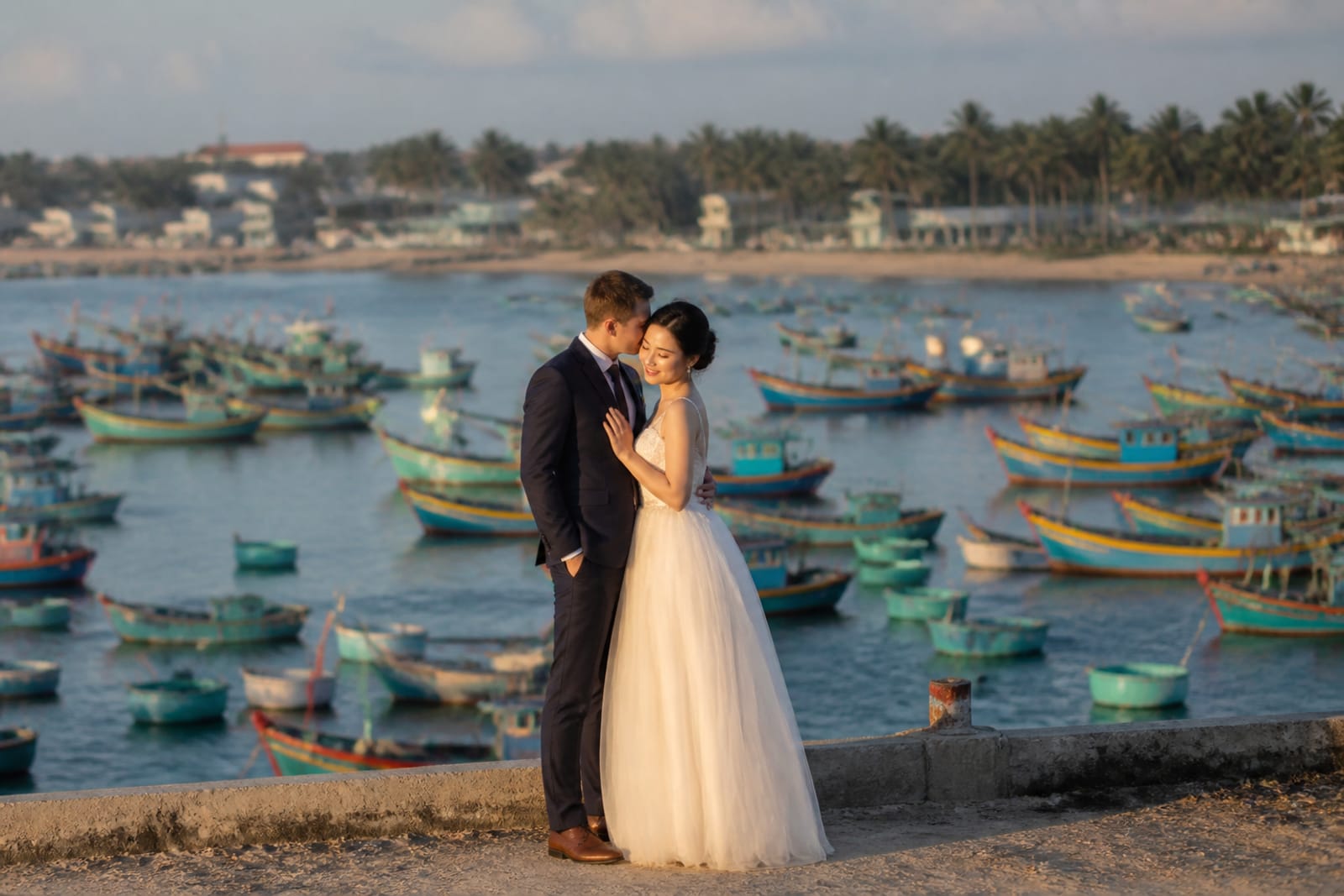
Mui Ne fishing villages—particularly around Mui Ne town and Ke Ga lighthouse area—offer drama that most travellers expect only from Hoi An or Ha Long. Weathered wooden boats, nets drying on sand, morning mist over the water, and fishermen in motion create narrative frames without feeling staged. Light here is directional and warm from 5:30 to 6:30 am and again from 4:30 to 6:00 pm; the sky holds colour longer than in northern Vietnam because of the open coastal horizon.
The tradeoff: Mui Ne's fishing activity is tidal and seasonal. Boats move between 4:00 and 6:30 am (peak catch), and again around 4:00 pm. Salt spray corrodes camera gear and dress hems. Afternoon winds (Nov–Mar especially) blow sand onto fabric and skin. You cannot stroll and reset; the photographer must anticipate, position and shoot in sequence. A director with pre-wedding or editorial experience outperforms a studio-trained technician here.
The light is real and specific. That's why it works.
📸 Book on WhatsApp — ao dai photoshoot
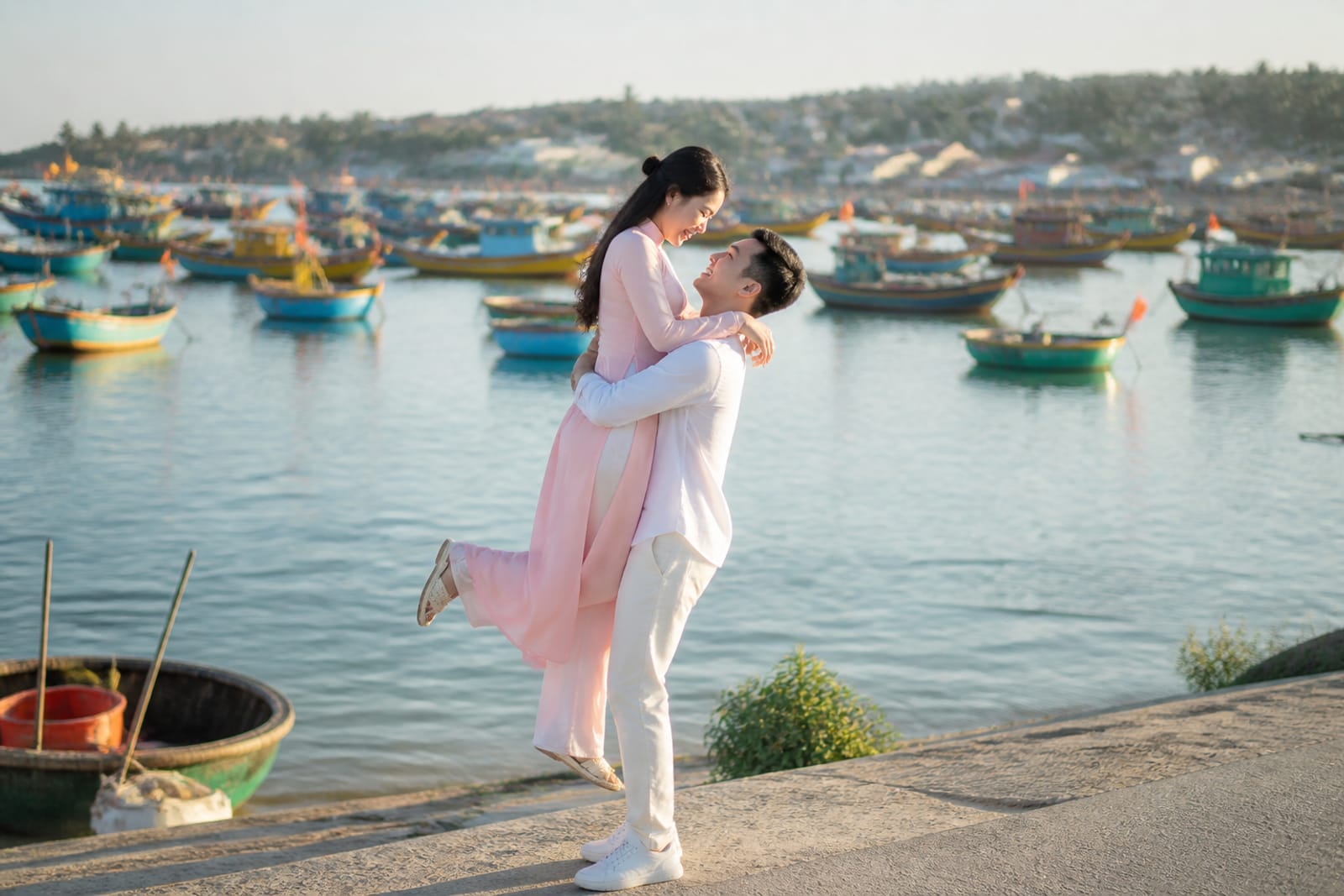
What season and light window gives you the sharpest frames?
Mui Ne's dry season runs Nov–Apr, with strongest light and calmest morning water Nov–Mar. Strong winds Nov–Mar blow sand visibly; if your dress is silk or tulle, sand sticking to fabric becomes a continuity problem across frames.
Feb–Apr offers the same light quality with less wind; April is warmer (milder for makeup and sweat), though afternoon heat rises above 30°C by 3:00 pm. May–Nov is the wet season: afternoon downpours are brief but arrive between 2:00 and 4:00 pm (elopement plans often collapse mid-shoot). June–Sept is hottest and rainiest.
Plan for sunrise (5:30–7:00 am) or late afternoon (4:30–6:00 pm) only. Shoot Nov–Apr, with Feb–Apr preferred if you're uncomfortable with wind-blown sand. Book a photographer with backup weather contingencies (covered boat, indoor market backup, hotel lobby light spot).
Early light is softer and more directional; late light is warmer and shorter. Both demand a photographer who can move and frame fast.
How do you dress for salt spray, sand and three-hour shoots without resetting?
Wear a lightweight ao dai (silk or linen blend, not cotton crepe—it wrinkles irreversibly in salt air) or a simple linen wedding dress, not layered tulle. Avoid whites if sand-blown; cream and soft gold photograph warmer anyway. Undergarments must be breathable cotton; synthetic fabrics trap sweat in 30°C heat and show through light fabrics.
Bring a second outfit: a linen shirt and tailored trousers, or a plain silk dress. After 60 minutes in the village, salt and sand accumulate; the photographer refreshes the palette by switching. This is a directing choice—not a wardrobe failure—and it expands the edit from one-mood to two-mood frames.
Footwear: sandals or linen slip-ons for walking the village and boats. Avoid heels (sand sinks, frames look tense). Shoes will get wet and sandy; don't wear your only pair.
Hair and makeup must set hard. Salt spray loosens waves and makeup. Ask your makeup artist for long-wear base, waterproof brow and lash, and a strong hold spray. A loose bun or low ponytail survives wind better than open waves.
| Outfit choice | Best for | Light/season | Why it works |
|---|---|---|---|
| Lightweight ao dai + silk underdress | Narrative, editorial feel; Vietnamese context | Feb–Apr sunrise | Moves with the fisherman rhythm; cream/gold glows in golden hour. |
| Simple linen dress + plain shirt | Minimalist, timeless; easy reset | Nov–Mar, late afternoon | Breathes in heat; shirt change = mood shift without wardrobe crisis. |
| Tailored trousers + silk blouse | Gender-neutral, modern elopement | Feb–Apr, any hour | Works in boats, net-pulling frames; sand less visible. |
What to check before hiring a local Mui Ne photographer
Cáo Studio does not operate in Mui Ne. For this destination, hire a local Binh Thuan-based photographer or videographer. Here's a vetting checklist:
Portfolio:
- Do they have 5+ fishing-village frames (boats, nets, morning light)? Not just beach sunset shots—those don't require knowledge of the village.
- Are faces sharp and lit, or backlit and soft? Morning shoots require front or side light; poorly exposed faces mean the editor can't save them later.
- Do sequences show movement (walking, looking, interacting) or stiff poses at monuments?
Experience:
- Have they shot elopements (two people, tight crew, no re-staging)? Wedding photographers often shoot families and bridesmaids; the pacing is different.
- Do they mention tide times, wind risk, or sun position? A photographer who lists logistics knows the village.
- Ask for a reference from another couple—not a testimonial, an actual name and email you can contact.
Gear and backup:
- What camera and lens do they carry? Full-frame DSLR or mirrorless is standard; phone-only is a flag.
- What backup gear (second body, spare batteries, rain bag for salt spray)?
- Do they have insurance? Non-negotiable in high-risk environments like boats and salt water.
- Will they deliver edited images, or raw files only? Most shooters offer both; agree in writing.
Communication:
- Do they respond within 24 hours? Language: English or your language? Miscommunication on shoot day is costly.
- Will they scout the village with you beforehand, or show up cold? A pre-shoot walk with your photographer (ideally at the intended light hour) prevents surprises.
Ask the photographer directly: "Walk me through your last elopement shoot here—light at this hour, wind that day, and what you'd do differently." Their answer reveals whether they direct or just document.
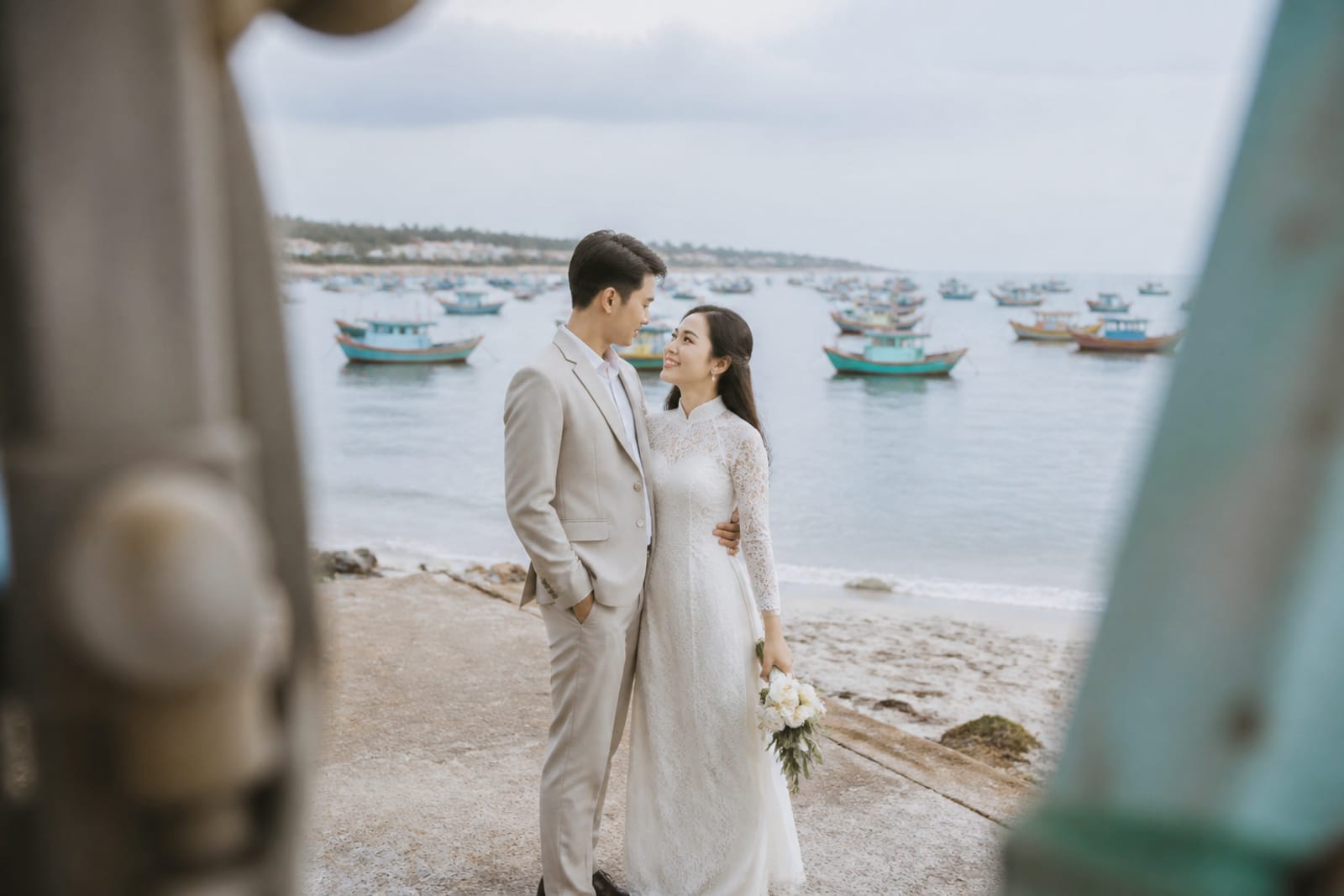
How does the shoot flow once the photographer arrives?
A Mui Ne elopement session runs 2–3 hours, usually split into two light windows:
First window (5:30–7:00 am or 4:30–6:00 pm): Arrive 15 minutes early. Photographer scouts the light angle and boat position. You walk to a moored fishing boat, stand in the net-drying area, or walk along the sand in outline against the water. The photographer shoots wide first (environmental framing), then medium (you both in the boat or frame), then detail (hands, rings, expressions). Expect 100–200 frames in 45 minutes. No posing; the director guides you: "Walk toward the boat. Look at the water, not the camera. Stop here while the fisherman passes."
Pause (7:00–8:30 am or 6:00 pm onward): Boat tours, coffee, outfit change, or light break. The photographer checks the first sequence for exposure and sharpness on the camera display.
Second window (8:30–9:30 am or 6:00–7:00 pm): A different boat or village area (if wind or tide has shifted). Repeat the wide-to-detail sequence with the second outfit. You'll look fresher; the light is slightly different (higher in the morning, dimmer at dusk). Finish before light flattens (9:30 am onward, or after 7:00 pm when mist rises and focus softens).
Delivery: Ask beforehand how long editing takes. Most Mui Ne photographers deliver within 5–10 working days (they edit and upload to a gallery link or hard drive). Discuss the number of final edited images in advance (elopement edits are usually 60–150 frames, not 500).
Comparing Mui Ne fishing village to other elopement backdrops in Vietnam
If you're torn between Mui Ne and another location, here's how they stack up for elopement shoots:
| Destination | Light quality | Season | Effort (logistics) | Vibe |
|---|---|---|---|---|
| Mui Ne fishing village | Golden, directional, saltwater glow | Nov–Apr | High (tide, salt, wind) | Raw, working, editorial. |
| Hoi An ancient town | Soft, amber, lantern contrast | Feb–Aug (dry) | Low (walkable, infrastructure ready) | Romantic, colonial, crowded before 6:30 am. |
| Ha Long Bay (boat elopement) | Misty, dramatic, limestone silhouette | Sep–Apr | Very high (boat motion, seasickness risk, long charter) | Cinematic, remote, expensive permit. |
| Sapa mountain valley | Cool, moody, terraced rice | Sep–Nov | Medium (altitude, early start, cold) | Intimate, misty, limited photo hours. |
Mui Ne wins for raw authenticity and directional light but demands a photographer who thrives in tight, moving environments. Hoi An wins for accessibility and established vendor networks. Choose Mui Ne if you want editorial drama; choose Hoi An if you want ease and vendor support (including pre-wedding hair and makeup teams).
For Hoi An elopements, Cáo Studio travels to Hoi An by appointment—ask us on WhatsApp for Hoi An dates and coordination. For Mui Ne, hire locally and use this guide to vet your team.
What to check before you book a local photographer for Mui Ne
Pre-booking research:
- Request the photographer's most recent fishing-village elopement (not a sample shoot or styled session).
- Ask the specific time they arrived, the light direction, and what changed from first to second light window.
- Request a phone call or video chat (not just email); language clarity prevents day-of confusion.
Contract & logistics:
- Agree on session length, number of edited images, and delivery timeline in writing (or email screenshot). Verbal agreements dissolve on shoot day.
- Confirm the photographer's backup plan if weather worsens (alternative village spot, rescheduling, refund policy).
- Ask the cost structure (flat rate, hourly, or per-image). Discuss what's included: editing, prints, digital files, video. Cáo Studio transparently quotes on WhatsApp; local photographers should do the same.
Final checks 48 hours before:
- Confirm the meeting time and exact location (boat name, village gate, parking spot—be specific).
- Share your outfit photos and hair/makeup plan; the photographer adjusts framing and suggests light angles that flatter your colour.
- Check the weather forecast and confirm the photographer's contingency.
- Ask the photographer to bring a rain cover for the camera (salt spray is as risky as rain).
📸 Book on WhatsApp — ao dai photoshoot
---
For elopement shoots in Hanoi, Ho Chi Minh City or Hoi An, Cáo Studio coordinates the full team—photography, makeup, hair and directing—in one booking. Our couple & family photoshoot and proposal & anniversary packages follow the same directed, one-team approach.
---
FAQ
Can I hire a Mui Ne photographer for the full day, or do I need two separate sessions?
Most local Mui Ne photographers quote a half-day (3–4 hours, one light window) or full-day (two light windows, 5+ hours) rate. Elopements usually fit a half-day morning (5:30–9:30 am) with one outfit change. Full-day shoots add afternoon light and a village-market or lighthouse backup location. Confirm the photographer's availability and how many images you'll receive in each option before booking.
What happens if the weather is bad the morning of the shoot?
Ask the photographer upfront: do they reschedule free, offer a rain date, or refund a percentage? Afternoon showers are common May–Nov; confirm their contingency (covered boat, indoor market, hotel lobby). For Nov–Apr, rain is rare but wind can blow sand—the photographer should have a backup beach or village alley spot. Get this in writing before you pay the deposit.
Should I book a videographer separately, or can the photographer also film?
Some local Mui Ne photographers shoot photo and video simultaneously; others offer one or the other. If you want both, ask whether it's included or a separate fee, and whether the video is edited (a reel or short film) or raw footage. Cáo Studio offers wedding & pre-wedding video as part of its team; local photographers vary widely. Clarify before booking.
Do I need a permit to shoot in the fishing village?
Check locally with your photographer. Most Mui Ne fishing villages are public access during daylight; commercial photography (selling prints, posting widely) may require local permission, but private elopement shoots rarely do. Your photographer should know local protocols; if they don't, that's a red flag.
How many edited images should I expect to receive?
Elopement edits typically range 60–150 final images (not 300+ like a full wedding). Ask the photographer upfront how many deliverables you'll get, what format (JPEG, RAW, prints), and how long editing takes. Most Mui Ne photographers deliver within 5–10 working days. Confirm the timeline before you pay—expectations on delivery vary widely among local vendors.
FAQ
Can I hire a Mui Ne photographer for the full day, or do I need two separate sessions?
Most local Mui Ne photographers quote a half-day (3–4 hours, one light window) or full-day (two light windows, 5+ hours) rate. Elopements usually fit a half-day morning (5:30–9:30 am) with one outfit change. Full-day shoots add afternoon light and a village-market or lighthouse backup location. Confirm the photographer's availability and how many images you'll receive in each option before booking.
What happens if the weather is bad the morning of the shoot?
Ask the photographer upfront: do they reschedule free, offer a rain date, or refund a percentage? Afternoon showers are common May–Nov; confirm their contingency (covered boat, indoor market, hotel lobby). For Nov–Apr, rain is rare but wind can blow sand—the photographer should have a backup beach or village alley spot. Get this in writing before you pay the deposit.
Should I book a videographer separately, or can the photographer also film?
Some local Mui Ne photographers shoot photo and video simultaneously; others offer one or the other. If you want both, ask whether it's included or a separate fee, and whether the video is edited (a reel or short film) or raw footage. Cáo Studio offers [wedding & pre-wedding video](/wedding-video) as part of its team; local photographers vary widely. Clarify before booking.
Do I need a permit to shoot in the fishing village?
Check locally with your photographer. Most Mui Ne fishing villages are public access during daylight; commercial photography (selling prints, posting widely) may require local permission, but private elopement shoots rarely do. Your photographer should know local protocols; if they don't, that's a red flag.
How many edited images should I expect to receive?
Elopement edits typically range 60–150 final images (not 300+ like a full wedding). Ask the photographer upfront how many deliverables you'll get, what format (JPEG, RAW, prints), and how long editing takes. Most Mui Ne photographers deliver within 5–10 working days. Confirm the timeline before you pay—expectations on delivery vary widely among local vendors.
Ao dai, makeup, hair and a local photographer in Hanoi or Saigon — one WhatsApp message.