/pre-wedding-photoshoot
Elopement photos at Muong Hoa valley rice terraces — Sapa guide
Muong Hoa valley rice terraces sit 1,500 metres above sea level in Sapa, northern Vietnam, with golden or water-filled terraces depending on season. An elopement shoot here runs 3–4 hours (sunrise to mid-morning light) with your couple, photographer, and one guide navigating narrow pathways. Cáo Studio does not operate in Sapa, so you'll hire a local photographer—we recommend checking their portfolio for terrace work in morning light, confirming they understand that muddy paths require sturdy footwear and backup clothing, and booking 4–6 weeks ahead during peak seasons (March–May, September–November). Avoid the rainy season (June–August) and winter fog (December–February); both ruin contrast and visibility. Your outfit must dry quickly after splashing through streams; many couples wear a lightweight second dress for safety. ---
What makes Muong Hoa valley special for elopements?
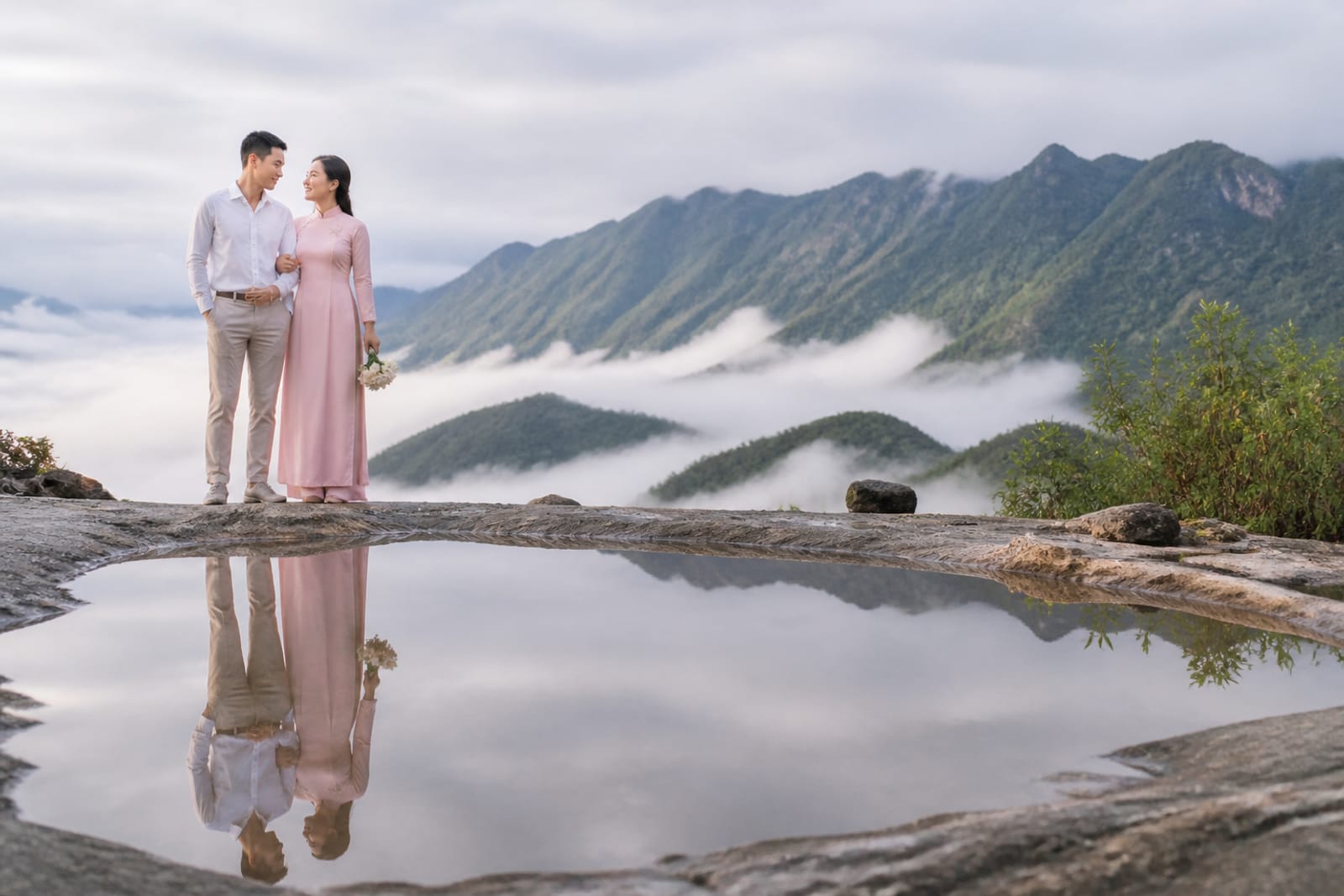
Muong Hoa valley is one of Sapa's three main terrace zones, stretching across steep contours with villages woven into the landscape. The valley faces northeast, delivering soft, wraparound light from sunrise to 9 a.m. before harsh shadows take over. Stone paths and stream crossings are real—not photo props—which means the shoot tests both your photographer's logistics and your couple's willingness to move deliberately. The terraces reflect water (May–June) or glow gold (late September–early October), creating natural depth without backdrops. Most couples book this for intimate two-person shoots; families of four or more struggle on the narrow paths and tire quickly at altitude.
The key decision: hire a photographer who has shot in Muong Hoa valley before, not just in Sapa town. Many Sapa photographers shoot the markets or homestays; fewer know the terrace light window and mud management.
---
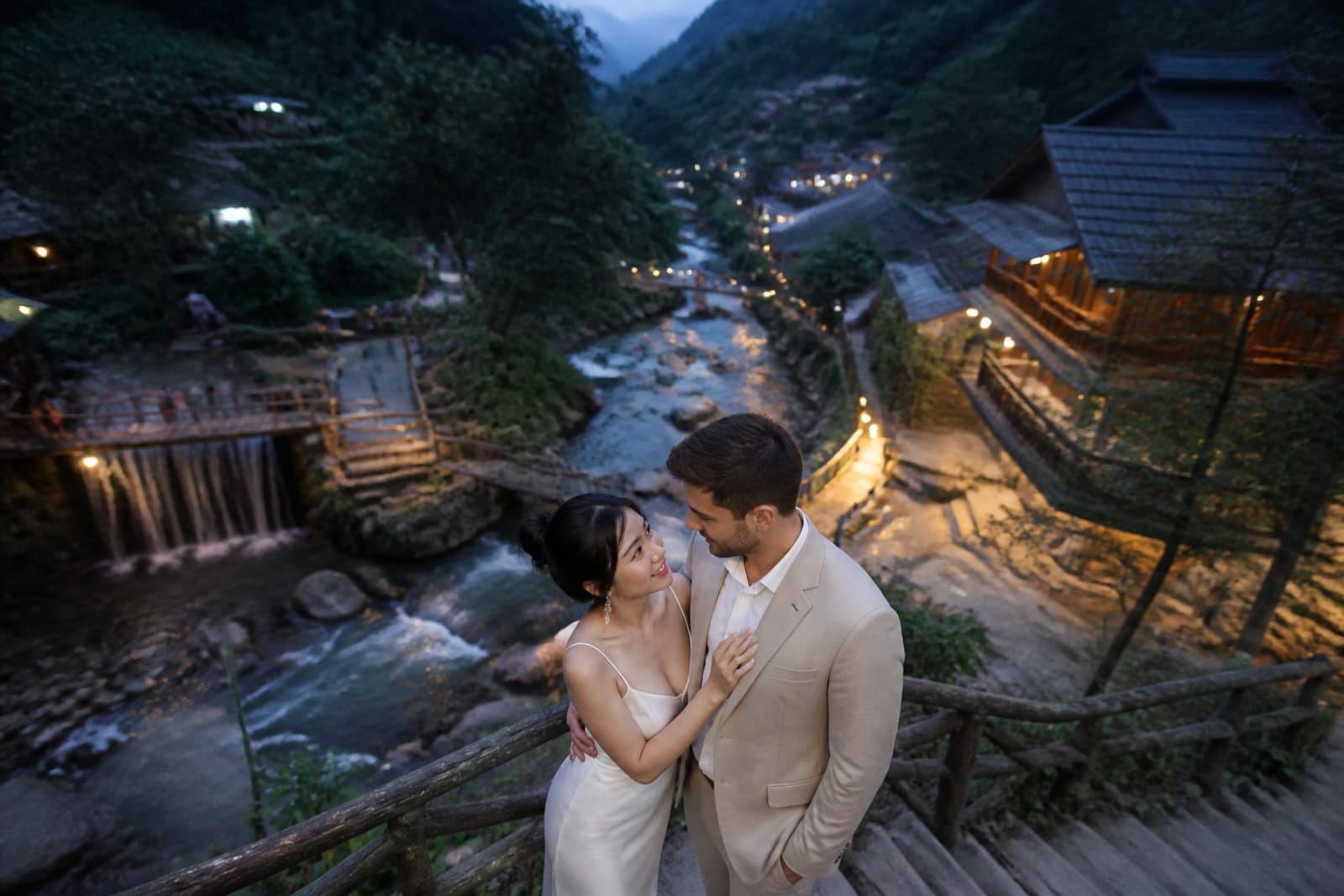
Which season delivers the light you want—and the wear on your dress?
| Season | Terrace state | Light quality | Mud & streams | Weather risk | Best for |
|---|---|---|---|---|---|
| Mar–May | Green, young growth; water in patches | Soft, clear; haze common late morning | Wet after rain; stream crossable | Occasional rain; cool mornings | Couples wanting green and predictable weather |
| Jun–Aug | Emerald (peak growth); water abundant | Often grey or overcast; rain disrupts shoots | Heavy mud; streams impassable after storms | 60–80% chance afternoon rain; cancel risk high | Not recommended—light and access unreliable |
| Sep–Nov | Gold (harvest); mostly dry terraces | Sharp, golden; longest clear-light window | Drier paths; streams lower; occasional puddles | Typhoon risk Sep; clearer Oct–Nov | Elopements seeking gold tones and dry logistics |
| Dec–Feb | Fallow or stubble; terraces resting | Often foggy mornings; clears by 10 a.m. | Firm, least muddy | Cold (5–10°C); frost possible; fog hides backdrop | Not ideal—cold, fog, and muted tones |
The honest take: September–November is the window. Light, access and seasonal beauty align. March–May works if you accept occasional fog and haze. June–August and December–February require backup dates because weather and light fail too often for a single-day elopement.
---
How do you plan the shoot timeline on location?
Start before 5:30 a.m.—your photographer arrives at your hotel or a meetpoint, you car to the valley entrance, and hiking begins by 6:15 a.m. The first terrace shots (wide, silhouette against light) happen by 6:45–7:15 a.m. as the sun lifts. By 7:30 a.m., the light angles warm and detail work (walking between terraces, close-ups on faces, stream crossings) fills the next hour. At 8:30 a.m., the light hardens; most shoots wrap by 8:45 a.m. or move into shade under banyan trees. A skilled photographer knows where shadow lies at what time. Amateurs start too late (sun already harsh) or lack backup spots when your dress gets wet.
What goes wrong: couples want "plenty of time" and suggest 8 a.m. start. By then, you've lost the soft window entirely. Insist on 5:30 a.m. collection. Bring a dry second dress, shoes with grip, and a towel.
---
Local photographer vs. a photographer who travels: which fits your elopement?
Sapa has strong local photographers who know the valleys intimately and charge less than a traveling studio. However, not all specialize in elopement work or English communication. A traveling pre-wedding photographer from Hanoi or Ho Chi Minh City brings directorial experience and often includes hair/makeup—useful if you want both polished and weathered looks—but costs more and relies on local logistics on the day. The trade-off table:
| Option | Best for | Light expertise | Outfit & makeup | Logistics | Cost factor |
|---|---|---|---|---|---|
| Local Sapa photographer | Couples with tight budgets; comfort with minimal prep | Knows the valley; may lack elopement framing | Couple handles outfit; no pre-shoot styling | Reliable—works in Sapa year-round | Lower |
| Traveling photographer from Hanoi/HCMC | Couples wanting editorial direction; ao dai or gown interest | Varies; ask portfolio; may underestimate local light shifts | Often includes hair/makeup artist | Depends on their Sapa experience; higher risk if first time | Higher; travel costs factor in |
Honest advice: book a local photographer if their portfolio shows elopement-style work (movement, light, couples framed with landscape) and they confirm they've shot Muong Hoa valley at sunrise. If you want ao dai or a groom outfit, a traveling team may handle fabric and fit better—but confirm they've worked at altitude and in Sapa's wind.
---
What to wear—and pack—without ruining the shoot
An elopement in the terraces demands a dress that survives splashing, drying quickly, and moving on uneven ground. Cáo Studio's ao dai rental and wedding dress rental both offer lightweight fabrics suited to outdoor shoots, but Sapa conditions are extreme: if you choose silk, bring a second lightweight backup. Avoid long trains (they snag on roots and mud). Bring compression leggings under an ao dai or a slip under a gown to reduce chafing on long walking. Sturdy hiking shoes are non-negotiable; many couples pack them in a bag and change into photo shoes at the first flat spot, then swap back for paths.
Pack: dry socks, a small towel, a windbreaker (Sapa wind rises by 8 a.m.), and a sealed bag for wet items. Hair should be pinned low (wind is constant) or in a braid; loose styles tangle in an hour of walking. Makeup must be waterproof if you're crossing streams; a local makeup artist understands this—ask your photographer if they work with one.
---
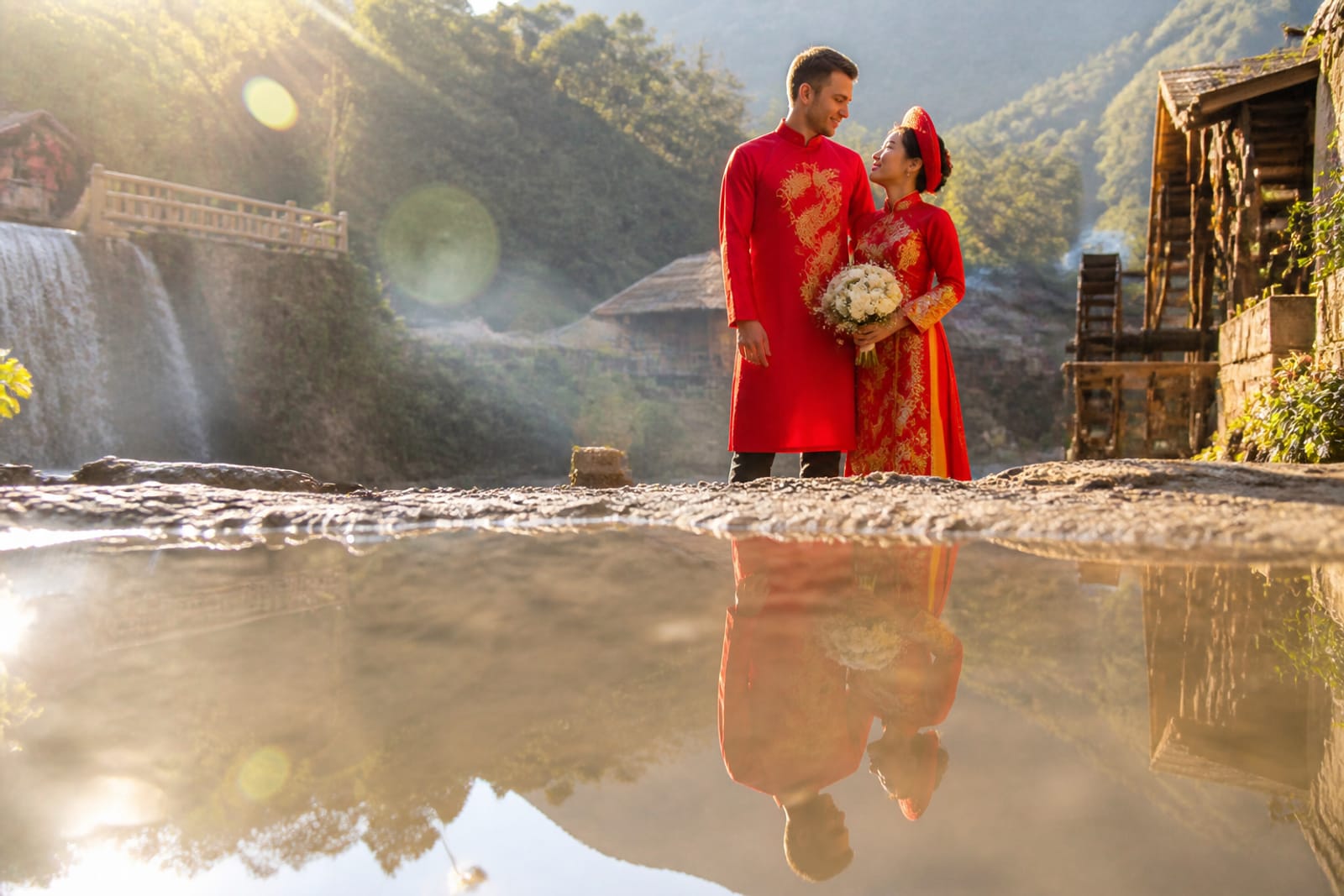
How to vet and book a Sapa elopement photographer
Start with Instagram portfolio searches for "Sapa elopement" and "Muong Hoa valley." Look for terraces in the background, couples in motion (walking, looking at each other, not stiff poses), and images taken in the golden light window (sunrise to 8 a.m.). Open messages on WhatsApp and ask three questions:
- "Have you shot elopements in Muong Hoa valley in [your season]? Show me 3–5 examples."
- "What happens if weather forces a reschedule? Do I get a full refund or a new date?"
- "Do you include a makeup artist, and do they have experience with outdoor/altitude conditions?"
Expect a response within 24 hours. If they're vague about the valley or haven't shot there, keep looking. Booking typically locks in 4–6 weeks prior; if you're booking 2 weeks out, expect higher costs or limited availability.
---
What to check before booking
- Portfolio: terraces, light angle, couple movement, not monuments or posed silhouettes.
- Reschedule policy: is it flexible for weather, or non-refundable?
- Arrival time: confirm 5:30 a.m. start, not later.
- Inclusions: edited photos timeline (usually 1–2 weeks); number of images; video or stills only.
- Altitude: ask if photographer shoots regularly at 1,500 m; some struggle with breathing and image sharpness.
- Language: if English is crucial, confirm their fluency on the first call.
📸 Book on WhatsApp — pre-wedding & elopement | 💄 Makeup & hair at your hotel | 🌸 See the lookbook
---
Why Cáo Studio recommends Muong Hoa valley elopements—and how we support them from Hanoi
Though Cáo Studio does not operate in Sapa, we've guided dozens of couples preparing for Sapa elopements from our Hanoi base. We recommend booking your pre-shoot preparation—hair and makeup at your hotel—a day or two before you travel to Sapa. This lets you test your look, confirm the dress fit, and start the elopement with confidence rather than scrambling on location. If your elopement includes both a Sapa shoot and a pre-wedding session in Hanoi (say, a temple or Old Quarter backdrop), we can coordinate your wardrobe and hair continuity across shoots. Many couples also rent ao dai or wedding dress through us before heading north, ensuring the fabric suits the Sapa climate.
For the Muong Hoa valley shoot itself, hire locally and lean on the logistics. For everything else—styling, timing, outfit choices—reach out on WhatsApp before you book.
---
📸 Book on WhatsApp — ao dai photoshoot | 🌸 See the lookbook
---
Related services for your elopement
- Pre-wedding & elopement photoshoots: directorial vision, edited timelines, outdoor light expertise.
- Couple & family photoshoot: if you're bringing family members to Sapa or want a secondary session in a different region.
- Makeup & hair at your hotel: book this before traveling to Sapa; test your look and reduce day-of stress.
- Ao dai rental and wedding dress rental: lightweight fabrics designed for outdoor work and altitude.
- Wedding day photographer: if your elopement is followed by a larger ceremony or reception elsewhere.
---
FAQ
Is Muong Hoa valley accessible in June or July?
Technically yes, but the season is rainy (60–80% afternoon downpour risk) and mornings are often overcast. Light fails, paths become treacherous, and shoots cancel frequently. March–May and September–November are far more reliable for elopement work.
Can I wear my grandmother's heavy silk gown in the terraces?
Not without risk. Heavy silk absorbs water, dries slowly, and snags on roots. Bring a lightweight backup dress or a rental—our dress rental offers fabrics built for outdoor shoots. If sentimental silk is crucial, wear it for a later session in Hanoi or Ho Chi Minh City.
What is the altitude like for non-hikers?
Muong Hoa valley sits at 1,500 metres. The hike is steady but not extreme; most couples in reasonable fitness complete 3–4 hours without serious strain. Take it slow, hydrate, and allow 10-minute rests between shoots. Mention any breathing concerns to your photographer before the day.
Do I need a local guide, or is the photographer enough?
A local guide is highly recommended. They navigate the paths, manage water crossings, know which terraces are safe, and can carry backup clothes or gear. Most Sapa photographers work with guides as standard practice. Confirm this in your booking conversation.
How many edited photos do I expect from a 4-hour elopement shoot?
Expect 80–150 edited images, depending on the photographer's style. Ask them directly—some deliver 200+, others focus on 40 premium frames. This should be confirmed before booking, not after. Turnaround is usually 1–3 weeks.
FAQ
Is Muong Hoa valley accessible in June or July?
Technically yes, but the season is rainy (60–80% afternoon downpour risk) and mornings are often overcast. Light fails, paths become treacherous, and shoots cancel frequently. March–May and September–November are far more reliable for elopement work.
Can I wear my grandmother's heavy silk gown in the terraces?
Not without risk. Heavy silk absorbs water, dries slowly, and snags on roots. Bring a lightweight backup dress or a rental—[our dress rental](/wedding-dress-rental) offers fabrics built for outdoor shoots. If sentimental silk is crucial, wear it for a later session in Hanoi or Ho Chi Minh City.
What is the altitude like for non-hikers?
Muong Hoa valley sits at 1,500 metres. The hike is steady but not extreme; most couples in reasonable fitness complete 3–4 hours without serious strain. Take it slow, hydrate, and allow 10-minute rests between shoots. Mention any breathing concerns to your photographer before the day.
Do I need a local guide, or is the photographer enough?
A local guide is highly recommended. They navigate the paths, manage water crossings, know which terraces are safe, and can carry backup clothes or gear. Most Sapa photographers work with guides as standard practice. Confirm this in your booking conversation.
How many edited photos do I expect from a 4-hour elopement shoot?
Expect 80–150 edited images, depending on the photographer's style. Ask them directly—some deliver 200+, others focus on 40 premium frames. This should be confirmed before booking, not after. Turnaround is usually 1–3 weeks.
Ao dai, makeup, hair and a local photographer in Hanoi or Saigon — one WhatsApp message.