/pre-wedding-photoshoot
Elopement photos at Truc Lam Monastery: guide & booking
Truc Lam Monastery sits on Da Lat's pine-forested hillside, offering mist, golden light through canopy gaps, and calm water reflections ideal for elopement shoots. Sessions run 2–4 hours, typically early morning (6–9 a.m.) when mist pools around the lake and trees, or late afternoon (3–5 p.m.) for warm, diffused light. Wear a lightweight áo dài (silk or cotton for climate comfort), plain suit or formal wear that photographs well in soft light; bring a shawl or light layer—altitude and shade mean cooler air. Da Lat's dry season (December–April) offers clearer skies and stable morning mist; rainy season (May–November) brings afternoon downpours, but mornings are usually fine. Cáo Studio – Makeup & Photoshoot does not operate in Da Lat; you will need to hire a local Da Lat–based photographer familiar with the monastery grounds, permit requirements, and light patterns. Budget time for travel from central Da Lat (roughly 30–45 minutes depending on traffic), permit fees (check directly with the monastery), and a guide familiar with access points where photography is permitted. ---
What makes Truc Lam Monastery special for elopements?
Truc Lam sits 1,500 meters above sea level in Da Lat's temperate zone. The grounds blend Buddhist architecture with dense pine forest, morning mist, stone pathways, and a serene artificial lake reflecting sky and trees. Unlike crowded urban backdrops, the monastery's open courtyards, meditation gardens and lakeside pavilions feel intimate and timeless—perfect for couples seeking quiet, contemplative imagery rather than celebration energy.
Light here is soft and directional. Early morning mist diffuses direct sun, reducing harsh shadows on faces and fabric. Late afternoon backlit mist creates a halo effect around the couple and trees. Midday (10 a.m.–2 p.m.) is flat and harsh; avoid shooting then. The monastery's stone and tile surfaces reflect light gently, filling shadows naturally without needing external reflectors.
📸 Book on WhatsApp — ao dai photoshoot
---
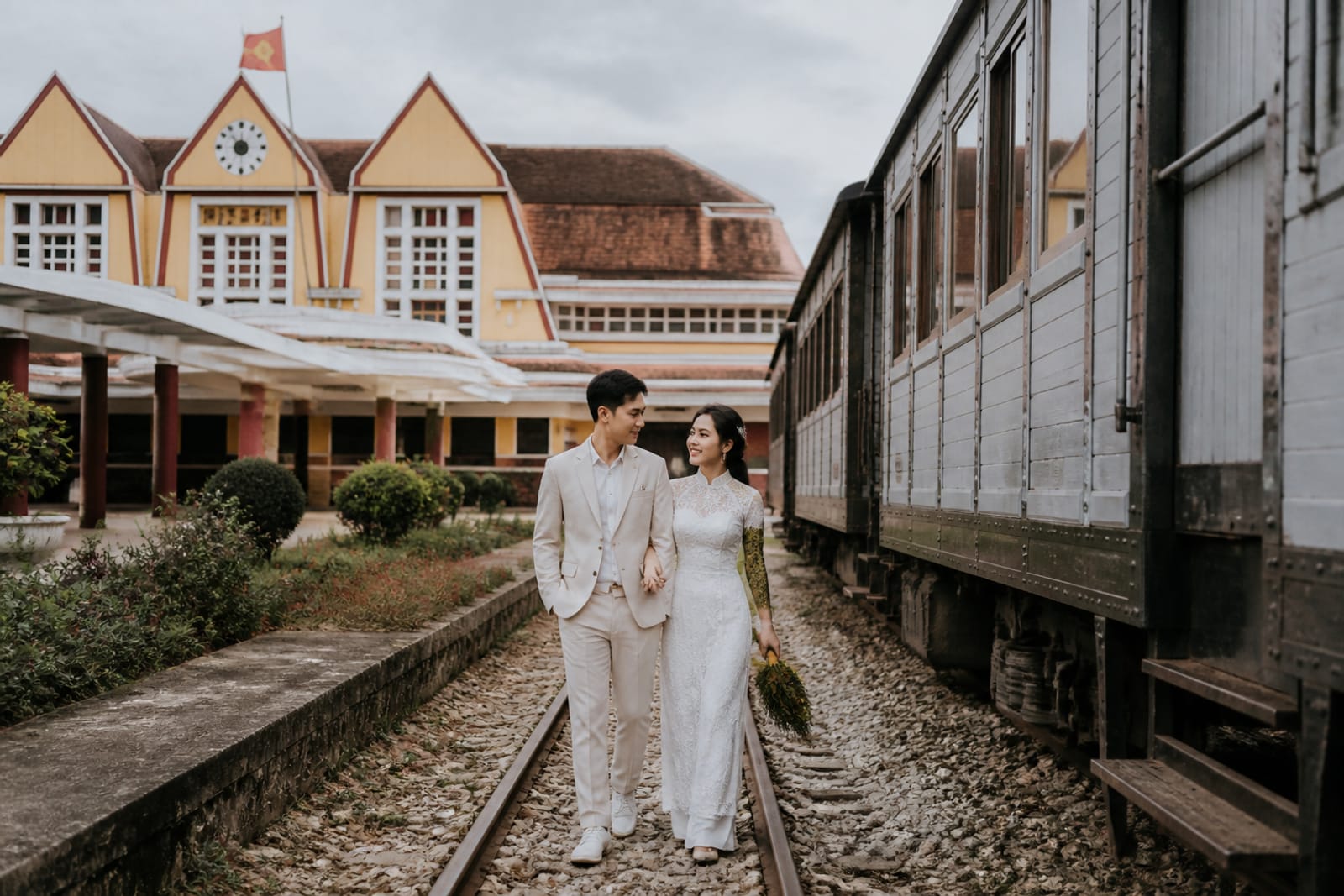
When should you shoot at Truc Lam: season and time of day?
Da Lat's highland climate stays cool year-round (roughly 15–25°C). Dry season (December–April) is peak: skies are clearest, morning mist is reliable, and light is most predictable. January–February brings occasional wild mist and cooler air; cherry blossoms bloom in late January–early February, adding pale pink tones to temple gardens if timing aligns.
Rainy season (May–November) brings afternoon downpours. Mornings are usually clear and mist-heavy until 8–9 a.m., then clouds thicken. Light is softer (fewer harsh shadows) but more unpredictable. November sees mist and wild sunflowers (da quy) in surrounding hillsides—a distinct visual if you're open to location variety.
| Timeframe | Light quality | Mist presence | Best for |
|---|---|---|---|
| Dec–Feb 6–8 a.m. | Soft, golden through mist | Heavy, reliable | Romantic, ethereal mood; intimate ceremony photos |
| Mar–Apr early morning | Clear, warm, less haze | Light, sporadic | Sharp detail, warm skin tones, garden color |
| May–Nov before 8 a.m. | Soft diffusion, variable clouds | Common but thinner | Budget shoots; expect some cloud cover |
| Nov (dry start) + surrounding hills | Warm, clear afternoon | Morning only | Wild sunflower backdrop if you venture outside grounds |
Book your session 2–4 weeks ahead. Confirm monastery access hours and photography zones with a local coordinator; some temples restrict shooting in certain areas or ask for permission fees.
---
How do you choose the right photographer for Truc Lam?
Cáo Studio – Makeup & Photoshoot operates in Hanoi, Ho Chi Minh City and Hoi An only—Da Lat requires a local photographer. Here's how to vet one:
Portfolio review: Ask to see 5–10 full elopement or monastery sessions (not single hero shots). Look for consistent exposure in soft, overcast light; natural posing; and how the photographer frames architecture and landscape. Mist photography is a skill—if their work looks blown-out (too bright) or dark in misty conditions, they may lack practice in that light.
Location familiarity: A photographer who knows Truc Lam will have scouted best sunrise spots, understand where morning mist pools, and know which temple areas allow unrestricted access. Ask if they've shot there in the past three months and what they learned about timing.
Light metering: In mist and dappled canopy, meters can deceive. A good photographer manually adjusts exposure and white balance; confirm they shoot RAW files (not JPEG only) so colors are accurate after editing.
Logistics: Ask how many shots they deliver, turnaround for editing, and whether they handle travel from central Da Lat or meet you on-site. Clarify if makeup & hair service is included or separate. If you want an áo dài, ask if they recommend rental or a tailor—Da Lat has local seamstresses, but lead time matters.
---
What should you wear and bring?
An áo dài is traditional and photographs beautifully in Da Lat's soft light. Choose lightweight fabric (silk or cotton blend) in a single color or subtle pattern—bold prints compete with temple architecture. Pastels (soft pink, cream, pale blue) or jewel tones (emerald, burgundy) work best. Wear a slip or undergarment designed for áo dài so the front panel drapes cleanly—unsure? ask your photographer or a local tailor for guidance.
If you prefer a Western wedding dress, bring lightweight, breathable fabric. Heavy satin will feel uncomfortable in Da Lat's variable humidity; consider a lace overlay or lighter silk crepe. A groom in a suit should choose breathable fabric and avoid dark colors if shooting early morning—white, light grey, or neutral tones photograph better in soft, cool light.
Bring layers: Da Lat is cool even in dry season, and shade under pine trees is chilly. A pashmina, light cardigan or silk shawl complements áo dài and keeps you comfortable between shots. Wear clean, simple shoes—the grounds are paved but wet moss is possible after rain; avoid heels if the path is slick.
Check the forecast 48 hours before. If rain is forecast, confirm with your photographer whether you'll reschedule or shoot with umbrellas (which can create striking silhouettes but reduce light on faces).
---
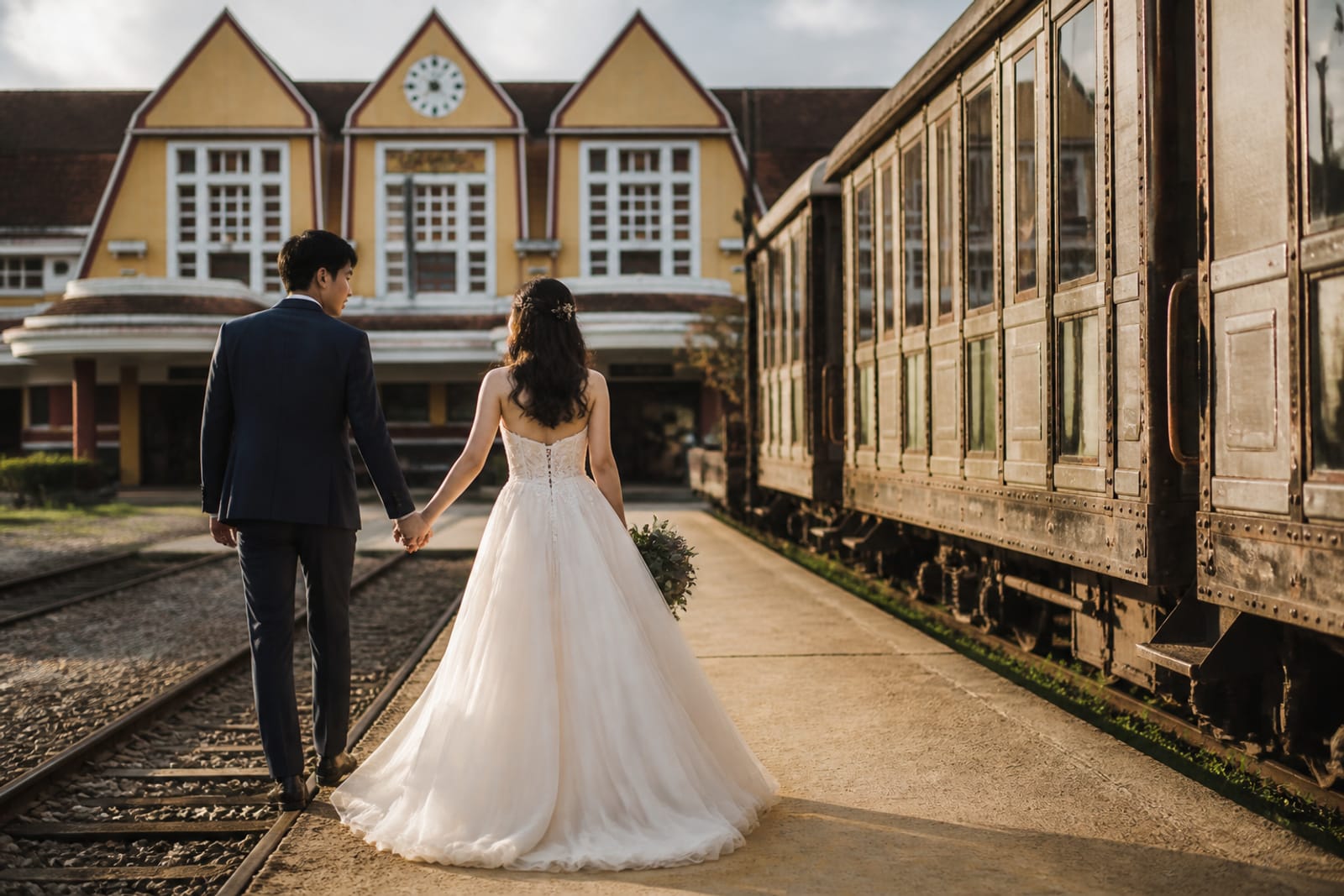
How do you coordinate logistics and permits?
Truc Lam Monastery welcomes visitors and photographers, but access rules exist. A professional local photographer will handle these, but you should confirm:
Permit & fees: Contact the monastery directly or ask your photographer if an advance notice or small permit fee is required. This varies; some days allow free photography, others ask photographers to register.
Access hours: The monastery opens early (around 5–6 a.m.) and closes by evening. A dawn session means arriving 4:30–5 a.m. Latest afternoon shoots wrap by 5–5:30 p.m.
Photography zones: Main temple buildings sometimes restrict photography to exterior courtyards or lake areas. Confirm which zones your photographer can shoot in; some interior meditation halls are off-limits.
Travel time: From central Da Lat (Xuan Huong Lake area), Truc Lam is roughly 6–8 km uphill. Budget 30–45 minutes each way depending on traffic and road conditions. Plan to meet your photographer on-site and arrive 15 minutes early.
Makeup timing: If you're getting makeup done on-site or at your hotel, start 1.5–2 hours before sunrise to finish by the time light is best. Ask your photographer for their preferred start time.
Post-shoot: After the session, confirm delivery timeline (usually 1–2 weeks for edited files) and format (digital download, USB, or printed album). Da Lat has print shops, but quality varies; discuss with your photographer whether to order prints locally or have them made elsewhere.
---
Pre-wedding shoots: Truc Lam vs. other Da Lat or regional options
If you're unsure whether a full elopement session or a pre-wedding photoshoot suits your needs, consider the difference:
Elopement session (Truc Lam): Intimate, one-location, 2–4 hours, focuses on quiet moments, décor, and light. Ideal if you're eloping (no large group) and want documentary-style imagery. One photographer is standard.
Pre-wedding shoot: Typically longer (4–8 hours), multi-location, more outfit changes and styled posing. Works for engaged couples building a portfolio before a larger wedding. May include couple photoshoots at a second or third site (e.g., Xuan Huong Lake, Crazy House gardens, Da Lat Market at dawn).
Makeup & hair service: If you need on-location glam, budget for a makeup artist to travel from central Da Lat or stay overnight. Cáo Studio – Makeup & Photoshoot offers makeup & hair at your hotel for clients in Hanoi, Ho Chi Minh City, and Hoi An; Da Lat requires a local artist.
For a full pre-wedding experience with professional makeup, styling and multi-location coverage, Cáo Studio's pre-wedding & elopement service is available in Hanoi, Ho Chi Minh City, and Hoi An. If you're based in or traveling to those cities, you might combine a regional elopement (e.g., Hoi An or Ninh Binh) with our team.
---
What to check before you book a photographer
First-hand portfolio: See at least three full sessions from the past 6 months. Ask why each couple chose Truc Lam and what the photographer would do differently today.
Communication: Confirm they respond within 12 hours via WhatsApp (or their primary contact channel) and speak English if needed.
Inclusions: Clarify exactly what you're paying for—hours, number of final edited images, delivery format, print options, and whether travel/parking fees are included.
Weather contingency: Ask their rescheduling policy if rain or heavy cloud disrupts light. A professional offers a free reschedule, not a refund.
Editing timeline: Ask how long edits take and whether you can request adjustments. Fast turnaround (3–5 days) is rare; expect 1–2 weeks for detailed retouching.
Local partnerships: Ask if they work with local makeup artists, florists, áo dài rental shops or decor vendors—useful if you're coordinating multiple services.
Avoid photographers with no local portfolio, those who can't explain their light choices in monsoon season, or anyone unwilling to visit the monastery before your session date.
---
---
For couples planning beyond Da Lat
If your elopement isn't set in Da Lat, consider these alternatives:
- Hanoi pre-wedding & elopement: Urban gardens, French colonial villas, Ha Long Bay day-trips, and Ninh Binh limestone karst. Cáo Studio covers the full city and nearby regions.
- Hoi An elopement: Ancient town lantern light, riverside villages, rice paddies, and coastal access. Cáo Studio travels to Hoi An by appointment.
- Ho Chi Minh City & Saigon region: Riverside architecture, war history sites, Mekong day-trips. Full team available.
For a couple photoshoot or proposal & anniversary session in any of those cities, Cáo Studio handles makeup, styling, and editing in-house. Day-of wedding photography and wedding video services are also available for Hanoi and Ho Chi Minh City.
---
FAQ
Can I wear an áo dài at Truc Lam Monastery, or is Western dress required?
Áo dài is traditional, encouraged, and photographs beautifully in soft temple light. Western dress is fine too. Choose lightweight fabric—Da Lat is cool but humidity varies. Ask your photographer for fabric recommendations if unsure.
What is the best time of year to shoot at Truc Lam for elopement photos?
December–April (dry season) is optimal: clear skies, reliable morning mist, and stable light. January–February is coldest with occasional cherry blossoms. Rainy season (May–Nov) offers softer light but unpredictable afternoon downpours; mornings are usually fine.
Do I need a permit to photograph at Truc Lam Monastery?
Rules vary by day and photographer status. A local, experienced photographer will confirm permit requirements directly with the monastery. Expect minimal or no cost; some days are permit-free. Plan ahead—don't assume you can shoot without checking.
How long should an elopement session at Truc Lam last?
Typical sessions run 2–4 hours, usually starting at sunrise (5–6 a.m. arrival, shooting by 6–8 a.m.) or late afternoon (3–5 p.m.). Include travel time from your hotel (30–45 min each way). Confirm exact duration and start time with your photographer when booking.
Can Cáo Studio – Makeup & Photoshoot handle my Da Lat elopement?
Cáo Studio operates in Hanoi, Ho Chi Minh City, and Hoi An only. For Da Lat, hire a local photographer familiar with the monastery, monsoon light, and permit requirements. Cáo Studio can handle your pre-wedding shoot if you're based in or traveling to Hanoi, Ho Chi Minh City, or Hoi An.
What should I expect to pay for a Da Lat elopement session?
Costs vary by photographer, duration, and whether makeup or décor is included. Budget for the photographer's fee, monastery permit (if any), travel time, and whether you're hiring additional services (makeup artist, flower arrangements). Ask your photographer for a detailed quote; use that to compare options.
FAQ
Can I wear an áo dài at Truc Lam Monastery, or is Western dress required?
Áo dài is traditional, encouraged, and photographs beautifully in soft temple light. Western dress is fine too. Choose lightweight fabric—Da Lat is cool but humidity varies. Ask your photographer for fabric recommendations if unsure.
What is the best time of year to shoot at Truc Lam for elopement photos?
December–April (dry season) is optimal: clear skies, reliable morning mist, and stable light. January–February is coldest with occasional cherry blossoms. Rainy season (May–Nov) offers softer light but unpredictable afternoon downpours; mornings are usually fine.
Do I need a permit to photograph at Truc Lam Monastery?
Rules vary by day and photographer status. A local, experienced photographer will confirm permit requirements directly with the monastery. Expect minimal or no cost; some days are permit-free. Plan ahead—don't assume you can shoot without checking.
How long should an elopement session at Truc Lam last?
Typical sessions run 2–4 hours, usually starting at sunrise (5–6 a.m. arrival, shooting by 6–8 a.m.) or late afternoon (3–5 p.m.). Include travel time from your hotel (30–45 min each way). Confirm exact duration and start time with your photographer when booking.
Can Cáo Studio – Makeup & Photoshoot handle my Da Lat elopement?
Cáo Studio operates in Hanoi, Ho Chi Minh City, and Hoi An only. For Da Lat, hire a local photographer familiar with the monastery, monsoon light, and permit requirements. Cáo Studio can handle your pre-wedding shoot if you're based in or traveling to Hanoi, Ho Chi Minh City, or Hoi An.
What should I expect to pay for a Da Lat elopement session?
Costs vary by photographer, duration, and whether makeup or décor is included. Budget for the photographer's fee, monastery permit (if any), travel time, and whether you're hiring additional services (makeup artist, flower arrangements). Ask your photographer for a detailed quote; use that to compare options.
Ao dai, makeup, hair and a local photographer in Hanoi or Saigon — one WhatsApp message.