/family-photoshoot
Family wedding photos in Quy Nhon with kids and parents
Family wedding photos in Quy Nhon work best February to August, when the coast is dry and light is predictable from dawn to mid-morning. Cáo Studio (based in Hanoi and Ho Chi Minh City) does not operate in Quy Nhon, but a local team can capture your multi-generation group if you brief them on light direction, child comfort, and outfit coordination beforehand. Sessions typically run 2–3 hours on a single beach or cove, with breaks for children. The key: shoot early (6–7 am, before crowds and heat), use natural walking and conversation to guide poses rather than stiff stances, and choose one clear outfit theme so grandparents, parents and kids read as one unit in the frame. Avoid peak midday sun (11 am–3 pm); it flattens faces and exhausts small children. ---
Where in Quy Nhon should a multi-generation family shoot?
Quy Nhon's coastline offers rocky coves, white-sand pockets, and piers that work with mixed ages. Bai Xep (the fishing village and curved bay) has soft morning light and shallow water—safe for children who wade but tiring for elderly relatives. Ghềnh Ráng (the rocky headland north of town) photographs dramatically but requires 10–15 minutes of uneven walking; best only if all adults are mobile. The town's central Quy Nhon Beach has lifeguard presence and is crowded by 8 am. For multi-generation comfort, a sheltered cove between Bai Xep and Ghềnh Ráng (ask a local guide or your hotel) offers shade, flat approach and morning backlight without the walk. Conclusion: choose the spot based on your eldest member's mobility, not Instagram aesthetics.
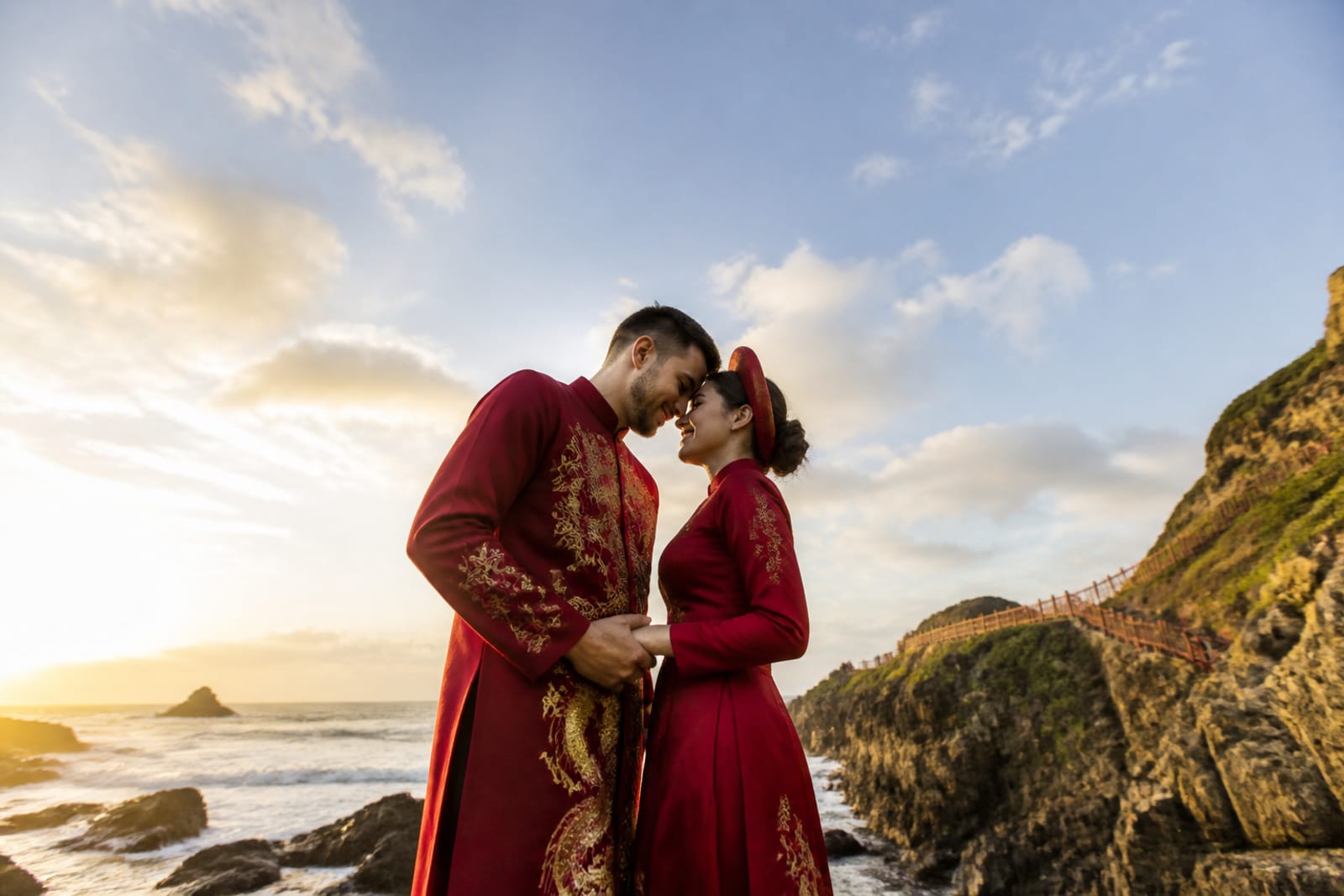
How do you keep children calm and engaged during a family shoot?
Young children (under 8) lose focus after 90 minutes; older kids manage 2+ hours if they understand the "game." Brief them beforehand: "We're not posing—we're walking, talking to each other, and the photographer catches real moments." Bring snacks and water, schedule a 15-minute break halfway through, and avoid midday heat (shoot 6–8 am or late afternoon 4–6 pm). Assign a family member (not the photographer) to manage children between frames—parents stay in the shot. If a child cries or refuses, move to a different activity (wading, collecting shells) rather than forcing the pose; the best frames come when they forget the camera exists. Conclusion: the session succeeds when children feel safe, not controlled.
Should the whole family wear matching outfits, or coordinate differently?
Matching outfits (e.g., white linen, cream ao dai) unify the frame but feel staged; coordinated colors (pastels, earth tones) read as intentional without uniformity. For multi-generation groups, avoid patterns that clash across ages—grandparents in solid silks, parents in textured linen, children in softer prints work better than everyone in identical fabric. Test outfits in daylight before the shoot: early morning coastal light is cool and slightly blue-grey, so warm neutrals (cream, taupe, soft orange) photograph better than pure white, which glows. If anyone wears ao dai, all should (or none), unless you're shooting a hybrid frame (grandparents in ao dai, younger generation in Western wear) as a deliberate statement. Conclusion: coordinate by color and era, not sameness.
| Outfit approach | Best for | Light/season fit | Why it works |
|---|---|---|---|
| Solid neutral (cream, taupe, linen) | Multigenerational unity | Feb–Aug morning light (cool, soft) | Reflects light evenly; no visual noise |
| Pastel palette (soft blues, greens, pinks) | Families with young children | Golden hour (sunset light warm-shifts) | Softens faces; hides sand stains |
| All ao dai (silk, different cuts by age) | Formal, heritage-focused groups | Morning backlit (6–7 am) | Cultural cohesion; silk catches directional light |
| Mixed formal/casual (grandparents formal, kids playful) | Candid, narrative-driven groups | Overcast morning (rare in dry season) | Tells story of generations; requires skilled framing |
What does the photographer need to know before the session starts?
Write a one-page brief for your local photographer: include the shoot date, time, location, group composition (ages, physical mobility), must-have frames (grandparents together, all children with parents, full family), and outfit colors. Specify: "We want movement—walking, looking at each other, not staring at camera." Request a shot list in order of energy (start with high-energy frames when children are fresh, end with calm poses as they tire). Confirm: does the photographer bring backup batteries, water, and a shade setup? Can they deliver edited photos in 48 hours? Will they shoot in RAW for editing flexibility? What's their policy if someone is unwell and a reschedule is needed? Conclusion: vague briefs lead to images that don't match your vision; a written outline costs nothing and prevents misalignment.
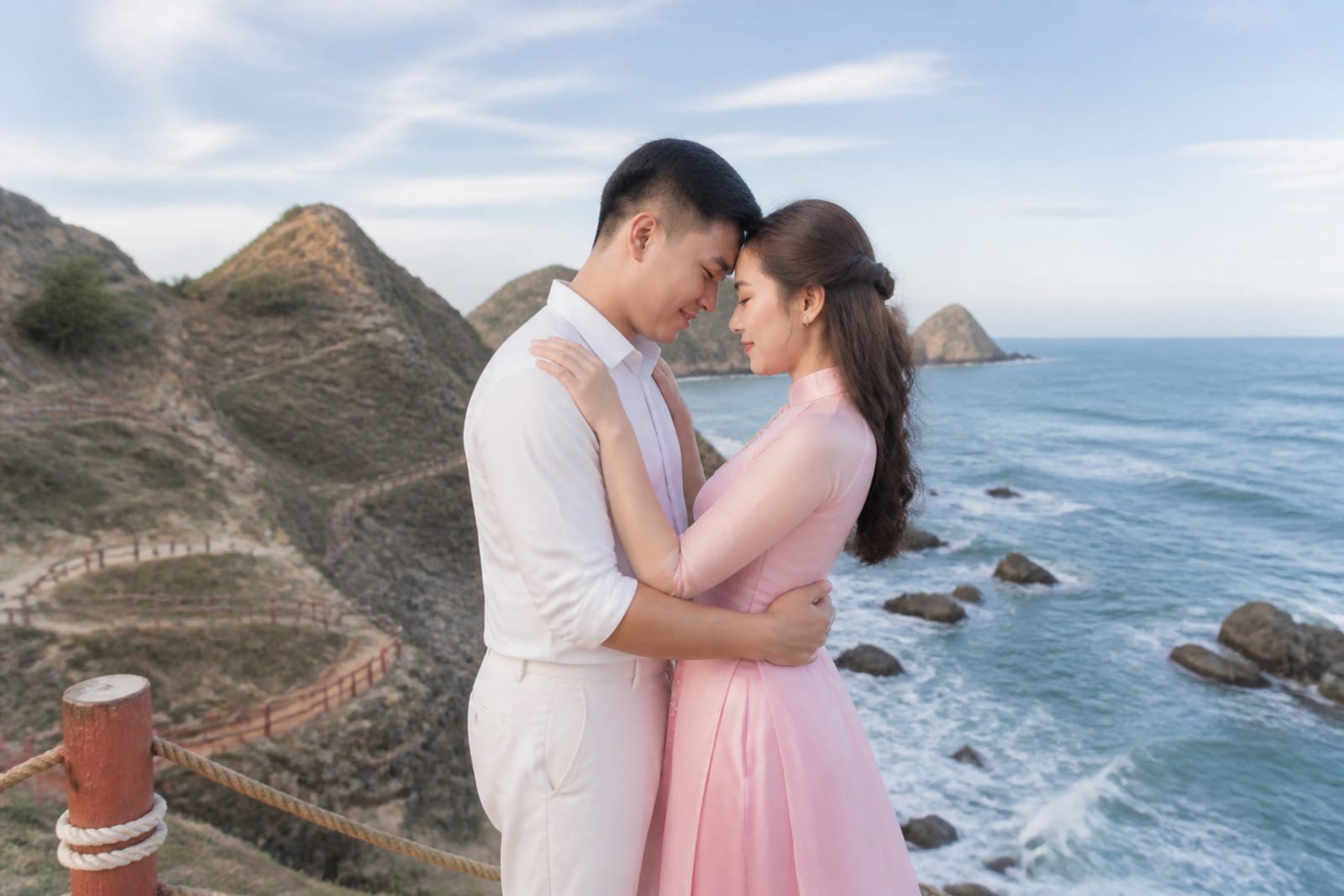
How much will a Quy Nhon family photoshoot cost, and what factors affect the price?
Photography costs in Quy Nhon vary by photographer experience, session length, edited image count, and travel time from the city center. Factors that influence pricing: number of outfits (more outfit changes = longer session = higher cost), group size (8+ people may need a second photographer), location accessibility (remote coves cost more in travel time), and editing turnaround (48-hour delivery is faster than 2 weeks). Ask local photographers for a quote based on 2–3 hours, 80–120 edited images, and one outfit. Do not assume "wedding photographer" means experience with children—ask to see family albums specifically. Comparison-shop at least two local teams; the cheapest often deliver unedited JPEGs only, which you then crop and color-grade yourself. Conclusion: clarify deliverables (edited vs. raw, number of images, format, delivery time) before quoting; cost factors matter more than the total number.
---
What to check before booking a Quy Nhon family photographer
- Portfolio: Look for multigenerational groups (not just couples); check if children look relaxed, not posed.
- Edited samples: Ask for finals straight from their camera—do they over-brighten, over-saturate, or leave natural skin tones?
- Backup plan: What happens if it rains (rare Feb–Aug, but possible)? Can you reschedule free, or pay a fee?
- Delivery: How many edited images? In what format (JPEG, TIFF, RAW)? How long after the shoot?
- Communication: Do they respond within 24 hours? Can you WhatsApp questions, or email only?
- Child experience: Ask directly: "Have you shot families with children under 8? Can I see two examples?"
---
Why Cáo Studio?
If you'd prefer to shoot a family session in Hanoi or Ho Chi Minh City, Cáo Studio coordinates makeup, hair, outfit (including ao dai rental), and directed photography as one team in a single booking. We walk families through light, framing, and movement—the same philosophy applies in Quy Nhon, but you'd need to hire locally there. For a pre-wedding or family session in Hanoi, we handle everything; for Quy Nhon, use this guide to vet a local photographer and brief them like a director would.
📸 Book on WhatsApp — family photoshoot
---
Related reading
- Family photoshoot pillar page
- Ao dai photoshoot—heritage and light
- Couple & family sessions
- Makeup & hair at your hotel
- Vacation photoshoots
- Our lookbook
💄 Makeup & hair at your hotel | 🌸 See the lookbook
---
FAQ
Can Cáo Studio shoot a family session in Quy Nhon?
No, Cáo Studio is based in Hanoi and Ho Chi Minh City. For Quy Nhon, hire a local photographer using the guide above. If you'd like a multigenerational shoot in Hanoi or Saigon with full makeup, hair and outfit coordination, contact us on WhatsApp.
What's the best month to photograph a family in Quy Nhon?
February to August is dry and sunny; light is predictable at dawn. September to December brings rain, typhoon risk and rough seas. January is transition season—cool mornings, possible drizzle. Avoid October–November for safety.
How do I brief a local photographer on "directed, not posed" family photos?
Send a written one-page brief: shoot times (6–7 am is best), must-have frames, outfit colors, group ages, and specific instructions like "We want walking shots, looking at each other, not staring at the camera." Request they shoot wide, then medium, then detail for each scene.
Should we rent ao dai for a Quy Nhon family session, or wear Western formal wear?
Ao dai (all family in heritage, or grandparents only) reads as intentional and photographs beautifully in morning light. Western formal works equally well but less distinctive. Avoid mixing ao dai and Western wear unless that's your deliberate statement. Choose based on family preference, not trends.
What happens if a child gets sick or refuses to participate mid-shoot?
Confirm the photographer's reschedule policy beforehand (free vs. fee). During the session, pivot: switch activities (wading, walking) instead of forcing poses. Often, the most natural frames happen when a child stops thinking about the camera. Never extend the session to "make up" for lost time; tired children photograph worse.
Can we do a multigenerational photoshoot and a separate couple shoot on the same day in Quy Nhon?
Yes, but split sessions (e.g., 6–8 am family, 4–5:30 pm couple) works better than back-to-back. The couple session allows intimate framing without children; the family session captures formal continuity. Confirm the photographer has time and energy for two shoots, and budget accordingly.
FAQ
Can Cáo Studio shoot a family session in Quy Nhon?
No, Cáo Studio is based in Hanoi and Ho Chi Minh City. For Quy Nhon, hire a local photographer using the guide above. If you'd like a multigenerational shoot in Hanoi or Saigon with full makeup, hair and outfit coordination, contact us on WhatsApp.
What's the best month to photograph a family in Quy Nhon?
February to August is dry and sunny; light is predictable at dawn. September to December brings rain, typhoon risk and rough seas. January is transition season—cool mornings, possible drizzle. Avoid October–November for safety.
How do I brief a local photographer on "directed, not posed" family photos?
Send a written one-page brief: shoot times (6–7 am is best), must-have frames, outfit colors, group ages, and specific instructions like "We want walking shots, looking at each other, not staring at the camera." Request they shoot wide, then medium, then detail for each scene.
Should we rent ao dai for a Quy Nhon family session, or wear Western formal wear?
Ao dai (all family in heritage, or grandparents only) reads as intentional and photographs beautifully in morning light. Western formal works equally well but less distinctive. Avoid mixing ao dai and Western wear unless that's your deliberate statement. Choose based on family preference, not trends.
What happens if a child gets sick or refuses to participate mid-shoot?
Confirm the photographer's reschedule policy beforehand (free vs. fee). During the session, pivot: switch activities (wading, walking) instead of forcing poses. Often, the most natural frames happen when a child stops thinking about the camera. Never extend the session to "make up" for lost time; tired children photograph worse.
Can we do a multigenerational photoshoot and a separate couple shoot on the same day in Quy Nhon?
Yes, but split sessions (e.g., 6–8 am family, 4–5:30 pm couple) works better than back-to-back. The couple session allows intimate framing without children; the family session captures formal continuity. Confirm the photographer has time and energy for two shoots, and budget accordingly.
Ao dai, makeup, hair and a local photographer in Hanoi or Saigon — one WhatsApp message.