/pre-wedding-photoshoot
Film Camera Wedding Photos in Vietnam: A Practitioner's Guide
Film photography in Vietnam works best when you plan for bright equatorial light, unpredictable humidity, and lab turnaround that spans days, not hours. Hanoi's winter (December–February) offers soft, cool light ideal for tungsten-balanced stock; the rainy season (May–September) demands fast film and ND filters to manage blown highlights. Ho Chi Minh City's dry season (December–April) suits color film, while humid months (May–November) risk film degradation if not stored sealed. A typical pre-wedding film shoot runs 2–4 hours, often combining analog and digital for safety—clients trust both backup files and film's unpredictable character. Cáo Studio – Makeup & Photoshoot in Hanoi and Saigon works with photographers who shoot film alongside digital, letting couples choose their aesthetic. Key challenges: Vietnam's tropical climate requires airtight storage, processing turnaround (often 2–3 weeks for color work), and acceptance that you won't see results until development. Plan your shoot around the dry season, brief your lab on your film type, and bring backup digital files for peace of mind.
Film photography in Vietnam demands respect for climate, light, and logistics that differ sharply from Western studios. You're not just choosing a look—you're solving a chain of technical and seasonal problems. Here's what happens in reality when you commit to film for a pre-wedding shoot in Vietnam.
Why do photographers choose film for Vietnam pre-weddings despite the humidity?
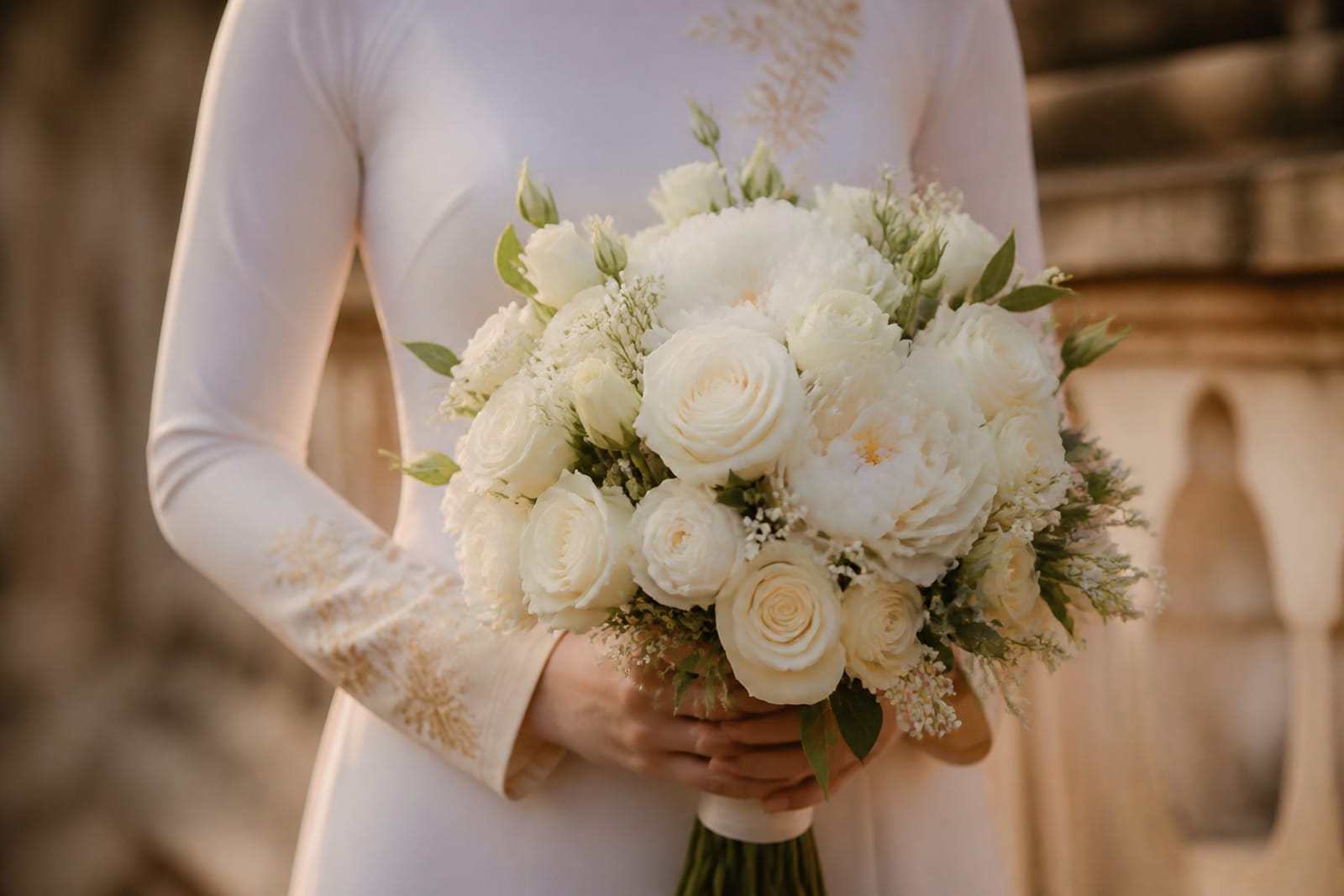
Film stock renders tropical skin tones and vegetation with a warmth and saturation digital sensors often miss. Kodak Portra 400 and Fujifilm Pro 400H (now discontinued, driving used-stock prices high) handle Hanoi's winter daylight and afternoon overcast without losing detail; Tri-X 400 black-and-white holds fine grain even in harsh midday sun. The answer isn't nostalgia—it's color science. A 35mm frame shot on Portra through a window in a Hoi An silk shop reads as authentically warm, where digital would need post-processing to match. Photographers choose film because it solves Vietnam's light problem directly: saturated colors without digital editing, natural highlight rolloff that protects blown-out sky, and a subjective "look" that appeals to couples seeking something their phone cannot produce.
The trade-off is trust. You'll see the shots 2–3 weeks after your session, not 24 hours. If your photographer underexposed during a cloud burst or your film was stored improperly before the shoot, you discover it late. Film forces planning and discipline; that's its actual cost.
When is film photography best in Hanoi, Ho Chi Minh City, and Hoi An?
| Season | Light Quality | Film Type & Why | Best Months | Challenges |
|---|---|---|---|---|
| Northern Cool (Hanoi) | Soft, grey, even | Tungsten-balanced (Kodak Portrait 400) or standard daylight; less contrast recovery needed | December–February | Cool temps favor color, but heavy cloud cover blocks detail; plan indoor/temple work |
| Northern Rainy (Hanoi) | Bright breaks, high contrast | Fast ISO (400+), ND filters to stop down; Tri-X or Portra push-processable | May–September | Midday humidity + sudden storms; film degrades if moisture seeps in; lab must be air-conditioned |
| Central Dry (Hoi An, Da Nang) | Golden, directional, warm | Portra 400 or Fujifilm Velvia (if you want saturation); shoot early morning or late afternoon | February–August | Sun angle is high; midday shoots blow highlights unless ND-filtered |
| Central Rainy (Hoi An) | Unpredictable contrast shifts | Fast stock + push-process agreement with lab; black-and-white safer than color in variable light | September–December | Typhoon risk; flooding occurs October–November; confirm shoot dates 2 weeks prior |
| Southern Dry (Ho Chi Minh City) | Harsh, high-contrast | Portra 400 for skin; Tri-X for architectural; use reflectors to fill shadow | December–April | Sun intensity at midday; early morning/sunset mandatory |
| Southern Wet (Ho Chi Minh City) | Afternoon downpours, morning soft | Fast film, fast lenses; color film risky unless studio lighting or overcast assured | May–November | Humidity peaks August–September; film canisters rust if not sealed; short sessions safer |
December–February in Hanoi and February–August in Hoi An are optimal for film because light is predictable, humidity lower, and processing labs (many of which have older, temperamental equipment) perform best in cool conditions. May–September in Hanoi and September–December on the central coast demand faster film, ND filters, and a photographer with push-processing experience and a trusted lab partnership.
How does humidity and heat damage film, and how do you prevent it?
Film base and emulsion degrade when moisture seeps through canister seals or when heat accelerates chemical reactions. In Hanoi's summer or Ho Chi Minh City's monsoon months, a film roll sitting in a car for two hours can absorb humidity that causes color shifts—especially in color negative and reversal stocks. Prevention: buy film from a refrigerated source (many Vietnamese retailers don't), store it in a sealed ziplock with silica packets in your accommodation's coolest spot (not a minibar; those cycle temperature), and check your photographer's storage protocol—ask if they use a dedicated film fridge on set. Expired stock (often cheaper) is gamble-prone in Vietnam's climate; Portra 400 from 2018 stored at room temperature in tropical humidity may shift warm. Professional labs in Hanoi and Ho Chi Minh City run refrigerated storage and handle processing the day film arrives—confirm this before booking. One tactical move: shoot your film session early in the trip, develop within the same week while you're still in-country, and view proofs before leaving Vietnam in case a re-shoot is needed.
📸 Book on WhatsApp — ao dai photoshoot
What role does a professional lab play in film results, and how do you choose one in Vietnam?
A lab isn't a neutral processor—it's a creative partner whose temperature control, developer chemistry, and scan quality determine whether your film's latitude and color appear or disappear. Vietnam has few true film labs; Hanoi hosts 2–3 that still process 35mm color and black-and-white in-house, while Saigon's options are similarly limited and inconsistent. A mediocre lab delivers flat scans, color shifts (reds too magenta, blues too cyan), or grain aliasing that crushes fine-grain film's advantage. Photographers working in Vietnam typically ship film to Bangkok, Da Nang, or overseas (Singapore, Tokyo, or LA) if the local lab is unreliable—a 3–7 day delay beyond the standard 2-week turn. Ask your photographer: where is the lab, what chemistry do they use, what's the scan resolution, and can they do test strips before committing to a full batch? A good lab offers pull/push processing (crucial if your photographer brackets exposure), hand-prints or high-res drum scans, and will re-scan if color looks off. Budget an extra week into your timeline if processing leaves Vietnam; if local, confirm the lab's storage and handling—many older Vietnamese labs don't climate-control negatives after processing, risking fading.
How do you combine film and digital for a safe, usable pre-wedding shoot in Vietnam?
Most couples want both: film's aesthetic for album and display, digital as backup and social-media source. A dual-approach shoot usually runs 2–4 hours with the same photographer holding film and digital bodies, or two shooters (film, digital) in parallel. Your photographer shots film on a mechanical body (no battery, no digital sensor to fail in humidity), digital on a modern mirrorless camera. The catch: you're paying for two cameras, lab processing, and duplicate editing time. On set, the photographer develops a rhythm: a key moment (bride adjusting ao dai, groom's reaction, kiss) gets both mediums for safety; setup shots or filler may be digital-only to save film stock cost. Film frames are "real"—they were actually exposed onto celluloid; digital gives you a contact sheet in 24 hours for sequencing, while film's 2–3 week turnaround means you're planning your album without seeing every frame. Cáo Studio – Makeup & Photoshoot in Hanoi and Ho Chi Minh City coordinates with photographers experienced in this hybrid workflow; they know which moments warrant film-only and where digital is faster and smarter.
What should you communicate to your photographer about expectations and limitations?
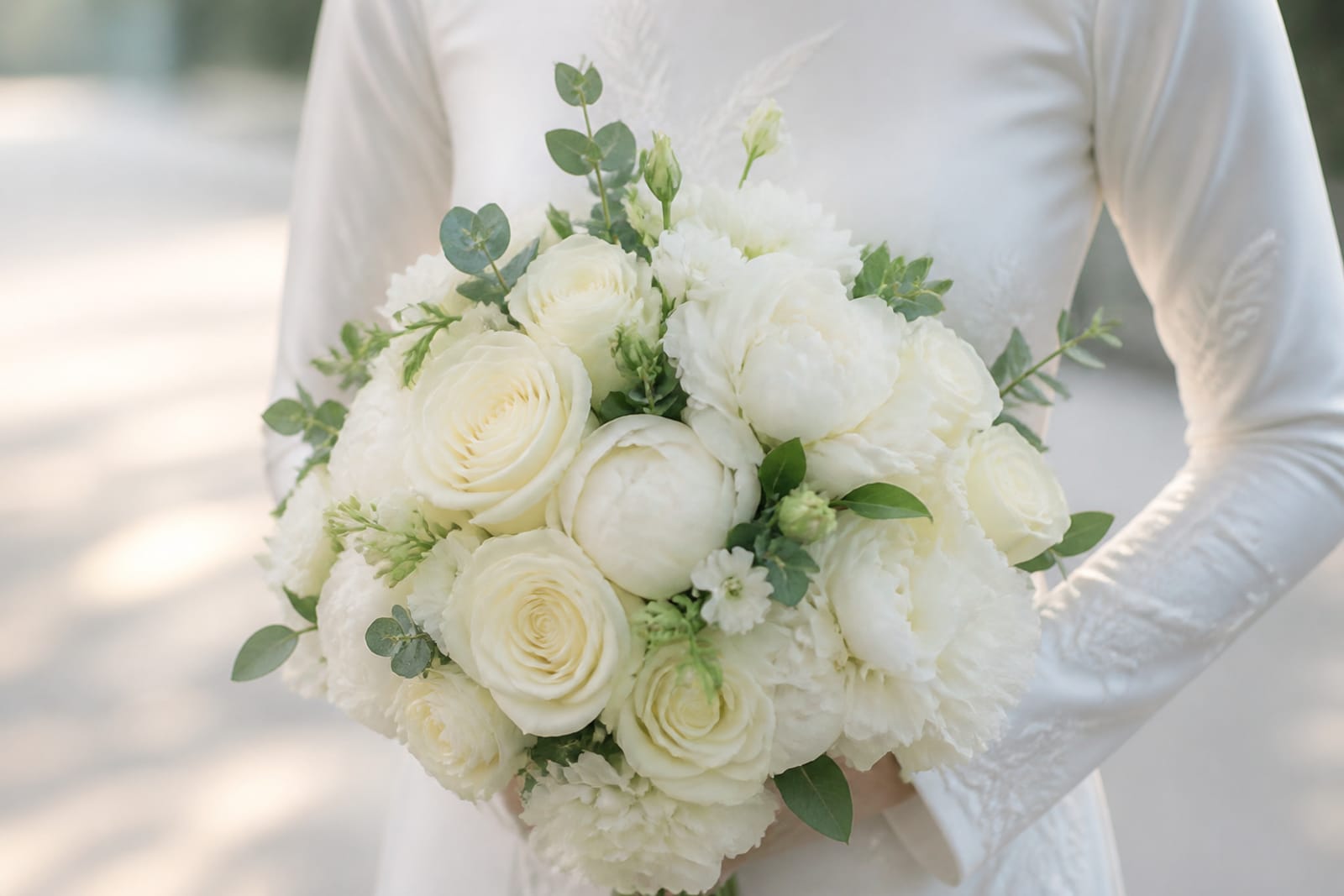
Start with a detailed film brief 4 weeks before your shoot. Specify: which film stocks you want (Portra 400, Tri-X, Velvia—each behaves differently), push/pull processing preferences, lab choice, and delivery timeline (2–3 weeks is standard; don't demand faster without accepting extra cost). Discuss exposure latitude: film pushes highlights into grain and shadow detail into murk; digital recovers both. Agree on a contact sheet (low-res scan of negatives) within 5–7 days so you can approve the lab's work and request re-scans or color adjustments before final delivery. Clarify what happens if light fails (a sudden storm in Hoi An, for example)—does the photographer pivot to digital, re-schedule, or reduce final film-frame count? Discuss your venue's lighting constraints; temples in Hanoi are often dim, and film rated 400 ISO may underexpose indoors unless your photographer uses fast lenses (f/1.4, f/2) or push-processes. State your tolerance for grain (Tri-X at 1600 ISO looks noticeably grainy; some couples love it, others want pushed Portra 400's finer structure instead). Finally, ask if the photographer insures against lab damage or file loss—few do, so manage your own risk by keeping a digital backup.
Communicate clearly with Cáo Studio – Makeup & Photoshoot on WhatsApp about your film vision, venue choices, and timeline. The studio's team can connect you with photographers experienced in analog work and Vietnam's seasonal light demands.
---
Practical Checklist: Before Booking a Film Pre-Wedding Shoot in Vietnam
- [ ] Confirm your shoot date falls in your region's dry or optimal season (Hanoi Dec–Feb, Hoi An Feb–Aug, HCMC Dec–Apr).
- [ ] Ask the photographer which film stock(s) they've used in Vietnam and show examples you like.
- [ ] Verify the lab's location, processing method (chemistry, scan DPI), and climate control.
- [ ] Request a sample contact sheet or low-res scan proof within 5–7 days of filming.
- [ ] Agree on push/pull processing, number of film rolls, and final delivery timeline (2–3 weeks typical).
- [ ] Brief the photographer on your ao dai, wedding dress, and any indoor/temple venues needing fast lenses.
- [ ] Discuss backup plan if light fails or weather disrupts the shoot (re-schedule, digital pivot).
- [ ] Ensure the photographer stores film in a refrigerated container on set, especially in May–September.
- [ ] Confirm whether you're booking film-only or hybrid (film + digital); price and time differ.
- [ ] Book makeup & hair services separately if needed—makeup & hair at your hotel or studio-based.
---
Honest Look: What Often Goes Wrong and How to Avoid It
Underexposure in overcast light. Hanoi's winter produces soft, even, dim light. A photographer metering for midtones may underexpose film by half-stop, losing shadow detail in an ao dai's pleats. Solution: discuss push-processing (develop at 1-stop faster) with your lab when booking; the photographer should bracket shots (shoot one frame at metered, one at +1 stop on the aperture or slower shutter).
Lab delays and color shifts. If your processor is backlogged, your film sits in a warm dark room for weeks before development, risking slight color fade. If the lab doesn't maintain consistent developer temperature, your images may shift warm (especially Portra, which skews magenta if chemistry drifts). Solution: ship film to the lab immediately after shooting; confirm lab has same-week processing and temperature-controlled dark room.
Film cost creep. Kodak Portra 400 is expensive in Vietnam (buy before travel); push-processing costs extra; lab scans at high DPI add time. If you want 500 final images, that's ~15 rolls of 35mm film; budget and timeline balloon. Solution: book 2–4 rolls with your photographer and choose your best 100–150 frames, or ask for hybrid (digital coverage, film-only on key moments).
Humidity spoiling unused film. You bring 10 rolls for your week in Vietnam, store them in your hotel room, and by Wednesday the canisters have condensation inside. Emulsion never fully dries. Solution: buy film as close to your shoot date as possible; store in a sealed bag with silica packets in the coolest spot (usually a solid wall, away from windows).
---
What to Check Before You Book
- Your photographer's film experience: Have they shot >5 weddings on 35mm in Vietnam's climate? Ask for film-only examples, not just digital.
- Lab reliability: Is the lab in-country or overseas? What's the scan quality (ask for 4000 DPI minimum). Do they push/pull? How long is standard turnaround?
- Film stock freshness: Where does your photographer source Portra, Tri-X, or other stock? Refrigerated storage matters.
- Hybrid shoot cost: If you want both film and digital, clarify if it's one photographer (two bodies) or two shooters (different rate).
- Venue constraints: If your ceremony is indoors (dimly lit temple, hotel ballroom), does the photographer have fast lenses for film, or will they switch to digital there?
- Season fit: Confirm your shoot month aligns with optimal light in your region (see the table above).
- Backup plan: If weather forces a reschedule, does the photographer cover re-shoot film costs, or is that an extra fee?
Book through Cáo Studio – Makeup & Photoshoot on WhatsApp (+84 338 762 340) to explore film pre-wedding options in Hanoi, Ho Chi Minh City, or Hoi An. The team connects you with photographers experienced in analog work and can advise on seasonal timing, venue lighting, and lab partnerships.
For comprehensive pre-wedding planning—including couple & family photoshoot, proposal & anniversary, and wedding video—visit the full pre-wedding photoshoot service page.
---
FAQ
Can I use film for an indoor wedding ceremony in a Hanoi temple?
Yes, but your photographer needs fast lenses (f/1.4 or f/1.8) and either fast film (Tri-X 400 push-processed to 1600) or a hybrid approach with digital backup. Temple light is often dim and tungsten-tinted; discuss color correction with your lab before shooting. Many photographers use digital indoors and film outdoors for safety.
What's the actual turnaround time from shooting to seeing proofs in Vietnam?
2–3 weeks is standard if the lab is in Hanoi or Ho Chi Minh City. If your photographer ships film overseas (Bangkok, Singapore, LA), add 5–7 days for shipping. A contact sheet or low-res scan proof should arrive 5–7 days after filming; final high-res scans follow within 2–3 weeks. Plan your album timeline accordingly—don't expect digital-speed delivery.
Should I choose color film or black-and-white for a pre-wedding shoot in Vietnam?
Color film (Portra 400) excels in Vietnam's natural light and renders ao dai colors beautifully. Black-and-white (Tri-X) handles high contrast and difficult lighting better and feels timeless. Many couples shoot both; discuss your aesthetic with your photographer and review film-stock examples before deciding.
Does humidity really ruin film, or is it exaggerated?
Humidity damages film if moisture seeps into canisters over days or weeks. A two-hour delay in a humid car is safe; storing film at room temperature for a week in May–September in Ho Chi Minh City risks emulsion shifts and color cast. Buy film close to your shoot, store sealed with silica, and process within days of shooting in tropical months.
Is a hybrid shoot (film + digital) worth the extra cost?
Yes, if your budget allows. You get film's aesthetic for albums and display, plus digital's speed for social media and online proofing. Your photographer covers the moment twice, reducing risk of underexposure or processing mishap. Many couples consider hybrid essential; discuss the cost and time commitment with your photographer.
What if my film lab closes or delivers poor scans?
Confirm lab stability and sample scans before committing. If scans disappoint, you can re-scan at a different lab (Vietnam or overseas) if negatives are safe. This adds cost and time. Always ask your photographer about their backup lab and whether they'll facilitate re-scans if needed.
Can I book film photography with Cáo Studio – Makeup & Photoshoot?
Cáo Studio in Hanoi and Ho Chi Minh City works with photographers experienced in analog work. Contact the team on WhatsApp (+84 338 762 340) to discuss film pre-wedding options, seasonal timing, and lab partnerships. A full brief on your film preferences, venue, and timeline is essential.
FAQ
Can I use film for an indoor wedding ceremony in a Hanoi temple?
Yes, but your photographer needs fast lenses (f/1.4 or f/1.8) and either fast film (Tri-X 400 push-processed to 1600) or a hybrid approach with digital backup. Temple light is often dim and tungsten-tinted; discuss color correction with your lab before shooting. Many photographers use digital indoors and film outdoors for safety.
What's the actual turnaround time from shooting to seeing proofs in Vietnam?
2–3 weeks is standard if the lab is in Hanoi or Ho Chi Minh City. If your photographer ships film overseas (Bangkok, Singapore, LA), add 5–7 days for shipping. A contact sheet or low-res scan proof should arrive 5–7 days after filming; final high-res scans follow within 2–3 weeks. Plan your album timeline accordingly—don't expect digital-speed delivery.
Should I choose color film or black-and-white for a pre-wedding shoot in Vietnam?
Color film (Portra 400) excels in Vietnam's natural light and renders ao dai colors beautifully. Black-and-white (Tri-X) handles high contrast and difficult lighting better and feels timeless. Many couples shoot both; discuss your aesthetic with your photographer and review film-stock examples before deciding.
Does humidity really ruin film, or is it exaggerated?
Humidity damages film if moisture seeps into canisters over days or weeks. A two-hour delay in a humid car is safe; storing film at room temperature for a week in May–September in Ho Chi Minh City risks emulsion shifts and color cast. Buy film close to your shoot, store sealed with silica, and process within days of shooting in tropical months.
Is a hybrid shoot (film + digital) worth the extra cost?
Yes, if your budget allows. You get film's aesthetic for albums and display, plus digital's speed for social media and online proofing. Your photographer covers the moment twice, reducing risk of underexposure or processing mishap. Many couples consider hybrid essential; discuss the cost and time commitment with your photographer.
What if my film lab closes or delivers poor scans?
Confirm lab stability and sample scans before committing. If scans disappoint, you can re-scan at a different lab (Vietnam or overseas) if negatives are safe. This adds cost and time. Always ask your photographer about their backup lab and whether they'll facilitate re-scans if needed.
Can I book film photography with Cáo Studio – Makeup & Photoshoot?
Cáo Studio in Hanoi and Ho Chi Minh City works with photographers experienced in analog work. Contact the team on WhatsApp (+84 338 762 340) to discuss film pre-wedding options, seasonal timing, and lab partnerships. A full brief on your film preferences, venue, and timeline is essential.
Ao dai, makeup, hair and a local photographer in Hanoi or Saigon — one WhatsApp message.