/suit-rental
Groom Outfits for Wedding Photos in Vietnam: Ao Dai, Khan Dong & Suits
Groom wedding outfits in Vietnam fall into three main categories: the ao dai (long silk tunic over trousers), the khan dong (vintage turban with matching tunic, rare but striking), and Western suits. Ao dai works year-round and photographs well in all light; suits are formal and flattering in cool weather (Nov–Feb) but cling in summer heat; khan dong requires confident styling and is best for styled shoots in controlled light. At Cáo Studio – Makeup & Photoshoot (Hanoi and Ho Chi Minh City branches), we work with grooms to match outfit choice to season, venue type (temple, garden, urban), and personal comfort. Most international couples rent ao dai or suits locally; khan dong is rare outside formal Vietnamese weddings. Plan outfit choice 2–4 weeks ahead so tailoring fits your body and shoot date aligns with optimal weather. 📸 Book on WhatsApp — ao dai photoshoot | 💄 Makeup & hair at your hotel | 🌸 See the lookbook ---
Why does season matter more than you think for groom outfits?
Light, temperature, and fabric behavior change dramatically across Vietnam's three climate zones. In the north (Hanoi), winter (Dec–Feb) is cool and grey—suits look sharp, but ao dai silk can feel heavy; summer (May–Sep) is hot and humid, making tailored fabric stick to skin and fabric wrinkles show in close-ups. Central Vietnam (Hoi An, Da Nang) is driest Feb–Aug, ideal for any outfit; Sep–Dec brings typhoon-season clouds and rain. The south (Ho Chi Minh City) is warm year-round, but Dec–Apr is drier and less hazy. Ao dai breathes better in heat; suits trap warmth and sweat shows under flash. Book your shoot in Feb–Mar or Oct–Nov (shoulder seasons) if you're flexible—cooler air, softer light, fewer crowds at temples. If you're locked into summer or winter, outfit choice shifts: summer = lightweight ao dai or linen suit; winter = heavier wool suit or silk ao dai with layering.
Conclusion: Season dictates which outfit photographs best and feels comfortable during a 2–4 hour session.
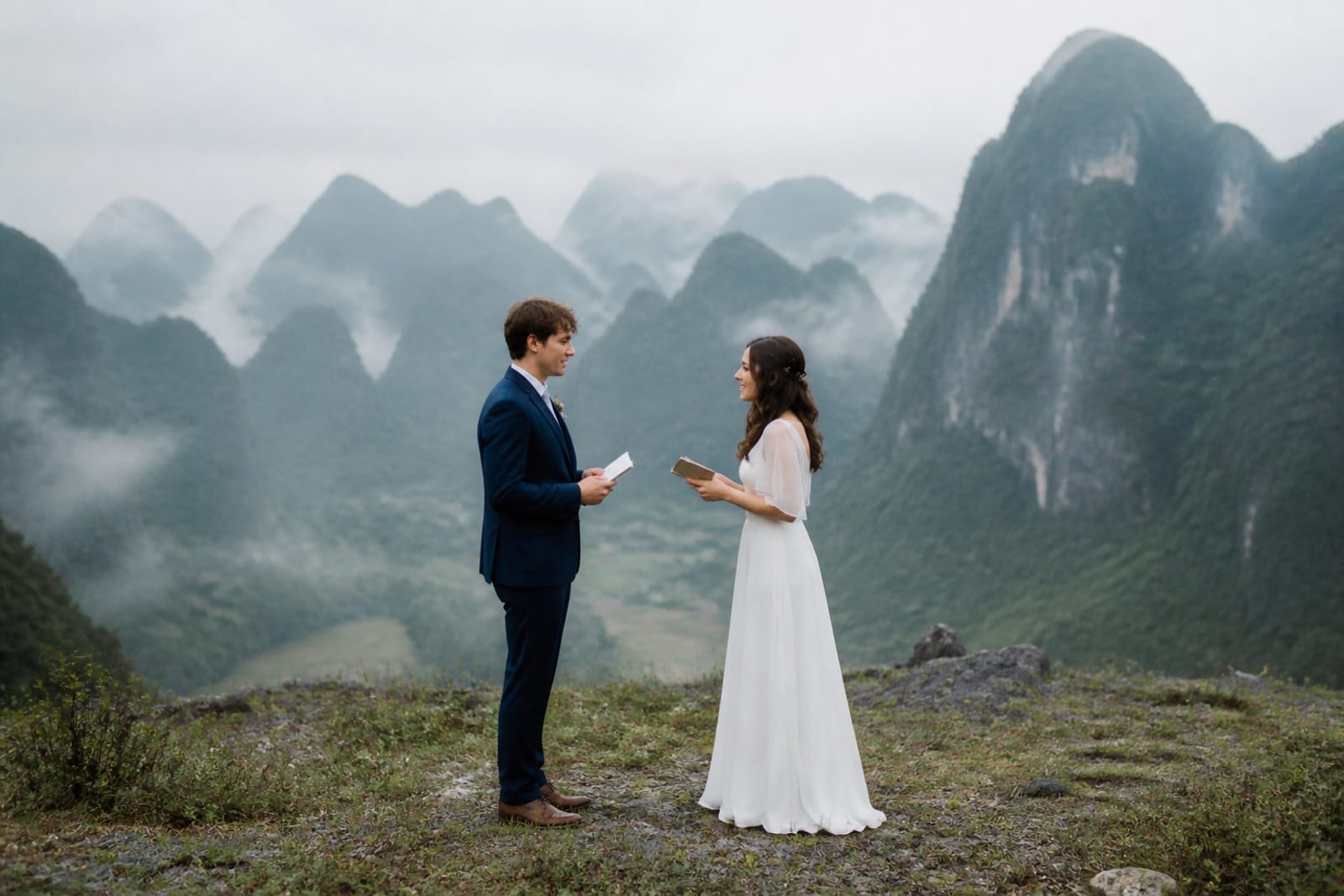
What does each outfit communicate, and when should you wear it?
| Outfit Type | Cultural Weight | Best Season/Light | Why It Works | What to Know |
|---|---|---|---|---|
| Ao dai (silk tunic) | Traditional Vietnamese; worn at Tet, formal events; bridegroom standard | Year-round; softer light Feb–Aug | Elegant, flows well in wind, photographs in any light, easy movement | Rental stock in Hanoi/HCMC; custom tailoring takes 2–3 weeks; undergarments matter (see below) |
| Western suit (jacket, trousers) | International formality; borrowed from Western weddings; modern look | Nov–Feb in north; Dec–Apr in south | Clean lines, flatters torso, works with ties/pocket squares, reads well from distance | Hotter months show sweat; wrinkles visible in close-ups; tailoring essential for fit |
| Khan dong (turban + tunic) | Rare, heritage; old-Hanoi elegance; formal Vietnamese only | Controlled studio light, Feb–Mar | Distinctive, photographs as storytelling, honors heritage | Requires experienced styling; few local rental options; best as second outfit in a session |
The ao dai is the default choice for couples mixing cultures—it reads as "Vietnamese" without requiring Western guests to decode formal wear. Suits suit (no pun intended) grooms who want to stand out from their bride's ao dai or who plan a Western ceremony first. Khan dong is a bold choice reserved for styled shoots with a photographer who knows how to light a turban.
What goes wrong with groom outfit fit, and how do you avoid it?
Tailoring mistakes account for more than half of disappointing groom photos. A jacket that's too loose bunches under the arms; trousers that are too long drag and crease; an ao dai that's too tight restricts arm movement and shows body shape unflattering in profile. Rental shops in Hanoi and Ho Chi Minh City often deliver generic sizing—sleeves 1 inch too long, waist 2 inches too wide. You see this in close-ups and video.
Step-by-step fitting checklist before you confirm a rental or tailoring order:
- Jacket (if suit). Button closed: no gap at chest, no pulling at shoulders. Sleeve ends at wrist bone. Lapels lie flat, no twisting.
- Trousers (suit or ao dai inner). Waist sits on natural waist, not hips. Inseam breaks gently on shoe top, no dragging or bunching.
- Ao dai outer tunic. Shoulders sit level; armhole doesn't pinch; tunic falls straight from chest (not clingy), and hem clears your heels by ½ inch.
- Try the pose. Sit down (you'll be sitting in 30% of photos). Raise your arms (for hand-in-pocket shots, hugs, holding a bouquet). Does fabric bunch, gap, or restrict? If yes, alter before shoot day.
- Check the undergarment. Wear what you'll wear at the shoot (see below). Bra straps, tank tops, or undershirts show under ao dai—ask your photographer at Cáo Studio about styling.
Rental shops in Hanoi and Saigon (where Cáo Studio operates) charge extra for rush tailoring; plan 2–3 weeks if you need alterations. If you're visiting for only a week, bring one fitted suit from home and rent the ao dai locally—one less variable.
Conclusion: Fit is non-negotiable; budget time and ask for fittings 3 days before your shoot.
Should you wear an undershirt under an ao dai, and what else goes under?
This is the question nobody asks until the photos arrive. Ao dai is semi-sheer silk or linen; light passes through it, especially when backlit or under studio flash. The silhouette depends on what's underneath.
Best practice for ao dai undergarments:
- Undershirt. Wear a thin, fitted white or ivory tank top or t-shirt (not baggy, not textured). Crew neck or v-neck, short-sleeve only—long sleeves show at the cuff. This prevents backlighting from exposing your torso and keeps you comfortable for 2–3 hours.
- Underpants. Dark, fitted briefs or boxer briefs (not loose boxers—they're visible as bulk under silk). Avoid patterns or logos.
- No bra, no sports bra. Ao dai is cut for a male chest; anything else creates an awkward silhouette.
- Socks. Thin, crew-length, dark, matching trousers. Visible ankle reads as sloppy.
If your ao dai is custom-made or premium rental, it may be lined or use thicker silk—ask the rental shop if it's opaque. Studio shoots (indoors, controlled light) are more forgiving; outdoor temple shoots and backlit garden sessions demand full layering. At Cáo Studio's Hanoi and Ho Chi Minh City studios, our makeup and hair team advises on this during the pre-shoot consultation.
Conclusion: Undershirt + dark briefs = polished silhouette in any light.
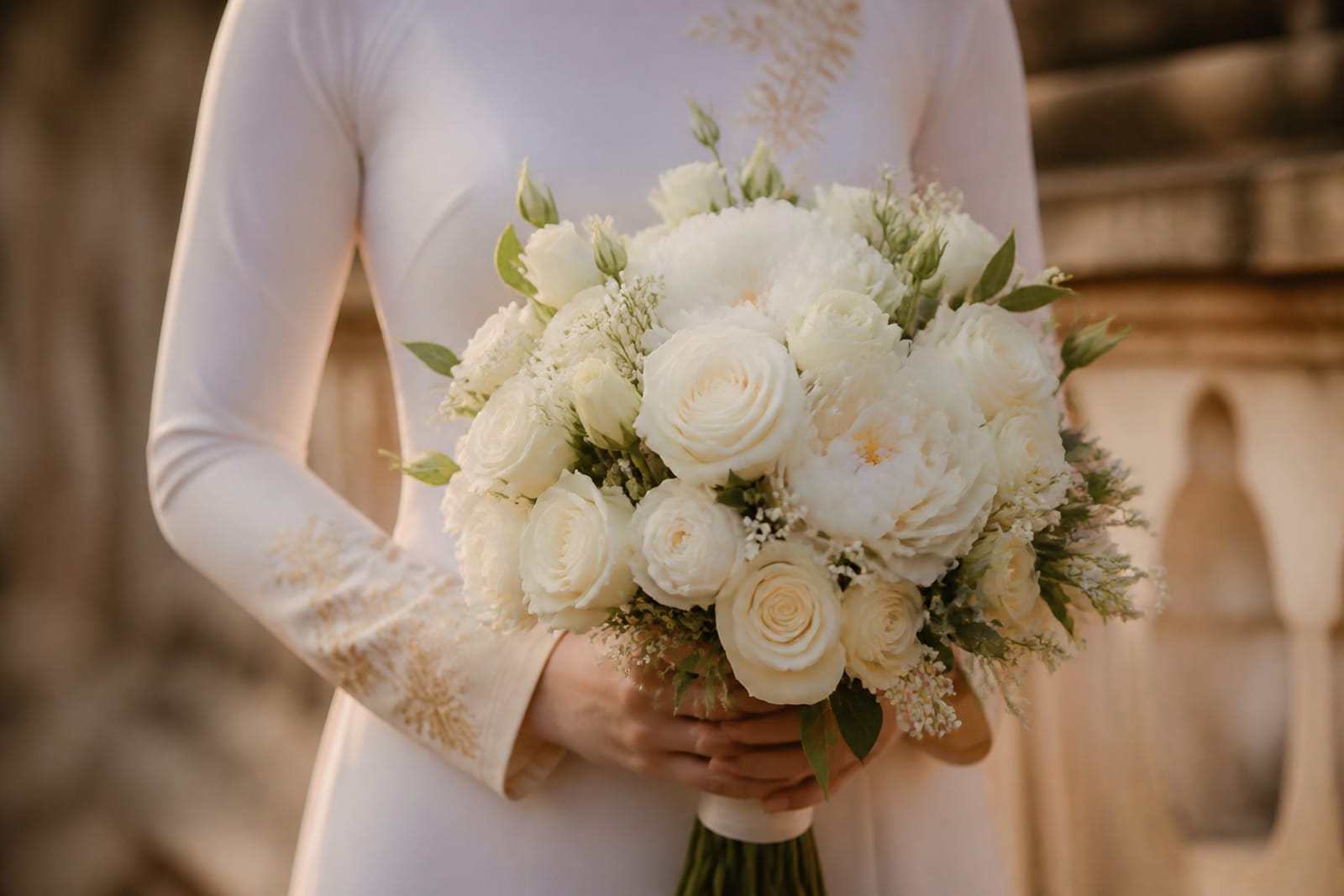
How do you coordinate groom outfit with bride outfit and wedding style?
Mismatch is jarring: a groom in formal Western suit standing beside a bride in casual ao dai reads as unequal; a groom in heritage khan dong next to a bride in a white wedding dress looks culturally confused. Coordination is about tone, color, and cultural intention.
Coordination framework:
- Same cultural register. If bride wears ao dai, groom wears ao dai (traditional shot) or Western suit (modern contrast). Avoid mixing heritage (khan dong) with Western (white dress) unless you're telling a deliberate story.
- Color palette. Ao dai comes in jewel tones (navy, burgundy, emerald), pastels (blush, sage), and earth tones. Match your bride's hue family: if she's in deep red, you wear deep red or charcoal (not pale pink). Suits are safer (grey, navy, black), but choose a tone that doesn't wash you out.
- Fabric weight. On a hot day, if bride wears lightweight ao dai, groom should not be buttoned into a wool suit. Both should breathe or both should be formal; mismatched effort shows.
- Formality of venue. Temple shoots demand elevated formality (suit or silk ao dai); casual garden or street sessions forgive relaxed tailoring or linen.
At Cáo Studio – Makeup & Photoshoot, our team consults with couples to align outfit choices. If you're renting both bride and groom outfits, book together—we can ensure the colors and silhouettes complement each other, and makeup & hair styling on the day ties everything together. See our couple & family photoshoot and pre-wedding photoshoot pages for how we coordinate styled shoots.
Conclusion: Coordinate color, fabric, and cultural tone so both partners read as one unit, not two separate people.
📸 Book on WhatsApp — ao dai photoshoot | 💄 Makeup & hair at your hotel | 🌸 See the lookbook
Where do you rent or buy groom outfits in Hanoi and Ho Chi Minh City?
Most travelers rent locally rather than ship a suit from home. Hanoi's Old Quarter and Hoan Kiem district have rental shops stocked with ao dai and suits; Ho Chi Minh City's District 1 and Saigon Centre have similar options. Quality varies: budget rentals ($) offer generic sizing and basic upkeep; mid-range shops include tailoring and garment cleaning; premium services provide custom silk and detailed alterations. Lead time: walk-in same-day rentals exist but fit is unpredictable; 3-day advance booking guarantees a fitting.
Rental vs. purchase decision:
- Rent if you're visiting for one shoot and won't wear the outfit again. Easier to return, no luggage worry, local sizing.
- Buy if you're staying 3+ weeks, plan multiple shoots (engagement, pre-wedding, family session), or want a keepsake. A custom ao dai or tailored suit becomes a memory; rental feels transactional.
Cáo Studio – Makeup & Photoshoot doesn't sell or rent outfits, but our team in Hanoi and Saigon branches knows trusted local vendors. When you book a photoshoot, ask on WhatsApp about outfit rental partners we recommend. This saves you time vetting shops and ensures the rental fits before your session.
What to check before you book a rental shop:
- Photos of rental stock (does it match their website or lookbook?).
- Policy on tailoring (included or extra fee?).
- Return condition requirements (stains, small rips—what are the penalties?).
- Cancellation terms (shoot postponed or rescheduled?).
- Timeline (how many days for alterations?).
📸 Book on WhatsApp — ao dai photoshoot | 💄 Makeup & hair at your hotel | 🌸 See the lookbook
---
See your groom outfit in motion
Our lookbook features groom outfits in real light and real poses. Browse Hanoi, Ho Chi Minh City, and Hoi An shoots to see how ao dai, suits, and layering photograph on different skin tones, body types, and venues. The lookbook also shows makeup & hair pairing, so you can envision your full styling before booking.
For a full pre-wedding experience—groom outfit, bride dress, hair, makeup, and professional photography—see our pre-wedding & elopement packages and wedding day photographer service. If you're already in-country and need quick hair and makeup touch-ups on shoot day, we offer makeup & hair at your hotel in Hanoi and Ho Chi Minh City.
Ready to lock in your groom look? Message us on WhatsApp +84 338 762 340 with your outfit choice, season, and shoot style. We'll guide you to trusted rental partners and ensure your outfit fits the vibe of your session.
---
FAQ
Can I wear a Western suit for an ao dai photoshoot, or should it be traditional?
Both work. Suit + bride in ao dai = modern contrast (popular for couples blending cultures). Ao dai + ao dai = traditional, cohesive. Choose based on your wedding style and how formal you want to feel. Suit works best in cooler months (Nov–Feb); ao dai is comfort in heat year-round.
What's the difference between renting and custom-tailoring a groom outfit in Vietnam?
Rental is fast (3–7 days) and low-cost; you return it after. Custom tailoring takes 2–4 weeks but is yours to keep, fits perfectly, and suits multiple events. For a short visit, rent. For a keepsake or multiple shoots, custom-tailor.
Do I need makeup for groom photos, or just the bride?
Grooms benefit from light makeup (foundation, powder, light contouring) to even skin tone and reduce shine under flash or sun. It's especially useful in outdoor shoots or close-up portraits. At Cáo Studio, makeup & hair services include groom grooming and styling.
How early should I book an outfit rental before my shoot?
Ideally 2–3 weeks for tailoring and fitting. If you're within 1 week, call rental shops directly to ask about walk-in availability. Confirmation 3–5 days before your shoot is mandatory (not 1 day), so they reserve your size.
Can I wear an undershirt under a light-colored ao dai, or will it show?
A thin white or ivory undershirt will barely show under most ao dai silk, especially if the outer fabric is jewel-toned or dark. Under pale or pastel ao dai, a white shirt may cast a faint shadow in backlighting; ask your rental shop about the fabric weight and opacity before deciding.
What if my ao dai or suit doesn't fit on shoot day—can the photographer fix it in editing?
Editing can tighten waistlines slightly or even out bunching in small areas, but fit problems are best solved before the shoot. Loose fabric, gaping sleeves, or dragging hems are visible in motion and video. Plan a fitting 3–5 days ahead and bring your chosen undergarments.
Is it okay to wear black or dark grey suit for a Vietnamese wedding photo, or does it look too formal?
Black and dark grey work perfectly for formal or evening shoots, especially in cooler months. They photograph well indoors and at temples. Avoid them in bright midday sun (too harsh contrast) or in very casual garden settings. Pair with lighter undershirt and loafers to soften the look.
Should my groom outfit match my bride's ao dai color exactly?
Not exact, but coordinate. If bride is in deep burgundy, groom can wear burgundy, navy, or charcoal—same color family. Exact matching can look costume-y. Aim for harmony: both jewel tones, both pastels, or one jewel and one neutral (e.g., groom in navy suit, bride in blush ao dai).
FAQ
Can I wear a Western suit for an ao dai photoshoot, or should it be traditional?
Both work. Suit + bride in ao dai = modern contrast (popular for couples blending cultures). Ao dai + ao dai = traditional, cohesive. Choose based on your wedding style and how formal you want to feel. Suit works best in cooler months (Nov–Feb); ao dai is comfort in heat year-round.
What's the difference between renting and custom-tailoring a groom outfit in Vietnam?
Rental is fast (3–7 days) and low-cost; you return it after. Custom tailoring takes 2–4 weeks but is yours to keep, fits perfectly, and suits multiple events. For a short visit, rent. For a keepsake or multiple shoots, custom-tailor.
Do I need makeup for groom photos, or just the bride?
Grooms benefit from light makeup (foundation, powder, light contouring) to even skin tone and reduce shine under flash or sun. It's especially useful in outdoor shoots or close-up portraits. At Cáo Studio, [makeup & hair](/makeup-and-hair) services include groom grooming and styling.
How early should I book an outfit rental before my shoot?
Ideally 2–3 weeks for tailoring and fitting. If you're within 1 week, call rental shops directly to ask about walk-in availability. Confirmation 3–5 days before your shoot is mandatory (not 1 day), so they reserve your size.
Can I wear an undershirt under a light-colored ao dai, or will it show?
A thin white or ivory undershirt will barely show under most ao dai silk, especially if the outer fabric is jewel-toned or dark. Under pale or pastel ao dai, a white shirt may cast a faint shadow in backlighting; ask your rental shop about the fabric weight and opacity before deciding.
What if my ao dai or suit doesn't fit on shoot day—can the photographer fix it in editing?
Editing can tighten waistlines slightly or even out bunching in small areas, but fit problems are best solved before the shoot. Loose fabric, gaping sleeves, or dragging hems are visible in motion and video. Plan a fitting 3–5 days ahead and bring your chosen undergarments.
Is it okay to wear black or dark grey suit for a Vietnamese wedding photo, or does it look too formal?
Black and dark grey work perfectly for formal or evening shoots, especially in cooler months. They photograph well indoors and at temples. Avoid them in bright midday sun (too harsh contrast) or in very casual garden settings. Pair with lighter undershirt and loafers to soften the look.
Should my groom outfit match my bride's ao dai color exactly?
Not exact, but coordinate. If bride is in deep burgundy, groom can wear burgundy, navy, or charcoal—same color family. Exact matching can look costume-y. Aim for harmony: both jewel tones, both pastels, or one jewel and one neutral (e.g., groom in navy suit, bride in blush ao dai).
Ao dai, makeup, hair and a local photographer in Hanoi or Saigon — one WhatsApp message.