/pre-wedding-photoshoot
Hidden photo corners near Da Lat Railway Station for couples
Da Lat Railway Station sits on a hillside where morning mist lingers until 8–9 AM, creating soft, diffused light—ideal for romantic portraits. The station itself (French colonial architecture, yellow walls, red-tiled platform) photographs best from the road below or from the platform stairs facing sunset (4–5 PM, winter/spring clearest). Hidden corners include the overgrown track section west of the station (moody, weathered), the pine-tree avenue leading uphill (dappled shade, good for movement shots), and the slope below the main building (golden hour, low angle looking up). December–April brings cool, dry weather and minimal crowds; avoid May–September (afternoon showers, hazy light). Cáo Studio – Makeup & Photoshoot operates in Hanoi, Ho Chi Minh City, and Hoi An—for Da Lat, hire a local photographer familiar with the station's permit rules and staff (shooting requires courtesy). Allow 2–3 hours for hair, makeup, wardrobe changes, and location moves. ---
Where exactly are these hidden corners and why do they work?
Da Lat Railway Station sits 1,500 meters above sea level on a steep hillside. The main building (restored colonial structure) has the platform on its east side. Most visitors shoot from the platform or car park—predictable framing. Hidden corners include: (1) the disused track bed west of the station, where rails rust and wildflowers grow through gravel—moody, intimate, few tourists pass here. (2) The pine-tree lane climbing uphill north from the station entrance—tall, straight pines cast dappled shadow, cool palette, good for full-length walking shots. (3) The slope below the building, facing the town—early morning sun hits here at a low angle, golden and warm. (4) The small garden area near the ticket office (often overlooked)—stone benches, old lampposts, intimate scale.
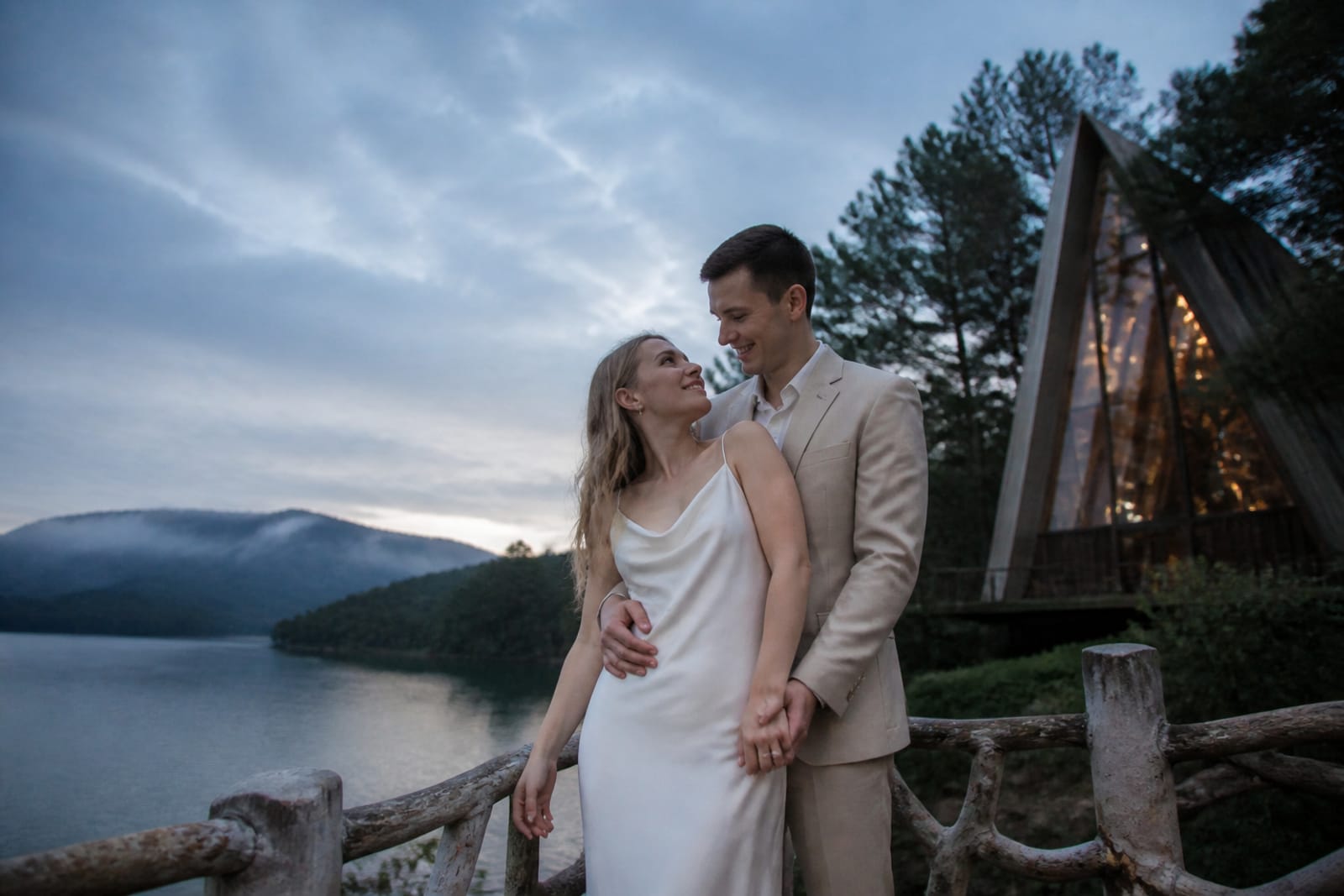
Light behavior: morning mist (5–8 AM) softens harsh shadows; by 9 AM direct sun begins. The hillside slope means light moves quickly. Afternoon (3–5 PM) sun glows from the west; cloud cover is common November–February, diffusing that light beautifully. Summer (May–Sept) afternoons bring haze and fast-moving clouds—unpredictable, often overcast by 2 PM.
---
When is the best season to shoot here?
| Season | Best light | Crowds | Weather | Best outfit types |
|---|---|---|---|---|
| Dec–Feb (winter/spring) | Soft morning mist, golden afternoon sun | Very low, weekday mornings empty | Cool (15–20°C), dry, clear skies | Jackets, layers, ao dai with shawl |
| Mar–Apr | Warm, bright morning sun, clear air | Low–moderate weekdays | Warm (20–25°C), dry, occasional mist | Light layers, sleeveless ao dai, flowy fabrics |
| May–Sep (rainy) | Hazy, unreliable; afternoon downpours | Moderate | Hot (22–28°C), humid; clouds & rain | Waterproof backup plan needed |
| Oct–Nov (autumn transition) | Variable; clear mornings, cloudy afternoons | Low–moderate | Cooling (18–23°C), mixed sun/cloud | Layers, jackets for morning shoots |
Conclusion: December–April offers the most reliable soft light and fewest crowds; book weekday sessions (Tue–Thu) to avoid weekend foot traffic and avoid Tet (late Jan–mid Feb, when many venues close or are crowded).
---
How do you plan a shoot without a studio—what are your choices?
Option A: DIY with a friend or partner. Bring a tripod, remote shutter, phone or entry-level camera. No permit required for personal photography (snapshot scale). Pros: free, private timing. Cons: no pro lighting, limited angles, hair/makeup rushed, no backup if light fails. Best for: casual, low-pressure couples who don't mind amateur results.
Option B: Hire a local Da Lat photographer. Search "Da Lat photographer" on Instagram or ask your hotel. Pros: local knowledge of light and staff relationships, often cheaper than Hanoi studios, can scout on shoot day. Cons: quality varies wildly; vet portfolios carefully, check reviews, clarify what's included (edited files? print rights?). Allow time for a pre-shoot consultation call (WhatsApp or video). Expect longer turnaround for edits (1–2 weeks).
Option C: Combine Da Lat with a Cáo Studio shoot in Hanoi or Hoi An. If you're traveling to northern or central Vietnam, book a couple's photoshoot before or after Da Lat. Pros: professional hair, makeup, edited gallery, multiple locations, keepsakes. Cons: requires travel to Hanoi/Saigon/Hoi An; different landscape (urban, colonial, beach vs. highland). Suits: couples wanting a polished, multi-location album.
Option D: Hybrid—local photographer for Da Lat, professional retouching elsewhere. Shoot locally, email RAW files to a retoucher (worldwide freelancers on Upwork, Fiverr). Pros: local advantage + pro finish. Cons: twice the cost, need to manage two vendors, image ownership questions.
---
What should you wear, and how does it photograph in highland light?
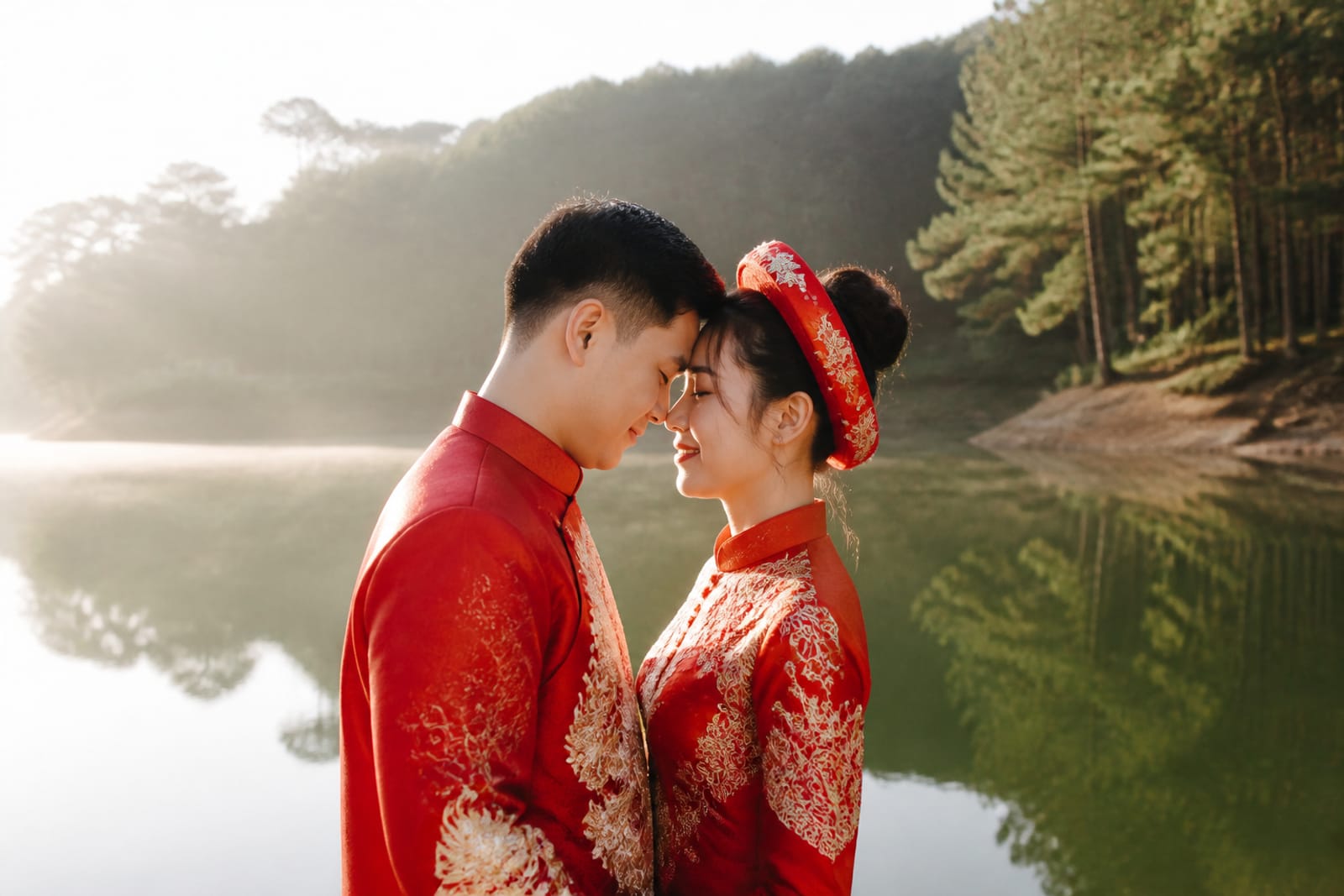
Ao dai (traditional): Da Lat's cool air and soft mist suit the flowing fabric beautifully. Winter/spring mornings (15–18°C) need a shawl or light jacket—layers add visual interest. Pastel colors (white, cream, pale blue, soft pink) glow in mist; deep colors (navy, black) risk looking flat in overcast light. Neutral tones (beige, grey) blend with the pine backdrop. Avoid neon or saturated colors—they clash with the cool, misty mood.
Modern casual: Knit sweaters, linen trousers, jackets. Da Lat's highland climate (15–25°C) forgives layering—a suit jacket over a tee, for example, reads well in the cool air and photographs with texture. Dark colors (charcoal, navy) pop against the grey-green pines.
Accessories: Scarves, hats, vintage props work well in this moody setting. The disused track section suits grayscale or monochrome styling.
Footwear: Wear comfortable shoes—the terrain is hilly and uneven. Avoid bright sneakers (distract from composition); brown leather boots or neutral canvas work better.
Pro move: Bring two outfits—one warm (jacket + trousers for morning mist), one lighter (sleeveless or short-sleeve for afternoon warmth). Shoot the intimate, cool corners in the morning outfit; the sunlit slopes in the afternoon one.
---
What permits, permissions, or fees apply?
Da Lat Railway Station is a working heritage site, managed by Vietnam Railways. It is open to visitors for photos, but there are unwritten rules:
- Personal, non-commercial photography: generally allowed; brief chats with staff (small courtesy tip or cold drink appreciated).
- Commercial photoshoot (models, professional gear, paid booking): technically requires permission from station management. Email or visit in person to ask (budget 1–2 days for approval). Some staff will allow it informally; others won't—clarify before booking.
- Drone photography: forbidden without aviation authority permit (rarely issued for this location).
- Large group/crew: expect a request to buy staff drinks or leave a small gift.
Action: Contact Da Lat Railway Station (find their Facebook or via your hotel concierge) before booking a photographer. Ask: "Can we do a couple photoshoot on [date]? Do we need permission?" Many local photographers have standing relationships and can speed this up.
Hiring a local photographer familiar with Da Lat avoids friction; they know the staff and customs. If using a distant team (e.g., Cáo Studio from Hanoi), confirm they can coordinate permit-checking on shoot day or ask them to advise you on how to arrange it.
📸 Book on WhatsApp — couple's photoshoot | 🎬 Pre-wedding & elopement guide
---
How do you actually run the shoot day—timing, wardrobe flow, and backup plan?
Ideal timeline (4-hour session):
- 6:30 AM arrival: Hair and makeup at your hotel or a local salon (allow 1.5–2 hours).
- 8:30 AM travel to station: 15–20 min drive from central Da Lat; scout the light when you arrive.
- 8:45–11:00 AM morning shots: Mist still soft, fewest crowds. Start with the pine lane or disused track (cooler, moody). Move to the slope below the station (light warming). Break for water.
- 11:00 AM–12:30 PM wardrobe change: Return to vehicle or a quiet spot; change into second outfit. Touch up makeup (bring blotting papers, lipstick).
- 12:30–2:00 PM sunny shots: Platform area, stairs, garden benches—now in warm, direct light. Wrap before afternoon clouds or rain.
- 2:00 PM departure: Travel home, rest, light dinner. Photographer begins culling images.
Backup plan:
- If rain: Shoots under eaves, platform roof, or reschedule to next clear day (agree on this before booking).
- If clouds don't clear: Work with overcast light (softer, fine for intimate shots); avoid wide vistas that look grey.
- If crowds build: Shift to the disused track or pine lane (naturally quieter) or shoot during quieter hours (weekday, 9–11 AM).
What to bring: water bottles, phone charger, small snacks, sunscreen, lip balm, hairspray touch-up, phone with emergency contact for photographer.
---
Comparing your options: DIY, local, or studio—which suits you?
| Approach | Investment (time/effort) | Image quality | Keepsakes | Best for | Booking lead time |
|---|---|---|---|---|---|
| DIY tripod + phone | 2–3 hours prep, shoot, sort | Amateur–decent | Digital files only | Budget couples, low pressure, memory-focused | Day-of |
| Local Da Lat photographer | Email/WhatsApp vetting (1 week), 4-hour shoot, 1–2 week edit | Pro–exceptional (if vetted) | Edited gallery, prints on request | Couples wanting local expertise, authentic feel, reasonable cost | 2–4 weeks prior |
| Cáo Studio (Hanoi/Saigon/Hoi An) | Booking (1–2 weeks), travel + shoot + post-production | Exceptional | Professional album, print options, keepsakes | Couples combining Da Lat with a polished, multi-location shoot elsewhere in Vietnam | 4–6 weeks prior |
| Hybrid (local shoot + pro retouching) | Local coordination + freelance outsourcing | Exceptional | Edited gallery + prints | Couples wanting local light + studio-grade finish | 3–4 weeks prior |
Conclusion: If you live in Da Lat or Hanoi/Saigon, a local photographer is fast and familiar. If you're traveling from abroad and want a keepsake-quality album, pair a Da Lat local session with a professional couple's photoshoot in Hanoi or Hoi An via Cáo Studio.
---
What to check before you book
Before committing to any photographer or shoot, confirm:
- Permit status. Ask the photographer: "Have you shot the station before? Do we need to contact management?" Their answer reveals whether they know the rules.
- Deliverables. How many edited files? Timeline for delivery? Do you own the RAW files or digital negatives? (Standard: edited gallery in 1–3 weeks; RAW files sometimes extra cost or ownership retained by studio.)
- Weather backup. What happens if it rains? Free reschedule? Partial refund? (Agree in writing via WhatsApp or email.)
- Hair & makeup. Included, or separate cost? Retouching in post-production? (Cáo Studio clarifies on WhatsApp; local photographers vary.)
- Outfit & styling. Do they suggest outfits, or is that your job? Will they lint-roll, adjust, manage wardrobe between shots?
- Travel & timing. If hiring from Hanoi or elsewhere, do they charge travel time? How early do they arrive for setup?
- Cost factors. Session fees vary by season (Dec–Feb higher), number of outfits, and travel distance. Request a WhatsApp quote—never commit without seeing examples from similar shoots.
💄 Makeup & hair at your hotel | 📹 Wedding & pre-wedding video
---
Honest tradeoffs: when not to book a pro shoot here
- If you only want candid, documentary shots: Da Lat Railway Station's crowds and light are unpredictable; a candid street photographer might feel more authentic than a posed couple shoot.
- If your timeline is tight (1–2 days in Da Lat): Scouting, weather, and permit-checking need margin; at least 3 days is safer.
- If your budget is under the cost of a local professional session: DIY with a tripod and good light is honest; don't overpay for a mediocre shoot just for "professional" label.
- If you hate crowds or early mornings: Summer afternoons are quieter but hazy; Dec–Feb mornings are best-lit but busier. Weekdays help; weekends do not.
---
Next steps: booking and timing
- Decide your approach. DIY, local, or studio? Read reviews and portfolios.
- Scout the light. Visit the station at your planned shoot time (even 1 day before) to see where sun falls.
- Contact Da Lat Railway Station via Facebook or your hotel to confirm shooting is allowed.
- Book hair & makeup separately in Da Lat (your hotel can recommend) or arrange beforehand.
- For a Cáo Studio couple's shoot elsewhere in Vietnam, message us on WhatsApp with your dates and preferred location (Hanoi, Saigon, or Hoi An).
- Request a quote. Never assume cost; ask for an exact breakdown of what's included (session hours, edited images, keepsakes, travel).
🌸 See the lookbook | 📋 Browse pre-wedding & elopement options
---
FAQ
Do I need a professional photographer at Da Lat Railway Station, or can I shoot on my own?
Personal photography with a phone or entry camera is free and acceptable. Hire a pro if you want polished edits, multiple locations, or a keepsake album. A tripod + remote shutter suffices for DIY couple shots; expect amateur results. Local photographers know the light and staff; Cáo Studio offers studio-grade results if you travel to Hanoi, Saigon, or Hoi An.
What time of day has the best light at the station?
6–9 AM offers soft mist and diffused light—ideal for romantic portraits. Golden hour (4–5 PM) illuminates the slope below the station. Midday (11 AM–3 PM) is harsh and hot; avoid it. Winter/spring (Dec–Apr) produces clearer, more predictable light than summer (May–Sept, hazy and rainy afternoons).
Will I need a permit to shoot here with a professional photographer?
Personal photography is allowed informally. Commercial photoshoots (paid photographer, models, professional gear) technically need station management approval—contact Da Lat Railway Station via Facebook or your hotel to ask. Many local photographers have informal relationships with staff; confirm with them before booking.
How should I dress for a photo session at Da Lat Railway Station?
Wear layers—the temperature ranges 15–25°C. Ao dai with a shawl or light jacket suits the cool, misty mood; pastel and neutral tones photograph better than bright colors in overcast light. Bring two outfits if you're shooting 3+ hours (morning cool-weather look, afternoon lighter look). Wear comfortable shoes for uneven terrain.
Should I hire a local Da Lat photographer or book with Cáo Studio?
Hire a local photographer if you only want Da Lat shots and prefer fast turnaround and local expertise. Book Cáo Studio if you're traveling through Vietnam and want a multi-location shoot (Hanoi, Saigon, Hoi An) with professional hair, makeup, and keepsakes. Hybrid approach: shoot locally in Da Lat, outsource retouching for studio-grade finish.
How long does a typical photo session take, and what's included?
Allow 4 hours total (1.5–2 hours hair/makeup, 2–2.5 hours shooting, location moves). Inclusions vary by photographer—clarify on WhatsApp or email (number of edited files, delivery timeline, print options, ownership of RAW files). Cáo Studio confirms exact session details via WhatsApp; local photographers' packages differ.
What's the backup plan if it rains on shoot day?
Agree on a reschedule or partial refund clause before booking. Morning showers are common May–September; Dec–April is drier. You can shoot under eaves or the station roof in light rain, or postpone to the next clear day (have flexibility built in if possible). Discuss backup dates when booking.
FAQ
Do I need a professional photographer at Da Lat Railway Station, or can I shoot on my own?
Personal photography with a phone or entry camera is free and acceptable. Hire a pro if you want polished edits, multiple locations, or a keepsake album. A tripod + remote shutter suffices for DIY couple shots; expect amateur results. Local photographers know the light and staff; Cáo Studio offers studio-grade results if you travel to Hanoi, Saigon, or Hoi An.
What time of day has the best light at the station?
6–9 AM offers soft mist and diffused light—ideal for romantic portraits. Golden hour (4–5 PM) illuminates the slope below the station. Midday (11 AM–3 PM) is harsh and hot; avoid it. Winter/spring (Dec–Apr) produces clearer, more predictable light than summer (May–Sept, hazy and rainy afternoons).
Will I need a permit to shoot here with a professional photographer?
Personal photography is allowed informally. Commercial photoshoots (paid photographer, models, professional gear) technically need station management approval—contact Da Lat Railway Station via Facebook or your hotel to ask. Many local photographers have informal relationships with staff; confirm with them before booking.
How should I dress for a photo session at Da Lat Railway Station?
Wear layers—the temperature ranges 15–25°C. Ao dai with a shawl or light jacket suits the cool, misty mood; pastel and neutral tones photograph better than bright colors in overcast light. Bring two outfits if you're shooting 3+ hours (morning cool-weather look, afternoon lighter look). Wear comfortable shoes for uneven terrain.
Should I hire a local Da Lat photographer or book with Cáo Studio?
Hire a local photographer if you only want Da Lat shots and prefer fast turnaround and local expertise. Book Cáo Studio if you're traveling through Vietnam and want a multi-location shoot (Hanoi, Saigon, Hoi An) with professional hair, makeup, and keepsakes. Hybrid approach: shoot locally in Da Lat, outsource retouching for studio-grade finish.
How long does a typical photo session take, and what's included?
Allow 4 hours total (1.5–2 hours hair/makeup, 2–2.5 hours shooting, location moves). Inclusions vary by photographer—clarify on WhatsApp or email (number of edited files, delivery timeline, print options, ownership of RAW files). Cáo Studio confirms exact session details via WhatsApp; local photographers' packages differ.
What's the backup plan if it rains on shoot day?
Agree on a reschedule or partial refund clause before booking. Morning showers are common May–September; Dec–April is drier. You can shoot under eaves or the station roof in light rain, or postpone to the next clear day (have flexibility built in if possible). Discuss backup dates when booking.
Ao dai, makeup, hair and a local photographer in Hanoi or Saigon — one WhatsApp message.