/pre-wedding-photoshoot
Hidden photo corners near Golden Bridge at Ba Na Hills for couples
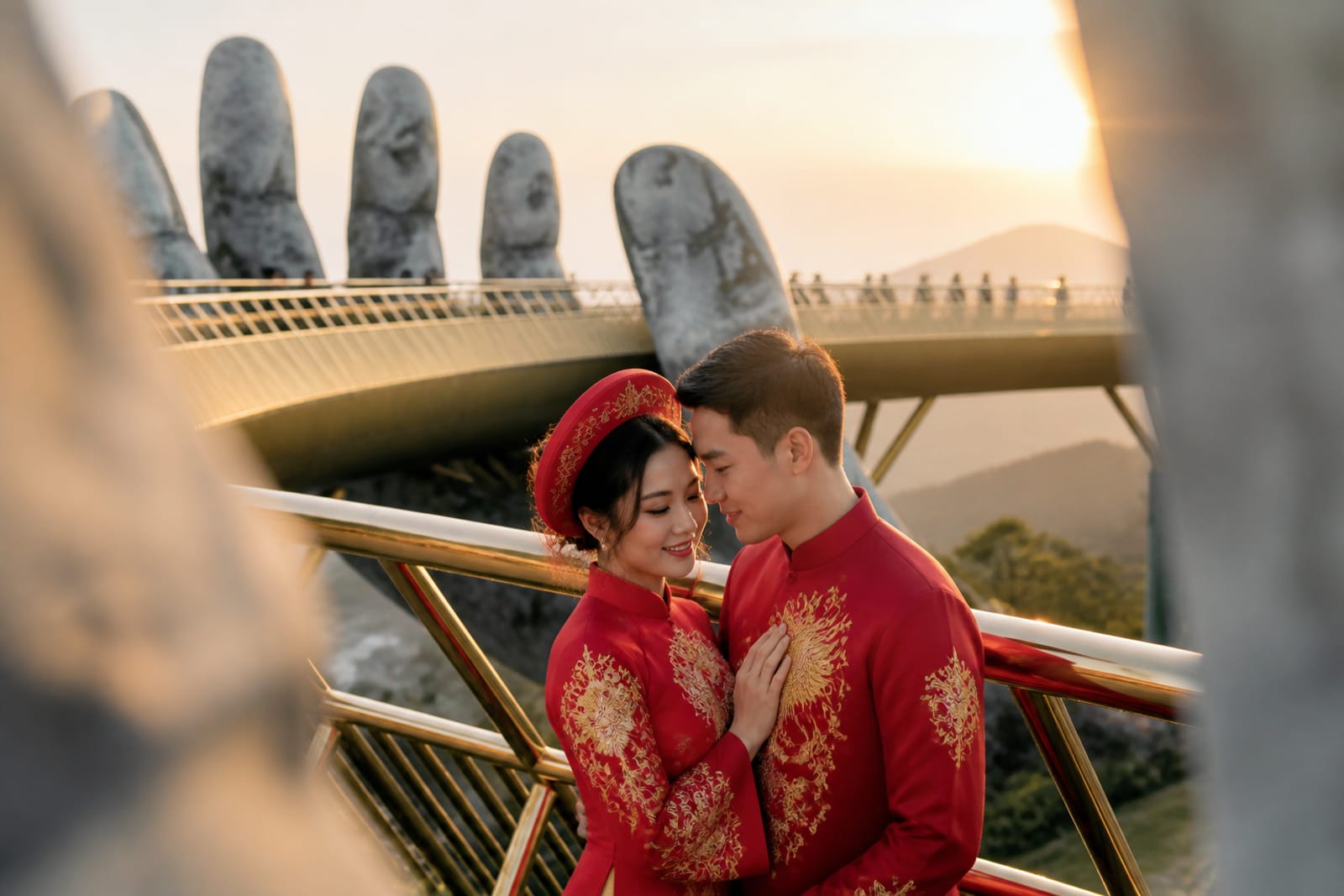
Ba Na Hills' Golden Bridge is framed by wide pedestrian zones, but the best couple frames live in the overlooking walkways, the café terraces above the bridge, and the quieter eastern path that curves away from the main deck. Early arrival (first cable car, around 6:10 am to 7:00 am) gives you 90 minutes of side light and near-empty paths before tour groups arrive. A directed shoot—where your photographer and stylist move together—works better here than hired posing, because the mountain's mist and angle change minute by minute. Cáo Studio brings outfit, hair and makeup in one booking, so you're ready to walk, look at the bridge, hold hands in real light rather than pause for setup between vendors. Avoid midday (10 am–2 pm): harsh overhead light, packed walkways, and the bridge's shadow falls across the deck. Late afternoon (4:00 pm onward) can work if the mist clears, but most couples find the early window the most reliable. ---
Is 6 am really the only window that works?
Early morning wins for light and solitude, but late afternoon can deliver frames if conditions align. Between 6:00 am and 8:00 am, the sun skims the mountainside from the east; the bridge's iron structure casts long shadows that frame you instead of washing you out. By 9:00 am, tour buses are unloading. Late afternoon (4:00 pm–6:00 pm) offers warmer, side-falling light again—but mist on the mountain unpredictably thickens, and you're gambling with an hour's worth of timing. Early is the director's choice because the light and crowd conditions are predictable.
📸 Book on WhatsApp — ao dai photoshoot | 🌸 See the lookbook
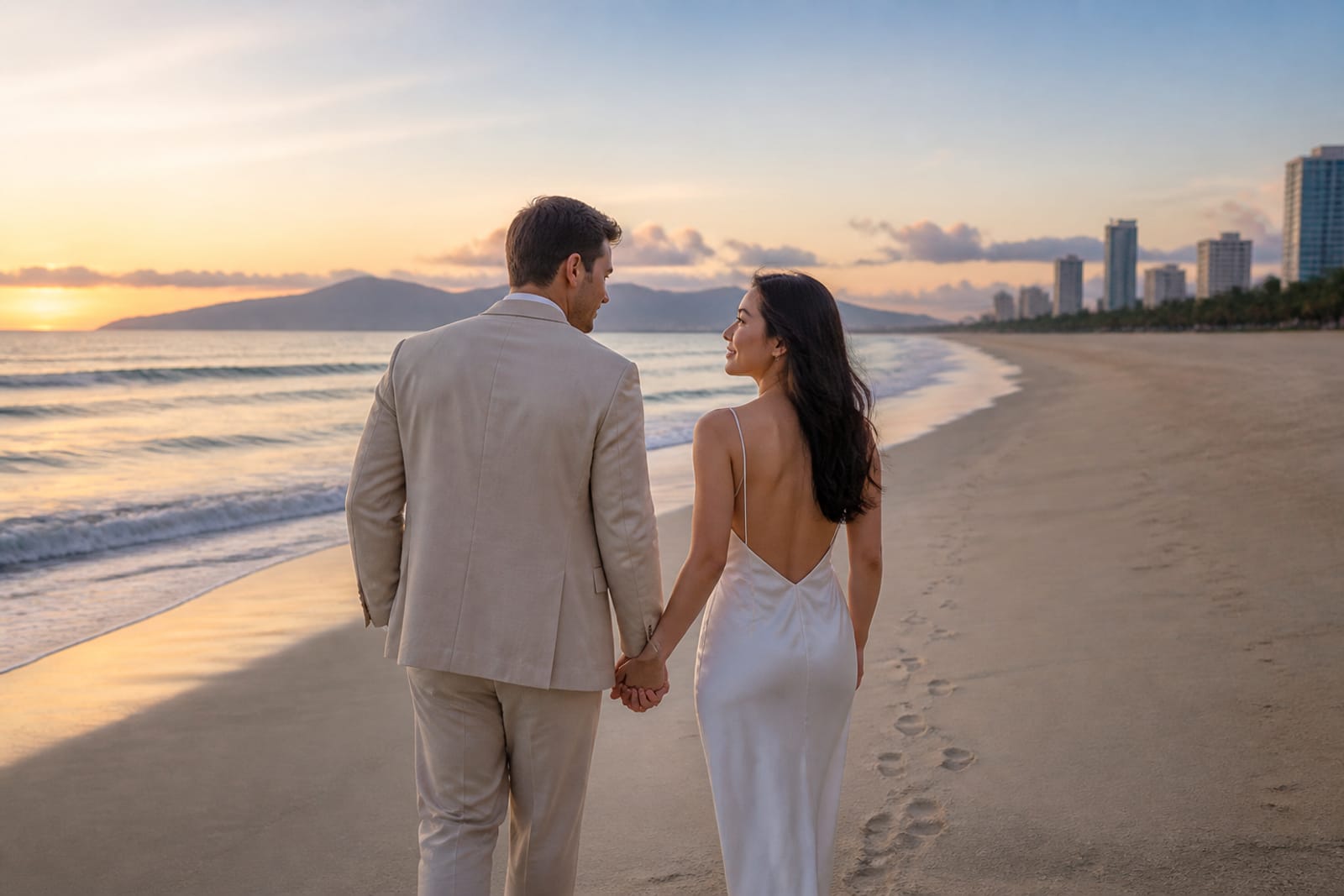
Which hidden corner suits your couple aesthetic?
| Spot | Best for | Light / Season | Why it works |
|---|---|---|---|
| Eastern overlook path (curves away from main deck) | couples who want isolation + landscape framing | 6:15–7:30 am; clearer Feb–Aug, misty Oct–Nov | low foot traffic; bridge visible in background without being the stage |
| Café terrace above the bridge | intimate moments, tea or coffee moment | 6:45–8:00 am; any season | natural seating, the bridge below and behind, softer light on faces |
| West-side steps (before you reach the main bridge) | walking-away frames, movement | 7:00–8:30 am; Feb–Aug (clearer air) | couple can walk downslope, bridge recedes, side light catches motion |
| Bridge's far edge (less-photographed side) | silhouettes, documentary feel | 5:45–6:30 am or 4:30–5:30 pm | minimal tourists, lower-angle light, iron detail frames the couple |
The eastern path and terrace fill first with a directed team because you can shoot 15–20 frames in 20 minutes, then move. Self-directed couples often linger at the main deck because it's obvious; that's where crowds pile. Choose your corner by light direction (east-facing before 8 am, west-facing after 4 pm) and whether you want the bridge in the frame or behind it.
How does a directed photoshoot differ from hiring a photographer + stylist separately?
A director and a stylist working in separate bookings mean reshoots: the photographer sees the outfit in the light, suggests a wardrobe swap, and you wait 20 minutes for the stylist to adjust. On Ba Na's early-access window, you lose the best 20 minutes of light to logistics. One team (hair, makeup, direction, camera) arrives already synced on the mood—they see the light, the outfit, your posture and the angle together and move. You walk, they frame; no pauses, no "hold that pose." The team at Cáo Studio handles makeup & hair and direction in one booking, so you spend the golden window actually photographing, not reorganizing.
What outfit and hair choices work on the mountain?
Ba Na's altitude (about 1,400 m) means cooler temperatures and wind—hair and fabric move differently than at sea level. An ao dai in silk works beautifully because the fabric flows and catches light, but layers underneath (slip pants, a long inner layer) keep you warm and prevent the outer fabric from clinging in the wind. For Western wedding wear, avoid heavy static fabrics (polyester satin clings); linen, cotton-blend and silk drape and move with the mountain breeze. Hair styled loose or half-pinned reads better in motion frames; tight updos look formal and still. Makeup needs longer-wear products because the cool air and mist don't trigger the same sweat as the city, but wind and humidity are real—a makeup artist who's worked on the mountain knows which primers and sets hold. Book makeup & hair the morning of your shoot so the artist can adjust for the actual light and temperature.
What to check before you book a Ba Na photoshoot.
Cable car and entry: Arrive early enough for first-opening cable car (check the current operating hours on the Ba Na Hills official site—they vary by season). Entry tickets are required; reserve them ahead during peak months (Feb–Aug). A director familiar with Ba Na knows the best entry path and avoids time wasted at the ground station.
Mist and season: Feb–Aug generally offer clearer air; Oct–Nov brings typhoon season and unpredictable mist. Mist can look atmospheric in frames, but if you want sharp landscape detail, check the weather forecast 3–5 days before and be ready to reschedule if visibility drops below 100 m.
Outfit logistics: If you're renting an ao dai or wedding dress, confirm pickup/return times with the rental studio. Cáo Studio arranges ao dai and suit rentals; ask on WhatsApp whether they can coordinate with Ba Na's schedule.
Transport and timing: Factor in travel time from your hotel to the base of Ba Na (30–50 minutes from Da Nang depending on traffic). A directed shoot runs efficiently, but you need a 2–3 hour window on-site to account for cable-car queues, outfit touch-ups, and unrushed frames.
Backup plan: Mountain weather shifts. Confirm with your photographer whether a rain date or rescheduled time is offered if mist or weather makes the shoot impossible.
---
How does a Ba Na shoot fit into a larger pre-wedding plan?
Many couples shoot one morning at Ba Na and another session in Hoi An's Ancient Town or Da Nang's My Khe beach for variety in landscape and light. A half-day Ba Na shoot (early arrival, golden hour only) pairs well with a late-morning or afternoon session elsewhere on the coast. Discuss your full itinerary when you reach out on WhatsApp—a director plans the whole day's light schedule so each location gets the window it needs.
If you're doing an ao dai photoshoot, Ba Na's early light and the fabric's movement in mountain wind create frames that beach or city shots won't match. If you prefer Western wedding attire, the same sunrise light works, and the landscape context (the bridge, the overlook) becomes part of your story rather than a static monument backdrop.
📸 Book on WhatsApp — ao dai photoshoot | 💄 Makeup & hair at your hotel | 🌸 See the lookbook
---
Where to find a photographer if Cáo Studio is booked.
Cáo Studio operates in Hanoi, Ho Chi Minh City, and Hoi An by appointment. For a Ba Na shoot (near Da Nang on the central coast), ask on WhatsApp whether the team travels for your dates. If they're unavailable, vet a local Da Nang photographer by:
- Portfolio: Request couples shots from Ba Na specifically—check if they've shot at the time of day you want (early morning light vs. afternoon). Generic golden-hour shots don't prove they know the mountain's quirks.
- Crew: Confirm whether they travel with hair and makeup or you hire separately. Separate vendors mean longer setups.
- Flexibility: Ask how they handle mist or weather changes and whether you can reschedule without penalty.
- Edited turnaround: Agree on delivery time in writing (48 hours, 1 week, etc.) before booking.
A local photographer who's shot Ba Na in your season is your safest bet if you can't book Cáo Studio.
---
FAQ
What's the best time of year to shoot at Ba Na's Golden Bridge?
February to August offers the clearest air and most predictable light. October–November brings typhoon season and heavy mist. Avoid Tet (late January–mid-February) when many services close and crowds spike. Winter (December–January) can be grey and cool; spring (March–April) and early summer (May–June) are ideal.
Do I need to book Ba Na entry tickets in advance?
Yes, especially during February–August (peak season). Check the official Ba Na Hills website for current ticket prices and booking instructions. Arrive early enough for the first cable-car opening to maximize your light window.
Can I wear a regular wedding dress to Ba Na, or should I choose an ao dai?
Both work, but ao dai reads better in early-morning mountain light because the silk flows and catches the sun. A Western dress works too—choose breathable fabrics (linen, cotton-blend, silk) over heavy satin, which clings in wind. Bring a shawl or cover-up because the mountain is 10–15°C cooler than the coast.
How long does a Ba Na photoshoot usually take?
A directed shoot typically runs 90 minutes to 2 hours on-site (first cable car to mid-morning), capturing outfit changes and multiple locations. Factor in an extra 1–2 hours for cable-car queues and travel from your hotel. Ask your photographer for exact timing when you book.
What happens if the mist is too thick on the morning of my shoot?
Mist on Ba Na is unpredictable in October–November. Confirm with your photographer whether you can reschedule at no cost or receive a refund if visibility is too poor. Early morning (6:00–7:30 am) usually clears faster than midday. Check the weather forecast 3–5 days before and stay flexible.
Can I book Cáo Studio for a Ba Na shoot?
Cáo Studio operates in Hanoi, Ho Chi Minh City, and Hoi An. For Ba Na (near Da Nang), ask on WhatsApp +84 338 762 340 whether the team travels for your dates. If not, they can recommend a vetted local photographer or suggest an alternative coastal shoot.
FAQ
What's the best time of year to shoot at Ba Na's Golden Bridge?
February to August offers the clearest air and most predictable light. October–November brings typhoon season and heavy mist. Avoid Tet (late January–mid-February) when many services close and crowds spike. Winter (December–January) can be grey and cool; spring (March–April) and early summer (May–June) are ideal.
Do I need to book Ba Na entry tickets in advance?
Yes, especially during February–August (peak season). Check the official Ba Na Hills website for current ticket prices and booking instructions. Arrive early enough for the first cable-car opening to maximize your light window.
Can I wear a regular wedding dress to Ba Na, or should I choose an ao dai?
Both work, but ao dai reads better in early-morning mountain light because the silk flows and catches the sun. A Western dress works too—choose breathable fabrics (linen, cotton-blend, silk) over heavy satin, which clings in wind. Bring a shawl or cover-up because the mountain is 10–15°C cooler than the coast.
How long does a Ba Na photoshoot usually take?
A directed shoot typically runs 90 minutes to 2 hours on-site (first cable car to mid-morning), capturing outfit changes and multiple locations. Factor in an extra 1–2 hours for cable-car queues and travel from your hotel. Ask your photographer for exact timing when you book.
What happens if the mist is too thick on the morning of my shoot?
Mist on Ba Na is unpredictable in October–November. Confirm with your photographer whether you can reschedule at no cost or receive a refund if visibility is too poor. Early morning (6:00–7:30 am) usually clears faster than midday. Check the weather forecast 3–5 days before and stay flexible.
Can I book Cáo Studio for a Ba Na shoot?
Cáo Studio operates in Hanoi, Ho Chi Minh City, and Hoi An. For Ba Na (near Da Nang), ask on WhatsApp +84 338 762 340 whether the team travels for your dates. If not, they can recommend a vetted local photographer or suggest an alternative coastal shoot.
Ao dai, makeup, hair and a local photographer in Hanoi or Saigon — one WhatsApp message.