/pre-wedding-photoshoot
Hon Chong Promontory Wedding Photos: Best Time & Light
Hon Chong's best photo hours are 6–7 am (soft east-facing side light on rock and couple, sea calm, almost no crowds) or 5:30–6:30 pm (golden low angle from the west, jetty and water in warm tone). Avoid 9 am–4 pm—direct overhead sun flattens stone texture and forces harsh shadows across faces. Dry season (Jan–Aug) is clearest; rainy season (Sep–Dec) brings grey skies and rough seas that block the jetty. Choose an ao dai or light linen—dark fabrics absorb midday heat and photograph muddy in overcast light. A local Nha Trang photographer or travel to Hanoi or Saigon for Cáo Studio's directed approach (outfit, hair, makeup and camera as one team). Arrive early to scout angles, check tide tables and confirm jetty access the morning of your shoot.
Hon Chong is a limestone peninsula 4 km south of Nha Trang center, ringed by fishing jetties and sea caves. Most couples shoot on the eastern promontory face (lower crowds, natural framing) or the jetty itself. The rock rises 50+ meters—scale and texture photograph best in soft, low-angle light that reveals stone grain and separates subjects from sky. Overhead sun erases depth; golden hour delivers narrative.
Why does morning light (6–7 am) work better than any other time?
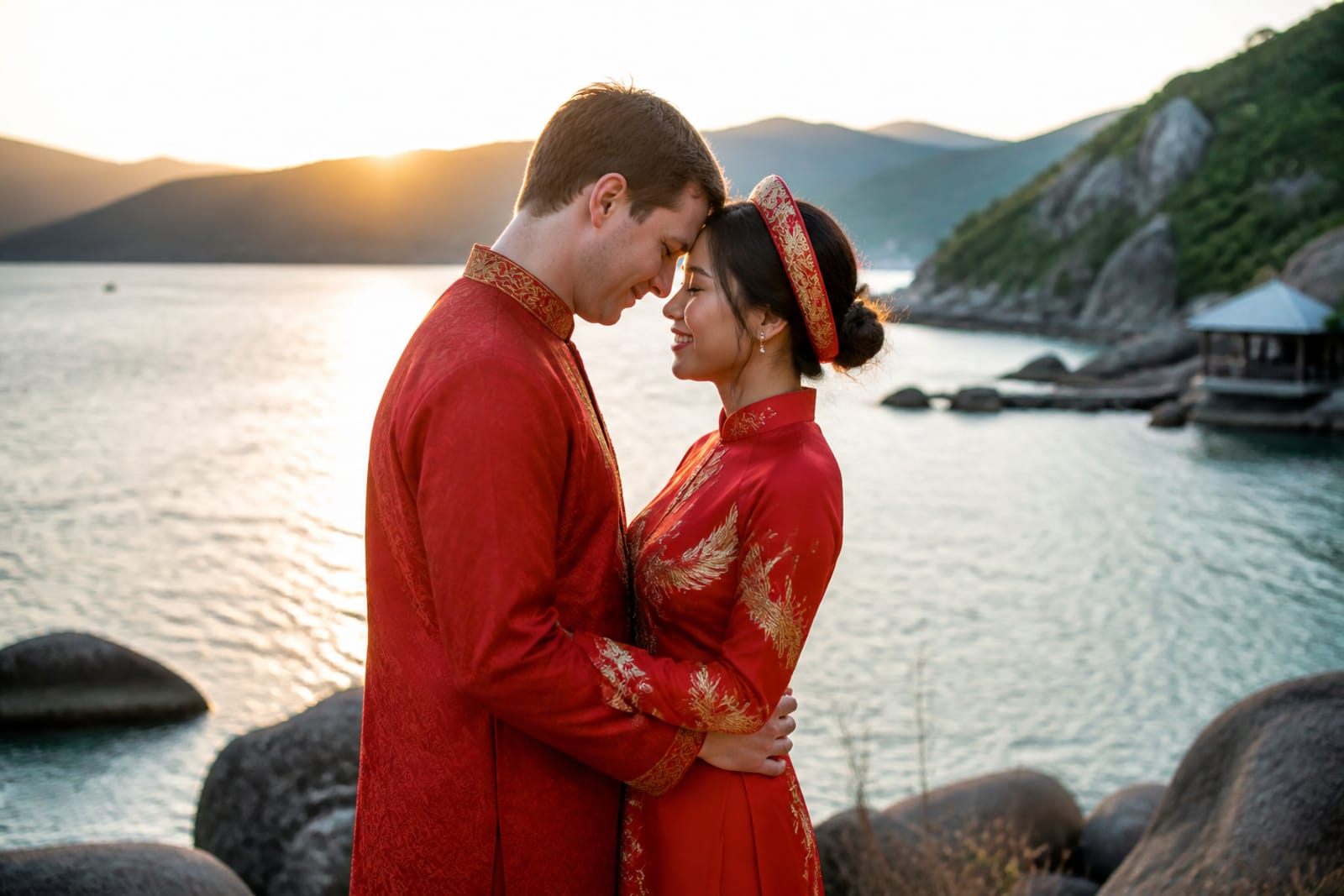
At sunrise, light arrives horizontally from the east, grazing the limestone surface. This creates shadow and relief—the rock stops looking flat, and your couple stands out against both stone and water. Golden hour feels romantic in photos, but morning light is directional: it sculpts. By 7:30 am, sun climbs higher; by 9 am, shadows shrink to hard lines under chin and nose. Morning also means the jetty is emptying (fishermen depart by 7 am) and sea state is calmest. The trade-off: you wake at 5 am, travel in darkness, and shoot in cool air (bring a shawl or cardigan over your ao dai or dress). Most couples who report "we regret not going early" mention afternoon backlight or crowds as the reason.
What about sunset—can you get the same quality at 5:30 pm?
Yes, with one caveat: the sun sets west of Hon Chong, so jetty light is warm and low, but the rock itself is increasingly backlit. This works if you frame your couple against the sunset (silhouette or rim light on shoulders) or shoot wide with the sun beside them. The sea turns amber; water reflections deepen; it feels cinematic. Crowds peak at this hour—locals and other couples arrive 4:30–5 pm onward. Humidity is highest late afternoon (sweat shows on skin under makeup). If your photographer doesn't move fast and direct (shoot wide first, then medium closeups, then detail), you'll spend 20 minutes standing while they frame and adjust. Cáo Studio's model—one director who handles photo, outfit and makeup decisions—cuts that wait time; local single-photographer setups sometimes take longer to pivot between angles.
Does season really affect Hon Chong wedding photos?
| Timeframe | Light & Sea | Crowds | Outfit Fit | Best For |
|---|---|---|---|---|
| Jan–Feb (cool, dry) | Clear, calm; moderate haze | Tet (late Jan–mid Feb) closes access; otherwise light | Ao dai drapes cleanly; can layer | Ao dai, cool tones |
| Mar–Apr (heating up) | Brilliant, stable; occasional haze | Building; weekends busy | Lightweight linen, silk | Light dresses, ao dai |
| May–Aug (hot, dry) | Very bright, harsh midday; golden hour sharp | Moderate; locals fishing mornings | Loose cotton, natural fibers | Early morning shoot (avoid afternoon) |
| Sep–Oct (transition, typhoon risk) | Grey, humid, unpredictable; sea choppy | Fewer tourists; jetty may close in storms | Waterproof prep needed | Reschedule if forecast warns |
| Nov–Dec (rainy season onset) | Overcast common; sudden sun showers | Low crowds; cool mornings | Waterproof dress cover | Overcast light (softer, no harsh shadows) |
Dry season (Jan–Aug) is objectively clearest; rainy season (Sep–Dec, worst Oct–Nov) brings typhoons, jetty closures and grey skies. However, overcast light is soft and shadowless—some couples prefer it, and it suits natural makeup and pale skin tones. Check the 7-day forecast before booking; if rain is predicted, reschedule or shoot indoors (ask a local photographer about backup venues, or inquire about hotel makeup & hair with a styled indoor session).
How do you choose an outfit that photographs well at Hon Chong?
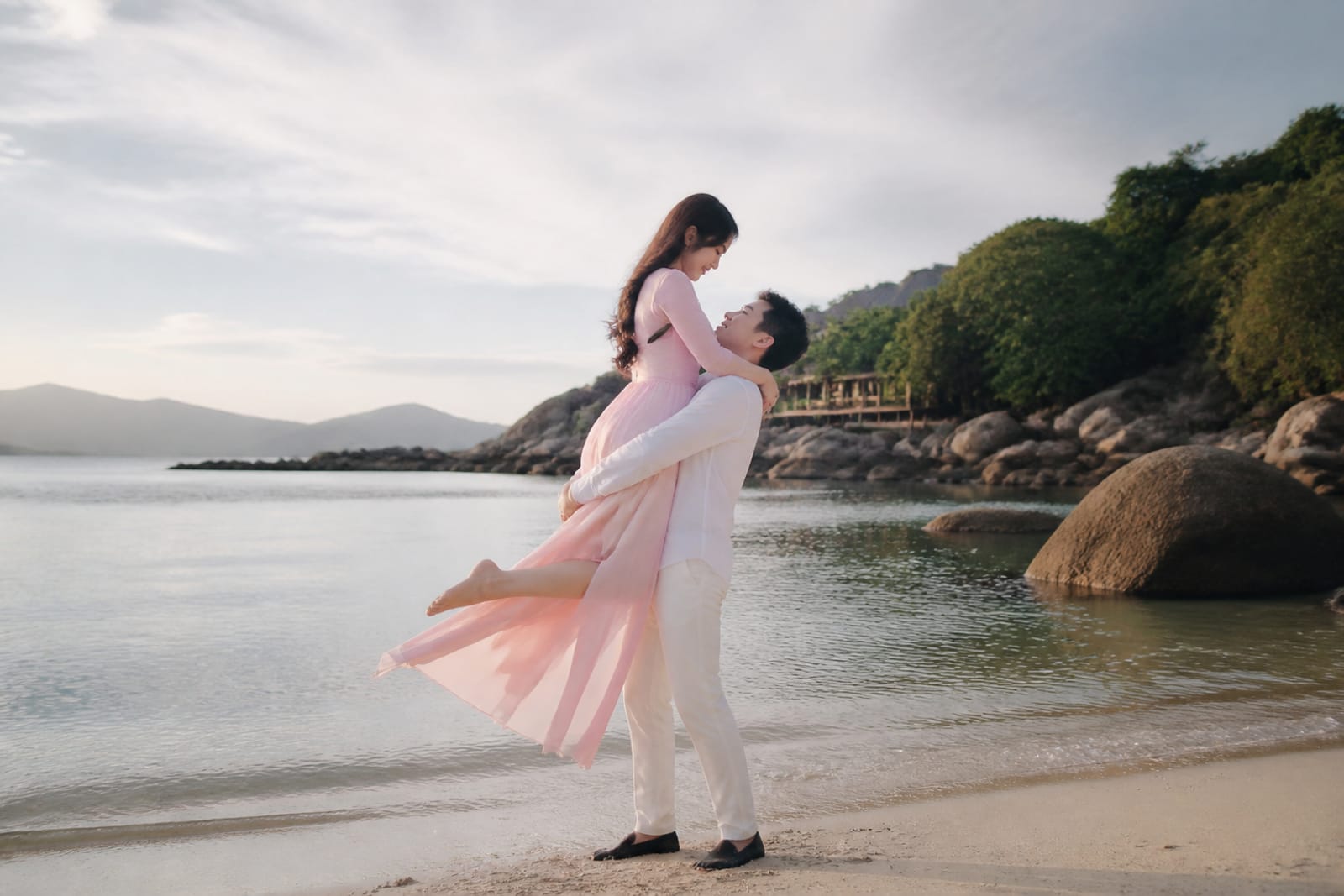
Light and fabric are linked. Ao dai (traditional Vietnamese tunic) photographs beautifully at Hon Chong because silk or silk-blend fabric catches golden and morning light, the high neckline suits the rocky backdrop, and the silhouette is distinct from sea and stone. Choose ivory, gold, pale pink or jewel tones (emerald, sapphire)—dark fabrics absorb light and look muddy in overcast or shadow. If wearing a Western dress, pick linen or cotton that moves (flowy trains and skirts catch light), avoid black or dark navy (they read as flat shadow), and confirm the neckline and sleeve allow arm movement for walking shots (most couples photograph better walking toward or away from camera, not static posing). Undergarments matter: show panty lines, and underarm sweat shows as dark patches later. Wear fitted undergarments and bring a small towel. If you're booking a full session (outfit, hair, makeup), Cáo Studio coordinates all three—we confirm fit and fabric with you beforehand, so no surprise sweat marks or ill-fitting pieces on location.
Should you hire a local Nha Trang photographer or book someone from elsewhere?
A local photographer knows Hon Chong's tides (jetty access changes by hour), owns backup weather gear, and can scramble if storm clouds arrive. They charge less (no travel cost) and can reshoot within days if you need retakes. The trade-off: solo photographers in Nha Trang often juggle many sessions; turnaround may be weeks, and you coordinate with separate makeup and hair vendors (three different people, three communication loops). If you want one team that handles outfit, hair, makeup and photo as a single message, travel to Hanoi or Saigon and book Cáo Studio's pre-wedding package. We arrive with a director, a makeup artist and a photographer (often the same person)—one vision, one brief, one mood. For a Hon Chong shoot, ask us on WhatsApp (+84 338 762 340) whether we're traveling to Nha Trang on your date; if not, we'll recommend vetted local photographers and help you coordinate. Either way, the framework below applies.
What to check before you book
Jetty & rock access: confirm the main jetty is open (storms, maintenance or fishing activity may close it). Call the Nha Trang tourism board or ask your photographer.
Tide & sea state: request a tide chart for your date. Low tide exposes more rock face; high tide floods the jetty. Calm seas are ideal—rough water ruins reflections and makes posing unsafe.
Sunrise/sunset time: verify exact times for your date (varies by month; free apps like PhotoPills show sunrise, sunset, and light direction). Plan to arrive 45 minutes early.
Outfit & shoes: wear shoes with grip (rocks are slippery when wet or algae-covered). Confirm ao dai length doesn't drag on stone. Bring a backup shawl or jacket for early-morning cool.
Photography style: ask your photographer how they work. Do they shoot wide first, then detail? How many outfits/locations? How fast is the turnaround to edited photos? (Cáo Studio delivers edited photos and a short film within 48 hours.)
Backup plan: if weather cancels the shoot, when can you reschedule? Some photographers offer rain dates free; confirm this upfront.
📸 Book on WhatsApp — ao dai photoshoot
---
Nha Trang's Hon Chong is one of Vietnam's most photogenic marriage proposal and pre-wedding backdrops, but light and timing make the difference between keepsake frames and forgettable snapshots. Early morning (6–7 am) is the most reliable window—soft side light, calm sea, minimal crowds. If sunset suits your schedule, frame your couple into the warmth rather than against harsh backlighting. Dry season (Jan–Aug) is safest; overcast light in rainy months is softer but less predictable. Linen, silk and pale tones photograph best; dark fabrics flatten. A local photographer saves on travel; a team like Cáo Studio (where outfit, hair, makeup and photo are one decision) cuts coordination chaos. Confirm jetty access, tide, and outfit fit before the shoot day. Whether you're booking a local session or traveling for a full directed experience, the same principles apply: arrive early, scout light, wear something that moves, and let the photographer move you—don't pose.
For pre-wedding shoots elsewhere in Vietnam, see our couple photoshoot guide and lookbook for inspiration. If you're planning a full wedding day, explore wedding photography and videography options.
FAQ
Can we shoot at Hon Chong in the rainy season (October–November)?
Yes, but with caveats. Overcast light is soft (no harsh shadows, good for pale skin), but sudden rain, rough seas and jetty closures are common. Forecast your shoot date and confirm jetty access 48 hours before. If storms hit, reschedule.
How long should a Hon Chong session last?
A typical couple photoshoot is 1.5–2 hours: 45 minutes on-location scouting and shooting the first outfit, 30–45 minutes for outfit/hair touch-up and a second location, 15 minutes for detail/landscape shots. A full pre-wedding package may span 3–4 hours across two locations (Hon Chong + a second backdrop).
Do we need a permit to shoot at Hon Chong?
Hon Chong is a public beach and landmark; no formal permit is required for personal or small-group photography. If you're hiring a professional photographer, some tourism authorities request a brief notification—ask your photographer to confirm current local rules.
What shoes should we wear on the rocks?
Wear closed-toe shoes with strong grip (sneakers, water shoes, or hiking boots). Rocks are slippery when wet or covered in algae. Remove shoes for walking shots on sand, but wear them on stone. Bring a towel to dry feet between takes.
How long until we receive edited photos after the shoot?
It depends on your photographer. Cáo Studio delivers edited photos and a short vertical film within 48 hours. Local photographers may take 1–2 weeks. Confirm turnaround time before booking.
FAQ
Can we shoot at Hon Chong in the rainy season (October–November)?
Yes, but with caveats. Overcast light is soft (no harsh shadows, good for pale skin), but sudden rain, rough seas and jetty closures are common. Forecast your shoot date and confirm jetty access 48 hours before. If storms hit, reschedule.
How long should a Hon Chong session last?
A typical couple photoshoot is 1.5–2 hours: 45 minutes on-location scouting and shooting the first outfit, 30–45 minutes for outfit/hair touch-up and a second location, 15 minutes for detail/landscape shots. A full [pre-wedding package](/pre-wedding-photoshoot) may span 3–4 hours across two locations (Hon Chong + a second backdrop).
Do we need a permit to shoot at Hon Chong?
Hon Chong is a public beach and landmark; no formal permit is required for personal or small-group photography. If you're hiring a professional photographer, some tourism authorities request a brief notification—ask your photographer to confirm current local rules.
What shoes should we wear on the rocks?
Wear closed-toe shoes with strong grip (sneakers, water shoes, or hiking boots). Rocks are slippery when wet or covered in algae. Remove shoes for walking shots on sand, but wear them on stone. Bring a towel to dry feet between takes.
How long until we receive edited photos after the shoot?
It depends on your photographer. Cáo Studio delivers edited photos and a short vertical film within 48 hours. Local photographers may take 1–2 weeks. Confirm turnaround time before booking.
Ao dai, makeup, hair and a local photographer in Hanoi or Saigon — one WhatsApp message.