/vacation-photoshoot
Honeymoon Photoshoot in Sapa: Plan, Prepare, Book a Local Photographer
A honeymoon photoshoot in Sapa means working with misty mornings, golden rice terraces (mid-September to early October) or water-filled paddies (May), and steep walking terrain. The best light arrives before 8 am and after 5 pm. You'll need 2–3 hours on location, weatherproof outfits (wool, layering for cold winter mornings), and a photographer experienced with mountain fog and trekking logistics. March–May and September–November offer stable weather; avoid December–February (cold fog obscures views, near-freezing mornings) and June–August (daily rain, slippery trails). Cáo Studio operates in Hanoi and Ho Chi Minh City; for a Sapa shoot, book a local mountain photographer who knows how to compose in mist and navigate the terrain, then ask your chosen studio about editing style, delivery time and revision rounds before committing.
Sapa sits 1,600 meters high in the northwest mountains. The terraced rice paddies, ethnic village walks, and quick weather changes make it a dream honeymoon location—but also one where light, season, and local knowledge separate keepsake frames from flat, washed-out shots.
If you're considering a vacation photoshoot in Vietnam, Sapa is one of the hardest locations to execute well. Here's what separates a successful session from a disappointing one.
---
What season should we shoot in Sapa for the best frames?
Rice terraces look radically different month to month. Golden harvest happens roughly mid-September to early October; green and lush paddies run June–August; winter (December–February) brings bare, grey terraces and thick fog that blocks views entirely. March–May offers clear skies, green growth, and comfortable walking temperatures (15–25°C). September–November is the second-best window: harvest gold, lower rainfall, and crisp air—though afternoon clouds roll in fast.
Season comparison:
| Season | Terrace color & state | Light & fog | Crowd level | Walking comfort | Rain risk |
|---|---|---|---|---|---|
| Mar–May | Green, lush, growing | Clear mornings, sharp shadows 5–8 am | Moderate | Pleasant (15–25°C) | Low |
| Jun–Aug | Deep green, water-filled | Heavy clouds, afternoon downpours | Lower | Humid, muddy trails | High daily showers |
| Mid-Sep–early Oct | Golden, harvest-ready | Clear mornings, golden hour intense 5–7 am | Moderate–high | Cool, dry (18–24°C) | Very low |
| Nov–Dec | Bare or early spring growth | Clear but cold mornings | Lower | Cool–cold (10–16°C) | Very low |
| Dec–Feb | Bare, grey, often flooded | Thick fog, low visibility, 0–10°C | Lower | Cold, icy risk | Frost, rare snow, thick fog obscures frames |
Conclusion: March–May and mid-September to early October are the two windows where light, color, and walking conditions align. Avoid December–February entirely; fog and cold will waste your budget.
---
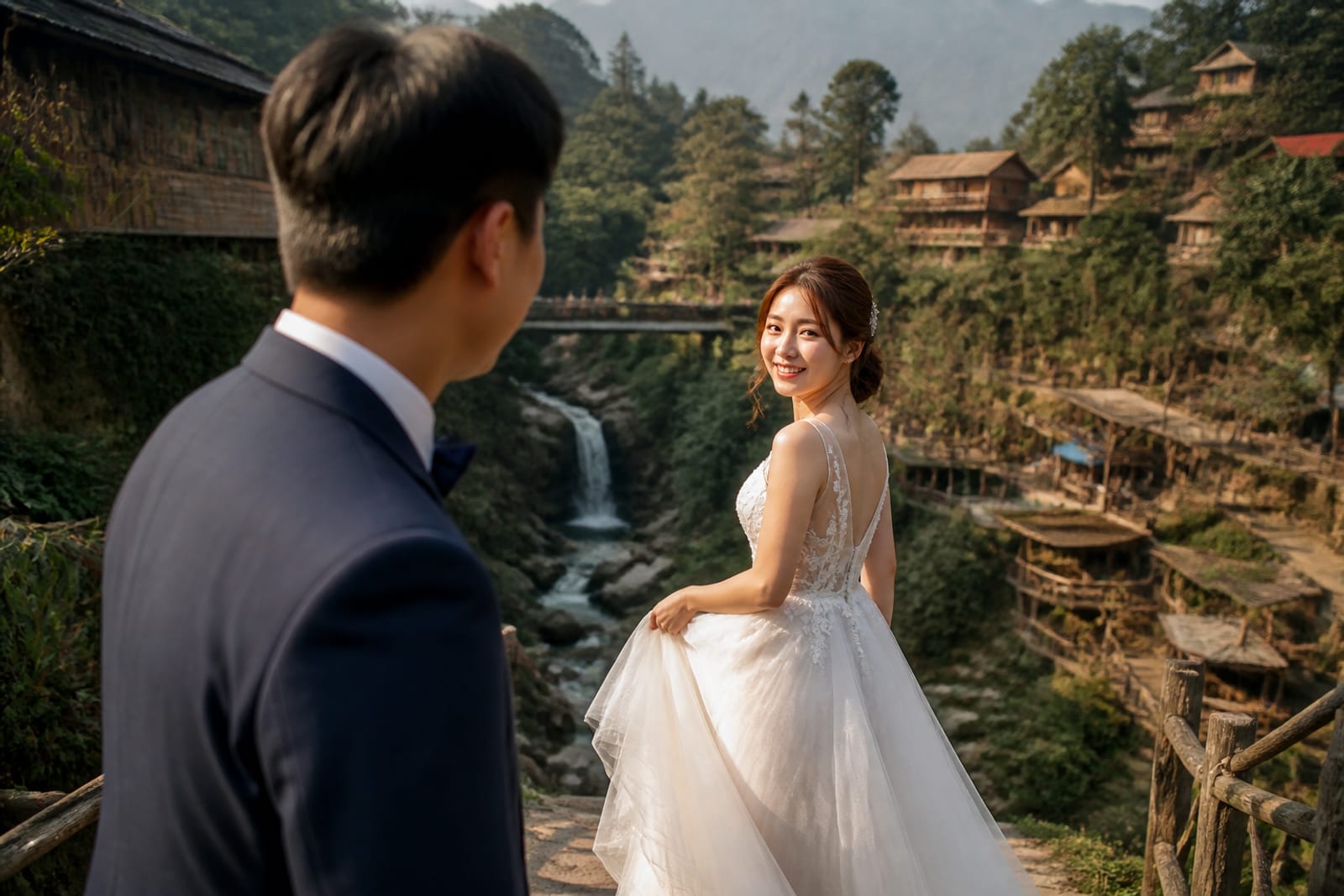
Which photo spots in Sapa actually photograph well for couples?
Most honeymoon photographers in Sapa default to the same three overlooks: Sapa town viewpoint, Cat Cat village, and the O Quy Ho pass road. The problem is crowds, harsh midday light, and stiff couple poses in front of postcard backdrops.
The frames that feel lived-in come from walking into the landscape, not posing in front of it. Shoot before 8 am on the high terraces near Muong Hoa valley—the mist clears gradually, soft light rakes across the paddies, and almost no one is there. Walk downhill through Cat Cat village, stopping to frame your partner looking at the view or walking ahead on narrow paths. The best shot often comes when you're moving, not posed.
Real terrain notes: Trails are steep and often muddy, especially in wet season. Wear hiking boots (not wedding heels); shoot in a simple, fitted dress or trousers that move with you. If you're renting ao dai, keep it for a later session in Hanoi or Hoi An where the light and walkways suit the fabric better.
Conclusion: early morning, moving through the landscape, modest crowds, and proper footwear yield frames that feel earned, not staged.
---
Should we hire a photographer based in Sapa or bring someone from Hanoi?
Cáo Studio operates in Hanoi, Ho Chi Minh City, and Hoi An. If you want Cáo's one-team approach (photographer, makeup, stylist coordinated), you'd book in Hanoi and travel to Sapa yourself, then have the images edited in 48 hours.
For a Sapa-based shoot, a local photographer familiar with the terrain, weather patterns, and light angles is often the better choice. They know which trails are passable, which viewpoints are crowded at which hours, and how quickly fog rolls in.
When to book local:
- You want minimal travel logistics (photographer meets you at your hotel).
- You're shooting mid-morning to afternoon (less technical light work).
- You prefer a casual, unscripted vibe with local cultural context.
- Budget is a factor (local rates are typically lower than Hanoi travel fees).
When Hanoi/Ho Chi Minh City makes sense:
- You want styled hair and makeup at your hotel before the shoot.
- You're doing multiple shoots (Sapa + Hanoi or Sapa + Hoi An in one trip).
- You prefer a specific creative direction or portfolio style.
- You want edited images and a short film within 48 hours.
How to vet a local Sapa photographer: Ask to see a full session (10+ images from one couple), not a highlight reel. Check if they've shot in winter fog, how they handle mist in post-processing, and whether they walk with couples or pose them at stops. Ask how many hours they allocate, if they charge for travel to remote trailheads, and what their delivery timeline is. Request references from recent couples and check one or two previous bookings on social media for consistent quality.
Conclusion: local expertise beats studio prestige for mountain logistics; vet their full body of work and delivery promises before booking.
---
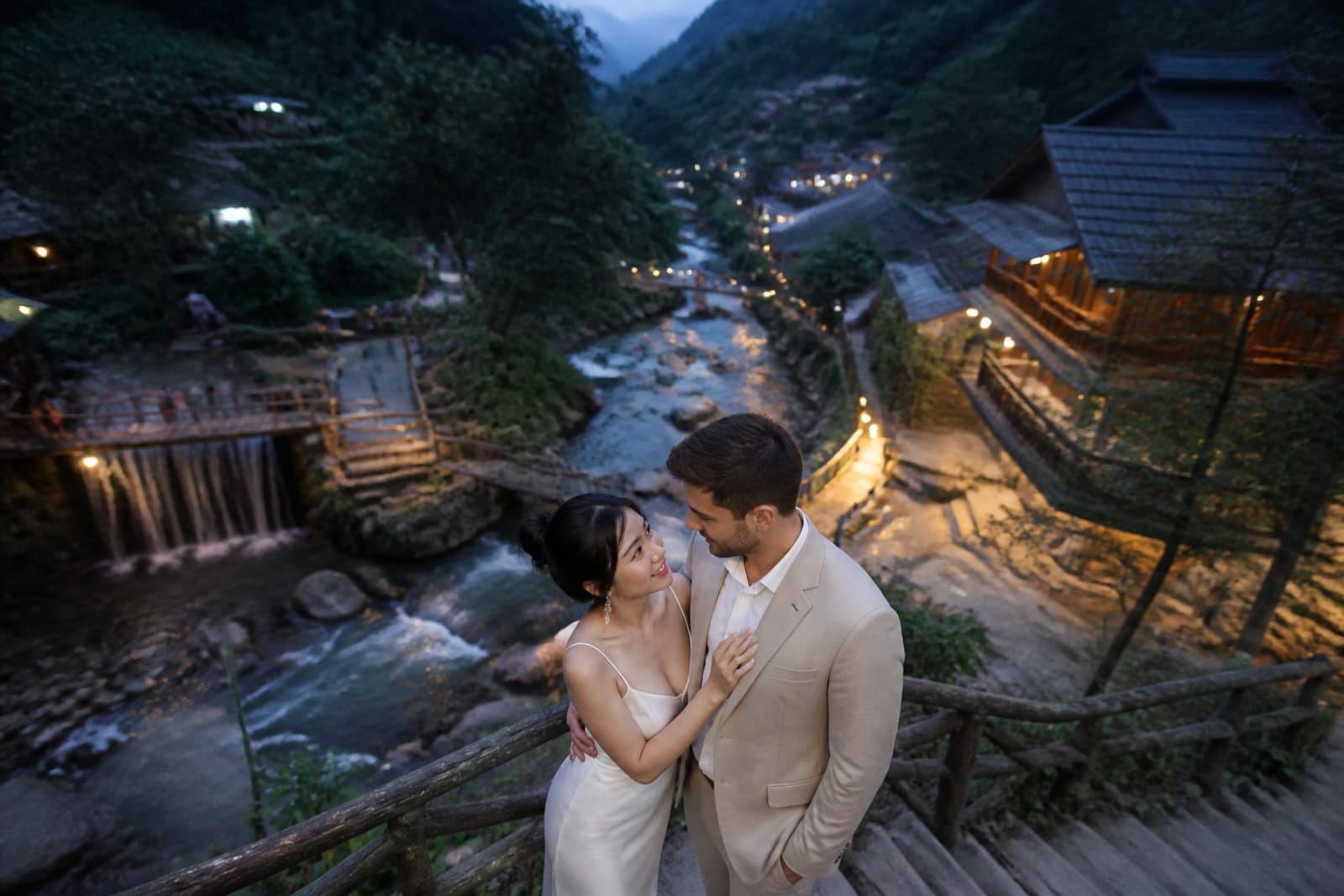
What do we wear for a Sapa honeymoon photoshoot?
Sapa light is soft and cool, which means muted, natural colors photograph better than bright, saturated ones. Think cream, soft grey, olive, rust, or navy. Wool or layered cotton keeps you warm and moves naturally in wind.
Avoid heavy satin, slippery synthetic fabrics, and structured pieces that constrain walking. Boots (waterproof hiking or worn-in leather) beat sandals or heels; the terrain demands grip.
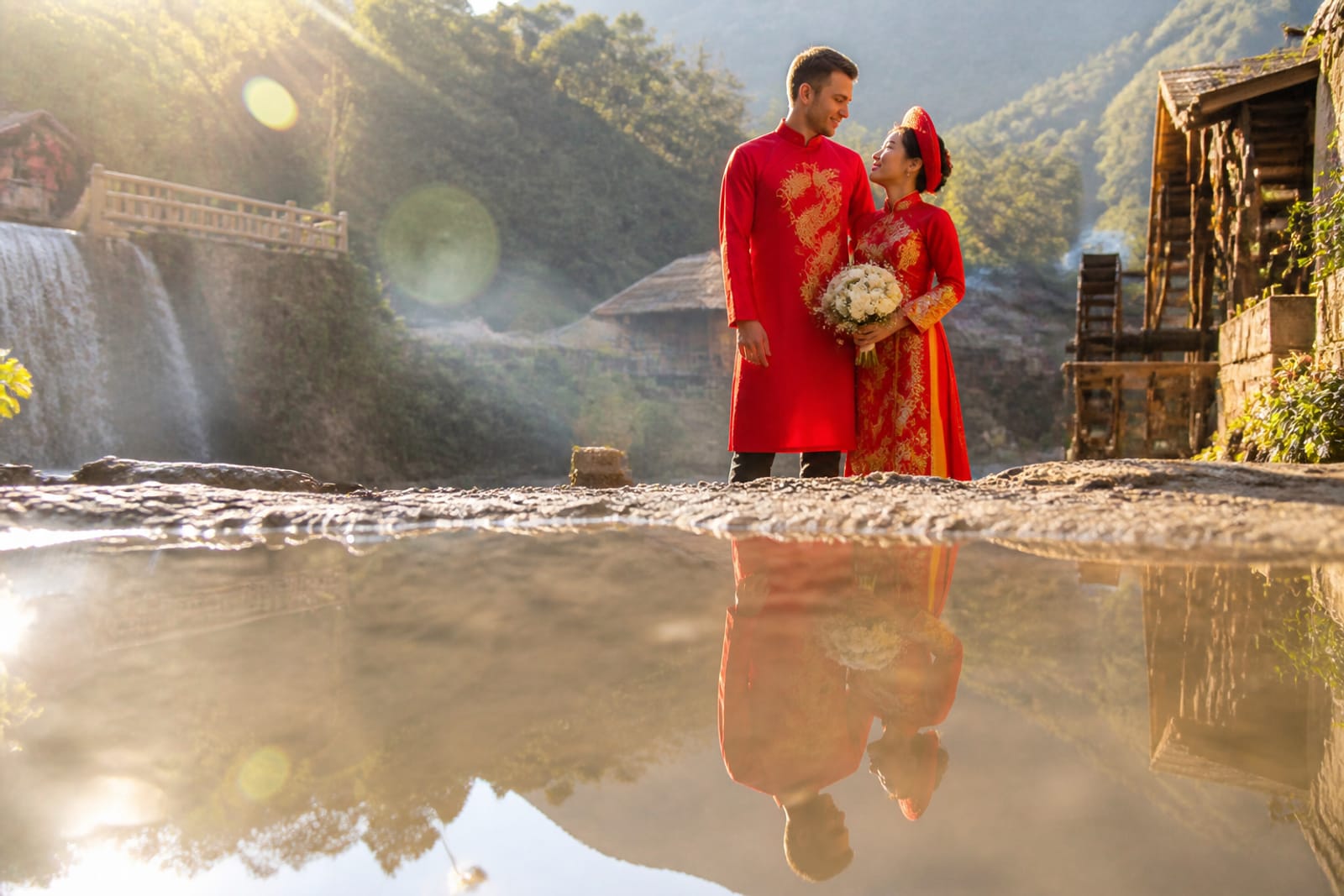
Ao dai in Sapa is tricky. The fabric catches wind and mud, the sleeves get wet in morning dew, and the silhouette doesn't suit steep terrain. Save ao dai for a photoshoot in Hoi An or Hanoi where you can walk on flat, dry ground and the light is controlled. For Sapa, wear fitted trousers, a simple knit, and a cardigan or jacket. If you want an ao dai frame, shoot it in town before or after the mountain session, on a paved street with a studio backdrop.
If you're having makeup and hair done at your hotel in Sapa town, ask the artist to keep the look fresh and minimal—heavy makeup runs in humidity and morning mist.
Conclusion: practical, layered, muted fabrics in good condition; save ceremonial dress for terrain that suits it.
---
What should we check before we book and pay?
Before committing to any photographer—local or from elsewhere—confirm these specifics in writing:
- How many hours? (usually 2–4 for Sapa terrain).
- How many edited images? (expect 50–100 for a 3-hour session).
- When are the edited files delivered? (local photographers often take 5–14 days; Cáo Studio's 48-hour turnaround is an exception).
- What happens if weather kills the shoot? Can you reschedule free, or do you lose the fee?
- Do they handle altitude or terrain issues? Have they shot couples with mobility concerns?
- What format do you get? (digital files, cloud link, USB, print-ready files?).
- Can you request revisions? (how many rounds, and is there an extra cost?).
- Do they provide any styling? (most local photographers don't include hair and makeup).
Ask for a contract or email confirmation. Do not pay the full fee upfront; offer a deposit (typically 30–50%) and the balance on delivery.
Conclusion: clarity on deliverables, timeline, and revision policy prevents post-shoot frustration.
---
📸 Book on WhatsApp — couple photoshoot
If you're planning a honeymoon in Vietnam and want a full-service shoot (photographer, hair, makeup, styled frames), Cáo Studio operates in Hanoi and Ho Chi Minh City with 48-hour turnaround. For Sapa itself, a local mountain photographer is often the pragmatic choice—vet their portfolio, confirm delivery timelines, and lock down the details before you pay.
Not shooting in Sapa? Explore pre-wedding photoshoots in Hanoi, couple sessions in Ho Chi Minh City, or romantic ao dai shoots in Hoi An. Each location has its own season, light, and outfit logic.
FAQ
Is Sapa safe for couples to shoot alone, or do we need a guide?
The main tourist trails (Cat Cat, Muong Hoa valley, O Quy Ho) are well-trodden and generally safe. Most couples book a photographer who doubles as a trail guide; some hire a separate local guide for cultural context. Avoid walking alone after dark or in heavy fog when visibility drops.
Can we shoot ao dai in Sapa?
Technically yes, but the terrain is steep, fabric gets wet and muddy, and strong wind makes the sleeves unmanageable. Ao dai photographs best on flat, paved ground in towns (Hoi An, Hanoi, Ho Chi Minh City). If you want an ao dai frame, shoot it before or after Sapa on a controlled background, then pack practical clothes for the mountains.
What happens if it rains during our Sapa photoshoot?
Light drizzle can create moody, atmospheric frames—but heavy rain makes trails dangerous and visibility poor. Ask your photographer upfront: can you reschedule free if weather is severe, or do you forfeit the fee? Reputable photographers build flexibility into their contracts or offer a rain date at no extra cost.
How early do we need to wake up for the best light?
Sunrise in Sapa is around 5:30–6:00 am (depending on season). The softest, most directional light lasts from 5:45 am to 8:00 am. Most honeymoon couples meet their photographer by 5:30 am or 6:00 am on location. Plan to be dressed and ready at your hotel by 5:00 am at the latest.
Should we hire a professional videographer too, or just still photography?
Still photography alone is sufficient for most couples. If you want a short film (2–5 minutes of key moments, edited to music), ask the photographer if they offer video or can recommend a videographer. Video requires additional equipment, a second person, and typically costs more. Decide based on your budget and whether moving images matter to you more than stills.
Can we shoot Sapa and another location in the same trip?
Yes. Many couples shoot Sapa (2–3 days) and then move to Hanoi, Ninh Binh, or Hoi An for a second session. If you book with Cáo Studio in Hanoi or Ho Chi Minh City, you can arrange a Sapa shoot with a local photographer, then return for a styled couple or ao dai shoot in town with full hair, makeup, and Cáo's editing.
FAQ
Is Sapa safe for couples to shoot alone, or do we need a guide?
The main tourist trails (Cat Cat, Muong Hoa valley, O Quy Ho) are well-trodden and generally safe. Most couples book a photographer who doubles as a trail guide; some hire a separate local guide for cultural context. Avoid walking alone after dark or in heavy fog when visibility drops.
Can we shoot ao dai in Sapa?
Technically yes, but the terrain is steep, fabric gets wet and muddy, and strong wind makes the sleeves unmanageable. Ao dai photographs best on flat, paved ground in towns (Hoi An, Hanoi, Ho Chi Minh City). If you want an ao dai frame, shoot it before or after Sapa on a controlled background, then pack practical clothes for the mountains.
What happens if it rains during our Sapa photoshoot?
Light drizzle can create moody, atmospheric frames—but heavy rain makes trails dangerous and visibility poor. Ask your photographer upfront: can you reschedule free if weather is severe, or do you forfeit the fee? Reputable photographers build flexibility into their contracts or offer a rain date at no extra cost.
How early do we need to wake up for the best light?
Sunrise in Sapa is around 5:30–6:00 am (depending on season). The softest, most directional light lasts from 5:45 am to 8:00 am. Most honeymoon couples meet their photographer by 5:30 am or 6:00 am on location. Plan to be dressed and ready at your hotel by 5:00 am at the latest.
Should we hire a professional videographer too, or just still photography?
Still photography alone is sufficient for most couples. If you want a short film (2–5 minutes of key moments, edited to music), ask the photographer if they offer video or can recommend a videographer. Video requires additional equipment, a second person, and typically costs more. Decide based on your budget and whether moving images matter to you more than stills.
Can we shoot Sapa and another location in the same trip?
Yes. Many couples shoot Sapa (2–3 days) and then move to Hanoi, Ninh Binh, or Hoi An for a second session. If you book with Cáo Studio in Hanoi or Ho Chi Minh City, you can arrange a Sapa shoot with a local photographer, then return for a styled [couple or ao dai shoot](/couple-photoshoot) in town with full hair, makeup, and Cáo's editing.
Ao dai, makeup, hair and a local photographer in Hanoi or Saigon — one WhatsApp message.