/vacation-photoshoot
Honeymoon Photoshoot in Vung Tau: What Works and What Doesn't
A honeymoon photoshoot in Vung Tau works best in the dry season (December to April), when morning light hits beaches cleanly and the sea stays calm for temple and coastal framing. Vung Tau's beaches are crowded on weekends with day-trippers from Saigon, so aim for weekday early morning (5:30–7:00 am) to shoot empty sand and soft golden hour. Most couples book a local photographer or travel with a team; Cáo Studio's base is in Saigon and Ho Chi Minh City, so Vung Tau requires custom planning—ask us on WhatsApp to discuss options. A full session (beach, temple, hotel portraits) typically runs 4–5 hours across locations. Avoid midday (11 am–3 pm) when contrast is harsh and crowds peak. Wear a lightweight ao dai or custom dress that moves in sea breeze; bring a second outfit for temple access (shoulders and knees covered). Plan 48 hours for editing and a short film. ---
How do the seasons affect light and crowds in Vung Tau?
Vung Tau's dry season (December–April) offers the clearest, least humid light—morning sun on water is sharp without haze. Weekday mornings feel empty; weekends see families and tourists flood the main beaches by 9 am. Rain season (May–November) brings afternoon downpours and grey skies, cutting golden hour short. Tet (late January–mid February) floods all southern coastal towns; book early or avoid that window. Plan your dates around weekday dry-season mornings to control light and background.
📸 Book on WhatsApp — ao dai photoshoot
Which beaches and temples give the best photoshoot light?
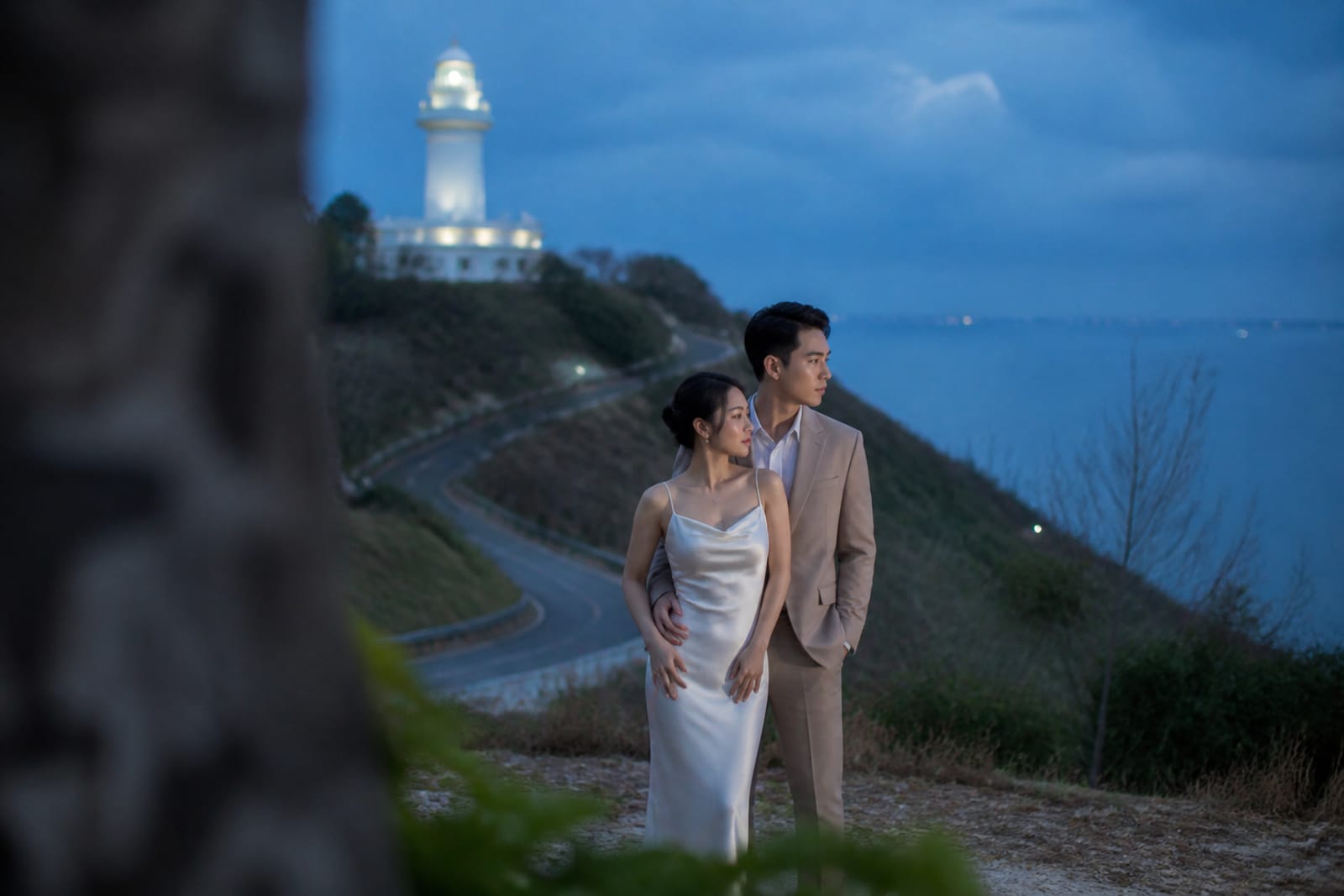
Back Beach (Bai Sau) faces east and catches golden hour at sunrise—soft, directional light ideal for couple portraits walking toward the water. Front Beach (Bai Truoc) is busier but has rocky outcrops and fishing boats for texture. Linh Son Pagoda sits on a hill overlooking the coast; morning light filters through trees onto the temple stairs, and crowds are thinnest before 7 am. Thich Ca Phat Dai Buddha statue offers wide-angle framing but draws tourists mid-morning. Shoot Back Beach at 5:45–6:30 am, then move to Linh Son Pagoda by 7 am before foot traffic builds.
What should we wear under an ao dai for a beach honeymoon shoot?
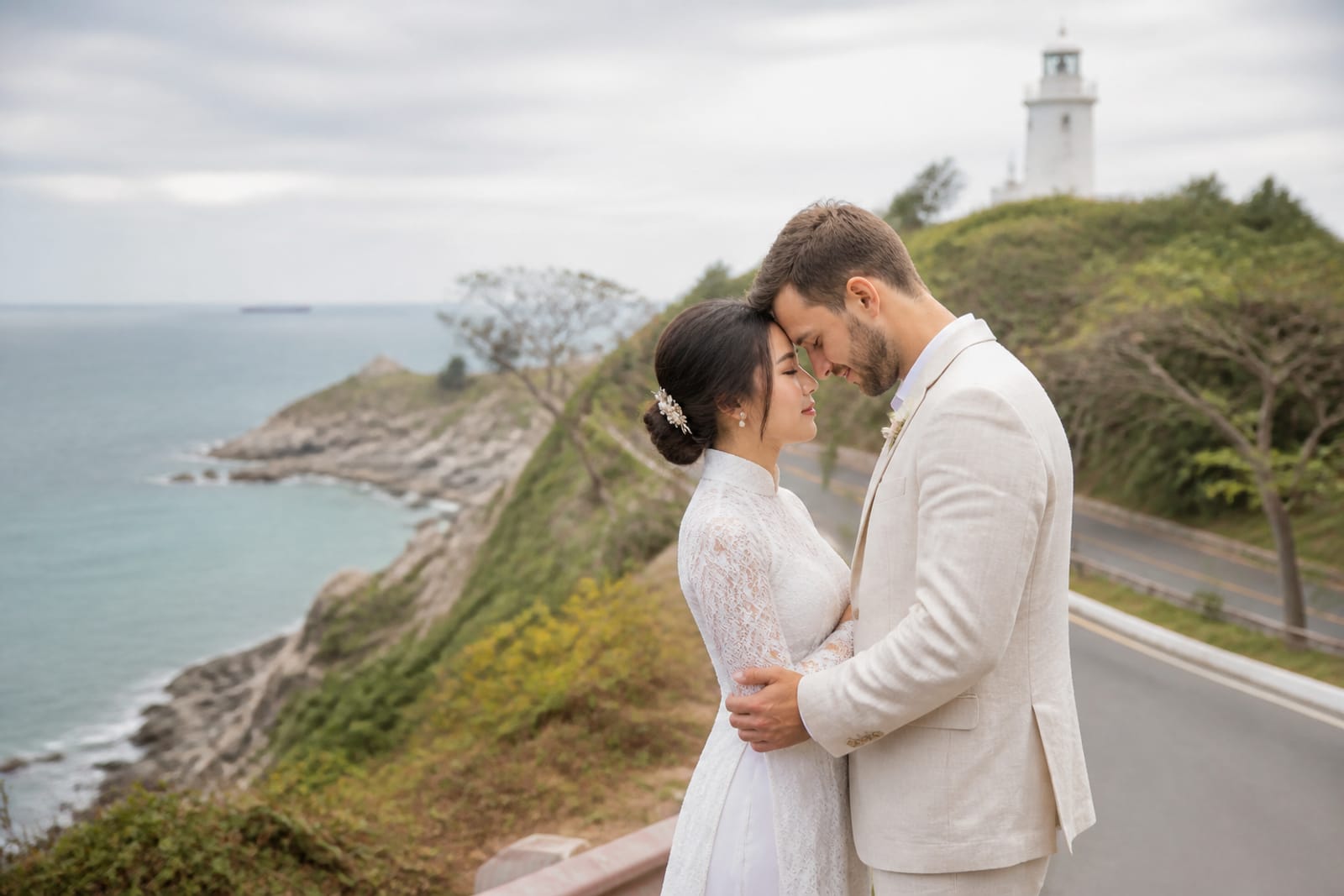
An ao dai floats in sea breeze and photographs beautifully, but it requires a fitted underslip (usually white or matching the outer fabric) that stays dry. Wear a seamless slip dress or white silk slip so no bra straps show; the outer ao dai is sheer silk, so the slip is your foundation. For beach movement, choose a slightly shorter ao dai (ankle-length rather than floor-length) so fabric doesn't drag in wet sand. Bring a second outfit—a lightweight dress or suit for temple scenes, since Linh Son Pagoda requires covered shoulders and knees. Avoid heavy jewellery that catches salt spray; opt for simple gold or silver. An ao dai with a white slip underneath works best; pack a temple-appropriate second outfit and keep jewellery minimal.
How do you plan a honeymoon shoot across Vung Tau's scattered locations?
Vung Tau's key photo spots are spread across 8–10 km (back beach, temples, city views, Thich Ca Buddha, rocky points). A typical day runs: sunrise at Back Beach (6:00–6:45 am, golden hour couples portraits), travel to Linh Son Pagoda (7:15–8:30 am, temple and stairway frames), late-morning hotel or city spot (9:00–10:30 am, detail shots and second outfit), then lunch break. Afternoon shoots (after 3 pm) are possible but fight harsh light and growing crowds. Book transport (taxi or scooter with driver) in advance; traffic from Saigon to Vung Tau is 1.5–2 hours depending on time of day. Makeup and hair should be done at your hotel before sunrise to save travel time. Book a full-day session with transport included; have makeup ready at your hotel by 5:15 am.
Should we hire a local Vung Tau photographer or travel with our own team?
Local photographers know the beaches, timing and temple access permits. Cáo Studio's base is Saigon and Hanoi; Vung Tau requires us to coordinate with a local team or arrange travel—this adds cost and logistics but keeps creative direction unified. A solo local photographer offers lower overall cost but splits focus between framing, light and styling. A full team (photographer + hair/makeup artist + stylist) ensures one message across every frame—outfit, light and pose align. For a cohesive honeymoon narrative, choose a photographer who can also coordinate or travel with a hair/makeup artist; ask on WhatsApp if Cáo Studio can support a Vung Tau day trip.
---
Comparison: Local vs. Full-Team Honeymoon Shoots in Vung Tau
| Option | Best for | Light & Season | Why It Works |
|---|---|---|---|
| Solo local photographer | Budget-conscious couples, simple beach portraits | Dry season, early morning essential | Low cost, knows beaches; styling is on you |
| Photographer + hotel hair/makeup | Couples wanting styled shots, no travel chaos | Dec–Apr, 5:45–7:30 am | Makeup stays fresh; photographer focuses on framing |
| Full team (photo + hair + makeup) | Honeymoon couples, ao dai or formal wear | Dry season, full day coverage | One message; outfit, light, expression coordinated |
| Travel with your team from Saigon | Couples seeking continuity, multiple locations | Dry season, weekday mornings | Same creative eye across all Vietnam shoots; logistics managed |
---
What to check before you book a Vung Tau honeymoon photoshoot
Season & timing: Confirm the shoot date falls in dry season (Dec–Apr) and ideally mid-week. Ask if the photographer's rate changes for peak (Tet, holidays) or off-season (monsoon, rainy afternoons).
Locations & permits: Check which sites are included. Temples require entrance during open hours (usually 6 am–5 pm); some charge entry and may restrict photography in certain areas. Verify the photographer has permission or knows local etiquette.
Transport & logistics: Does the quote include travel time from Saigon, or will you arrange your own taxi? Ask if the team meets you at your hotel or a meeting point.
Outfit & styling: Confirm whether the photographer expects you to bring outfits, or if they provide/coordinate (some studios rent ao dai or formal wear). If you're bringing an ao dai, ask about slip requirements and fabric that photographs well.
Hair & makeup: If the photographer doesn't include an artist, book a separate hotel makeup service. Ask the photographer their preferred makeup style (matte, glossy, bold eyes for outdoor light) so the artist aligns.
Deliverables & timeline: Ask exactly what you receive (number of edited photos, a video, digital files, prints or albums) and when. Most studios deliver within 3–5 days; confirm before booking.
Backup plan for rain: Dry season is reliable, but afternoon showers can happen. Ask if the photographer reschedules, offers a partial refund, or shoots in alternate indoor locations (hotels, pagoda interiors).
Cost factors (not fixed prices): Rate depends on session length (half-day vs. full-day), number of locations, whether the team travels from Saigon or is local, peak season (Dec–Feb, Tet), number of outfits, and add-ons (video, album, prints). Get a quote on WhatsApp.
---
For a full overview of how to plan a couple's photoshoot, see our couple & family photoshoot guide. If you're also considering an ao dai session with professional styling, read about ao dai photoshoots. For honeymoons across multiple Vietnam cities, check vacation photoshoots. Cáo Studio's Saigon base and Hanoi location can coordinate Vung Tau shoots—ask on WhatsApp for details and a custom quote.
New to working with a photoshoot studio? See our FAQ and pricing guide. Browse the lookbook to see how Cáo Studio frames couples and locations.
---
Real Examples: Timing and Light in Vung Tau
5:45–6:20 am (Back Beach sunrise): Water is mirror-still, sky shifts from grey to gold, couples walk toward the horizon with side light. No tourists. Temperature is cool; ao dai moves in light sea breeze. Foreground sand is wet and reflective—ideal for wide shots.
6:30–7:15 am (Back Beach, continued): Golden hour peaks; light is warm and directional, shadows are long. Few locals walk the beach; a fisherman or two might add natural context without being intrusive.
7:20–8:15 am (Linh Son Pagoda, stairway): Morning sun filters through banyan trees; light is dappled and soft on stone steps. Pagoda grounds are quiet. Temperature rises; makeup begins to settle.
9:00–10:30 am (Hotel room or city viewpoint): Hard overhead light demands fill-flash or reflector work. Indoors, hotel windows provide soft directional light ideal for detail shots (hands, rings, ao dai fabric close-up).
Avoid 11 am–3 pm: Sun is directly overhead, contrast is harsh, shadows under eyes are dark, crowds peak at all beaches. Golden hour returns at 4:30–5:30 pm, but sea breeze drops, humidity rises, and tourists still occupy main beaches.
---
📸 Book on WhatsApp — couple photoshoot
For more on how to choose a photoshoot style and location, see vacation photoshoots. Ready to book? Contact Cáo Studio on WhatsApp to discuss your Vung Tau honeymoon plans, dates and custom pricing.
---
FAQ
Is Vung Tau suitable for a honeymoon photoshoot, or should we shoot in Hanoi or Hoi An instead?
Vung Tau suits couples who want sea and temples without Hanoi's crowds or Hoi An's tourist density. It's closer to Saigon, so easier logistics for Ho Chi Minh City–based honeymoons. Hanoi offers lakes and architecture; Hoi An has lantern-lit Old Town. Choose based on your vibe: beach and pagoda (Vung Tau), urban and water (Hanoi), lantern heritage (Hoi An).
What's the best time of year to shoot a honeymoon photoshoot in Vung Tau?
December through April is dry, sunny and ideal—light is clear, crowds are manageable on weekdays, and sea conditions are calm. Avoid May–November (rain season, typhoons, afternoon downpours) and Tet (late January–mid February, when everywhere is crowded and many services close).
Can Cáo Studio shoot my Vung Tau honeymoon, or do I need a local photographer?
Cáo Studio's bases are Saigon and Hanoi. Vung Tau shoots require custom planning—ask on WhatsApp. We can coordinate with a local team, arrange travel from Saigon, or recommend vetted photographers. Full details and pricing are discussed in our WhatsApp conversation.
Do I need to wear an ao dai for a beach honeymoon photoshoot, or can I wear a dress?
Either works. An ao dai photographs beautifully in sea breeze and feels special for a honeymoon; a lightweight custom dress is easier to move in at the beach. Many couples wear both—ao dai for temple scenes, dress for beach walking. Confirm with your photographer what they recommend for light and location.
How long does a Vung Tau honeymoon photoshoot take, and what locations can we include?
A full-day shoot typically runs 5–7 hours (sunrise at Back Beach, temple by 7 am, hotel detail shots by mid-morning, optional afternoon revisit). Most sessions cover beach, temple, and one urban/city spot. Exact length and locations depend on your package and preferences—discuss on WhatsApp to customize.
What should I expect for editing and delivery after a Vung Tau photoshoot?
Most studios deliver edited photos within 3–5 days; some include a short vertical film or social-media reel. You'll receive digital files (usually 50–100+ edited images), and options for prints, albums or frame sets. Confirm exact inclusions and timeline before booking—ask your photographer for their standard deliverables.
FAQ
Is Vung Tau suitable for a honeymoon photoshoot, or should we shoot in Hanoi or Hoi An instead?
Vung Tau suits couples who want sea and temples without Hanoi's crowds or Hoi An's tourist density. It's closer to Saigon, so easier logistics for Ho Chi Minh City–based honeymoons. Hanoi offers lakes and architecture; Hoi An has lantern-lit Old Town. Choose based on your vibe: beach and pagoda (Vung Tau), urban and water (Hanoi), lantern heritage (Hoi An).
What's the best time of year to shoot a honeymoon photoshoot in Vung Tau?
December through April is dry, sunny and ideal—light is clear, crowds are manageable on weekdays, and sea conditions are calm. Avoid May–November (rain season, typhoons, afternoon downpours) and Tet (late January–mid February, when everywhere is crowded and many services close).
Can Cáo Studio shoot my Vung Tau honeymoon, or do I need a local photographer?
Cáo Studio's bases are Saigon and Hanoi. Vung Tau shoots require custom planning—ask on WhatsApp. We can coordinate with a local team, arrange travel from Saigon, or recommend vetted photographers. Full details and pricing are discussed in our WhatsApp conversation.
Do I need to wear an ao dai for a beach honeymoon photoshoot, or can I wear a dress?
Either works. An ao dai photographs beautifully in sea breeze and feels special for a honeymoon; a lightweight custom dress is easier to move in at the beach. Many couples wear both—ao dai for temple scenes, dress for beach walking. Confirm with your photographer what they recommend for light and location.
How long does a Vung Tau honeymoon photoshoot take, and what locations can we include?
A full-day shoot typically runs 5–7 hours (sunrise at Back Beach, temple by 7 am, hotel detail shots by mid-morning, optional afternoon revisit). Most sessions cover beach, temple, and one urban/city spot. Exact length and locations depend on your package and preferences—discuss on WhatsApp to customize.
What should I expect for editing and delivery after a Vung Tau photoshoot?
Most studios deliver edited photos within 3–5 days; some include a short vertical film or social-media reel. You'll receive digital files (usually 50–100+ edited images), and options for prints, albums or frame sets. Confirm exact inclusions and timeline before booking—ask your photographer for their standard deliverables.
Ao dai, makeup, hair and a local photographer in Hanoi or Saigon — one WhatsApp message.