/vacation-photoshoot
How to look natural in travel photos: guide + booking
Natural travel photos balance authenticity with intentional framing. A photographer—whether you hire locally or book ahead with a studio like Cáo Studio – Makeup & Photoshoot in Hanoi, Ho Chi Minh City, or Hoi An—guides you into candid moments while controlling light and background. Timing matters: shoot during golden hour (first two hours after sunrise, last two before sunset) to avoid harsh midday shadows on your face. Wear clothes that fit loosely and move with you; tight outfits read as uncomfortable on camera. Solo travelers can scout locations beforehand and use a tripod with a remote shutter; couples and groups benefit from a third-person eye to direct energy and catch genuine interaction. Avoid over-styling—natural skin, minimal makeup if any, and hair you'd actually wear make the biggest difference. ---
What makes a travel photo look natural instead of posed?
The strongest travel photos capture you doing rather than facing the camera. Look toward a view, walk through a doorway, or adjust your scarf—genuine actions feel less constructed than standing still and smiling directly. Light plays the hidden role: soft, diffused light (cloudy days, shade, or sunrise/sunset) shows real skin texture and eye detail, while harsh midday sun creates unflattering shadows and forces squinting. Posture matters too—relax your shoulders, keep your chin level, and let your arms rest naturally at your sides or move with intention. The best travel portraits look like someone caught you in a good moment, not like you were waiting for a camera.
Where should you shoot to look natural in your own photos?
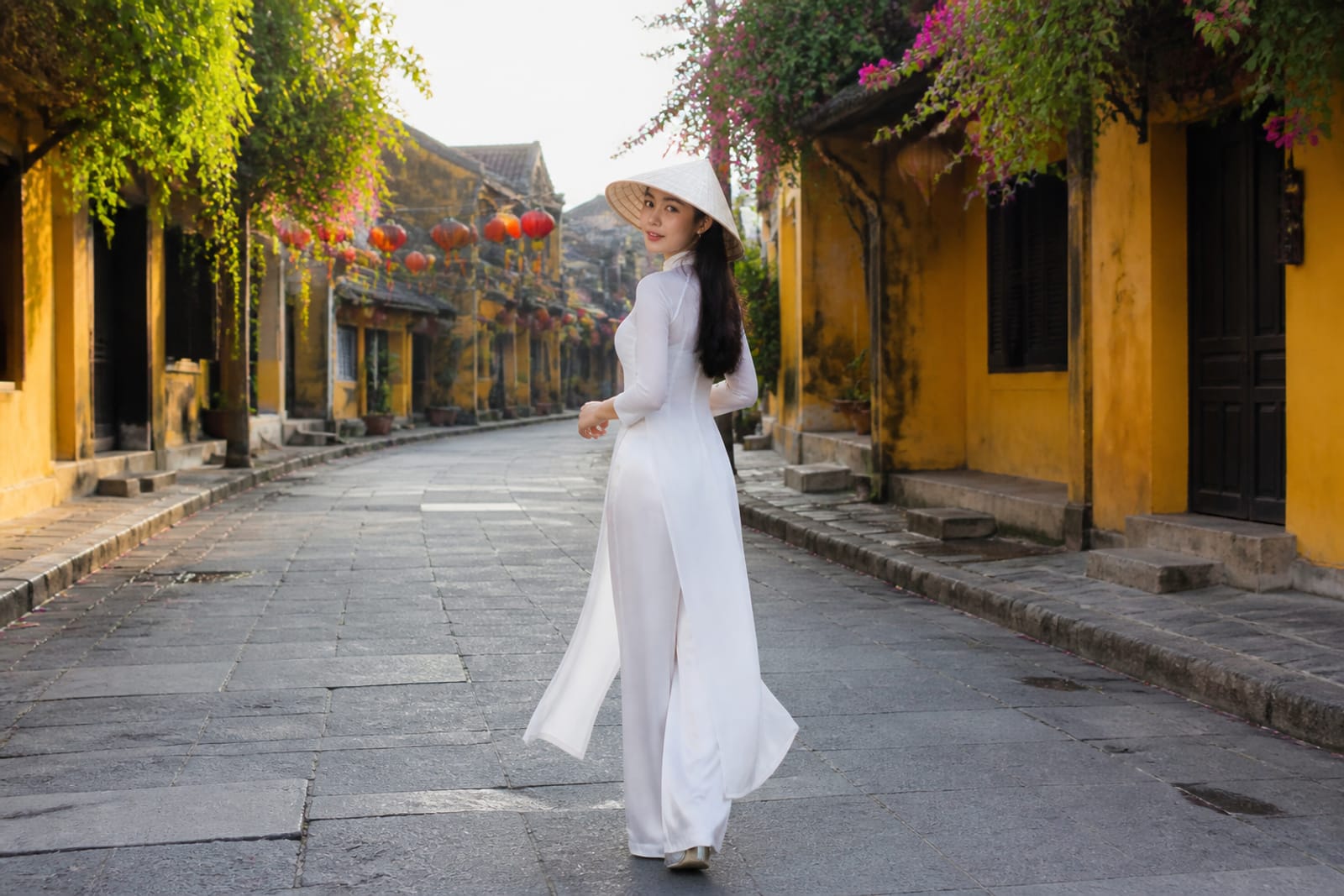
Location sets the entire tone. Avoid crowded, obviously "Instagram" spots where you feel watched—natural expressions fade when you're hyper-aware of your surroundings. Seek quiet streets, temple courtyards after early morning hours, gardens at off-peak times, or architectural details with soft shadow play. In Vietnam, quiet morning hours at heritage sites yield authentic backdrops and better light than midday. If you're traveling solo with a camera, scout locations first without shooting; return when you feel grounded there. Working with a local photographer removes the navigation stress—they know which alleys have flattering light at 6 a.m., which temple courtyards allow photography, and how to position you so you're comfortable, not performing. 📸 Book an ao dai or vacation photoshoot with Cáo Studio in Hanoi or Ho Chi Minh City to let someone else handle framing while you focus on breathing and presence.
How does outfit choice affect whether photos look natural?
Outfit has more impact than most people realize. Tight clothes restrict movement and read as discomfort on your face; loose, breathable fabrics let you gesture and shift naturally. Natural fabrics (linen, cotton, silk) catch light softly compared to synthetic blends, which can look shiny or plastic on camera. Colors matter subtly—jewel tones and earth tones feel grounded; neon or white-on-white can wash you out or draw harsh reflections. Avoid loud logos or busy patterns that distract from your face and energy. Wear what you'd genuinely travel in, not a costume; authenticity reads instantly. If you're planning an ao dai photoshoot, the fabric and fit have been tested for camera—but the same principle applies: the moment you forget you're wearing it, the camera catches something real.
Outfit decision framework for natural travel photos
| Outfit choice | Best for | Light season | Why it works |
|---|---|---|---|
| Loose linen shirt + neutral trousers | Walking through streets, exploring markets | Any season; avoid harsh midday | Moves with you, breathes in heat, fabric reflects light softly |
| Long fitted dress in solid colour | Standing at viewpoints, near architecture | Golden hour, overcast | Silhouette flatters on camera; solid colour doesn't compete |
| Layered casual (t-shirt + open overshirt) | Transitions between sites; versatility | Cool mornings (Dec–Feb in north) | Easy to adjust for temperature; layers add dimension without trying |
| Ao dai (rental or owned) | Cultural sites, formal backdrops | Any season; best in dry months | Built for camera; traditional fit reads as intentional, not stiff |
| Shorts + fitted top | Coastal, tropical backdrops | Dry season (north Dec–Apr; central Feb–Aug; south Dec–Apr) | Comfortable in heat; shows natural posture and movement |
---
What time of day produces the most natural-looking travel photos?
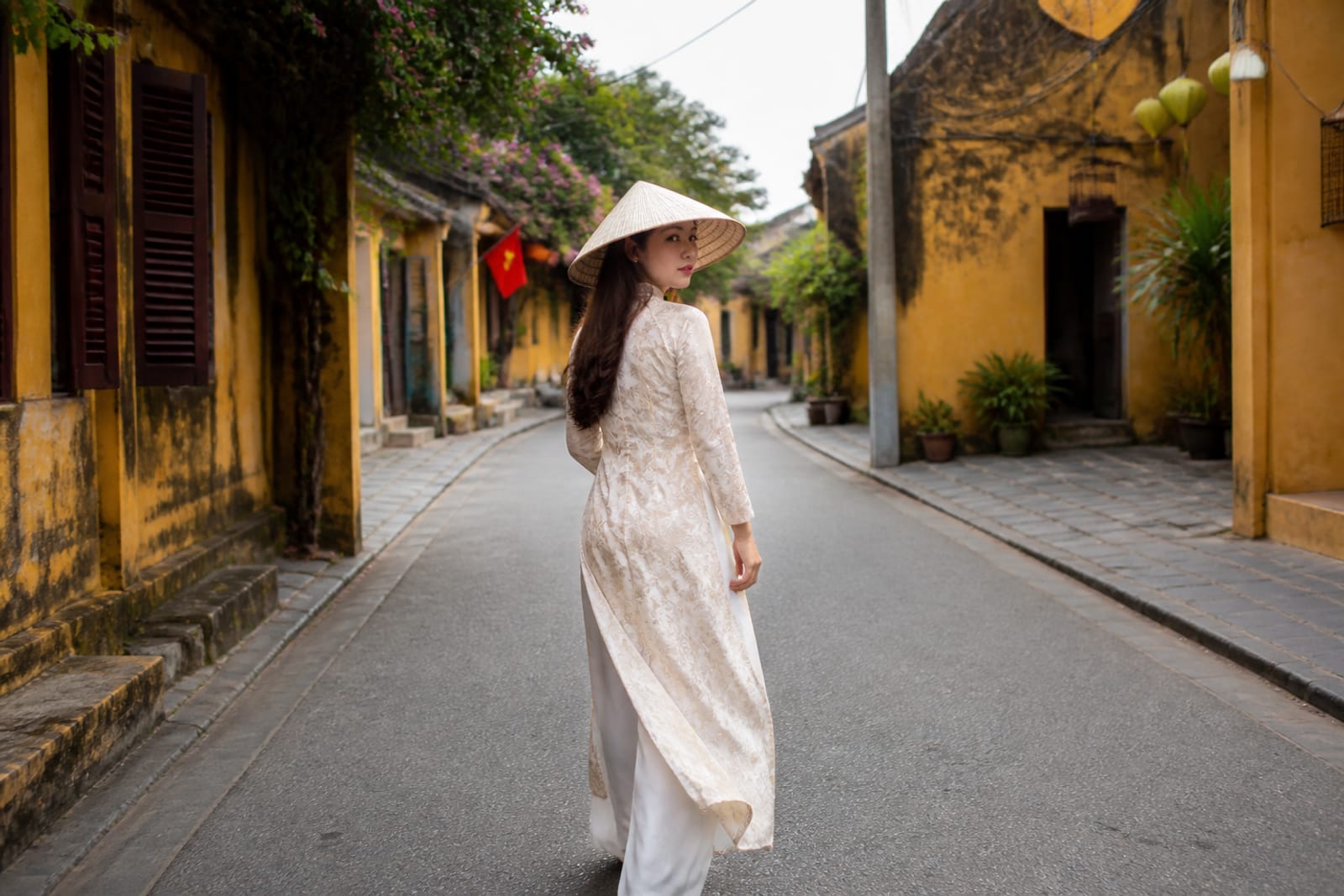
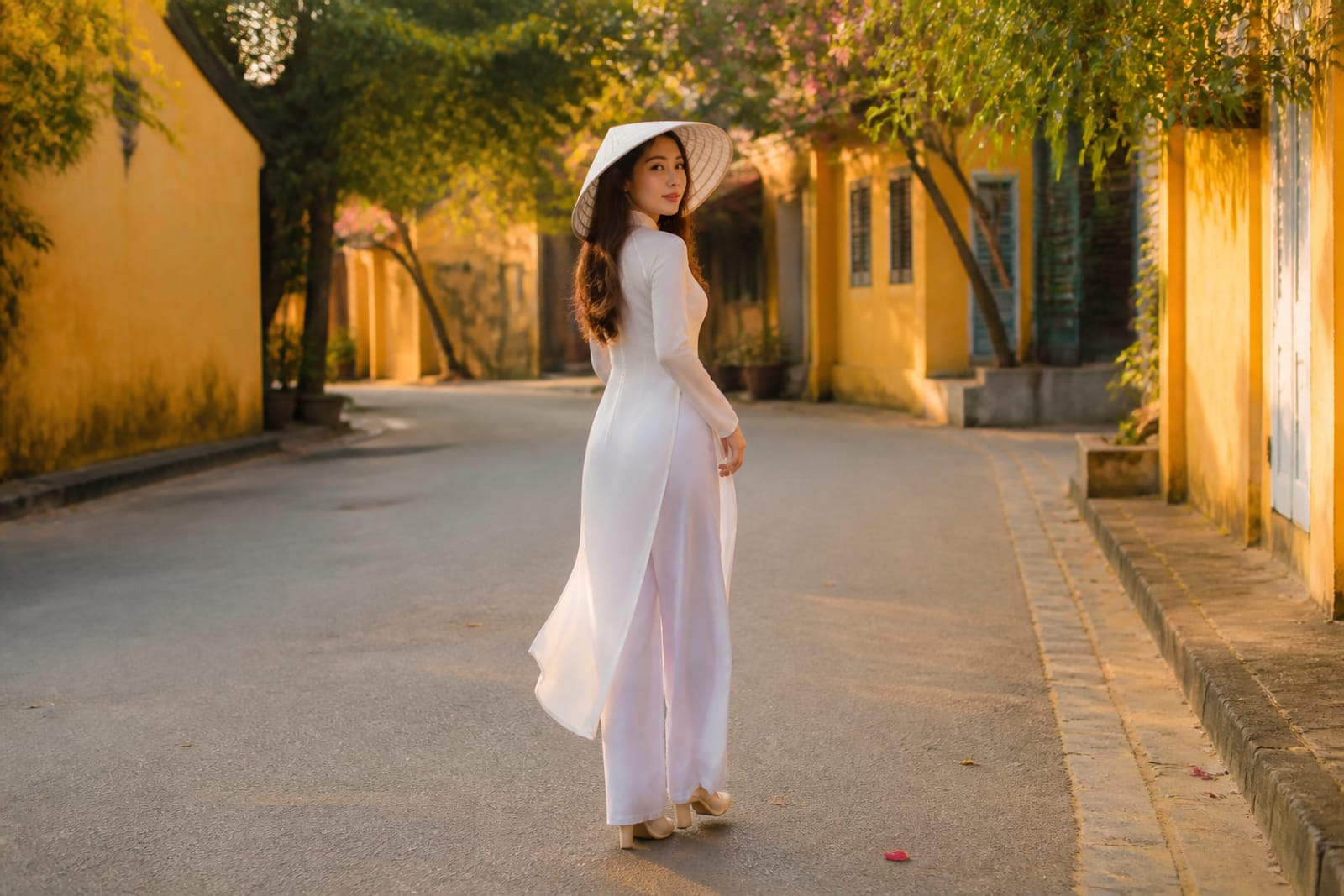
Golden hour—the first two hours after sunrise and the last two before sunset—yields the softest, most flattering light for human skin. During these windows, light wraps around your face rather than casting hard shadows under your eyes and nose. Midday (10 a.m.–3 p.m.) produces harsh shadows and forces squinting; avoid shooting then unless you're in deep shade. Overcast days are underrated: diffused cloud cover mimics the softness of golden hour all day, making even midday shots look natural. In Vietnam's humid climates, overcast days are common Sep–Jan in the north and Oct–Nov in the central coast; this unpredictability is why booking a photographer who knows local weather patterns helps. If you're traveling solo, plan shoots early; return to spots at sunset if you want a second attempt. Working with Cáo Studio's makeup and hair service means you can shoot at optimal times without rushing; the team coordinates around light windows.
Should you hire a local photographer or DIY travel photos?
DIY (solo or with a travel companion): Requires scouting, a tripod, remote shutter, and willingness to lose shots to poor framing. You control timing and cost factors (location travel, permits if any), but you miss professional eye contact direction—the subtle cue that says "relax now, look left, breathe" that unlocks genuine expression. Best for low-stakes moments and budget-conscious travelers who don't mind imperfect shots.
Local photographer: You gain someone who reads your energy, knows lighting in real time, and speaks your language (or communicates visually). They handle composition, exposure, and the technical worry; you focus on presence. Cost factors: travel time to your location, number of hours, outfit changes, and whether they include editing. Cáo Studio – Makeup & Photoshoot operates across Hanoi, Ho Chi Minh City, and Hoi An with teams trained to work with international travelers and specific session formats (couple & family photoshoots, ao dai sessions, or vacation portraits). Best for travelers who want polished, reliable results without the technical heavy lifting.
Hybrid: Shoot solo during travels; book a vacation or solo photoshoot for one intentional session in a key location. This balances cost and quality.
---
What should you check before booking a travel photoshoot?
Before committing, confirm these five points with any photographer or studio:
- Session format and what's included. Ask on WhatsApp whether the package covers outfit changes, makeup, location scouting, editing style, and how many edited files you receive. Cáo Studio confirms all specifics via WhatsApp +84 338 762 340; never assume inclusions from a website description.
- Location and timing flexibility. Can they shoot at your chosen spot, or do they work only from set studios? How do they handle weather delays or early morning light? Studios in Vietnam face monsoon seasons—confirm their backup plan for your travel dates.
- Editing style. Ask for examples or lookbooks. Do they enhance or leave skin natural? Do they tone down colour grading? See the Cáo Studio lookbook to gauge aesthetic before booking.
- Cancellation and rescheduling. Understand the studio's policy if weather is poor or you need to postpone.
- Photographer's familiarity with cultural sites. In Vietnam, many temples and historical sites have etiquette and photography rules. A local photographer knows where you can shoot, what to wear respectfully, and peak quiet hours. Cáo Studio teams are trained in these details.
💄 Makeup & hair at your hotel lets you skip studio travel if you're on a tight schedule.
---
Real workflow: how a professional travel photoshoot runs
You send reference images and mood notes via WhatsApp. The photographer suggests two–three locations with light windows that suit your travel dates and itinerary. You arrive on shoot day with outfits tried on beforehand (no surprises on camera). The photographer positions you, directs your gaze, and captures interaction and stillness in 30-second intervals. If makeup is included, it happens first; aim for light, natural coverage that reads on camera without feeling heavy.
Sessions typically run 1–3 hours depending on outfit changes and location count. The photographer captures hundreds of images; you'll receive edited galleries (size and count confirmed on WhatsApp beforehand). Turnaround is usually 1–2 weeks after the shoot. You never see unedited files—the studio handles that selection and post-processing.
Common mistakes to avoid: arriving hungry or tired, overdressing for the season, chasing only famous landmarks instead of quieter alleyways where you feel grounded, and expecting the photographer to know your preferences without communicating them. The more you articulate "I feel natural in candid moments, not smiling directly" or "I want to show movement, not standing still," the better the results.
🌸 See the lookbook to understand Cáo Studio's editing and directional style.
---
Season and weather: how Vietnam's climate affects natural-looking travel photos
North (Hanoi, Ninh Binh, Sapa, Ha Giang): Cool, grey winter (Dec–Feb) produces soft, diffused light ideal for portraits—no squinting, no harsh shadows. Hot, humid summer (May–Sep) brings afternoon clouds and sudden rain; morning shoots are best. Overcast days are common Jun–Sep, eliminating harsh light but reducing colour vibrancy.
Central coast (Hue, Da Nang, Hoi An, Quy Nhon): Dry season (Feb–Aug) offers consistent blue skies and stable light—golden hour is predictable. Rainy season (Sep–Dec, worst Oct–Nov) brings afternoon downpours and typhoon risk; dawn shoots are safer. Booking a shoot in Feb–Aug gives you reliable windows; Sep–Dec requires flexibility.
South (Ho Chi Minh City, Mekong, Phu Quoc, Mui Ne, Vung Tau, Con Dao): Dry season (Dec–Apr) is sunny and stable; wet season (May–Nov) has short afternoon downpours but morning light is usable. Humidity is high year-round, so breathable outfits matter everywhere.
Choose travel dates or book your photoshoot around these windows if you want predictable light. If you're traveling during monsoon or typhoon risk (Oct–Nov central coast), ask your photographer for backup indoor locations (colonial architecture, covered markets, temple interiors).
---
Natural travel photos start with intention—choosing light, outfit, location, and often a photographer who understands your presence—then releasing control and trusting the moment. Cáo Studio – Makeup & Photoshoot serves travelers across Vietnam who want to skip the DIY guesswork and walk away with authentic portraits. Book your session on WhatsApp and let the camera catch you as you actually are.
FAQ
Can I look natural in photos without a professional photographer?
Yes, if you scout locations, shoot during golden hour, wear comfortable clothes, and use a tripod with remote shutter. Solo DIY requires patience and willingness to take many shots; a photographer saves time and catches moments you'd miss framing yourself.
What should I wear under an ao dai to look natural on camera?
Wear a thin, flesh-toned slip or bodysuit underneath. An ao dai reads best on camera when it drapes smoothly without bunching or visible undergarments. Choose light fabric in warm weather. Cáo Studio's ao dai rental pairs with styling advice—ask on WhatsApp about undergarment recommendations for your body type.
How far in advance should I book a travel photoshoot?
Two to four weeks is standard, especially during peak seasons (Dec–Feb in the north, Feb–Aug in central Vietnam). Last-minute bookings (under one week) may be available depending on photographer availability; ask on WhatsApp. Booking early lets you confirm your outfit and location preferences without rush.
Do I need makeup for a natural-looking travel photo?
No. Natural skin is strongest on camera, especially in soft light. Light concealer, tinted moisturizer, and defined brows read as "awake and present" without looking done. If you're uncomfortable with bare skin on camera, Cáo Studio's makeup and hair service provides natural coverage designed for travel photography—ask about their minimal makeup style.
What's the difference between booking a vacation photoshoot and a couple or family session?
Solo or duo vacation shoots focus on one person's presence and expression over several locations. Couple and family photoshoots direct group dynamics, interaction, and energy—more complex than solo work. Family sessions need longer shoots to capture candid moments between people; ask on WhatsApp about session length and edit count, which vary by group size.
Should I book a photoshoot or a pre-wedding session if I'm engaged or married?
Pre-wedding and elopement shoots are designed for couples pre-wedding or on elopement day; they include more outfit changes and intentional narrative. Couple vacation photoshoots are travel-focused and shorter. If you're celebrating an anniversary, proposal and anniversary packages offer specialized formats. Message Cáo Studio on WhatsApp to clarify which fits your timeline and story.
FAQ
Can I look natural in photos without a professional photographer?
Yes, if you scout locations, shoot during golden hour, wear comfortable clothes, and use a tripod with remote shutter. Solo DIY requires patience and willingness to take many shots; a photographer saves time and catches moments you'd miss framing yourself.
What should I wear under an ao dai to look natural on camera?
Wear a thin, flesh-toned slip or bodysuit underneath. An ao dai reads best on camera when it drapes smoothly without bunching or visible undergarments. Choose light fabric in warm weather. Cáo Studio's [ao dai rental](/ao-dai-rental) pairs with styling advice—ask on WhatsApp about undergarment recommendations for your body type.
How far in advance should I book a travel photoshoot?
Two to four weeks is standard, especially during peak seasons (Dec–Feb in the north, Feb–Aug in central Vietnam). Last-minute bookings (under one week) may be available depending on photographer availability; ask on WhatsApp. Booking early lets you confirm your outfit and location preferences without rush.
Do I need makeup for a natural-looking travel photo?
No. Natural skin is strongest on camera, especially in soft light. Light concealer, tinted moisturizer, and defined brows read as "awake and present" without looking done. If you're uncomfortable with bare skin on camera, Cáo Studio's [makeup and hair service](/makeup-and-hair) provides natural coverage designed for travel photography—ask about their minimal makeup style.
What's the difference between booking a vacation photoshoot and a couple or family session?
Solo or duo vacation shoots focus on one person's presence and expression over several locations. [Couple and family photoshoots](/couple-photoshoot) direct group dynamics, interaction, and energy—more complex than solo work. Family sessions need longer shoots to capture candid moments between people; ask on WhatsApp about session length and edit count, which vary by group size.
Should I book a photoshoot or a pre-wedding session if I'm engaged or married?
[Pre-wedding and elopement shoots](/pre-wedding-photoshoot) are designed for couples pre-wedding or on elopement day; they include more outfit changes and intentional narrative. [Couple vacation photoshoots](/couple-photoshoot) are travel-focused and shorter. If you're celebrating an anniversary, [proposal and anniversary packages](/proposal-and-anniversary) offer specialized formats. Message Cáo Studio on WhatsApp to clarify which fits your timeline and story.
Ao dai, makeup, hair and a local photographer in Hanoi or Saigon — one WhatsApp message.