/pre-wedding-photoshoot
Is Hanoi Old Quarter Good for Pre-Wedding Photos? Pros, Cons & Alterna
The Hanoi Old Quarter (around Hoan Kiem Lake, Phan Dinh Phung Street, Train Street) offers cinematic colonial architecture and narrow lanes, but pre-wedding shoots there face three real obstacles: summer heat and monsoon rain (May–Sep), winter grey skies and drizzle (Dec–Feb), and persistent foot traffic that blocks framing. Autumn (Oct–Nov) and spring (Mar–Apr) are technically best, yet even then crowds gather by mid-morning. Cáo Studio – Makeup & Photoshoot shoots in the Old Quarter, but we advise couples to weigh travel time, outfit changes, and whether soft morning light in a less-trafficked alley suits your vision better than a studio or Hoi An's quieter ancient town backdrop. ---
Why the Hanoi Old Quarter looks good on Instagram but presents real shooting challenges
The Old Quarter's appeal is visual: shuttered colonial shopfronts, motorbike chaos framed as energy, wet stone in rain. But these same elements become liabilities during a shoot. Foot traffic never truly pauses—even 6 a.m. brings vendors and early commuters. Train Street, the most photogenic narrow lane, is periodically closed by authorities; check with local guides before planning. Winter skies (Dec–Feb) hang grey and flat, killing contrast and forcing high ISO or fill light. Summer (May–Sep) brings 35°C+ heat, humidity that wilts makeup, and afternoon downpours that end sessions abruptly. Autumn (Oct–Nov) is genuinely better—mild, drier, softer light—but crowds know it, booking slots fill weeks ahead.
The real cost factors: longer travel time from your hotel (often 20–40 minutes by taxi depending on traffic), multiple outfit changes requiring onsite prep or a nearby changing room, and needing a second team member to hold reflectors or manage crowds. Rain also means contingency; a cancelled session means rescheduling or losing your date. These logistics are avoidable elsewhere.
---
When Hanoi Old Quarter does work: the specific window and outfit strategy
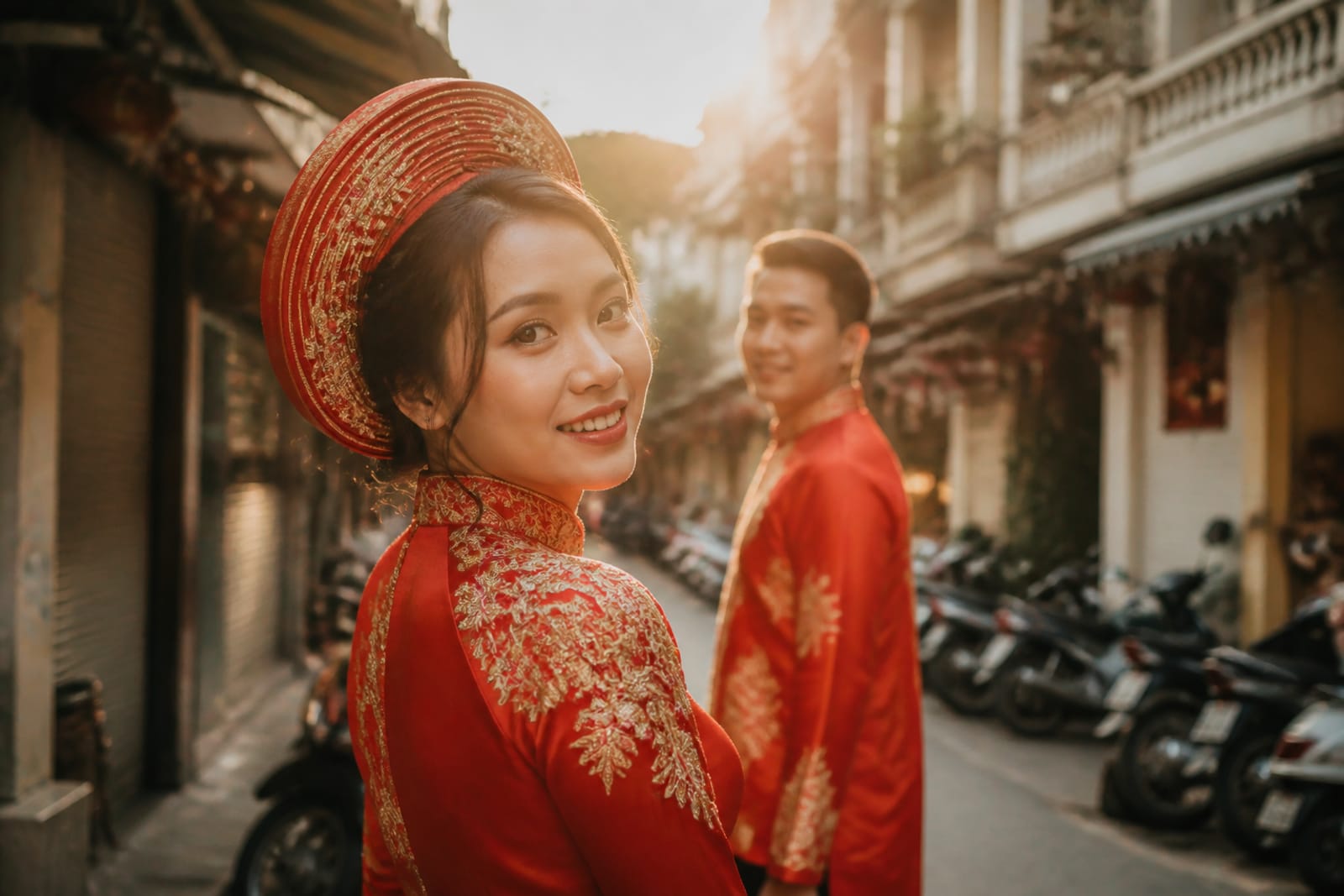
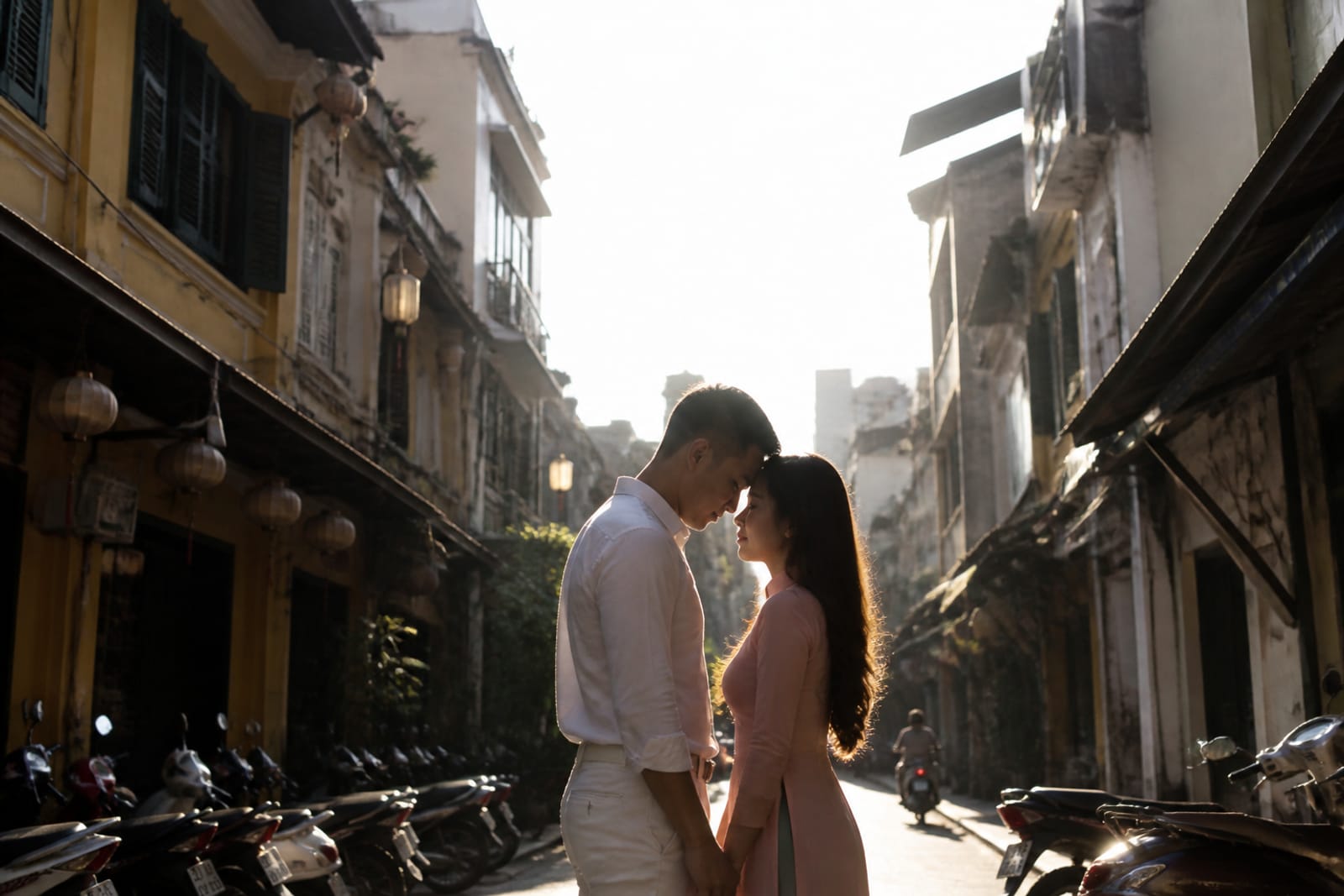
If autumn (Oct–Nov) aligns with your date and you book a very early 5:30–7:30 a.m. slot, the Old Quarter can deliver soft, directional light, fewer crowds, and that moody wet-pavement aesthetic. This narrow window demands precision: you need clear skies (check forecasts daily leading up), lightweight ao dai or modern dress that breathes, and realistic expectations—two to three final locations maximum before crowds swell and light angles shift.
Ao dai shoots in the Old Quarter work better than Western dresses because the garment's loose, flowing cut tolerates quick outfit changes in cramped alley spaces. The silk catches soft morning light without wrinkles that develop during long sessions. Modern pre-wedding outfits (tailored suits, minimalist dresses) also read well against weathered stone, but they require more time to refresh between locations.
Skip the Old Quarter in June–August entirely—heat, humidity and typhoon rain make it miserable. December–February is possible only if you're comfortable with grey, overcast light or willing to shoot in late afternoon when shadows grow harsh. Spring (Mar–Apr) brings dust haze and drizzle; plan for contingencies.
---
How Cáo Studio shoots the Old Quarter: logistics and what you actually get
We arrive before dawn, scout clear pathways around foot traffic, and position you in alleys with directional light while a second team member holds fill reflectors and watches for crowds. Sessions typically run 2–3 hours, covering 3–4 locations as light shifts; longer shoots in the Old Quarter exhaust couples with wardrobe friction and accumulated crowd interruptions.
Makeup and hair at your hotel beforehand saves 45 minutes of onsite prep. You arrive ready, light is optimal, and you're not juggling a mirror and powder on a narrow street. We always bring a backup indoor or covered location (a colonial café, a covered market corner) for when rain appears unexpectedly—this keeps the shoot alive without cancelling.
The real difference from shooting solo: we know which alleys close to traffic at certain hours, which shopkeepers permit us to shoot nearby (builds goodwill with small gifts), and how to frame shots that exclude tuk-tuks and mopeds despite constant motion. We also manage the pace—couples often want "just one more shot" until light fails and they're exhausted; we watch the light clock and move decisively.
Check on WhatsApp before booking whether Train Street is open that week; if closed, we pivot to quieter Hang Gai Street or the French Quarter near the Cathedral instead.
---
Comparison: Old Quarter vs. Hoi An, Ha Long, and studio alternatives
| Option | Best for | Light & Season | Crowd Factor | Why Choose It |
|---|---|---|---|---|
| Hanoi Old Quarter | Cinematic urban authenticity, ao dai drama | Autumn (Oct–Nov) early morning only | High midday, manageable 5–7 a.m. | Iconic colonial backdrop, local texture |
| Hoi An Ancient Town | Romantic, timeless elegance, lantern shots | Feb–Aug driest; Oct–Nov softer light | Low even midday; fewer motorbikes | Pedestrian-only streets, yellow walls, lanterns, fewer crowds than Hanoi |
| Ha Long Bay | Epic landscape, seascape drama | Mar–May, Oct early-Nov best (calm seas) | Minimal crowds on boat/private junk | Dramatic geology, open sky, wind management easier |
| Studio or indoor backdrop | Full control, weather-proof, quick outfit changes | Any season, any time | None—you're alone | Consistent light, no commuting, premium backdrop variety |
Each suits a different priority. Hoi An works for couples wanting "romance without chaos"—the Ancient Town is genuinely quieter than Hanoi, and the yellow ochre walls are more flattering to skin tone than grey stone. Ha Long is for adventurous couples unafraid of wind and movement; the light is harder but the scale is unmatched. Studio or vacation/elopement shoots elsewhere suit tight schedules and couples who value time over iconic landmarks.
---
What to check before committing to an Old Quarter pre-wedding shoot
Checklist:
- Confirm exact dates – Ask us on WhatsApp whether autumn (Oct–Nov) or your chosen month genuinely suits; don't assume "always good."
- Check Train Street status – Call or message 48 hours before; if closed, does the photographer have a strong backup plan?
- Verify weather daily – Grey/rainy forecasts for your shoot date? Confirm the contingency plan (rescheduling, pivot location, or studio backdrop).
- Plan outfit transitions – Book hotel makeup and hair; arrive to the Old Quarter in final outfit to save 30+ minutes and keep you fresh.
- Set a realistic location count – Plan 3–4 locations max; five or more means exhaustion and diminishing light.
- Ask about crowd management – Does the photographer know when alleys clear? Can they exclude foot traffic or work around it honestly?
- Early slot or off-season trade-off – If not Oct–Nov, accept that light will be flatter or crowds heavier; negotiate expectations upfront.
---
Why Hoi An and smaller Hanoi suburbs are quieter alternatives with similar aesthetics
Hoi An's Ancient Town delivers the colonial charm—yellow ochre walls, shuttered windows, lanterns, water reflections—without Hanoi's motorbike density. The town is officially pedestrian-only after 3 p.m., so late-afternoon and early-evening light is genuinely unobstructed. It's also more intimate; walking the same street, you're surrounded by fewer tourists than in Hanoi's Old Quarter. Hoi An photoshoots are available by appointment (we travel there); ask on WhatsApp for team availability and dates.
If you want Hanoi but quieter, the French Quarter near St. Joseph Cathedral (Phan Boi Chau area) and around the Temple of Literature offer colonial or traditional architecture with far less foot traffic. Light behaves the same (seasonal constraints apply), but the pace is calmer and you can breathe between shots.
Cost factors differ: Hoi An requires travel time (roughly 4–5 hours by car from Hanoi), which affects session pacing and day structure. A Hanoi suburb shoot saves transit but trades some iconic drama.
---
Final decision: matching your vision to the right location and season
Your choice hinges on three questions:
- Icon or atmosphere? If you want "that famous Hanoi shot," Old Quarter in Oct–Nov early morning is it. If you want "romantic, timeless, fewer stresses," Hoi An works better.
- Which season aligns with your date? Tet (late Jan–early Feb) closes many services and crowds landmarks—avoid. Summer (May–Sep) makes Old Quarter nearly unusable. Spring (Mar–Apr) is moody but hazy. Autumn (Oct–Nov) is the sweet spot; book months ahead.
- How much control do you need? Studio or elopement-style shoots give you full mastery of light and timeline. Real locations trade some control for authenticity and scale.
The most satisfied couples we photograph are those who matched their expectations to the season and location honestly—not those who pushed for an iconic location in a poor season and ended up frustrated with grey light or crowds.
📸 Book on WhatsApp — ao dai photoshoot | 💄 Makeup & hair at your hotel | 🌸 See the lookbook
---
Real couples ask: does a pre-wedding shoot in the Old Quarter need a permit?
No formal permit is required for personal pre-wedding photography in public spaces like the Old Quarter; Vietnam does not restrict casual wedding or portrait photography on public streets. However, if you're planning a large crew (multiple assistants, equipment stands, reflectors blocking foot traffic), local authorities may ask questions. We travel minimal—two to three team members, hand-held gear—so this is never an issue. If you're hiring a larger production crew, check locally before arrival.
---
FAQ
Is the Hanoi Old Quarter worth a pre-wedding shoot, or should I choose Hoi An instead?
The Old Quarter offers iconic urban drama but demands an Oct–Nov early-morning slot to avoid crowds and grey light. Hoi An delivers similar colonial romance with fewer crowds and is pedestrian-only after 3 p.m., making it a calmer choice if you value smooth pacing and softer constraints. Hoi An requires travel time; Old Quarter saves commuting. Both work; match your tolerance for crowds and weather logistics.
What's the best time of year to shoot pre-wedding photos in Hanoi?
October–November is genuinely optimal—dry, mild temperatures, soft morning light, and manageable crowds if you book early slots. Avoid May–September (35°C+ heat, monsoon, humidity wrecks makeup) and Dec–Feb (grey skies, drizzle, overcast light). March–April is possible but hazy and often drizzly. Tet (late Jan–early Feb) closes services and crowds landmarks; skip it entirely.
How long does an Old Quarter pre-wedding shoot actually take, including travel and outfit changes?
A typical shoot runs 2–3 hours on-location, covering 3–4 locations. Add 30–45 minutes for hotel-based makeup and hair beforehand, plus 20–40 minutes travel time from your hotel depending on traffic. Plan 4–5 hours total for comfort; don't overload with five or more locations unless you're willing to move fast and lose detail.
What happens if it rains during my Old Quarter shoot?
We carry a backup indoor or covered location (colonial café, market shelter, underpass with interesting texture) to keep shooting safely. If rain is heavy and persistent, we'll pivot to that backup or reschedule to the next clear day. Confirm the reschedule policy with us on WhatsApp before booking—some couples prefer a full refund or credit if weather is severe.
Can I wear a Western wedding dress in the Old Quarter, or should I choose ao dai instead?
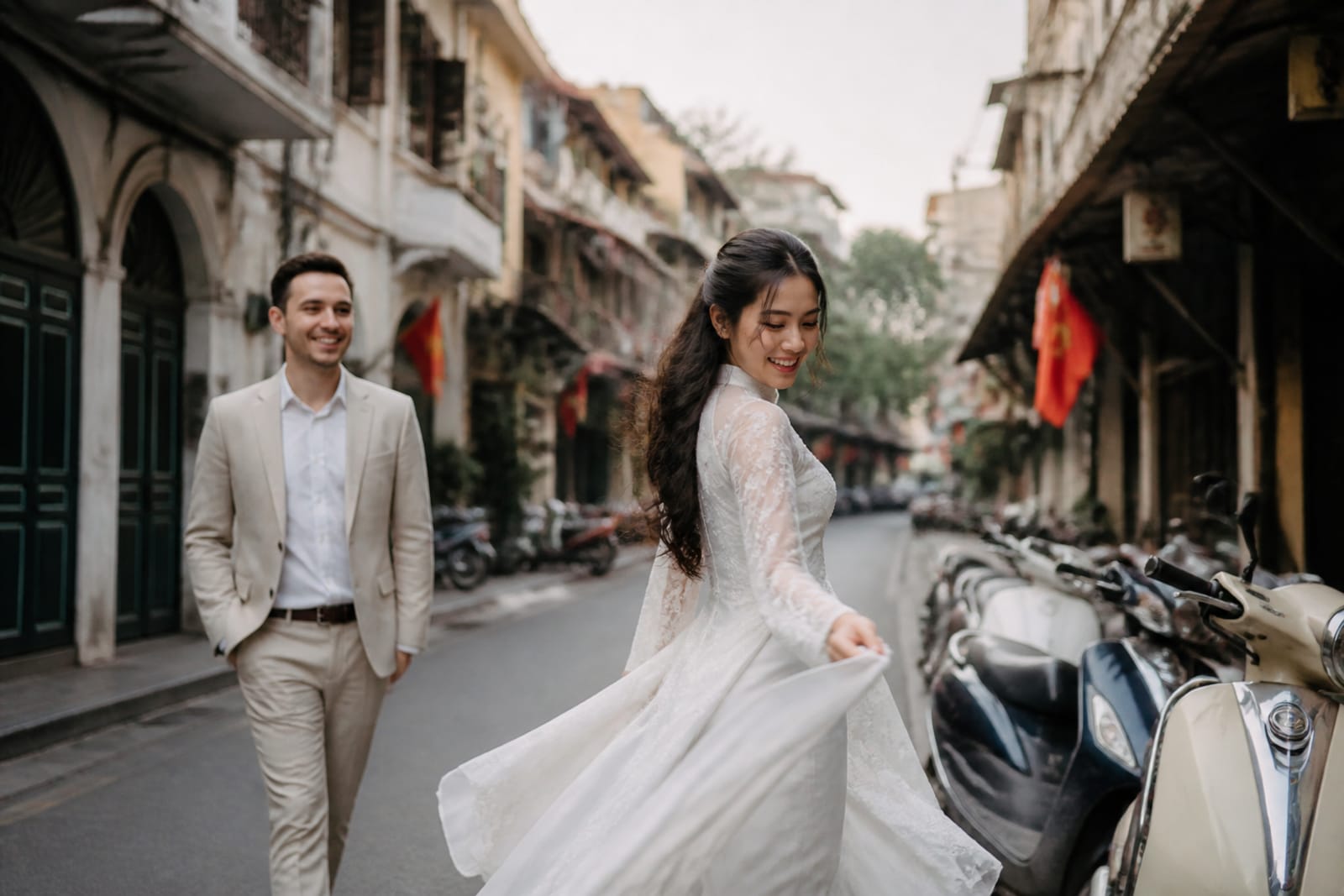
Both work, but ao dai is more practical. The loose, flowing cut tolerates quick outfit changes in cramped alley spaces without wrinkling; the silk catches soft morning light beautifully. Western dresses read well against weathered stone but require more time to refresh (pressing, smoothing) between locations and are harder to move in on narrow, wet streets. If you wear a dress, keep it minimal—fewer layers, shorter train—so you're not struggling through cobblestones.
Is Train Street a guaranteed location for a pre-wedding shoot?
No. Train Street (Phan Dinh Phung Street) is periodically closed by local authorities due to safety concerns. Check with us on WhatsApp 48 hours before your shoot; if closed, we pivot to equally atmospheric alternatives like quieter Hang Gai Street or the French Quarter. Don't build your heart around one location—the best backup shots often surprise you.
FAQ
Is the Hanoi Old Quarter worth a pre-wedding shoot, or should I choose Hoi An instead?
The Old Quarter offers iconic urban drama but demands an Oct–Nov early-morning slot to avoid crowds and grey light. Hoi An delivers similar colonial romance with fewer crowds and is pedestrian-only after 3 p.m., making it a calmer choice if you value smooth pacing and softer constraints. Hoi An requires travel time; Old Quarter saves commuting. Both work; match your tolerance for crowds and weather logistics.
What's the best time of year to shoot pre-wedding photos in Hanoi?
October–November is genuinely optimal—dry, mild temperatures, soft morning light, and manageable crowds if you book early slots. Avoid May–September (35°C+ heat, monsoon, humidity wrecks makeup) and Dec–Feb (grey skies, drizzle, overcast light). March–April is possible but hazy and often drizzly. Tet (late Jan–early Feb) closes services and crowds landmarks; skip it entirely.
How long does an Old Quarter pre-wedding shoot actually take, including travel and outfit changes?
A typical shoot runs 2–3 hours on-location, covering 3–4 locations. Add 30–45 minutes for hotel-based makeup and hair beforehand, plus 20–40 minutes travel time from your hotel depending on traffic. Plan 4–5 hours total for comfort; don't overload with five or more locations unless you're willing to move fast and lose detail.
What happens if it rains during my Old Quarter shoot?
We carry a backup indoor or covered location (colonial café, market shelter, underpass with interesting texture) to keep shooting safely. If rain is heavy and persistent, we'll pivot to that backup or reschedule to the next clear day. Confirm the reschedule policy with us on WhatsApp before booking—some couples prefer a full refund or credit if weather is severe.
Can I wear a Western wedding dress in the Old Quarter, or should I choose ao dai instead?
Both work, but ao dai is more practical. The loose, flowing cut tolerates quick outfit changes in cramped alley spaces without wrinkling; the silk catches soft morning light beautifully. Western dresses read well against weathered stone but require more time to refresh (pressing, smoothing) between locations and are harder to move in on narrow, wet streets. If you wear a dress, keep it minimal—fewer layers, shorter train—so you're not struggling through cobblestones.
Is Train Street a guaranteed location for a pre-wedding shoot?
No. Train Street (Phan Dinh Phung Street) is periodically closed by local authorities due to safety concerns. Check with us on WhatsApp 48 hours before your shoot; if closed, we pivot to equally atmospheric alternatives like quieter Hang Gai Street or the French Quarter. Don't build your heart around one location—the best backup shots often surprise you.
Ao dai, makeup, hair and a local photographer in Hanoi or Saigon — one WhatsApp message.