/pre-wedding-photoshoot
Nho Que River wedding photos: best time of day and light
The Nho Que River's best photography window is 5:30–6:30 am or 4:00–5:30 pm, when side light skims the water and cliffs without harsh shadows. Shoot between February and August for clear skies and stable weather; avoid September–December (typhoon and flood risk, grey skies). The river sits deep in a mountain valley, so morning light arrives later and evening light fades fast—timing precision matters. A local photographer familiar with the water level, access roads and light angle is essential; Cáo Studio does not operate in Ha Giang, so research vetted photographers in Hanoi or Ha Giang who can travel. Budget time for a multi-day trip: the 5-hour drive from Hanoi (each way) means the shoot is part of a larger adventure, not a same-day pop. Know the river's seasonal moods before booking.
The Nho Que River winds through Ha Giang's northern highlands, carving deep limestone gorges that catch golden light for maybe one hour a day. Most travellers find it on Instagram and book a photographer without checking water levels, weather forecasts or how far the access road really is. Soft, directional light transforms a riverside moment from snapshot to cinematic—but only if you time it right and understand what can go wrong.
What is the Nho Que River and why does light matter there?
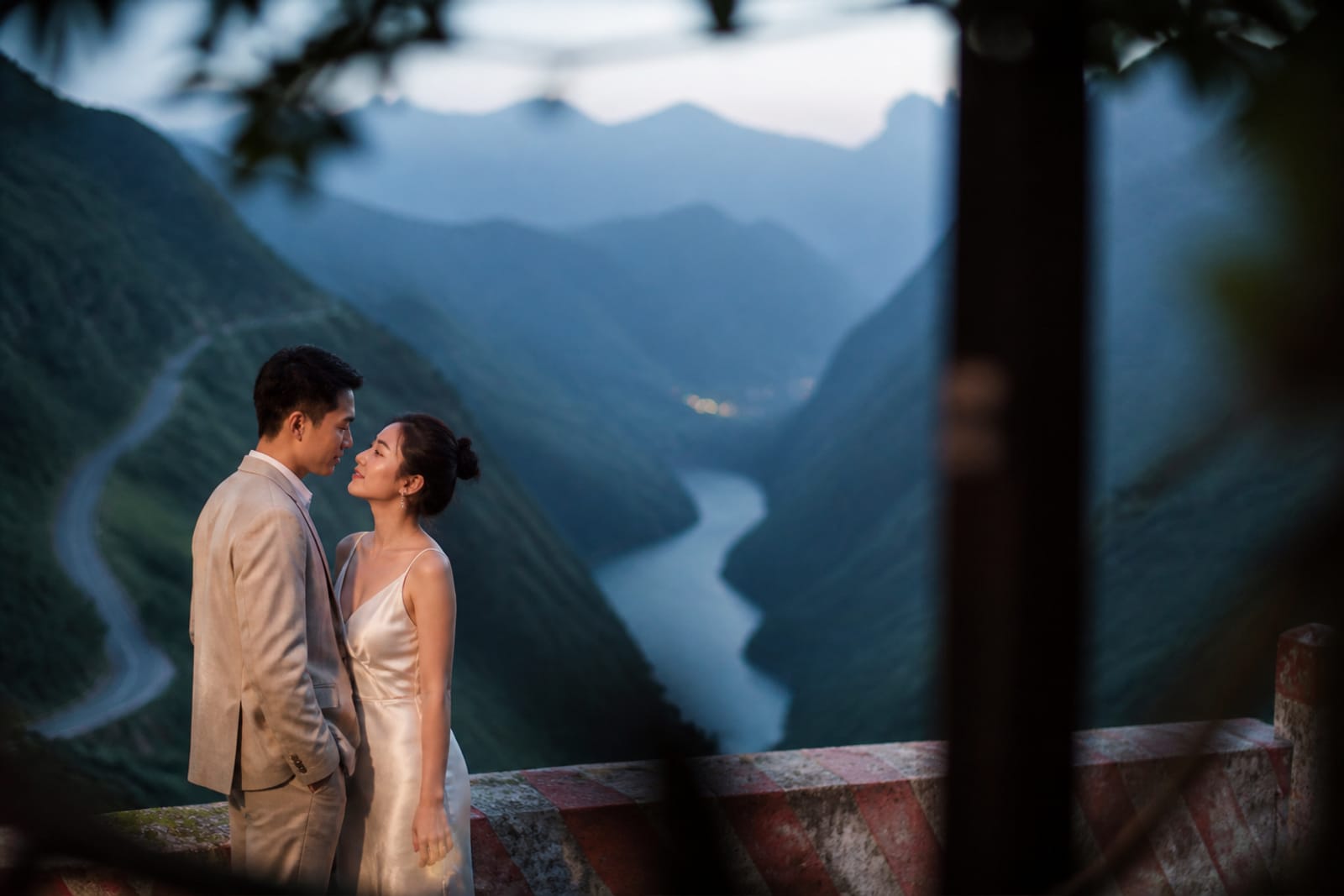
The Nho Que flows between near-vertical limestone walls in Ha Giang Province, creating a natural amphitheatre for light. Water acts as a reflector, so warm morning or evening light bounces off the river's surface and lifts shadow detail on your face and clothing. Midday (10 am–3 pm) sun is harsh and flat—cliffs cast dark shadows across the water, and you'll squint. The river's depth and clarity shift seasonally; dry season water is clearer and more reflective, while wet season floods turn it muddy and unsafe. Access points are limited: most photoshoots happen at viewpoints near Viet Hai village or along the valley road where you can walk close to the water. The river's remoteness means you depend entirely on a photographer who knows the safe spots, the best light angle at each hour, and how water levels change week to week.
What are the best seasons, and why do they differ from other Vietnam destinations?
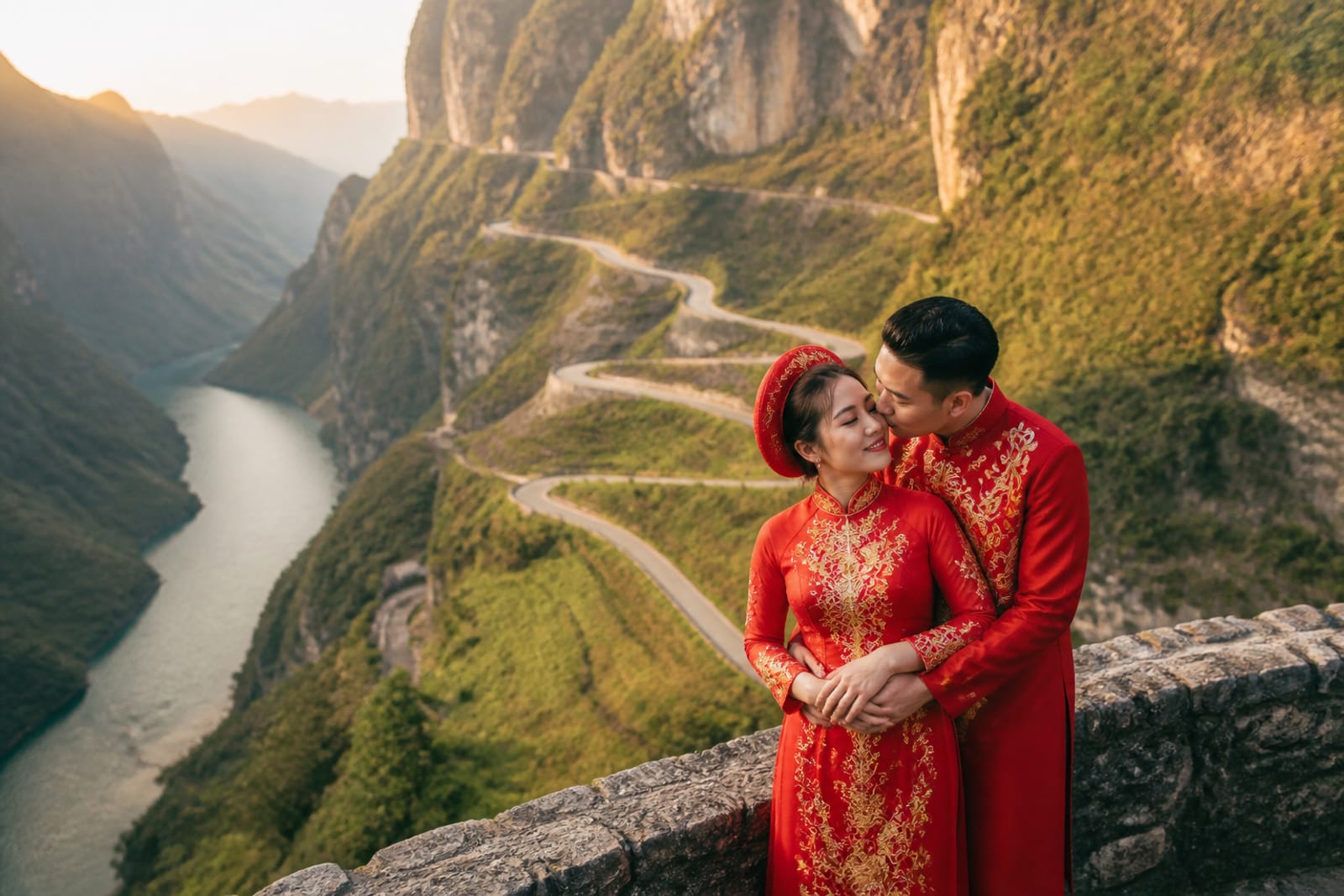
Ha Giang has three distinct photo seasons: dry and cool (December–February), warm and clear (March–August), and wet and risky (September–December). December–February brings chill mornings (5–12°C) and stable light; dawn shoots are cold but rewards are sharp, golden frames and zero rain interruptions. March–August is warm, skies are mostly clear, and water clarity stays good until July. From September onward, monsoon winds and rains intensify; October–November is typhoon season with unpredictable flooding and grey cloud cover that erases directional light. Local farmers plant buckwheat in late September–October (white flowers, dramatic in photos), but weather risk often outweighs the visual gain. For a pre-wedding shoot on the Nho Que, February–August (especially March–May and July–August) offer the most predictable light and safest access. Check the 7-day forecast and ask your photographer about river levels before committing.
What time of day gives the best light, and how does it change by season?
The Nho Que's position in a deep valley means direct sun doesn't touch the water until 6:00–6:30 am and leaves by 5:00–5:30 pm; outside those windows, cliffs block or scatter light unevenly. In March–May, sunrise is near 6:00 am and golden light lasts 30–40 minutes; by August, sunrise shifts to 5:30 am but morning fog can linger until 6:30 am. Afternoon light is richer in May–July (warm, low-angle rays) than in February (steeper, bluer). Midday is never useful—water glare, hard shadows, and your eyes half-closed from brightness. Plan to start shooting 15 minutes before the light turns golden, shoot for 40–50 minutes at peak, then finish before shadows swallow the river. Professional photographers scout the exact location and light angle days before to confirm the timing for your session date. This precision is why a local or Ha Giang-based team outperforms someone guessing from Google Maps.
| Scenario | Best for | Light quality | Crowd & access | Why it works or fails |
|---|---|---|---|---|
| February–May dawn | Couples who wake early; soft, romantic mood | Golden, directional, flattering | Solitary; roads clear | Shortest window (30 min); cold; best frame-to-shutter ratio |
| July–August afternoon | Travellers avoiding 5 am starts; warm tone | Warm orange, side-lit; some haze | Few tourists; afternoon clouds possible | Longer window (50 min); risk of cloud at 4:30 pm |
| June midday (2–3 pm) | Not recommended | Harsh, flat, glare | Busier | Shadows darken water; you squint; frames unusable |
| September–November | Risky for schedules; buckwheat flowers | Unpredictable; grey or bright flashes | Weather closures possible | Flood risk; light blocked by cloud cover 70% of sessions |
How do you hire a photographer, and what should you verify before booking?
Cáo Studio operates in Hanoi, Ho Chi Minh City and Hoi An; we do not shoot in Ha Giang. If you're set on the Nho Que, find a photographer through: (1) asking your hotel or tour operator for trusted local contacts; (2) checking portfolios on Instagram and asking which exact dates and light times they used; (3) verifying they've shot there in the season you're visiting (not just once in good weather). Ask them: Do you know the river's current water level and access road condition? Have you shot there in [your month]? What backup spot do you use if weather blocks the main river view? How long is the drive from your accommodation? Do you charge a travel fee, and is that factored into the session cost? A photographer who can answer precisely—"We'll shoot at Viet Hai at 5:45 am on the eastern bank; if rain is forecast, we move to Meo Vac viewpoint"—is ready. One who says, "We'll figure it out when you arrive," is not. Cost factors include travel (long distance), the photographer's experience level, number of outfits, and editing timeline; confirm these matter before asking price. Read their reviews and ask to see unedited proofs, not just polished Instagram highlights.
💄 Makeup & hair at your hotel | 👰 Pre-wedding & elopement photoshoots | 🌸 See the lookbook
What should you bring, and what can go wrong?
Bring layers (mornings are 8–12°C even in May), a waterproof bag for your outfit (dust and mud on valley roads), and waterproof shoes if you're walking close to the river. Formal dress (ao dai, wedding gown, suit) needs a garment bag; humidity and river spray damage delicate fabrics. Makeup should be waterproof or reapplied after the drive (5 hours in a car, morning chill and river moisture degrade foundation). Common mistakes: arriving without checking the river's water level (low water in dry months can limit reflections); shooting midday out of impatience (frames are unusable); booking a photographer who's never scouted the location (they guess timing and waste your light window); underestimating how cold mornings are (you shiver, frames show tension). Rain can close the river road without warning in wet season; talk to your photographer about a rain date or backup plan before you commit. If you're combining the Nho Que with other Ha Giang sights (Hoang Su Phi rice, Khau Vai market), a multi-day itinerary with an overnight stay near the river makes sense—you'll avoid the brutal 5-hour return drive the same day.
How do you prepare clothing, makeup and hair for this location?
Ao dai is traditional and photographs beautifully against the limestone; silk catches light, and the silhouette complements the river's vertical lines. If wearing Western bridal dress, choose lightweight fabric (humidity, humidity, humidity) and avoid heavy trains (mud on valley roads). Makeup: waterproof base, matte finish (river glare and humidity kill shine), and warm tones (golden and orange light is unflattering with cool pinks and silvers). Ask your photographer if they work with a makeup artist; if not, confirm they've shot outdoor lighting before and can advise on color. Hair: avoid heavy product (sweat and river moisture undo curls); a loose braid or half-up style moves naturally and photographs softer than stiff updos. Shoes matter—you may walk over uneven ground and river rocks; formal shoes often slip on wet stone. If the river is part of a larger couple photoshoot across Ha Giang, coordinate wardrobe changes with driving time; each outfit swap costs 20–30 minutes.
📸 Book on WhatsApp — pre-wedding photoshoots | 💍 Proposal & anniversary packages
---
What to check before you book
- Photographer's portfolio: Do their Nho Que photos look crisp, warm-lit, and taken at golden hour? Or soft-focused and midday-flat?
- Season and water level: Ask them about this month's conditions. Are they optimistic or honest about weather risk?
- Scout confirmation: Have they visited the exact location in your season, or are they planning to figure it out on the day?
- Travel cost and timeline: What's included, and how long is the drive? Does it affect your total itinerary?
- Backup plan: If weather closes the river, what's Plan B? A photographer with named alternatives (Tay Con viewpoint, etc.) is organized.
- Editing time: How long until you see photos? Remote locations often mean longer turnaround.
- Outfit and makeup coordination: Do they work solo, or with a team? If solo, can they direct you and manage hair/makeup between takes?
For a pre-wedding photoshoot that includes the Nho Que as one location within a Hanoi-based itinerary, you might combine it with studio portraits or other northern Vietnam sights; this spreads cost and reduces pressure on a single shoot day. Discuss multi-day options with your photographer.
🌸 See pre-wedding photoshoots | 🎬 Wedding & pre-wedding video
FAQ
Does Cáo Studio shoot at the Nho Que River?
No. Cáo Studio operates in Hanoi, Ho Chi Minh City and Hoi An. We recommend hiring a local Ha Giang photographer familiar with river levels and morning light. Ask on WhatsApp if you'd like referrals to vetted contacts.
What is the absolute best time of day to photograph the Nho Que?
5:45–6:30 am (winter/spring) or 4:15–5:00 pm (summer). Golden light skims the water and cliffs; the window lasts 30–50 minutes. Midday is unusable.
Can I shoot the Nho Que in the rainy season?
Not recommended. September–December brings typhoon risk, flooding, grey skies and unpredictable water levels. Stick to February–August.
How far is the Nho Que from Hanoi, and can I do it as a day trip?
5 hours by car each way. A same-day trip leaves zero buffer for scouting, weather delays or outfit changes. Book a 2–3 day Ha Giang tour if the Nho Que is your focus.
Should I hire a photographer who's never been to the Nho Que before?
No. Ask for proof they've shot there in your season. A photographer scouting for the first time on your shoot day will waste your light window.
What color ao dai or dress works best on the Nho Que?
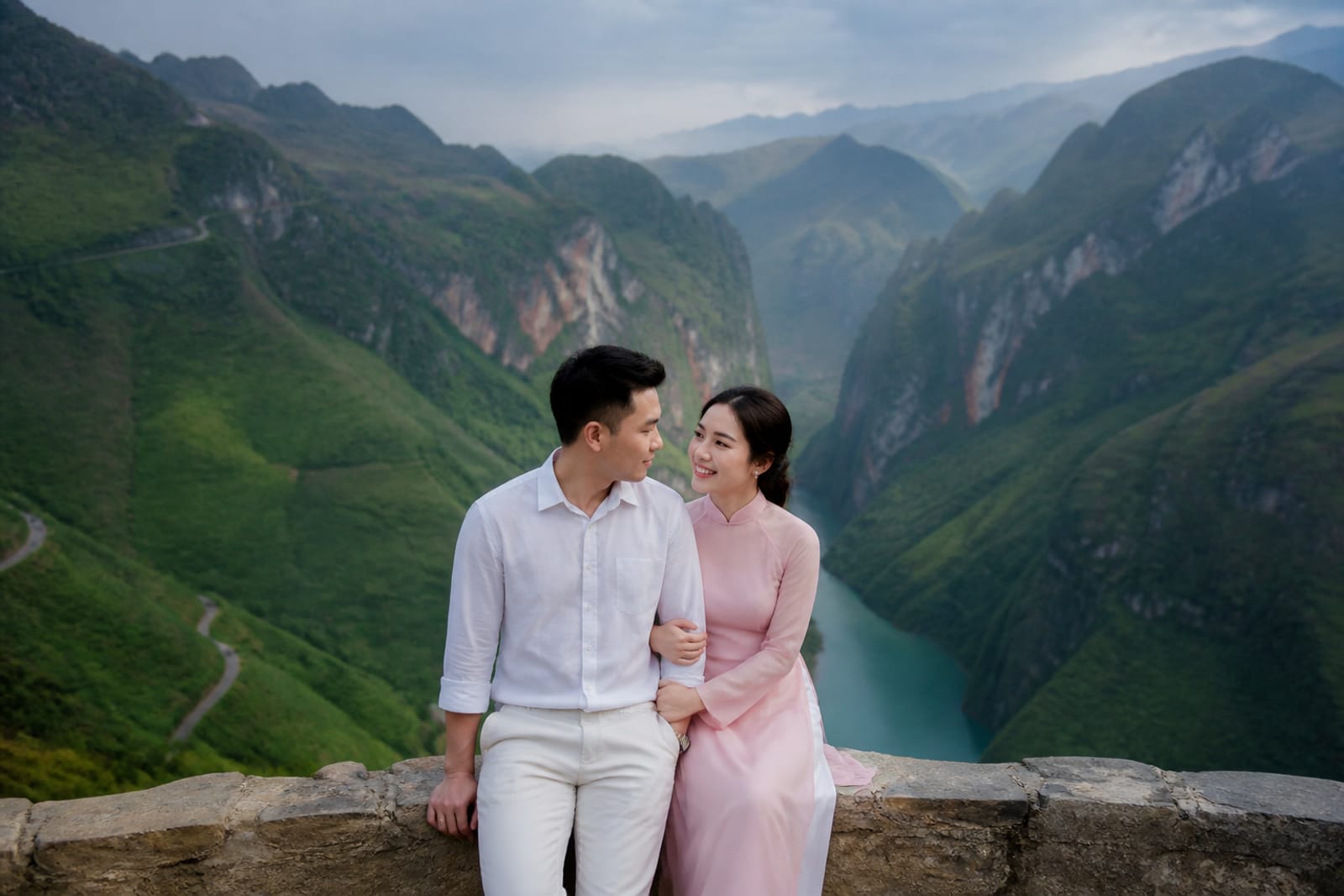
Jewel tones (emerald, sapphire, burgundy) pop against limestone; white reads clean but can overexpose in morning light. Avoid pastels—they wash out in golden hour. Ask your photographer what they've seen work.
If it rains on shoot day, can we reschedule?
Yes, but confirm a rain date and backup location before you book. Remote locations have limited windows; plan flexibility into your trip.
Do I need a permit to photograph at the Nho Que?
Check locally or ask your photographer. Access rules and commercial shoot permits can change; a local guide will know current restrictions.
FAQ
Does Cáo Studio shoot at the Nho Que River?
No. Cáo Studio operates in Hanoi, Ho Chi Minh City and Hoi An. We recommend hiring a local Ha Giang photographer familiar with river levels and morning light. Ask on WhatsApp if you'd like referrals to vetted contacts.
What is the absolute best time of day to photograph the Nho Que?
5:45–6:30 am (winter/spring) or 4:15–5:00 pm (summer). Golden light skims the water and cliffs; the window lasts 30–50 minutes. Midday is unusable.
Can I shoot the Nho Que in the rainy season?
Not recommended. September–December brings typhoon risk, flooding, grey skies and unpredictable water levels. Stick to February–August.
How far is the Nho Que from Hanoi, and can I do it as a day trip?
5 hours by car each way. A same-day trip leaves zero buffer for scouting, weather delays or outfit changes. Book a 2–3 day Ha Giang tour if the Nho Que is your focus.
Should I hire a photographer who's never been to the Nho Que before?
No. Ask for proof they've shot there in your season. A photographer scouting for the first time on your shoot day will waste your light window.
What color ao dai or dress works best on the Nho Que?
Jewel tones (emerald, sapphire, burgundy) pop against limestone; white reads clean but can overexpose in morning light. Avoid pastels—they wash out in golden hour. Ask your photographer what they've seen work.
If it rains on shoot day, can we reschedule?
Yes, but confirm a rain date and backup location before you book. Remote locations have limited windows; plan flexibility into your trip.
Do I need a permit to photograph at the Nho Que?
Check locally or ask your photographer. Access rules and commercial shoot permits can change; a local guide will know current restrictions.
Ao dai, makeup, hair and a local photographer in Hanoi or Saigon — one WhatsApp message.