/pre-wedding-photoshoot
One-day pre-wedding photoshoot itinerary in Da Nang
A one-day pre-wedding photoshoot itinerary in Da Nang chains together morning coastal shots (My Khe beach at first light), midday ao dai portraits in shaded temples or colonial architecture, and late-afternoon urban details—typically 6–8 hours with outfit changes and a lunch break. Da Nang's dry season (Feb–Aug) offers stable light and calm seas; avoid Sep–Dec (typhoon risk, grey skies, afternoon downpours). Cáo Studio – Makeup & Photoshoot does not operate in Da Nang, but this guide helps you plan the route, choose timing, and vet a local photographer. Book a guide or coordinate a photographer familiar with permit and tide logistics before arrival; start at My Khe before 6:30 a.m., move indoors by 11 a.m., and end with city golden-hour shots around 5 p.m. --- A one-day pre-wedding shoot packs location, outfit, and light discipline into a single push. Da Nang's geography—beach, French colonial quarters, Buddhist temples, and modern districts—offers variety but requires timing precision. Sunrise and late afternoon are your only soft-light windows; midday forces shade or indoors. Most couples hire a photographer (local or traveling) and coordinate a small team (makeup artist, outfit handler, videographer optional). The rhythm works because you start where light is strongest (east-facing beach), rest and change during peak sun (11 a.m.–3 p.m.), and finish on the opposite side of the city when the sun swings west. 📸 Book on WhatsApp — ao dai photoshoot | 💄 Makeup & hair at your hotel | 🌸 See the lookbook
Why does timing matter more than location in a one-day shoot?
Light quality, not scenery, determines image sharpness and mood. Da Nang's dry season (Feb–Aug) gives you predictable sun angles: east at dawn, directly overhead by 10 a.m., and west by 5 p.m. Clouds vanish by 7 a.m. in Feb–May, but May–Aug afternoons can haze over. The beach at sunrise (5:45–6:30 a.m.) delivers backlit glow and calm water; midday (11 a.m.–3 p.m.) is unusable—harsh shadows, squinting, washed-out skin tones. Late afternoon (4:30–6 p.m.) brings warm, directional light ideal for fabric texture (ao dai silk, suit detail). Tides matter: high tide fills My Khe with color, low tide exposes sand flats. Check the tide calendar before booking and schedule your beach slot accordingly. A photographer who knows Da Nang can pre-scout and meter light, saving you 1–2 hours of on-site fumbling.
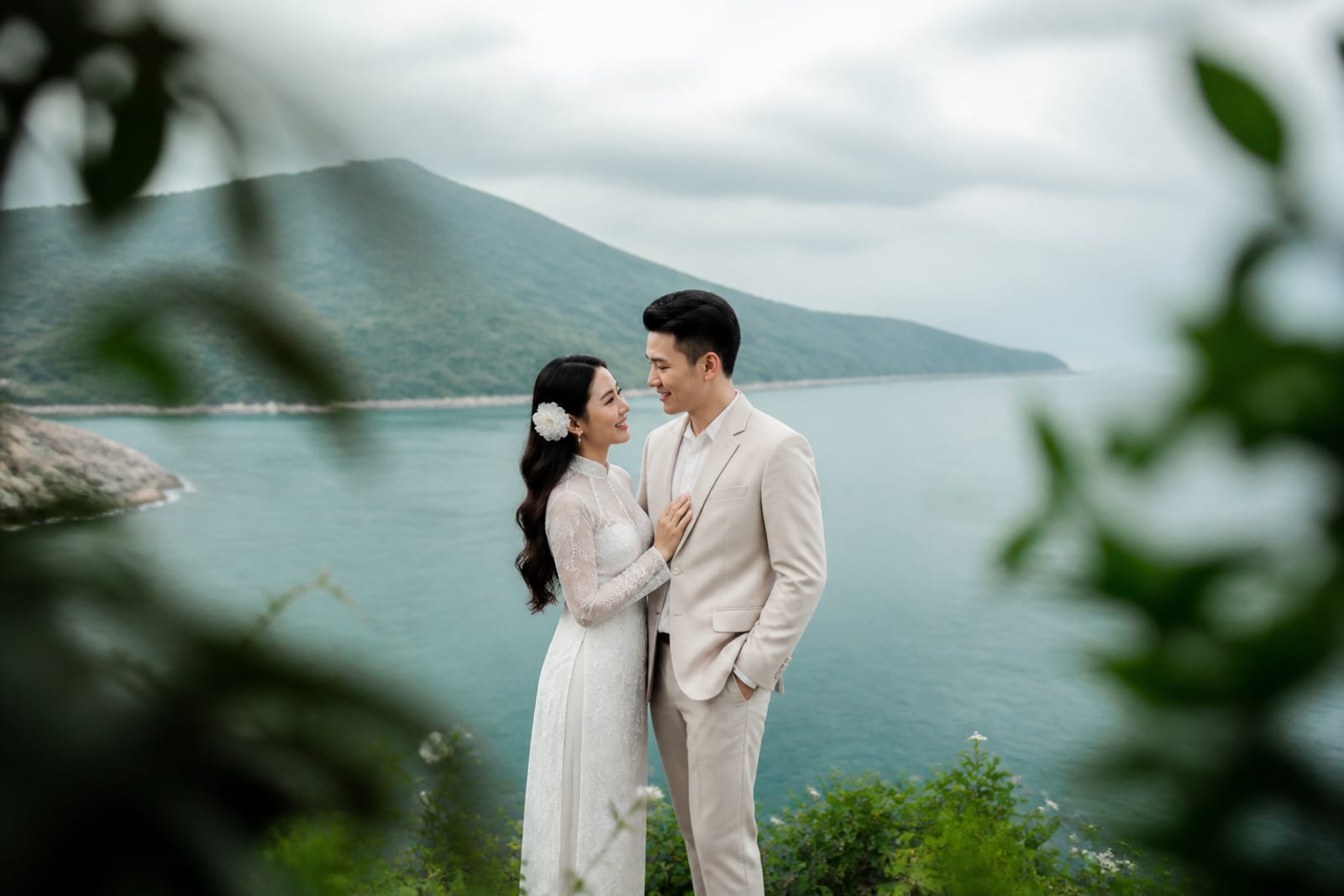
What itinerary paces six to eight hours without rushing outfits?
Structure your day around outfit transitions and location commute time. Start at your hotel (5:15 a.m.) for makeup and Western attire (dress, suit, lightweight jacket for early warmth). Depart for My Khe by 5:45 a.m.; shoot 6:00–7:30 a.m. (30–45 min travel + setup, 45 min shooting). Return to hotel or a nearby changing room by 8:30 a.m.; apply touch-up makeup and change into ao dai (30 min). Drive to a temple (e.g., Linh Ung Bai But pagoda on Ngu Hanh Son, or Thap Nhan temple in the city center) by 9:15 a.m.; shoot 9:30–11:00 a.m. in shaded courtyards or upper pavilions (30 min travel, 90 min shooting). Lunch and rest at a café or hotel room (11:00 a.m.–1:30 p.m.). Change into casual evening wear (jeans, linen shirt, or second ao dai variant) by 2:00 p.m. Shoot urban details—colonial doorways, market alley color, riverside—2:30–4:30 p.m. (60 min travel + location hopping, 90 min shooting). Golden-hour finale on a high building, bridge, or park overlook 4:45–6:00 p.m. (15 min travel, 45 min shooting). This rhythm gives 240 minutes of active shooting across four locations, with built-in buffer for traffic, setup, and outfit comfort.
| Segment | Light Quality | Best Time | Outfit | Location | Why It Works |
|---|---|---|---|---|---|
| Sunrise Beach | Backlit, golden, soft | 6:00–7:30 a.m. | Lightweight Western (dress/suit, no heavy fabric) | My Khe east-facing | Water calm, glow bounces off sand and fabric |
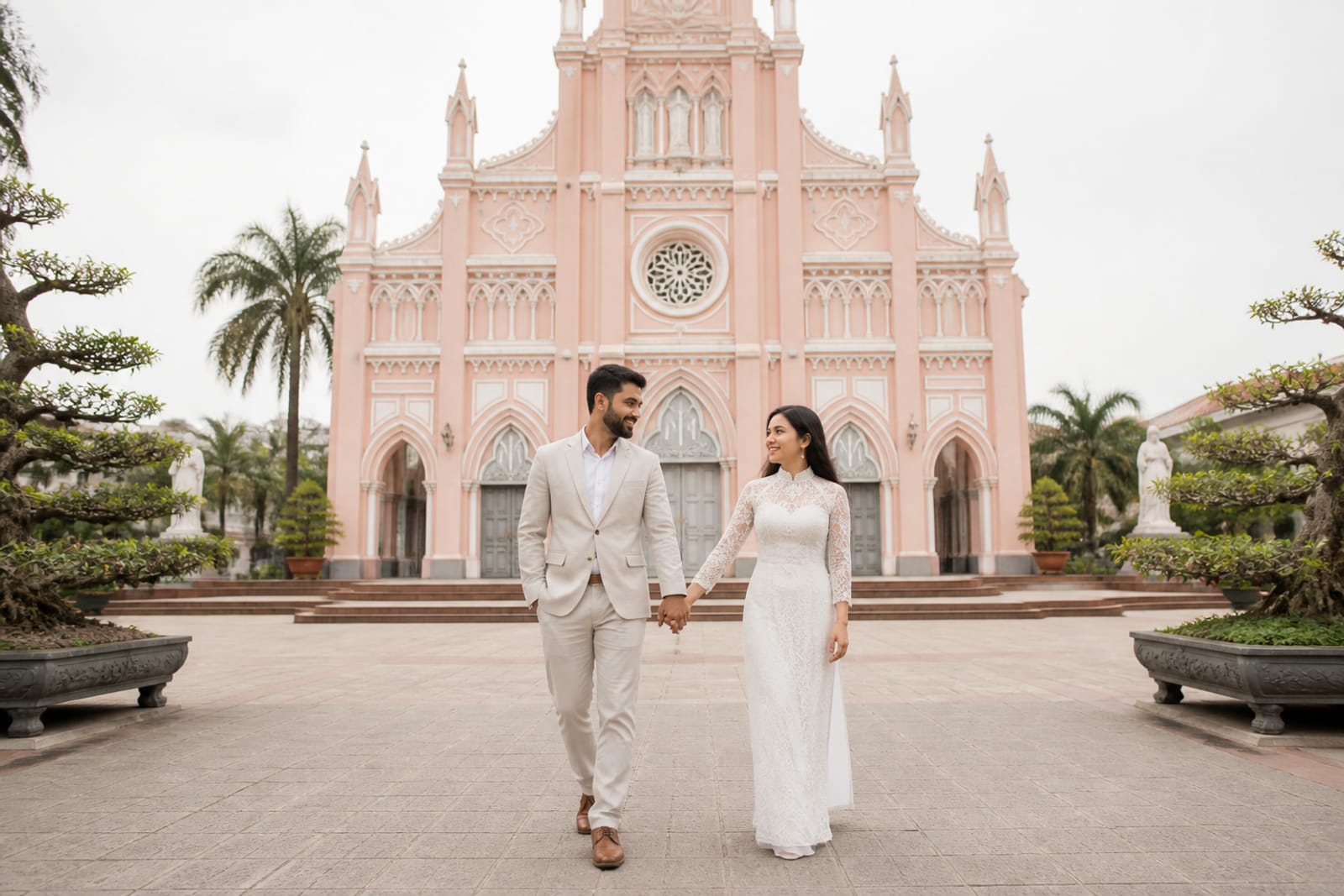
| Temple/Architecture | Shaded, cool, diffuse | 9:30–11:00 a.m. | Ao dai (heavy silk reads in shadow) | Ngu Hanh Son or central temple | Avoids midday heat, colors pop against stone |
| Lunch Break | N/A | 11:30 a.m.–1:30 p.m. | Dress down, eat | Air-conditioned café or hotel | Recharge, touch-up makeup, plan final push |
| Urban/Casual | Warm, directional, skimmable | 2:30–4:30 p.m. | Jeans, linen, casual ao dai | Alleys, colonial quarter, riverside | Softer light than midday, intimate feel, fewer tourists |
| Golden Hour | Warm, long shadows, high contrast | 4:45–6:00 p.m. | Final outfit (dress/suit or ao dai) | Elevated viewpoint, bridge, park | West-facing sun creates drama, silhouettes, texture |
Should you book a one-day shoot or split across two days?
One day works if you prioritize three distinct locations and accept tighter sequencing; two days let you rest, scout, and linger in each space. A one-day shoot suits couples on tight travel schedules, those confident in outfit changes, and pairs comfortable with minimal downtime between segments. Two-day shoots (often called "pre-wedding" by local studios) give you morning beach on Day 1, overnight rest, then Day 2 temples and evening shots—less rushing, more variety, better wardrobe recovery. Cost factors differ: one-day sessions may charge less (shorter photographer hours, one location set-up) but demand faster team coordination; two-day bookings often cost more but include double the location time and more outfit options. If you're unsure, ask a photographer on WhatsApp: "Can you cover My Khe, a temple, and urban shots in eight hours, or should we split across two days?" A photographer familiar with Da Nang logistics will advise based on your outfit count and energy level. For couples shooting an ao dai photoshoot as the centerpiece, one day often suffices if you anchor temple time and pair it with a casual Western start and end.
How do you choose between a local photographer, a traveling studio, or a hybrid model?
Local Da Nang photographer: knows tides, temple opening hours, parking, and seasonal weather intimately; often cheaper; may lack international portfolio polish or backup gear. Vet by portfolio (30+ pre-wedding samples), WhatsApp communication speed, and a trial call to discuss your vision—poor English or vague answers flag coordination risk.
Traveling studio (e.g., Cáo Studio – Makeup & Photoshoot based in Hanoi or Ho Chi Minh City): brings consistent editing, high-end gear, and a cohesive team (makeup, videographer, albums) but must travel and charges accordingly; limited local scouting time. Best if you value uniform branding and prefer a studio with track record across Vietnam.
Hybrid: hire Cáo Studio or another traveling team for main shooting, and a local makeup artist (Da Nang-based) who understands tropical skin and humidity, or a local scout who meets you 2 days prior to finalize locations and timing.
| Model | Pros | Cons | Best For |
|---|---|---|---|
| Local Photographer | Knows tide/permit/weather, cheaper, accessible | Uneven portfolio, communication gaps, no backup team | Budget-conscious, simple day-of logistics |
| Traveling Studio | Consistent quality, full team (makeup/video/album), portfolio proof | Travel fees, limited pre-shoot scouting, less local intel | International couples, high-volume editing, multi-location coverage |
| Hybrid (Studio + Local MUA/Scout) | Best light expertise + local logistic speed | Coordination overhead, two invoices | Couples wanting quality + local knowledge + premium finish |
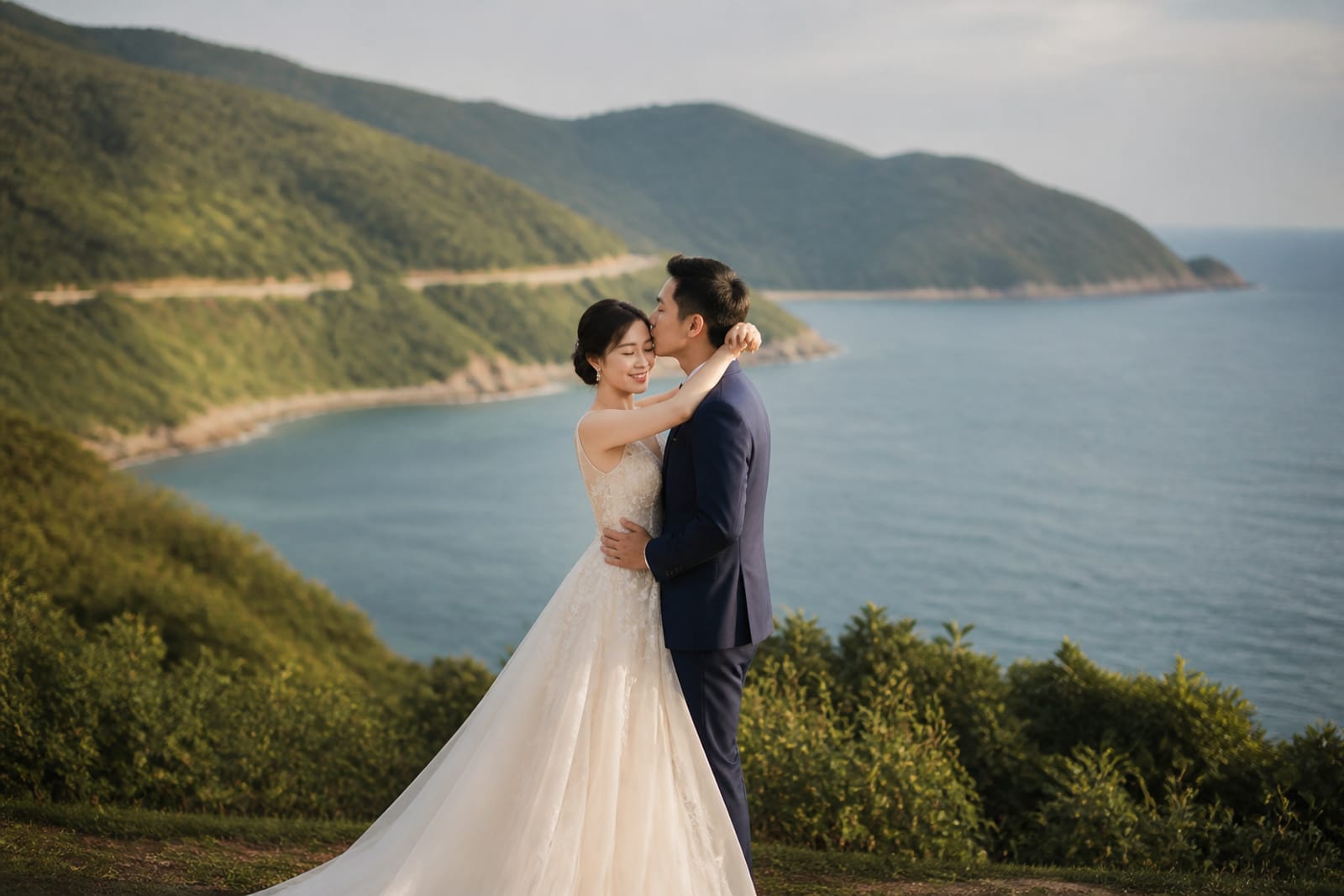
What climate and season factors shift your itinerary month to month?
Feb–May: coolest, driest. Sunrise is comfortable (18–22°C). Humidity rises mid-May. Tides predictable, seas calm. Best overall window—book early.
Jun–Aug: hottest (32–36°C), still dry. Sunrise brings relief; midday unbearable. Afternoon haze thickens, reducing visibility for long shots. ao dai silk wilts; bring antistatic spray. Sunset delayed by heat shimmer.
Sep–Dec: rainy, typhoon season. Avoid Oct–Nov (worst storms). Sep and Dec have shorter dry windows; plan flexibility. Morning clouds linger until 8–9 a.m. Afternoon downpours common (2–4 p.m.); reschedule or seek covered backdrops (arcades, interior courtyards).
Tet (late Jan–mid Feb): many temples close for 3–5 days. Permits may delay. Book 2+ months ahead.
Da Nang's central-coast climate means your one-day itinerary is most reliable Feb–May; Jun–Aug works if you embrace early starts and skip midday; Sep–Dec requires contingency plans (indoor venues, rescheduling buffer) and constant rain checks. Communicate with your photographer: "If Thursday morning has 30% rain, can we move beach to Friday or pivot indoors?" A savvy team will have backup locations already scouted.
💄 Makeup & hair at your hotel | Book now | See our lookbook
How do you prepare the day before to avoid logistics failure?
Outfit Check: Try on all pieces (dress/suit/ao dai/casual set) and confirm fit after travel. Pack wrinkle release, stain stick, and safety pins. If wearing ao dai, confirm it was fitted to your 2026 measurements—rentals from ao dai rental or tailors should be collected 2–3 days prior, not the morning-of.
Confirm with Your Photographer: Send WhatsApp message with final weather forecast, tide time, hotel address, and start time (e.g., "5:15 a.m. pickup"). Ask: "Will you bring backup lighting for temple interiors?" and "Which entrance do we use at Linh Ung pagoda?" Vague replies mean re-confirm by phone.
Scout or Brief on Locations: If you haven't visited Da Nang before, your photographer should share 2–3 reference photos per location (My Khe angle, temple corner, riverside spot) so you envision poses. If hiring a local couple photoshoot team, request they visit the temple the day before to confirm opening hours and light angles—many temples close noon–2 p.m. for prayers.
Hair & Makeup Logistics: Book a local makeup artist or coordinate with your hotel concierge for same-day service 4:30–5:15 a.m. Confirm they're ready for quick touch-ups between locations (temples charge entry but often allow makeup refreshment in bathrooms). Bring blotting powder, lip tint, and setting spray in your shoot bag.
Transport & Timing: Arrange a driver or book a private car service; rideshare may not arrive at 5:30 a.m. Build 20-min buffers between locations (traffic, parking, outfit handoff). Test your phone's navigation the night before.
---
What to check before you book
- Photographer's da nang portfolio: ≥10 pre-wedding samples from Feb–Aug (dry season) showing clear morning and golden-hour light. Ask when each shot was taken; old or Saigon-only samples don't prove Da Nang expertise.
- Outfit-change logistics: Confirm if your photographer provides a changing room or expects you to use hotel/paid studio space. Clarify who handles fabric (hem, dust) between shots.
- Backup weather plan: Does the photographer have covered-location alternatives if rain hits? If you reschedule due to typhoon warning, is there a fee or credit? Get this in writing on WhatsApp.
- Makeup touch-up included: If not, book a local artist separately. Tropical humidity melts makeup; reapply between segments or budget for artist on standby.
- Timeline responsibility: Who owns the schedule—you or the photographer? Confirm if the itinerary is pre-locked or flexible if light/mood/crowds shift mid-shoot.
- File delivery: Ask exactly when and in what format (digital files, prints, album). For Cáo Studio or other studios, clarify on WhatsApp; timings vary by package.
- Costs and payment schedule: Costs depend on outfit count, location travel, crew size, and editing scope—never quoted here. Request a quote via WhatsApp; standard terms are 30–50% deposit on booking, balance on delivery.
---
For couples based in Hanoi or Ho Chi Minh City traveling to Da Nang, consider whether you'd prefer to book a traveling studio (Cáo Studio operates from Hanoi and Saigon and can travel to Da Nang; ask on WhatsApp for availability and travel dates) or hire a local team and manage the coordination yourself. Both paths work—choose based on budget, timeline, and how much logistics stress you want to handle. Your one-day itinerary succeeds when the photographer knows Da Nang's light rhythm, your team moves without drama, and you stay hydrated and confident through five outfit changes. Start planning 2–3 months ahead to secure dates, scout locations, and finalize timings.
FAQ
Can I shoot a one-day pre-wedding in Da Nang without an ao dai?
Yes. Many couples use Western wear only (dress, suit, casual linen). Ao dai adds cultural texture and a portfolio statement, but it's not required. Choose based on your comfort and vision—a good photographer adapts to your wardrobe, not the reverse.
What's the cheapest way to do a one-day pre-wedding shoot in Da Nang?
Hire a local photographer (Da Nang-based); costs are typically lower than flying a traveling studio from Hanoi or Saigon. Vet portfolios carefully and ask for referrals from hotels or local tour companies. Avoid ultra-budget rates (under 50% of market average)—they often mean no editing or backup gear.
Do I need permits to shoot at Da Nang temples and beaches?
No permit is required for My Khe beach. Most temples allow private photo sessions free or with a small donation (confirm entry status the day before with your photographer). Never shoot without asking a temple staff member first—some restrict photography in prayer areas. Your photographer should know temple protocols.
How many outfits should I bring for a one-day shoot?
Three to four is ideal: Western (beach), ao dai (temple), casual evening wear, optional finale outfit (dress/suit). More means slower changes and missed light windows; fewer limits variety. Coordinate outfit count with your photographer when booking.
What if it rains during my one-day shoot?
Sep–Dec rain is common; have a backup indoor plan (colonial interiors, market covered sections, hotel lobbies). Feb–Aug rain is rare but possible. Confirm with your photographer: "What's your rain protocol?" A prepared team pivots without losing momentum; an unprepared one loses 2–3 hours rescheduling.
Should I fly a makeup artist to Da Nang or hire locally?
Hire locally if you trust reviews (ask your hotel for referrals, check Instagram portfolios). Traveling a makeup artist costs flight + accommodation and only pays if you're booking a full wedding photographer package. For one-day pre-wedding, a skilled local makeup artist is faster (knows humidity, local lighting) and cheaper.
FAQ
Can I shoot a one-day pre-wedding in Da Nang without an ao dai?
Yes. Many couples use Western wear only (dress, suit, casual linen). Ao dai adds cultural texture and a portfolio statement, but it's not required. Choose based on your comfort and vision—a good photographer adapts to your wardrobe, not the reverse.
What's the cheapest way to do a one-day pre-wedding shoot in Da Nang?
Hire a local photographer (Da Nang-based); costs are typically lower than flying a traveling studio from Hanoi or Saigon. Vet portfolios carefully and ask for referrals from hotels or local tour companies. Avoid ultra-budget rates (under 50% of market average)—they often mean no editing or backup gear.
Do I need permits to shoot at Da Nang temples and beaches?
No permit is required for My Khe beach. Most temples allow private photo sessions free or with a small donation (confirm entry status the day before with your photographer). Never shoot without asking a temple staff member first—some restrict photography in prayer areas. Your photographer should know temple protocols.
How many outfits should I bring for a one-day shoot?
Three to four is ideal: Western (beach), ao dai (temple), casual evening wear, optional finale outfit (dress/suit). More means slower changes and missed light windows; fewer limits variety. Coordinate outfit count with your photographer when booking.
What if it rains during my one-day shoot?
Sep–Dec rain is common; have a backup indoor plan (colonial interiors, market covered sections, hotel lobbies). Feb–Aug rain is rare but possible. Confirm with your photographer: "What's your rain protocol?" A prepared team pivots without losing momentum; an unprepared one loses 2–3 hours rescheduling.
Should I fly a makeup artist to Da Nang or hire locally?
Hire locally if you trust reviews (ask your hotel for referrals, check Instagram portfolios). Traveling a makeup artist costs flight + accommodation and only pays if you're booking a full [wedding photographer](/wedding-photographer) package. For one-day pre-wedding, a skilled local makeup artist is faster (knows humidity, local lighting) and cheaper.
Ao dai, makeup, hair and a local photographer in Hanoi or Saigon — one WhatsApp message.