/pre-wedding-photoshoot
Photography rules at Fansipan summit: permits, drones and what to chec
Fansipan summit sits at 3,143 meters; you reach it by cable car (the only public way up). Shooting there requires awareness of permit rules (ask your local guide about current photography permits—regulations shift), a tight weather window (sunrise to 8 a.m., then fog rolls in), and outfit planning (wind is fierce, fabrics tear if not fitted right). Pre-wedding shoots here work best in Mar–May or Sep–Nov; winter is cold and foggy, summer is rainy. You'll need 6–8 hours for transport, cable car, shoot and descent. Cáo Studio does not operate at Fansipan, but our pre-wedding photoshoot) team can advise on Hanoi-based timing and connect you with vetted local photographers who know summit logistics.
Why does Fansipan summit attract photographers despite the difficulty?
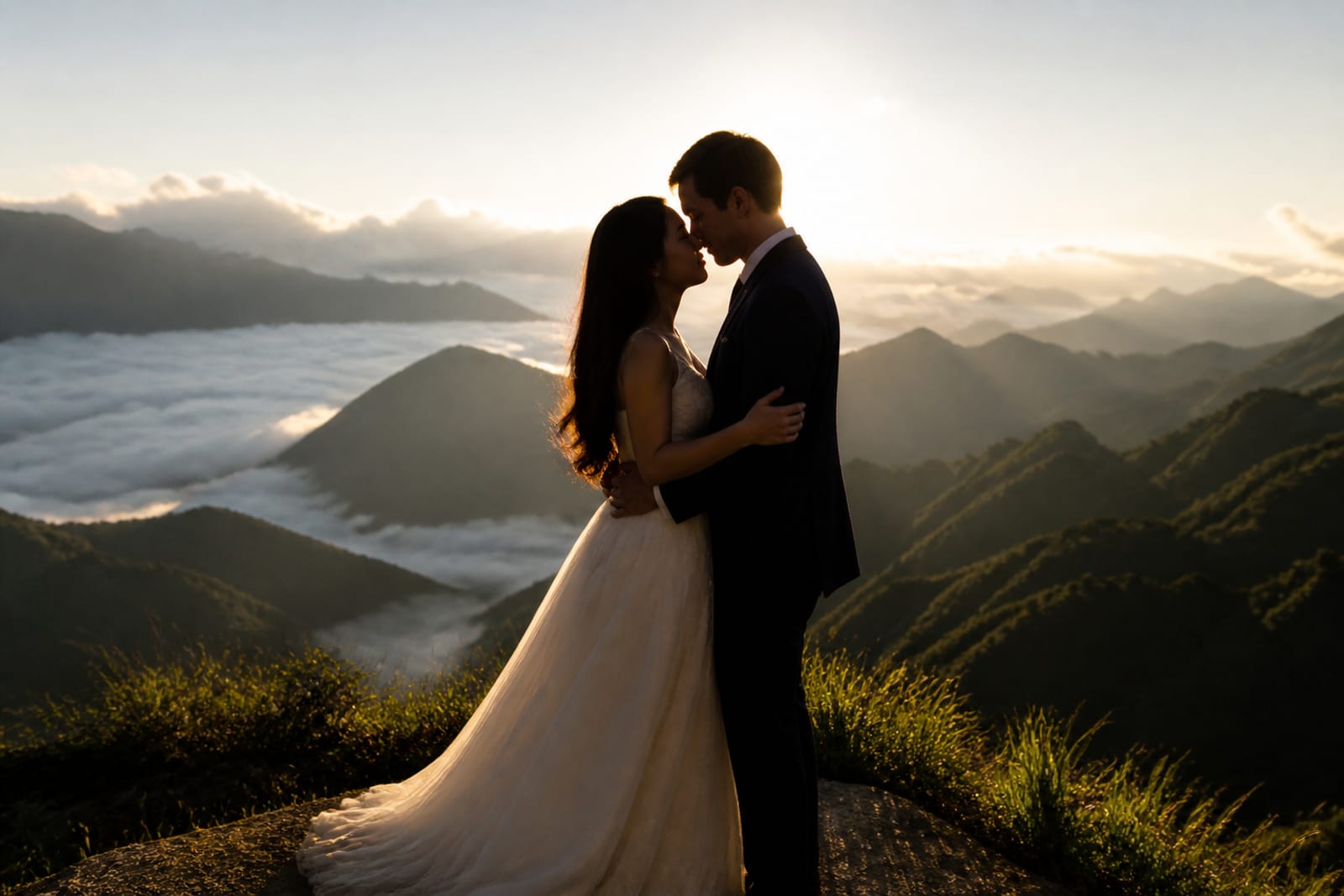
Fansipan delivers what few Vietnam peaks offer: bare alpine stone, a 360-degree horizon, and light that's sharp and shadowless in early morning. The scale is real—couples stand small against the stone, which reads cinematic in wide frames. Wind adds honest movement to fabric and hair. No photo here looks posed because the environment doesn't permit it. The trade-off is clear: you sacrifice convenience and comfort for a frame you can't make elsewhere. If your vision requires that specific altitude and isolation, the effort rewires the story your photos tell.
What permits and rules must you check before booking a Fansipan shoot?
Photography permits at Fansipan are managed by the cable car operator and Fansipan Legend complex. Rules vary by season and are updated annually—never assume last year's permission covers this year. Contact the cable car station directly or ask a Hanoi-based photographer who works there regularly to confirm current policy (some regions require a guide present, others restrict commercial shooting during certain hours). Drones are typically prohibited. Always carry ID and expect security checks at the gate. A local guide or photographer shoulders this compliance risk, not the studio, so vet whether your photographer has recent permits and experience navigating checkpoint staff. This is not a detail to discover on arrival.
📸 Book on WhatsApp — ao dai photoshoot | 💄 Makeup & hair at your hotel | 🌸 See the lookbook
Which seasons actually work, and how does weather kill the plan?
| Season | Light at dawn | Fog arrival | Wind strength | Outfit durability | Best for |
|---|---|---|---|---|---|
| Dec–Feb | Sharp, clear | 9–10 a.m. | Moderate–strong | High (cold-stiffens fabric) | Clear wide shots; risk of frost, cold hands |
| Mar–May | Soft, diffused | 8–9 a.m. | Gentle–moderate | High | Gentle light, comfortable walk-up, green valleys below |
| Jun–Aug | Obscured by clouds | 6–7 a.m. | Light | Low (heat, sweat, heavy fabrics cling) | Rare clear window; afternoon monsoon likely |
| Sep–Nov | Sharp, clear | 8 a.m. | Gentle–moderate | High | Crystal visibility, golden light mid-morning, dry underfoot |
Mar–May and Sep–Nov are the only seasons where a full shoot (3–4 hours on summit) is reliably possible. Winter fog arrives by 10 a.m., summer clouds obscure the view by 7 a.m., and monsoon (Jun–Aug) closes the peak for days. You do not control weather, but timing to the hour—shoot 5:30–7:30 a.m.—gives you the best statistical window. A local guide knows when to climb and when to descend based on cloud patterns they see daily.
How do outfit choices hold up at 3,143 meters?
High altitude means wind, chill and rapid sun exposure. An ao dai (traditional Vietnamese silk tunic) tears in strong gusts if the fabric is thin or if the silhouette isn't tailored tight. Heavy cotton or silk blends fare better than lightweight chiffon. Underlayers matter—leggings or fitted shorts prevent wind from billowing fabric and distracting from the frame. Groom suits need an extra layer (jacket or heavy vest) to read credible in cold; a thin shirt alone looks wrong and feels worse. Shoes must grip stone; worn leather soles slip. Hair and makeup need setting spray that withstands altitude and wind-chill—standard formulas run if sweat or mist builds. Bring a shawl, not for warmth (the shoot is only 2–3 hours on top), but for a second outfit option if the first gets compromised by wind or accident.
Cáo Studio's makeup & hair service) is based in Hanoi and Saigon; if you're assembling an independent Fansipan shoot with a local photographer, hire a makeup artist who's worked at altitude before—they know products and timings that hold.
What does a realistic Fansipan shoot timeline look like?
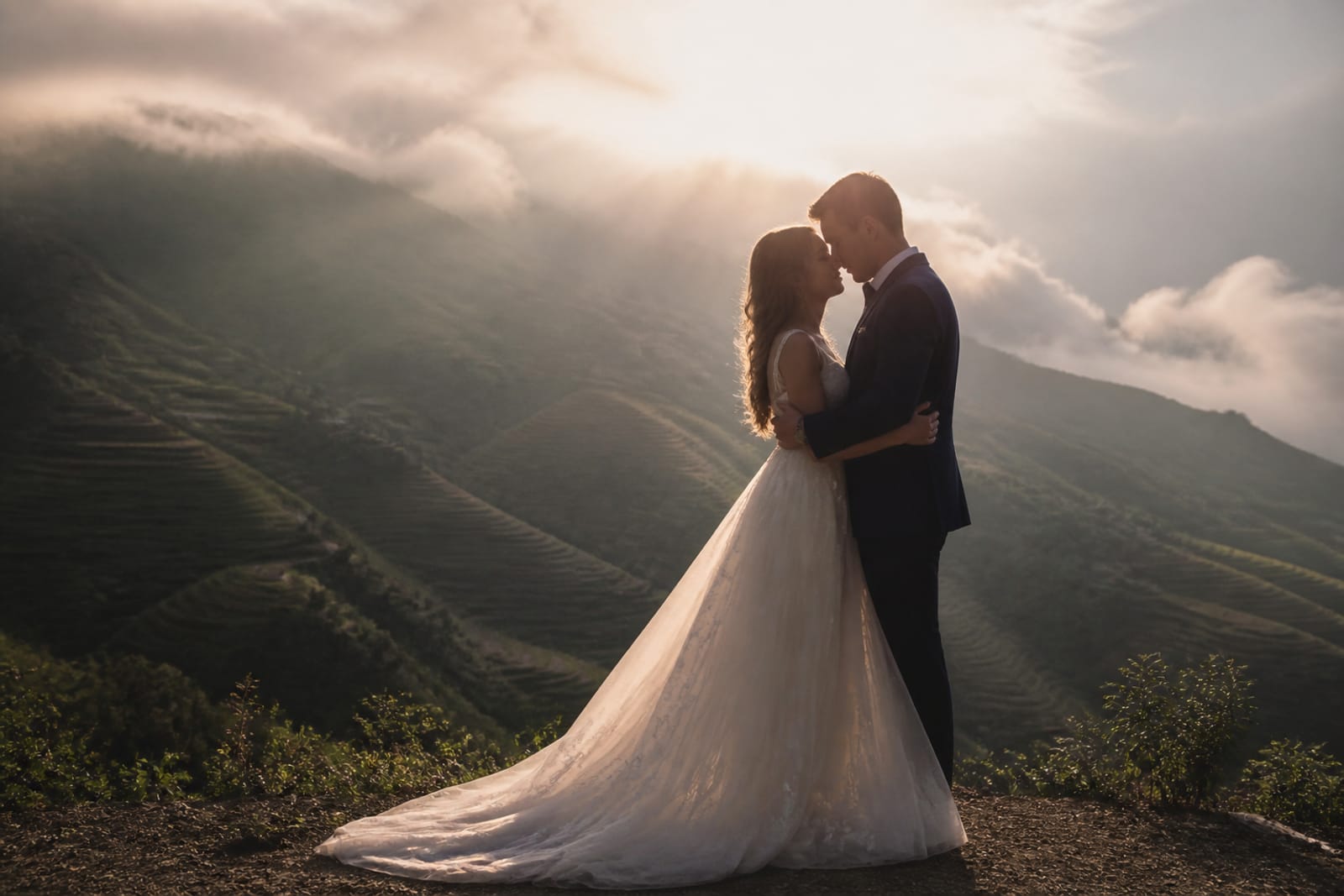
A full Fansipan session (cable car + summit shoot + descent) spans 6–8 hours door-to-door. You leave your hotel by 4–4:30 a.m. to reach the cable car base (roughly 45 min from Sapa town) before the 5 a.m. opening. Cable car up takes 15 min. Arrival on summit is 5:30 a.m.; you have a 2–3-hour window before fog or crowds thicken. Photographer and couple shoot wide frames first (you walking, the landscape framing you), then mediums (both of you together, detail of hands or rings), then close-ups (faces, reactions). Descent and cable car down take 30–45 min including wait time. You're back at your hotel by 1–2 p.m., often cold and tired. This is not a casual morning shoot. It requires an early wake, fitness to walk on loose stone, and mental readiness for wind and exposure. If you want a relaxed session, choose a valley or temple shoot in Sapa or Hanoi) instead. If you want the summit frame, accept the effort as part of the story.
How do you find and vet a local photographer if Cáo Studio isn't there?
Cáo Studio operates in Hanoi), Ho Chi Minh City) and Hoi An) only; Fansipan is outside our service area. For a Fansipan shoot, ask your Sapa hotel concierge for photographers with recent summit work (not generic valley shots). Request a portfolio showing actual light at dawn (harsh, clear light), not edited studio backdrops. Ask directly: "How many times have you shot this location?" "Do you have current permits?" "What do you do if weather closes the peak?" A photographer who's vague on these points is winging it. Expect to communicate by WhatsApp or phone; vet their responsiveness and English clarity before booking. Read recent reviews on Google Maps for Sapa photography services, but cross-check: a well-made review for a couple's shoot doesn't guarantee they know pre-wedding timing or outfit logistics. Meet by video call to discuss your vision, outfit plan and weather contingencies. A real pro will ask you specific questions—how heavy your ao dai is, whether you've hiked at altitude, what backup date you'll accept—not just quote a price.
💍 Proposal & anniversary package | 📷 Pre-wedding photoshoot | 🌸 See the lookbook
Comparison: Fansipan vs. alternative pre-wedding spots in the north
| Location | Altitude & scale | Weather reliability | Outfit durability | Permit hassle | Best for |
|---|---|---|---|---|---|
| Fansipan summit | Extreme (3,143m) | Seasonal, 2–3-hour window | High challenge | Moderate–high | Epic wide frames, alpine isolation, couples seeking difficulty as part of the story |
| Sapa town & rice fields | Low–mid (1,600m, open valleys) | Better Mar–Nov | Low (fields are soft, wind is light) | None | Gentle movement, walking between terraces, intimate moments, flexible timing |
| Hanoi temples (Tran Quoc, One Pillar) | Urban, no altitude | Year-round, best 6–8 a.m. | High (stone, stable backdrop) | Low (public access) | Classic Vietnam frames, fewer crowds early, tight composition, same-day turnaround |
| Ha Long Bay (boat + islets) | Sea level, dramatic limestone | Dry Feb–Aug only | Medium (moisture, salt spray) | Low (tour operator coordinates) | Cinematic water, light reflects off rock, longer shoot window, comfort of being at sea |
Fansipan suits couples who define their shoot by challenge and scale. If you want cinematic light with less effort, Sapa valley or Hanoi's temples and urban spots) deliver in half the time. If you're split between comfort and ambition, shoot Sapa on day one and Fansipan summit on day two—the contrast reads as a narrative arc in an album.
What to check before you book a Fansipan pre-wedding shoot
- Photographer permit status: Ask for proof of current permission (cable car operator letter, guide license, or written confirmation). Never accept "don't worry, we've done it before."
- Weather contingency: What happens if fog arrives by 6:30 a.m.? Can you reschedule for free, or is there a fee? Get this in writing.
- Outfit plan: Discuss fabric weight, wind-resistance, and whether makeup needs re-touching mid-shoot. Ask if the photographer has worked with ao dai at altitude.
- Physical fitness: Be honest about your walking ability and comfort with heights. The summit path has loose stone and steep sections—neither is insurmountable, but both are real.
- Backup date: Confirm how many free rescheduling attempts you get if weather closes the peak.
- Delivery timeline: Ask when edited images arrive and how many final photos you receive.
- Cost factors (not amounts): Summit shoots cost more than valley work because of permits, early start, and guide fees. Seasonal demand (Mar–May and Sep–Nov) affects pricing. Ask what's included (guide, permit, location scouting, how many outfits, edited files) and what incurs additional charges.
If the photographer is evasive on any of these, book elsewhere.
📸 Book on WhatsApp — couple photoshoot | 🎬 Wedding & pre-wedding video | 💍 Proposal & anniversary
FAQ
Does Cáo Studio shoot at Fansipan summit?
No. Cáo Studio operates in Hanoi), Ho Chi Minh City) and Hoi An) only. We can advise on timing and connect you with vetted local Sapa photographers, or book a pre-wedding session in Hanoi) with backup dates and guaranteed turnaround.
What is the best time of year to shoot at Fansipan?
Mar–May and Sep–Nov. Both seasons offer clear dawn light, a 2–3-hour shooting window before fog, and comfortable walking temperatures. Dec–Feb is cold and foggy by 9–10 a.m.; Jun–Aug is rainy with clouds arriving by 7 a.m.
Do I need a permit to shoot a pre-wedding session at Fansipan?
Yes. Permits are managed by the cable car operator and Fansipan Legend complex; rules are updated annually. Ask your photographer for current permit status in writing before booking. Drones are typically prohibited.
How long does a Fansipan summit shoot take, door-to-door?
Plan 6–8 hours total: 45 min travel to cable car base, 15 min ascent, 2–3 hours on summit, 15 min descent, plus wait times. You'll leave your hotel around 4 a.m. and return by 1–2 p.m.
What outfit works best at Fansipan's altitude?
Fitted ao dai in heavy silk or cotton blend (thin chiffon tears in wind); leggings underneath. Groom suits need a jacket or heavy vest. Grippy shoes for stone. Bring a shawl for a second-outfit option. Hair and makeup must use altitude-resistant setting spray.
Can I shoot at Fansipan if I've never hiked at altitude before?
Yes, if you're reasonably fit. The cable car does most of the work. The summit path has loose stone and steep sections, but neither is technical climbing. Tell your photographer and guide about any concerns; they can adjust pace and break timing.
What's the difference between shooting Fansipan summit and shooting Sapa valley?
Fansipan offers alpine scale, harsh early-dawn light, and isolation—but requires permits, a tight weather window, and 6–8 hours. Sapa valley (fields, rice terraces, colonial town) is more relaxed, flexible timing, no permits, and better outfit comfort. Fansipan suits couples who want difficulty as part of the story; Sapa suits those seeking gentle, cinematic frames.
FAQ
Does Cáo Studio shoot at Fansipan summit?
No. Cáo Studio operates in [Hanoi]((/hanoi)), [Ho Chi Minh City]((/saigon)) and [Hoi An]((/hoi-an)) only. We can advise on timing and connect you with vetted local Sapa photographers, or book a [pre-wedding session in Hanoi]((/pre-wedding-photoshoot)) with backup dates and guaranteed turnaround.
What is the best time of year to shoot at Fansipan?
Mar–May and Sep–Nov. Both seasons offer clear dawn light, a 2–3-hour shooting window before fog, and comfortable walking temperatures. Dec–Feb is cold and foggy by 9–10 a.m.; Jun–Aug is rainy with clouds arriving by 7 a.m.
Do I need a permit to shoot a pre-wedding session at Fansipan?
Yes. Permits are managed by the cable car operator and Fansipan Legend complex; rules are updated annually. Ask your photographer for current permit status in writing before booking. Drones are typically prohibited.
How long does a Fansipan summit shoot take, door-to-door?
Plan 6–8 hours total: 45 min travel to cable car base, 15 min ascent, 2–3 hours on summit, 15 min descent, plus wait times. You'll leave your hotel around 4 a.m. and return by 1–2 p.m.
What outfit works best at Fansipan's altitude?
Fitted ao dai in heavy silk or cotton blend (thin chiffon tears in wind); leggings underneath. Groom suits need a jacket or heavy vest. Grippy shoes for stone. Bring a shawl for a second-outfit option. Hair and makeup must use altitude-resistant setting spray.
Can I shoot at Fansipan if I've never hiked at altitude before?
Yes, if you're reasonably fit. The cable car does most of the work. The summit path has loose stone and steep sections, but neither is technical climbing. Tell your photographer and guide about any concerns; they can adjust pace and break timing.
What's the difference between shooting Fansipan summit and shooting Sapa valley?
Fansipan offers alpine scale, harsh early-dawn light, and isolation—but requires permits, a tight weather window, and 6–8 hours. Sapa valley (fields, rice terraces, colonial town) is more relaxed, flexible timing, no permits, and better outfit comfort. Fansipan suits couples who want difficulty as part of the story; Sapa suits those seeking gentle, cinematic frames.
Ao dai, makeup, hair and a local photographer in Hanoi or Saigon — one WhatsApp message.