/pre-wedding-photoshoot
Photography rules at Hanoi Train Street: permits and what to check fir
Hanoi Train Street (Phố Tàu, Tran Phu ward) is a working railway where trains pass 2–3 times daily; photography requires advance notice to local authorities and train operators because the track remains active. Permits are not sold; access depends on timing outside train movements and coordination with residents and railway staff. Drones are banned. Shooting is allowed sunrise to early afternoon, but crowding peaks 8–10am; off-peak shoots (6–7am or after 4pm) face train schedules. Professional studios like Cáo Studio – Makeup & Photoshoot coordinate with authorities and scout light angles; DIY shoots risk disruption, safety issues, and visitor conflicts. Before booking, check the current access status on site or ask the studio on WhatsApp—local restrictions change seasonally. ---
Where is Hanoi Train Street and why does it matter for photos?
Train Street runs through Hanoi's French Quarter (District 1, Tran Phu ward), a 100-meter stretch where a single-track railway passes within arm's reach of shophouse windows and narrow alleys. The intimate scale, weathered colonial walls, and morning light filtering through the street's overhead fixtures create a distinctive moody aesthetic—rare in Hanoi. For pre-wedding and couple shoots, it's popular for both candid and posed frames against the historical backdrop. The street has no designated tourist zone; it's a residential and working railway area, which is why access matters legally and practically.
📸 Book on WhatsApp — ao dai photoshoot
What permits and permissions do you actually need?
There is no public permit system. Access depends on informal coordination with Railway Police (who monitor the track), local residents, and your photographer's relationships in the area. Professional studios maintain contact with authorities and coordinate arrival times. DIY shooters often proceed without clearance and face interruptions—residents may ask you to leave, or police may redirect you during peak hours. The railway authority does not issue photography licenses; instead, reputable studios confirm access by visiting beforehand and timing shoots around scheduled trains. If you book independently, contact the Tran Phu Ward office or ask local guides; do not assume access is automatic.
What time of day has the best light and fewest conflicts?
Early morning (6–7am) offers soft directional light from the east, minimal crowds, and fewer residents in the street. By 8–10am, the alley fills with vendors, local workers, and tourists; light becomes harsh and overhead. Midday (11am–2pm) is too bright for flattering skin tones and attracts crowds. Late afternoon (4pm onward) is cooler but train schedules intensify—trains typically pass early morning and early evening, so check exact timings with your photographer. Autumn (Oct–Nov) has the softest, most consistent light; winter (Dec–Feb) is often overcast and drizzly. Late spring (Apr–May) is humid with haze. Summer (Jun–Sep) is very hot and unpredictable with afternoon downpours.
| Time of Day | Light Quality | Crowds | Safety | Best For |
|---|---|---|---|---|
| 6–7am | Soft, directional east light | Very low | Minimal train risk | Couples wanting intimate, moody shots |
| 8–10am | Warm, increasingly harsh | High tourists + vendors | Train timing variable | Those comfortable with activity; detail shots of walls |
| 11am–2pm | Hard overhead; unflattering | Peak | Medium train risk | Avoiding crowds; not ideal for faces |
| 4pm+ | Golden side light; cool air | Moderate | Higher train frequency | Evening mood; requires flexibility on trains |
Autumn (Oct–Nov) and early winter (Dec early-Jan) have the most reliable, soft light and mild temperatures. Dec–Feb mornings are cool (10–15°C); bring layers. May–Sep is hot (35°C+), humid, and prone to sudden rain—early morning shoots are safer.
Should you book a studio or shoot independently?
A studio like Cáo Studio – Makeup & Photoshoot handles logistics: they've scouted safe angles, timed trains, and briefed residents. Sessions include professional styling, hair & makeup coordination, and editing—you're not managing access conflicts. Independent shoots save money but require you to scout, confirm access, and manage resident interactions. Train Street residents tolerate tourists but not large groups or extended disruptions. Studios typically arrive with 1–2 people for smaller setup; large crews (5+ people with equipment) draw complaints. If shooting alone, keep your group to 2–3 people, avoid peak hours, and be respectful if asked to move.
💄 Makeup & hair at your hotel | 🌸 See the lookbook
What outfits and logistics work best on a narrow railway?
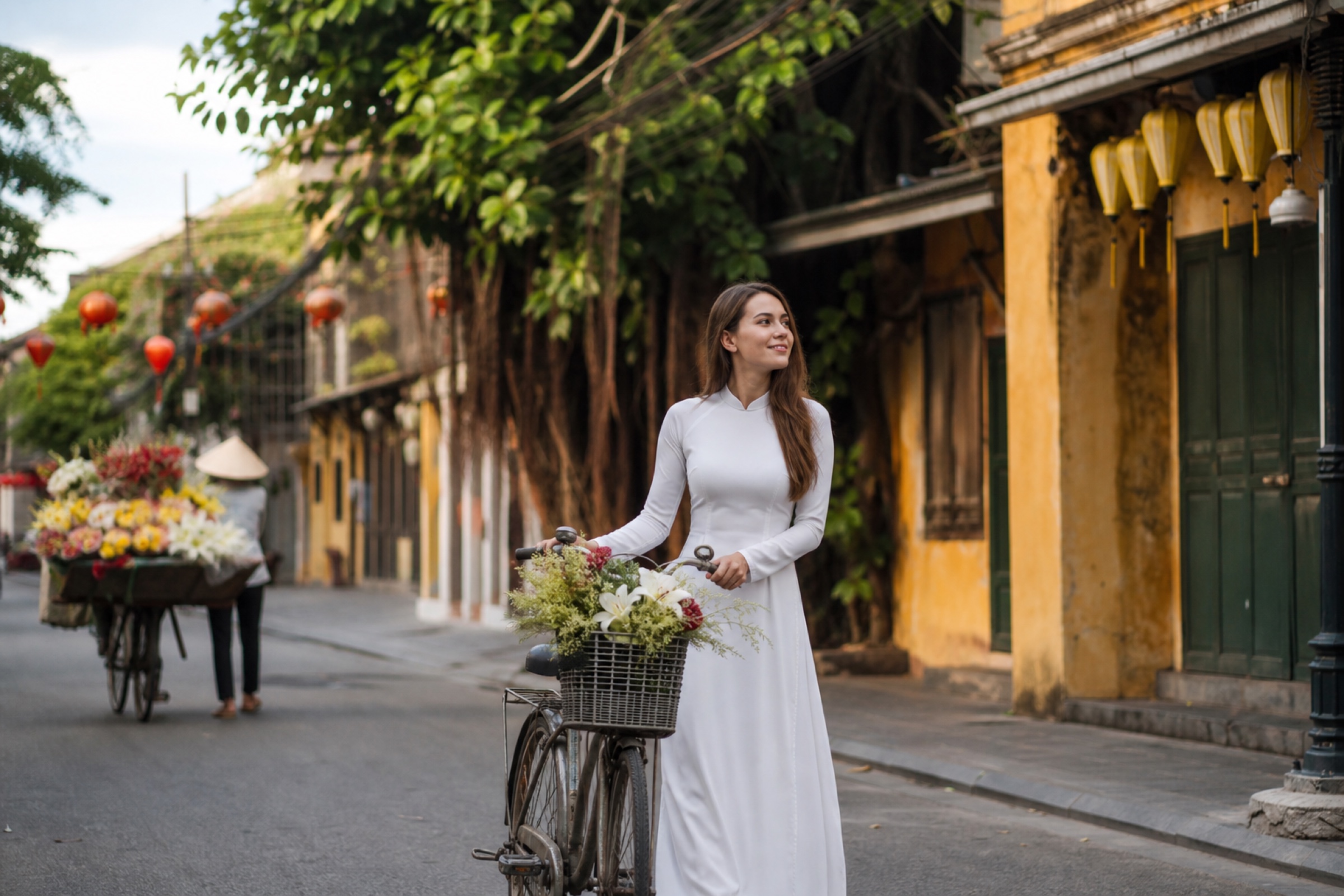
Fitted or tailored clothing moves safely in the tight street; full ao dai skirts and wide wedding trains risk snagging on wall details or touching the track. For ao dai photoshoots, choose fitted silhouettes or bring a helper to manage fabric. Heels are risky on uneven cobblestones—flat shoes or low blocks are better. Avoid large props (umbrellas, signage) that obstruct the alley or annoy residents. Makeup must be designed for early morning or golden hour—cooler light demands slightly warmer tones to avoid looking ashen. Pre-wedding shoots work best with 1–2 outfit changes (switch quickly to minimize time on-site). Bring water, sunscreen, and a microclip or small mirror for touch-ups. The shoot typically takes 45–90 minutes including setup, changes, and walking between spots; longer shoots push into peak-crowd time.
What are the real risks and how do you avoid them?
Train safety: Trains pass 2–3 times daily at unpredictable intervals (no public schedule). Never stand on the track or lean into the street during a train's approach. Your photographer must monitor the track constantly. Residents and vendors are accustomed to trains—follow their cues.
Resident and vendor friction: The street is people's livelihood and home. Shooting outside shop windows without permission, blocking access, or staying late into work hours (8am onward) can invite confrontation. Book early morning or late afternoon; ask before framing anyone's shop.
Police interruption: Railway Police patrol irregularly. Having a professional studio with known relationships reduces delays. If stopped, be polite, explain you're a couple/family doing a quick session, and move if asked.
Poor light and weather: Winter drizzle and spring haze degrade photos. Summer heat exhausts couples quickly on a dark, narrow street. Avoid May–Sep unless you're comfortable with heat and sudden rain. Late autumn to early January is most reliable.
Congestion and photo quality: Peak tourist hours (8am–1pm) mean blurred backgrounds, photobombs, and harsh light. Shooting 6–7am costs extra energy but yields cleaner frames. Studios that specialize in pre-wedding shoots know this trade-off.
Which Cáo Studio service fits a Train Street session?
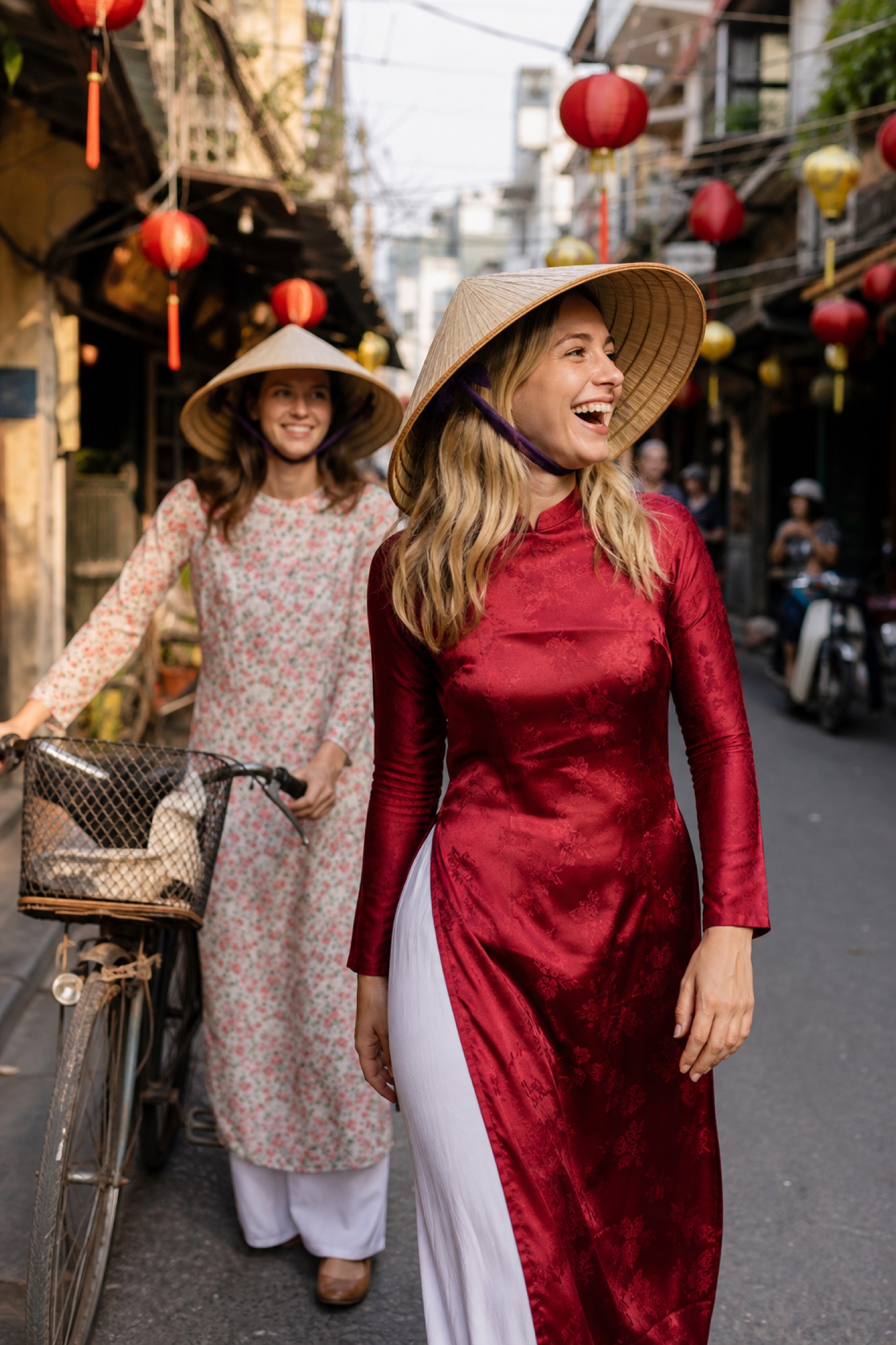
Train Street works best as part of a pre-wedding photoshoot or a couple & family session that includes multiple Hanoi locations. Cáo Studio typically pairs Train Street with softer, daylight-friendly spots (Hoan Kiem Lake, flower streets, local cafes) in the same outing to mix moods and light conditions. If you want a full-day experience, makeup and hair coordination is usually arranged at the studio or your hotel beforehand so you arrive camera-ready. For proposals or anniversaries, Train Street's historical intimacy is memorable—ask the team on WhatsApp about proposal & anniversary packages that include the street plus a secondary, more flexible location. The lookbook shows real Hanoi sessions; review it to see how the team adapts Train Street's tight space and moody light.
📸 Book on WhatsApp — ao dai photoshoot
---
What to check before you book
- Access and timing: Confirm current local restrictions on WhatsApp. Ask the studio if they've shot there recently and what they found.
- Train schedule: Request the photographer's train-timing process—reputable studios know how to time safely.
- Outfit fit: If wearing an ao dai or large dress, ask the photographer if they recommend a fitted or adjustable version, and whether a helper is included.
- Weather plan: For Dec–Feb or May–Sep, clarify backup timing or indoor locations if weather is poor.
- Group size: Check whether the studio includes assistants, hair/makeup artists, or just a photographer—larger groups need earlier booking slots.
- Editing turnaround: Confirm how long edited files take (varies by session size and studio workload); this affects your timeline for albums or prints.
- Nearby locations: Ask if Train Street is bundled with other Hanoi shoots to maximize your morning light and reduce downtime.
---
Compare photoshoot options in Hanoi
If Train Street's constraints aren't ideal, consider these alternatives for similar mood and history:
| Location | Light Quality | Crowds | Outfit Fit | Best For |
|---|---|---|---|---|
| Train Street | Moody, intimate, directional (early AM) | High 8am–1pm; quiet 6–7am | Fitted, no trains; flat shoes | Dramatic, historical mood; adventure-seeking couples |
| Hoan Kiem Lake (weekend evenings) | Golden late-day light; pedestrian-only after 5pm | Very high (but pedestrian, not trains) | Any; wide space | Relaxed, scenic vibe; ao dai friendly; fewer conflicts |
| Flower streets (e.g., Phan Dinh Phung autumn) | Soft, scattered light; peach blossoms Feb, chrysanthemums Oct–Nov | Moderate AM; easier to manage | Wide space; ao dai works beautifully | Romantic seasonal mood; less logistical stress |
| Old Quarter alleys (Hang Buom, Cha Ca) | Moody, shadows, character; less predictable | Moderate | Fitted preferred; narrow | Textured, lived-in feel; fewer formal restrictions |
Each suits different priorities. Train Street offers historical drama and a working-railway element; Hoan Kiem is more relaxed and visibly beautiful; flower streets are seasonal and romantic; Old Quarter alleys give similar mood with easier logistics. Ask the studio which combinations suit your vision and schedule.
💄 Makeup & hair at your hotel | 🌸 See the lookbook
---
Hanoi's seasonal light and how it affects Train Street shoots
Oct–Nov (autumn): Soft, diffused light; mild temps (20–25°C); low humidity. Best season overall. Train Street's narrow shadows and highlights are most dramatic.
Dec–Feb (winter): Cool (10–15°C), often overcast and drizzly. Light is flat; heaters in shops create steam. Atmosphere is moody but requires warm layers and rain contingency.
Mar–Apr (spring): Mild (18–25°C) but humid with frequent drizzle and haze. Light is soft but murky. Train Street feels atmospheric but less clean.
May–Sep (summer): Hot (30–35°C+), very humid; afternoon downpours and typhoon-remnant risk. Early morning is essential; shoots after 8am risk heat exhaustion and rain. Not ideal unless you're willing to start at 5:30–6am.
For Train Street specifically, Oct–Nov is best; Dec–early Jan works if you dress warmly; Apr–May is acceptable but less ideal; Jun–Sep requires early start and flexibility.
---
Real examples: Train Street session flow
A typical early-morning couple shoot (6–7am start):
- 5:45am: Meet at a nearby café; final makeup touch-up.
- 6–6:45am: Shooting at Train Street—tight angles, moody light, minimal crowds. One or two outfit changes if time allows.
- 6:45–7:15am: Move to a secondary nearby location (Old Quarter alley or local shop interior) as light improves.
- Return and breakfast.
- Duration: 90–120 min on-site; editing turnaround usually 3–7 days depending on studio workload.
A late-afternoon attempt (4–5pm start):
- Softer, warmer light but higher train frequency and more vendors setting up.
- Difficult to manage crowding and train timing simultaneously.
- Studios often advise against this unless late-light mood is a priority.
Peak-hours shoot (8–10am, busy but possible):
- Harsher light, many tourists, residents less flexible.
- Typically produces sharper frames but less moody feel.
- Better for detail shots of architecture; harder for intimate couple portraits.
Ask your photographer which time matches your vision and energy level before booking.
---
FAQ
Do I need a permit to photograph on Hanoi Train Street?
There is no public permit system. Professional studios coordinate with Railway Police and local residents; independent shooters proceed informally and risk interruption. Check current access status by contacting the Tran Phu Ward office or asking Cáo Studio on WhatsApp before booking.
Can I use a drone at Hanoi Train Street?
No. Drones are banned due to the active railway and proximity to a residential area. Train operator and police enforce this strictly. Stick to ground-level photography.
What time of day has the best light for Train Street photos?
Early morning (6–7am) offers soft, directional light and minimal crowds. Avoid 8am–2pm (harsh, crowded); late afternoon (4pm+) has golden light but more trains. Autumn (Oct–Nov) is best; winter is overcast; summer requires an extra-early start.
Should I book a studio or shoot independently?
Studios handle access logistics, safety coordination, hair/makeup, and editing. Independent shoots save money but require you to manage residents, train timing, and legal gray areas. For pre-wedding shoots, a studio reduces stress.
How long does a Train Street photoshoot take?
Typically 45–90 minutes on-site including setup and outfit changes. Many studios pair it with a second location to maximize morning light and minimize downtime. Ask the studio for the full session structure before booking.
Is Train Street safe for photography?
Yes, if you follow train safety (never stand on the track; monitor for approaching trains) and respect residents. Studios train on these rules. Avoid large groups, stay 6–7am if possible, and move if police or residents ask.
What should I wear for a Train Street shoot?
Fitted clothing works best in the narrow space. For ao dai, choose fitted silhouettes; bring a helper for fabric management. Flat shoes or low blocks are safer on uneven cobblestones. Heels risk catching and twisting ankles.
Can I book Train Street as a solo traveler or vacation photoshoot?
Yes. Vacation and solo photoshoots at Cáo Studio can include Train Street as a secondary location. Early morning group shoots (if other clients are booked) can share studio logistics and cost factors.
What if the weather is bad on my scheduled Train Street shoot?
Professional studios typically offer rescheduling or a secondary covered location (Old Quarter alley, café interior). Confirm the studio's weather policy before booking, especially Dec–Feb and May–Sep.
Does Train Street work for an ao dai photoshoot?
Yes. Fitted ao dai silhouettes suit the narrow space; full skirts need careful fabric management. Studios offer ao dai photoshoots throughout Hanoi; ask if Train Street is included or add it as a multi-location session. --- 📸 Book on WhatsApp — ao dai photoshoot | 💄 Makeup & hair at your hotel | 🌸 See the lookbook For a customized quote and current access status, contact Cáo Studio – Makeup & Photoshoot on WhatsApp +84 338 762 340.
FAQ
Do I need a permit to photograph on Hanoi Train Street?
There is no public permit system. Professional studios coordinate with Railway Police and local residents; independent shooters proceed informally and risk interruption. Check current access status by contacting the Tran Phu Ward office or asking Cáo Studio on WhatsApp before booking.
Can I use a drone at Hanoi Train Street?
No. Drones are banned due to the active railway and proximity to a residential area. Train operator and police enforce this strictly. Stick to ground-level photography.
What time of day has the best light for Train Street photos?
Early morning (6–7am) offers soft, directional light and minimal crowds. Avoid 8am–2pm (harsh, crowded); late afternoon (4pm+) has golden light but more trains. Autumn (Oct–Nov) is best; winter is overcast; summer requires an extra-early start.
Should I book a studio or shoot independently?
Studios handle access logistics, safety coordination, hair/makeup, and editing. Independent shoots save money but require you to manage residents, train timing, and legal gray areas. For pre-wedding shoots, a studio reduces stress.
How long does a Train Street photoshoot take?
Typically 45–90 minutes on-site including setup and outfit changes. Many studios pair it with a second location to maximize morning light and minimize downtime. Ask the studio for the full session structure before booking.
Is Train Street safe for photography?
Yes, if you follow train safety (never stand on the track; monitor for approaching trains) and respect residents. Studios train on these rules. Avoid large groups, stay 6–7am if possible, and move if police or residents ask.
What should I wear for a Train Street shoot?
Fitted clothing works best in the narrow space. For ao dai, choose fitted silhouettes; bring a helper for fabric management. Flat shoes or low blocks are safer on uneven cobblestones. Heels risk catching and twisting ankles.
Can I book Train Street as a solo traveler or vacation photoshoot?
Yes. [Vacation and solo photoshoots](/vacation-photoshoot) at Cáo Studio can include Train Street as a secondary location. Early morning group shoots (if other clients are booked) can share studio logistics and cost factors.
What if the weather is bad on my scheduled Train Street shoot?
Professional studios typically offer rescheduling or a secondary covered location (Old Quarter alley, café interior). Confirm the studio's weather policy before booking, especially Dec–Feb and May–Sep.
Does Train Street work for an ao dai photoshoot?
Yes. Fitted ao dai silhouettes suit the narrow space; full skirts need careful fabric management. Studios offer [ao dai photoshoots](/ao-dai-photoshoot) throughout Hanoi; ask if Train Street is included or add it as a multi-location session. --- [📸 Book on WhatsApp — ao dai photoshoot](/book) | [💄 Makeup & hair at your hotel](/makeup-and-hair) | [🌸 See the lookbook](/lookbook) For a customized quote and current access status, contact Cáo Studio – Makeup & Photoshoot on WhatsApp +84 338 762 340.
Ao dai, makeup, hair and a local photographer in Hanoi or Saigon — one WhatsApp message.