/pre-wedding-photoshoot
Photography rules at Hoi An Ancient Town: permits, drones & shoot chec
Hoi An Ancient Town is a UNESCO-listed site in central Vietnam that requires a paid entrance ticket for all visitors and photographers. Commercial photoshoots (pre-wedding, couple sessions, ao dai portraits) need advance permission from the site management; tourist snapshots with personal cameras do not. Drones are prohibited in and above the Ancient Town without a special permit from the local Department of Information and Communications—rarely issued to independent photographers. The best light is sunrise (5:30–6:30 a.m., earliest arrival), when crowds are minimal and the lantern-lit bridges photograph best. Cáo Studio – Makeup & Photoshoot handles all permits and logistics for clients, shooting between sunrise and early morning to avoid the midday heat and afternoon crowds. If you're planning a DIY session, expect to contact the management office weeks ahead and navigate Vietnamese bureaucracy; a local studio absorbs this complexity and ensures your shoot runs legally. ---
Do I need a permit to photograph commercially in Hoi An Ancient Town?
Yes. Any commercial photoshoot—engagement, pre-wedding, ao dai sessions, couple portraits—requires written permission from Hoi An Ancient Town's management office. Tourist snapshots for personal use do not. Commercial means you're hiring a photographer, paying for a styled session, or publishing the images for promotional purposes. The permit process involves providing your session date, photographer name, shot list and proof of insurance; approval typically takes 1–3 weeks. Without it, you risk the session being stopped mid-shoot and images being confiscated. Local studios like Cáo Studio – Makeup & Photoshoot manage all paperwork, so you arrive ready to shoot.
---
Can you fly drones over Hoi An Ancient Town?
No. Drones are banned in and above the Ancient Town without explicit approval from Hoi An's Department of Information and Communications. That permit is almost never issued to independent photographers or small studios for aesthetic shoots. Commercial drone footage for weddings or marketing requires special clearance from both the site and local aviation authorities. If drone imagery is essential to your vision, discuss alternatives with your studio—creative ground-level angles and elevated positions within the town often deliver the same emotional impact without legal risk.
---
What time should you shoot at Hoi An to avoid crowds and permit issues?
Sunrise is the only practical window. The Ancient Town opens early, and the management team is present by 6:00 a.m. to oversee permitted shoots. Sunrise light (5:30–6:30 a.m. in summer, slightly later in winter) is soft, golden and directional—ideal for ao dai and couple portraits. The lanterns are still lit; streets are nearly empty; and you can complete a full session by 9:00 a.m., before tour groups arrive. Midday (10:00 a.m.–3:00 p.m.) is harsh, crowded and often too hot for elaborate outfits. Evening lantern-lighting (around 6:30 p.m.) is beautiful but draws crowds and requires a fresh permit extension. Plan sunrise; it's non-negotiable for both quality and logistics.
---
How do weather and season affect Hoi An shoot dates?
Hoi An's dry season runs February–August, but not equally. February–April is ideal: mild, green rice fields nearby, minimal rain and comfortable in formal wear. May–August is dry but sweltering (35°C+), so sunrise shoots are essential to avoid heat stress on you and your outfit. The rainy season (September–December) brings afternoon downpours and typhoon risk. October–November is especially dangerous—the Ancient Town experiences flooding in streets and alleyways, turning paths into shallow rivers and making ao dai hems drag through water. December–January cools down but often sees drizzle and grey skies. Choose February–April for the most reliable conditions; if you shoot May–August, commit to sunrise timing and bring a lightweight outer layer for air-conditioned indoor breaks.
---
What's the difference between booking a studio vs. DIY photography at Hoi An?
| Aspect | DIY (Personal Photographer) | Local Studio (e.g. Cáo Studio) |
|---|---|---|
| Permits & paperwork | You contact management; 2–4 weeks lead time; no guarantee of approval | Studio handles all; included in session cost; approval confirmed before booking |
| Timing knowledge | Research sunrise times; may miss best light windows | Photographer knows seasonal sunrise times and crowd patterns by experience |
| Outfit logistics | You arrange transportation, changing rooms, makeup touch-ups on location | Studio provides makeup chair, climate-controlled space, outfit changes between setups |
| Legal accountability | You're responsible if shooting without approval | Studio's insurance and permit cover liability |
| Post-production | You negotiate edits and timeline separately | Included in package (confirm details on WhatsApp) |
| Cost factors | Photographer fee + your entrance ticket + transport | Studio fee (includes permit, makeup, multiple outfits, edits); discuss on WhatsApp |
| Best for | Budget-conscious, flexible timelines, personal vision | Stress-free, legally protected, professional styling and editing |
DIY suits photographers confident in bureaucracy and logistics. Studios like Cáo Studio – Makeup & Photoshoot suit travelers who want to focus on the experience, not paperwork.
---
What should you wear under an ao dai, and how does Hoi An's humidity affect fabric?
Hoi An is humid year-round, even in the "dry" season. Silk and lightweight linen ao dai are traditional but cling in moisture; synthetic blends dry faster if you need multiple outfit changes. Wear a fitted slip or thin underdress in cream or the ao dai's primary color to avoid transparency in morning light. Humidity curls loose hair and softens makeup, so book hair and makeup services the morning of your shoot—not the night before. If you're renting an ao dai locally or bringing your own, allow time to steam it after humid evenings. Cáo Studio – Makeup & Photoshoot's makeup & hair service is timed for shoot day, ensuring your look stays fresh through humidity and multiple outfit changes.
---
What to check before you book a Hoi An photoshoot
Session date & permit timing: Confirm your session is at least 2–3 weeks away so the studio can secure approval. Last-minute bookings may not have time for permits.
Entrance ticket responsibility: Clarify whether your ticket is included in the session package or purchased separately. Budget accordingly and ask the studio to confirm current ticket status (the site may close for maintenance or special events).
Sunrise logistics: Ask how early you need to arrive, whether the studio provides transport from your hotel, and if makeup is applied on-site or before. Factor in 30 minutes of travel time.
Outfit count & changes: Confirm how many outfits you're shooting (ao dai, wedding dress, casual) and how the studio handles changing spaces. Wet or humid fabric takes longer to transition between looks.
Weather backup plan: Ask what happens if it rains heavily or visibility is poor. Does the studio reschedule, offer an alternative date, or shoot indoors at a backup location?
Edits & delivery timeline: Confirm when you'll receive edited photos. High-season shoots (February–April) may have longer turnarounds.
Insurance & permissions: Verify the studio holds commercial insurance and has the active permit before your shoot date. Ask for permit confirmation 48 hours prior.
WhatsApp check-in: Reach out on WhatsApp +84 338 762 340 to confirm exact inclusions, timing and any location-specific questions the night before your session.
---
📸 Book a pre-wedding photoshoot | 🌸 Explore our Hoi An shoots | 💄 Add makeup & hair service
---
Beyond the Ancient Town: other Hoi An photo locations without permit restrictions
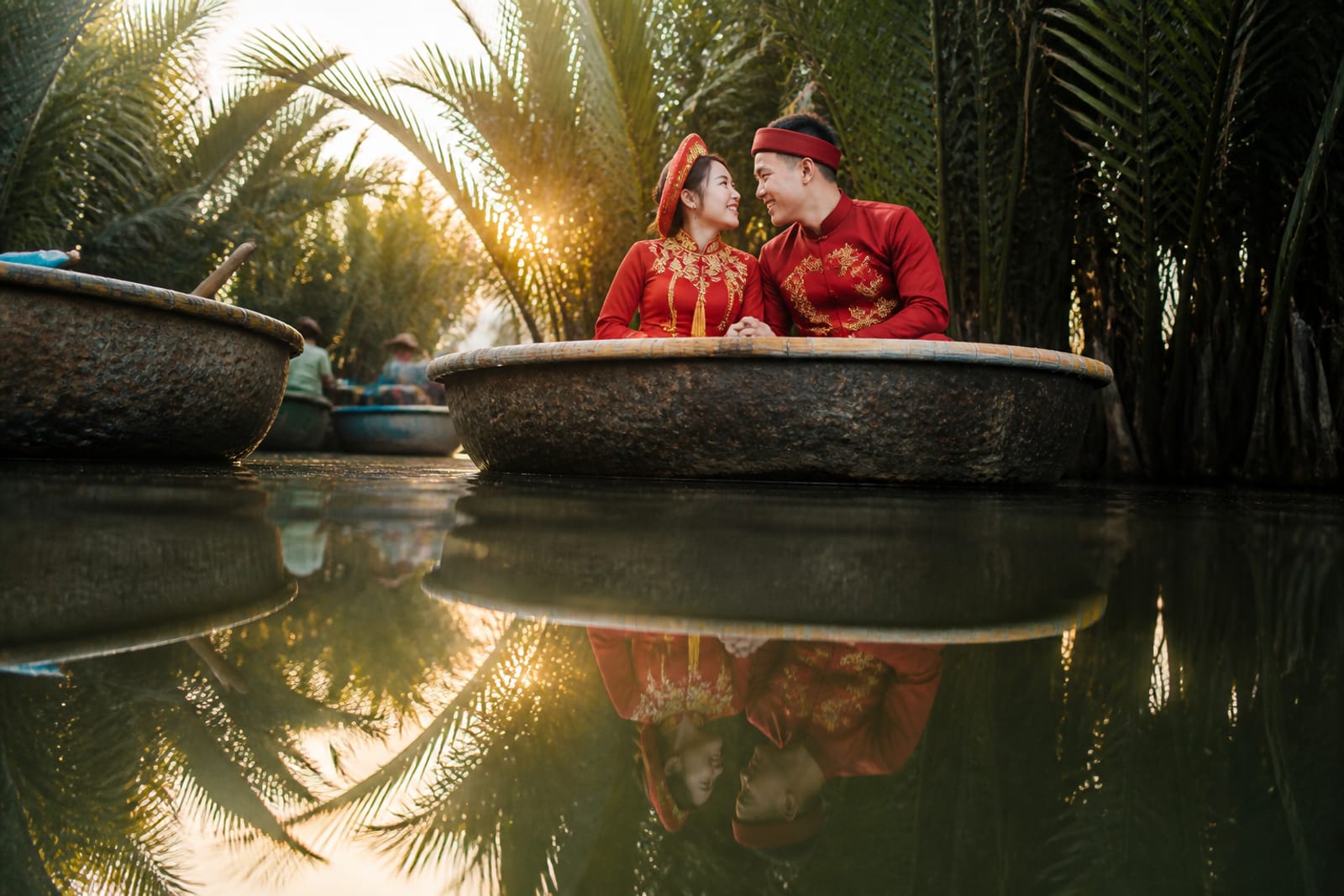
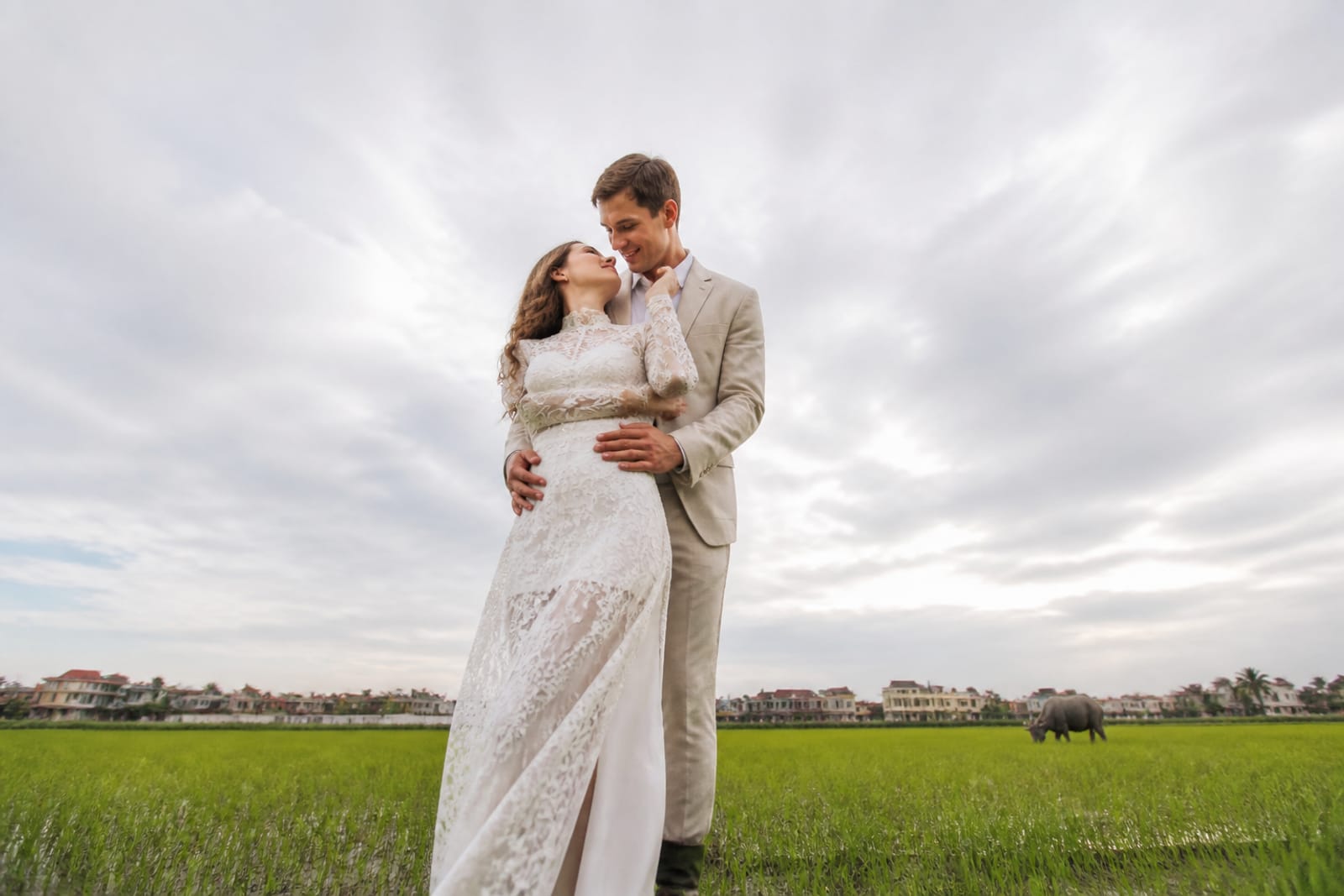
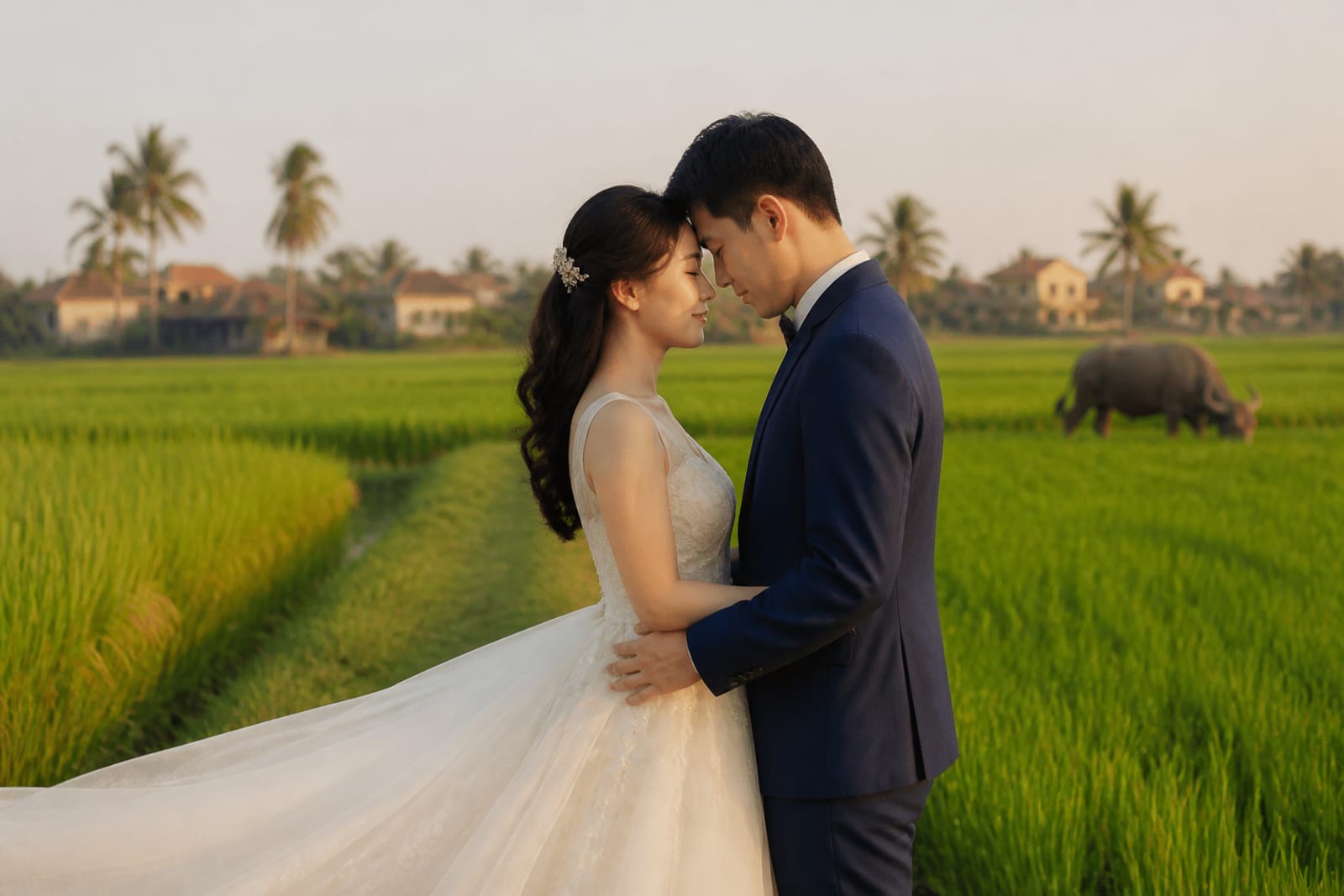
If Ancient Town permits feel restrictive or you want variety, consider nearby spots. The rice fields around Tra Que village (3 km north) are open access, green February–May, and perfect for ao dai full-body shots in natural light—no entrance fee or permit required. The Japanese Bridge and Thu Bon River offer reflections at sunrise without the bureaucratic weight of the walled town. Cua Dai Beach, 4 km east, works for sunset or early-morning couple portraits but has no shade; bring water and sunscreen. Local fishermen's boats near the bridge create authentic scene backgrounds. These alternatives suit travelers who want the Hoi An aesthetic (lanterns, water, heritage) without navigating commercial shoot permissions. Discuss location preferences when you book; Cáo Studio – Makeup & Photoshoot can advise on which backdrops suit your outfit and timeline.
---
📸 See pre-wedding shoot examples | 🎥 Also book wedding video | ❓ Read our FAQ
---
Hoi An photography etiquette: temples, locals and the tourist-photographer balance
Hoi An's temples and pagodas (Phuc Kien Assembly Hall, Quan Am Pagoda, Ong Pagoda) allow photography but respect active worship. Remove shoes before entering; ask permission before photographing monks or worshippers. Morning hours (6:00–8:00 a.m.) see fewer tourists and more devotional activity—ideal for candid, respectful shots. Don't pose in front of altars or mock religious gestures. Locals in the Ancient Town are accustomed to tourists but fatigue with posed requests; a small gesture (tea, a compliment, a small gift) goes further than a camera alone. If you're hiring a studio, the photographer knows these boundaries and will navigate them respectfully, keeping your shoot authentic and courteous.
---
💄 Book makeup & hair | 👗 Rent an ao dai | 📞 WhatsApp us now
---
FAQ
Do I need a separate drone permit if I have a commercial photoshoot permit at Hoi An Ancient Town?
Yes. A commercial shoot permit covers ground-level photography; drones require separate approval from the Department of Information and Communications, which is rarely granted for aesthetic shoots. Drones are prohibited in the Ancient Town airspace without it.
What time is sunrise at Hoi An in February vs. August?
Sunrise ranges from approximately 6:30 a.m. in February to 5:30 a.m. in August. Exact times shift week to week; ask your studio for the precise time before your shoot date.
If it rains heavily on my shoot day, what happens to my permit and deposit?
Confirm with your studio's cancellation and reschedule policy when you book. Most studios either reschedule to the next available date or offer an indoor alternative location; permits remain valid for the rescheduled date.
Can I wear a white ao dai in Hoi An if I'm also planning a wedding photo elsewhere in Vietnam?
Yes, but white ao dai shows sweat and humidity stains quickly. Choose white only if your Hoi An shoot is at sunrise (earliest light, minimal sweat) or pair it with a complementary outer layer. Ask your makeup artist to apply long-wear foundation and a powder to manage shine.
Does Cáo Studio – Makeup & Photoshoot provide transportation from my Hoi An hotel to the Ancient Town?
Confirm transport details on WhatsApp when you book. Hoi An is compact; some sessions include hotel pickup, others rely on a short taxi ride. Ask the exact arrangement and meeting point before your session.
What happens if the Ancient Town is closed for a special event or maintenance on my booked date?
Ask your studio to confirm the town's calendar 1–2 weeks before your shoot. If an unexpected closure occurs, a professional studio will reschedule you at no extra cost or offer an alternative date with equal or better light conditions.
Can I book a Hoi An photoshoot less than two weeks in advance?
Unlikely. Permit approval typically requires 2–3 weeks. If you're already in Hoi An with less time, discuss express options with the studio on WhatsApp; they may have slots for walk-in shoots or alternative non-permit-required locations like rice fields or nearby villages.
FAQ
Do I need a separate drone permit if I have a commercial photoshoot permit at Hoi An Ancient Town?
Yes. A commercial shoot permit covers ground-level photography; drones require separate approval from the Department of Information and Communications, which is rarely granted for aesthetic shoots. Drones are prohibited in the Ancient Town airspace without it.
What time is sunrise at Hoi An in February vs. August?
Sunrise ranges from approximately 6:30 a.m. in February to 5:30 a.m. in August. Exact times shift week to week; ask your studio for the precise time before your shoot date.
If it rains heavily on my shoot day, what happens to my permit and deposit?
Confirm with your studio's cancellation and reschedule policy when you book. Most studios either reschedule to the next available date or offer an indoor alternative location; permits remain valid for the rescheduled date.
Can I wear a white ao dai in Hoi An if I'm also planning a wedding photo elsewhere in Vietnam?
Yes, but white ao dai shows sweat and humidity stains quickly. Choose white only if your Hoi An shoot is at sunrise (earliest light, minimal sweat) or pair it with a complementary outer layer. Ask your makeup artist to apply long-wear foundation and a powder to manage shine.
Does Cáo Studio – Makeup & Photoshoot provide transportation from my Hoi An hotel to the Ancient Town?
Confirm transport details on WhatsApp when you book. Hoi An is compact; some sessions include hotel pickup, others rely on a short taxi ride. Ask the exact arrangement and meeting point before your session.
What happens if the Ancient Town is closed for a special event or maintenance on my booked date?
Ask your studio to confirm the town's calendar 1–2 weeks before your shoot. If an unexpected closure occurs, a professional studio will reschedule you at no extra cost or offer an alternative date with equal or better light conditions.
Can I book a Hoi An photoshoot less than two weeks in advance?
Unlikely. Permit approval typically requires 2–3 weeks. If you're already in Hoi An with less time, discuss express options with the studio on WhatsApp; they may have slots for walk-in shoots or alternative non-permit-required locations like rice fields or nearby villages.
Ao dai, makeup, hair and a local photographer in Hanoi or Saigon — one WhatsApp message.