/pre-wedding-photoshoot
Photography Rules at Hoi An Rice Paddies: Permits, Drones & What to Ch
Hoi An rice paddies require no formal photoshoot permit, but access depends on private or communal land—always confirm with your photographer. Drones are prohibited without prior approval from local authorities; most organized shoots avoid them entirely. Optimal shooting windows are February to April (mild, green fields) and June to August (dry but intensely hot by midday—shoot sunrise only). Sessions typically run 1.5–2.5 hours, moving between adjacent paddy zones to capture different light angles and field stages. Weather shifts fast: morning mist clears by 8 a.m., afternoon clouds build by 3 p.m., and typhoons strike September–November. Cáo Studio – Makeup & Photoshoot coordinates shoots via WhatsApp, handling landowner relations and timing; independent photographers must verify access 48 hours ahead or risk cancellation. ---
Where do you actually shoot in Hoi An rice paddies?
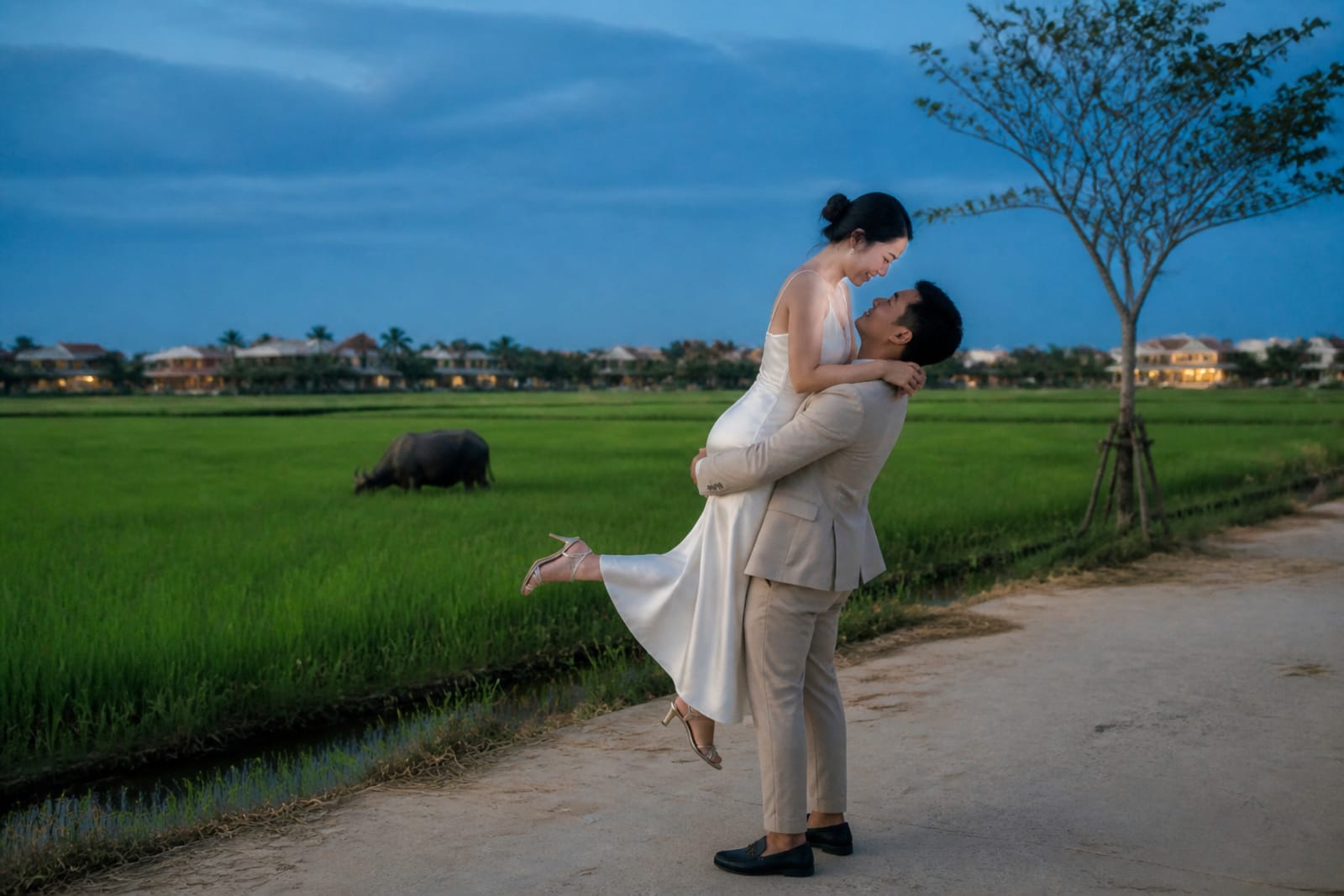
Hoi An has three main paddy zones within 20–30 minutes of the Ancient Town: the Cam Thanh area (easiest access, popular, morning sun from the north), the Ta Noi zone near the old pottery village (quieter, sunset-facing, best April–May), and fields near Tra Que herb village (mixed crops, intimate framing, often crowded 9 a.m.–noon). Each zone has working farmers; mid-May through mid-August, many paddies stand harvested or fallow—green is guaranteed only February–April. Walking paths are often wet, narrow and bordered by water channels. Sunrise mist lingers until 6:30–7 a.m.; by 8 a.m., light flattens. Afternoon light (4–5 p.m.) is golden but rare in the rainy season. Most photographers base their route on which paddies are in active growth stage when you book.
📸 Book on WhatsApp — ao dai photoshoot
Do you need a drone permit for rice paddy photography?
No drone footage is permitted without explicit written approval from Hoi An authorities, which is rarely granted for tourism. Most commercial shoots—including pre-wedding photoshoots—forgo drones entirely and rely on ground-level positioning, elevated natural platforms (paddy banks, tree lines) and wide-angle lenses to capture landscape scale. Operators found flying without authorization face confiscation and fines. If aerial shots are essential to your vision, discuss alternatives (elevated angle from a stable bank, wide framing) with your photographer during booking. Cáo Studio focuses on authentic ground-based composition that captures the intimate texture of the paddies without regulatory risk.
What's the seasonal light quality at different times?
| Month Range | Best For | Light Character | Field Condition | Why It Works |
|---|---|---|---|---|
| Feb–Apr | Classic emerald paddies, soft morning light | Diffused, cool-toned, long shadows at sunrise | Young rice, lush green, peak growth | Mild temps, stable weather, green guaranteed |
| May–Jul | Intense burnished gold, bold contrast | Harsh midday, golden late afternoon only | Late-stage mature rice, occasional fallow patches | Dry, predictable, sunrise essential to avoid overexposure |
| Aug–Oct | Difficult; heat, haze, risk of rain | Hazy, unpredictable cloud cover, downpours mid-session | Mixed (harvest, replanting, stubble) | Humidity peaks; typhoon threat Sep–Nov makes outdoor timing risky |
| Nov–Jan | Cool but often overcast, drizzle risk | Flat grey light, mist lingers past 8 a.m. | Sparse, winter dormancy, some green in Dec | Pleasant temperature but low visual drama; flooded paddies risk in Nov |
Sunrise shoots (5:30–7 a.m.) are non-negotiable May–August; February–April allows flexible morning (6–9 a.m.) or late afternoon (4–5 p.m.) windows. Avoid midday year-round; afternoon light after 3 p.m. is best but only reliable February–April.
What do you wear under an ao dai in the paddies?
Ao dais worn in paddies require sturdy undergarments: fitted leggings (black or neutral, full-length to avoid mud splashes) worn under the inner slip, and water-resistant flat shoes or sandals left at the paddy edge during barefoot shots. Bare feet give authentic grounding and authentic images, but the field floor is soft mud, not grass—expect mess between toes and minor scratches from stubble. Bring a bucket of water and towel in the vehicle to rinse feet before re-dressing. If you wear the ao dai over leggings, shoot only from the waist up or accept visible legs in frames. Many couples pair the ao dai with a modern tonal tunic or slip dress worn underneath, visible if the outer layer parts. Makeup should be sweat-proof and matte; humidity by 8 a.m. is 80–90%. Makeup & hair at your hotel can prep you the morning of your shoot to account for the paddies' moisture and early light.
How do you avoid weather cancellations and reschedule safely?
Book shoots in the dry season (February–April for stability; May–August requires sunrise-only commitment). Schedule on a weekday if possible; fewer foot-traffic interruptions and fresher paddy water. Check a 5-day forecast 48 hours before; if rain is forecast, confirm with your photographer immediately—most offer one free reschedule within 30 days. Hoi An's rainy season (September–December, worst October–November) brings afternoon downpours, flooded paddies and sudden wind; avoid booking then unless you accept session loss. Never book a wedding-day shoot in the paddies without a weather backup plan (an alternate indoor location or date). Typhoon season (October–November) can wipe out multiple weeks; budget extra time if booking within that window.
Cáo Studio coordinates rescheduling via WhatsApp and works with local contacts to verify paddy access and field stage before each session. Independent photographers should visit the site 48 hours prior and get written confirmation of access from the landowner.
What's the realistic cost and time commitment for a rice paddy shoot?
Pricing varies by session length, outfit changes, makeup, meal and transport logistics—ask for a quote on WhatsApp. Most organized shoots run 2–3 hours on-site, plus 30–60 minutes of travel time from Hoi An center. If booking couple photoshoots or a full pre-wedding photoshoot, the paddies are often one segment of a multi-location day; adding paddies increases session length and extends your commitment. Solo vacation photoshoots or intimate ao dai photoshoots at the paddies alone typically range shorter. Hiring a licensed local photographer (independent of Cáo Studio) costs less than a full studio package but requires you to manage access permissions, transport and makeup. Compare the option that fits your time and vision.
---
Is a rice paddy shoot worth the early wake-up?
Yes, if you commit to sunrise (5:30–7 a.m. arrival). Morning light is directional, the paddies are quietest, and mist adds dreamy texture. Afternoon paddies are busy with farmers and tourists, light is flat mid-day, and heat makes makeup retouch necessary. Every couple who booked midday regretted it; every sunrise shoot delivered archive-quality frames.
Can you bring props or decor to the paddies?
Light props (a chair, a lantern, a silk scarf) are okay if you carry them in and out. Anything nailed, stuck or left behind disrespects the landowner and can block future bookings for all photographers. Never leave trash. Floral arrangements wilt fast in heat and humidity; a single bloom in the ao dai's hand is more elegant and practical.
What happens if it rains during the shoot?
Light rain is manageable (ao dai and skin waterproof makeup become priorities). Heavy rain halts the session; Hoi An's paddies flood fast, and wet mud becomes slippery and unsafe. Most photographers offer a reschedule within 30 days at no extra charge. If you've traveled internationally, confirm the reschedule policy before booking—some independent shooters require a refund instead.
Should I hire Cáo Studio or a local independent photographer?
Cáo Studio handles landowner coordination, makeup, styling and transportation; you arrive ready and leave with confidence. Independent photographers are cheaper but you manage permits, access, makeup booking and getting to the paddies. See the lookbook and FAQ to compare package details, or ask on WhatsApp for a quote and service overview.
Can you do a rice paddy shoot in November or December?
November is high-risk; paddies often flood, and typhoons arrive. December is possible (cooler, less rain) but light is duller and winter dormancy means fewer green fields. February–April is the only month-long window with reliable conditions, long daylight and guaranteed lush growth. Book early if targeting December–January; cancellation rates spike.
---
What to check before you book a rice paddy shoot
- Season: Confirm the month and week—February–April is safest; avoid October–November entirely.
- Early light commitment: Can you arrive 5:30 a.m.? Confirm the photographer's pickup time.
- Outfit logistics: Do you own or rent an ao dai? Ao dai rental requires 2–3 days' notice.
- Makeup: Sweat-proof makeup is essential. Does the package include makeup & hair, or are you booking separately?
- Reschedule policy: If weather cancels the shoot, what's the rescheduling window (30 days, 60 days)?
- Land access: Ask the photographer for written confirmation they've verified access 48 hours before your session date.
- Transport and meals: Does the package include pickup from your hotel and a meal break? Clarify on WhatsApp.
- Backup location: If the paddies are flooded, does the photographer offer an indoor or alternate outdoor venue at no extra charge?
---
Comparison: Rice paddies vs. other Hoi An shoot locations
| Location | Best Season | Light Peak | Crowd Level | Outfit Suitability |
|---|---|---|---|---|
| Rice paddies | Feb–Apr | Sunrise (5:30–7 a.m.) | Low (early morning) | Ao dai, bare feet, earth tones essential |
| Ancient Town streets | Feb–Apr, Dec–Jan | Early morning (6–7 a.m.) before crowds | High (9 a.m. onward) | Ao dai, modern dress, heels work |
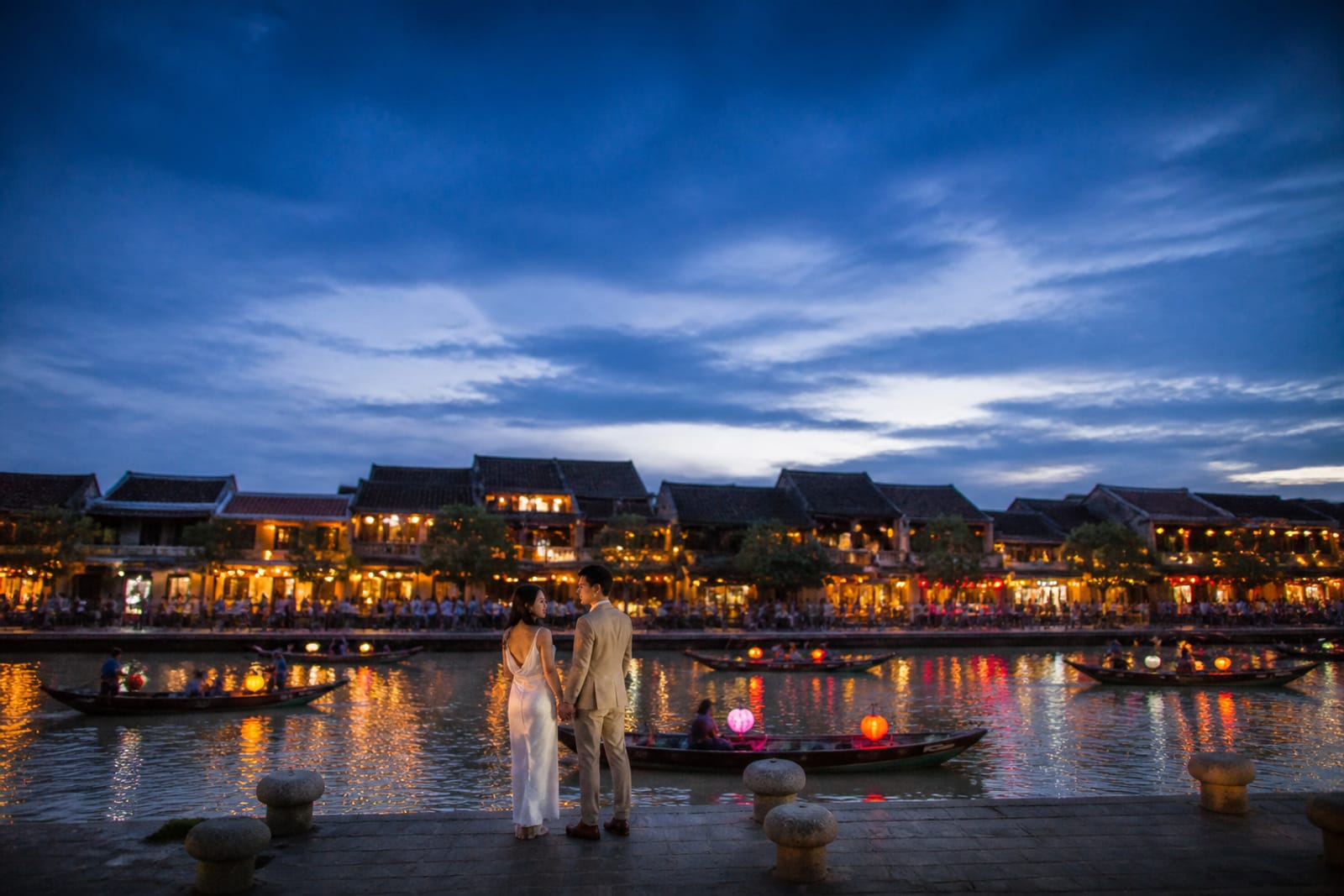
| Tran Phu waterfront | Feb–Aug (dry) | Late afternoon (4–5 p.m.) | Medium | Casual, ao dai, lightweight fabric |
| Tra Que herb village | Feb–May | Morning (7–9 a.m.) | Low | Casual, ao dai over leggings, closed shoes |
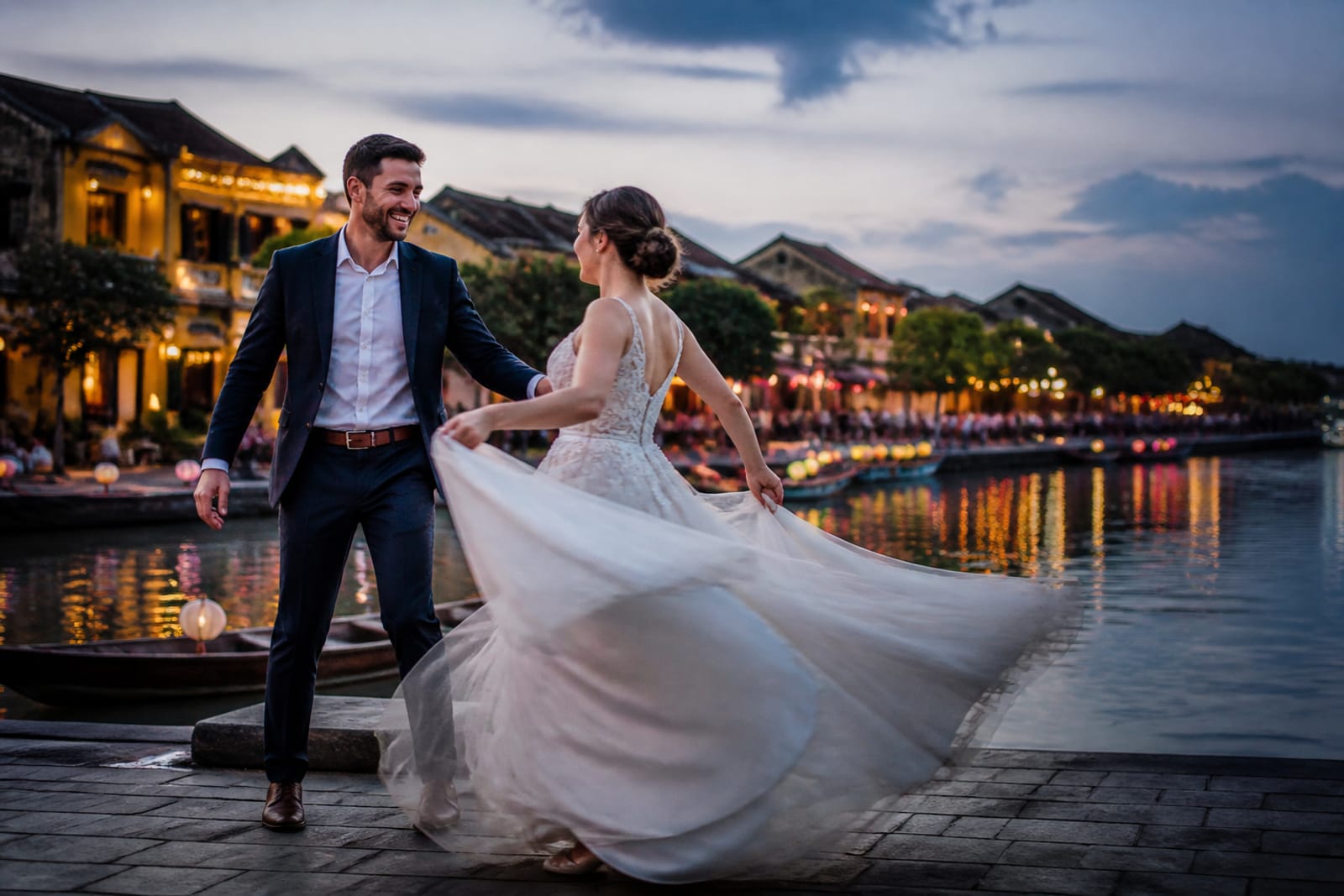
| Japanese Bridge & lanterns | Year-round | Dusk (6–7 p.m.) | Very high (peak evening) | Ao dai, formal dress, heels acceptable |
Rice paddies demand the earliest wake-up but reward you with solitude and authentic landscape intimacy. If you prefer crowds, iconic landmarks and flexible timing, the Ancient Town and waterfront offer more convenience. If you value authenticity and green scenery, paddies are non-negotiable.
---
📸 Book on WhatsApp — ao dai photoshoot
For personalized timing, seasonal advice and to confirm access at the exact paddies you prefer, reach out to Cáo Studio – Makeup & Photoshoot on WhatsApp. The team coordinates Hoi An shoots by appointment and travels to confirm light, weather and paddy stage before each session. Explore pre-wedding photoshoot options, see the lookbook for paddy imagery, and check the FAQ for session flow details.
FAQ
Do I need a photoshoot permit to shoot in Hoi An rice paddies?
No formal permit exists for tourist photography, but access depends on private or communal land ownership. Your photographer must confirm access with the landowner 48 hours before the shoot. Cáo Studio handles this coordination; independent photographers should verify in writing.
Are drones allowed over the rice paddies?
No. Drone flights require written approval from Hoi An authorities, which is rarely granted for tourism. Flying without permission results in confiscation and fines. All organized shoots rely on ground-level composition.
What's the best month to shoot in the paddies?
February–April offers mild weather, guaranteed green fields, stable light and low typhoon risk. May–August is dry but intensely hot; shoot sunrise only. Avoid October–November due to flooding and typhoons.
What should I wear under my ao dai for a paddy shoot?
Fitted neutral leggings under the inner slip, and water-resistant flat shoes or sandals (removed for barefoot shots). Bare feet ground the image authentically but expect soft mud. Bring a towel and water bucket to rinse before re-dressing.
What happens if it rains and the shoot is cancelled?
Most photographers offer one free reschedule within 30 days. Confirm the reschedule policy before booking. Heavy rain and flooding make the paddies unsafe; light rain is usually manageable with waterproof makeup.
FAQ
Do I need a photoshoot permit to shoot in Hoi An rice paddies?
No formal permit exists for tourist photography, but access depends on private or communal land ownership. Your photographer must confirm access with the landowner 48 hours before the shoot. Cáo Studio handles this coordination; independent photographers should verify in writing.
Are drones allowed over the rice paddies?
No. Drone flights require written approval from Hoi An authorities, which is rarely granted for tourism. Flying without permission results in confiscation and fines. All organized shoots rely on ground-level composition.
What's the best month to shoot in the paddies?
February–April offers mild weather, guaranteed green fields, stable light and low typhoon risk. May–August is dry but intensely hot; shoot sunrise only. Avoid October–November due to flooding and typhoons.
What should I wear under my ao dai for a paddy shoot?
Fitted neutral leggings under the inner slip, and water-resistant flat shoes or sandals (removed for barefoot shots). Bare feet ground the image authentically but expect soft mud. Bring a towel and water bucket to rinse before re-dressing.
What happens if it rains and the shoot is cancelled?
Most photographers offer one free reschedule within 30 days. Confirm the reschedule policy before booking. Heavy rain and flooding make the paddies unsafe; light rain is usually manageable with waterproof makeup.
Ao dai, makeup, hair and a local photographer in Hanoi or Saigon — one WhatsApp message.