/pre-wedding-photoshoot
Photography rules at Hon Kho island: permits, drones and what to check
Hon Kho island is a protected area near Quy Nhon in central Vietnam (driest Feb–Aug, rainy Sep–Dec). Photography is permitted for personal use, but drones require approval from the island authority; commercial shoots need a production permit. Sessions run 2–4 hours depending on tide and light; golden hour arrives around 6–7 am and 5–6 pm. Before booking any photographer, confirm they hold the correct permits, understand tide schedules, and can navigate rocky terrain safely. Cáo Studio operates in Hanoi, Ho Chi Minh City and Hoi An — for Hon Kho, hire a local Quy Nhon photographer and use this guide to vet them.
Hon Kho island draws couples and solo travelers seeking dramatic limestone cliffs, turquoise water and solitude. The catch: it's a protected marine zone with real permitting rules. A rushed photoshoot without permits or tide knowledge wastes money and risks confiscation. This guide walks you through what to check, when to shoot and how to hire the right photographer.
What permits do you actually need for Hon Kho photography?
Personal photography (you, a friend with a phone) is unrestricted. Drones require written approval from the Quy Nhon city Department of Natural Resources and Environment — processing takes 5–7 business days and permission is often denied for protected zones. Commercial photoshoots (paid photographer, model, published images) need a production permit from the provincial authorities. Most local photographers know the pathway and handle it; some don't. Ask outright: "Do you have experience with production permits at Hon Kho?" If they're vague, find another. Cáo Studio shoots within Hanoi, Ho Chi Minh City and Hoi An; for Hon Kho, verify your local photographer's permit track record before deposit.
Why is tide timing more critical than you think?
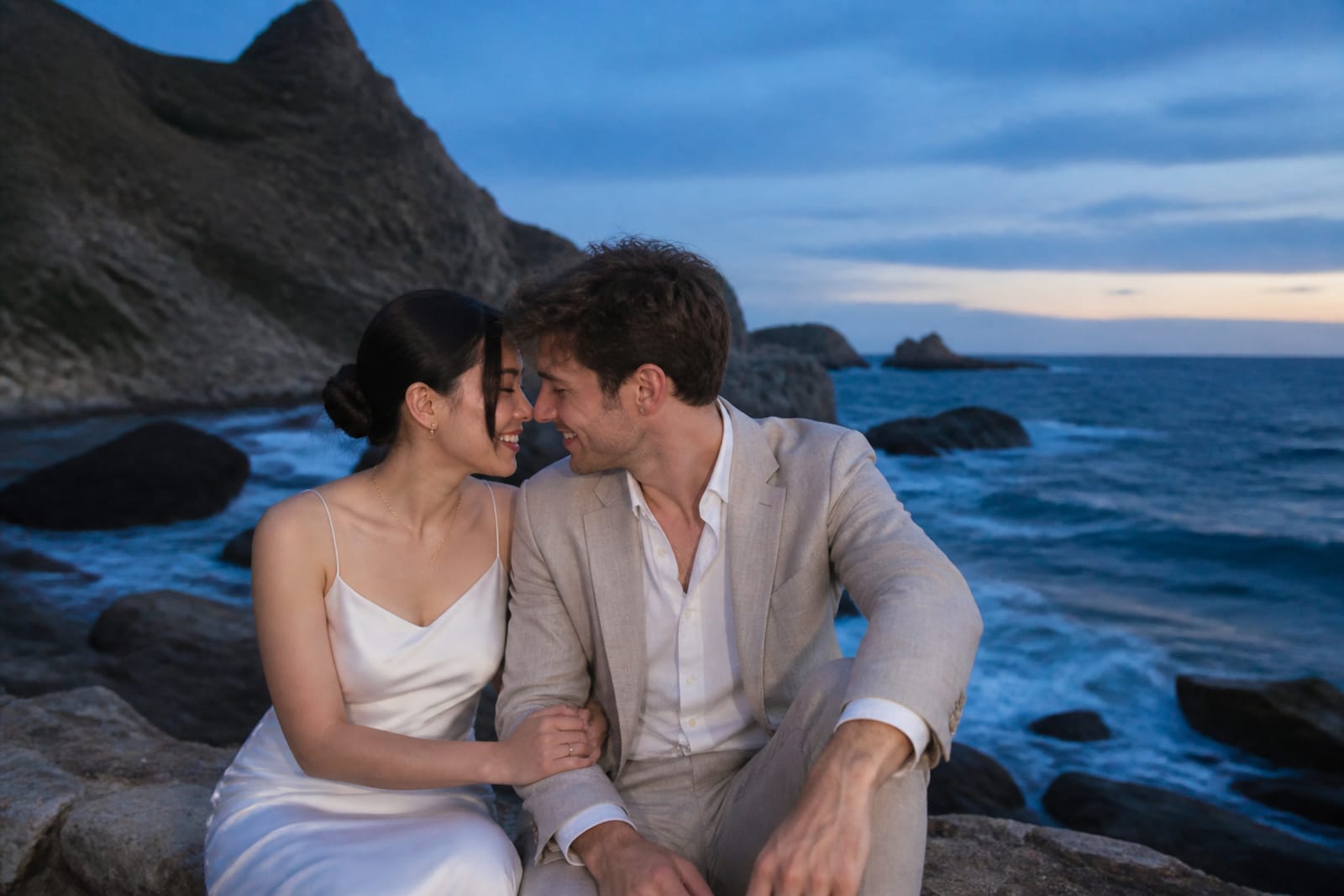
Hon Kho's coves shift dramatically between high and low tide — the same beach is rocky wasteland at low tide and a swimmable cove at high tide. Photographers who ignore tides waste the shoot's best frames. Tide tables shift monthly; your photographer must check 48 hours before the session. Golden hour (6–7 am and 5–6 pm) often overlaps slack water, when tides turn — this is when light and access align. A 7 am arrival means a 5:30 am boat departure from the mainland. Afternoon light at 5:15 pm works year-round but requires a solid boatman with a headlight for the return. Ask your photographer: "What's our tide window and boat departure time?" If they answer vaguely, they're not ready. Local Quy Nhon photographers worth their salt have boatman relationships and know every tide.
How do seasonal weather patterns affect your shoot?
| Season | Best for photoshoots | Light quality | What to watch | Why timing matters |
|---|---|---|---|---|
| Feb–Apr | Ideal window | Sharp, blue sky, 7–8 hours daylight | Occasional haze; plan early morning | Cool water, calm seas, clear lines |
| May–Aug | Still good; hotter | Bright but intense midday glare; soft dawn/dusk | Afternoon thunderstorms (rare but fast); heat stamina | Dry season; avoid 11 am–3 pm glare |
| Sep–Dec | High risk | Overcast, short windows; typhoon swells | Rain, cancelled boats, strong currents; Oct–Nov worst | Rainy season; many trips scrapped same-day |
Quy Nhon's central coast climate shifts sharply. Feb–Apr is safest: stable weather, calm water, long golden hours. May–Aug works if you shoot dawn or dusk; midday glare flattens skin tones and water color. Sep–Dec is wet and unpredictable — boats cancel at short notice, skies close in. A reputable photographer books sessions in Feb–Aug and reserves Sep–Dec only for confident clients who'll reschedule if needed.
What outfit choices work on rocky terrain and salt spray?
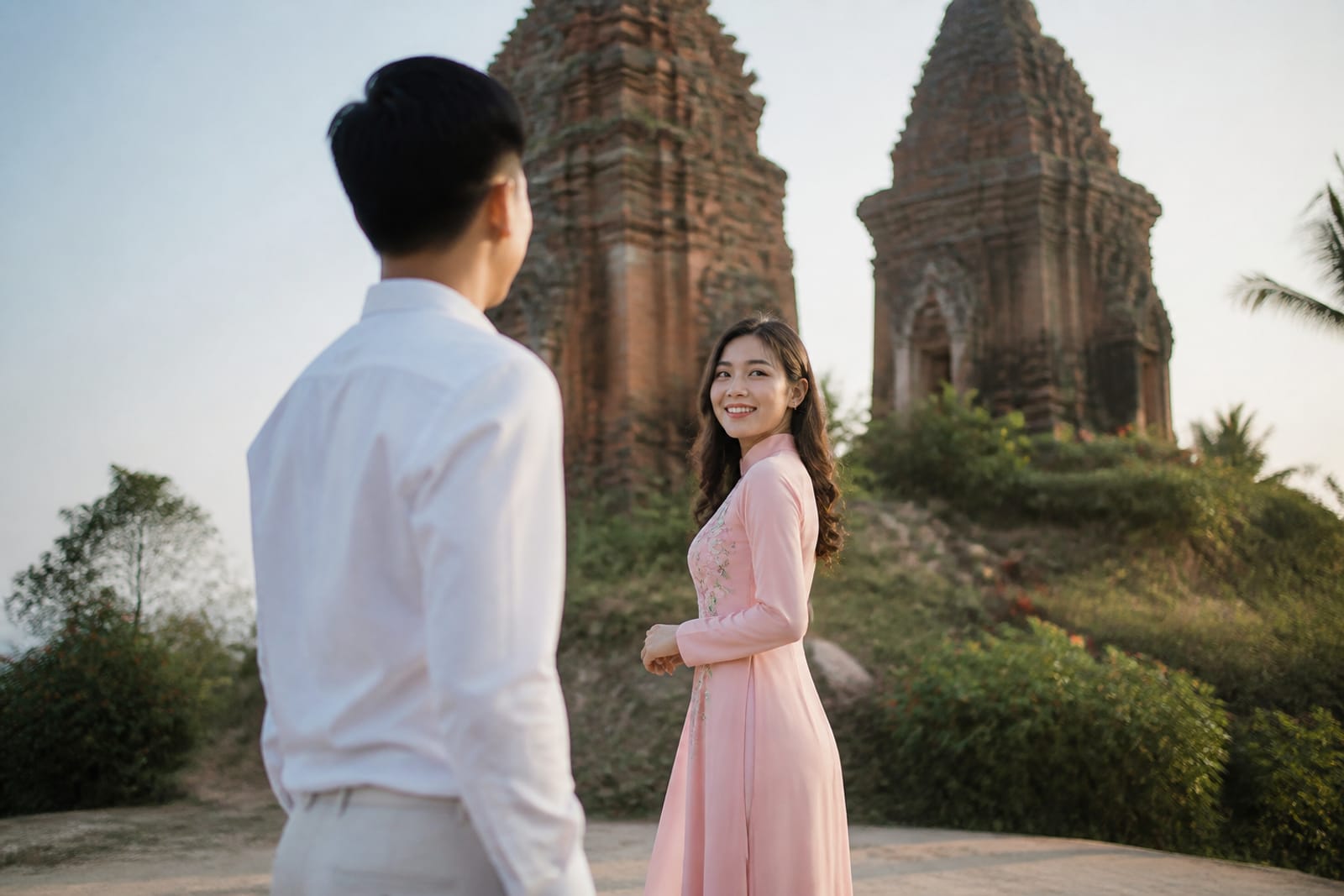
Loose fabrics (cotton, linen) move naturally in salt air; structured dresses cling and chafe. Light colors (cream, pale blue, white) pop against turquoise water but show salt stains — expect touch-ups. Dark fabrics hide spray but absorb heat. An ao dai works if the photographer and team know how to protect the hem and inseam on rocks (this is specialist knowledge — ao dai photoshoot teams trained in outdoor terrain handle this better). Sandals should have grip; heels are impractical and dangerous. Wet-look or "beachy" sessions (you in water) demand a swimsuit under the outer outfit and a dry-bag for phone and shoes. Bring a light wrap for wind and sunrise chill. Ask your photographer: "What do you recommend for Hon Kho's terrain?" Experienced local shooters have outfit checklists and often suggest a second outfit for contrast.
How do you vet a local photographer before you book?
Start with these checks:
- Portfolio: Ask for 5–10 Hon Kho or similar protected-area shoots. Not stock images — their own work, dated, with exif data if possible.
- Permit proof: Request a copy of their production permit or past approval letters. If they say "the island doesn't need permits," walk away.
- Boatman reference: Ask who they book boats with and get that person's direct contact — call and ask if the photographer is reliable.
- Tide and light plan: Ask them to walk you through the exact schedule: arrival time, expected golden-hour window, tide height at your arrival, exit plan if weather turns.
- Insurance and backup: Do they shoot backup cameras? What happens if equipment fails mid-session?
- Edited delivery: Ask how many edited photos you get, when, and in what format. Vague answers = red flag.
For pre-wedding sessions in Vietnam's coastal zones, Cáo Studio handles Hoi An (a quieter, less-restricted alternative 2 hours north of Quy Nhon). Hoi An avoids permits and tide risk entirely — the team knows every back-alley light and street vendor pattern. If Hon Kho appeals for its isolation, a local Quy Nhon photographer is your only option; if you want a full directed shoot (hair, makeup, multiple outfits, 48-hour turnaround), Hoi An eliminates logistics headaches. Both are coastal; the difference is regulatory burden and team depth.
What backup plans should you discuss with your photographer?
Weather cancellation is common Sep–Dec. Confirm in writing:
- If it rains or boats are unsafe, do you reschedule free or is it forfeited?
- Can you move to an alternative location (a beach or inland temple) on the same day?
- What's the refund policy if you cancel due to illness?
Salt spray damages electronics; ask if your photographer brings weatherproof bags and lens hoods. Long rock walks tire quickly — confirm how many location changes you'll make and whether there are rest points. If you're doing a couple photoshoot or an elopement, discuss whether the rhythm is walking and talking (natural frames) or positioned poses (slower, more controlled). A director-style photographer will walk you toward a cave, stop to let the light hit your faces, and shoot while you look at each other — not "stand here and look at the camera."
📸 Book on WhatsApp — pre-wedding in Hoi An | 💄 Makeup & hair support for your session | 🌸 See what our shoots look like
Comparing your options: Hon Kho solo shoot vs. pre-wedding in Hoi An
If you're debating between a remote island session and a guided team shoot closer to Quy Nhon:
- Hon Kho solo + local photographer: Low regulatory footprint, dramatic isolation, full day flexibility, but you manage permits, boatman logistics and weather risk yourself. Suit couples wanting complete privacy or adventure-focused sessions.
- Hoi An pre-wedding with Cáo Studio: One team (photographer, director, makeup artist if booked) handles all logistics, shoots in 2–4 hours, delivers edited images in 48 hours, includes outfit and hair guidance, zero permits. Suits couples who value stress-free execution and professional continuity.
Both work. Hon Kho demands more planning and local knowledge. Hoi An trades pristine isolation for certainty. Cáo Studio offers family photoshoot, couple & anniversary sessions and vacation shoots across three bases — Hanoi, Saigon and Hoi An — if you want a directed, team-based approach.
What to check before you book a photographer for Hon Kho
Use this checklist:
- Permit status: Do they have production-permit experience at protected areas? Ask for a past approval copy.
- Tide & weather: Can they commit to a specific tide window and explain the backup plan if storms close the zone?
- Boat logistics: Who's the boatman, and have they worked together before?
- Outfit & safety: Do they advise on terrain-safe clothing and understand how to protect fabrics (especially ao dai)?
- Delivery timeline: How many edited images, in what format, when?
- Communication: Do they respond within 24 hours? Do they ask questions about your vision or just take a booking?
A photographer who answers all six directly and gives specific examples (e.g., "We shoot 5:45–7:15 am on spring tide; the boatman's name is Minh, his number is …; I deliver 150 edited images 5 days after") is worth hiring. One who deflects or says "I'll figure it out after you book" is not.
📸 Book on WhatsApp — ao dai photoshoot | 💄 Makeup & hair at your hotel | 🌸 See the lookbook
---
FAQ
Can I use a drone at Hon Kho island?
Drones require written approval from Quy Nhon's Department of Natural Resources and Environment (processing 5–7 days). Permission is often denied for protected zones. Confirm your photographer's drone status in writing before deposit.
What time of year avoids monsoon rain and boat cancellations?
Feb–Aug is driest, with Feb–Apr offering the most stable weather and longest daylight. Sep–Dec is rainy; Oct–Nov sees the most cancellations and typhoon swells.
Do I need a permit if I'm just a couple bringing a smartphone?
Personal photography (you and a friend with a phone) is unrestricted. Paid commercial shoots (photographer, model, published use) need a production permit.
How much does a local Hon Kho photographer cost?
Rates vary by experience and location coverage. Ask quotes on WhatsApp or contact local Quy Nhon tourism boards for photographer referrals.
Why does tide timing affect the photoshoot so much?
At low tide, Hon Kho's coves become rocky, narrow and unsafe; at high tide, the same spots are swimmable and open. Tide windows (45 min–90 min) determine the best frames. Golden hour (dawn/dusk) often overlaps slack water, maximizing both light and access.
Is Hoi An a better option than Hon Kho for a pre-wedding shoot?
Hoi An eliminates permits, tides and weather risk, and Cáo Studio handles hair, makeup and direction as one team. Hon Kho offers remote drama and privacy but requires more logistics and local vetting. Choose based on whether you prioritize isolation or stress-free execution.
Can I do an ao dai photoshoot at Hon Kho?
Yes, but rocky terrain and salt spray demand a photographer experienced in protecting delicate fabrics. Cáo Studio's ao dai photoshoot team is trained for outdoor terrain; for Hon Kho, ensure your local photographer has ao dai experience and brings protective gear.
FAQ
Can I use a drone at Hon Kho island?
Drones require written approval from Quy Nhon's Department of Natural Resources and Environment (processing 5–7 days). Permission is often denied for protected zones. Confirm your photographer's drone status in writing before deposit.
What time of year avoids monsoon rain and boat cancellations?
Feb–Aug is driest, with Feb–Apr offering the most stable weather and longest daylight. Sep–Dec is rainy; Oct–Nov sees the most cancellations and typhoon swells.
Do I need a permit if I'm just a couple bringing a smartphone?
Personal photography (you and a friend with a phone) is unrestricted. Paid commercial shoots (photographer, model, published use) need a production permit.
How much does a local Hon Kho photographer cost?
Rates vary by experience and location coverage. Ask quotes on WhatsApp or contact local Quy Nhon tourism boards for photographer referrals.
Why does tide timing affect the photoshoot so much?
At low tide, Hon Kho's coves become rocky, narrow and unsafe; at high tide, the same spots are swimmable and open. Tide windows (45 min–90 min) determine the best frames. Golden hour (dawn/dusk) often overlaps slack water, maximizing both light and access.
Is Hoi An a better option than Hon Kho for a pre-wedding shoot?
Hoi An eliminates permits, tides and weather risk, and Cáo Studio handles hair, makeup and direction as one team. Hon Kho offers remote drama and privacy but requires more logistics and local vetting. Choose based on whether you prioritize isolation or stress-free execution.
Can I do an ao dai photoshoot at Hon Kho?
Yes, but rocky terrain and salt spray demand a photographer experienced in protecting delicate fabrics. Cáo Studio's [ao dai photoshoot](/ao-dai-photoshoot) team is trained for outdoor terrain; for Hon Kho, ensure your local photographer has ao dai experience and brings protective gear.
Ao dai, makeup, hair and a local photographer in Hanoi or Saigon — one WhatsApp message.