/pre-wedding-photoshoot
Pre-wedding photo ideas and poses at Pu Luong rice terraces
Pu Luong rice terraces (north-central Vietnam, 3 hours from Hanoi) suit pre-wedding shoots when rice is golden (late May–June, Sep–Oct) and you walk into soft morning or late-afternoon light rather than stand still. The landscape itself guides posture: walking between field edges, looking at each other while moving uphill, sitting in the stubble. A local Pu Luong photographer or guide is essential—the terrain is steep, paths are narrow, light changes fast, and weather shifts mid-morning. Cáo Studio does not shoot in Pu Luong; we direct sessions in Hanoi, Ho Chi Minh City and Hoi An. For Pu Luong, find a local Hanoi-based photographer who knows the fields intimately and can time your arrival with the light. Cost depends on travel time from Hanoi, number of outfit changes and overnight stay; discuss factors with a local team before booking. ---
How do light and season affect Pu Luong frames?
Light is the only reason to shoot Pu Luong at all. Between late May and early July, rice is knee-high and green; Sep–Oct the fields turn gold, and the air is clearer. Morning light (6–8 am) is soft and side-lit, casting long shadows across the terrace lines. Late afternoon (4–6 pm) mirrors this warmth but requires you to shoot toward the sun, which backlight frames beautifully if your photographer knows how to meter skin against bright sky.
Winter (Nov–Feb) brings cooler air and mist that sits in the valleys until 9 am—moody but harder to control. Avoid June–August: heat is extreme, afternoon clouds block sun fast, and sudden downpours erase light. October is ideal: fields are golden, light is predictable and the crowds are thinner than Hoi An or Ha Long.
Comparison table: Light and season at Pu Luong
| Season | Rice stage | Morning light | Afternoon light | Best for | Why |
|---|---|---|---|---|---|
| Late May–June | Green, knee-high | Soft, side-lit; 6–8 am ideal | Hazy, clouds build | Movement shots, close frames | Lush green and no noon heat |
| July–August | Chest-high | Harsh by 7:30 am | Blocked by clouds/rain | (Avoid) | Heat, sudden storms, uneven sky |
| Sep–October | Golden, ripe | Long shadows, 6–7 am best | Warm, 4–6 pm magic hour | Walking, wide fields, couples | Golden tone, clear sky, cool air |
| Nov–February | Stubble, harvested | Soft but dim; mist until 9 am | Golden but short; ends 5 pm | Detail and mist frames | Moody, fewer tourists, cooler |
The conclusion: book Sep–October for reliable golden light; June for vibrant green if you can start before 7 am.
📸 Book on WhatsApp — pre-wedding shoot
What poses and movements work in steep terrain?
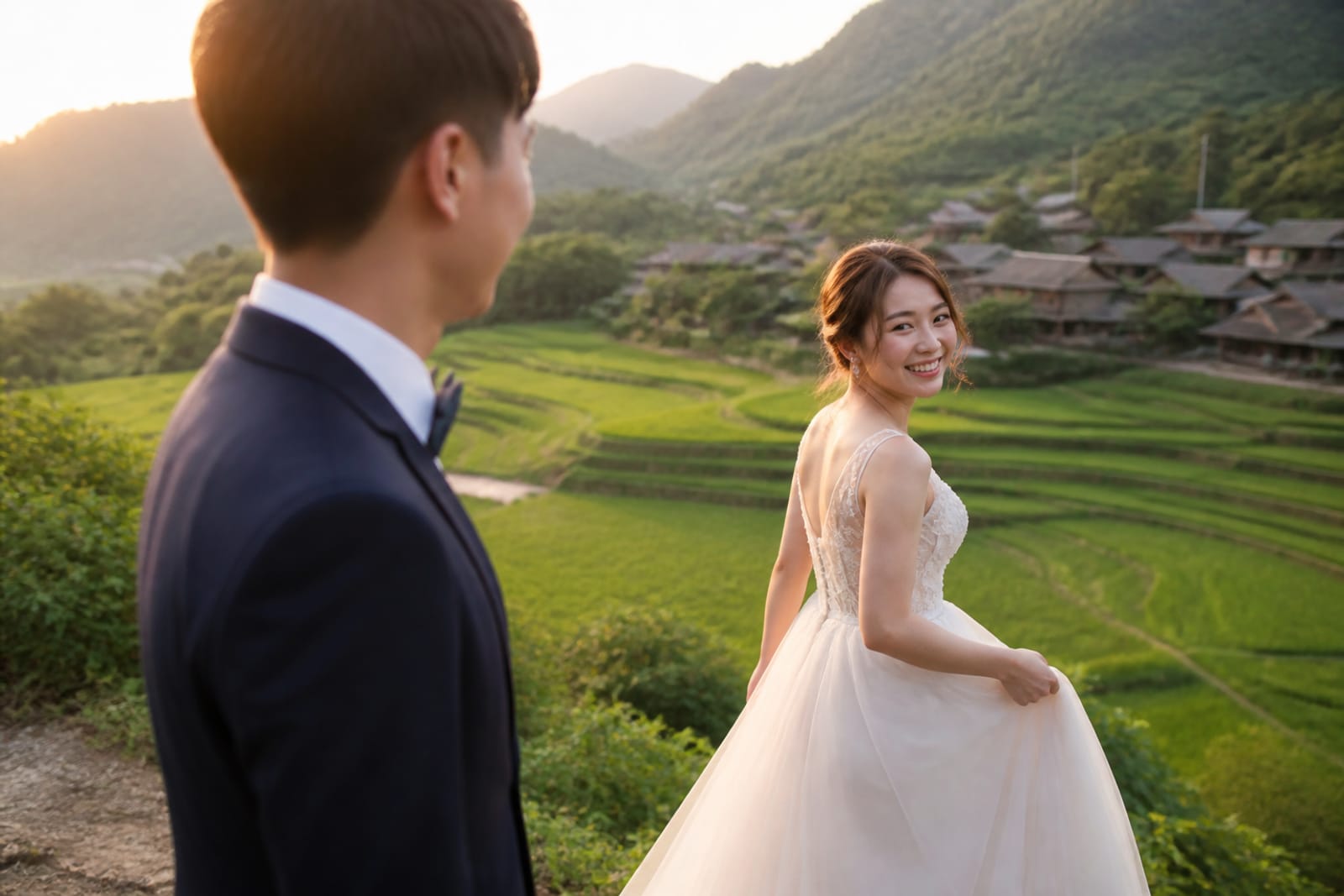
Forget stiff "couple facing camera" frames in Pu Luong. The landscape is best used as a guide. Walk between terrace edges, where the path narrows and your eye naturally lines up the field geometry. Sit in the stubble after harvest, lean into each other, let your photographer shoot from above so the fields frame you below. Hold hands walking uphill, shot from behind or the side so you're moving into the frame, not posing in it.
Movement beats pose. A real photographer directs: "Walk to that stone, slow down, look back at the light." You walk naturally; the camera catches the frame where light hits your face. This requires a photographer who knows Pu Luong's paths (expect steep, muddy stretches) and can move backward or to the side while shooting. Rigid poses crumble on uneven ground anyway.
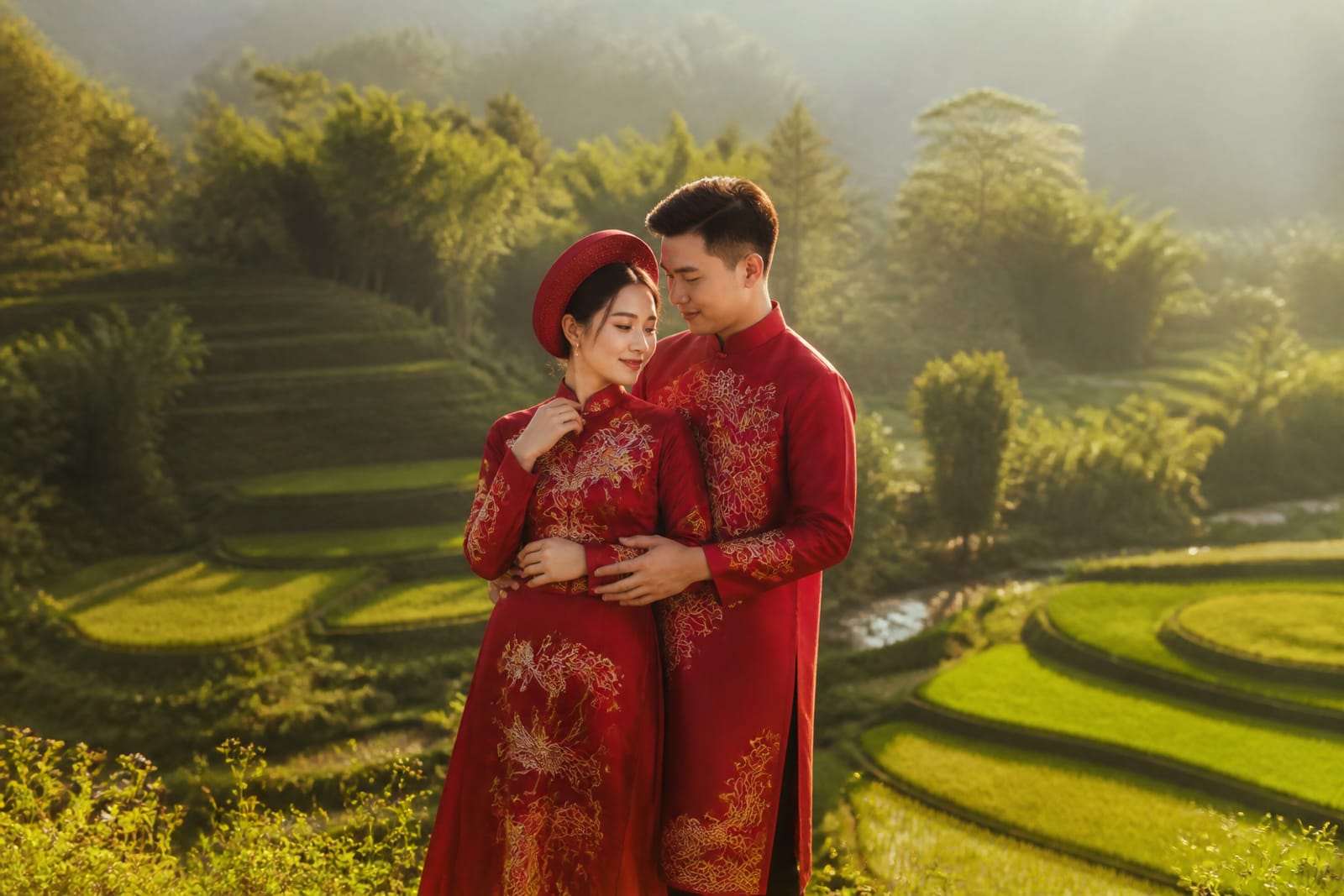
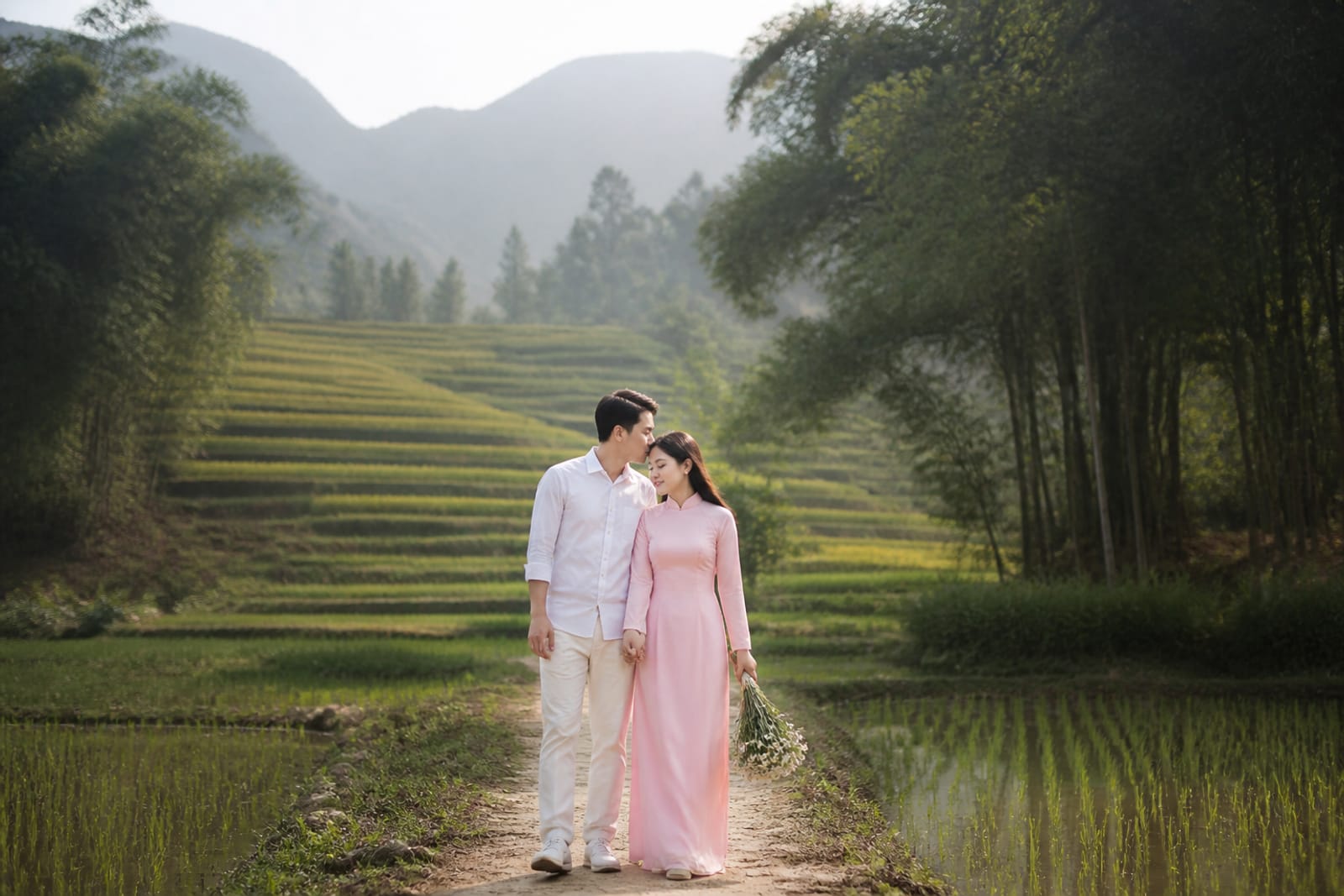
Outfit choice matters: loose fabrics catch wind and light beautifully; bright reds and whites pop against green or gold. An áo dài works if the photographer is skilled at moving fabric on slopes; an engagement dress or suit risks mud and tears. Ask a local team what fabric and color they'd choose after scouting the fields in your chosen season.
How do overnight stays and outfit changes affect the shoot?
Most Pu Luong pre-wedding shoots run 6–8 hours across two days (morning light, then afternoon light after rest). A single day at one light window (6–8 am) is tighter but possible if you're decisive about framing and have one outfit. Two outfits mean moving to a new location between shots, which takes 30 minutes of hiking on uneven ground—doable, but exhausting and risky for borrowed clothing.
Overnight stay logic: arrive the evening before, sleep in a homestay or small hotel, shoot at dawn when mist still clings to the valleys, rest mid-day, then shoot late afternoon on higher terraces. This spreads fatigue and lets you use two light windows and two settings. Cost factors include guide fees, homestay booking, meals and transport from Hanoi—ask the local team for a breakdown when you plan.
Bring a change bag: shoes suitable for mud, a wrapping cloth to protect outfits between locations, and water. One outfit per light window is the honest rule; trying to "get it all" in six hours often results in rushed frames and dropped phones.
Should you book a local Pu Luong photographer or travel one?
A photographer based in Hanoi who regularly shoots Pu Luong knows exactly which terrace catches light at 6:15 am, which paths are safe after rain and how to navigate homestay owners (some don't allow early-morning shoots). They've scouted in each season and know which fields are harvested when. A Hanoi-based team can also coordinate overnight logistics and a guide simultaneously.
A photographer traveling from Saigon or abroad for Pu Luong will shoot competently but lose the intuition of timing and terrain. They depend on day-of discovery and a local guide, which adds cost and delays decisions. If you're already working with Cáo Studio for a Hanoi pre-wedding shoot, ask whether they can recommend a trusted local Pu Luong photographer, though Pu Luong is outside their service area.
Vet a local photographer the same way: ask to see Pu Luong work from the exact season and rice stage you're targeting, check whether they own editing software (fast turnaround matters for pre-wedding timelines) and confirm they're insured and have a guide contract. Meet or video-call them; their confidence in light prediction is as important as their portfolio.
What do couples overlook when planning Pu Luong pre-wedding shoots?
Weather shifts in three hours in Pu Luong. Morning mist clears to clear sky, then noon clouds roll in from the west. A shoot planned for 6–10 am might lose light by 8:30 am if clouds come early. The photographer should have a backup location (lower terraces, a village path, a homestay garden) and be ready to pivot without a redo fee. Ask this explicitly before booking.
Mud is real. Wet season (May–Aug) leaves paths slick; even dry season (Oct–Nov) has patches after overnight dew. Wear shoes with grip. A rented wedding dress is a risk unless you're shooting on homestay grounds only. Áo dài works beautifully if the photographer has dressed in it before and knows how to move the fabric on slopes.
Sunset shots sound romantic but require you to still be in the fields at 6 pm with failing light and a long hike back to homestay in darkness. Plan light windows that end by 5 pm and include a 30-minute walk back. A photographer who refuses to discuss safety or time limits isn't ready for mountain shoots.
Finally, the timeline. Pu Luong delivers edited photos slower than studio shoots because files are heavier (outdoor, high-resolution) and edits are more complex (correcting uneven light across a wide landscape). Expect 3–4 weeks for a full gallery, not 48 hours. If your wedding is in two weeks, Pu Luong isn't the right choice—shoot in Hanoi or Hoi An instead, where Cáo Studio delivers within two days.
🌸 See the lookbook | 💄 Makeup & hair at your hotel
---
What to check before you book a Pu Luong pre-wedding shoot
- Photographer's Pu Luong portfolio in your chosen season (Sep–Oct golden, May–June green, etc.)
- Whether they own editing software and commit to a delivery date (not vague "a few weeks")
- Backup location and weather pivot plan if morning light fails
- Homestay and guide coordination included or booked separately
- Outfit advice: fabric weight, color, shoe grip, whether áo dài or dress is safer in their experience
- Final timeline: how many weeks before your wedding they deliver; if fewer than three weeks, choose a closer studio
- Redo policy: what happens if weather loses the day entirely
---
🌸 Book on WhatsApp — pre-wedding shoot with Cáo Studio in Hanoi, Ho Chi Minh City or Hoi An
For more pre-wedding planning, explore couple photoshoots, áo dài pre-wedding ideas and wedding day photography.
---
FAQ
Can I wear a rented wedding dress at Pu Luong?
Risky. Terrain is steep and muddy; fabric tears and dries slowly overnight. Áo dài, linen separates or a committed dress you own work better. Ask the local photographer whether they've shot that dress on slopes before.
How many outfit changes are realistic in one Pu Luong shoot?
One outfit per light window (dawn, afternoon). Changing outfits involves 20–30 minutes of hiking with a bag. Two outfits across two days is comfortable; three causes rushed frames and fatigue.
Do I need a guide separate from the photographer?
Yes. A guide knows paths, homestay etiquette and safe timing. A photographer is not a mountain guide. The local photographer will arrange this; confirm it's included in the quote.
What season has the best frames without the crowds?
October. Rice is golden, light is clear, weather is cool and tourists thin out after September. June is beautiful (green, no heat) but busier and clouds build fast in afternoon.
How long before my wedding should I shoot at Pu Luong?
At least 4–6 weeks. Edited photos take 3–4 weeks; pre-wedding shoots in Hanoi or Hoi An are faster (48 hours with Cáo Studio). If your wedding is sooner, choose a closer location.
FAQ
Can I wear a rented wedding dress at Pu Luong?
Risky. Terrain is steep and muddy; fabric tears and dries slowly overnight. Áo dài, linen separates or a committed dress you own work better. Ask the local photographer whether they've shot that dress on slopes before.
How many outfit changes are realistic in one Pu Luong shoot?
One outfit per light window (dawn, afternoon). Changing outfits involves 20–30 minutes of hiking with a bag. Two outfits across two days is comfortable; three causes rushed frames and fatigue.
Do I need a guide separate from the photographer?
Yes. A guide knows paths, homestay etiquette and safe timing. A photographer is not a mountain guide. The local photographer will arrange this; confirm it's included in the quote.
What season has the best frames without the crowds?
October. Rice is golden, light is clear, weather is cool and tourists thin out after September. June is beautiful (green, no heat) but busier and clouds build fast in afternoon.
How long before my wedding should I shoot at Pu Luong?
At least 4–6 weeks. Edited photos take 3–4 weeks; pre-wedding shoots in Hanoi or Hoi An are faster (48 hours with Cáo Studio). If your wedding is sooner, choose a closer location.
Ao dai, makeup, hair and a local photographer in Hanoi or Saigon — one WhatsApp message.