/pre-wedding-photoshoot
Pre-wedding Photo Ideas and Poses at Tran Quoc Pagoda
Tran Quoc Pagoda pre-wedding shoots center on the pagoda's tiered silhouette, riverside framing, and peaceful courtyards—ideal for couples wanting cultural depth without crowds. The temple sits on a narrow island accessible by a stone bridge; shoots typically run 2–3 hours in early morning (best light, fewest visitors) or late afternoon. Cáo Studio – Makeup & Photoshoot coordinates access timing, advises on ao dai, casual, or hybrid outfits, and delivers poses that balance intimate close-ups with wide environmental shots. Key factors affecting session cost include travel distance from central Hanoi, number of outfit changes, and whether makeup/hair is done on-site or at your hotel. Autumn (Oct–Nov) is driest; winter (Dec–Feb) is overcast and cooler; spring (Mar–Apr) often cloudy; summer (May–Sep) is very hot and rainy—plan accordingly. ---
Why Is Tran Quoc Pagoda a Pre-wedding Photo Hotspot?
Tran Quoc Pagoda (translated as "Quoc Su Pagoda" or "National Pagoda") sits on a slender peninsula in the Red River, making it one of Hanoi's most photogenic landmarks. The temple dates to the 6th century and exudes quiet reverence—unlike busier downtown zones, the pagoda attracts fewer tour groups in early morning and late afternoon. The tiered brick tower, ancient stone steps, leafy courtyards, and riverside vistas create multiple framing options within a compact footprint. A single shoot there gives you architectural symmetry, spiritual atmosphere, and natural water reflections without needing to travel between distant locations. Couples who value cultural storytelling and soft, layered backgrounds find the pagoda essential for pre-wedding portfolios.
📸 Book on WhatsApp — pre-wedding photoshoot | 💄 Makeup & hair at your hotel | 🌸 See the lookbook
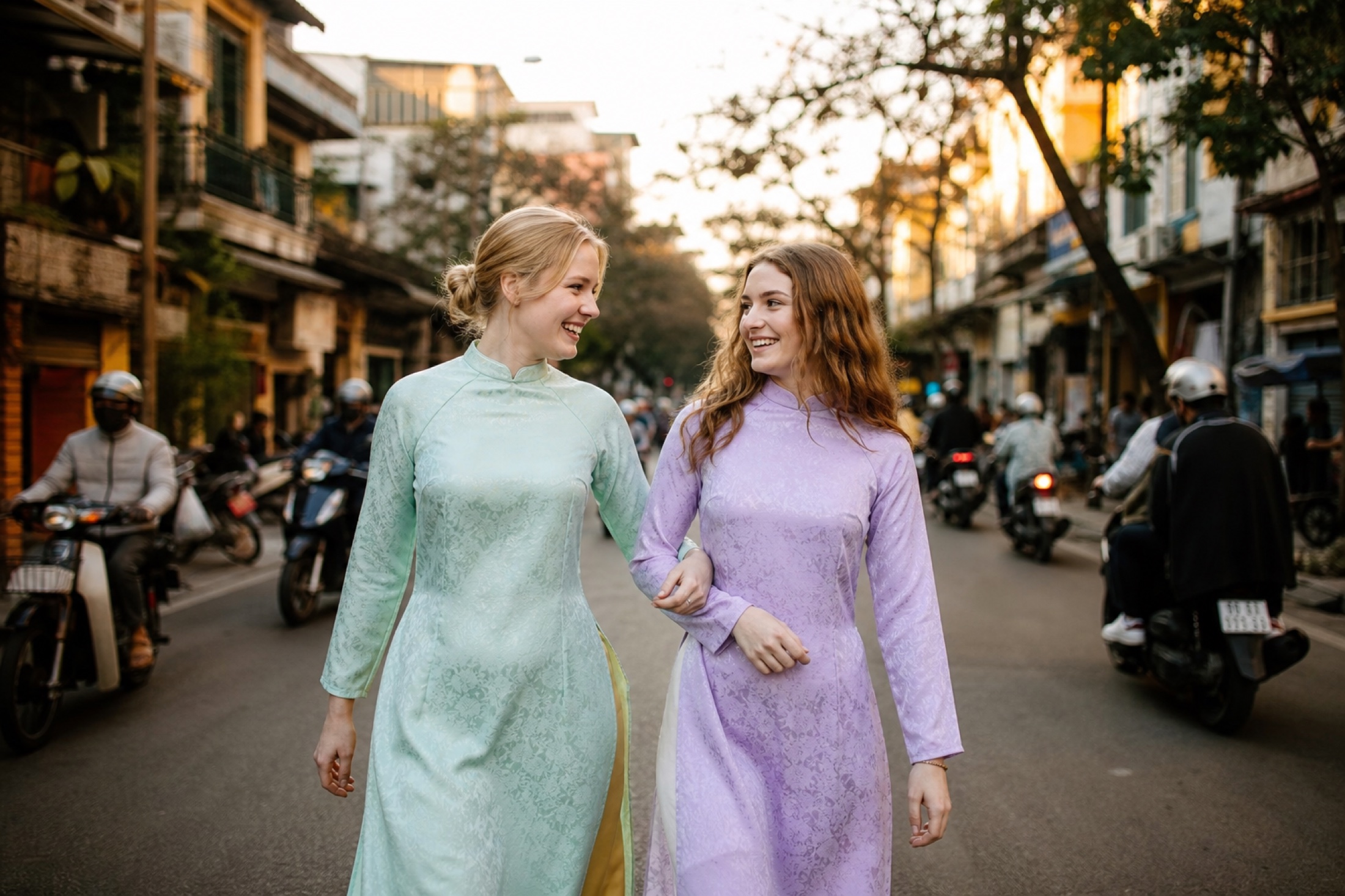
What Light Timing and Season Work Best for Shooting There?
Golden hour—the first 90 minutes after sunrise or the final 60 minutes before sunset—bathes the pagoda in warm, directional light that sculpts the brick tower and softens facial features. Early morning shoots (6:30–8:30 a.m.) offer the clearest skies, fewer tourists, and a misty riverside atmosphere; late afternoon (4:30–6:30 p.m.) gives warmer, more dramatic tones if clouds cooperate. Autumn (Oct–Nov) in Hanoi delivers cool air, minimal haze, and predictably dry mornings—the most reliable season for pre-wedding shoots here. Winter (Dec–Feb) is cooler (10–20°C) but often overcast and drizzly; midday overcast actually helps by diffusing shadows, though the sky reads flat. Spring (Mar–Apr) is mild but humid with frequent haze; summer (May–Sep) brings intense heat (35°C+), heavy downpours, and typhoon-remnant risk. If you shoot in winter or spring, expect softer, cooler-toned light; plan for longer post-processing to recover detail in bright skies.
Which Outfit Choices Work Best at the Pagoda?
| Outfit Type | Best For | Light/Season | Why It Works |
|---|---|---|---|
| Ao dai (traditional silk) | Cultural cohesion, formal narrative | Autumn, early morning | Fabric drapes in still air; honors temple setting; warm light catches embroidery. |
| Western wedding dress | Contemporary elegance, contrast | Autumn, late afternoon | Crisp lines pop against weathered brick; golden hour flatters pale fabrics. |
| Casual (linen, tailored shirt) | Intimate, timeless feel | Any season | Negotiates temple respect; photograph well in diffuse light; no weather risk. |
| Hybrid (ao dai top + modern skirt) | Modern Vietnamese fusion | Spring, autumn | Bridges tradition and trend; lighter than full ao dai; flexible for temperature. |
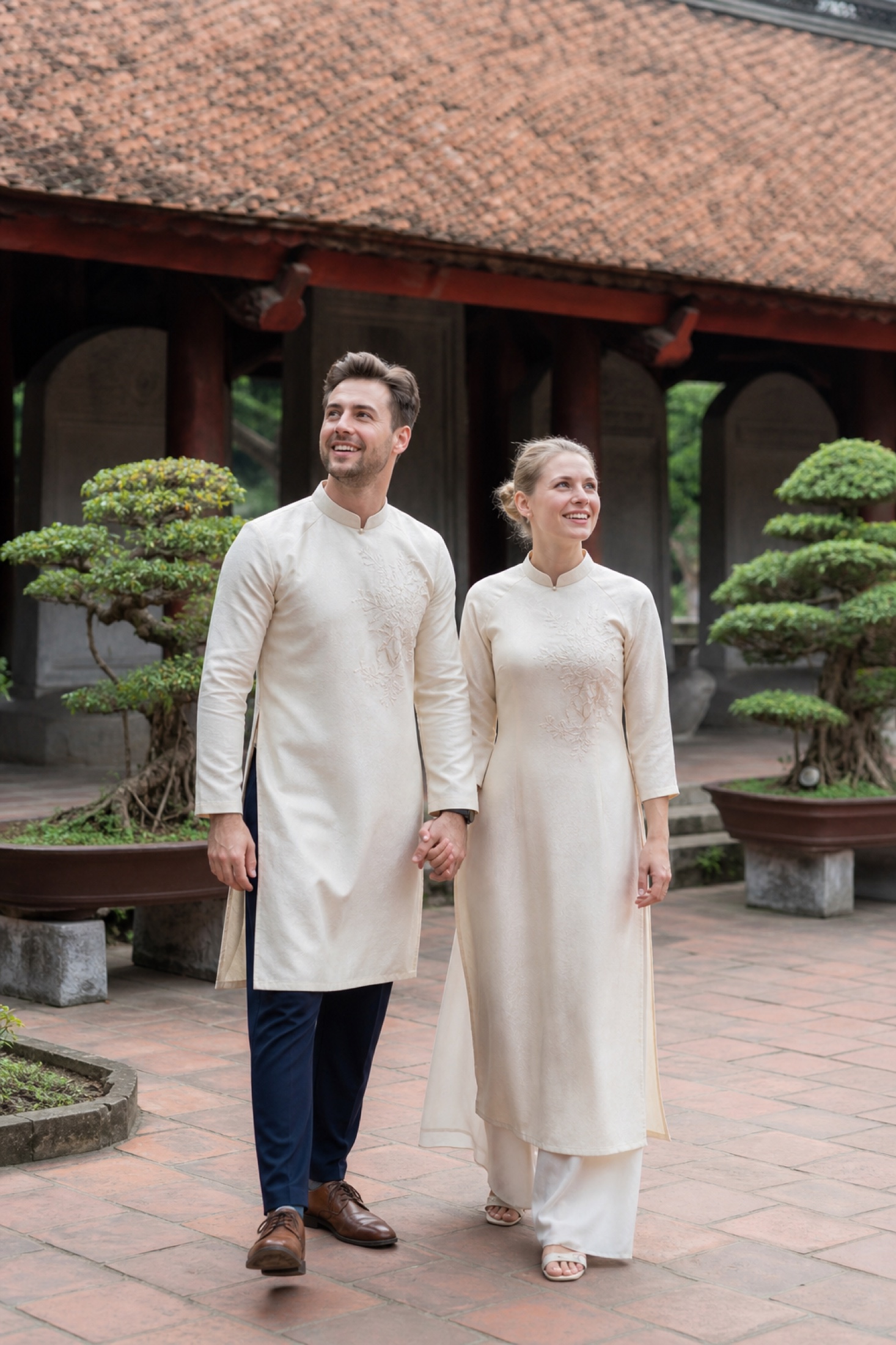
| Groom formal (suit or traditional tunic) | Matched elegance | Autumn, early morning | Structured tailoring reads sharp in contrast light; temple formality suits formal wear. |
Ao dai (a traditional Vietnamese tunic dress) is not mandatory—many couples choose it for its cultural weight and photogenic drape, but Western bridal wear and casual clothing also photograph beautifully there. If you wear an ao dai, confirm fit and fabric weight beforehand; silk ai dai can feel restrictive after 2+ hours in summer heat. Casual outfits avoid the formality trap and feel more relaxed on the river edge. Grooms often choose either formal Western suits or a matching ao dai tunic; darker tones (navy, charcoal, black) frame the pagoda's stone architecture well.
💄 Makeup & hair at your hotel | 🌸 See the lookbook | 🎥 Learn about wedding video
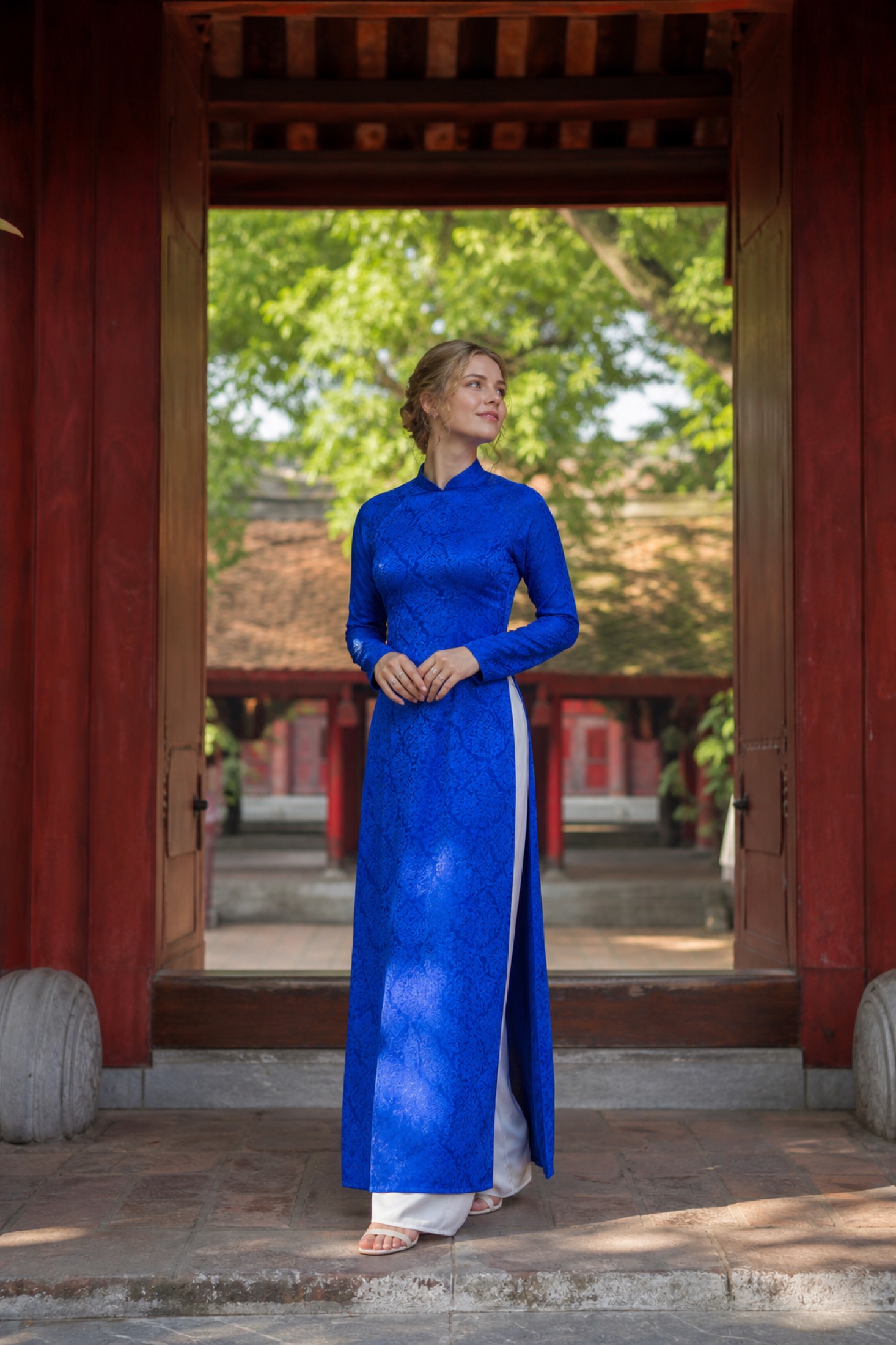
How Should You Position Yourself and What Poses Deliver Strong Images?
Strong poses at Tran Quoc Pagoda leverage the architecture and couple geometry: walk-and-turn sequences along the stone bridge (her hand on his chest, looking back over shoulder) use the river as a leading line; embrace poses on the upper temple terrace, framed by the brick tower and sky, emphasize intimacy against grandeur. Sit on temple steps with the pagoda staircase ascending behind you—the diagonal lines add visual energy. Backlit poses (sun low behind you, couple in silhouette or rim-lit) work well late afternoon with the river glistening. Close-up foreground poses (hands, details, rings framed by temple stone) anchor the intimate story. Slow, deliberate movement—walking, adjusting each other's collar, gazing—photographs better than static standing; avoid rigid military posture. The photographer composes wide environmental shots (both of you tiny against the pagoda), medium framing (waist-up, pagoda in background), and macro (hands, fabric detail, facial closeness). A skilled photographer shoots 200–400 frames over a 2.5-hour session; the specific count and edited file count depend on your package—confirm exact details on WhatsApp.
What Practical Logistics Should You Confirm Before Booking?
Before committing, clarify: Does your pre-wedding photoshoot package include makeup and hair, or do you arrange that separately at your hotel via Cáo Studio's makeup service? How many outfit changes are included, and does the shoot time extend if you change? Is the session Hanoi-based, and does travel time from your hotel to the pagoda factor into the quoted duration? What is the weather backup plan—does rain reschedule you, or does the photographer adapt to overcast light? Can you bring a family member or maid of honor for moral support, or does the photographer prefer an intimate crew? When do you receive edited files—days, weeks, or months? Do you get a private online gallery or hard-copy album, and what are the options? Ask whether the photographer has temple access permission and whether there are photography restrictions at certain courtyards. Confirm the final session date at least one week ahead; the pagoda can be closed unexpectedly for ceremonies. Request a shot list or mood board exchange beforehand so the team understands your priorities (romantic, playful, moody, cultural storytelling).
📸 Book on WhatsApp — pre-wedding photoshoot | 🎥 Explore wedding video options | 📷 View the lookbook
How Do Session Costs Break Down, and What Factors Should You Weigh?
Cost is shaped by season, outfit count, crew size, and add-ons—never a flat fee. Autumn shoots cost more than winter; multiple outfit changes extend time and editing load; adding an on-site makeup artist increases crew expense; printing or album binding adds material and labor. Travel from downtown Hanoi to the pagoda (about 4 km north) affects scheduling; early-morning shoots require earlier crew arrival. If you choose Cáo Studio's Hanoi-based team, the quote reflects their experience there, local permits, and editing turnaround. Compare three factors: (1) Light quality at your chosen date—is it autumn clarity or winter overcast? (2) Outfit ambition—one outfit (lowest variable cost) versus three (triple editing and styling time). (3) Crew scope—photographer only versus photographer + makeup artist + assistant. Request a pricing breakdown on WhatsApp; the team explains cost drivers without a published price tag. Avoid choosing purely on budget; a cheaper quote often means fewer edits, smaller file formats, or shorter shoot time.
What to Check Before You Book
- Season and weather forecast: Confirm autumn/dry-season dates; rain shoots require backup planning.
- Outfit logistics: Do you own or rent your ao dai or dress? Confirm fit two weeks ahead.
- Makeup and hair: Book on-site styling through Cáo Studio or arrange independently; coordinate timing.
- Temple access and restrictions: Ask whether certain courtyards prohibit photography or require permits.
- Backup date: Clarify reschedule policy if weather is unsafe or the pagoda is closed.
- File delivery and format: Ask for resolution, editing timeline, and whether you receive RAW or JPEG.
- Crew experience: Request to see a previous pagoda shoot in the lookbook.
- Group size and timeline: Confirm who attends (couple only, family, friends) and exact shoot window.
---
FAQ
Is an ao dai required for a pre-wedding shoot at Tran Quoc Pagoda?
No. Ao dai is traditional and photogenic, but Western bridal wear, casual linen, and hybrid outfits all work beautifully there. Choose what feels authentic to your story and comfortable for 2–3 hours. Confirm your choice with the photographer when booking.
What time of day gives the best light at the pagoda?
Early morning (6:30–8:30 a.m.) or late afternoon (4:30–6:30 p.m.) during golden hour offer warm, flattering light. Autumn (Oct–Nov) is most reliable; winter and spring often produce overcast, diffused light, which softens shadows but flattens sky tone.
How many hours should a pagoda shoot take?
Most pre-wedding shoots run 2–3 hours, allowing time for arrival, outfit change, posing sequences across multiple zones, and buffer for light or weather shifts. Confirm the exact duration and what's included in your package on WhatsApp.
Can we have family or friends attend the shoot?
Many couples invite close family or a maid of honor for moral support. Discuss group size with the photographer beforehand; large groups can slow posing flow and distract from couple intimacy. A small, quiet presence usually works fine.
Does the pagoda charge an entry fee for photography?
Entry to Tran Quoc Pagoda is free, but ask your photographer whether they have an existing relationship or permits that streamline access. Some shoots require early coordination to avoid conflicts with temple ceremonies or crowded tourist hours.
What happens if it rains on my shoot date?
Confirm your package's weather backup plan when booking. Options include rescheduling to a clear date, shooting in light rain (overcast light softens shadows), or relocating to a covered temple courtyard. Cáo Studio advises based on forecast and your comfort.
Should we rent or buy our wedding outfits?
Rental (ao dai, dress, suit) is popular for pre-wedding shoots—try different styles without ownership cost. Buying is ideal if you want the exact design or plan to wear the outfit again. Cáo Studio can recommend local rental partners or coordinate with your chosen vendor.
How long until we receive edited photos?
Turnaround varies by package; ask Cáo Studio for the exact timeline (typically weeks, not months). Confirm whether you receive a private gallery link, physical album, or both, and in what file format (JPEG, RAW, print-ready resolution).
FAQ
Is an ao dai required for a pre-wedding shoot at Tran Quoc Pagoda?
No. Ao dai is traditional and photogenic, but Western bridal wear, casual linen, and hybrid outfits all work beautifully there. Choose what feels authentic to your story and comfortable for 2–3 hours. Confirm your choice with the photographer when booking.
What time of day gives the best light at the pagoda?
Early morning (6:30–8:30 a.m.) or late afternoon (4:30–6:30 p.m.) during golden hour offer warm, flattering light. Autumn (Oct–Nov) is most reliable; winter and spring often produce overcast, diffused light, which softens shadows but flattens sky tone.
How many hours should a pagoda shoot take?
Most pre-wedding shoots run 2–3 hours, allowing time for arrival, outfit change, posing sequences across multiple zones, and buffer for light or weather shifts. Confirm the exact duration and what's included in your package on WhatsApp.
Can we have family or friends attend the shoot?
Many couples invite close family or a maid of honor for moral support. Discuss group size with the photographer beforehand; large groups can slow posing flow and distract from couple intimacy. A small, quiet presence usually works fine.
Does the pagoda charge an entry fee for photography?
Entry to Tran Quoc Pagoda is free, but ask your photographer whether they have an existing relationship or permits that streamline access. Some shoots require early coordination to avoid conflicts with temple ceremonies or crowded tourist hours.
What happens if it rains on my shoot date?
Confirm your package's weather backup plan when booking. Options include rescheduling to a clear date, shooting in light rain (overcast light softens shadows), or relocating to a covered temple courtyard. Cáo Studio advises based on forecast and your comfort.
Should we rent or buy our wedding outfits?
Rental (ao dai, dress, suit) is popular for pre-wedding shoots—try different styles without ownership cost. Buying is ideal if you want the exact design or plan to wear the outfit again. Cáo Studio can recommend local rental partners or coordinate with your chosen vendor.
How long until we receive edited photos?
Turnaround varies by package; ask Cáo Studio for the exact timeline (typically weeks, not months). Confirm whether you receive a private gallery link, physical album, or both, and in what file format (JPEG, RAW, print-ready resolution).
Ao dai, makeup, hair and a local photographer in Hanoi or Saigon — one WhatsApp message.