/pre-wedding-photoshoot
Pre-wedding photo ideas at Moc Chau tea hills
Moc Chau tea hills work best for pre-wedding shoots in January–February (cooler, misty mornings; blossoms frame the terraces) or July–August (deep green, dramatic skies before rain). Soft side light hits the slopes at dawn (6–7 am) and late afternoon (4–5 pm); midday is flat and harsh. Poses that work: walking into the distance along a ridge, sitting together on a tea-picker's path, silhouettes against the mist. Cáo Studio operates in Hanoi, Ho Chi Minh City and Hoi An; for Moc Chau (a northern hill station, 150 km from Hanoi), hire a local photographer with a second outfit and makeup artist as part of one team — avoid booking three vendors separately. Check their portfolio for similar terrain, ask how they handle weather shifts, and confirm turnaround time before deposit. 📸 Book on WhatsApp — pre-wedding shoot ---
What makes Moc Chau different from central Vietnam pre-wedding spots?
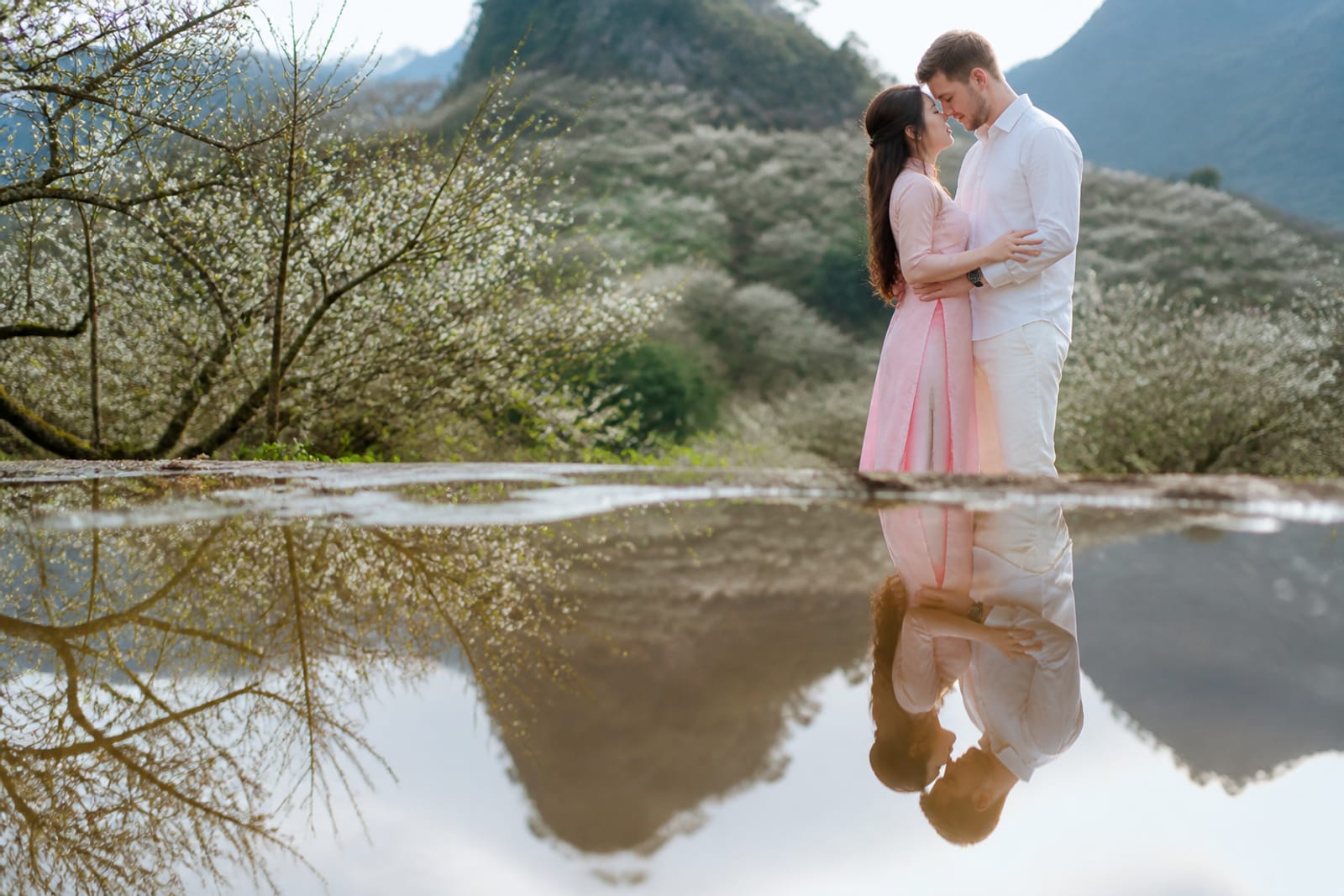
Moc Chau sits in the north's cool zone (altitude ~1,000 m). Unlike coastal sites (Hoi An, Da Nang), it has no urban monuments — only hills, tea, mist and small villages. This means fewer tourists, intimate framing, and real weather drama (mist rolls in and out in 20 minutes). The terraces are genuinely green year-round; in winter (Dec–Feb), plum and cherry blossoms bloom near roads and farm gates, adding a soft foreground layer. Central coast offers temples and lanterns; Moc Chau offers solitude and texture. For couples who want monuments, heritage and a same-day turnaround, Cáo Studio's Hanoi pre-wedding service combines the Old Quarter's French colonial light with day trips to Ninh Binh's karst valleys—all with one team handling makeup, outfit and film.
When should you shoot at Moc Chau — and why season matters more than you think?
| Season | Light quality | Crowds | Outfit fit | Best for | Why it works |
|---|---|---|---|---|---|
| Dec–Feb (winter) | Soft, overcast; dawn mist lingers until 8 am | Very low | Layers, long sleeves, sweater over ao dai | Romantic, intimate frames | Blossoms frame the terraces; mist creates natural depth |
| Mar–Apr (spring) | Bright, direct; high contrast | Low | Light layers; heat builds mid-morning | Bold color, high detail | Clear skies, but heat wilts makeup by 9 am |
| May–Sep (summer) | Green, dramatic; afternoon clouds gather | Low weekdays, high weekends | Sleeveless, breathable | Drama, depth, moody tones | Deep green tea; risk of afternoon downpours; short windows |
| Oct–Nov (autumn) | Warm, golden early morning; rain likely | Medium | Waterproof layers | Secondary shoot (backup to winter) | Monsoon unpredictable; mist and drama, but timing tight |
Winter and early spring win for reliability and botanical framing. Ask your local photographer how they light on overcast mornings — many shooters rely on cloud bounce (free fill light), so confirm they scout the route beforehand.
Which poses work on sloped terrain — and why framing matters more than posing?
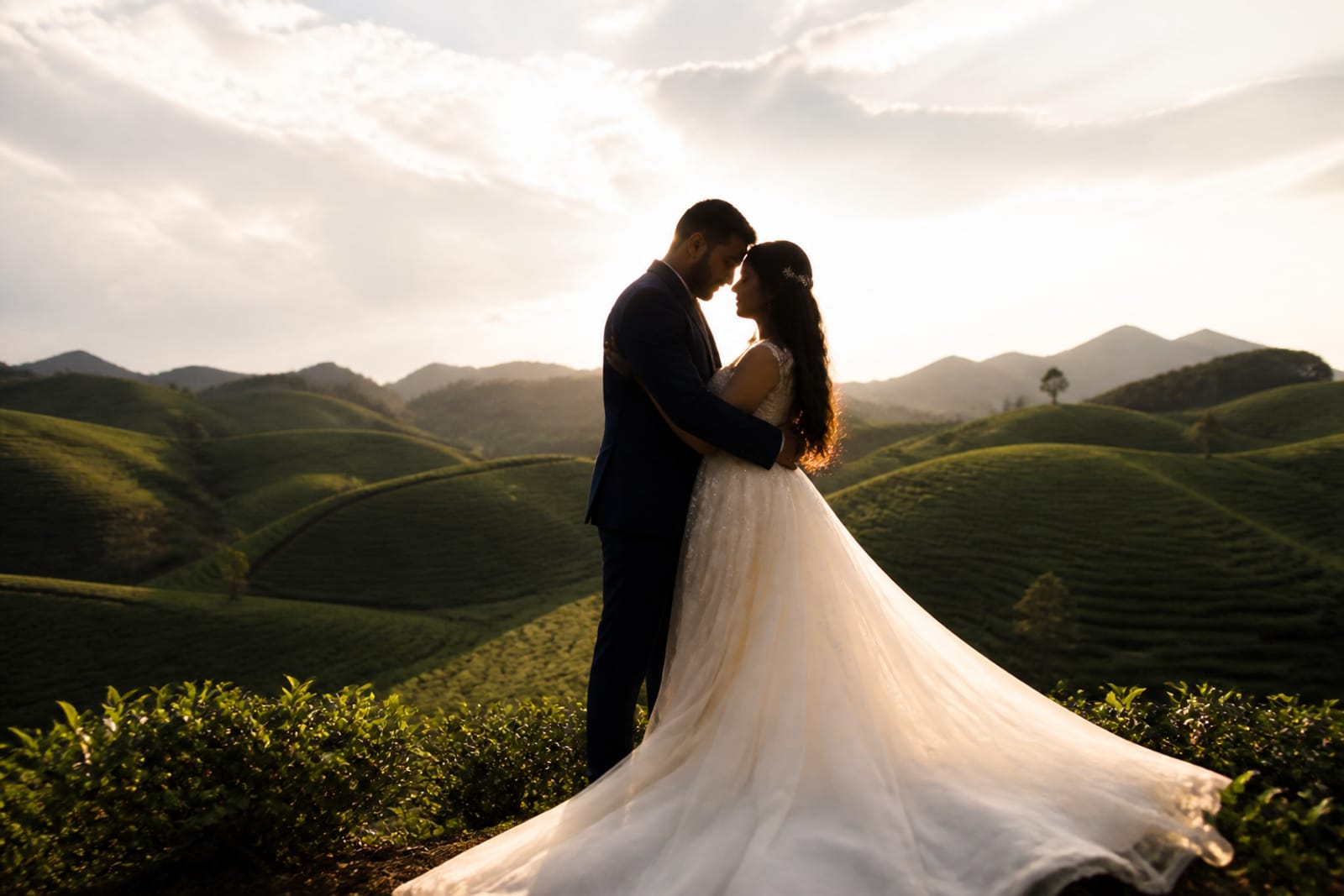
On a slope, traditional "face the camera" poses flatten the image. Instead, direct poses around movement and environment: walking away into the distance (shows the landscape), sitting on a tea-picker's path (hands together, looking at each other), standing on a ridge silhouetted at dusk. Real light is the pose — a couple backlit against mist becomes iconic without effort. Ask your photographer to show you frames from a similar shoot (not just a highlight reel): wide shots that include the terrain, then medium (two-shot), then close detail (hands, fabric). This progression tells a story instead of stacking static portraits.
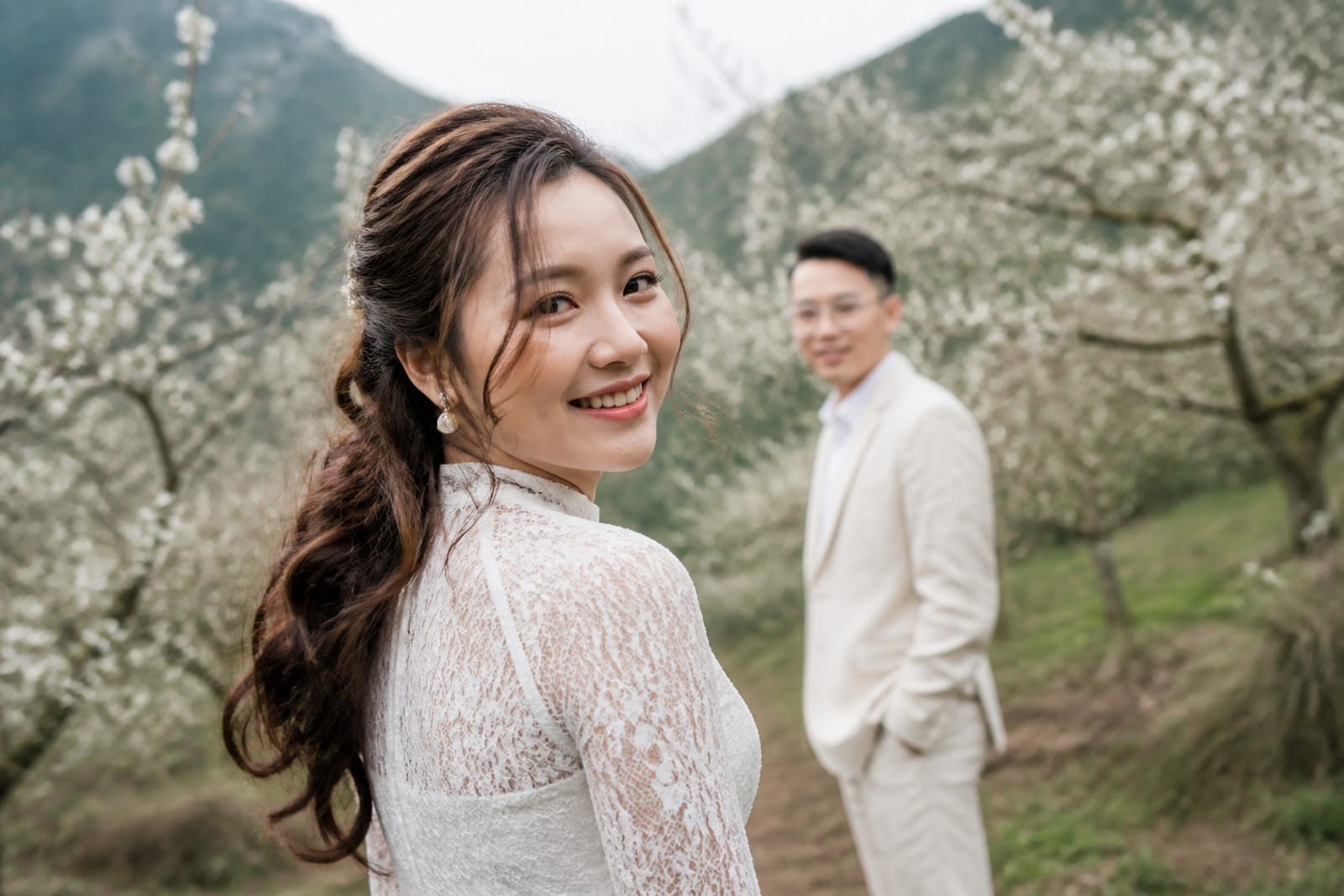
One angle competitors miss: outfit continuity. If you bring two outfits (ao dai for morning, casual for afternoon), the best light window narrows — you're changing when the sun is ideal. Cáo Studio's approach: one message, one outfit. For Moc Chau with a local team, bring one primary outfit in a color that holds in overcast light (jewel tones, earth tones—not pale pastels) and one spare layer (shawl, cardigan) for weather shifts. Confirm with your photographer whether they'll frame you in the landscape or compose tighter portraits.
How do you find and vet a local Moc Chau photographer — and what to ask?
Moc Chau has no large studios. Search for northern Vietnam pre-wedding photographers on Facebook and Instagram (search terms: "pre-wedding Moc Chau" or "chup pre-wedding Moc Chau"). Shortlist 3–4 with portfolios showing terrain and natural light, not studio posing.
Before booking:
- Portfolio check: ask for 3 full shoots in similar hill/farm terrain (not just studio work or city shoots).
- Team setup: confirm one booking includes photographer + makeup artist + (optionally) wardrobe stylist. Separate vendors mean timing gaps and conflicting ideas.
- Scout and weather protocol: do they scout the location beforehand? What happens if mist clears or rain starts? Ask for a "plan B" (second location within 20 km).
- Turnaround time: request delivery dates in writing (usually 2–4 weeks for edited files).
- Outfit and hair: are makeup and styling included, or booked separately? Confirm in the quote.
- Transport: who covers vehicle costs between sites? Ask upfront—no surprises.
- Number of photos and edits: ask how many shots they deliver edited (not just raw files). Reputable teams deliver 40–80 edited frames, not 200 uncurated images.
Why many couples choose Hanoi or Hoi An with Cáo Studio instead — and when that's the better call?
Moc Chau requires a 3–4 hour drive from Hanoi, plus timing pressure (one weather window per day). For couples with limited time (1–2 days in Vietnam), Cáo Studio's Hanoi base offers heritage light without travel friction. Hanoi's Old Quarter (narrow streets, shuttered windows, soft golden hour light at 5–6 pm), the Red River (dawn mist, promenade walks), and day trips to Ninh Binh (karst valleys, limestone reflections) are all within reach, shoot-ready, and include a same-day or 48-hour edit turnaround with makeup and outfit handled by one team.
Moc Chau suits couples who:
- Have 2+ days in northern Vietnam.
- Want isolation and natural terrain (not urban landmarks).
- Are willing to book a local photographer and manage logistics independently.
- Prioritize botanical framing (blossoms, tea terraces) over architectural heritage.
Cáo Studio suits couples who:
- Want a complete experience (photographer + makeup + outfit) in one booking.
- Prefer quick turnaround and a director's eye on framing.
- Are based in Hanoi, Ho Chi Minh City or can visit Hoi An.
- Need wedding video alongside stills.
Ask yourself: are you traveling for the landscape, or for a full production experience? Moc Chau = landscape-led. Cáo Studio = experience-led with location as a tool.
What to check before you book a Moc Chau shoot or book with Cáo Studio?
For a local Moc Chau photographer:
- Portfolio shows terrain, not just posed couples.
- Team includes makeup; if not, how is hair and makeup handled (self, hotel referral, extra cost)?
- Written protocol for weather delays (rescheduling, backup location, refund terms).
- Deposit and payment split clear upfront (never 100% prepay—split 50/50 or 60/40).
- Delivery timeline in the quote (2–3 weeks is standard; 48-hour "rush" costs more).
- Transport covered or cost transparent (not hidden in final invoice).
For Cáo Studio shoots:
- Review the FAQ and lookbook to confirm style alignment.
- Contact on WhatsApp (+84 338 762 340) with dates and rough budget; get a quote before committing.
- Confirm exact inclusions (outfit, makeup, number of edited files, video format) — these vary by package.
- Ask whether your location (Hanoi, Hoi An, or a day trip from Hanoi) fits their usual schedule.
Budget factors (not amounts — ask locally and on WhatsApp):
- Season (peak warmth and crowds cost more; winter is shoulder rate).
- Travel time (Moc Chau adds transport; Hanoi within the city is simpler).
- Number of outfits (one outfit = faster shoot; two = more time, higher cost).
- Makeup and styling (confirm if included or separate).
- Video (stills + short film = premium add-on).
FAQ
Is Moc Chau better than Hoi An for a pre-wedding shoot?
Depends on your priority. Moc Chau offers terrain and isolation; Hoi An offers heritage, lanterns and a built studio base. Moc Chau needs a 3-hour drive and local photographer; Hoi An with Cáo Studio is one-team, documented. Choose Moc Chau for landscape; Hoi An for heritage and support.
What months have the best light at Moc Chau?
January–February (cool, misty, blossoms) and July–August (deep green, dramatic skies). Avoid Oct–Nov (monsoon risk). Check weather weekly closer to your date and confirm a backup plan with your photographer.
Do I need an ao dai for a Moc Chau shoot?
No. Ao dai is cultural and elegant; casual outfits (linen, earth tones) also work in nature. Confirm your outfit color reads well in overcast light — jewel tones and earth tones hold better than pale pastels on grey days.
How much does a Moc Chau photographer cost compared to Cáo Studio?
Cost factors include season, team size, travel time and turnaround. Get quotes from local photographers and WhatsApp Cáo Studio for Hanoi options; do not prepay more than 50%. Prices vary; ask for itemized quotes.
Can Cáo Studio shoot in Moc Chau?
Cáo Studio operates in Hanoi, Ho Chi Minh City and Hoi An. For Moc Chau, hire a local northern Vietnam photographer. For Hanoi day trips (Ninh Binh, Red River), Cáo Studio's Hanoi team covers logistics and delivers in 48 hours with makeup included.
What if rain happens on my Moc Chau shoot day?
Confirm your photographer's protocol upfront — do they reschedule, shoot in the rain (dramatic, but wet outfits), or have a nearby indoor backup? Northern Vietnam winters are overcast; mist is normal and often photogenic. Plan for wet weather.
How many photos do I get from a Moc Chau shoot?
Reputable teams deliver 40–80 edited frames, not 200 unedited. Ask your photographer for a specific number before booking. Cáo Studio's pre-wedding package details are confirmed on WhatsApp. ===
FAQ
Is Moc Chau better than Hoi An for a pre-wedding shoot?
Depends on your priority. Moc Chau offers terrain and isolation; Hoi An offers heritage, lanterns and a built studio base. Moc Chau needs a 3-hour drive and local photographer; [Hoi An with Cáo Studio](/hoi-an) is one-team, documented. Choose Moc Chau for landscape; Hoi An for heritage and support.
What months have the best light at Moc Chau?
January–February (cool, misty, blossoms) and July–August (deep green, dramatic skies). Avoid Oct–Nov (monsoon risk). Check weather weekly closer to your date and confirm a backup plan with your photographer.
Do I need an ao dai for a Moc Chau shoot?
No. Ao dai is cultural and elegant; casual outfits (linen, earth tones) also work in nature. Confirm your outfit color reads well in overcast light — jewel tones and earth tones hold better than pale pastels on grey days.
How much does a Moc Chau photographer cost compared to Cáo Studio?
Cost factors include season, team size, travel time and turnaround. Get quotes from local photographers and [WhatsApp Cáo Studio](/pre-wedding-photoshoot) for Hanoi options; do not prepay more than 50%. Prices vary; ask for itemized quotes.
Can Cáo Studio shoot in Moc Chau?
Cáo Studio operates in Hanoi, Ho Chi Minh City and Hoi An. For Moc Chau, hire a local northern Vietnam photographer. For Hanoi day trips (Ninh Binh, Red River), [Cáo Studio's Hanoi team](/hanoi) covers logistics and delivers in 48 hours with makeup included.
What if rain happens on my Moc Chau shoot day?
Confirm your photographer's protocol upfront — do they reschedule, shoot in the rain (dramatic, but wet outfits), or have a nearby indoor backup? Northern Vietnam winters are overcast; mist is normal and often photogenic. Plan for wet weather.
How many photos do I get from a Moc Chau shoot?
Reputable teams deliver 40–80 edited frames, not 200 unedited. Ask your photographer for a specific number before booking. Cáo Studio's [pre-wedding package](/pre-wedding-photoshoot) details are confirmed on WhatsApp. ===
Ao dai, makeup, hair and a local photographer in Hanoi or Saigon — one WhatsApp message.