/pre-wedding-photoshoot
Pre-wedding Photo Ideas & Poses at Japanese Covered Bridge Hoi An
The Japanese Covered Bridge (Chùa Cầu) is a 16th-century wooden structure spanning the Thu Bon River, centrepiece of Hoi An Ancient Town. Pre-wedding shoots there run 1–3 hours, typically at sunrise (5:30–6:30 a.m., quietest and softest light) or dusk (lanterns lit, crowded by 7 p.m.). You'll need an Ancient Town entrance ticket; the bridge is part of the ticketed zone. Best months are February–April (cool, dry, green rice fields) and August (dry, though very hot). Avoid October–November (typhoon season, flooding risk). Cáo Studio – Makeup & Photoshoot runs pre-wedding sessions in Hoi An by appointment—the team travels from Hanoi or Saigon. Poses work best when you book a professional who knows the bridge's angles, light shifts and entry/exit flow to avoid other tourists. Budget time for hair, makeup and travel to the site; cramped bridge footwork requires patience and trust in your photographer's guidance. ---
What makes the Japanese Bridge the top pre-wedding choice?
Symmetry, light and story converge here. The bridge's arched wooden roof frames the couple inside a warm, enclosed stage; water reflects dawn and dusk light; the red railings and lanterns read as luxury in any frame. Hoi An's entire Ancient Town is a UNESCO site, so shooting anywhere near it signals heritage and investment. The bridge is also walkable from most hotels and cafés, lowering logistical stress. Every couple sees the same iconic shot—which is both its strength (recognisable, timeless) and its challenge (your shots risk blending into the cultural-tourism archive). The best pre-wedding photographers here compose variations: bride walking towards groom, both facing the river, close-ups on the railings, silhouettes at sunrise, detail shots of dress folds against wood texture.
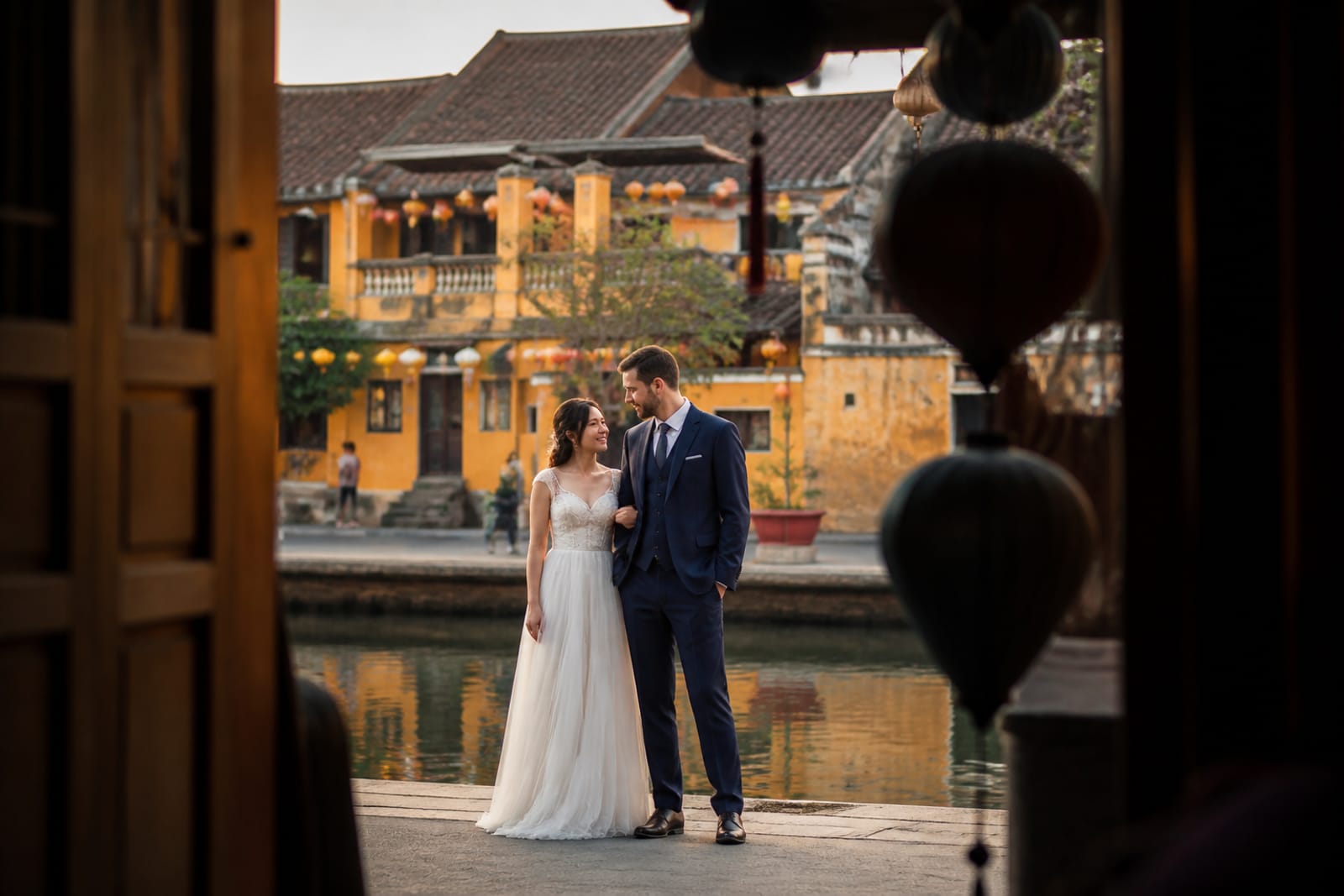
When should you book—season, time and crowd reality?
| Season | Light & Weather | Crowds | Outfit Challenge | Best For |
|---|---|---|---|---|
| Feb–Apr | Soft, cool, dry; rice paddies green | Early morning quiet | Ao dai layers fit; no heat sweat | Comfort, detail shots, romance |
| May–Aug | Intense heat (35°C+), dry | Sunrise less crowded; midday packed | Heat damage to makeup; ao dai fabric clings | Sunrise-only sessions; hardy couples |
| Sep–Dec | Humid, rainy, typhoons; Oct–Nov worst | Unpredictable; rain clears crowds | Puddles, wet fabric, makeup runoff | AVOID—flooding risk in Ancient Town |
| Late Dec–Jan | Cool, often drizzly | Moderate | Light layering works | Quiet, moody, fewer tourists |
Direct answer: Book February–April if you want ease and green scenery. Sunrise (any month except Oct–Nov) beats mid-morning. October–November are closed—the Ancient Town floods; the bridge footbridge becomes dangerous. Tet (late Jan–mid Feb) crowds the site and closes many services; book around it.
📸 Book on WhatsApp — pre-wedding photoshoot
What poses actually work on a narrow wooden bridge?
The bridge is roughly 5 metres long and 3 metres wide—cramped. Generic "walk towards me" or "kiss on the railing" poses work, but they trap you in a queue with other tourists. Professional photographers who've shot there repeatedly know:
- Groom-framing shot: bride walks toward groom standing in mid-bridge archway; his silhouette contains her motion (requires a second shooter or a tripod outside the bridge).
- Hands & details: close-ups of rings, dress hem, ao dai embroidery against the bridge's red wood—no crowd issues, infinite time to compose.
- Dusk lantern portrait: one couple, lanterns lit behind, water still; shoot ~6:15–6:45 p.m., before peak lantern-night crowds (full-moon nights are busiest).
- River-side exit: leave the bridge via the river path; shoot the bride & groom walking away, bridge framing them small in the distance (requires permission and local knowledge to access safely).
- Staircase approach: shoot them climbing the bridge's entrance stairs (far less crowded than the bridge itself; wooden steps, dramatic angles).
Avoid: long, static "gaze into distance" poses—other tourists photobomb constantly, especially 8 a.m.–5 p.m. Move fast, shoot 30+ frames per pose, or go sunrise.
Ao dai versus Western dress—which photographs better here?
| Outfit Type | Light Behaviour | Movement & Footwork | Historic Fit | Practical Limits |
|---|---|---|---|---|
| Ao dai (silk, brocade) | Jewel tones pool light beautifully; folds catch dawn soft-box effect | Long split skirt clears bridge railings; no tripping; walks smoothly | UNESCO site amplifies authenticity; lantern-lit evening iconic | Heat damage in May–Aug; requires undergarment (avoid white on red bridge) |
| Western wedding dress | Satin catches highlights harshly; white overexposes in sunrise; tulle grabs moisture | Train tangles on wooden steps & railings; veil catches on archway; limits stairs | Contrasts with heritage; reads "destination wedding" | Heavy fabric, hot, puddle-prone in rainy season |
| Ao dai + Western-style groom suit | Colour contrast; both fabrics move freely | Best footwork; no tangling | Balanced modern–heritage message | Groom overheats in suit; recommend linen blend |
Direct answer: Ao dai photographs best on the Japanese Bridge. The split skirt moves like silk on water; jewel colours—crimson, emerald, navy, gold—read richly against wood, water and lantern light. Western dresses get backit harshly at sunrise, and trains catch the bridge's railings. If you love a Western dress, book a dusk session (7–8 p.m., softer, scattered light) and plan for a custom undergarment to manage the bridge's narrow gaps. Hire a professional who's fitted couples on this bridge before—footwork coaching matters more than outfit type.
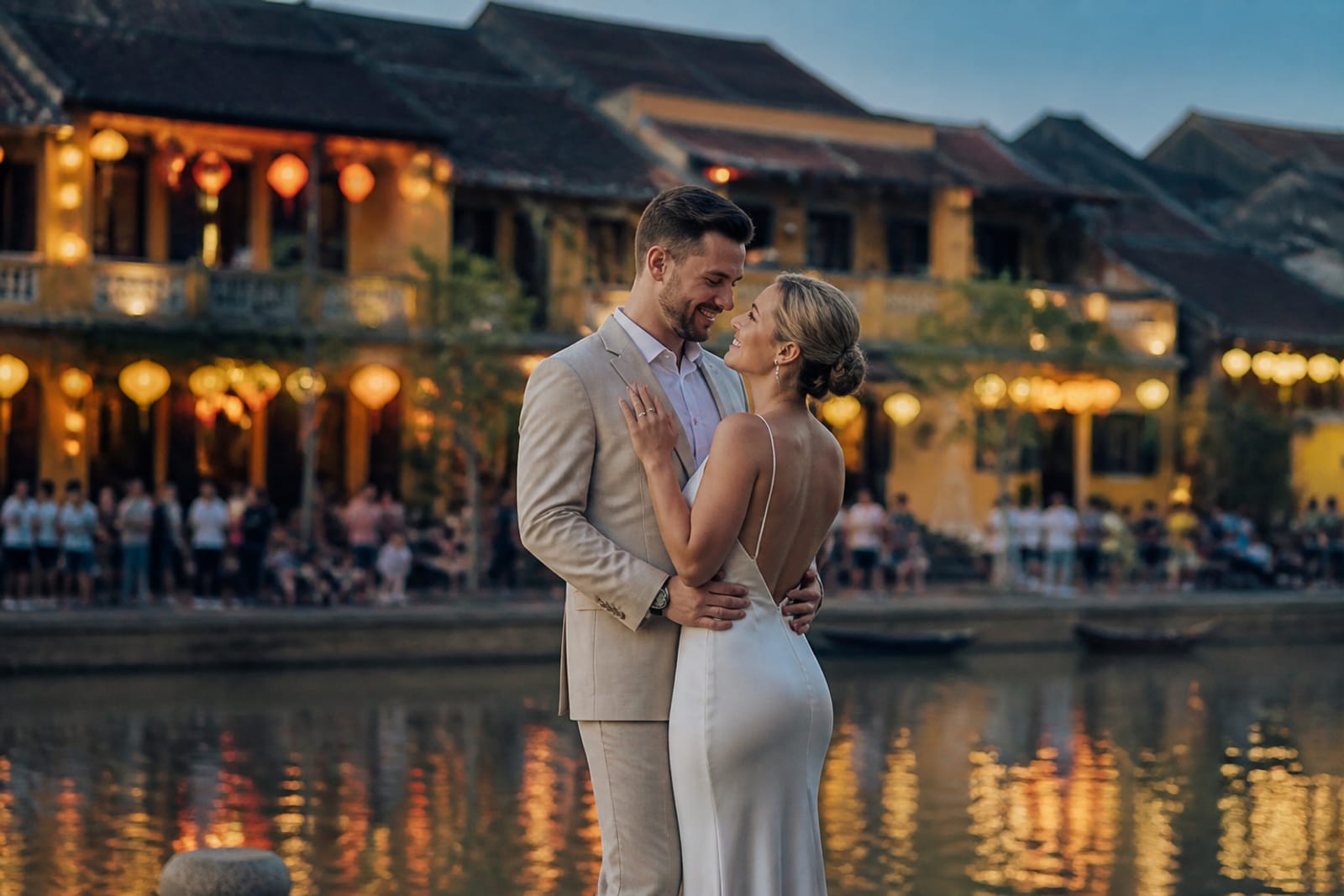
How do you book a photographer for this specific location?
You have three routes:
Route 1: Studio-based team (Cáo Studio – Makeup & Photoshoot) A Hanoi or Saigon studio sends a photographer + makeup artist to Hoi An by appointment. Pros: consistent portfolio, contracted timeline, backup team, edited files within a known period. Cons: travel markup factors into cost; book 4–6 weeks ahead so the team can coordinate logistics. Ask on WhatsApp for Hoi An availability and exact inclusions—sessions, outfit changes, delivery format and timing are confirmed one-to-one.
Route 2: Hoi An-based freelancer or small studio Cheaper, intimate, knows the bridge intimately. Pros: same-day booking possible; local contacts for permits (if needed). Cons: variable portfolio quality; no backup if they cancel; communication often via translation or broken English; no formal contract standard. Use Google Maps reviews, Instagram geotags and ask your hotel concierge.
Route 3: Hotel concierge or package deal Hotels bundle "pre-wedding shoot" with makeup, outfit rental, album. Pros: one phone call; logistical simplicity. Cons: mark-up; photographer may be local freelancer unknown to you; limited artistic direction. Check their portfolio first—many are generic.
For Cáo Studio bookings: WhatsApp +84 338 762 340 with your dates, outfit preferences (ao dai, Western, both), sunrise vs. dusk, and preferred edits. The team will confirm Hoi An slot availability and tailor the session to your vision.
What logistics often trip up couples on-site?
Timing mismatches: You book sunrise (6 a.m.), but makeup takes 90 minutes and your hotel is 15 minutes away. You arrive at the bridge at 7:45 a.m. into peak-tourist zone. Fix: book makeup at your hotel the night before, or hire on-site hair/makeup from a Hoi An studio.
Crowd underestimation: The bridge holds maybe 12–15 people comfortably. By 7 a.m., tour groups queue. You shoot for 90 minutes and get 20 usable frames because strangers' heads bob behind every take. Fix: book a 5:30–6:30 a.m. sunrise (photographer must meet you earlier), or negotiate a private access window with the Ancient Town management (rare; ask your photographer to explore this).
Weather gear forgotten: It rained overnight; the bridge deck is slippery. Your bride's heels catch; the groom grabs the railing. Ao dai hem soaks up puddle water. Fix: bring grip-sole shoes or go barefoot on the bridge (acceptable in pre-dawn light); carry a lightweight shawl to drape over shoulders if wet; check the 5-day forecast and reschedule if Oct–Nov (typhoon risk).
Outfit transit: Your ao dai is in a hotel wardrobe 2 km away; hair is done; you're barefoot in a taxi. The driver is confused about the Ancient Town entrance. Fix: hire a driver familiar with Hoi An (your photographer's contact or hotel concierge); bring outfit in a garment bag, shoes in a separate tote; ask the photographer to meet you at a fixed hotel pickup point and brief the driver in advance.
Light vanishes: You wanted "golden hour" dusk; lanterns are lit at 6:50 p.m., but by 7:05 p.m. the sky is ink-black and 200 tourists crowd the bridge for the lantern-night experience. Fix: shoot 6:15–6:40 p.m., when lanterns glow but sky holds colour; or commit to full sunrise (5:30–6:45), not late-morning "golden hour" (which doesn't exist in tropical Hoi An in daylight savings era).
---
What to check before you book
- Portfolio: Ask to see ≥10 images shot at the Japanese Bridge, in the same season you're booking. Generic "couple in ao dai" shots from unrelated locations don't prove bridge competence.
- Timing detail: Confirm the exact start time (sunrise requires 5:30 a.m. hotel pickup, not 7 a.m.). Ask how many outfit changes are included; bridge sessions work best with 1–2 outfits (logistics).
- Weather & rescheduling: Verify the rescheduling policy in writing. Hoi An's rainy season (Sep–Dec) means real risk of cancellation. Confirm whether a rain date is free or costs extra.
- Makeup & hair: Ask whether it's included or separate. If separate, book a Hoi An salon (your photographer can recommend) or request hotel-pickup service.
- Deliverables & timeline: Clarify the number of edited images, format (digital files, prints, album), and turnaround time. WhatsApp the studio to confirm all details; don't assume.
- Permits & access: Some tourist-heavy times require Ancient Town management notice. Reputable photographers handle this; ask directly.
---
The bigger pre-wedding picture
The Japanese Bridge is stunning, but it's one location. Many couples shoot a pre-wedding photoshoot across multiple sites—Hoi An Ancient Town alleys, rice paddies near Tra Que, riverside at sunset, your hotel room for intimate portraits. If you're considering Hoi An, also explore:
- Couple photoshoot options: couple & family photoshoot packages often include flexibility across 2–3 Hoi An locations.
- Ao dai rental & styling: ao dai rental services in Hoi An let you change outfits mid-shoot; ask your photographer if changes are included.
- Video keepsakes: Pair still photos with wedding & pre-wedding video to capture the bridge's ambient sound and movement (lanterns, water, footsteps).
Cáo Studio – Makeup & Photoshoot brings Hanoi and Saigon expertise to Hoi An. See the lookbook for style examples, and reach out on WhatsApp to plan your session.
---
FAQ
Is the Japanese Covered Bridge open year-round for photography?
Yes, but avoid October–November (typhoon season causes flooding in Hoi An Ancient Town). The bridge itself is accessible daily, but poor weather and safety risks make those months unreliable for shoots. February–April and August are most predictable.
Do I need a permit to shoot pre-wedding photos on the bridge?
No personal permit required for tourists, but commercial shoots (hiring a professional photographer) should be cleared with Hoi An Ancient Town management. Established studios handle this; freelancers may not. Ask your photographer upfront whether they've coordinated with local authorities.
Can we shoot at dusk and still get clear photos?
Yes, 6:15–6:45 p.m. works well—lanterns glow, the sky holds warm colour, and fewer tourists linger. After 7 p.m., the sky blackens and the bridge becomes a lantern-night spectacle (beautiful, but crowded and hard to frame just the couple).
What's the best time of day to avoid other tourists?
Sunrise (5:30–6:45 a.m.) is by far the quietest. The bridge may be empty for 30–45 minutes before tour groups arrive around 7 a.m. Plan to start shooting before 6 a.m. if you want isolation.
Should we wear shoes on the bridge?
Wooden decking can be slippery, especially if wet. Grip-sole shoes or going barefoot both work in pre-dawn light. Avoid heels; if you wear them, have them removed before the bridge itself and shoot barefoot or in flats for safety and visual flow.
How long does a pre-wedding session at the bridge typically take?
60–90 minutes is standard, including setup, outfit changes (if any), multiple poses and location shifts. Sunrise sessions work best because the changing light rewards longer time on-site. Dusk sessions are tighter (30–45 min) because lantern crowds build fast.
Can we include other Hoi An locations in one day?
Yes. Many pre-wedding shoots span 3–4 locations—bridge at sunrise, Ancient Town alleys mid-morning, rice paddies at golden hour, riverside café at dusk. This requires 6–8 hours, two outfit changes and a local photographer familiar with light and access. Ask Cáo Studio about multi-location packages when you WhatsApp.
What if it rains on our shoot day?
Check your photographer's rescheduling policy before booking. Hoi An rain is often brief afternoon downpour; morning shoots sometimes proceed. October–November risk typhoons (days of rain); avoid booking then. If you're committed to the date, bring an umbrella for couple shots and accept moody, wet-stone aesthetics (which photograph beautifully in certain styles).
FAQ
Is the Japanese Covered Bridge open year-round for photography?
Yes, but avoid October–November (typhoon season causes flooding in Hoi An Ancient Town). The bridge itself is accessible daily, but poor weather and safety risks make those months unreliable for shoots. February–April and August are most predictable.
Do I need a permit to shoot pre-wedding photos on the bridge?
No personal permit required for tourists, but commercial shoots (hiring a professional photographer) should be cleared with Hoi An Ancient Town management. Established studios handle this; freelancers may not. Ask your photographer upfront whether they've coordinated with local authorities.
Can we shoot at dusk and still get clear photos?
Yes, 6:15–6:45 p.m. works well—lanterns glow, the sky holds warm colour, and fewer tourists linger. After 7 p.m., the sky blackens and the bridge becomes a lantern-night spectacle (beautiful, but crowded and hard to frame just the couple).
What's the best time of day to avoid other tourists?
Sunrise (5:30–6:45 a.m.) is by far the quietest. The bridge may be empty for 30–45 minutes before tour groups arrive around 7 a.m. Plan to start shooting before 6 a.m. if you want isolation.
Should we wear shoes on the bridge?
Wooden decking can be slippery, especially if wet. Grip-sole shoes or going barefoot both work in pre-dawn light. Avoid heels; if you wear them, have them removed before the bridge itself and shoot barefoot or in flats for safety and visual flow.
How long does a pre-wedding session at the bridge typically take?
60–90 minutes is standard, including setup, outfit changes (if any), multiple poses and location shifts. Sunrise sessions work best because the changing light rewards longer time on-site. Dusk sessions are tighter (30–45 min) because lantern crowds build fast.
Can we include other Hoi An locations in one day?
Yes. Many pre-wedding shoots span 3–4 locations—bridge at sunrise, Ancient Town alleys mid-morning, rice paddies at golden hour, riverside café at dusk. This requires 6–8 hours, two outfit changes and a local photographer familiar with light and access. Ask Cáo Studio about multi-location packages when you WhatsApp.
What if it rains on our shoot day?
Check your photographer's rescheduling policy before booking. Hoi An rain is often brief afternoon downpour; morning shoots sometimes proceed. October–November risk typhoons (days of rain); avoid booking then. If you're committed to the date, bring an umbrella for couple shots and accept moody, wet-stone aesthetics (which photograph beautifully in certain styles).
Ao dai, makeup, hair and a local photographer in Hanoi or Saigon — one WhatsApp message.