/pre-wedding-photoshoot
Pre-wedding photoshoot at Hoa Lu, Ninh Binh: complete guide
Hoa Lu pre-wedding shoots blend Vietnam's cultural heritage with landscape drama: ancient Dinh and Le dynasty temples, mist-draped karst peaks, and seasonal rice-field gold create naturally cinematic backdrops. Most couples shoot during dry, cooler months (March–May or September–November) when light is soft and crowds thin. Sessions typically run 3–4 hours on location, starting early (6–7 a.m.) to catch temple grounds empty and morning mist. You'll need traditional ao dai outfits, comfortable walking shoes for temple steps, and a photographer familiar with Hoa Lu's light and etiquette rules (temples require modest dress; tripod permits are informal but respectful). Cáo Studio – Makeup & Photoshoot can coordinate makeup, hair, and studio pre-wedding shoots in Hanoi or arrange on-location sessions; for Hoa Lu specifically, you'll hire a local Ninh Binh photographer or travel with your Hanoi team. Plan 1–2 days to avoid rushed decisions, scout locations at dawn, and confirm access before booking. ---
Where exactly are Hoa Lu's best photo spots for couples?
The two main temple complexes—Dinh Tien Hoang Temple and Le Hoan Temple—anchor most shoots. Dinh's stone courtyard and carved dragon steps frame dramatic ao dai silhouettes, especially in low morning light (6:30–8 a.m.). Le's open halls and forest-framed entrances suit intimate poses. Between them, rice paddies (visible October–June) and the small Hoa Lu Museum grounds offer softer, wider shots away from crowds.
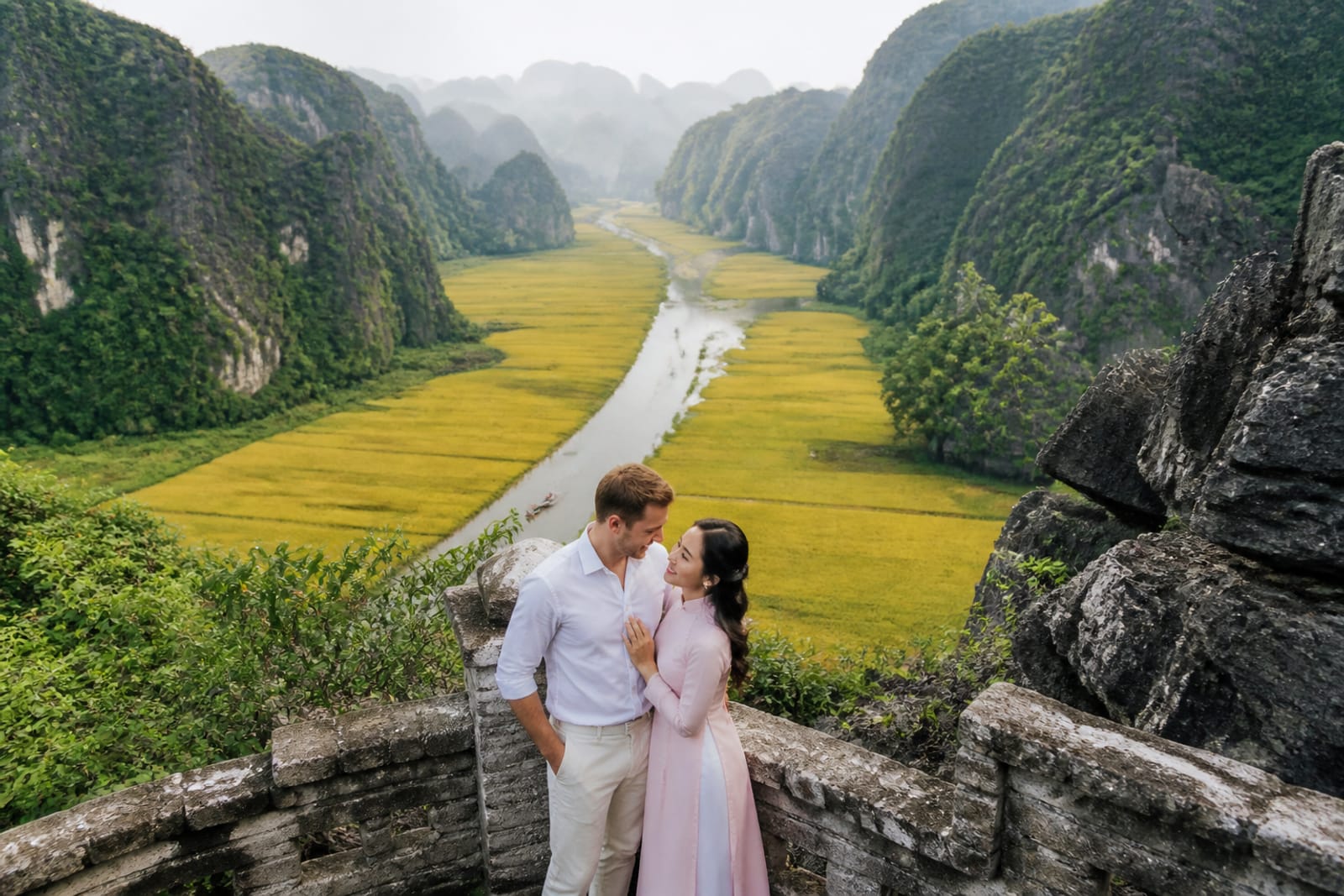
Hang Mua viewpoint—500 stone steps up limestone cliffs—works for adventurous couples willing to commit time and energy. The 360° panorama at sunrise is stunning but exhausting; save it for fitness-tested pairs and plan outfit changes to dry clothes at the top. Morning mist clears by 8–9 a.m., so early starts are non-negotiable.
The Trang An boat dock and rowing paths (rowed by local operators) suit water-based portraits; negotiate boat times with your photographer and operator before the shoot day. Never shoot alone on the water—safety protocols matter.
📸 Book on WhatsApp — pre-wedding photoshoot
When is the light best, and which months suit pre-wedding shoots?
Season comparison table: Hoa Lu pre-wedding shoots
| Month range | Light quality | Rice fields | Weather & crowds | Best for |
|---|---|---|---|---|
| Mar–May | Soft, warm; early mist | Golden, harvest-ready | Cool, dry; moderate crowds | Clear ao dai color, temple detail |
| Jun–Aug | Harsh, high sun; humid | Post-harvest, green; flooded | Hot, afternoon storms; fewer tourists | Adventure couples, water shots |
| Sep–Nov | Golden, directional; evening glow | New crop, bright green | Dry, cooling; low crowds (pre-Tet) | Landscape scale, dramatic sky |
| Dec–Feb | Grey, diffuse; cool | Dormant or flooded | Cold mornings, cool days; Tet chaos | Moody, intimate feels; avoid Tet week |
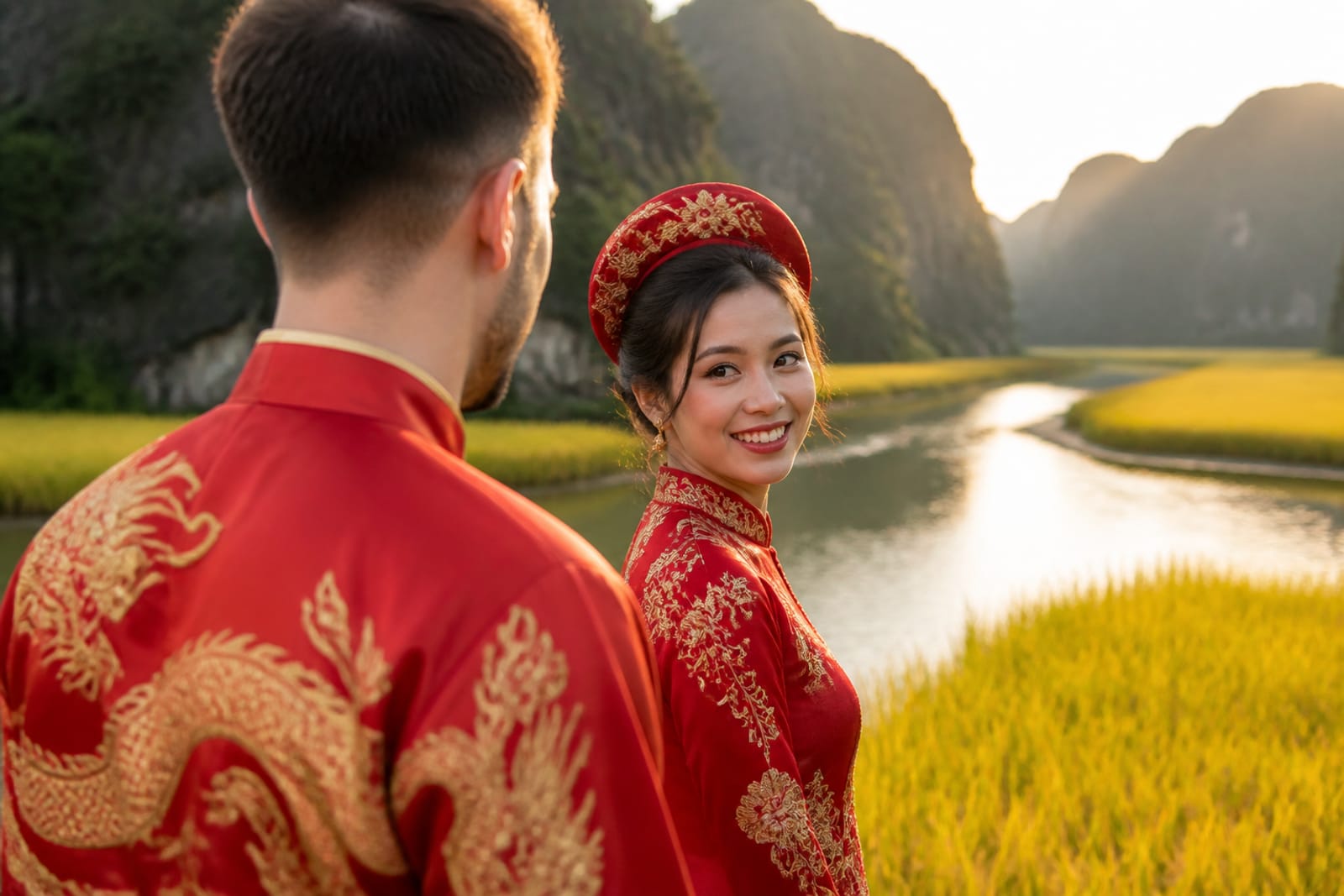
Specific timing advice: March–May and September–November are ideal—cool enough for layered ao dai, dry enough for clean rice paddies, and light turns rich by 4–5 p.m. if you shoot morning-to-evening. Avoid mid-June to August (oppressive heat, afternoon storms, ao dai fabrics wrinkle and sweat-mark). December–February is moody but grey; book Dec or early Jan if you love muted tones. Skip late January to mid-February entirely (Tet chaos, temple access disrupted, crowds surge).
Early starts (6–7 a.m.) are non-negotiable year-round: temples are quiet, mist clings to cliffs, and light rakes horizontally across stone and water.
What should couples wear, and how do outfits move in Hoa Lu's spaces?
The ao dai is the obvious choice and emotionally resonant at ancient temples. Choose lighter silk or linen for warm months (March–May, June–August) to breathe in humidity and heat; heavier brocade works October–February when cool air allows fabric to drape without clinging. Have your photographer or makeup team on WhatsApp check ao dai availability and fit—temples are formal spaces, and modest, well-fitted outfits photograph better and earn local respect.
Undergarments matter: traditional slip pants under the ao dai or structured leggings prevent see-through fabric in sunlight and simplify movement on temple steps. Bring backup pants and a t-shirt in your car; you'll change after high-exertion shots (Hang Mua, boat scenes) to avoid wrinkled fabric in evening portraits.
Shoes are a logistics puzzle. Temples require foot removal at thresholds; soft, easy-to-slip shoes (ballet flats, embroidered loafers, or dressy sandals) save time. Avoid stilettos on uneven stone; save heels for polished courtyard shots where you'll stand still. Groom or partner outfit: Western suit works in shade; direct sun bleaches color by mid-morning. Opt for lighter linens or consider a complementary áo groom (matching coat over trousers) for cultural resonance. Avoid long sleeves in June–August unless you're certain about shade timing.
How do you hire and vet a local Hoa Lu photographer?
Cáo Studio – Makeup & Photoshoot operates in Hanoi, Ho Chi Minh City, and Hoi An; for Hoa Lu shoots, you'll coordinate with a Ninh Binh–based photographer or arrange a day trip with your Hanoi team (ask on WhatsApp if travel logistics interest you).
Vetting a local Ninh Binh photographer:
- Portfolio review: Look for Hoa Lu temple details—carved stone, light on faces under archways, rice-field depth. Avoid portfolios heavy on generic landscape shots; they signal limited couple-posing experience.
- Temple etiquette proof: Do their images show respect for sacred spaces (no couple poses on altars, no disruptive positioning)? Photographers familiar with Hoa Lu know the unwritten rules.
- Equipment and backup: Ask if they carry a backup camera, lenses for both wide landscape and intimate portrait work, and a rig for Hang Mua (climbing with expensive gear is risky).
- On-location experience: Have they shot at Dinh, Le, and Hang Mua in your intended month? Ask for 2–3 client references who shot in the same season.
- Communication in your language: Confirm real-time WhatsApp or messaging during the shoot—miscommunication on temple access, timing, or outfit changes derails sessions.
Expect to pay a local photographer via cash or bank transfer on the shoot day. Agree on deliverables (edit timeline, format, number of edited images) in writing beforehand.
Should you hire a Hanoi studio team to travel or book local talent?
Decision framework: Hanoi team vs. local Ninh Binh photographer
| Factor | Hanoi studio team (e.g., Cáo Studio) | Local Ninh Binh photographer |
|---|---|---|
| Continuity | Makeup, styling, familiar creative direction | One specialist; coordinate beauty separately |
| Travel cost & time | Studio covers fuel/labor; you stay overnight | Lower day rate; no studio coordination overhead |
| Local access | Contacts for temples, boat operators, permits | Embedded relationships; faster, informal access |
| Backup & safety | Multiple team members, redundant gear | Solo operator; critical if equipment fails |
| Editing turnaround | Consistent style, faster (studio workflow) | Variable; clarify before booking |
Who should choose each:
- Hanoi studio team: Couples wanting unified beauty and photography direction, first-time shoots (you want guidance), or those prioritizing familiar creative style and quick turnaround.
- Local photographer: Budget-conscious couples comfortable coordinating makeup elsewhere, second shoots (you know what you want), or those who value hyper-local temple knowledge and casual timing.
Ask Cáo Studio on WhatsApp if they arrange Hoa Lu travel shoots or recommend trusted local partners.
What are the temple etiquette rules, and how do they affect shooting?
Vietnamese temples are working spiritual spaces, not photo sets. Respect non-negotiable for both access and image integrity:
- Footwear: Remove shoes at thresholds marked by red carpets or attendant gestures. Photographers should scout step patterns so you don't fumble during resets.
- Altar positioning: Never pose directly on or in front of active altars; step to the side. If incense or offerings are being made, pause shooting—the space is in use.
- Head bowing and dress: Keep shoulders covered; avoid sleeveless ao dai or bare-backed poses. Brief respectful bows when entering main halls (many couples include this in their shots—it's genuine and photogenic).
- Photography permits: Hoa Lu temples don't issue formal permits for couple shoots, but informal understanding is expected. A small donation (check current amounts locally) to the temple fund is courteous and smooths access.
- Tripod placement: Keep tripods out of main walkways and away from altars. Local attendants may ask you to reposition—cooperate without frustration; you're guests.
- Crowds and timing: Early arrival (before 7 a.m.) avoids tour groups and gives you uninterrupted temple access for 2–3 hours.
Photographers who ignore these rules damage Hoa Lu's reputation for couple shoots; locals begin restricting access. Vet your photographer's temple experience directly.
---
What to check before you book
- Season alignment: Confirm your chosen month matches light and weather expectations. Ask your photographer for 2–3 shots from that exact month.
- Outfit contingencies: Will makeup and ao dai travel with you, or are you renting/buying locally? Confirm fit and care (wrinkled silk needs steam; humid air stains light colors).
- Shoot day timeline: How long do you shoot? When does mist clear? Is Hang Mua included, and does your fitness level match? Agree on a written itinerary.
- Edited deliverables: How many images, what format, edit style, and turnaround? Mismatched expectations breed frustration.
- Bad-weather backup: What happens if it rains on shoot day? Reschedule date? Partial refund? Clarify before paying.
- Temple access confirmation: Will your photographer confirm Dinh and Le temple access the day before? Rare closures happen (renovation, ceremonies).
- On-location communication: Does your photographer speak English or your language? Confirm WhatsApp availability during the shoot for real-time questions.
---
See also
Learn more about pre-wedding shoots in Vietnam:
- Pre-wedding photoshoot package overview
- Couple & family photoshoot in Hanoi
- Ao dai photoshoot and rental options
- Makeup & hair at your hotel or venue
- Wedding video in Vietnam
- Cáo Studio Hanoi base and team
- Browse lookbook gallery for pre-wedding style ideas
📸 Book on WhatsApp — pre-wedding photoshoot
---
FAQ
How early do we need to wake up to shoot at Hoa Lu?
Arrive by 6–6:30 a.m. to catch temple grounds empty and morning mist still clinging to limestone. Light is softest and richest between 6:30–8 a.m., and tour groups typically arrive after 8:30 a.m. Earlier starts mean fewer reshoots and more relaxed poses.
Can we shoot Hoa Lu in summer (June–August)?
Yes, but expect heat exhaustion, afternoon storms, and harsh midday light. Choose early morning (6–8 a.m.) shoots only, have shade breaks scheduled, and avoid Hang Mua climbing. Summer works for adventurous couples; casual, intimate feels photograph well in diffuse cloudy light.
Do we need permission to shoot at Dinh and Le temples?
Formal permits don't exist, but temples are active spiritual spaces. Arrive early, dress modestly, avoid altars during ceremonies, and consider a small donation to the temple fund as courtesy. Local photographers know these unwritten rules; confirm your photographer understands temple etiquette before booking.
How much should an ao dai cost, and where do we rent or buy one in Ninh Binh?
Rental and purchase prices vary; check with local tailors or shops in Ninh Binh town. Ask your photographer for tailors they've worked with—they know fit and timeline. Budget time for fittings if buying custom; ready-made rental is faster but less personalized.
What if it rains on our shoot day?
Misty rain suits moody temple portraits and adds reflection to wet stone. Heavy downpours disrupt shooting and make Hang Mua unsafe. Agree with your photographer on a reschedule date or partial refund policy before booking, and confirm bad-weather backup plans in writing.
Can we shoot both Hoa Lu temples and Hang Mua in one day?
Yes, but it's ambitious. Temple shoots take 2–3 hours (6–9 a.m.); Hang Mua climbing, summit poses, and descent take 2–3 hours more. Total 5–6 hours of shooting with no breaks taxes both couple and photographer. Plan two shoot days if stamina or photo count matters, or prioritize one location for a relaxed session.
Does Cáo Studio shoot at Hoa Lu?
Cáo Studio – Makeup & Photoshoot operates in Hanoi, Ho Chi Minh City, and Hoi An. For Hoa Lu pre-wedding shoots, ask on WhatsApp if the team arranges day-trip coordination or can recommend trusted local Ninh Binh photographers. Makeup and styling services can be arranged in Hanoi before you travel to Ninh Binh.
FAQ
How early do we need to wake up to shoot at Hoa Lu?
Arrive by 6–6:30 a.m. to catch temple grounds empty and morning mist still clinging to limestone. Light is softest and richest between 6:30–8 a.m., and tour groups typically arrive after 8:30 a.m. Earlier starts mean fewer reshoots and more relaxed poses.
Can we shoot Hoa Lu in summer (June–August)?
Yes, but expect heat exhaustion, afternoon storms, and harsh midday light. Choose early morning (6–8 a.m.) shoots only, have shade breaks scheduled, and avoid Hang Mua climbing. Summer works for adventurous couples; casual, intimate feels photograph well in diffuse cloudy light.
Do we need permission to shoot at Dinh and Le temples?
Formal permits don't exist, but temples are active spiritual spaces. Arrive early, dress modestly, avoid altars during ceremonies, and consider a small donation to the temple fund as courtesy. Local photographers know these unwritten rules; confirm your photographer understands temple etiquette before booking.
How much should an ao dai cost, and where do we rent or buy one in Ninh Binh?
Rental and purchase prices vary; check with local tailors or shops in Ninh Binh town. Ask your photographer for tailors they've worked with—they know fit and timeline. Budget time for fittings if buying custom; ready-made rental is faster but less personalized.
What if it rains on our shoot day?
Misty rain suits moody temple portraits and adds reflection to wet stone. Heavy downpours disrupt shooting and make Hang Mua unsafe. Agree with your photographer on a reschedule date or partial refund policy before booking, and confirm bad-weather backup plans in writing.
Can we shoot both Hoa Lu temples and Hang Mua in one day?
Yes, but it's ambitious. Temple shoots take 2–3 hours (6–9 a.m.); Hang Mua climbing, summit poses, and descent take 2–3 hours more. Total 5–6 hours of shooting with no breaks taxes both couple and photographer. Plan two shoot days if stamina or photo count matters, or prioritize one location for a relaxed session.
Does Cáo Studio shoot at Hoa Lu?
Cáo Studio – Makeup & Photoshoot operates in Hanoi, Ho Chi Minh City, and Hoi An. For Hoa Lu pre-wedding shoots, ask on WhatsApp if the team arranges day-trip coordination or can recommend trusted local Ninh Binh photographers. Makeup and styling services can be arranged in Hanoi before you travel to Ninh Binh.
Ao dai, makeup, hair and a local photographer in Hanoi or Saigon — one WhatsApp message.