/pre-wedding-photoshoot
Pre-wedding photoshoot at Mui Ne red sand dunes: complete guide
Mui Ne's red sand dunes run 50 km along the southern coast and are best shot at sunrise or late afternoon when light is warm and side-lit. A typical pre-wedding session takes 2–3 hours on the dunes plus travel time from town. The dry season (Nov–Apr) brings strong winds and clear skies; the wet season (May–Nov) adds afternoon clouds and softer light. Wear layers under ao dai or Western dress: the sand heats fast by mid-morning, and wind can tangle fabric. Hire a local Mui Ne photographer who knows dune access, tide times, and knows how to move quickly in sand (dragging equipment or taking frequent breaks exhausts everyone). Cáo Studio – Makeup & Photoshoot is based in Hanoi, Ho Chi Minh City and Hoi An; for Mui Ne, we recommend scouting a local Mui Ne team on portfolios before booking. ---
What makes Mui Ne dunes different from other Vietnamese pre-wedding spots?
Mui Ne dunes are the only massive red-sand desert landscape in Vietnam's populated south. Unlike rice fields, limestone karsts or beaches, the dunes are barren, geometric and entirely changeable—wind reshapes them daily. This means no crowds, no buildings, endless background options and fast natural light transitions. The trade-off: exposure (wind, heat, sand texture), no shelter, and no permission issues—the dunes are public land but often accessed via informal tracks. Compare them to couple photoshoots at Hoi An Ancient Town (rich heritage, built-in architecture, pedestrian-heavy) or Hanoi temple sessions (intimate, cultural, weather-limited in winter). Mui Ne dunes suit couples who want raw, minimalist images and don't mind physical exposure.
📸 Book on WhatsApp — pre-wedding photoshoot | 💄 Makeup & hair at your hotel
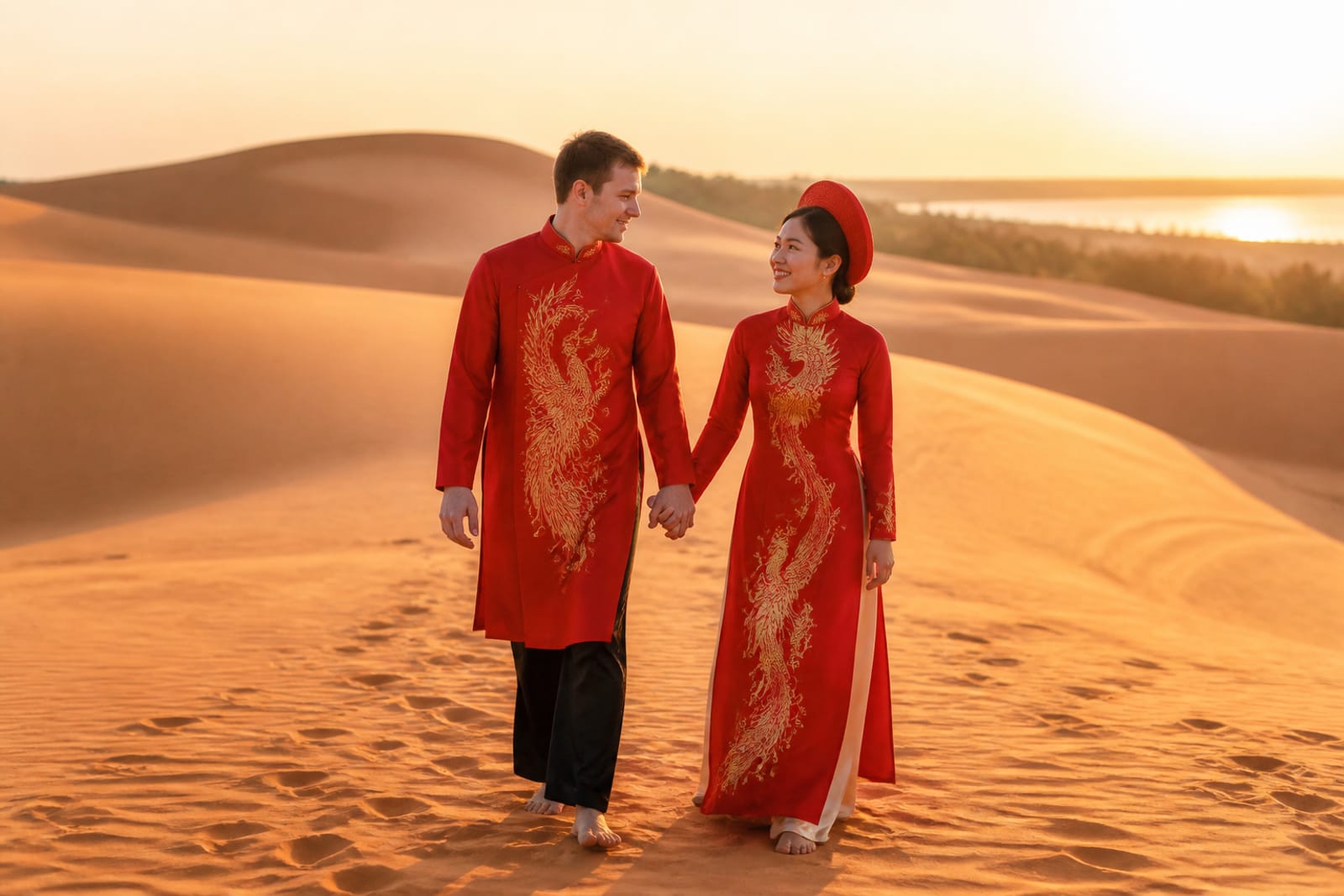
When should you shoot the Mui Ne dunes?
Sunrise (5:30–6:30 AM) offers slanted golden light, fewer vehicles, and cool temperatures—sand is solid and footprints are sharp. The catch: early arrival, no makeup touch-ups on location, and wind often picks up by 6:15 AM. Late afternoon (4:00–5:30 PM) gives warm side-light, time for a full preparation, and active light (clouds throw shadows). The dunes cool slightly, but vehicles and casual visitors still pass. Midday (10 AM–3 PM) produces harsh overhead light, blown-out skies and heat exhaustion—avoid unless you want bleached, graphic silhouettes. Seasonally, Nov–Mar offers consistent dry conditions and strong winds that carve dune ridges sharply; Feb–Mar brings occasional drizzle from Pacific cold fronts. May–Sep sees afternoon showers (usually 2–4 PM), softer light and fewer tourists. Plan sunrise in Nov–Mar and late afternoon in May–Sep; book a shoot date 2–3 weeks ahead so the photographer can scout light and wind patterns.
How do you prepare your outfit for sand and wind?
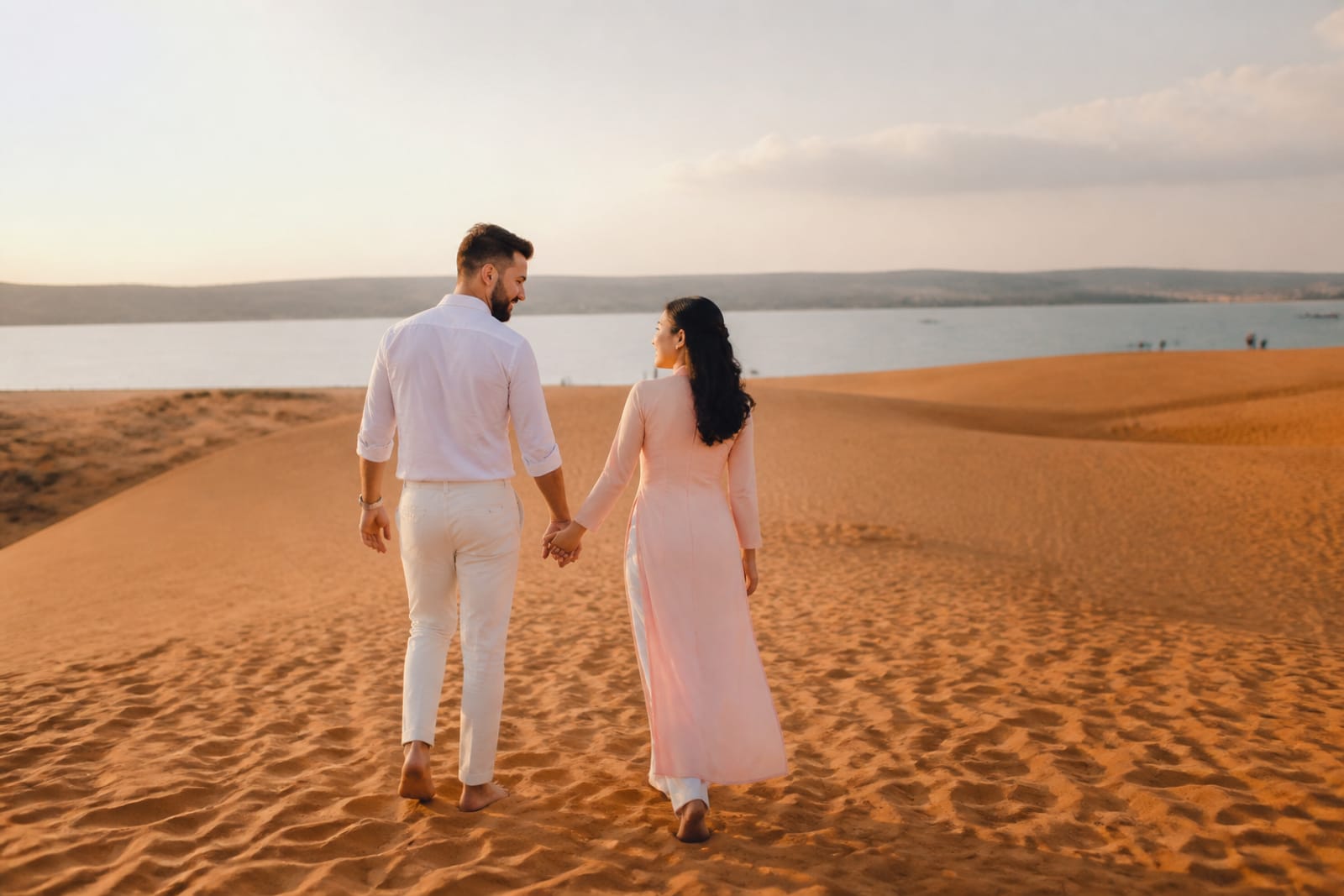
Wear a slip or bike shorts under your ao dai or dress—sand will shift fabric, and wind will expose legs. Choose ao dai in natural fibers (silk, linen) that move without tangling; synthetic fabrics cling and wrinkle fast in humidity. If wearing Western dress, avoid full tulle skirts (sand sticks and tangles); fitted or A-line cuts work better. Bring a second outfit: change midway once the first is dusty, or shoot the same look at two different dune ridges. Footwear: go barefoot for classical images (sand is not sharp, and bare feet photograph cleanly), or wear sandals to the dunes and remove them on-site. Do not wear shoes with laces—sand fills them, and you'll waste time cleaning. Jewelry should be minimal and secure (wind and movement toss earrings). Hair should be styled with strong product and clips; the wind will test it, but loose waves often photograph better than rigid braids. Makeup: request waterproof products and ask your makeup artist about sand—it can lodge in brows and lashes during the shoot, and wiping it off damages makeup. Bring a spray bottle for touch-ups after sandy moments.
What should you check before booking a Mui Ne photographer?
| Aspect | What to verify | Why it matters |
|---|---|---|
| Portfolio light | Do their images show warm, side-lit dune shots? Can you see sharp detail and color (not blown-out sand)? | Poor light control wastes the shoot; mismatched style means wasted time. |
| Dune access | Do they own/know permit holders for the private dune sections? Or do they shoot public land? | Private sections are cleaner; public access is cheaper but busier. Clarify terms before arrival. |
| Wind strategy | Have they shot in strong wind? Do they show methods to keep fabric stable (assist, timing)? | Inexperienced teams lose time to blown hair and fabric tangles. |
| Equipment care | Do they mention sand damage to lenses/sensors? Do they bring protective gear? | Sand ruins cameras fast; careless handling voids results. Ask if they bring air blowers, lens caps, backup gear. |
| Timing & pacing | How many outfit changes do they normally do? How do they handle heat/exhaustion breaks? | Dune sessions tire quickly; a slow photographer means you'll overheat, makeup degrades, and light fades. |
| Local knowledge | Can they name specific dune ridges, sunrise directions, tide impacts? | Vague answers suggest they'll waste time scouting on your shoot day. |
Ask for a location scout call or video before booking. Request a shot list (outfit changes, poses, timing) in writing. Confirm sand-management practices (equipment protection, how they clean images afterward). Check if they'll provide a backup shooter if weather turns bad or equipment fails.
🌸 See the lookbook | 💍 Proposal & anniversary package
What happens if weather disrupts your shoot?
Sunrise sessions can be cancelled 30 minutes before start if fog or rain blocks light—Mui Ne coastal weather changes fast, and a grey sky over dunes is flat and dull. Strong wind (>30 km/h) is actually good for dune texture but bad for hair and fabric control; an experienced photographer can adapt. Afternoon showers (May–Sep) usually pass in 30 minutes; a smart team will move to a sheltered area (beachfront, dune base) and resume once light clears. Typhoon season (Oct–Nov) can close dune access for 1–2 days; consider booking a flexible date. Heavy rain cancels the shoot and most photographers offer a reschedule or partial refund (confirm terms in writing before paying). A common mistake: shooting in light drizzle without testing makeup—waterproof products are essential, and you may need to redo makeup mid-shoot. Plan for 1–2 backup dates within your Mui Ne trip (stay 3–4 days if weather is uncertain). If you're traveling far (international flight), book at least 5 days in the area to absorb one weather delay without rushing.
Why hire a local Mui Ne photographer instead of traveling from Hanoi or Ho Chi Minh City?
A Mui Ne-based photographer knows dune access routes, tides, wind patterns and seasonal light by daily experience—they can read conditions on your shoot morning and adapt instantly. They have relationships with landowners of private dune sections (cleaner, fewer visitors) and know which ridges are best lit at sunrise vs. late afternoon. Travel time from Hanoi (14 hours by bus) or Ho Chi Minh City (4 hours by car) means the photographer arrives tired; if light changes or wind kicks up unexpectedly, they have no backup plan. Local teams also carry sand-specific equipment (protective lens filters, air blowers, sealed camera bags) as routine. The cost factor is lower: no accommodation or transport fees billed to you, and shorter shoot days fit their schedule. However, Cáo Studio – Makeup & Photoshoot operates in Hanoi, Ho Chi Minh City and Hoi An—we do not have a Mui Ne team. We recommend scouting local Mui Ne photographers via Instagram portfolios, asking your hotel concierge for referrals, or checking Vietnam photography directories for reviews. When vetting, ask for examples of Mui Ne dune work specifically (not wedding halls or beach studios); request a test call to gauge communication and English fluency.
How do you plan and book a Mui Ne pre-wedding shoot?
Step 1: Choose your dates. Book 4–6 weeks ahead. Confirm visa, flights and hotel. Select 1–2 backup dates within your stay in case of weather. Decide sunrise vs. late afternoon based on season (Nov–Mar: sunrise is crisper; May–Sep: afternoon clouds soften harsh light).
Step 2: Scout photographers. Search "Mui Ne pre-wedding photographer" or "Mui Ne wedding photographer" on Instagram; save 3–5 portfolios with Mui Ne dune images. Message via WhatsApp or Instagram; ask for a portfolio of 10–15 dune images, rates, and availability. Request a video call to meet them and ask the vetting questions above.
Step 3: Confirm logistics. Agree on meeting point (hotel pickup, dune access, or your car). Clarify what's included: number of shots, outfit changes, makeup touch-ups on location, file format and delivery time. Ask about rescheduling terms if weather cancels. Get a quote and pay via bank transfer or PayPal (never full payment upfront; a 30–50% deposit is standard).
Step 4: Plan outfits and hair/makeup. Decide on ao dai, Western dress or mix. Book a makeup artist if you want professional prep—check if your photographer recommends someone or if your hotel offers services. For makeup & hair services in Ho Chi Minh City or nearby areas, ask your hotel or photographer for local recommendations.
Step 5: Prepare and shoot. Arrive 15 minutes early. Bring water, sunscreen, and a change of shirt. Let the photographer lead positioning and pacing; trust their light reading. After 2–3 hours, you'll be tired—plan a break midway. Expect edited files within 2–3 weeks; ask if raw files are included or supplied separately.
---
What to check before you book
- Photographer location: Confirm they are Mui Ne-based or Saigon-based; ask about their dune experience (not just studio or beach work).
- Shot list: Get a written outline of timing, outfit changes and poses before paying.
- File delivery: Ask format (JPEG, RAW, Lightroom presets), quantity and turnaround time.
- Reschedule terms: Confirm in writing what happens if weather cancels (free reschedule date, partial refund, or forfeit).
- Sand protocol: Ask how they protect equipment and clean the camera/lenses after the shoot.
- Communication: Confirm language (English, Vietnamese) and response time for questions on shoot day.
---
💍 Plan your moment — proposal & anniversary package
For a full pre-wedding photoshoot in Vietnam, Cáo Studio – Makeup & Photoshoot coordinates sessions in Hanoi, Ho Chi Minh City and Hoi An. Ask on WhatsApp +84 338 762 340 about Hoi An team travel dates and couple photoshoots that blend heritage venues with modern aesthetics. If you're planning a wedding day or multi-day elopement in Mui Ne or southern Vietnam, we also offer wedding photography and videography packages; reach out for custom quotes.
FAQ
What is the best time of year to shoot at Mui Ne dunes?
Nov–Mar offers consistent dry light and windy conditions that sharpen dune ridges; sunrise is crisp and cool. May–Sep brings softer afternoon light and fewer crowds, but afternoon rain (usually 2–4 PM) can interrupt. Avoid Oct–Nov typhoon season unless you have flexible dates for weather delays.
Do I need a permit to shoot on Mui Ne dunes?
Public dunes require no permit, but private sections (cleaner, fewer visitors) may require access fees or owner permission. Your photographer should clarify land status and arrange access before your shoot day. Always ask in advance.
Can I wear a traditional ao dai on the dunes?
Yes. Wear a slip or bike shorts underneath to prevent sand and wind exposure. Choose natural-fiber ao dai (silk, linen) that moves without tangling. Synthetic fabrics cling in humidity. Bare feet photograph best; bring sandals to walk but remove them on-site.
How long does a pre-wedding shoot on the dunes take?
A typical session is 2–3 hours on the dunes, plus travel time from town (15–30 minutes each way). Include 30 minutes for setup, makeup touch-ups, and outfit changes. Arrive early or plan a late afternoon start to avoid midday heat.
What should I bring to a Mui Ne dune photoshoot?
Bring water (1.5–2 liters per person), sunscreen, a change of shirt, and clips/ties for hair control. Wear minimal, secure jewelry. Go barefoot or remove shoes on-site to avoid sand buildup. A spray bottle helps refresh makeup and cool you between shots.
Can Cáo Studio – Makeup & Photoshoot shoot my pre-wedding at Mui Ne?
No. Cáo Studio operates in Hanoi, Ho Chi Minh City and Hoi An. For Mui Ne, we recommend scouting local Mui Ne photographers via Instagram portfolios and asking your hotel for referrals. Contact us on WhatsApp for help planning pre-wedding shoots in Hoi An or Ho Chi Minh City instead.
FAQ
What is the best time of year to shoot at Mui Ne dunes?
Nov–Mar offers consistent dry light and windy conditions that sharpen dune ridges; sunrise is crisp and cool. May–Sep brings softer afternoon light and fewer crowds, but afternoon rain (usually 2–4 PM) can interrupt. Avoid Oct–Nov typhoon season unless you have flexible dates for weather delays.
Do I need a permit to shoot on Mui Ne dunes?
Public dunes require no permit, but private sections (cleaner, fewer visitors) may require access fees or owner permission. Your photographer should clarify land status and arrange access before your shoot day. Always ask in advance.
Can I wear a traditional ao dai on the dunes?
Yes. Wear a slip or bike shorts underneath to prevent sand and wind exposure. Choose natural-fiber ao dai (silk, linen) that moves without tangling. Synthetic fabrics cling in humidity. Bare feet photograph best; bring sandals to walk but remove them on-site.
How long does a pre-wedding shoot on the dunes take?
A typical session is 2–3 hours on the dunes, plus travel time from town (15–30 minutes each way). Include 30 minutes for setup, makeup touch-ups, and outfit changes. Arrive early or plan a late afternoon start to avoid midday heat.
What should I bring to a Mui Ne dune photoshoot?
Bring water (1.5–2 liters per person), sunscreen, a change of shirt, and clips/ties for hair control. Wear minimal, secure jewelry. Go barefoot or remove shoes on-site to avoid sand buildup. A spray bottle helps refresh makeup and cool you between shots.
Can Cáo Studio – Makeup & Photoshoot shoot my pre-wedding at Mui Ne?
No. Cáo Studio operates in Hanoi, Ho Chi Minh City and Hoi An. For Mui Ne, we recommend scouting local Mui Ne photographers via Instagram portfolios and asking your hotel for referrals. Contact us on WhatsApp for help planning [pre-wedding shoots in Hoi An](/hoi-an) or Ho Chi Minh City instead.
Ao dai, makeup, hair and a local photographer in Hanoi or Saigon — one WhatsApp message.