/pre-wedding-photoshoot
Pre-wedding photoshoot Cao Bang countryside: complete planning guide
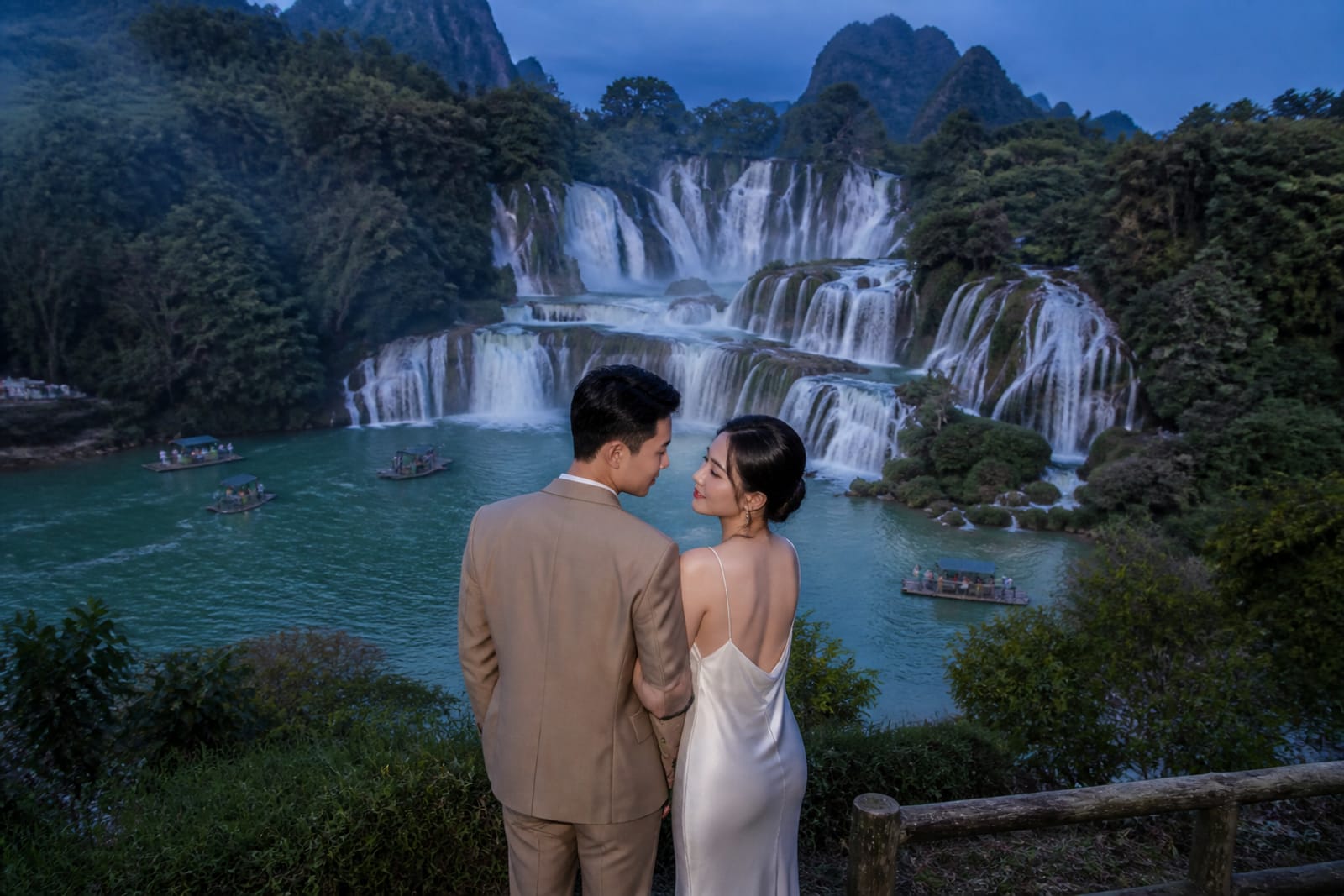
A pre-wedding photoshoot in Cao Bang countryside means shooting in one of northern Vietnam's most rugged limestone and river landscapes—Ban Gioc waterfall, Ban Gioc village, rice paddies near Quang Uyen, and karst cliffs around Ngan Son. Cao Bang sits about 270 km northeast of Hanoi; sessions run a full day (travel time included). The best window is late August to September, when rice fields turn gold and the waterfall is fullest after the rainy season. You'll need a local photographer or guide who knows safe access to Ban Gioc (it borders China) and the seasonal rhythms of light—early morning at the waterfall, late afternoon in the fields. Cáo Studio does not operate in Cao Bang; we coordinate shoots in Hanoi, Ho Chi Minh City and Hoi An. If you're based in Hanoi and want a director-led team (one outfit, hair, makeup and photographer in one booking), ask us on WhatsApp about a Cao Bang day trip; otherwise, this guide will help you find and vet a local Cao Bang photographer.
Why is Cao Bang countryside special for pre-wedding shoots?
Cao Bang has three distinct landscapes that few other regions in Vietnam can offer together: massive limestone karsts rising from flat valley floors, whitewater rivers, and—crucially for timing—rice paddies that shift colour with the season. Most pre-wedding shoots in Vietnam cluster around Hanoi's old town, Hoi An's lanterns, or Da Nang's beaches. Cao Bang's remoteness means fewer tourists in your frames and a harder, more elemental light. The waterfall and cliff system are real, not built; the rice is worked by local farmers. That authenticity reads in photographs. The trade-off is logistics: you're looking at a 5–6 hour drive each way from Hanoi, roads that are narrow but manageable, and a photographer who understands monsoon timing and border zone rules.
📸 Book on WhatsApp — pre-wedding & elopement
What season gives you the best light and landscape?
Late August to September is the sweet spot. Rice fields are ripening to gold after the summer rains; the Ban Gioc waterfall runs full and white from monsoon water; morning mist sits in the valleys, softening the karst. October can work, though typhoons and floods are possible in the central and southern coast—Cao Bang, in the north, is safer, but check local weather forecasts within a week of your shoot. December to February, the dry season, offers clearer skies and crisp light, but the waterfall drops to a trickle and rice paddies are harvested or flooded for planting—the landscape is sparse. March to May is warming up, fields are green (not gold), and midday light is harsh. June to July is rainy and grey; avoid unless you want moody, grey-sky drama. The monsoon lasts June to September in the north, with heaviest rain July–August; time your shoot for late August after the rain has passed but the water volume remains high.
How do you plan outfits for a Cao Bang countryside shoot?
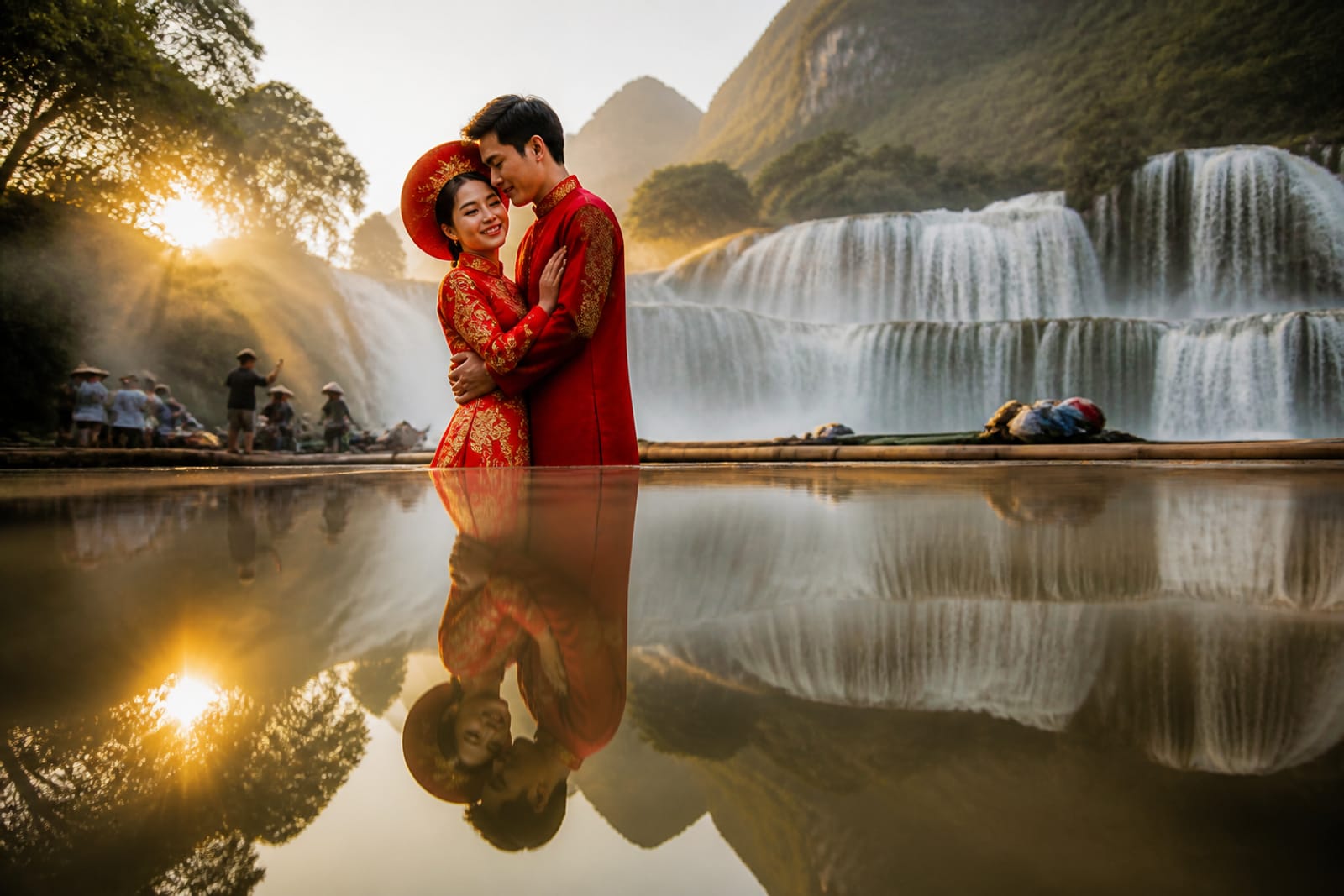
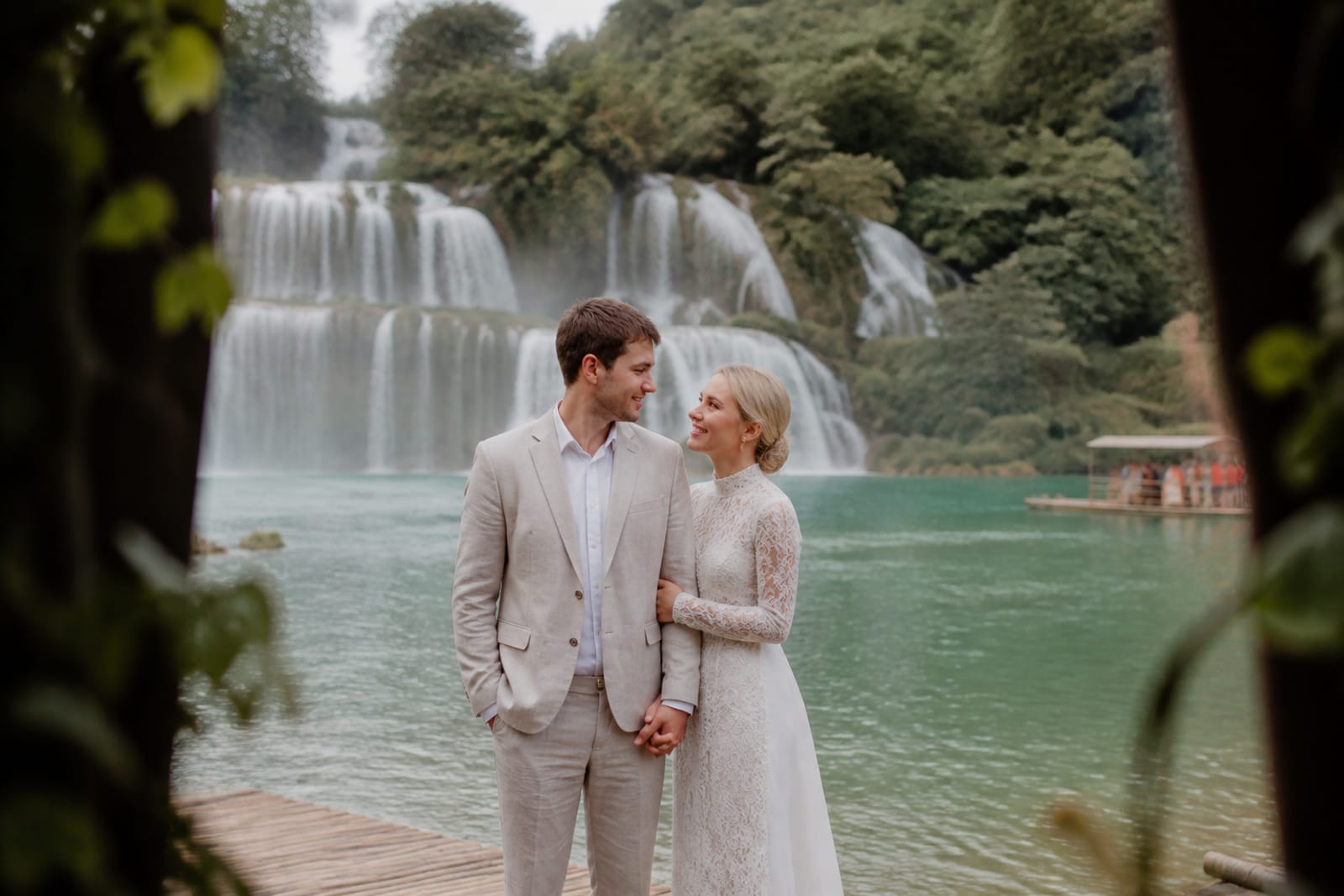
Cao Bang's landscape is dramatic and earthy—limestone grey, water silver, rice gold, mud brown. Bright, saturated colours (reds, hot pinks, electric blues) can clash; neutral or jewel tones (deep greens, burgundy, navy, gold, champagne, ivory) sit better. Ao dai works beautifully if the fabric is a weight that moves in wind and doesn't wrinkle from a long car ride—silk or high-quality cotton blends are better than raw silk. Avoid heavy embroidery that reads flat in wide shots; minimal detail or an ombré dye reads better from a distance. Practical: wear a cardigan or shawl for the journey (car AC, early morning chill at Ban Gioc), and bring a second pair of shoes—you'll be walking mud, loose stone, and uneven paths. If you're booking a local photographer, check that they've styled pre-wedding shoots before; if you book Cáo Studio for a Hanoi base shoot, our team brings outfit, hair and makeup as one package—ask on WhatsApp if a Cao Bang day trip fits your dates.
| Outfit choice | Best for | Light & season | Why it works |
|---|---|---|---|
| Ao dai (silk, deep jewel tone) | Cultural, romantic frames | Late August–September morning | Fabric catches side light; earth tones blend karst; movement in wind reads in wide shots |
| Linen or cotton trousers + linen shirt (neutral) | Casual, walking frames | September–October afternoon | Breathable for humidity; wrinkles suit landscape; minimalist look doesn't compete with geology |
| Dress (knee-length, A-line, muted colour) | Couple walk-and-talk | Early morning, any season | Easier to move in rough terrain; skirt catches light; no ao dai sizing constraints |
| Formal Western suit + shirt | Groom solo, couple formal | December–February crisp light | Less common; reads sharp against grey stone; harder to rewear after shoot |
What are the logistics you actually need to handle?
Book transport (van or private car for 4–6 hours each way; driver costs are a factor, not a fixed price—confirm with a Hanoi travel agency or your photographer). Arrive Ban Gioc at sunrise (around 5:30–6:00 am in September), when mist still clings to the cliff and side light is soft and low. The waterfall viewing platform is a 15-minute walk from the car park on uneven stone steps; wear proper shoes, not sandals. By 8:00 am, tour groups start arriving, and light flattens as the sun climbs. Shift to rice paddies (Quang Uyen area, 20–30 km south) for mid-morning or lunch; light is harder, but the scale is vast. Late afternoon, return to karst ridges or village lanes near Quang Uyen for golden-hour side light. Sunset is around 6:00–6:30 pm in September; you'll need to be on the road by 7:00 pm to reach Hanoi by midnight or later. That's a 12–14 hour day. Bring water, sunscreen, and a small medical kit (plasters, pain relief). Phone signal is patchy; download maps offline. If you're not with a guide, hire a local from Ban Gioc village (ask your photographer to arrange this) to confirm safe paths and seasonal access rules—the border zone can shift restrictions.
How do you find and vet a Cao Bang photographer?
Ask for a portfolio of Cao Bang shoots specifically—not just one or two frames, but a full session showing wide shots, medium portraits, and detail. Check if they own a car or arrange transport (this matters; some will ask you to meet them at the site, which wastes your golden-hour window). Confirm they know Ban Gioc's current access rules and seasonal patterns (water level, mist timing, crowd hours). Vet their editing: Cao Bang's landscape should feel grounded and real, not oversaturated or overly moody. Ask if they've worked with couples before or mostly do solo travel shots—pre-wedding shoots demand different pacing (you're shooting two people, connection, movement) than vacation frames. Get a written quote that lists what you're paying for: transport, hours on-site, number of edited photos, delivery timeline, and what happens if weather is bad (do you reschedule or get a partial refund?). If you're in Hanoi and want a full creative team (outfit, makeup, hair, photography, one message), contact Cáo Studio on WhatsApp—we can advise on Cao Bang logistics and may be able to coordinate a day trip if it aligns with your dates.
What to check before you book
Photographer's experience in Cao Bang specifically. Not just "I shoot in Vietnam"; ask for 3–5 past couples' galleries from Cao Bang or similar karst/countryside sites. Light and landscape there are unique.
Transport and timing clarity. Confirm pickup time (should be 2:00–3:00 am from Hanoi to hit sunrise at Ban Gioc), car type, and whether the photographer drives or if you arrange it. A shared-taxi situation wastes your light window.
Editing timeline and file format. When do you get the photos? How many edited frames? Digital files, prints, an album? Some local photographers deliver within a week; others take months.
Weather contingency. What happens if it rains on your date? Do you reschedule, shoot anyway, or get a partial refund? Get this in writing.
Outfit and styling. If the photographer doesn't include makeup or hair, book them separately (Cáo Studio offers makeup & hair, or hire a local stylist in Cao Bang via your photographer). Styling matters more in remote landscapes where you're far from shade and touch-ups.
Solo vs. team logistics. One person juggling camera, light meter, and your posing is harder than a director with an assistant. Ask if they work alone or bring anyone.
FAQ
Can Cáo Studio shoot a pre-wedding in Cao Bang?
Cáo Studio operates in Hanoi, Ho Chi Minh City, and Hoi An. We don't have a Cao Bang base, but we coordinate with local photographers and can advise on a day trip from Hanoi. Ask on WhatsApp to discuss feasibility for your dates.
What's the best month to shoot in Cao Bang countryside?
Late August to September: rice fields are golden, the waterfall runs full after monsoon rains, and morning mist softens the karst. December–February is dry and clear but the waterfall drops and paddies are sparse. Avoid June–July (heavy rain, grey light) and March–May (green fields, harsh midday sun).
How long does a Cao Bang pre-wedding shoot take?
A full day (12–14 hours including travel from Hanoi). You'll shoot at Ban Gioc at sunrise, rice paddies mid-morning, and karst or village scenes at golden hour. Leave Hanoi by 2:00–3:00 am, return by midnight or later.
Do I need to wear ao dai in Cao Bang, or can I wear something else?
Ao dai works beautifully in the landscape (jewel tones, silk that moves in wind), but it's not required. Linen trousers and a shirt, or a knee-length dress also photograph well and are easier to walk in rough terrain. Choose colours that complement grey stone and gold rice (deep greens, burgundy, navy, ivory).
What's the difference between hiring a local Cao Bang photographer and booking a Hanoi-based team?
A local Cao Bang photographer knows seasonal timing, access rules, and the landscape intimately; costs are typically lower. A Hanoi or Ho Chi Minh City team brings creative direction, styling (outfit, hair, makeup), and a faster editing turnaround, but travel time and coordination are higher. For pre-wedding shoots with Cáo Studio, we include one creative direction, one outfit, one hair and makeup artist, and one photographer in one booking—ask on WhatsApp for Cao Bang feasibility.
Is Ban Gioc waterfall safe for a photoshoot? Are there border restrictions?
Ban Gioc sits on the China–Vietnam border; the viewing platform is on Vietnamese soil and is safe for tourists and photographers. Local rules can shift; ask your photographer or hire a Ban Gioc village guide to confirm current access. The 15-minute walk to the platform is on uneven stone steps—wear proper shoes and allow extra time.
Can I get a wedding day photographer in Cao Bang instead of pre-wedding?
Yes. For a wedding-day photoshoot in a Cao Bang countryside venue (ceremony, reception, or both), hire a local Cao Bang photographer with wedding experience, or ask a Hanoi-based team (like Cáo Studio) if they can travel. Travel costs are a factor; confirm early.
FAQ
Can Cáo Studio shoot a pre-wedding in Cao Bang?
Cáo Studio operates in Hanoi, Ho Chi Minh City, and Hoi An. We don't have a Cao Bang base, but we coordinate with local photographers and can advise on a day trip from Hanoi. Ask on WhatsApp to discuss feasibility for your dates.
What's the best month to shoot in Cao Bang countryside?
Late August to September: rice fields are golden, the waterfall runs full after monsoon rains, and morning mist softens the karst. December–February is dry and clear but the waterfall drops and paddies are sparse. Avoid June–July (heavy rain, grey light) and March–May (green fields, harsh midday sun).
How long does a Cao Bang pre-wedding shoot take?
A full day (12–14 hours including travel from Hanoi). You'll shoot at Ban Gioc at sunrise, rice paddies mid-morning, and karst or village scenes at golden hour. Leave Hanoi by 2:00–3:00 am, return by midnight or later.
Do I need to wear ao dai in Cao Bang, or can I wear something else?
Ao dai works beautifully in the landscape (jewel tones, silk that moves in wind), but it's not required. Linen trousers and a shirt, or a knee-length dress also photograph well and are easier to walk in rough terrain. Choose colours that complement grey stone and gold rice (deep greens, burgundy, navy, ivory).
What's the difference between hiring a local Cao Bang photographer and booking a Hanoi-based team?
A local Cao Bang photographer knows seasonal timing, access rules, and the landscape intimately; costs are typically lower. A Hanoi or Ho Chi Minh City team brings creative direction, styling (outfit, hair, makeup), and a faster editing turnaround, but travel time and coordination are higher. For [pre-wedding shoots with Cáo Studio](/pre-wedding-photoshoot), we include one creative direction, one outfit, one hair and makeup artist, and one photographer in one booking—ask on WhatsApp for Cao Bang feasibility.
Is Ban Gioc waterfall safe for a photoshoot? Are there border restrictions?
Ban Gioc sits on the China–Vietnam border; the viewing platform is on Vietnamese soil and is safe for tourists and photographers. Local rules can shift; ask your photographer or hire a Ban Gioc village guide to confirm current access. The 15-minute walk to the platform is on uneven stone steps—wear proper shoes and allow extra time.
Can I get a wedding day photographer in Cao Bang instead of pre-wedding?
Yes. For a wedding-day photoshoot in a Cao Bang countryside venue (ceremony, reception, or both), hire a local Cao Bang photographer with wedding experience, or ask a Hanoi-based team (like [Cáo Studio](/wedding-photographer)) if they can travel. Travel costs are a factor; confirm early.
Ao dai, makeup, hair and a local photographer in Hanoi or Saigon — one WhatsApp message.