/pre-wedding-photoshoot
Pre-Wedding Photoshoot Costs: Mai Chau & Pu Luong Planning Guide
Pre-wedding photoshoot costs in Mai Chau and Pu Luong depend on season (golden rice = late May–June and Sep–Oct, peak prices), travel time from Hanoi or Saigon (affects crew transport and accommodation), number of outfit changes, and whether you hire a local photographer or a studio that travels there. Cáo Studio operates from Hanoi, Ho Chi Minh City and Hoi An—for Mai Chau or Pu Luong, you'll book a local photographer or arrange a private guide-photographer. Expect to budget for pre-dawn hikes to catch soft light on terraces, guide fees to access private paddies, and contingency for weather. The golden rule: rice season drives demand and pricing; shoot in grey, misty winter (Nov–Feb) or shoulder months for lower costs and moodier frames.
Why does season change what you pay?
Rice ripens and yellows roughly late May–June and Sep–Oct in Mai Chau and Pu Luong. During those weeks, every couple books shoots there; local photographers and guides raise rates or book out entirely. Winter (Nov–Feb) is cool and misty but grey—moody, atmospheric light without crowds or waitlists. Spring (Mar–Apr) is unpredictable: some mornings are clear, others are hazy. Shoulder seasons (early May, late Sep, early Nov) offer fewer couples, softer demand, and better negotiating room. A local photographer in golden-rice season may cost 30–50% more than Nov–Feb—but you're paying for scarcity, not better light. Off-season shoots often yield moodier, more original frames because mist and low cloud create diffused, directional light that flattens fewer shadows.
📸 Book on WhatsApp — ao dai photoshoot | 🌸 See the lookbook
How much does transport and crew logistics add?
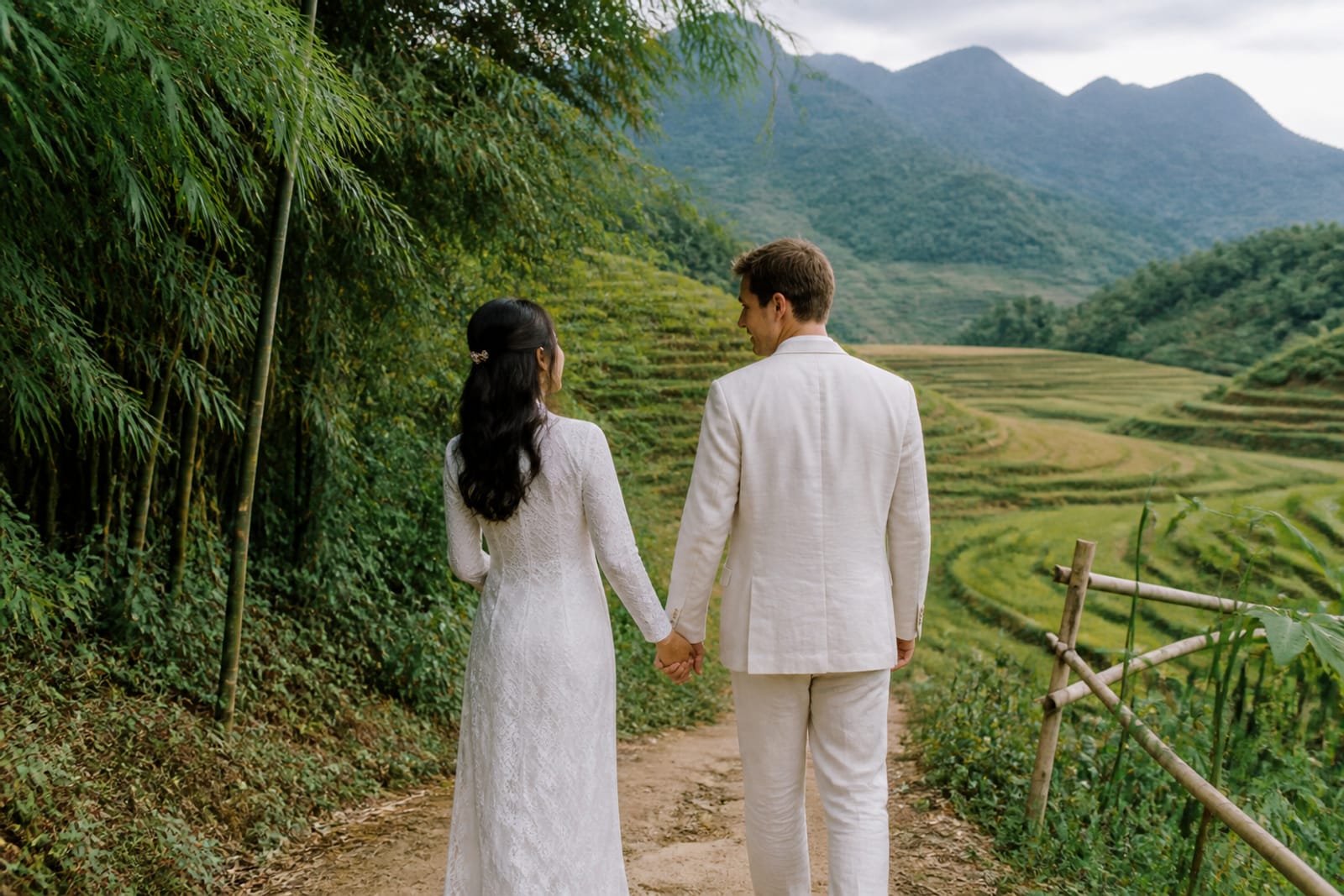
Mai Chau is roughly 140 km southwest of Hanoi; Pu Luong is 160 km south, both requiring 3–4 hours' drive in a van. If you hire a Hanoi-based photographer, they charge for crew transport (photographer, assistant, possibly a makeup artist or stylist), fuel, and either a day trip (early start, late return) or overnight accommodation. Overnight adds hotel cost; day trips add driver fatigue and reduce shooting hours—you lose soft light at dawn or dusk. Local photographers skip transport but may have less experience with wide cinematic framing or editorial styling. Cáo Studio operates from Hanoi and can coordinate makeup and hair services, but for a shoot in Mai Chau or Pu Luong you'll need a local photographer—ask about whether they handle hair and makeup or if that's separate. Transport and crew logistics typically add 20–40% to the base photography cost. Always confirm with the photographer: do they cover transport in their rate, or is it billed separately?
What does "location access" mean for your budget?
Private rice paddies, homestay grounds, and temple stairs aren't free. Local guides charge a fee to escort you to private fields; some homestays require a booking or "location use" contribution. Early-morning shoots (5–6 am) need transport arranged the night before. If you want to shoot at a waterfall or hilltop viewpoint, check whether a permit or park fee applies. A photographer who knows the landscape can navigate free or low-cost spots; one who doesn't will drive you to tourist traps with obvious backdrops and high entry costs. Budget for guide fees (if needed), transport on the day, and any location contributions—these often equal or exceed the makeup artist's fee. Ask the photographer: which locations are included in their rate? Which require extra payment? Do they scout beforehand, or do you discover costs on shoot day?
| Factor | Best Season | Cost Impact | Tip |
|---|---|---|---|
| Rice colour | Late May–Jun, Sep–Oct | High; peak rates | Shoot early May or late Sep to avoid peak |
| Weather/light | Nov–Feb (grey, mist) | Lower rates, fewer couples | Misty morning light is cinematic, not inferior |
| Transport | Day trip from Hanoi | 3–4 hrs each way, crew fatigue | Overnight stay = better dawn/dusk light, higher hotel cost |
| Guides & access | Private paddies, temples | Per-location fee, 1–2 guides | Ask photographer to negotiate; some spots free |
| Crew size | Photographer + assistant | Base; add makeup/styling | One-team approach = better coordination, lower vendor juggling |
| Outfit changes | 1–3 outfits | More changes = longer shoot, higher crew costs | Ao dai + casual + formal = three full looks, 4–5 extra hours |
Should you hire a local or bring a crew from Hanoi?
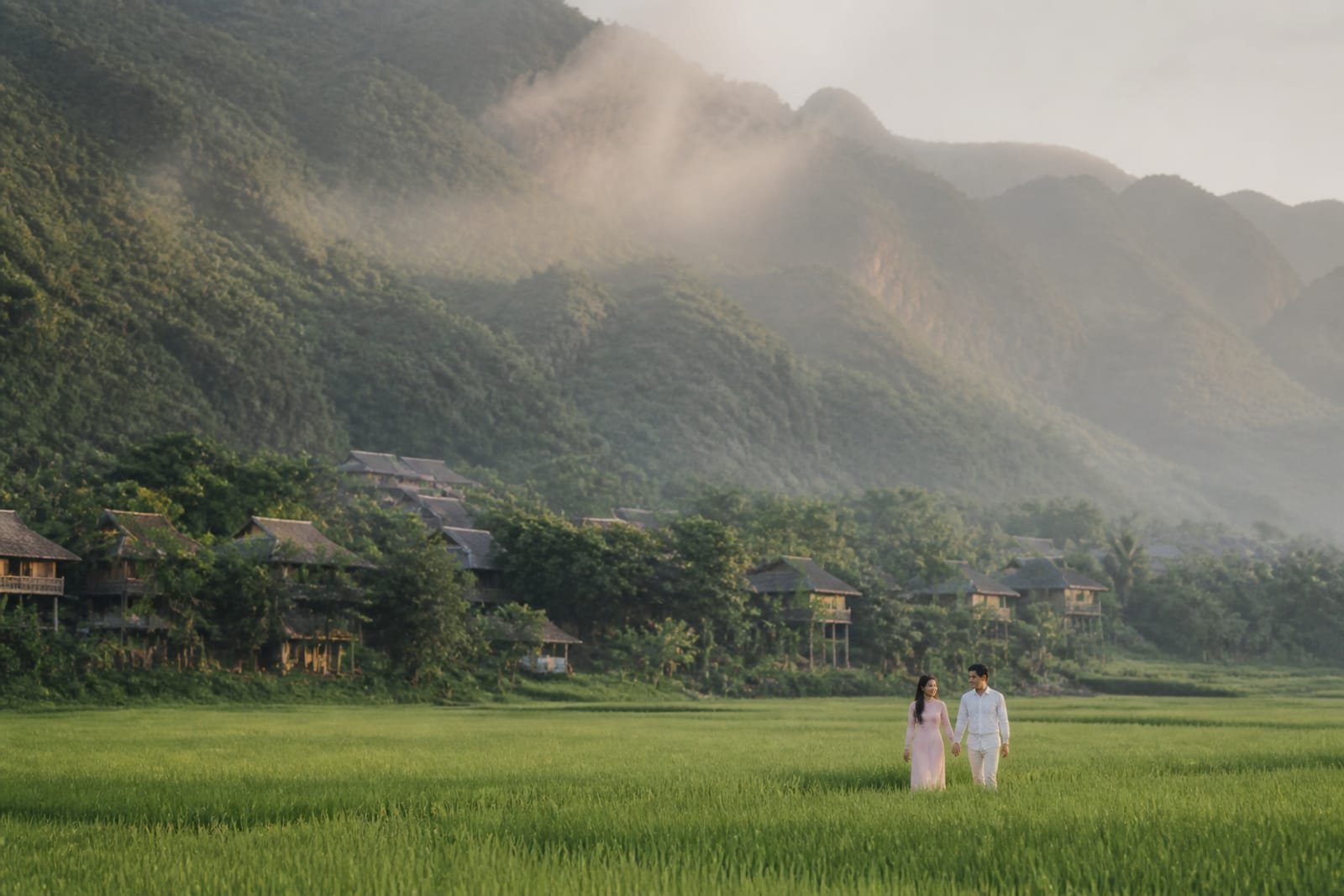
Local photographers know terrain, light angles, and which rice fields turn gold when. They skip transport costs and accommodation. Most are skilled with landscape and group portraiture but may lack experience framing couples intimately or directing movement through frames. Ask to see their couple portfolio—not just landscape or tourism shots. Hanoi-based studios or photographers bring cinematic framing, editorial direction (outfit, hair, makeup all aligned), and post-production consistency. They charge for transport, fuel, and sometimes accommodation. If they're a full team (photographer, makeup artist, stylist), you get one message—everyone knows the vision. Cáo Studio operates from Hanoi, Ho Chi Minh City, and Hoi An; for Mai Chau or Pu Luong, you'll hire locally or ask a Hanoi friend to recommend a photographer who has shot couples there. Hiring locally saves 30–50% on transport but risks lower production value; hiring from Hanoi costs more but ensures cinematic, editorial-grade output. Neither is wrong—it depends on whether you prioritize budget or visual cohesion across frames.
What should you confirm before you book?
Ask these questions in writing (email or WhatsApp, not a phone call—you need proof):
- Is the rate inclusive? Does it cover transport, guide fees, location permits, and how many outfit changes?
- Who handles hair and makeup? Is the photographer's partner or an assistant doing it, or do you hire a separate makeup artist?
- What's the shooting schedule? What time do you start, where do you meet, how many hours, and when do you wrap?
- How many edited photos do you get? Do you see a proof gallery before the photographer edits, or do you trust the selection?
- What's the delivery timeline? Edited photos in 1 week, 2 weeks, or longer?
- What happens if weather is bad? Can you reschedule free, or do you forfeit the deposit?
- Do they offer video or just stills? A short vertical video reel is increasingly standard; confirm if it's included.
💄 Makeup & hair at your hotel | 🌸 See the lookbook
How to find and vet a local photographer for Mai Chau or Pu Luong
Search "[Mai Chau photographer couple shoots]" or "[Pu Luong elopement photoshoot]" on Instagram or Google. Look for photographers with 20+ posts of couples (not just landscapes or tourists). Check: Do their frames show real movement—couples walking, looking at each other, laughing—or stiff posed portraits? Do the colours and light look natural, or over-processed? Message 3–5 photographers; ask for a portfolio link and client references. Red flags: no couple photos in their portfolio, they quote a price without knowing your needs, they can't speak English clearly (communication matters on shoot day), their website doesn't list editing turnaround or what's included. Green flags: they ask questions about your vision, offer a signed agreement, show before-and-after edits, provide client testimonials or referrals. Get quotes in writing. Confirm everything in text before you pay a deposit. If you're not confident in local options, ask your accommodation (homestay or resort in Mai Chau/Pu Luong) for a recommendation—they work with photographers year-round and know who's reliable.
📸 Book on WhatsApp — ao dai photoshoot
Outfit and styling considerations
An ao dai shoot works beautifully in rice fields—the silk catches morning light, and the silhouette contrasts the landscape. If you want casual or Western formal looks too, factor in multiple outfit changes and time to refresh makeup between shoots. Cáo Studio offers ao dai rental and makeup and hair services for shoots in Hanoi or Saigon, but if you're shooting in Mai Chau or Pu Luong, arrange outfits beforehand and hire a local makeup artist or bring one from the city. Budget extra time if you're changing clothes on-site—rural locations lack dressing rooms, so plan a private homestay corner or vehicle. Wearing layers under an ao dai helps with temperature swings (cool dawn, warm midday); check our guide to what to wear under an ao dai for specifics.
---
What to check before you book
- Portfolio: 20+ couple shots, real movement, natural editing.
- Inclusions: Transport, guides, makeup (or not), number of outfit changes, edited photo count, delivery date.
- Communication: Responsive, asks questions, sends a written agreement.
- References: Ask for client names or Instagram handles; follow up.
- Contingency: Reschedule policy if weather cancels the shoot.
- Season: Book Nov–Feb or shoulder months for lower costs and fewer crowds; expect higher rates late May–June and Sep–Oct.
---
FAQ
Is it cheaper to shoot in Mai Chau or Pu Luong than in Hanoi?
Not always. Local photographers may charge less, but travel, guides, and accommodation offset savings. Pu Luong typically costs slightly more because terrain is steeper and requires longer hikes. Season matters more than location—off-season rates anywhere are lower than golden-rice-season rates.
What's the best time of year to shoot in Pu Luong and Mai Chau?
Late May–June and Sep–Oct offer golden rice fields but peak prices and crowds. Nov–Feb is cool, misty, and moody—rates are lower, light is diffused and cinematic, and you'll likely shoot without waiting for a photographer slot. Early May and late Sep are sweet-spot shoulders: rice is still ripening, crews are less booked, and prices are negotiable.
Do I need to hire a guide in addition to the photographer?
Many local photographers double as guides, so ask if guidance is included in their rate. If you want to reach private paddies or specific viewpoints, a separate guide fee usually applies. Confirm in writing before the shoot.
Can I bring my own makeup artist, or should I use the photographer's recommendation?
Either works. If the photographer recommends someone, ask for portfolio photos of couple shoots in natural light (outdoor makeup looks different than studio). If you bring your own, brief them on timing—early starts mean makeup done in low light, so bring good mirrors and a small light source.
What happens if it rains on shoot day?
Mist and light rain can create moody, atmospheric frames—don't cancel automatically. Heavy rain or thunderstorms require rescheduling. Confirm the photographer's policy: free reschedule, a percentage refund, or forfeiture of deposit. Weather in Pu Luong and Mai Chau is unpredictable year-round, so a flexible plan is worth the peace of mind.
Should I book a video as well as photos?
Yes, if your budget allows. A short 1–2 minute vertical film (edited in 48–72 hours) captures movement, sound, and emotion that still frames miss. Ask whether video is included in the photography rate or billed separately. Cáo Studio offers wedding and pre-wedding video services—for local shoots in Mai Chau or Pu Luong, ask the photographer if they also shoot video or have a videographer partner.
How many photos should I expect to receive?
Typical packages include 50–150 edited photos per outfit change or per 4–6 shooting hours. Clarify: do you get every shot, a curated selection, or only the photographer's top picks? Some photographers show you an unedited proof gallery so you can flag your favourites before final editing.
FAQ
Is it cheaper to shoot in Mai Chau or Pu Luong than in Hanoi?
Not always. Local photographers may charge less, but travel, guides, and accommodation offset savings. Pu Luong typically costs slightly more because terrain is steeper and requires longer hikes. Season matters more than location—off-season rates anywhere are lower than golden-rice-season rates.
What's the best time of year to shoot in Pu Luong and Mai Chau?
Late May–June and Sep–Oct offer golden rice fields but peak prices and crowds. Nov–Feb is cool, misty, and moody—rates are lower, light is diffused and cinematic, and you'll likely shoot without waiting for a photographer slot. Early May and late Sep are sweet-spot shoulders: rice is still ripening, crews are less booked, and prices are negotiable.
Do I need to hire a guide in addition to the photographer?
Many local photographers double as guides, so ask if guidance is included in their rate. If you want to reach private paddies or specific viewpoints, a separate guide fee usually applies. Confirm in writing before the shoot.
Can I bring my own makeup artist, or should I use the photographer's recommendation?
Either works. If the photographer recommends someone, ask for portfolio photos of couple shoots in natural light (outdoor makeup looks different than studio). If you bring your own, brief them on timing—early starts mean makeup done in low light, so bring good mirrors and a small light source.
What happens if it rains on shoot day?
Mist and light rain can create moody, atmospheric frames—don't cancel automatically. Heavy rain or thunderstorms require rescheduling. Confirm the photographer's policy: free reschedule, a percentage refund, or forfeiture of deposit. Weather in Pu Luong and Mai Chau is unpredictable year-round, so a flexible plan is worth the peace of mind.
Should I book a video as well as photos?
Yes, if your budget allows. A short 1–2 minute vertical film (edited in 48–72 hours) captures movement, sound, and emotion that still frames miss. Ask whether video is included in the photography rate or billed separately. Cáo Studio offers [wedding and pre-wedding video services](/wedding-video)—for local shoots in Mai Chau or Pu Luong, ask the photographer if they also shoot video or have a videographer partner.
How many photos should I expect to receive?
Typical packages include 50–150 edited photos per outfit change or per 4–6 shooting hours. Clarify: do you get every shot, a curated selection, or only the photographer's top picks? Some photographers show you an unedited proof gallery so you can flag your favourites before final editing.
Ao dai, makeup, hair and a local photographer in Hanoi or Saigon — one WhatsApp message.