/pre-wedding-photoshoot
Pre-wedding photoshoot in Hanoi in February: weather, light and crowds
February in Hanoi spans the cool-weather window (roughly 10–20°C) with frequent overcast skies and drizzle, creating diffused, flattering light perfect for skin tones and ao dai colours. Pre-wedding shoots work year-round, but February demands weather flexibility: indoor backup locations, waterproof planning and layered outfits. Crowds thin post-Tet (late January–mid February), so morning bookings at temples and parks face fewer tourists. Rain is common, not guaranteed—check forecasts 48 hours before. Cáo Studio – Makeup & Photoshoot books couples at Hanoi's [/hanoi](hanoi studio) for custom routes; hair and makeup prep protects against humidity and drizzle. Sessions typically run 2–4 hours across mixed locations (temples, lakes, streets). Expect soft, even light midday; avoid harsh golden-hour contrast. Bring a backup outfit if rain hits; the studio confirms exact timings and contingency on WhatsApp. 📸 Book on WhatsApp — pre-wedding photoshoot ---
Is February too cold or rainy for a Hanoi pre-wedding shoot?
February weather is cool and often grey, not prohibitively cold. Daytime temperatures sit 10–20°C; layering (thin under-layers, a cardigan to remove) keeps couples comfortable during pose holds. Rain occurs 2–4 days per week on average, not all day—morning showers clear by midday, or afternoon drizzle arrives late. Overcast skies are an asset: no harsh shadows, even skin-tone exposure, and ao dai silk photographs without glare. Drizzle adds romantic moodiness to lake and street shots. The real challenge is damp ground (slippery temple steps, wet park grass) and humidity affecting hair—not temperature itself. Check the forecast 48 hours ahead; rain is manageable, not a dealbreaker. Couples who embrace the grey light often report their favourite February shots.
---
What's the best time of day to shoot in February's light?
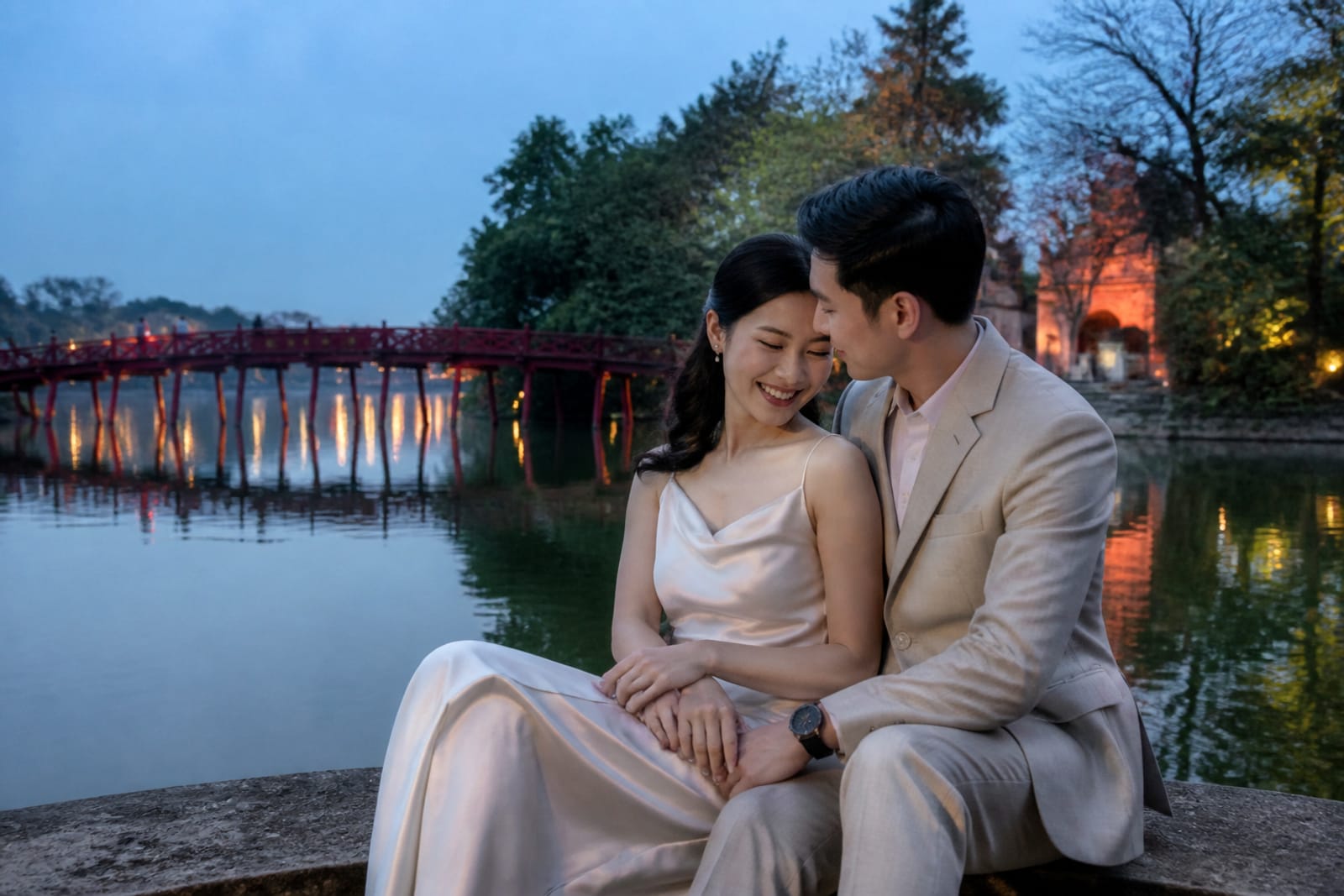
February's low sun angle and frequent cloud cover flatten the harsh contrast that makes summer shoots difficult. Midday (10:00–14:00) delivers the softest, most forgiving light: no long shadows, no blown-out sky, even exposure across faces and fabric. Golden hour (sunrise/sunset) is brief and often obscured by clouds or haze—not worth chasing. Early morning (07:00–09:00) captures quieter temples and parks before crowds; light is cool-toned and gentle but requires faster film settings. Late afternoon (15:00–17:00) risks drizzle and dimness, cutting into usable shooting time. For ao dai work, midday is optimal: colours pop against soft skies, and the fabric's movement photographs crisply without shadow blur. Indoor backup (hotel lobbies, cafés with window light) works well in February because natural light is ample but indirect—no need for flash. Book a session starting mid-morning to chase the peak 3–4 hours of consistent, flattering light.
---
How do crowds and temple access change in February?
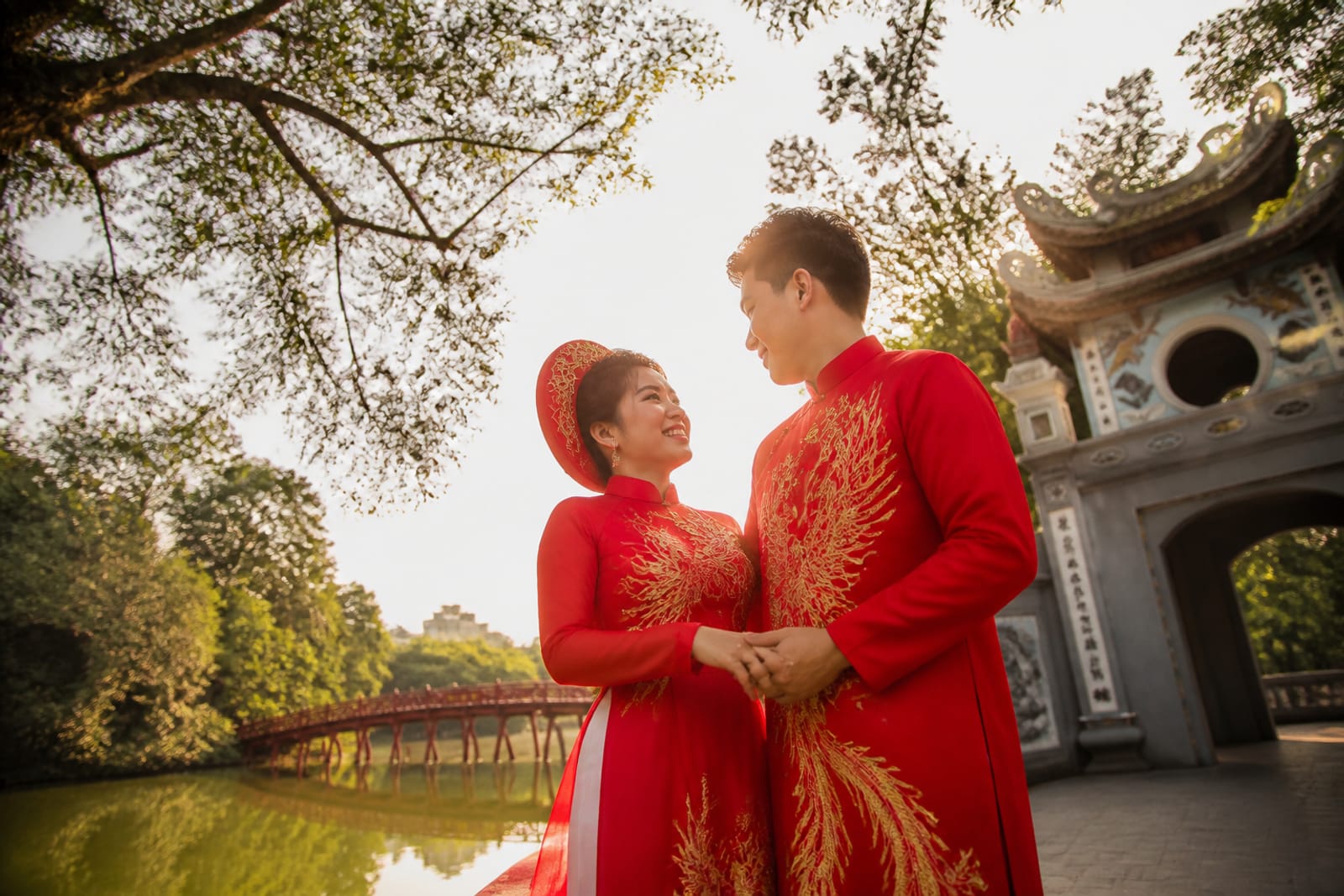
Post-Tet (after mid-February), tourist traffic drops noticeably—weekday mornings at temples like Tran Quoc and One Pillar see far fewer selfie-stick wielders than October–November. February weekdays are less crowded than weekends; early starts (08:00–09:00) beat the lunch-hour surge. Tet itself (late January–mid-February) closes many venues for 3–5 days and draws heavy pre-holiday crowds—plan around official Tet dates. Popular lakeside routes (Hoan Kiem, Tay Ho) remain busy but manageable on weekday mornings. Train Street access is restricted at times by local authorities; always confirm shooting permission with the studio before arrival. Temple etiquette in February is unchanged: remove shoes, dress respectfully (ao dai is ideal), and avoid posing in prayer areas. Hoan Kiem Lake's pedestrian-only weekend evenings (18:00+) are excellent for couple portraits but crowded—book a weekday session to shoot the same spots with breathing room. Cáo Studio coordinates location timing and permissions; the studio avoids scheduling during Tet closures and peak-crowd hours.
---
What should couples wear under an ao dai for a February shoot?
Ao dai layering in February balances modesty, warmth and mobility. Standard wear: lightweight slip or thin tank (white or skin-tone) under the áo dài to prevent transparency and provide insulation; thin thermal leggings or cotton long-underwear under the trousers if bare legs feel too cold outdoors. Avoid bulky base layers that show through the slim-fit fabric or create bunching at the waist. Shoes: flat sandals or embroidered silk slippers work indoors; waterproof flats (leather or fabric) for outdoor wet ground. If the couple adds a cardigan or shawl for warmth during travel, remove it for actual poses to show the áo dài's silhouette. February's humidity is low compared to summer, so even lightweight layers feel breathable. For makeup, powder and long-wear base prevent drizzle smudging; the makeup artist (included in makeup & hair services) applies weather-resistant products. Bring a small towel or blotting papers for any moisture touch-ups between location moves. The studio advises on exact layering once weather forecast is confirmed—this flexibility is built into the booking process.
---
Which Hanoi locations are best for February pre-wedding shoots?
Location comparison: choosing the right spot for February light and mood
| Spot | Best for | Light in February | Crowd level | Why it works |
|---|---|---|---|---|
| Tran Quoc Temple + lakeside | Ao dai & symmetry | Soft, reflected off water; morning ideal | Low weekday morning | Ancient stonework, water backdrop, soft overcast glow |
| Old Quarter (Phan Dinh Phung street) | Candid urban romance | Dappled by autumn trees (if lingering foliage); midday | Medium weekday | Narrow lanes shield from glare, tree-filtered light, old shop-house walls |
| Hoan Kiem Lake perimeter | Couple portraits & motion | Flat, even; best 10:00–14:00 | Medium; quieter weekday morning | Iconic backdrop, open sky bounces soft light, pedestrian paths |
| One Pillar Pagoda | Intimate temple ceremony vibe | Even indirect; overcast ideal | Low weekday | Confined space, no harsh shadows, historic intimacy |
| Tay Ho Temple + pier | Lakeside reflection + motion | Soft across water; avoid late afternoon haze | Low weekday | Romantic pier framing, water bounce, fewer tourists than central lake |
| Indoor: hotel lobby, café windows | Rain backup & close-ups | Abundant natural window light | Controlled | Soft window light needs no flash; drizzle-proof; intimate scale |
Shoot strategy: book early morning (08:00–09:00) at a temple, then move to a lakeside or street location by midday when light peaks. Overcast skies mean you're not chasing sun position—you can linger at one spot without light degrading. If drizzle hits, pivot indoors; the studio pre-scouts backup café and lobby locations. Visit the lookbook to see how the studio adapts February shoots across these spots.
---
What do couples need to check before booking a February pre-wedding shoot?
Pre-booking checklist
- Confirm dates. Check Tet dates (late January–mid-February) on the official calendar and avoid Tet days when venues close. Book 2–4 weeks ahead so the studio can scout conditions and secure permissions.
- Check the weather forecast 48 hours before. Rain is normal; drizzle is shootable. If heavy downpour is predicted, the studio will suggest rescheduling or pivoting to an indoor-heavy plan.
- Coordinate outfit count & changes. More outfits mean more time and location moves; in February's limited daylight, 2–3 changes (e.g. áo dài, Western dress, candid) maximise variety without rushing. Confirm with the studio on WhatsApp.
- Clarify makeup & hair timing. If drizzle is forecast, longer-wear products and extra touch-up time are built into the prep. Makeup & hair services are confirmed in the booking.
- Plan travel time & backup location. Rain can slow transport; allow 15–20 minutes buffer between location moves. The studio includes a dry backup venue (café, lobby) in the itinerary.
- Ask about post-processing timeline. February bookings proceed normally; deliverables and editing turnaround are confirmed on WhatsApp with the quote.
---
Can couples combine a pre-wedding shoot with other Hanoi photo services in February?
Yes. Many couples pair a pre-wedding photoshoot with complementary sessions. An ao dai photoshoot is a natural addition—February's soft light flatters the traditional garment, and the same day-planning logic applies. A couple photoshoot emphasizes candid intimacy; February's overcast conditions suit this mood. If wedding day is scheduled soon after, booking wedding-day photographer coverage in February ensures the team knows your preferences and locations. Makeup & hair at your hotel can be added for ceremony-day prep after your shoot. The studio coordinates multi-service bookings on a single WhatsApp thread—one quote, one timeline, one point of contact.
---
What makes February different from other pre-wedding shoot seasons in Hanoi?
October–November (autumn) is Hanoi's peak pre-wedding season: mild, dry, trees turn golden, crowds at landmarks are heaviest. December–January is cool and clear, fewer tourists, but daylight ends by 17:00 (short window). February is a sweet spot between autumn's crowds and winter's brevity. Light is softer than spring (March–April haze & drizzle), and couples enjoy more flexibility. May–September is ruled out: heat hits 35°C+, humidity rises above 80%, afternoon downpours are daily, typhoon remnants are a risk. So February offers low crowds, flattering diffused light, and manageable weather—a practical choice for engaged couples who can't shoot in autumn or prefer to avoid peak-season booking queues. Check the pricing page or ask on WhatsApp for February-specific availability and quote details.
---
How does the studio adapt the shoot plan if February weather turns wet?
Cáo Studio builds contingency into every February booking. Two days before the shoot, the studio confirms the weather forecast with the couple and outlines Plan A (outdoor primary locations), Plan B (dry backup indoors or covered), and Plan C (full reschedule option if severe weather is predicted). On shoot day, the team carries waterproof camera bags, brings towels, and has a list of 2–3 indoor venues (hotel lobbies, galleries, cafés with large windows) pre-scouted and pre-approved. If drizzle starts mid-shoot, the team pivots smoothly—ao dai fabric dries fast, makeup is touch-up-resistant, and indoor window light is adequate for full outfit sets. Couples are never rushed; the studio extends session time or books a follow-up day if weather cuts the shoot short. This adaptability is part of the Hanoi service—February rain is expected, not an exception. Book on WhatsApp and discuss your weather comfort level when you inquire; the studio tailors the plan to your preferences.
FAQ
Is February good for an ao dai shoot, or should we wait for autumn?
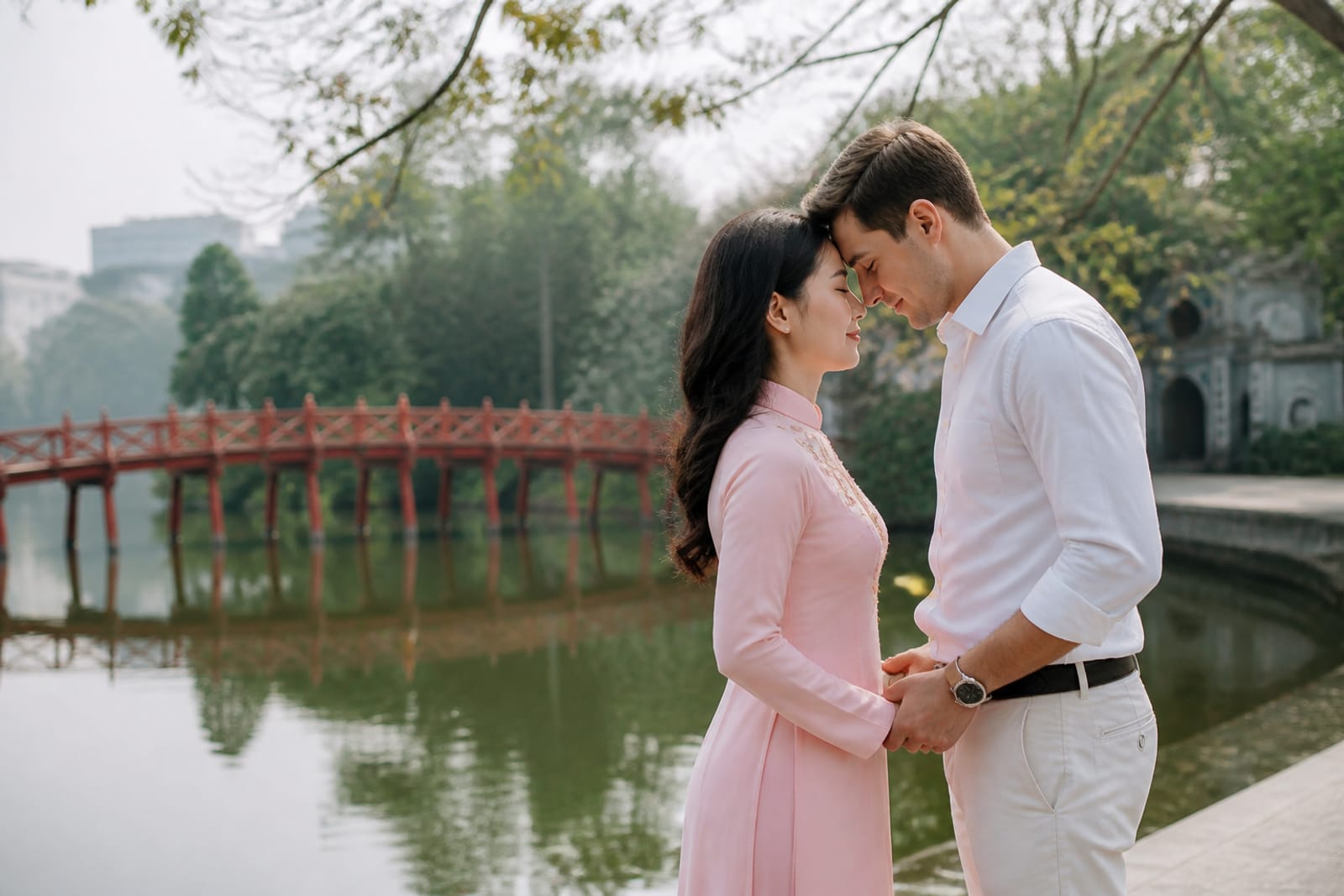
February's soft, overcast light is excellent for ao dai colours and detail; fabric photographs without glare. Autumn (October–November) is drier and has the iconic golden trees, but crowds at popular temples are heavier. February trades some golden light for fewer tourists and equally flattering diffuse conditions. Both seasons work—it depends on your crowd tolerance and aesthetic preference. Ask the studio which locations are least busy in your chosen week.
What happens if it rains on our shoot day in February?
Drizzle is shootable; the studio has waterproof gear and backup indoor locations. Heavy downpours trigger Plan B (pivot indoors) or Plan C (reschedule). You'll agree on contingency steps when you book. February rain is common but not all-day—most sessions proceed with minor route adjustments and extra prep time. Confirm your weather comfort on WhatsApp before the booking is final.
How much time should we block for a February pre-wedding shoot?
Most couples book 3–4 hours to cover 2–3 outfit changes and 2–3 locations. February's daylight (roughly 07:00–17:00) is shorter than summer, so morning starts (08:00–09:00) maximise the golden midday window. The studio confirms exact timing and location count when you send your brief on WhatsApp—no standard package durations are published, as sessions are customised.
Can we shoot indoors entirely if we're worried about February rain?
Yes. The studio offers indoor-only sessions (hotel lobbies, cafés with window light, galleries). Indoor light is abundant in February because the overall light level is soft and diffuse. This removes weather risk but trades outdoor backdrop variety. Discuss your preference on WhatsApp; the quote will reflect indoor-only vs. mixed plans.
Do we need special makeup or outfit tips for a February Hanoi shoot?
Bring layers under your ao dai (lightweight thermal leggings, thin slip) for warmth and modesty. Makeup should be long-wear and powder-based to resist any drizzle or humidity touch-ups. The studio's makeup & hair services use weather-resistant products and include touch-up time. Waterproof or water-resistant shoes are wise for potentially damp temple grounds. Confirm outfit count (2–3 changes) when you book so the studio can advise on transitions and timing.
What's the difference between a pre-wedding shoot and an ao dai photoshoot at Cáo Studio?
A pre-wedding photoshoot is a couple's session covering multiple outfits and locations leading up to the wedding day—emphasis on intimate, candid, and formal couple portraiture. An ao dai photoshoot focuses on the traditional garment itself, often with one or two outfit sets and heritage-focused locations. Many couples book both: ao dai session in February for the dress, then a full pre-wedding session closer to the wedding date. Ask on WhatsApp for a combined package quote.
FAQ
Is February good for an ao dai shoot, or should we wait for autumn?
February's soft, overcast light is excellent for ao dai colours and detail; fabric photographs without glare. Autumn (October–November) is drier and has the iconic golden trees, but crowds at popular temples are heavier. February trades some golden light for fewer tourists and equally flattering diffuse conditions. Both seasons work—it depends on your crowd tolerance and aesthetic preference. Ask the studio which locations are least busy in your chosen week.
What happens if it rains on our shoot day in February?
Drizzle is shootable; the studio has waterproof gear and backup indoor locations. Heavy downpours trigger Plan B (pivot indoors) or Plan C (reschedule). You'll agree on contingency steps when you book. February rain is common but not all-day—most sessions proceed with minor route adjustments and extra prep time. Confirm your weather comfort on WhatsApp before the booking is final.
How much time should we block for a February pre-wedding shoot?
Most couples book 3–4 hours to cover 2–3 outfit changes and 2–3 locations. February's daylight (roughly 07:00–17:00) is shorter than summer, so morning starts (08:00–09:00) maximise the golden midday window. The studio confirms exact timing and location count when you send your brief on WhatsApp—no standard package durations are published, as sessions are customised.
Can we shoot indoors entirely if we're worried about February rain?
Yes. The studio offers indoor-only sessions (hotel lobbies, cafés with window light, galleries). Indoor light is abundant in February because the overall light level is soft and diffuse. This removes weather risk but trades outdoor backdrop variety. Discuss your preference on WhatsApp; the quote will reflect indoor-only vs. mixed plans.
Do we need special makeup or outfit tips for a February Hanoi shoot?
Bring layers under your ao dai (lightweight thermal leggings, thin slip) for warmth and modesty. Makeup should be long-wear and powder-based to resist any drizzle or humidity touch-ups. The studio's [makeup & hair services](/makeup-and-hair) use weather-resistant products and include touch-up time. Waterproof or water-resistant shoes are wise for potentially damp temple grounds. Confirm outfit count (2–3 changes) when you book so the studio can advise on transitions and timing.
What's the difference between a pre-wedding shoot and an ao dai photoshoot at Cáo Studio?
A [pre-wedding photoshoot](/pre-wedding-photoshoot) is a couple's session covering multiple outfits and locations leading up to the wedding day—emphasis on intimate, candid, and formal couple portraiture. An [ao dai photoshoot](/ao-dai-photoshoot) focuses on the traditional garment itself, often with one or two outfit sets and heritage-focused locations. Many couples book both: ao dai session in February for the dress, then a full pre-wedding session closer to the wedding date. Ask on WhatsApp for a combined package quote.
Ao dai, makeup, hair and a local photographer in Hanoi or Saigon — one WhatsApp message.