/pre-wedding-photoshoot
Pre-wedding photoshoot in Hoi An for British couples
A pre-wedding photoshoot in Hoi An is a curated session—typically a morning or sunset outing—in the UNESCO Ancient Town, rural rice fields or riverside locations, styled with ao dai, Western wedding dress or both. Cáo Studio – Makeup & Photoshoot (based in Hanoi and Ho Chi Minh City) travels to Hoi An by appointment; the team handles hair, makeup and posing on location, working around the Ancient Town's entrance times and seasonal weather. British couples book pre-wedding shoots to capture intimate moments before the wedding day, often as keepsakes or engagement announcements. Sessions work best February to April (dry, mild, green fields, manageable crowds) and May to August (very hot, early sunrise required). Avoid September to November (typhoons, flooding in the Ancient Town, especially October–November when streets are waterlogged). Winter (December–January) is cooler but often drizzly. The Ancient Town requires an entrance ticket and closes briefly at dawn; arriving by 5:30–6:00 a.m. secures quiet, soft light. Etiquette matters: dress respectfully at temples, ask permission before photographing locals, and confirm outfit changes and location access on WhatsApp beforehand to avoid logistical surprises on shoot day.
A pre-wedding shoot in Hoi An balances romance with logistics. British couples often arrive with Western dress expectations—white gown, tuxedo—but discover that an ao dai (Vietnamese silk tunic) adds cultural depth and photographs beautifully in Hoi An's colonial light. The decision between a single location, a multi-site day (Ancient Town plus rice fields), hotel-based hair and makeup, or a full-day elopement style shapes both the experience and the practical demands. Cáo Studio – Makeup & Photoshoot has run sessions across all three of Vietnam's regions; here's what actually works in Hoi An, month by month, and what to confirm before you book.
Why does timing matter more in Hoi An than in Hanoi or Ho Chi Minh City?
Hoi An sits on the central coast and floods seasonally. February to April is the sweet spot: dry, mild (20–28°C), rice fields vivid green, and the Ancient Town walkable without water pooling on stone streets. May to August is bone-dry but brutal—temperatures exceed 35°C regularly, so a 7 a.m. start is non-negotiable and you'll need extra water, shade and makeup touch-ups. September to December brings typhoons and rain; October–November is the worst (roads flooded, temples closed, lanterns unlit for days). December–January cools down but drizzle is common, softening light and requiring waterproof makeup and dress covers. If you're flexible, pick February–March: the fields are greenest, light is soft all day, and crowds thin after the Tet school holidays. For summer shoots, expect a 5:00–6:30 a.m. sunrise session followed by breakfast and a late-afternoon or dusk return for lantern light—a full day of planning, not a casual couple-hours session.
📸 Book on WhatsApp — pre-wedding photoshoot
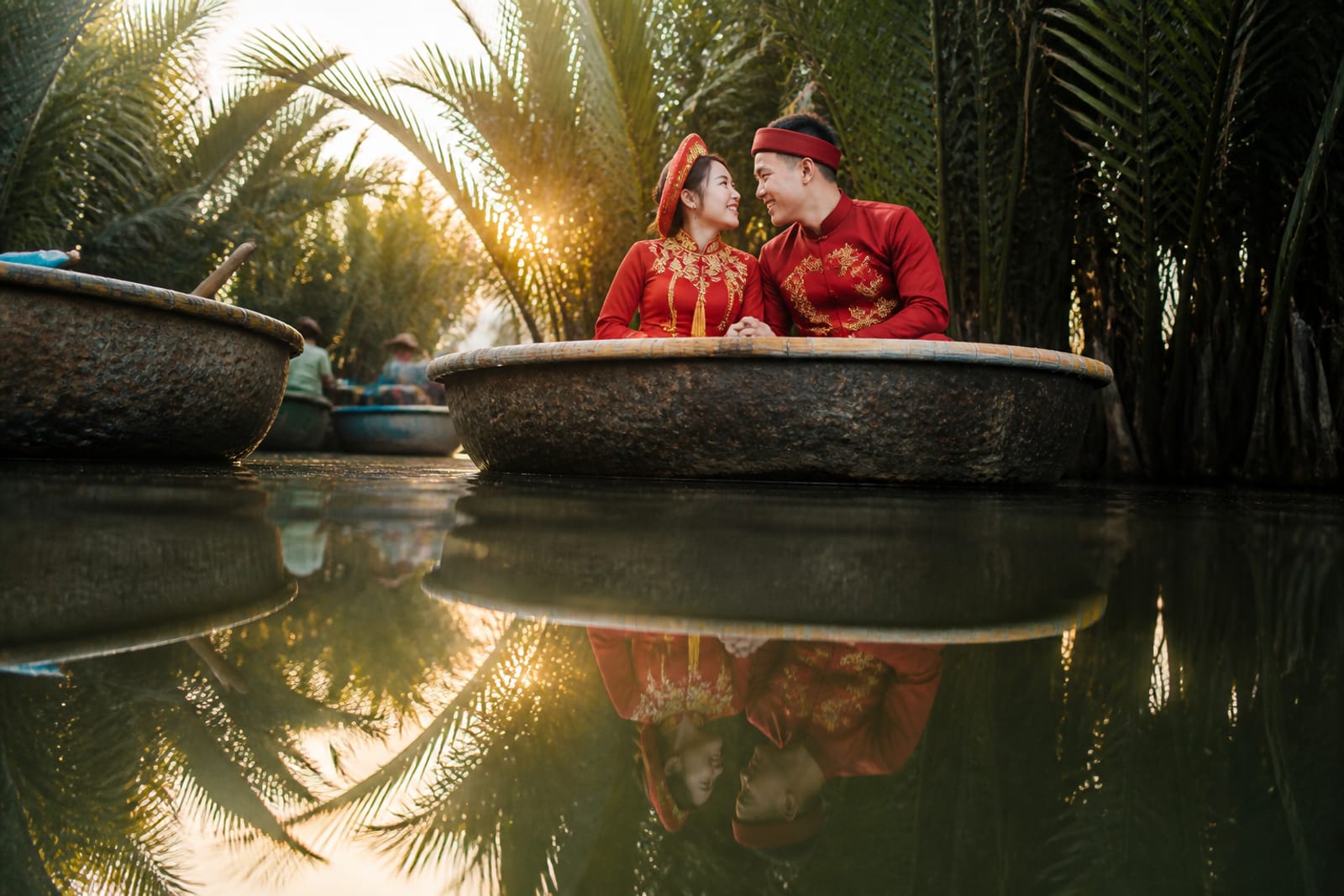
Should you wear an ao dai, your wedding dress, or both?
An ao dai is the practical choice for Hoi An: it's culturally fitting, photographs brilliantly in colonial doorways and lantern-lit alleys, and you're not risking a wedding gown on wet cobblestones or dust. A traditional white or cream ao dai rents locally; Cáo Studio can advise on fit and color when you book. A Western wedding dress works beautifully in the rice fields at sunrise, on the riverbank at dusk, or in the manicured grounds of a riverside hotel. Many couples shoot both—ao dai in the Ancient Town, gown in nature—but that requires two makeup applications, outfit changes and double the session length; confirm outfit swaps and change locations with the team in advance so nothing is improvised on the day. Grooms similarly choose between a tailored suit and a traditional Vietnamese groom's outfit (or western formal wear). Ask Cáo Studio to see the lookbook for real examples of ao dai and Western dress in Hoi An light so you can picture the difference.
What light and locations actually deliver the images you see online?
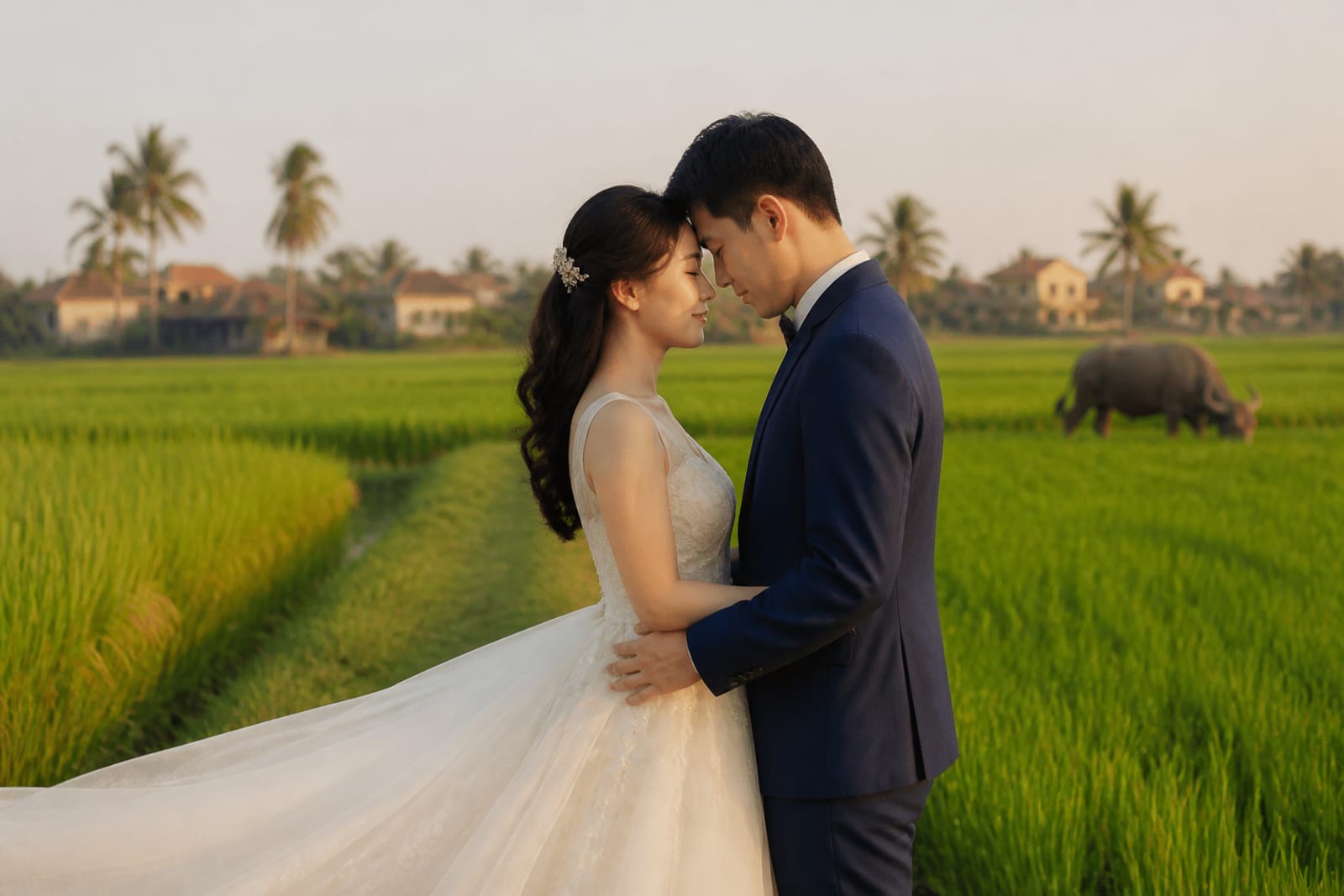
The Ancient Town is stunning but crowded and time-bound. Entrance tickets are required (check the current price on the Hoi An tourism site), and the gates open around 6:00 a.m.; arriving at 5:30 a.m. means you'll have the lantern-strung alleys and Japanese Bridge almost empty for 30–40 minutes. By 8:00 a.m. tour groups arrive. The stone streets and yellow-ochre walls are flattering in soft, cool morning light (5:30–7:30 a.m.); dusk (around 6:30–7:00 p.m., season-dependent) rekindles lanterns and softens harsh overhead sun. Mid-day (10 a.m.–4 p.m.) is harsh, flat and crowded—avoid it even in winter. The rice fields surrounding Hoi An (roughly 15–30 minutes by motorbike or car) are quieter, greener and wider-open; sunrise here is stunning February–August, but requires an early 4:30–5:00 a.m. start. The river (Hoai River, running through town) and riverbank hotels offer soft morning light and no crowds. Sunrise shoots across all locations mean traveling by vehicle in low light; confirm your driver and route with Cáo Studio so the team arrives on time and you're not waiting in the cold. Sunset shoots in the Ancient Town mean navigating narrow streets in fading light and ensuring the hair and makeup touch-ups are timed so you're camera-ready when lanterns glow—logistics-heavy, but iconic.
| Location | Best for | Light & Season | Practical Notes |
|---|---|---|---|
| Ancient Town alleys | Cultural immersion, lanterns, iconic shots | Sunrise (5:30–7:30 a.m.) or dusk (6:30–7:00 p.m.); Feb–Apr softest; May–Aug requires 5:30 a.m. | Entrance ticket needed; crowds heavy by 8 a.m.; cobblestones wet Oct–Nov |
| Rice fields | Wide, pastoral, romantic, natural green | Sunrise (5:00–6:30 a.m.) Feb–Aug; Sep–Dec too wet | 15–30 min drive; early wake, muddy shoes, no shade |
| Hoai River & riverbank | Reflections, soft diffused light, hotel-based | Morning (6:30–8:30 a.m.) or late afternoon (4:00–6:00 p.m.); year-round workable | Minimal crowds; easy logistically; fewer dramatic backdrops |
| Temples & gardens | Respectful cultural context, ornate details | Mid-morning (7:00–9:00 a.m.) best light; avoid mid-day; confirm dress code | Require respectful clothing; ask permission for commercial shoots |
Cáo Studio has shot across all four; ask on WhatsApp for location recommendations based on your outfit choice and the month you're visiting.
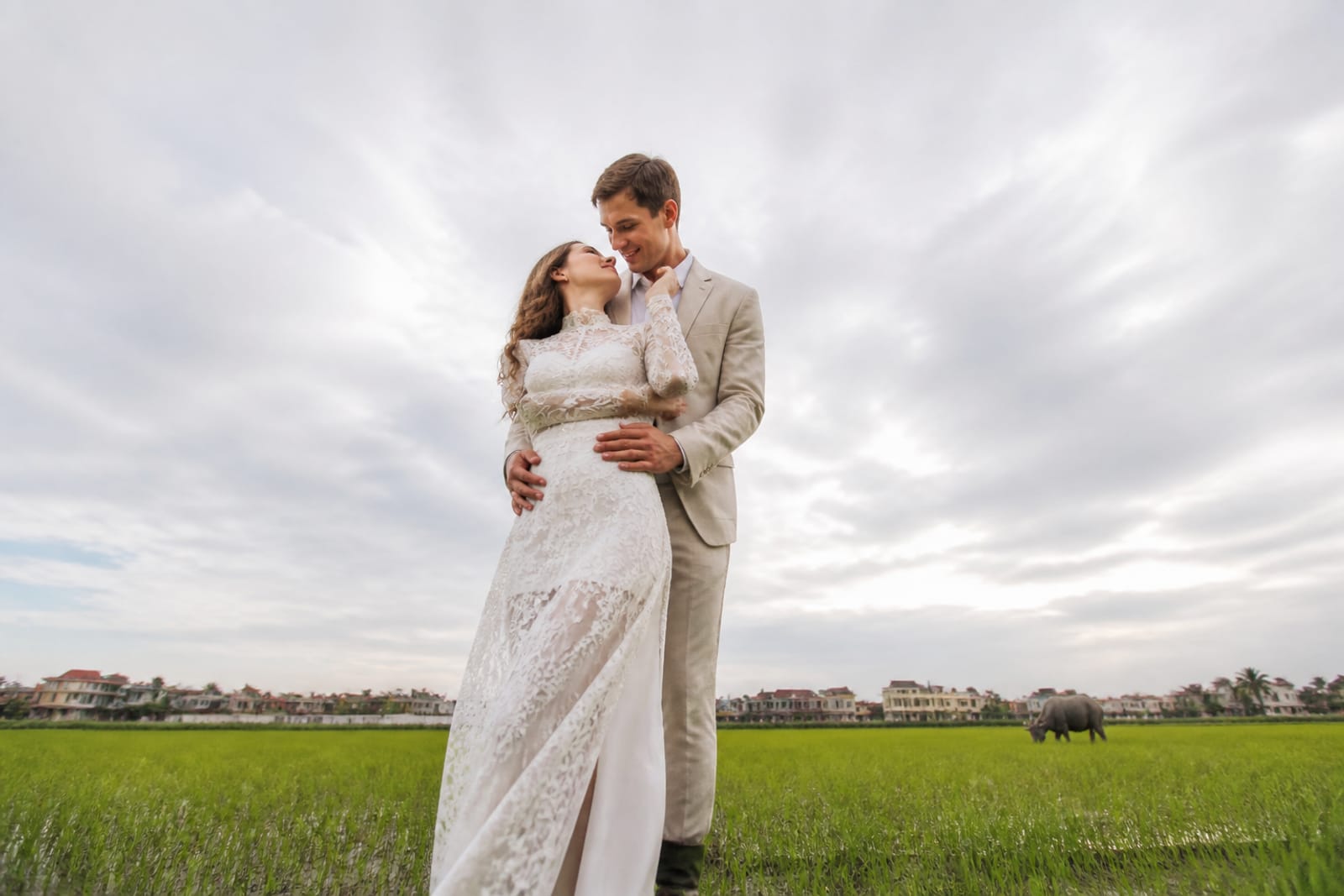
What happens with makeup, hair and outfit changes on the day?
Cáo Studio arranges pre-session consultations on WhatsApp so the team knows your outfit, hair style, makeup tone and any changes planned before you meet. Hair and makeup are applied at your hotel (via the makeup & hair at your hotel service) or at a pre-arranged location, typically 1–2 hours before the first shoot time, so you're camera-ready by 5:30 or 6:00 a.m. for sunrise. If you're changing outfits mid-session (ao dai to gown, for example), the team factors in a 15–30-minute outfit change and touch-up window, often at a pre-booked hotel or a quiet cafe. Makeup fades in heat and humidity; bring blotting sheets, a compact powder and lip color so the coordinator can refresh you between locations without a full redo. Have a conversation about makeup durability (waterproof mascara, long-wear foundation) before the shoot, especially if you're crying happy tears or shooting in the heat. The team carries backup supplies; confirm this so you're not scrambling for safety pins or bobby pins on location. Shoes matter: the Ancient Town cobblestones are uneven and wet in the rainy season; wear stable bridal heels or plan to go barefoot for some shots and change into walking shoes between takes.
How do you plan the shoot schedule around Hoi An's reality?
A realistic pre-wedding shoot day unfolds like this: 4:30–5:00 a.m. wake-up and light breakfast. 5:30–6:00 a.m. arrive at the first location (usually the Ancient Town, needing the 5:30 a.m. quiet window). 6:00–7:30 a.m. shoot in soft, cool light. 7:30–8:30 a.m. move to a second location (rice field or river, 15–30 min drive) or return to the hotel to change outfit and refresh makeup. 9:00–11:00 a.m. second shoot block, increasingly warm. 11:00 a.m.–3:00 p.m. break: rest, lunch, air conditioning, change into gown or alternate outfit if planned. 4:00–6:00 p.m. late-afternoon shoot at a less-visited temple garden or riverbank (softer light as sun drops). 6:30–7:30 p.m. return to the Ancient Town for lantern-light shots if the team is still on location; otherwise, wrap at dusk. This is a full day, not a 2–3-hour session. If you're traveling with jet lag or want a gentler pace, book a single half-day block (sunrise in the Ancient Town, or late afternoon by the river) instead. Confirm the itinerary, travel times, rest breaks, outfit changes and location map on WhatsApp before you arrive so the team and driver have a clear route and the couple isn't making decisions in the dark at 4:30 a.m.
Hoi An's weather, crowds and light cycles reward structure. A pre-wedding shoot that ignores seasons or tries to squeeze two locations into 3 hours often ends in rushed makeup, harsh midday sun and the couple exhausted rather than glowing. The couples Cáo Studio has photographed in Hoi An who felt genuinely happy afterward were those who booked February–April, started early, factored in a long day with breaks, and confirmed outfit and location details on WhatsApp at least a week beforehand. If you're unsure whether a pre-wedding shoot is the right fit for you, or whether an elopement or full wedding day coverage suits you better, ask the team. A good shoot plan matches your expectations, your schedule, and Hoi An's reality.
📸 Book on WhatsApp — pre-wedding photoshoot
---
What to check before you book
- Season & weather: Confirm your travel month. Feb–Apr = ideal. May–Aug = early sunrise (5:00 a.m.) required. Sep–Nov = typhoon/flood risk; confirm with Cáo Studio if dates are feasible.
- Outfit & rental: Do you need ao dai rental, wedding dress, or groom outfit? Ask about rental options (Cáo Studio partners can advise) and confirm sizes and fittings by WhatsApp.
- Hotel & makeup location: Confirm your hotel address or a nearby cafe so the makeup artist can arrive on time for pre-shoot application.
- Locations & access: Ask which specific locations Cáo Studio recommends for your month and outfit. Confirm you're comfortable with travel times, physical walking and early mornings.
- Itinerary & timing: Get a written outline of the planned schedule (wake-up, first location time, outfit changes, second location, wrap time) so everyone is aligned.
- Photographer's experience: Ask to see the lookbook for real Hoi An shoots. Cáo Studio's team has worked across Hanoi, Ho Chi Minh City and Hoi An; seeing examples in your chosen season reassures you of the light and style you'll get.
- Inclusions & deliverables: Confirm exactly what's included—hours, number of edited photos, delivery timeline, makeup included—on WhatsApp, as these vary by package.
FAQ
What month should British couples book a pre-wedding shoot in Hoi An?
February–April is ideal: dry, mild (20–28°C), vivid rice fields and manageable crowds. May–August works if you start at 5:00–5:30 a.m. Avoid September–November (typhoons, flooding, especially Oct–Nov). December–January is cool but often drizzly.
Is an ao dai necessary, or can we wear a wedding dress and suit?
Both work. Ao dai suits the Ancient Town and photographs beautifully in colonial light; a wedding dress shines in rice fields at sunrise or riverbank at dusk. Many couples shoot both, but that requires extra outfit changes and time. Ask Cáo Studio to show you examples in the lookbook so you decide.
How early do we need to wake up?
For sunrise in the Ancient Town or rice fields, you'll wake around 4:30–5:00 a.m. and be camera-ready by 5:30–6:00 a.m. This is non-negotiable to beat crowds and capture soft light. Single location shoots can start later (6:30–7:00 a.m.) but still require an early morning.
Will we be photographed around other tourists in the Ancient Town?
Yes—by 8:00 a.m., tour groups arrive. Arriving at 5:30 a.m. gives you 30–40 quiet minutes before crowds. Sunset (6:30–7:00 p.m.) is also quieter but requires lanterns to be lit and dusk navigation. Mid-day (10 a.m.–4 p.m.) is loud and crowded; avoid it.
What should we wear under an ao dai?
A strapless white or nude slip (or tube top) prevents shoulder marks and visible undergarments under the silk. Briefs or a thong avoids visible panty lines. Ask Cáo Studio's makeup artist when she applies makeup; she can advise on fit and comfort for sitting and moving between locations.
How much does a pre-wedding shoot in Hoi An cost?
Pricing depends on session length, location count, outfit changes, makeup included and travel time. Ask Cáo Studio for a quote on WhatsApp with your preferred month, locations and outfit choices; they'll send exact pricing and package details.
Can we book if we're not getting married, just an engagement or anniversary shoot?
Yes. Cáo Studio also runs couple & family sessions and proposal & anniversary packages. Hoi An's light and locations work for any celebration. Ask on WhatsApp what suits your occasion.
What if it rains or weather changes on shoot day?
Light drizzle (Dec–Jan, early mornings) often softens light beautifully and clears quickly. Heavy rain (Sep–Nov) may require rescheduling or moving to covered locations (hotel lobbies, covered riverside pavilions). Confirm the team's contingency plan before you book; if rain is forecast, have a backup indoor location or date in mind.
How long does a full pre-wedding shoot day take?
Typically 12–14 hours (4:30 a.m.–5:30 or 6:30 p.m.), including wake-up, travel, two location blocks, breaks, outfit changes and lantern shoots if booked. A half-day session (sunrise only or late afternoon only) is 5–6 hours plus travel. Confirm the exact timeline on WhatsApp so you know when to rest and eat.
Do we need to book hotels or outfits in advance?
Yes. Confirm your hotel address early (needed for makeup artist arrival). Ao dai rentals should be booked or fitted 1–2 weeks before arrival. Wedding dress should travel with you or be arranged with a local rental shop (ask Cáo Studio for referrals). Early planning prevents last-minute stress.
FAQ
What month should British couples book a pre-wedding shoot in Hoi An?
February–April is ideal: dry, mild (20–28°C), vivid rice fields and manageable crowds. May–August works if you start at 5:00–5:30 a.m. Avoid September–November (typhoons, flooding, especially Oct–Nov). December–January is cool but often drizzly.
Is an ao dai necessary, or can we wear a wedding dress and suit?
Both work. Ao dai suits the Ancient Town and photographs beautifully in colonial light; a wedding dress shines in rice fields at sunrise or riverbank at dusk. Many couples shoot both, but that requires extra outfit changes and time. Ask Cáo Studio to show you examples in the lookbook so you decide.
How early do we need to wake up?
For sunrise in the Ancient Town or rice fields, you'll wake around 4:30–5:00 a.m. and be camera-ready by 5:30–6:00 a.m. This is non-negotiable to beat crowds and capture soft light. Single location shoots can start later (6:30–7:00 a.m.) but still require an early morning.
Will we be photographed around other tourists in the Ancient Town?
Yes—by 8:00 a.m., tour groups arrive. Arriving at 5:30 a.m. gives you 30–40 quiet minutes before crowds. Sunset (6:30–7:00 p.m.) is also quieter but requires lanterns to be lit and dusk navigation. Mid-day (10 a.m.–4 p.m.) is loud and crowded; avoid it.
What should we wear under an ao dai?
A strapless white or nude slip (or tube top) prevents shoulder marks and visible undergarments under the silk. Briefs or a thong avoids visible panty lines. Ask Cáo Studio's makeup artist when she applies makeup; she can advise on fit and comfort for sitting and moving between locations.
How much does a pre-wedding shoot in Hoi An cost?
Pricing depends on session length, location count, outfit changes, makeup included and travel time. Ask Cáo Studio for a quote on WhatsApp with your preferred month, locations and outfit choices; they'll send exact pricing and package details.
Can we book if we're not getting married, just an engagement or anniversary shoot?
Yes. Cáo Studio also runs [couple & family sessions](/couple-photoshoot) and [proposal & anniversary packages](/proposal-and-anniversary). Hoi An's light and locations work for any celebration. Ask on WhatsApp what suits your occasion.
What if it rains or weather changes on shoot day?
Light drizzle (Dec–Jan, early mornings) often softens light beautifully and clears quickly. Heavy rain (Sep–Nov) may require rescheduling or moving to covered locations (hotel lobbies, covered riverside pavilions). Confirm the team's contingency plan before you book; if rain is forecast, have a backup indoor location or date in mind.
How long does a full pre-wedding shoot day take?
Typically 12–14 hours (4:30 a.m.–5:30 or 6:30 p.m.), including wake-up, travel, two location blocks, breaks, outfit changes and lantern shoots if booked. A half-day session (sunrise only or late afternoon only) is 5–6 hours plus travel. Confirm the exact timeline on WhatsApp so you know when to rest and eat.
Do we need to book hotels or outfits in advance?
Yes. Confirm your hotel address early (needed for makeup artist arrival). Ao dai rentals should be booked or fitted 1–2 weeks before arrival. Wedding dress should travel with you or be arranged with a local rental shop (ask Cáo Studio for referrals). Early planning prevents last-minute stress.
Ao dai, makeup, hair and a local photographer in Hanoi or Saigon — one WhatsApp message.