/pre-wedding-photoshoot
Pre-wedding photoshoot in Hue's rainy season: plan around weather
Pre-wedding photoshoots in Hue during the rainy season (Sep–Dec, worst Oct–Nov) are possible but demand different choices than dry-season shoots. Instead of the Imperial City's stonework in sunlight, you'll shoot under cloud cover, in flooded gardens, and along the riverside where mist reads as mood. Rain light is soft and directionless—good for even skin tones, bad for crisp detail shots. Cáo Studio shoots in Hanoi, Ho Chi Minh City and Hoi An, not Hue; this guide helps you find a local photographer who understands Hue's wet-season palette, choose outfits (lightweight ao dai, water-resistant layers), scout timing (early morning for clearer skies), and manage expectations (fewer wide establishing shots, more close-frame and movement storytelling). Budget extra time for location scouts post-rain and confirm your photographer has shot storms before. ---
Why does Hue's rainy season change how pre-wedding shots look?
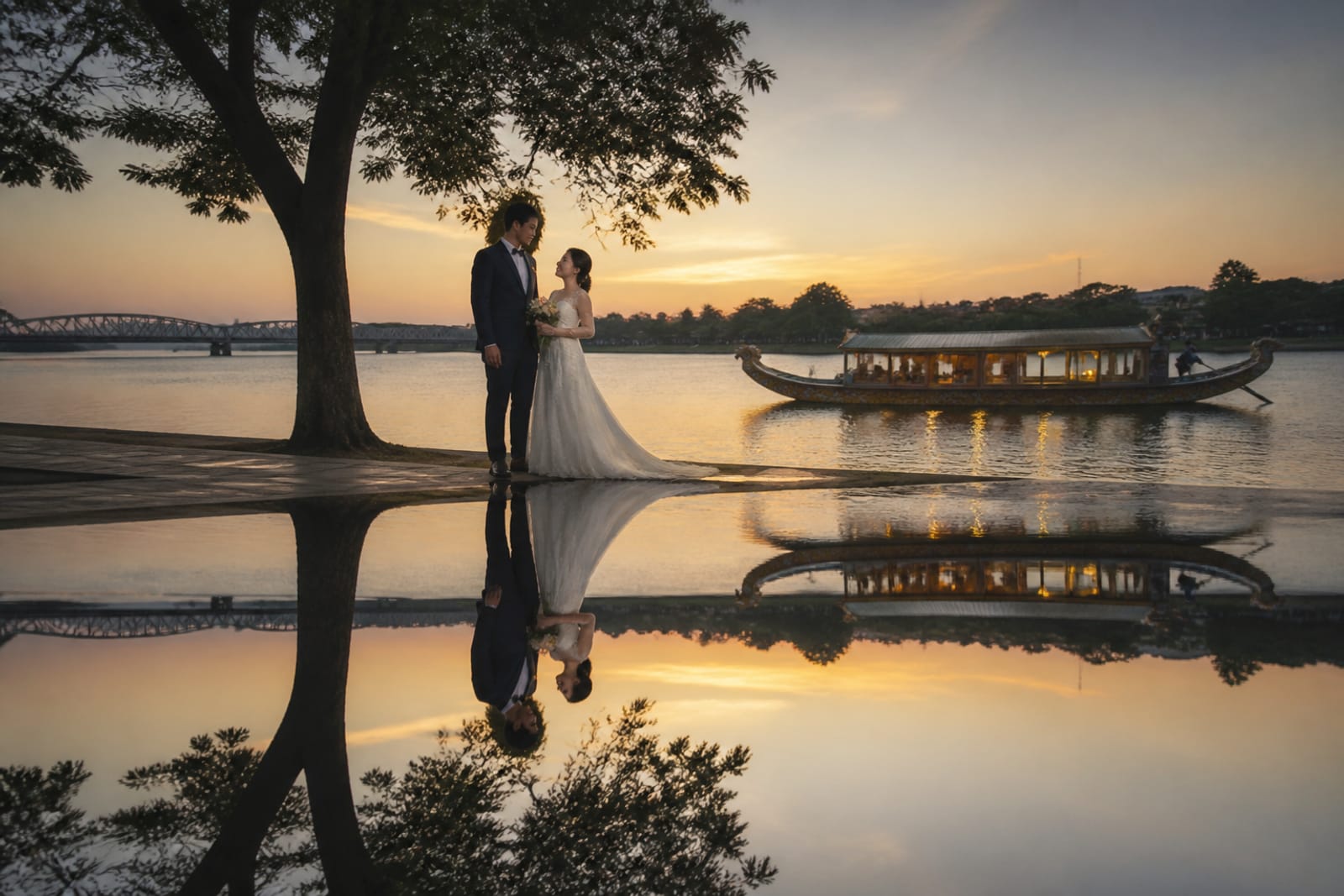
Hue sits on Vietnam's central coast but receives more rain than Da Nang or Hoi An because the Perfume River valley traps moisture. Sep–Dec is the heavy-rain and typhoon season; Oct–Nov is the worst, with daily downpours and occasional flooding. Cloud cover raises ambient light but flattens shadows—landscapes lose depth, and backlit hair-rim light vanishes. Water on roads and temple courtyards becomes part of the frame rather than a backdrop problem. Soft, grey light is flattering for skin but demands close framing and movement to avoid flat-looking couple portraits. A photographer who shoots rain regularly will reframe around reflections, use the wet ground for depth, and capture you walking or holding each other instead of posing static in the mist.
Should you shoot during rain or wait for a break?
Rain breaks in Hue typically last 30–90 minutes in the rainy season—you can time shoots between squalls. Light at 6–7 am is often clearest; by midday, clouds thicken again. If your wedding date is fixed during Oct–Nov, plan a rainy-day shoot (bring an umbrella for between-shots, wear quick-dry fabrics) rather than gamble on a clear day. A local photographer will know the weekly pattern and can suggest shooting 5–6 am for the best chance of a 2–3 hour dry window. If rain does fall during the shoot, experienced teams use it—couple walking through drizzle, lanterns reflected in puddles, temple steps slick and moody. Never cancel outright; instead, pivot to indoor or sheltered venues (the Trang Tien Bridge underside, the Citadel's covered gateways, hotel gardens with roof cover) where rain light still works. The trade-off: fewer expansive landscape shots, more intimate framing and story-driven sequences.
How does wet-season clothing change your shoot?
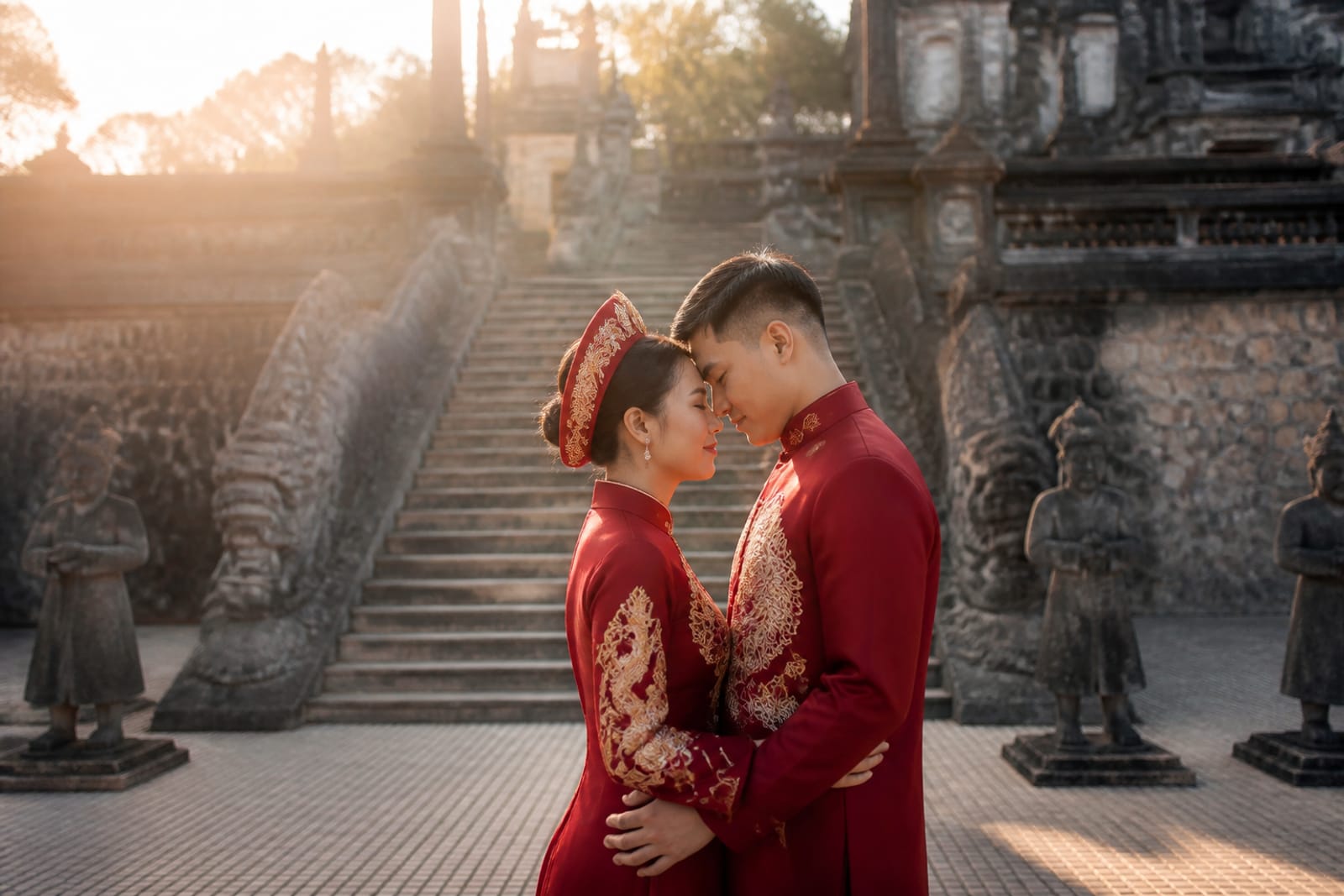
Ao dai in humidity and rain demands lightweight, quick-dry silk or linen blends rather than heavy brocade. Water clings to traditional fabrics, weighs them down, and creates an unflattering cling around the legs. For pre-wedding shoots, consider an ao dai in neutral tones (cream, soft grey, muted rose)—they read better in flat, overcast light than jewel tones, which can look murky under grey skies. Groom's suit fabric matters: cotton-linen blends breathe and dry faster than polyester. Avoid heavy embroidery or beading; water spotting shows on ornate detail, and seams take longer to dry. Bare feet or sandals (if shooting temple grounds) mean toenails should be groomed—rain often means close-up ground-level shots. Hair in humidity frizzes fast; confirm your makeup artist (or hire one locally, or coordinate via makeup & hair at your hotel) uses anti-frizz serum and strong-hold products. Accessory choice shifts too: metal jewelry can tarnish in salt spray if you're near water; silk flowers absorb water and collapse—ask about fake blooms or jewelry-only styling.
| Outfit Choice | Best for Rainy Hue | Light & Season | Why It Works |
|---|---|---|---|
| Lightweight ao dai (silk, linen) | Pre-wedding couples | Soft, overcast light; quick-dry fabric | Moves gracefully in mist, dries between shots, reads well in grey tones |
| White or cream silk áo | Engagement or romantic pairs | 6–7 am before cloud thickens | Glows under soft diffuse light; shows as ethereal, not washed-out |
| Groom's cotton-linen suit | Formal couple sessions | Any hour during rain breaks | Breathes, dries fast; avoids heavy polyester cling |
| Layered look (áo + overshirt) | Couples wanting movement | Transitional light, 5–8 am | Allows mid-shoot quick changes; overshirt removes for close frames |
| Muted jewel tones (dusty rose, slate, sage) | Pairs who like moody aesthetic | Overcast + reflective water | Rich tones hold contrast in flat, grey light |
What locations in Hue actually work in the rain?
The Imperial City (Citadel) requires an entry ticket and has restricted professional photography rules—confirm with the gate keeper or hire a local guide who knows current permit status. Its covered colonnades and arched gateways offer rain shelter; shoot walking through them or framed under the Ngo Mon Gate's silhouette. The Perfume River at dawn, even with rain, reflects the sky and city lights; rain mist softens the far bank and creates layered depth. Trang Tien Bridge (no ticket required) shoots well in drizzle—the underside offers shelter, and wet steps give texture. Temple grounds (Thien Mu, Tu Duc Tomb) are atmospheric in rain but muddy; wear grippy shoes and bring a small towel for the couple's feet between shots. Hoan Kiem Lake (Hanoi comparison: that's pre-wedding shoots in Hanoi) has no equivalent in Hue—instead, scout the riverside promenade or smaller pagodas in quiet neighborhoods where locals aren't rushing. Ask your photographer to visit 2–3 sites during dry weather beforehand; rain changes access (flooded paths, slippery stone), and pre-scouting saves shoot-day surprises. Avoid low-lying tomb gardens during heavy rain (flash-flood risk) and anywhere with metal railings during thunderstorms.
How do you find and vet a photographer for rainy-season Hue shoots?
Cáo Studio operates in Hanoi, Ho Chi Minh City and Hoi An (ask on WhatsApp for Hoi An dates), not Hue—so you'll hire a local Hue-based team. When vetting, ask: Have you shot pre-wedding in Oct–Nov? Request a portfolio showing rain-light work (grey skies, reflections, movement, not just sunny monument shots). Do you have backup indoor/shelter locations if weather worsens? A yes means they've thought through contingency. What is your editing style? Rain-light work often needs lifted shadows and cooler tones—confirm that matches your taste. Check whether they offer a post-rain location scout (day-of or 1–2 days before shoot) and whether they include a videographer or just stills (rain footage is cinematic if captured well, but requires a second person). Ask about delivery time: wet-weather shoots demand more editing (spotting removal, color correction for grey casts), so 2–3 weeks is realistic vs. same-day. Request one recent couple shoot (not a model/portfolio shoot) to see real-world pacing and frame variety. Local wedding coordinators or your hotel concierge can often refer trusted Hue photographers; cross-reference on Instagram for style consistency and storm-weather work. See Cáo Studio's approach to pre-wedding shoots for comparison—Cáo's one-team model (photographer + makeup + styling in one booking) works in Hanoi, Saigon and Hoi An, reducing vendor-coordination stress.
📸 Book on WhatsApp — couple & family photoshoots | 💄 Makeup & hair at your hotel | 🌸 See the lookbook
What to check before you book a pre-wedding shoot in rainy-season Hue
- Cancellation policy: Does the photographer refund if typhoon warnings close roads, or reschedule to the next available date?
- Backup plan in writing: Confirm alternate indoor/shelter locations (not just "we'll figure it out").
- Fabric & styling: Will they advise on quick-dry materials, or do you bring final outfits and hope they fit?
- Timing flexibility: If you book 6–8 hours and rain clears at 10 am, can you shift locations mid-shoot?
- Editing turnaround: Rainy-light work needs color correction—ask for realistic delivery (not same-day for rain shoots).
- Permit & access: If shooting temple grounds or the Imperial City, confirm they've checked current photography rules (they change).
- Equipment insurance: Ask if their gear (camera, lights, backup bodies) is insured—rain damage happens, and you need coverage clarity.
- Video vs. stills: Rain-light video is moody but harder to fix in post—clarify whether video is included and how many edits you get.
💍 Explore pre-wedding & elopement options | 🎬 Wedding video & pre-wedding film
---
FAQ
Is October or November the worst month for pre-wedding shoots in Hue?
October and November are both heavy-rain months, with Oct–Nov combined as peak typhoon season. Choose either if timing is fixed; both demand rain-ready photographers. Early Oct can be slightly drier than late Oct—ask a local photographer for the specific forecast week of your date.
Can we still do an outdoor shoot if rain is expected every day?
Yes, if you book 5–7 am (often clearest) or have indoor backup locations (temple colonnades, hotel gardens with roof). A photographer experienced in rainy-season work will reframe as movement and close shots rather than wide landscapes—it's different, not impossible.
What should we wear under the ao dai to avoid showing wet fabric cling?
Wear a fitted slip in the same color as the ao dai, or go unlined if the outer fabric is thick enough (test at home first). Skip padding—wet silk clings to it awkwardly. For the groom, a cotton undershirt prevents the dress shirt from clinging to his chest in humidity.
Do we need to hire a makeup artist separately, or can our hotel provide one?
Many Hue hotels offer basic makeup; for pre-wedding, hire a dedicated artist who knows frizz control and strong-hold products for rain. If booking a Hue photographer via a studio like Cáo Studio, confirm whether makeup is included or coordinate locally—don't assume.
How much extra should we budget for a rainy-season shoot vs. dry season?
Budget factors: rainy-season location scouts take longer (post-rain access checks), editing takes 2–3 weeks not 1, and backups (indoor venues, extra outfit changes) may add coordination time. Ask your photographer for their rainy-season rate vs. dry-season—they often charge the same but deliver fewer shots due to lower light. More important: allow extra scheduling buffer for weather reschedules.
What if a typhoon warning closes roads on our shoot day?
Confirm cancellation terms before booking. Professional photographers refund or fully reschedule—never charge a no-show fee if roads are impassable. Choose a photographer who commits this in writing; verbal promises fail when weather turns.
FAQ
Is October or November the worst month for pre-wedding shoots in Hue?
October and November are both heavy-rain months, with Oct–Nov combined as peak typhoon season. Choose either if timing is fixed; both demand rain-ready photographers. Early Oct can be slightly drier than late Oct—ask a local photographer for the specific forecast week of your date.
Can we still do an outdoor shoot if rain is expected every day?
Yes, if you book 5–7 am (often clearest) or have indoor backup locations (temple colonnades, hotel gardens with roof). A photographer experienced in rainy-season work will reframe as movement and close shots rather than wide landscapes—it's different, not impossible.
What should we wear under the ao dai to avoid showing wet fabric cling?
Wear a fitted slip in the same color as the ao dai, or go unlined if the outer fabric is thick enough (test at home first). Skip padding—wet silk clings to it awkwardly. For the groom, a cotton undershirt prevents the dress shirt from clinging to his chest in humidity.
Do we need to hire a makeup artist separately, or can our hotel provide one?
Many Hue hotels offer basic makeup; for pre-wedding, hire a dedicated artist who knows frizz control and strong-hold products for rain. If booking a Hue photographer via a studio like [Cáo Studio](/makeup-and-hair), confirm whether makeup is included or coordinate locally—don't assume.
How much extra should we budget for a rainy-season shoot vs. dry season?
Budget factors: rainy-season location scouts take longer (post-rain access checks), editing takes 2–3 weeks not 1, and backups (indoor venues, extra outfit changes) may add coordination time. Ask your photographer for their rainy-season rate vs. dry-season—they often charge the same but deliver fewer shots due to lower light. More important: allow extra scheduling buffer for weather reschedules.
What if a typhoon warning closes roads on our shoot day?
Confirm cancellation terms before booking. Professional photographers refund or fully reschedule—never charge a no-show fee if roads are impassable. Choose a photographer who commits this in writing; verbal promises fail when weather turns.
Ao dai, makeup, hair and a local photographer in Hanoi or Saigon — one WhatsApp message.