/pre-wedding-photoshoot
Pre-wedding photoshoot in Mai Chau and Pu Luong in August
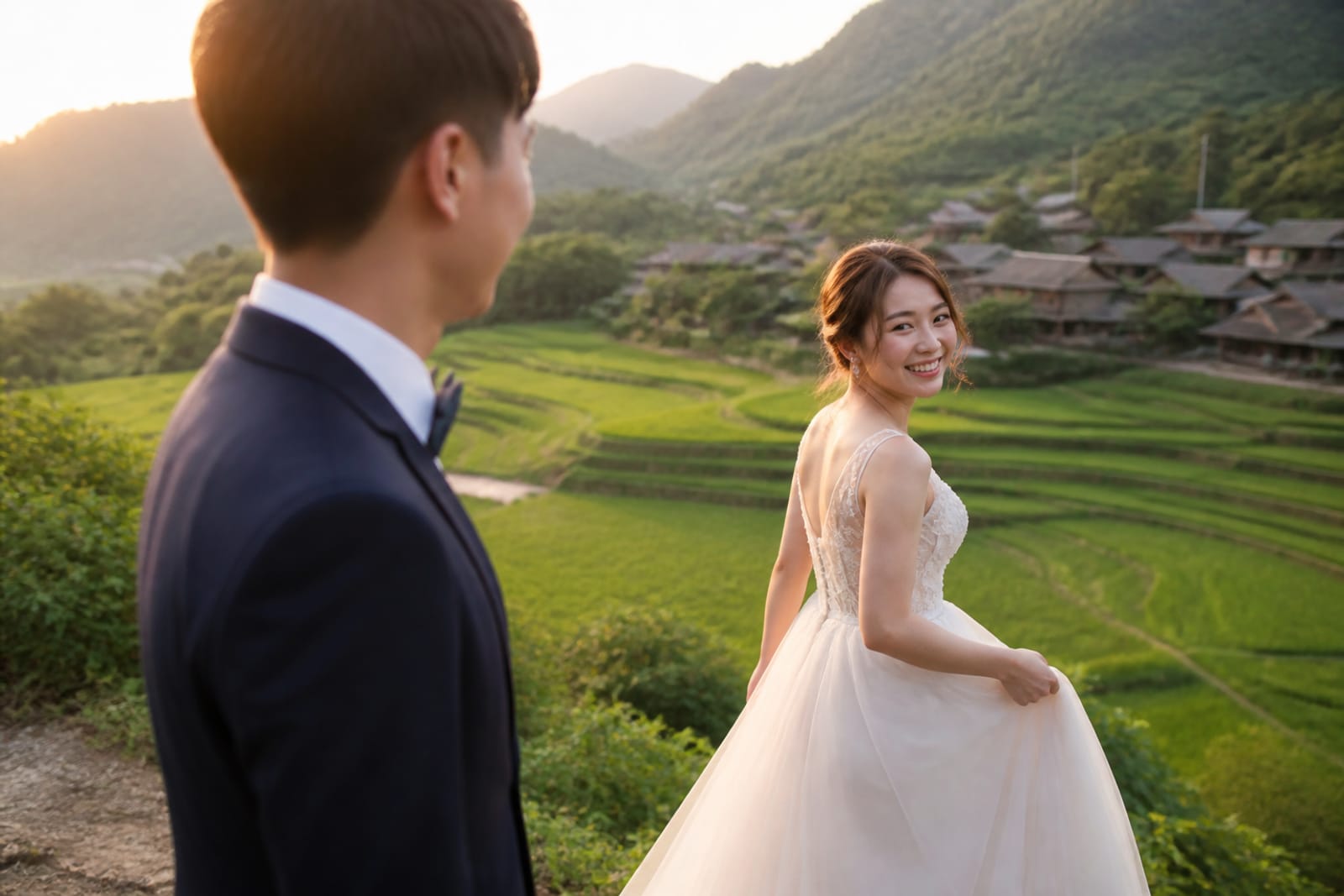
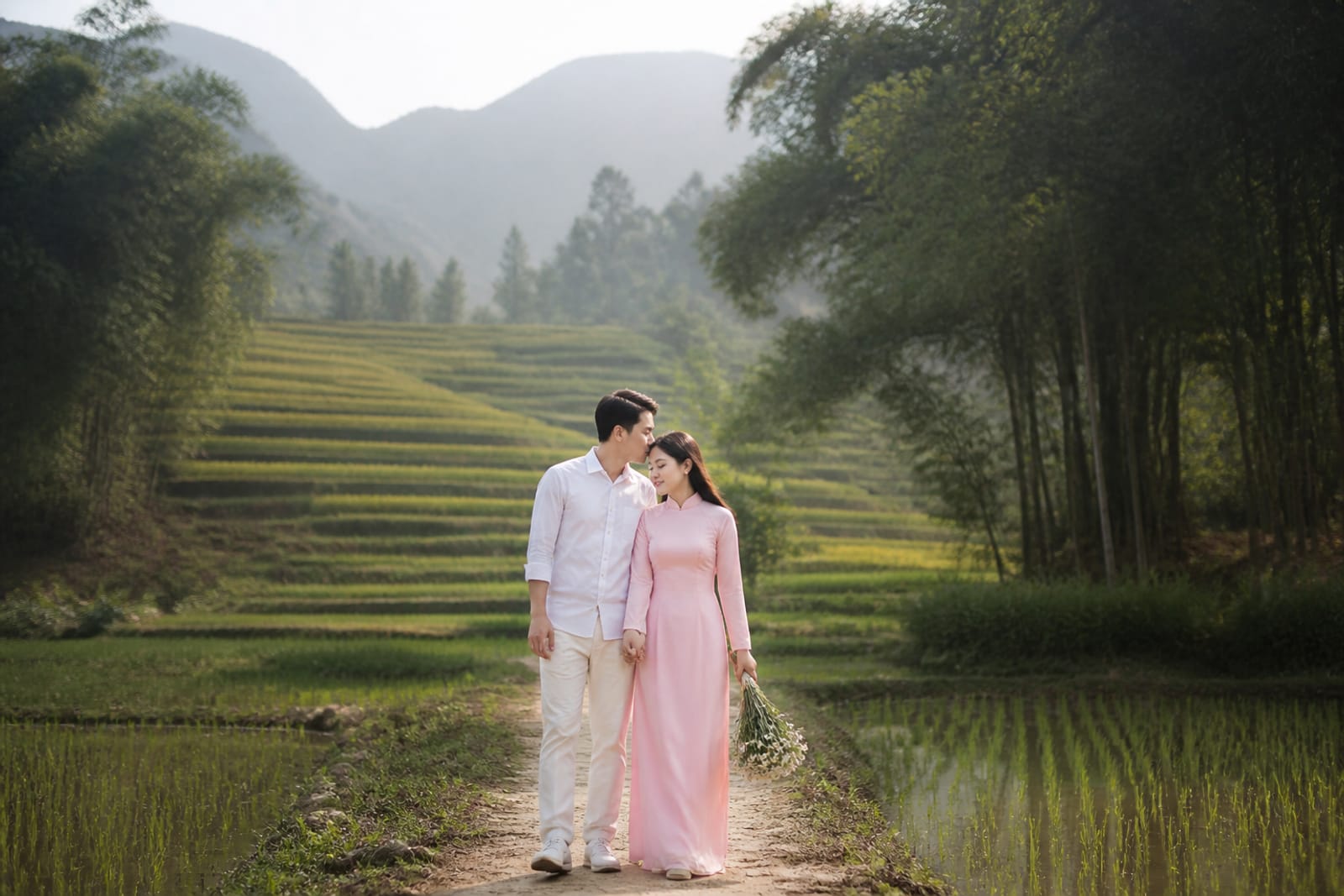
Mai Chau and Pu Luong are rice-terrace valleys in Hoa Binh province, roughly two to three hours from Hanoi, best for pre-wedding shoots April–June and September–October when the rice is golden and the sky is clear. August sits in the rainy season: afternoon downpours are frequent, mist hangs low on ridges until mid-morning, and the rice is still green. The trade-off is fewer crowds and softer, more diffused light—ideal if you embrace mist and don't rely on harsh shadows. Sessions typically run early (6–9 am) to catch the hour before clouds build, and outfits (áo dài, Western dress, casual wear) must be swappable if weather shifts fast. Cáo Studio's approach here is to scout light in real time and redirect the shoot toward what the valley offers that day—a walking moment in the mist, a detail framed against wet stone, the landscape holding you two—rather than fight the weather. ---
When should we actually shoot if August is rainy?
Early mornings offer the clearest window: sunrise to 8:30 am, before afternoon thunderstorms build. The mist clears slowly in August—expect soft, even light until 9 am, then cloud thickening by 10:30 am. If rain hits mid-session, the shoot pivots to covered areas (village porches, wooden pavilions) or pauses until the downpour passes (20–40 minutes typical). Shoot too late in the day and you're chasing light that has already scattered into grey. Starting at 6–6:30 am puts you ahead of weather and gives you two clear hours—enough for wide terraces, couple moments on paths, and detail shots of landscape or hands.
📸 Book on WhatsApp — pre-wedding photoshoot
How does August mist change what we should wear?
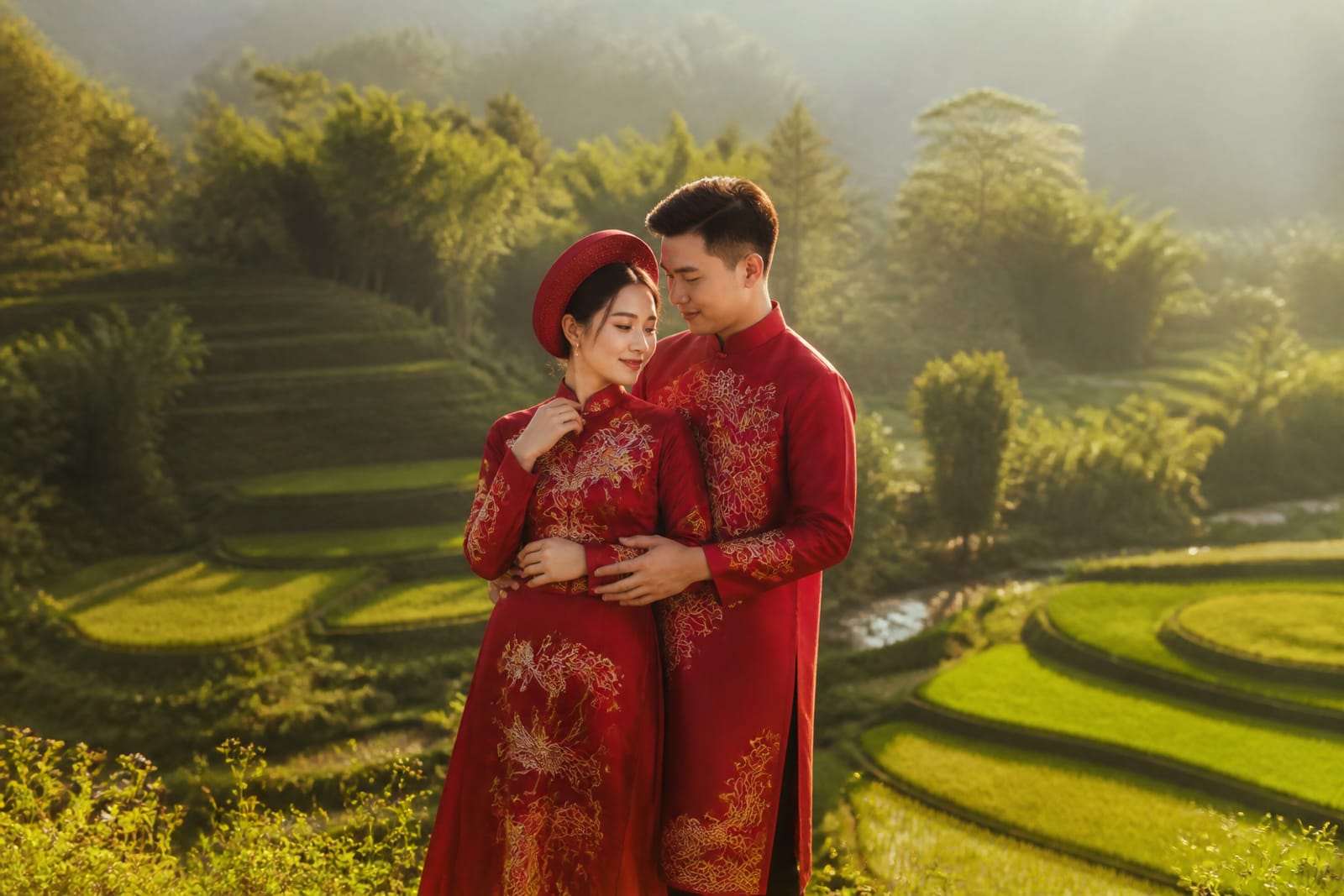
Mist softens color and contrast, so deep jewel tones (emerald, navy, burgundy) and white read better than pastels that wash out in grey light. Áo dài in silk or brocade photographs well even in mist because fabric texture holds the frame; Western dresses work best in stronger, more structured silhouettes. Bring layering: August is cool and damp at 6 am in the valley (around 15–17°C), and you'll warm up as you walk. Wet grass and muddy paths are real—waterproof shoes or sandals you can slip on and off matter more than heels. Plan at least two outfits so the camera catches different tones against the same light; a change of áo dài and a casual second look (linen shirt, light trousers) hedge against both weather and visual repetition.
What's the crowd level in August, and does it affect shooting?
August is shoulder season—fewer domestic visitors and Western tourists than peak months (April–May, September–October, Tet), so village paths and terrace overlooks are quieter. You won't need to wait for groups to clear, and locals are used to photographers but not overwhelmed by them. The trade is that August tourism infrastructure slows: some homestays close for renovation, guides book out less predictably, and village services run lean. Logistically, this means Cáo Studio scouts routes the day before or early morning to confirm access and light. Fewer crowds also means you move freely—no rushing couples through five-minute windows—but it also means backup shelter or an alternative venue inside a village building, not spread across open terraces.
How does mist light compare to clear-sky light for framing?
Mist acts like a giant softbox: it eliminates hard shadows, flattens the image plane, and pulls focus to color and movement rather than dramatic contrast. Clear light (May–June, October) creates shape and depth through shadow; mist creates intimacy through tone. On camera, mist light suits close framing (you two walking, hands, faces) and environmental context (terraces, village edges) equally—no blown skies or underexposed faces to manage. The risk is grey-on-grey if the entire frame is mist and no subject stands apart; the fix is to position you against a darker reference (a shadow on the terrace, green rice, a wooden wall) or to shoot detail close (your hands, fabric texture, a flower) where mist doesn't compete. Edited work in August holds more muted tones; if you want color pop, plan a second shoot in clearer weather or bring bright accents (a red umbrella, a golden shawl, flowers).
| Condition | Best for | Light type | Why it works |
|---|---|---|---|
| August mist, 6–8 am | Close couple moments, hands, fabric detail | Soft, diffused, no shadow | Intimate framing; no squinting; texture reads |
| August afternoon (risky) | Wide landscape, environmental (if storm passes) | Broken cloud, variable | Unpredictable; pivot required mid-shoot |
| September–October | Terraces, golden rice, wide moments | Clear, directional, warm | Depth and color; 2–3 hour shooting window |
| May–June | Terraces, long shadows, couple walking | High contrast, early/late sweet light | Strong visual story; midday heat, afternoon crowds |
Choosing August works if you like mist-soft tones and don't mind weather flexibility; choosing September–October trades some spontaneity for guaranteed golden light.
What's the step-by-step plan if we book in August?
1. Confirm dates with your team two weeks ahead. Mist and rain shift week to week; your photographer scouts the best lookout and light window for your exact date.
2. Pack layers and two outfits. Áo dài or dress in a deep tone, casual backup, waterproof shoes, shawl or light jacket for 6 am.
3. Coordinate transport the evening before. Meet at your Hanoi hotel or a central point (Hoa Binh town) early—6 am start means a 5 am pickup.
4. Shoot 6–9 am, then debrief or explore the village. If weather holds, capture couple moments and landscape; if rain builds, shift to covered frames or a light touch-up shoot later in the week.
5. Review edits within 48 hours. The team delivers vertical film (60–90 seconds) and full-resolution photos for your album and prints, plus color notes if a second session reshoot feels right.
6. Order prints or keepsakes once you've approved edits. Framed prints, an album, or a custom keepsake box anchor the shoot into a physical memory you keep.
💄 Makeup & hair at your hotel to start your morning polished, or we handle it on-site with touch-ups between locations.
---
What to check before you book a pre-wedding shoot in August
- Weather windows: Confirm your photographer understands August rain and has an indoor backup (village pavilion, homestay interior). Don't assume an open-air plan will work.
- Outfit fit in mist: Show your áo dài or dress to the team before the shoot. Muted tones and structured fabric photograph better than pastels or light, clingy materials.
- Travel time and pace: Terrace walks on wet grass take longer than on dry paths. Factor in slower movement and extra time for outfit changes.
- Editing timeline: Mist light needs careful color grading. Confirm the team delivers edits within 48 hours, not a week.
- Rain protocol: Ask whether the shoot pauses, pivots to indoor/covered frames, or reschedules if rain is heavy. Know the policy before you pay.
- Accessibility for two: If either of you has mobility concerns, ask whether the chosen terraces and paths are walkable in wet conditions. A guide or walking stick may be necessary.
For pre-wedding shoots in Mai Chau and Pu Luong, Cáo Studio works from Hanoi and coordinates directly with you via WhatsApp. We don't have a permanent base in the valleys; every shoot is a day trip scouted on your date. If you prefer clearer light or guaranteed sunshine, September–October shoots are stronger—but August mist offers something rare: a quiet valley and soft frames most couples never see.
🌸 See the lookbook to compare how light changes our framing across seasons and weather.
---
What makes a pre-wedding shoot different from an engagement shoot?
An engagement shoot is usually shorter (2–3 hours, one outfit, one location) and candid. A pre-wedding photoshoot spans a full day (or two days), multiple outfits, multiple locations, and includes a short film—it's a narrative, not a moment. Both need a director and a team (not a vendor list stitched together), but pre-wedding work demands more light scouting, more wardrobe coordination, and more editorial thinking.
---
Can we reschedule if August weather is too rough?
Yes. Confirm your reschedule policy with Cáo Studio when you book. If the shoot is unsafe (flooding, lightning) or visibility drops below framing-distance, the session pauses or moves to a later date. Most couples build in a backup date within two weeks; if rain threatens on the morning of the shoot, you and the team decide together whether to go, pivot indoors, or wait. No refund is lost—the session just shifts. That's why WhatsApp contact matters: real-time weather calls happen fast.
---
Is an ao dai required, or can we wear Western dress?
Neither is required. Áo dài photoshoots celebrate the garment; pre-wedding shoots include whatever tells your story—áo dài, Western dress, casual wear, or a mix. Many couples do one áo dài frame and two Western looks in a single session. If you want áo dài but don't own one, rental is available, and makeup and hair are included or added on.
---
How is this different from booking a local photographer directly?
Cáo Studio sends one team (photographer, director, makeup and hair artist) to manage light, outfit, and narrative in real time—no coordination between separate vendors. A local photographer knows the valleys well, but if weather shifts, if your hair needs a touch-up, or if the light changes, you're juggling multiple calls. Booking directly also means you vet the portfolio yourself and navigate language/timing gaps. Cáo Studio handles the logistics and the shoot as a single conversation on WhatsApp—simpler, faster, and backed by a team trained in directing pre-wedding work across Vietnam.
---
Should we book a videographer separately, or is video included?
Cáo Studio includes a short vertical film (60–90 seconds) with every pre-wedding shoot—no separate booking. If you want a longer edit (3–5 minutes) or a full wedding-day film, that's a separate package under wedding & pre-wedding video. Ask on WhatsApp for the scope; video pricing and runtime are confirmed in your quote.
FAQ
Will August mist ruin our pre-wedding photoshoot?
No. Mist creates soft, intimate light—ideal for close framing and texture. The trade-off is less dramatic sky and fewer clear-distance landscape shots. If you want golden-hour contrast, book September–October instead. August works beautifully if you embrace the mood.
What's the best time of day to shoot in August in Mai Chau?
6:30–8:30 am. Mist clears earliest then, and light is soft and even. Afternoon thunderstorms usually build by 10:30 am. Starting earlier beats chasing weather later.
Do we need permits or village permission to shoot in Mai Chau or Pu Luong?
No formal permit is required, but village homestays and local guides appreciate a heads-up. Cáo Studio coordinates access and introductions; you focus on the shoot, not logistics.
How much heavier is the camera workload if it's raining?
Rain doesn't stop the shoot—it shifts it. Covered outdoor areas (pavilions, porches) offer shelter; indoor framing (homestay rooms, doorways) works too. The team brings weather gear; you don't need to.
Can we reschedule if the weather forecast looks bad a few days before?
Yes. Talk to the team on WhatsApp. Most couples build in a backup date; if conditions are unsafe or visibility is too poor, the session moves forward, not the money.
What's included in the 48-hour edit turnaround?
Full-resolution images, color-graded for August light, and a 60–90 second vertical film. Specific file counts and print options are confirmed when you book—ask on WhatsApp.
FAQ
Will August mist ruin our pre-wedding photoshoot?
No. Mist creates soft, intimate light—ideal for close framing and texture. The trade-off is less dramatic sky and fewer clear-distance landscape shots. If you want golden-hour contrast, book September–October instead. August works beautifully if you embrace the mood.
What's the best time of day to shoot in August in Mai Chau?
6:30–8:30 am. Mist clears earliest then, and light is soft and even. Afternoon thunderstorms usually build by 10:30 am. Starting earlier beats chasing weather later.
Do we need permits or village permission to shoot in Mai Chau or Pu Luong?
No formal permit is required, but village homestays and local guides appreciate a heads-up. Cáo Studio coordinates access and introductions; you focus on the shoot, not logistics.
How much heavier is the camera workload if it's raining?
Rain doesn't stop the shoot—it shifts it. Covered outdoor areas (pavilions, porches) offer shelter; indoor framing (homestay rooms, doorways) works too. The team brings weather gear; you don't need to.
Can we reschedule if the weather forecast looks bad a few days before?
Yes. Talk to the team on WhatsApp. Most couples build in a backup date; if conditions are unsafe or visibility is too poor, the session moves forward, not the money.
What's included in the 48-hour edit turnaround?
Full-resolution images, color-graded for August light, and a 60–90 second vertical film. Specific file counts and print options are confirmed when you book—ask on WhatsApp.
Ao dai, makeup, hair and a local photographer in Hanoi or Saigon — one WhatsApp message.