/pre-wedding-photoshoot
Pre-wedding photoshoot in Mu Cang Chai: March light and planning
Mu Cang Chai in March offers clean, directional light on terraced rice at a quieter time than peak seasons, though the paddies are neither flooded nor golden. The landscape sits at 800–1000 m elevation in the northern mountains; the 6–7 hour drive from Hanoi means an overnight stay or early departure. March weather is cool (12–18°C mornings, 20–24°C afternoons) and mostly dry, with occasional mountain mist that can enhance or obscure light. Cáo Studio does not have a team based in Mu Cang Chai; this guide prepares you to hire a local photographer or coordinate with us for a Hanoi-based pre-wedding shoot instead. March works well if you want intimate framing without water reflections or golden hour chaos—but confirm road access and mist forecasts 48 hours before. ---
Why does March feel different from May and September?
May and September pull crowds: May for water-filled paddies and June for planting activity; September for golden mid-harvest light and peak tourism. March sits between seasons. The terraces are dry, stubbled or early-planted green, with no standing water to reflect light and no golden grain. You get clear sky, stable temperatures, and roads free of mist-heavy mornings that plague December–February. The trade-off is that the landscape reads as "working farmland" rather than "postcard terraces"—which suits couples seeking lived-in frames over Instagram cliché. Mist still rolls through valleys at dawn; you'll shoot best between 7 am and 4 pm, when light cuts through cleanly. Avoid midday (10 am–2 pm); the overhead sun flattens the relief of stepped fields.
📸 Book on WhatsApp — pre-wedding photoshoot
What's the light quality like in the morning and afternoon?
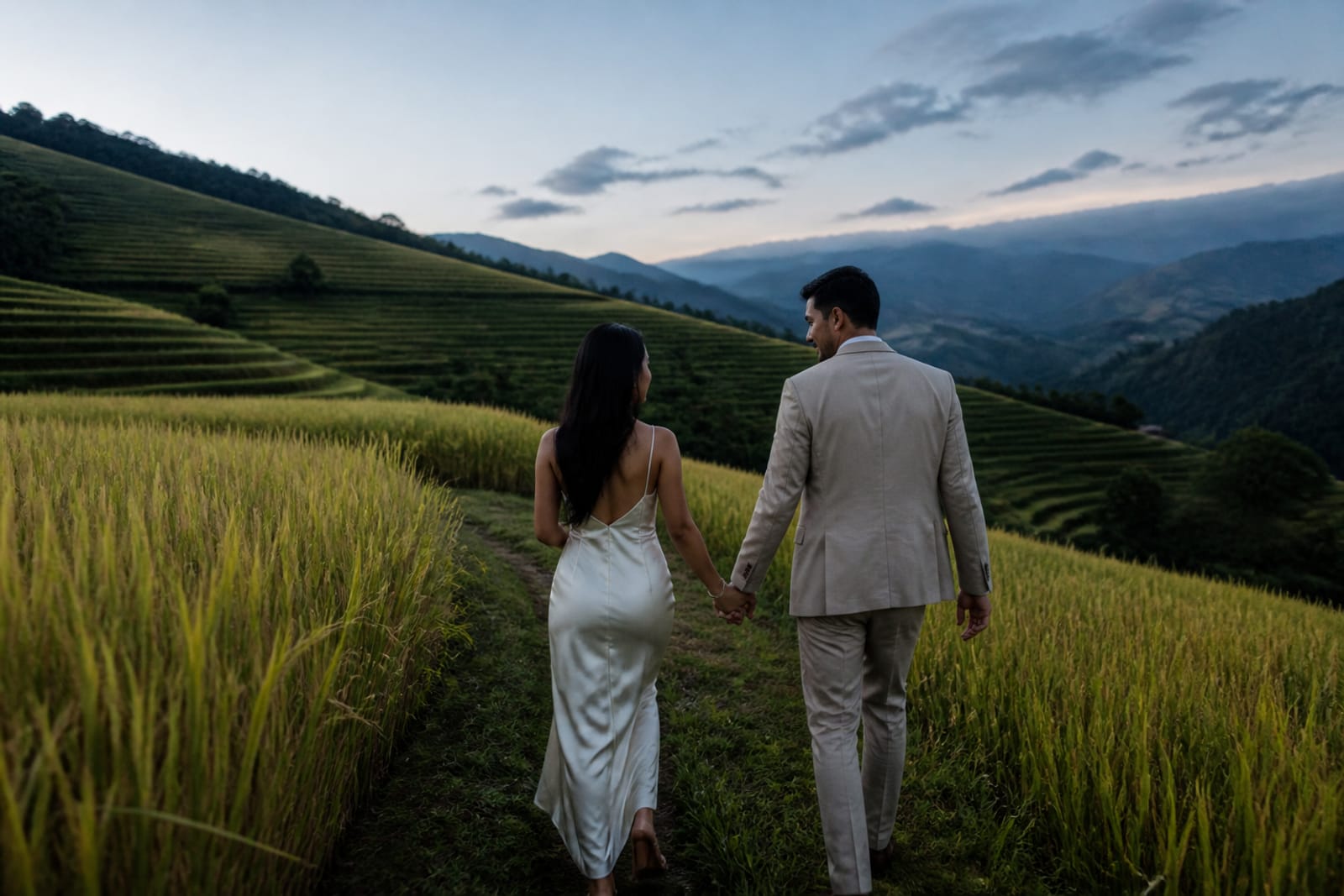
Morning light (6:30–8:30 am) arrives soft and directional from the east, grazing the terrace walls and casting long shadows that sculpt the landscape. Mist may linger in valleys until 8 am; if it clears, you get creamy overcast or sharp side light—both work for couple frames. Afternoon light (2:30–4:30 pm) swings from the west and grows warmer (golden-hour tone without extreme glare). The sun sits lower than in summer, so backlit frames and rim-lit profiles work well without blown-out skies. Plan two sessions (morning + afternoon) if your shoot spans a day, or anchor one time-window and work within it—mountain light shifts fast, and mist can return by late afternoon.
How do you dress for three climate zones in one shoot?
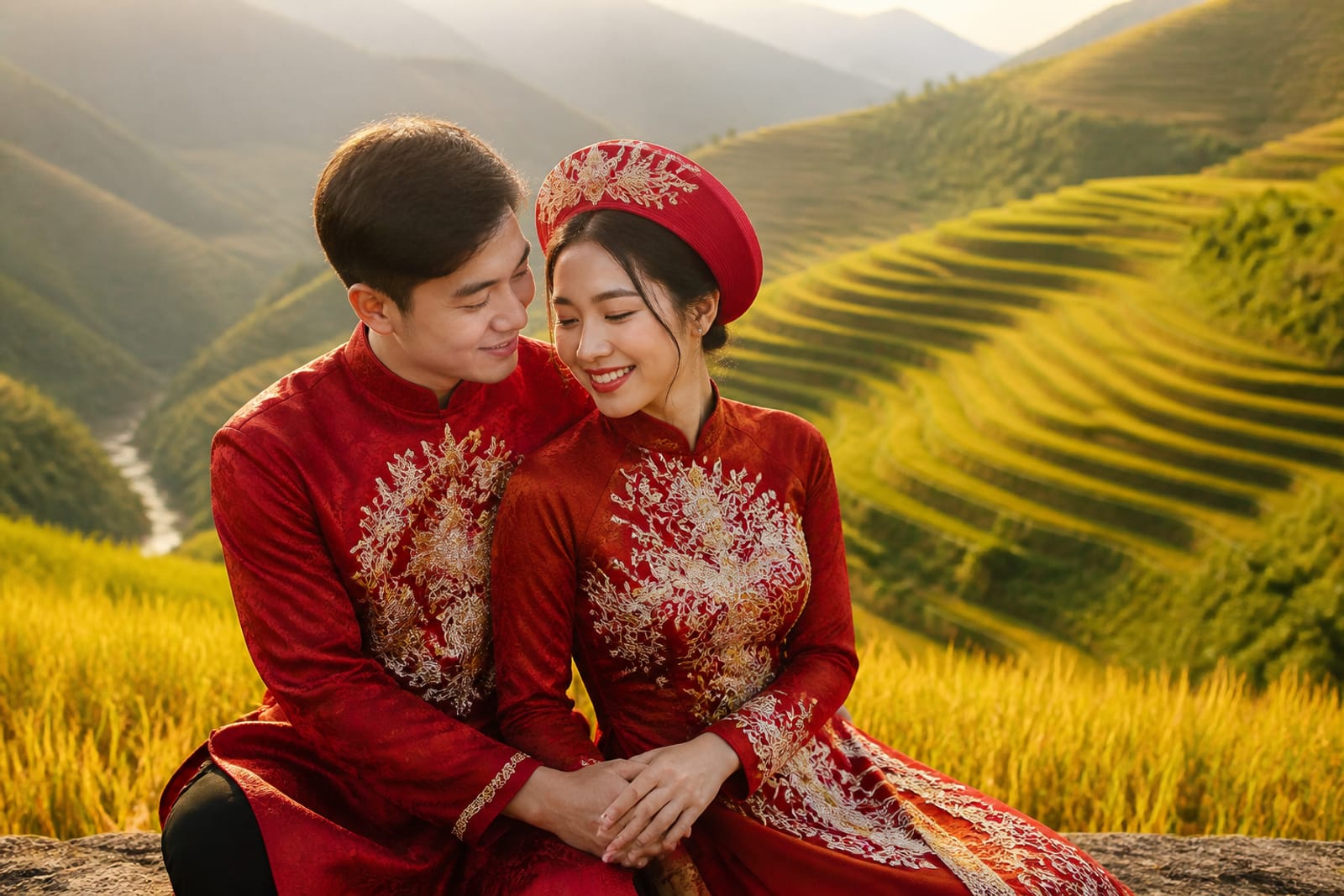
The valley floor (where you'll drive) runs 10–12°C cooler than Hanoi; the higher paths reach 15°C even on warm March days. Wear layers: a long-sleeved undershirt or thermal base, then an ao dai or light dress, then a cardigan or jacket to shed between light-windows. If you're wearing an ao dai, its silk flows over thermal leggings (which keep you warm and read as intentional under the fabric). Avoid heavy coats that bulk the silhouette; scarves and shawls work better and catch light beautifully in backlighting. Groom wears lightweight trousers (dark linen or cotton—avoid heavy wool), a linen shirt, and a structured vest or light blazer. Feet matter: the paths are uneven and sometimes muddy post-rain; wear hiking boots or sturdy flats, not heels or dress shoes. A local guide can advise on current ground conditions 24 hours before.
| Outfit type | Best for | Light window | Why it works |
|---|---|---|---|
| Ao dai + thermal base | Couple frames in paddies | 6:30–8 am or 3–4 pm | Fabric flows; base keeps warm; layers read clean |
| Groom linen + vest | Walking, seated frames | 7–11 am | Light weight, directional light; vest adds structure |
| Scarf or shawl | Backlighting, detail shots | Sunset-edge frames (3:30–4:30 pm) | Catches rim light; moveable; no bulk |
| Local wrap (if renting) | Authenticity in village frames | Early morning before light hardens | Shows place, keeps warm, reads as respect |
What do you need to arrange before heading there?
Book accommodation in Mu Cang Chai town (10–20 min drive to main terraces) at least two weeks ahead; mid-March can draw families and school groups. Arrange a driver familiar with mountain roads (ask your hotel or hire via local booking apps); the roads are paved but winding, and fog can obscure them early morning. Confirm access with a local guide 48 hours before—some paths close seasonally after heavy rain, and mist forecasts help you choose a time-window. Hire a local photographer or coordinate with Cáo Studio for a pre-wedding shoot in Hanoi, then take that team to Mu Cang Chai if you want continuity. Bring small props (a letter, a flower wreath, a book) rather than large rentals; they pack light and suit intimate framing. Pack rain gear even in March (mountain weather shifts fast), sunscreen, and water.
How do you choose between hiring local or coordinating with a farther team?
A local photographer in Mu Cang Chai knows light patterns, path access, and can move fast between framings without navigation delays. They cost less travel time and logistics. The trade-off: you're vetting someone new, managing a one-off relationship, and may not get the integrated ao dai styling and makeup that a full team brings. Cáo Studio shoots in Hanoi, Saigon, and Hoi An—a 6+ hour drive from Mu Cang Chai. If you want our team to travel, costs rise (vehicle, accommodation, days away), and pre-wedding shoots require coordination well in advance. A hybrid approach: book a couple photoshoot or pre-wedding session with us in Hanoi, then hire a local for Mu Cang Chai's terraces. That way you get our styling and direction in the capital, and local expertise in the mountains. Ask on WhatsApp +84 338 762 340 if traveling to Mu Cang Chai interests you—we can advise on costs and logistics.
What should you check before finalizing a March date?
Confirm road conditions with your accommodation or guide—late March monsoon rain can soften unpaved paths, though main roads stay passable. Check mist forecasts 5–7 days out; March tends toward clear mornings, but pockets of fog still hit valleys. Book your photographer at least three weeks ahead, especially if coordinating a team travel. Verify that rental ao dai or suits fit and ship in time (allow 2–4 weeks for custom work or alterations). Test your phone or camera battery in cool mountain air—cold drains power faster. Agree with your photographer on the exact time-windows, number of locations (moving between paddies costs time), and what "edited and delivered" means for your final frames. See our FAQ for detail on how Cáo Studio sessions work; if you're hiring locally, ask your photographer the same questions.
---
What to check before you book
- Road access: Call your accommodation or hire a local guide to confirm paths are passable 48 hours before shooting.
- Mist and light: March mornings often clear by 8 am; book a sunrise scout the evening before to find the clearest light-window.
- Outfit fit and shipping: Ao dai or suits need 2–4 weeks for tailoring; order early.
- Photographer contract: Confirm number of locations, editing timeline, and file delivery before signing.
- Backup date: Mountain weather changes fast; agree on a rain date when you book.
---
FAQ
Is March warm enough for an ao dai shoot in Mu Cang Chai?
March mornings are 12–15°C; wear thermal leggings under your ao dai and bring a cardigan to shed between light-windows. Afternoons warm to 20–24°C. Avoid December–February if you dislike cold; May–August is warmer but busier and more expensive.
Can you shoot in the rain in March?
Light drizzle adds mist and texture; shooting stops in heavy rain (unsafe on muddy paths, poor light). Book a flexible date and plan a backup location in town or nearby valleys where light reads cleaner.
How long does the drive from Hanoi to Mu Cang Chai take?
6–7 hours each way, depending on road conditions. Most couples stay overnight and shoot across two days to avoid fatigue and capture both morning and afternoon light. Plan arrival the day before.
Should we hire a local photographer or book with Cáo Studio?
A local photographer knows terrain and costs less in logistics. Cáo Studio works in Hanoi, Saigon, and Hoi An; for Mu Cang Chai, we can advise on hybrid options (book us for Hanoi pre-wedding, hire local for terraces). Ask on WhatsApp +84 338 762 340.
What do we wear under an ao dai on a cold mountain shoot?
Thermal leggings (seamless, neutral tone) keep warmth without bulk. Wear a fitted base layer under the top. Test the fit at home before traveling; layers should read clean under silk, not lumpy. Bring a lightweight scarf or shawl to layer without adding weight.
Does Cáo Studio offer video for pre-wedding shoots?
Yes—ask on WhatsApp for details on wedding & pre-wedding video options. A short film can capture movement on the terraces and the journey from Hanoi better than stills alone.
How much does a Mu Cang Chai photoshoot cost?
Costs depend on the photographer, travel distance, team size, and number of days. A local hire costs less than coordinating Cáo Studio's travel from Hanoi. Request a quote on WhatsApp +84 338 762 340 if you'd like us to advise or coordinate.
FAQ
Is March warm enough for an ao dai shoot in Mu Cang Chai?
March mornings are 12–15°C; wear thermal leggings under your ao dai and bring a cardigan to shed between light-windows. Afternoons warm to 20–24°C. Avoid December–February if you dislike cold; May–August is warmer but busier and more expensive.
Can you shoot in the rain in March?
Light drizzle adds mist and texture; shooting stops in heavy rain (unsafe on muddy paths, poor light). Book a flexible date and plan a backup location in town or nearby valleys where light reads cleaner.
How long does the drive from Hanoi to Mu Cang Chai take?
6–7 hours each way, depending on road conditions. Most couples stay overnight and shoot across two days to avoid fatigue and capture both morning and afternoon light. Plan arrival the day before.
Should we hire a local photographer or book with Cáo Studio?
A local photographer knows terrain and costs less in logistics. Cáo Studio works in Hanoi, Saigon, and Hoi An; for Mu Cang Chai, we can advise on hybrid options (book us for Hanoi pre-wedding, hire local for terraces). Ask on WhatsApp +84 338 762 340.
What do we wear under an ao dai on a cold mountain shoot?
Thermal leggings (seamless, neutral tone) keep warmth without bulk. Wear a fitted base layer under the top. Test the fit at home before traveling; layers should read clean under silk, not lumpy. Bring a lightweight scarf or shawl to layer without adding weight.
Does Cáo Studio offer video for pre-wedding shoots?
Yes—ask on WhatsApp for details on [wedding & pre-wedding video](/wedding-video) options. A short film can capture movement on the terraces and the journey from Hanoi better than stills alone.
How much does a Mu Cang Chai photoshoot cost?
Costs depend on the photographer, travel distance, team size, and number of days. A local hire costs less than coordinating Cáo Studio's travel from Hanoi. Request a quote on WhatsApp +84 338 762 340 if you'd like us to advise or coordinate.
Ao dai, makeup, hair and a local photographer in Hanoi or Saigon — one WhatsApp message.