/pre-wedding-photoshoot
Pre-wedding photoshoot in Sapa in May: weather, light and crowds
May in Sapa works well for pre-wedding shoots because rice terraces are vivid green, mornings stay cool and clear until 10 a.m., and typhoons have not yet begun. You'll face afternoon downpours (typically 2–5 p.m.) and moderate crowds on popular trails. Plan your shoot for 6–9 a.m., wear moisture-wicking layers under your ao dai or dress, and bring a waterproof cover for gear. Cáo Studio shoots pre-wedding sessions in Hanoi and Ho Chi Minh City; for Sapa, contact the team on WhatsApp to discuss a travel shoot or hire a vetted local photographer who knows the terrain and permits. 📸 Book on WhatsApp — ao dai photoshoot ---
Why is May actually good for Sapa pre-wedding photos?
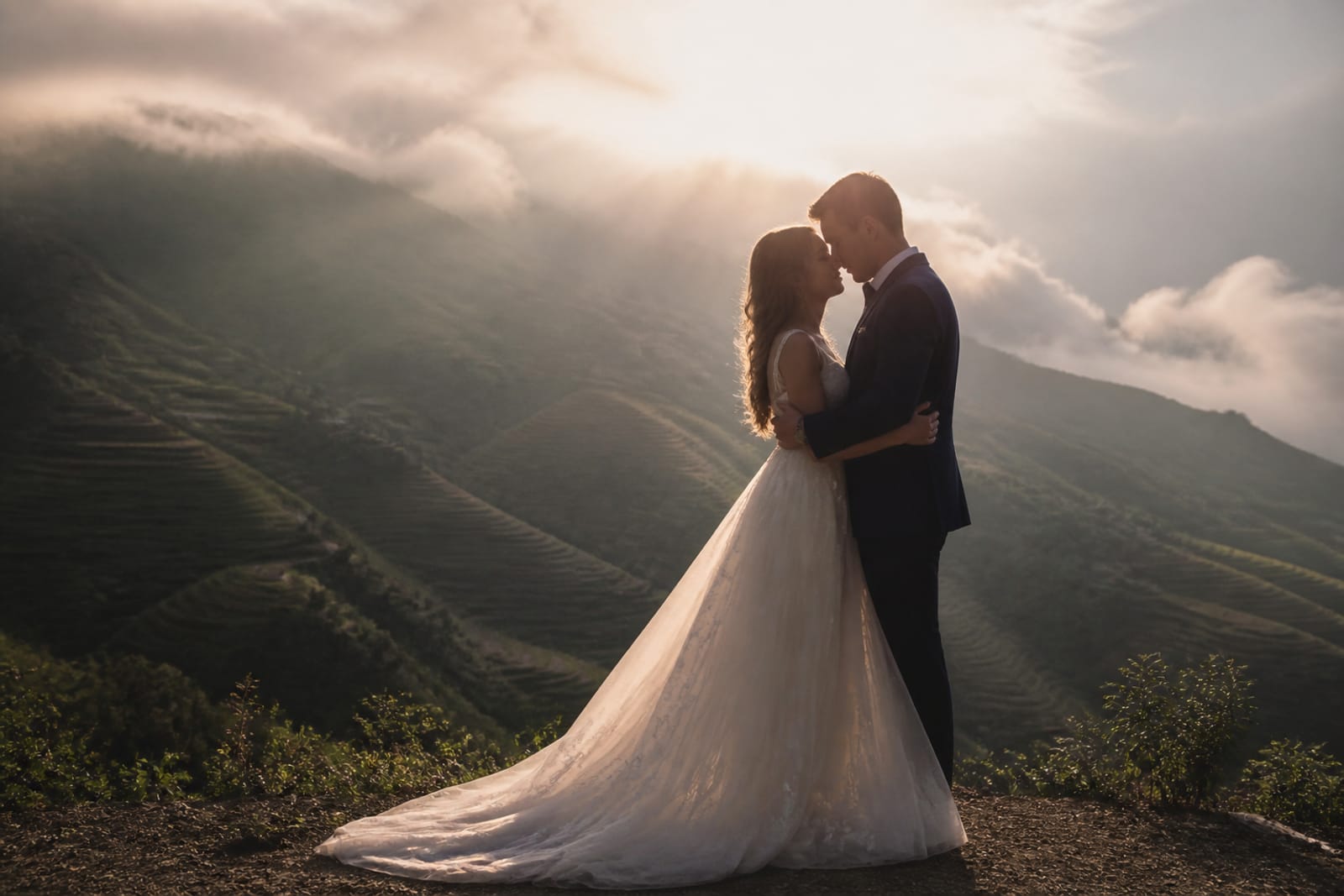
May sits between Sapa's cool spring and the rainy season, giving you a narrow window of reliable morning light and lush landscape. Terraces are saturated green from May rains, rice plants are at mid-growth height (not yet harvest gold), and morning cloud cover filters harsh sun into soft, directional light ideal for skin tones and fabric texture. Afternoon fog and drizzle roll in around 2 p.m., but you're done shooting by then. Tourist numbers are moderate—not peak (Sep–Oct) and not shoulder-season quiet—so iconic spots like Muong Hoa Valley feel busy but not chaotic between 7–9 a.m.
Why it matters: Early light + green landscape + manageable crowds = fewer reshoots and more authentic frames.
---
What time should you actually shoot in May?
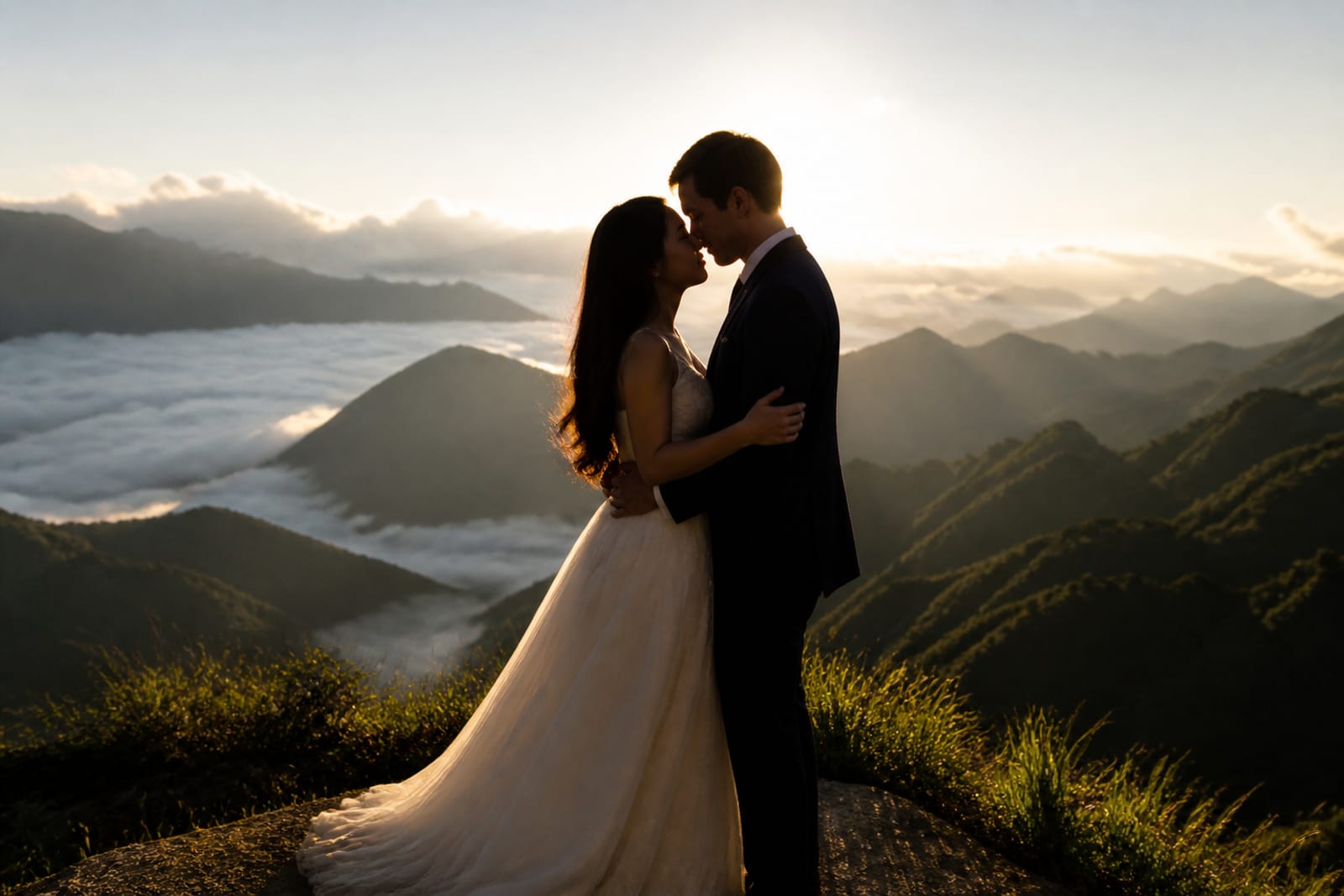
Arrive at your location by 5:45 a.m. to catch the first soft side light at 6:15 a.m. Clouds drift in by 8 a.m., creating diffused directional light that flatters faces and ao dai color. By 9:30 a.m., the sun climbs higher and tourist groups multiply; by noon, heat and haze flatten contrast. Shoot from 6 a.m. to 9:30 a.m. and you'll have enough frame variety (wide landscape, medium two-shot, close detail) to fill an edit.
What goes wrong: Starting at 10 a.m. means harsh backlit subjects, blown skies, and crowds in every wide shot. You'll retake frames three times over and still leave unhappy.
How to avoid it: Book a shoot start at 5:45 a.m. (the photographer picks you up at your hotel by 5:15 a.m.). Yes, it's early—but those two hours are non-negotiable for Sapa's light and calm.
---
Should you shoot before or after the rice harvest?
| Timing | Terrace State | Light Colour | Crowd Density | Walking Effort | Best For |
|---|---|---|---|---|---|
| May–early Jun | Mid-growth green, water-filled | Soft warm amber in dawn | Moderate | Easy (paths flat) | Ao dai, natural landscape drama |
| Jun–Jul | Dense green, mature stalks | Hazy, humid, diffused | Low | Moderate (tall crops block views) | Intimate close-ups, overcast mood |
| Late Sep–early Oct | Golden ripening, pre-harvest | Warm amber, strong shadows | Peak tourist crush | Moderate (uneven terrain) | Contrast, warmth—but very crowded |
The real trade-off: May gives you colour saturation and path ease but moderate foot traffic. Late September offers golden light and iconic frames, but you'll share every spot with 50 other couples and tour groups. If solitude and ao dai colours matter more than golden tones, stay in May.
---
What weather should you actually prepare for in May?
May in Sapa averages 18–24°C (64–75°F) in the morning, rising to 26°C (79°F) by late morning; the key variable is rain, not cold. Expect a 50–60% chance of afternoon showers between 2–5 p.m. based on seasonal patterns. Morning mist burns off by 7 a.m.; afternoon fog rolls in by 3 p.m.
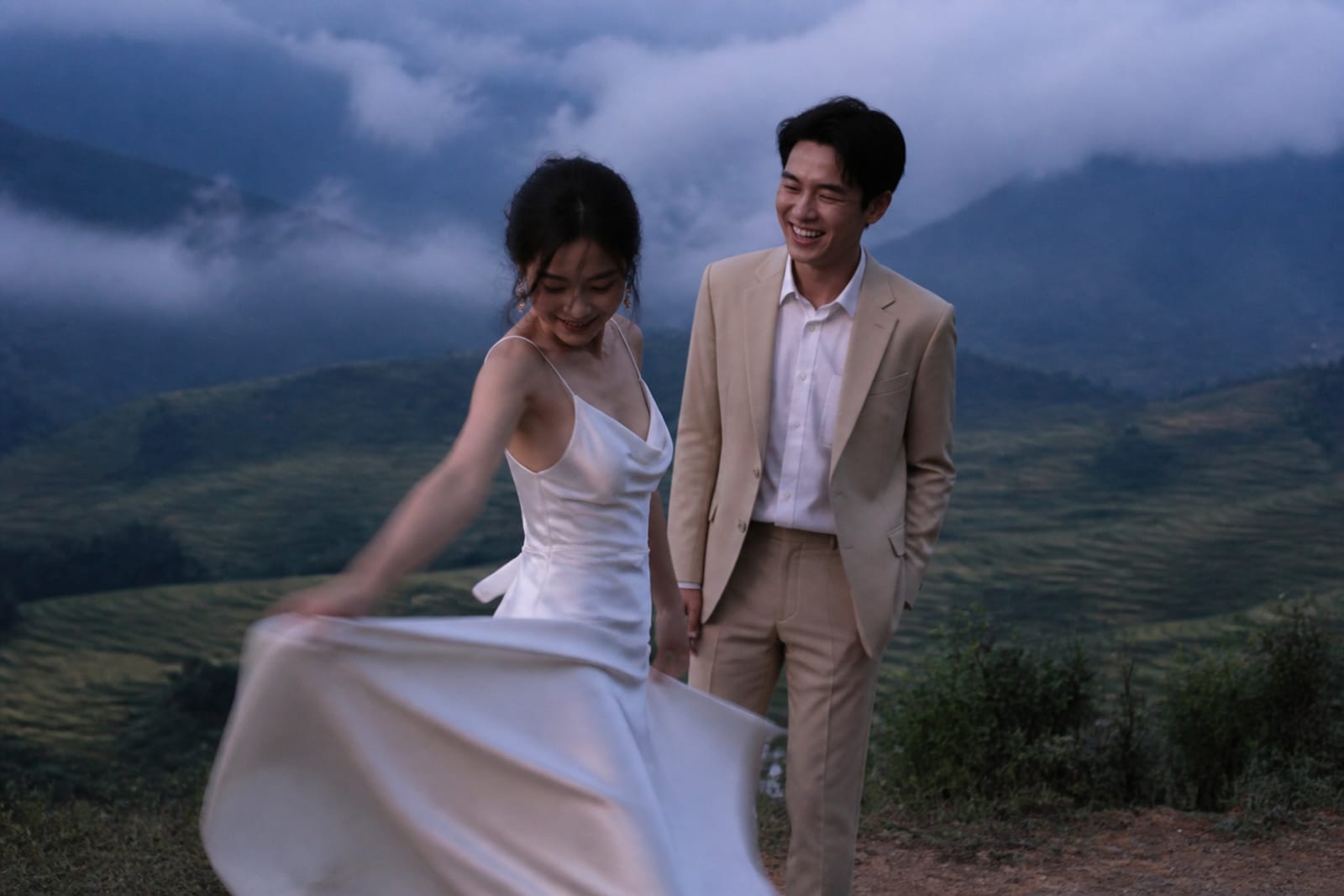
Pack: A lightweight waterproof jacket (for the photographer and backup outfits), a compact umbrella, and moisture-wicking base layers under your ao dai or dress—damp fabric clings and loses shape in humid air. Avoid heavy makeup that sweats; a matte base and waterproof brows outlast humidity.
Avoid: Silk ao dai in May—it clings when damp and loses lustre in morning mist. Cotton-blend or linen ao dai (or a rented style specific to mist shoots) photographs better.
---
How do you find and vet a photographer if Cáo Studio isn't going to Sapa?
Cáo Studio operates out of Hanoi, Ho Chi Minh City, and Hoi An. For a Sapa pre-wedding shoot, ask the team on WhatsApp whether they travel to Sapa on your dates—some couples request it—or hire a local photographer who knows Muong Hoa Valley trails and permit rules. Search for "Sapa pre-wedding photographer" on Instagram, look for portfolios with 6+ morning shots (not just one golden-hour frame), and check that the photographer holds a business registration and has shot after 6 a.m. (proves they've managed early light and permits). Ask for references from two couples who shot in May. Confirm the photographer owns liability insurance and provides edited photos within 7 days.
Red flags: No morning shots in their portfolio, no business registration listed, or promises to shoot during typhoon season without mentioning permits.
---
What to check before you book a Sapa pre-wedding shoot
- Hotel to location travel time: Confirm your hotel to the first shoot location is 20–40 minutes, not 90 minutes—travel time eats into golden light.
- Ao dai fit and fabric: If renting locally, try it on 48 hours before and bring a moisture-wicking slip; if bringing from home, pack it flat and steam it the night before.
- Photographer's backup plan: Ask how they handle 7 a.m. rain (shoot in mist for mood, or delay to 8:30 a.m. when clouds lift). Not having an answer is a warning.
- Photo delivery timeline: Edited images should arrive within 7 days; anything longer risks delays if you're a guest at a wedding.
- Permit access: The photographer must confirm they can legally access your chosen locations (some terraces require local guide fees—ask whether that's included).
---
How does a pre-wedding photoshoot in Sapa differ from a city shoot?
Sapa's pre-wedding shoots involve early wake-ups, unpaved terrain, and weather that changes hourly—very different from urban shoots in Hanoi or Ho Chi Minh City. You're paying for a photographer who can move fast over uneven ground, read changing light in real time, and reframe around weather, not just pose you in front of monuments. The payoff is frames that feel earned and unique, not like 100 other couples' photos from the same Instagram spot. If Cáo Studio books a Sapa travel shoot, the team brings the full setup (photographer, a makeup artist to refresh your look between locations, and wardrobe coordination) so your morning is calm, not chaotic.
For more on working with a multi-disciplinary team, see our couple & family photoshoot guide and wedding day photographer services.
---
FAQ
Is May actually better than September for Sapa pre-wedding photos?
May offers softer light, lower crowds, and easier walking; September delivers golden tones but peak tourism. Pick May if mood and ao dai colour matter more than golden-hour warmth. Both work—choose based on what light you prefer.
Do I need a local guide in Sapa, or just the photographer?
A photographer familiar with Sapa trails and permit rules is enough. If you want cultural context or off-path access, hire a guide separately—that's not the photographer's role.
What happens if it rains during the 6–9 a.m. shoot window?
Morning mist and light drizzle photograph beautifully in Sapa. Heavy rain (rare before 10 a.m. in May) means reshooting 2–3 hours later. Confirm your photographer has a rain-day rescheduling clause in the contract.
Should I rent an ao dai in Sapa or bring one from Hanoi?
Bring or rent from Hanoi if possible—fit and fabric quality are more predictable. Sapa rentals exist but sizes run small and fabrics are often synthetic. If renting locally, try on 48 hours early.
How much walking is involved in a Sapa pre-wedding shoot?
Expect 3–5 km of mixed terrain (flat paths, terraced steps, occasional muddy sections) over 2–3 hours. Wear supportive shoes and bring blister tape. Choose a photographer comfortable moving fast and reshaping shots on the go.
Can Cáo Studio shoot my pre-wedding in Sapa?
Cáo Studio operates in Hanoi, Ho Chi Minh City, and Hoi An. Contact the team on WhatsApp to ask whether they travel to Sapa on your dates. Otherwise, we recommend hiring a local photographer—ask us for vetting tips.
FAQ
Is May actually better than September for Sapa pre-wedding photos?
May offers softer light, lower crowds, and easier walking; September delivers golden tones but peak tourism. Pick May if mood and ao dai colour matter more than golden-hour warmth. Both work—choose based on what light you prefer.
Do I need a local guide in Sapa, or just the photographer?
A photographer familiar with Sapa trails and permit rules is enough. If you want cultural context or off-path access, hire a guide separately—that's not the photographer's role.
What happens if it rains during the 6–9 a.m. shoot window?
Morning mist and light drizzle photograph beautifully in Sapa. Heavy rain (rare before 10 a.m. in May) means reshooting 2–3 hours later. Confirm your photographer has a rain-day rescheduling clause in the contract.
Should I rent an ao dai in Sapa or bring one from Hanoi?
Bring or rent from Hanoi if possible—fit and fabric quality are more predictable. Sapa rentals exist but sizes run small and fabrics are often synthetic. If renting locally, try on 48 hours early.
How much walking is involved in a Sapa pre-wedding shoot?
Expect 3–5 km of mixed terrain (flat paths, terraced steps, occasional muddy sections) over 2–3 hours. Wear supportive shoes and bring blister tape. Choose a photographer comfortable moving fast and reshaping shots on the go.
Can Cáo Studio shoot my pre-wedding in Sapa?
Cáo Studio operates in Hanoi, Ho Chi Minh City, and Hoi An. Contact the team on WhatsApp to ask whether they travel to Sapa on your dates. Otherwise, we recommend hiring a local photographer—ask us for vetting tips.
Ao dai, makeup, hair and a local photographer in Hanoi or Saigon — one WhatsApp message.