/pre-wedding-photoshoot
Pre-wedding Photoshoot Mekong Delta March: Light, Weather & Crowds
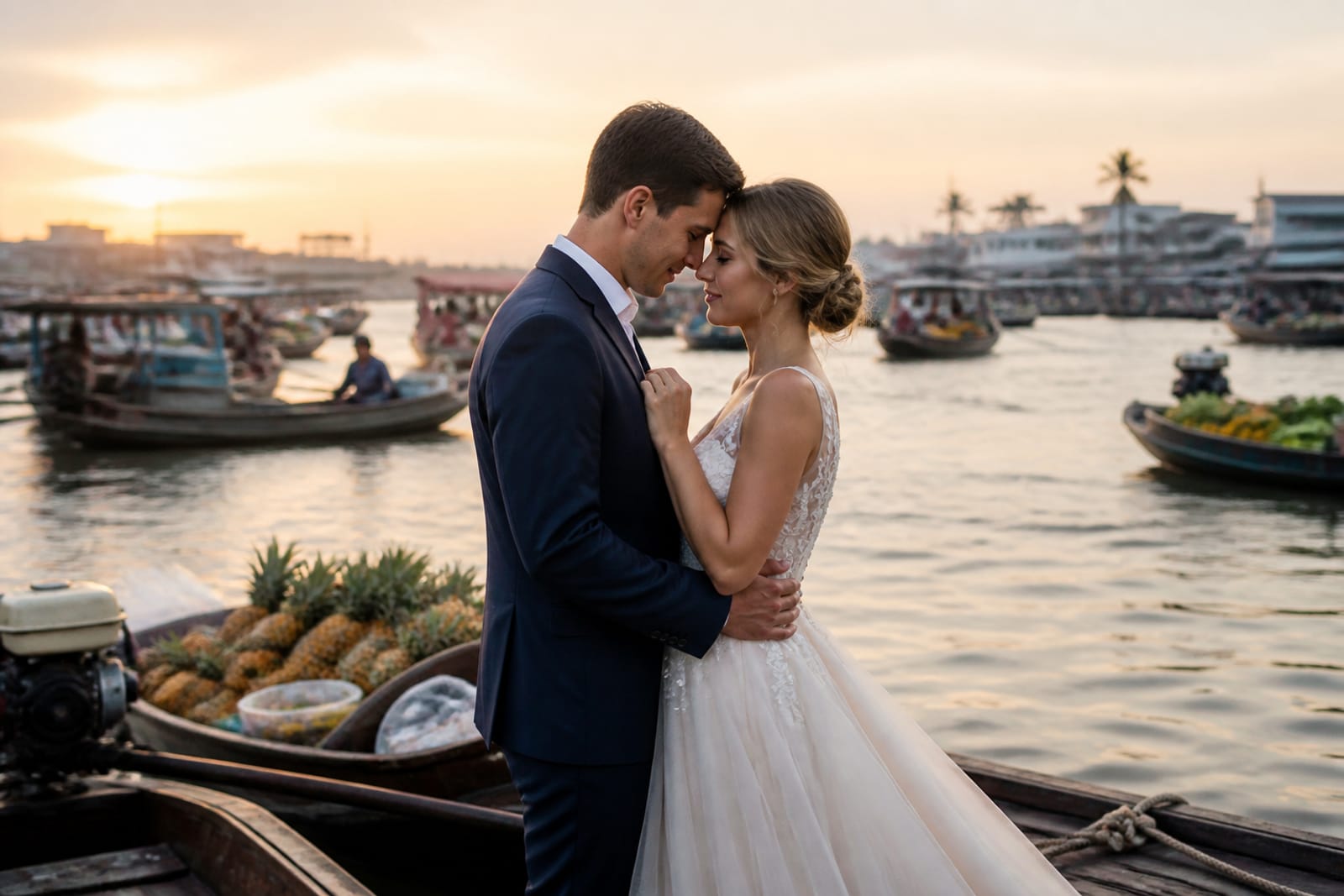
The Mekong Delta in March has three critical advantages for pre-wedding work: the dry season (Dec–Apr) means stable, warm morning light, afternoon thunderstorms are rare, and floating markets still operate at dawn without peak-season chaos. A typical session runs 3–4 hours—you'll start at a market (5–6 am, soft golden hour), move to a canal or rice terrace (8–10 am, direct overhead light requires shade or repositioning), and finish near a village homestay or temple (late morning, side light). Wear breathable ao dai or Western outfit; expect 25–28°C by 9 am and high humidity even in the dry season. The primary risk is overshooting—crowds return by 10 am, and light flattens fast. Cáo Studio directs the sequence (walk, pause, turn) rather than posing, so your frames feel lived-in. A local boat guide and early wake-up are non-negotiable. 📸 Book on WhatsApp — pre-wedding photoshoot ---
Why March beats other months for Mekong Delta pre-wedding work
March sits at the end of the dry season, when water levels are dropping and morning light is still cool and directional. January–February are busier (Tet holiday and its aftermath); April onward the heat climbs above 30°C by mid-morning and humidity exhausts both crew and subjects. September–November brings typhoon risk and afternoon downpours that cancel shoots. March offers a 4–5 hour window of usable light before the sun climbs too steep.
---
What does "Mekong Delta light" actually look like in a frame?
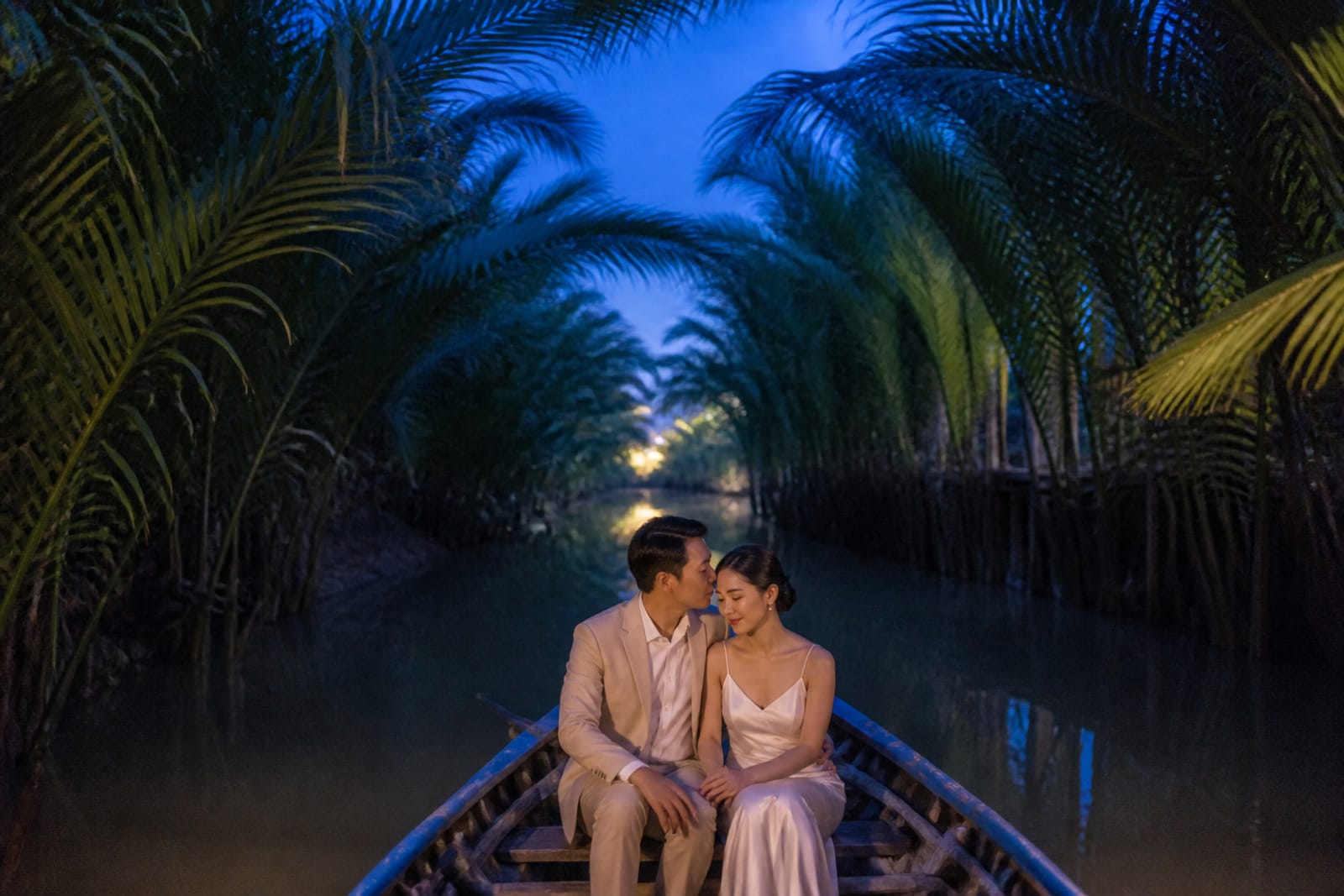
The Delta's water surfaces—canals, flooded rice paddies, the main river—act as reflectors. At 6–7 am, this means soft side-light on your face with a bright water background; you'll need to position yourself between the sun and the water to avoid flare or backlighting your face unintentionally. By 9–10 am, that reflection becomes harsh—squinting is common. The best sequences happen in the first two hours after dawn, when the light is warm but not yet overhead. Clouds (common even in March) soften that reflection, but they also rob you of the golden hour glow. A director who knows the site's water direction shoots wide and medium first (walking along the canal, pausing at a floating garden), then detail shots once everyone has settled into the light.
---
Floating market vs. canal vs. rice field: which backdrop serves your story?
| Backdrop | Best for | March light quality | Why it works | Walking difficulty |
|---|---|---|---|---|
| Floating market (Cai Rang, Cai Be) | Motion, energy, vendors | 5–7 am only; flattens by 8 am | Water + activity + authentic hustle | Boat boarding, crowded jetties |
| Canal (village tributaries) | Intimate, quiet, mirror reflections | 6–9 am; soft all morning | Private water, minimal crowds, directional light | Moderate; narrow paths, overgrown banks |
| Rice terrace (dry-season stubble or replanting) | Landscape scale, couple silhouettes | 7–10 am best; geometric lines | Open sky, natural leading lines, fewer tourists | Low; flat walking, sun exposure |
| Homestay garden or temple grounds | Cultural framing, ao dai color pop | 8–10 am; dappled shade possible | Controlled environment, no boat hire, fast setup | Very low; stationary or short walks |
Conclusion: Floating market requires the earliest wake-up but delivers unmatched motion; a canal balances intimacy and light; a rice field works if you want landscape scale but demands sun protection.
---
How to dress for March Mekong Delta heat without overheating
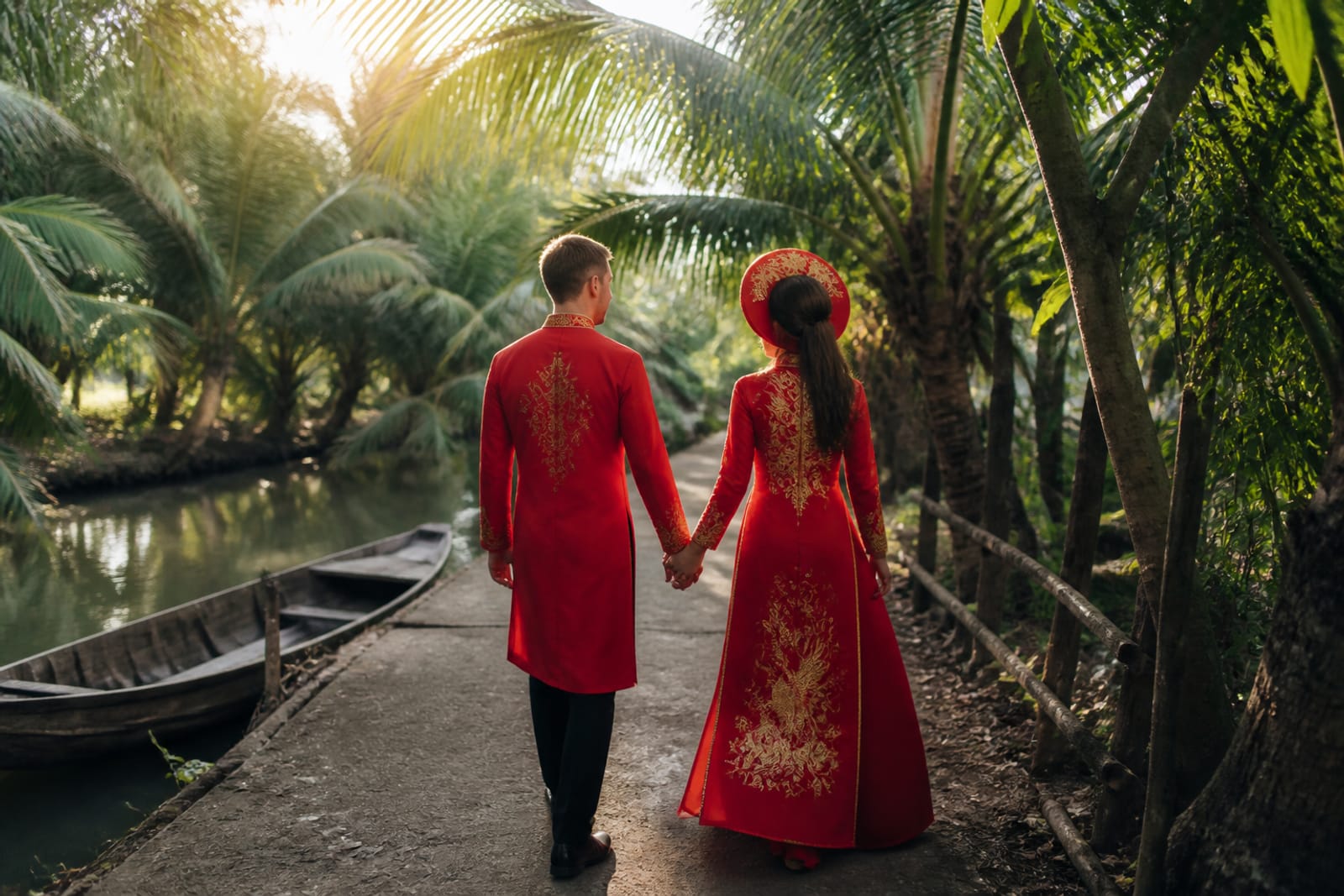
An ao dai is the cultural choice and photographs beautifully in morning light—the fabric drapes and catches side-light that Western dresses often miss. Wear a lightweight, unlined version (linen or cotton blend, not silk or heavy brocade); skip the inner pants if the outer áo is opaque, and choose a color that reads distinct against the water (jewel tones, pastels, pastels—avoid white, which washes out in harsh reflection). Underneath, wear moisture-wicking undergarments; March heat and humidity mean visible sweat within 20 minutes of walking. If you choose a Western dress or suit, pick breathable fabric and light colors; dark suits absorb heat and read flat against water. The groom's ao groom (áo ghi bà) or a cream linen shirt works well. Plan a 15-minute break after the floating market phase to dry sweat, reapply powder and reset makeup before the main sequences.
---
What can go wrong, and how to avoid it
Overshooting in failing light: The Delta's dry-season light is reliable, but it moves fast. If your session starts at 7 am instead of 6 am, you lose 30 minutes of usable golden hour; the water reflection becomes harsher and your face ends up backlit. Set a firm start time and wake before dawn.
Boat hire delays: Many couples assume they'll book a boat on the morning of the shoot. In March, boats are plentiful but early-morning guides may have prior bookings or engine problems. Confirm your boat and guide at least three days ahead; have a backup canal walk option if the water route falls through.
Makeup and sweat: Even waterproof makeup breaks down in 25°C+ humidity and physical activity. A makeup artist familiar with tropical conditions applies extra powder layers, uses setting spray, and carries blotting papers. Cáo Studio's hotel makeup service (applied just before departure) avoids the problem of sitting in a hotel room pre-made for two hours.
Crowded markets after 8 am: Tour groups and locals converge on floating markets by 8:30–9 am. Your director must shoot the wide sequences (couple among boats, vendors, reflections) by 7:30 am, then either pivot to a quieter canal or wrap market work and move to the next location.
Uneven canal banks and boat boarding: The Delta's paths are often narrow, overgrown or muddy, especially after recent rains (rare in March, but possible). Wear shoes with grip, not heels; have a guide steady you during boat boarding. A director shoots this transition naturally (stepping aboard, a hand-hold, a glance) rather than posing it.
---
Timing and logistics: the hour-by-hour breakdown
5:00–5:30 am: Meet your boat guide and photographer at a designated jetty (hotel, homestay, or market dock). Boat ride to the floating market or starting canal. Light is still pre-dawn; the camera catches silhouettes and early vendors setting up.
5:30–7:00 am: First sequences—wide shots of the market, the couple walking along boats, pausing to look at flowers or produce. Golden-hour side-light. Heavy shooting here; director captures motion and reflections.
7:00–7:30 am: Transition—walk to a quieter tributary or return to the boat for a short ride. Breakfast or water break.
7:30–9:00 am: Second phase—more intimate canal or homestay sequences. Light is higher but still flattering; director shifts to medium and close-ups. Makeup touch-up happens here if needed.
9:00–9:30 am: Final sequences or wrap, depending on your package. Light is now neutral overhead; this phase works for detail shots (hands, rings, fabric texture) rather than full-frame portraits.
---
Pre-wedding Mekong Delta sessions through Cáo Studio
Cáo Studio's pre-wedding photoshoot service covers Hanoi, Ho Chi Minh City and Hoi An. For a Mekong Delta shoot—based in My Tho, Can Tho, Vinh Long or Cai Be—ask us on WhatsApp about coordination with local guides and photographers. We can direct the session remotely or arrange a team visit depending on your date and location preference. The approach stays consistent: one team handles outfit consultation, makeup-and-hair, and photography so the story is unified and the light is never wasted on setup delays.
For context on our wider pre-wedding offering, see the couple & family photoshoot page and our Saigon base—many couples stay in Ho Chi Minh City and day-trip to the Delta, so we often coordinate from there.
---
What to check before you book a Mekong Delta pre-wedding shoot
- Boat availability: Contact your guide or homestay at least one week ahead; confirm engine and guide name.
- Weather updates: Check local forecasts three days before; March rain is uncommon but not impossible.
- Outfit fit and comfort: Try your ao dai in humidity and sitting position before the shoot; sleeves and hems should allow arm movement and boat boarding.
- Makeup artist familiarity with tropical settings: If hiring locally, ask for a portfolio that includes outdoor, humid work.
- Backup locations: Have a second canal or homestay garden identified in case the market is unexpectedly crowded or the boat is unavailable.
- Camera and card redundancy: High heat and humidity can cause condensation inside lenses; bring two memory cards and allow equipment to acclimate to temperature changes.
- Permit or guide permissions: Some temples or private gardens may require permission; your local guide handles this, but confirm they've arranged it.
---
Key takeaway
March is the Mekong Delta's most forgiving month for pre-wedding work: dry season, cool mornings, and manageable crowds. A 4–5 hour session starting at dawn captures floating markets, canals and rice fields in authentic light, with minimal retouching needed. The critical factors are an early wake-up, a reliable boat guide booked in advance, and a director who understands how water reflects light and when to move on from a location. Overhead light after 10 am flattens emotion and requires creative repositioning. Plan for heat, humidity and sweat, even though March is cooler than later months.
For a fully coordinated experience—outfit consultation, makeup-and-hair, directed photography and quick turnaround edits—reach out on WhatsApp for a pre-wedding quote. If you're based near Ho Chi Minh City or Hanoi, Cáo Studio's Saigon team can discuss Mekong Delta logistics with you directly.
📸 Book on WhatsApp — pre-wedding photoshoot | 🎥 See our wedding video work | 📖 Browse the lookbook
---
FAQ
Is March actually better than February for the Mekong Delta?
February often overlaps with Tet (Lunar New Year), when homestays close and floating markets are chaotic. March is calmer, slightly warmer (still cool mornings), and more predictable. Late February works if you avoid Tet weeks; ask locally for the exact dates.
Do I need a separate makeup artist for a Mekong Delta shoot, or can I use hotel makeup?
Hotel makeup applied just before departure works well if the artist is experienced with humidity and outdoor heat. If your shoot starts at 5 am, you'll need early-morning setup; Cáo Studio's makeup-and-hair service travels with crews in Hanoi and Saigon. For a Mekong Delta session, discuss timing and logistics on WhatsApp.
What if the water level is very low in March?
By late March, water levels are dropping (dry season peak). Low water exposes muddy banks and makes some canals difficult to navigate by boat. Early March (first two weeks) has better water levels; if you're shooting late March, confirm water depth with your local guide in advance.
Can I shoot in the afternoon in March?
Technically yes, but afternoon light is overhead and harsh by 11 am; reflection off the water creates squinting and flat shadows. Afternoon works for detail shots (rings, fabric, close-ups) or if you're indoors at a homestay. Most couples shoot 5–9 am, then explore the Delta on foot or by boat without the camera.
Do I need permits to shoot at a floating market in March?
Cai Rang and Cai Be floating markets don't usually require permits for private shoots, but your guide should confirm. Some homestays or temples request advance notice. A local guide knows the etiquette; Cáo Studio discusses permits when coordinating your session on WhatsApp.
How many edited photos do I get from a Mekong Delta pre-wedding shoot?
The exact deliverables are confirmed on WhatsApp—number of photos, editing style, turnaround time, and any video add-ons depend on the package you choose. See the pricing page or ask us directly via WhatsApp.
FAQ
Is March actually better than February for the Mekong Delta?
February often overlaps with Tet (Lunar New Year), when homestays close and floating markets are chaotic. March is calmer, slightly warmer (still cool mornings), and more predictable. Late February works if you avoid Tet weeks; ask locally for the exact dates.
Do I need a separate makeup artist for a Mekong Delta shoot, or can I use hotel makeup?
Hotel makeup applied just before departure works well if the artist is experienced with humidity and outdoor heat. If your shoot starts at 5 am, you'll need early-morning setup; [Cáo Studio's makeup-and-hair service](/makeup-and-hair) travels with crews in Hanoi and Saigon. For a Mekong Delta session, discuss timing and logistics on WhatsApp.
What if the water level is very low in March?
By late March, water levels are dropping (dry season peak). Low water exposes muddy banks and makes some canals difficult to navigate by boat. Early March (first two weeks) has better water levels; if you're shooting late March, confirm water depth with your local guide in advance.
Can I shoot in the afternoon in March?
Technically yes, but afternoon light is overhead and harsh by 11 am; reflection off the water creates squinting and flat shadows. Afternoon works for detail shots (rings, fabric, close-ups) or if you're indoors at a homestay. Most couples shoot 5–9 am, then explore the Delta on foot or by boat without the camera.
Do I need permits to shoot at a floating market in March?
Cai Rang and Cai Be floating markets don't usually require permits for private shoots, but your guide should confirm. Some homestays or temples request advance notice. A local guide knows the etiquette; Cáo Studio discusses permits when coordinating your session on WhatsApp.
How many edited photos do I get from a Mekong Delta pre-wedding shoot?
The exact deliverables are confirmed on WhatsApp—number of photos, editing style, turnaround time, and any video add-ons depend on the package you choose. See the [pricing page](/pricing) or ask us directly via WhatsApp.
Ao dai, makeup, hair and a local photographer in Hanoi or Saigon — one WhatsApp message.