/pre-wedding-photoshoot
Pre-wedding photoshoot Saigon Opera House: complete guide
A pre-wedding photoshoot at Saigon Opera House involves a 2–4 hour session on location, typically at dawn or late afternoon to avoid harsh midday light and tour crowds. The venue sits in central District 1; you'll need a local photographer familiar with Opera House light, timing and etiquette—Cáo Studio – Makeup & Photoshoot has shot there with international couples for years and handles permits and logistics. Expect to bring 1–2 outfits (formal wear, ao dai, or both), wear comfortable shoes for walking, and book at least 2–3 weeks ahead. The golden rule: arrive early, scout the light path, and respect active tour groups—they move through constantly. ---
Is the Saigon Opera House the right backdrop for your pre-wedding shoot?
The Opera House works best if you want timeless, architectural elegance and don't mind a heritage-site atmosphere that demands respect for other visitors. Its Beaux-Arts façade and grand interior (if access is granted) are photogenic, but crowds are predictable: tour groups cluster 9 a.m.–5 p.m. If you prefer solitude or dramatic isolation, very early morning (6–7 a.m.) or late afternoon after 5 p.m. offer quieter windows. The venue suits formal wear, western bridal looks, and structured ao dai—soft, flowing fabrics photograph beautifully against the stone symmetry.
---
What light and weather conditions work best year-round?
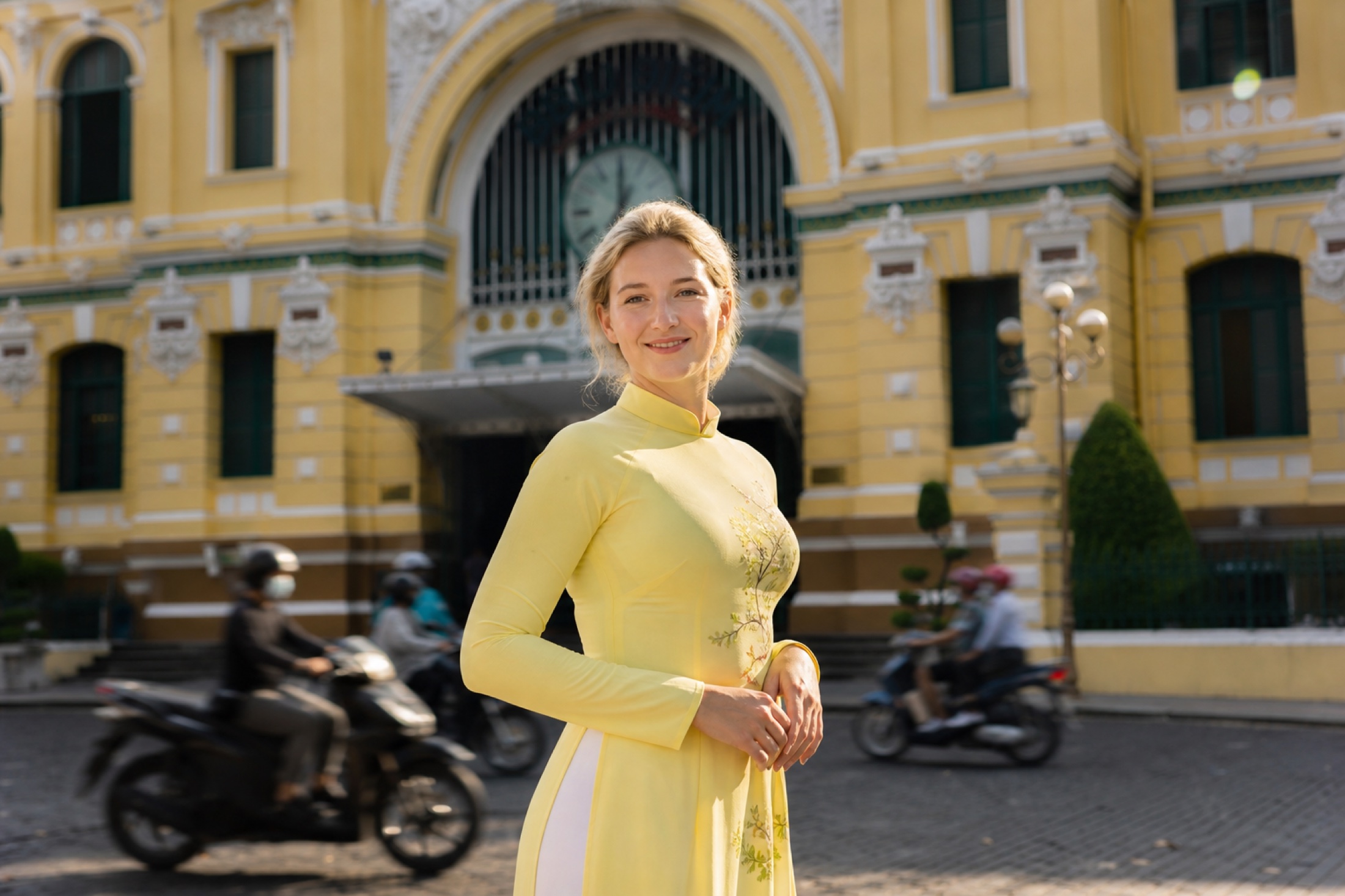
Ho Chi Minh City runs dry December–April (roughly 25–32°C, low humidity, clear skies) and wet May–November (25–35°C, afternoon downpours, hazy mornings). Dry season (Dec–Apr) gives you crisp light and predictable weather; January–February are most comfortable. Midday light is harsh even then—shoot early morning (6–8 a.m., soft golden light on the façade) or golden hour (5–7 p.m., warm tones on stone). Wet season (May–Nov) brings morning fog and afternoon storms; mornings stay relatively dry if you finish by 11 a.m., but humidity dulls the light. Avoid October–November (peak typhoon risk; flooding possible near the building). Cloud cover in wet season can actually soften shadows—useful if you're willing to accept unpredictability.
---
How do permits, access and logistics actually work on the day?
The Opera House is an active heritage site and performance venue; it's not a private photo location. Your photographer must understand the formal rules: external photography on the public plaza is typically permitted, but interior access (lobby, corridors, auditorium) requires prior approval or is restricted. Cáo Studio has established relationships and knows current access policies—they coordinate this before your booking. On arrival, expect security checks; bring ID and any permits your photographer has arranged. The plaza and front steps are public; you won't be alone. Tour groups change every 30–45 minutes, so timing matters—book a slot that uses light windows (early or late) when foot traffic is lowest. Wear your outfit en route; changing happens in the car or a nearby café. Bring water, touch-up makeup, and a small crew (partner, makeup artist, 1–2 support people max)—this keeps logistics tight and respectful to the venue.
---
What outfits photograph best at the Opera House?
| Outfit Type | Best For | Light Conditions | Why It Works |
|---|---|---|---|
| White / cream western bridal dress | Timeless, formal contrast | Early morning or golden hour | Bright fabric pops against dark stone; classic silhouettes suit Beaux-Arts symmetry |
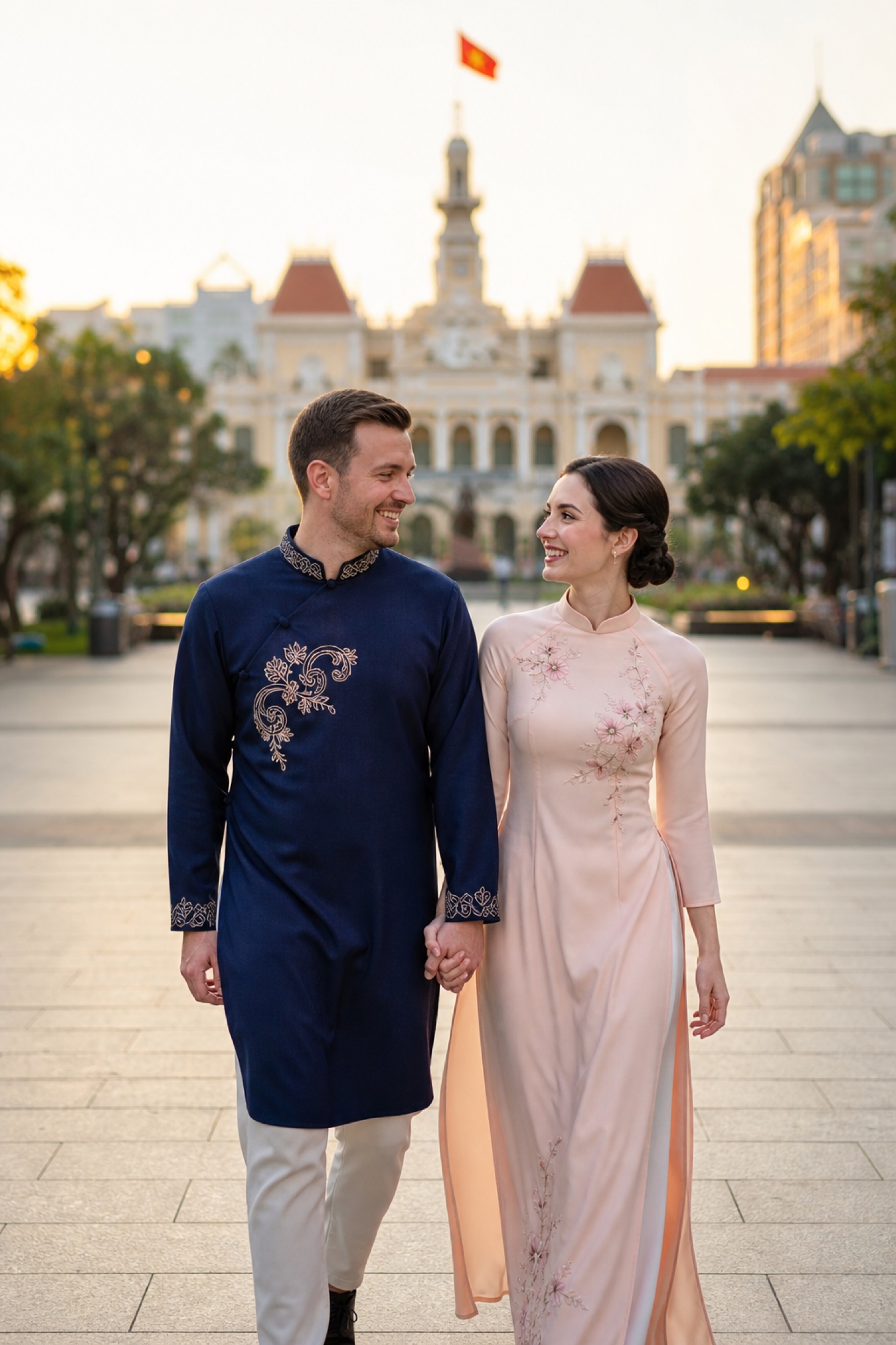
| Ao dai (formal) | Cultural, elegant anchor | Golden hour (soft, warm tones) | Fabric drape and colour (deep jewel tones, metallics) glow on heritage backdrop; Vietnamese identity fits the colonial-era site |
| Dark / jewel-tone suits (groom) | Structured, architectural | Morning light (crisp definition) | Tailored lines echo building geometry; absorb light without glare |
| Casual smart (jeans, blazer, light top) | Intimate, editorial feel | Overcast or late afternoon | Works in wet season; softens formality for lifestyle shots |
Avoid pure white on overcast days (washes out); deep jewel tones, navy and metallics hold depth even in hazy light. Bring a second outfit (ao dai pairs beautifully with western formalwear if you have time and space); check with your photographer on wardrobe timing and changing logistics before the day.
---
What's the realistic timeline and how should you prepare?
Book your photographer (Cáo Studio or a trusted local alternative) 3–4 weeks in advance so they can confirm access and schedule your preferred light window. Two weeks before, finalize your outfits—have them tailored and tested (walk, sit, breathe in them). One week before, check the weather forecast; if rain is heavy, discuss backup dates or indoor alternatives with your photographer. On the day: arrive 20–30 minutes early (parking can be tight in District 1), do a light check and composition walk-through, and start shooting as soon as light is optimal—don't wait for a perfect gap in crowds; work around them. Sessions typically run 2–3 hours depending on outfit changes and location moves (nearby streets, Bitexco Financial Tower park, or Ben Nghe Channel waterfront add variety without leaving the central district). Bring touch-up makeup if using a hotel makeup artist; confirm they're on call or plan a 15-minute break mid-session.
🌸 See the lookbook | 💄 Makeup & hair at your hotel
---
How does Cáo Studio's pre-wedding service compare to other options?
Cáo Studio – Makeup & Photoshoot specializes in pre-wedding shoots for international couples; their pre-wedding & elopement package includes location scouting, permit coordination, and styling advice for heritage sites like the Opera House. They offer on-location makeup & hair at your hotel so you arrive camera-ready, and their Saigon team knows District 1 light, crowds and access intimately. Freelance photographers and online agencies may be cheaper but often lack on-ground relationships and cultural knowledge—you risk access issues, poor light planning, or permits not arranged. If you're booking a couple photoshoot or want traditional ao dai photoshoot framed in colonial heritage, Cáo Studio's integrated approach (photographer + makeup + location planning) removes stress. For standalone photography only, ask for portfolio examples at Opera House specifically and confirm they know current access rules.
---
What to check before you book
- Location confirmation: Ask your photographer if they've shot at the Opera House in the last 6 months and what access they currently have (external only vs. interior). Policies change.
- Light plan: Request a proposed shoot time (early morning or late afternoon) and why—avoid vague "flexible" answers.
- Crowd management: How many outfit changes, and will they build in time for groups to clear?
- Weather backup: What happens if heavy rain or typhoon warning occurs? Is a reschedule free, and how many options do you get?
- Nearby alternatives: Do they know Bitexco Financial Tower park, Ben Nghe waterfront, or District 1 street light for backup compositions if Opera House access is suddenly limited?
- Makeup timing: If using their hotel makeup service, confirm the artist can meet you on-site or nearby so you're camera-ready on arrival.
- Outfit logistics: Clarify how and where you'll change; bring a privacy solution (car, café) and confirm the photographer has a secure space for your belongings.
📸 Book on WhatsApp — pre-wedding photoshoot
---
Still deciding? Compare your pre-wedding options in Ho Chi Minh City
If the Opera House feels too formal or crowded, Saigon offers alternatives: Saigon's riverside (Ben Nghe, Bitexco park) has modern, open-air light and fewer rules; Bitexco Financial Tower park offers contemporary urban backdrop with rooftop views. For cultural framing, Saigon's ao dai rental and photoshoot at heritage temples or quiet street corners (District 5, Chinatown) may suit you better if you prioritize Vietnamese identity over colonial architecture. Cáo Studio's Saigon team scouts all these—ask them to compare options on WhatsApp based on your couple's story, outfit plan and comfort level.
💄 Get makeup & hair arranged | 🌸 See the lookbook
---
FAQ
Do I need a permit to shoot at Saigon Opera House?
External photography on the plaza is generally open to the public; interior access requires prior arrangement. Your photographer must know current rules—Cáo Studio handles this before booking. Always confirm access at least two weeks ahead.
What time of year has the best light at the Opera House?
December–April (dry season) offers clear skies and crisp light; January–February are most comfortable. Early morning (6–8 a.m.) or golden hour (5–7 p.m.) work year-round, avoiding harsh midday sun.
Can I wear a white western dress and ao dai in the same session?
Yes—many couples do both. Timing and changing logistics depend on crew size and nearby facilities. Discuss with your photographer beforehand; Cáo Studio factors this into their planning.
How long is a typical pre-wedding shoot at the Opera House?
Most sessions run 2–3 hours depending on outfit changes, location moves and crowd gaps. Exact inclusions are confirmed on WhatsApp—send Cáo Studio your outline to get specifics.
What if there's heavy rain or typhoon warning on my shoot date?
Ask your photographer's reschedule policy upfront. Cáo Studio offers flexible date options; confirm how many reboots you get. Early morning shoots in wet season are safer than afternoon (storms typically afternoon).
Can Cáo Studio do my makeup at the Opera House on the day?
Yes—they offer on-location makeup & hair at your hotel, and can coordinate timing to have you camera-ready before the shoot. Discuss your hotel location and arrival time on WhatsApp.
Are there quieter times to shoot at the Opera House?
Before 7 a.m. or after 5 p.m. are quietest. Midday (10 a.m.–4 p.m.) has heavy tour groups. Book early morning or golden hour for solitude.
What should I wear under my ao dai for this shoot?
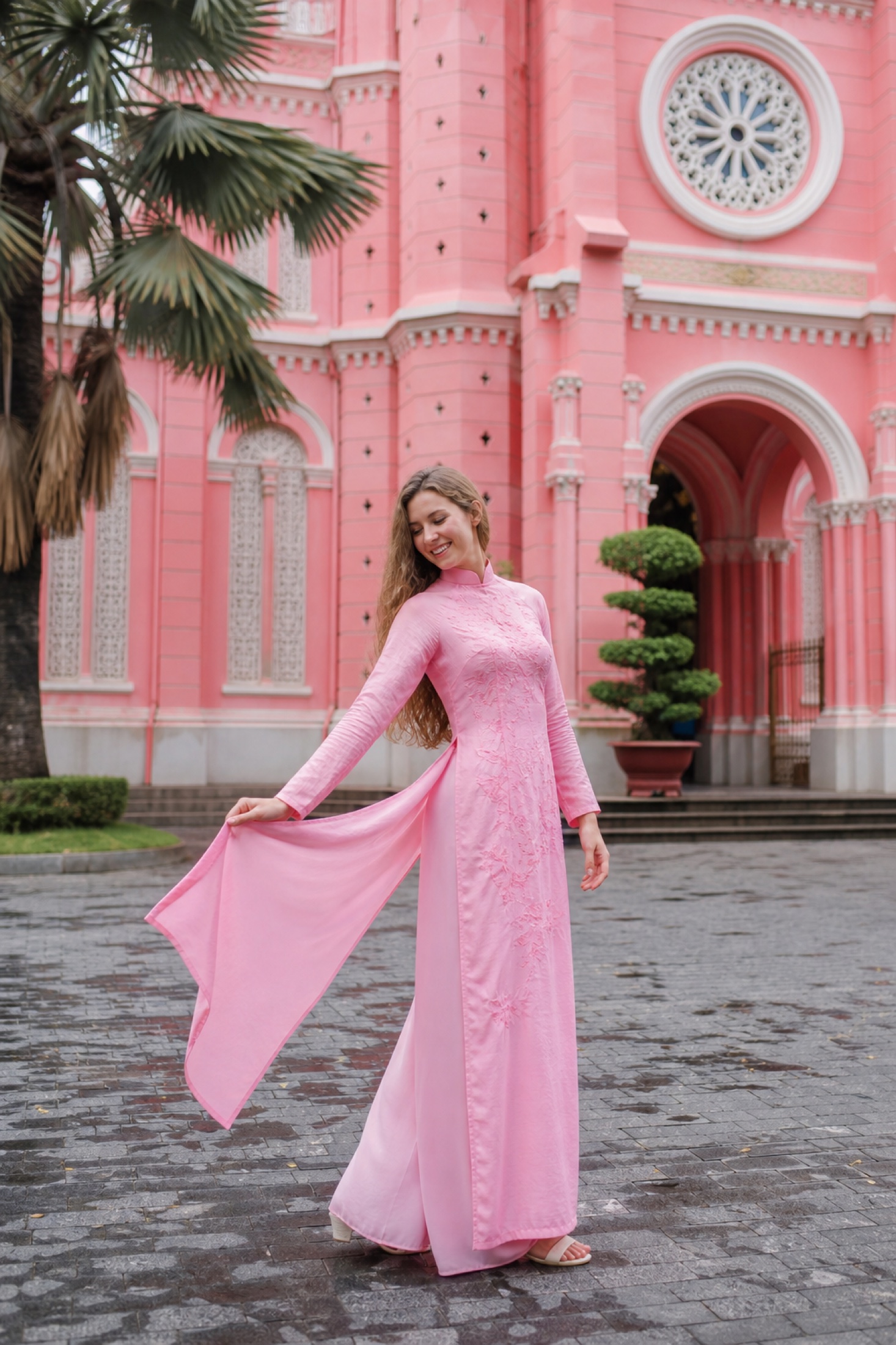
Wear form-fitting slip shorts or bike shorts (skin-tone or black) and a thin camisole or slip—fabric should not show through the ao dai. Test the outfit beforehand; avoid visible panty lines.
FAQ
Do I need a permit to shoot at Saigon Opera House?
External photography on the plaza is generally open to the public; interior access requires prior arrangement. Your photographer must know current rules—Cáo Studio handles this before booking. Always confirm access at least two weeks ahead.
What time of year has the best light at the Opera House?
December–April (dry season) offers clear skies and crisp light; January–February are most comfortable. Early morning (6–8 a.m.) or golden hour (5–7 p.m.) work year-round, avoiding harsh midday sun.
Can I wear a white western dress and ao dai in the same session?
Yes—many couples do both. Timing and changing logistics depend on crew size and nearby facilities. Discuss with your photographer beforehand; Cáo Studio factors this into their planning.
How long is a typical pre-wedding shoot at the Opera House?
Most sessions run 2–3 hours depending on outfit changes, location moves and crowd gaps. Exact inclusions are confirmed on WhatsApp—send Cáo Studio your outline to get specifics.
What if there's heavy rain or typhoon warning on my shoot date?
Ask your photographer's reschedule policy upfront. Cáo Studio offers flexible date options; confirm how many reboots you get. Early morning shoots in wet season are safer than afternoon (storms typically afternoon).
Can Cáo Studio do my makeup at the Opera House on the day?
Yes—they offer [on-location makeup & hair at your hotel](/makeup-and-hair), and can coordinate timing to have you camera-ready before the shoot. Discuss your hotel location and arrival time on WhatsApp.
Are there quieter times to shoot at the Opera House?
Before 7 a.m. or after 5 p.m. are quietest. Midday (10 a.m.–4 p.m.) has heavy tour groups. Book early morning or golden hour for solitude.
What should I wear under my ao dai for this shoot?
Wear form-fitting slip shorts or bike shorts (skin-tone or black) and a thin camisole or slip—fabric should not show through the ao dai. Test the outfit beforehand; avoid visible panty lines.
Ao dai, makeup, hair and a local photographer in Hanoi or Saigon — one WhatsApp message.